
Theories on the Origin of Life Spontaneous generation
- Slides: 40
Theories on the Origin of Life • Spontaneous generation is theory that life can come from non-living matter. (Frogs come from mud, flies come from garbage, etc. ) • Abiogenesis Hypothesis–life arose from a combination of inorganic chemicals methane (CH 4), ammonia (NH 3) + water (H 2 O) that existed in the ancient oceans of earth.
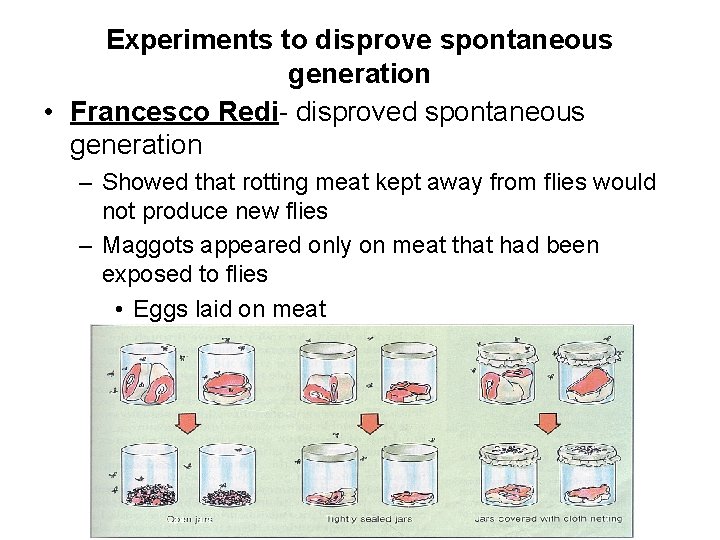
Experiments to disprove spontaneous generation • Francesco Redi- disproved spontaneous generation – Showed that rotting meat kept away from flies would not produce new flies – Maggots appeared only on meat that had been exposed to flies • Eggs laid on meat
Experiments to disprove spontaneous generation • Lazzaro Spallanzani – 1700 s – Microorganisms would not grow in broth when its container was heated and then sealed – Inferred that microorganisms do not arise spontaneously – Microorganisms were carried in the air
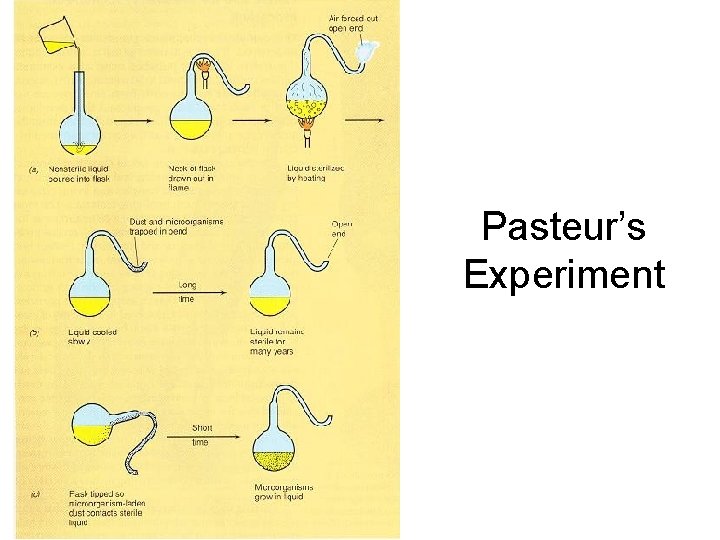
Experiments to disprove spontaneous generation • Louis Pasteur – Used variation of Spallanzani’s experiment – Used curve-necked flasks – Microorganisms were prevented from entering the flask – When curved necks were broken, broth became cloudy with microorganims
Pasteur’s Experiment
Experiments to prove Heterotroph Hypothesis Alexander Oparin and John Haldane- proposed that at high temperatures the gases of early Earth formed simple compounds (eg. amino acids) When earth cooled, water vapor condensed to form lakes and seas, compounds collected in the water Compounds entered complex chemical reactions Resulted in macromolecules (eg. Proteins)
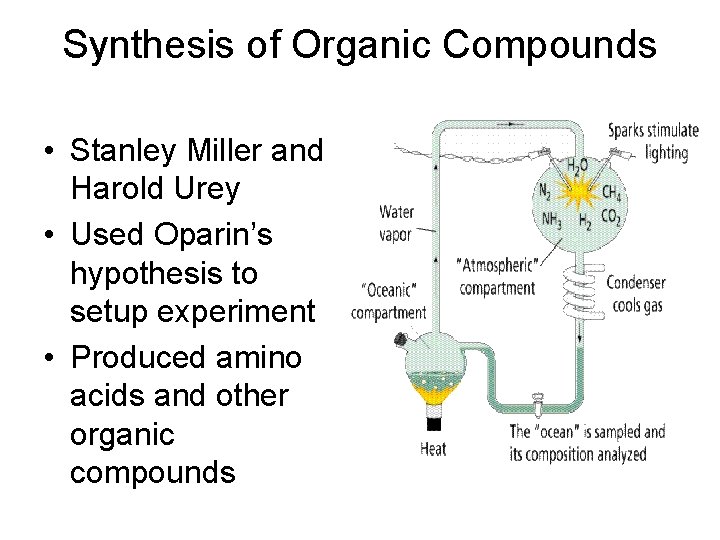
Synthesis of Organic Compounds • Stanley Miller and Harold Urey • Used Oparin’s hypothesis to setup experiment • Produced amino acids and other organic compounds
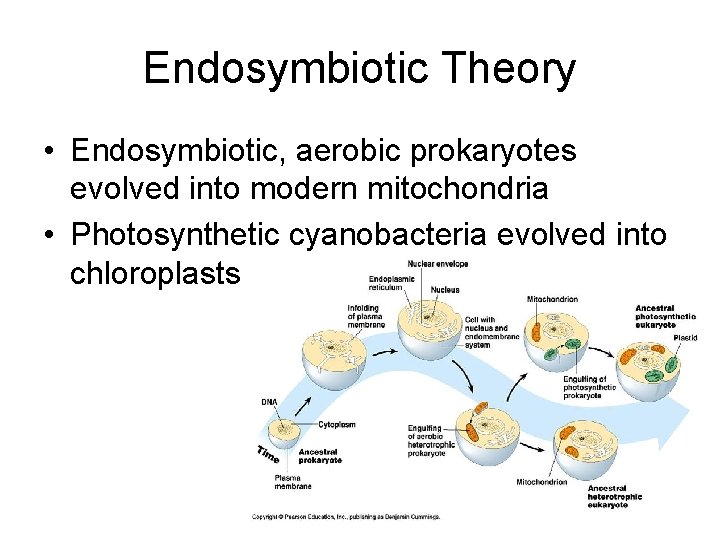
Endosymbiotic Theory • Endosymbiotic, aerobic prokaryotes evolved into modern mitochondria • Photosynthetic cyanobacteria evolved into chloroplasts
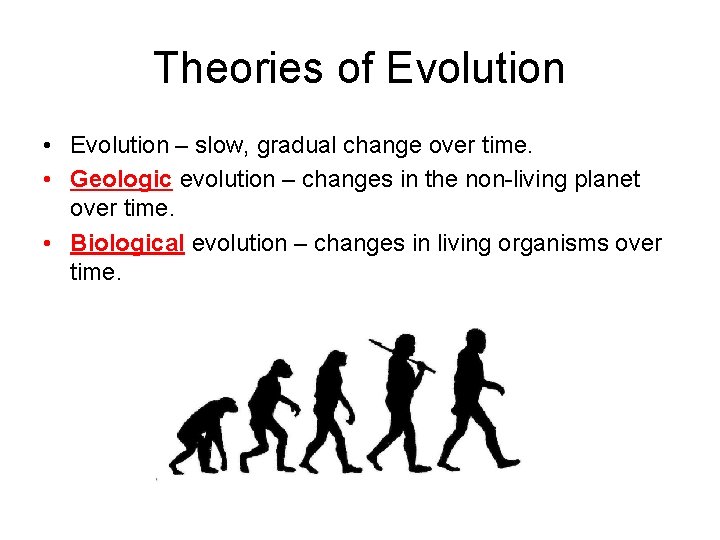
Theories of Evolution • Evolution – slow, gradual change over time. • Geologic evolution – changes in the non-living planet over time. • Biological evolution – changes in living organisms over time.
Geologic Evolution • Charles Lyell- Uniformintarianism ( geologic processes are still changing the Earth at a uniform rate) • James Hutton- Gradualism( changes in the Earth is due to slow continuous processes such as erosion, earthquakes, and volcanoes)
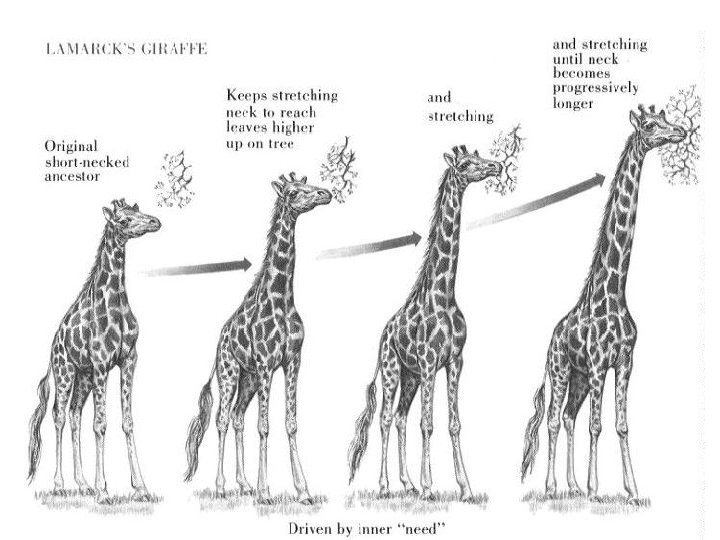
Biological Evolution • Jean-Baptiste Lamarck • Use and Disuse – He hypothesized that organisms were able to develop new structures as they needed them and they were able to pass them on to their offspring. This was called the. . • Theory of Inheritance of Acquired Traits • Got evolution right, but got mechanism wrong !!
• Inherited Traits – characteristics genetically passed on the offspring. • Acquired Characteristics – a trait that develops during an individual’s lifetime.
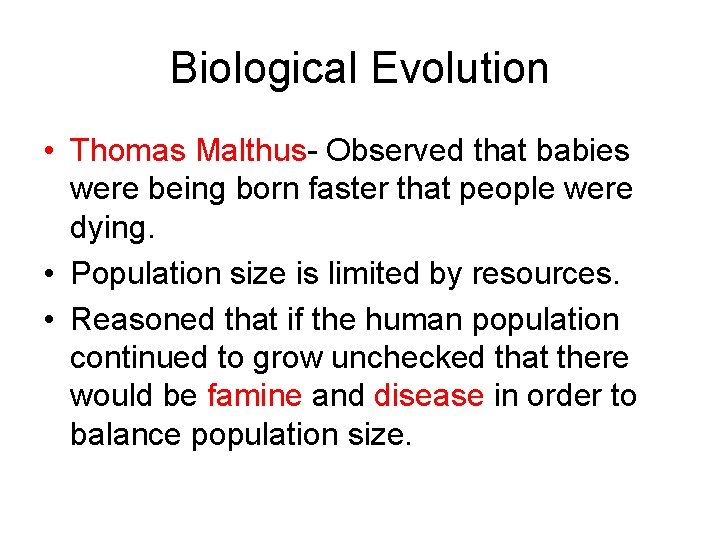
Biological Evolution • Thomas Malthus- Observed that babies were being born faster that people were dying. • Population size is limited by resources. • Reasoned that if the human population continued to grow unchecked that there would be famine and disease in order to balance population size.
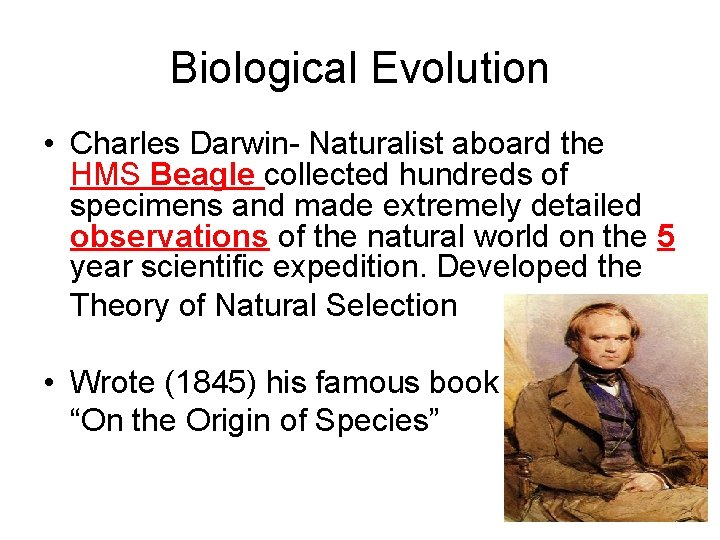
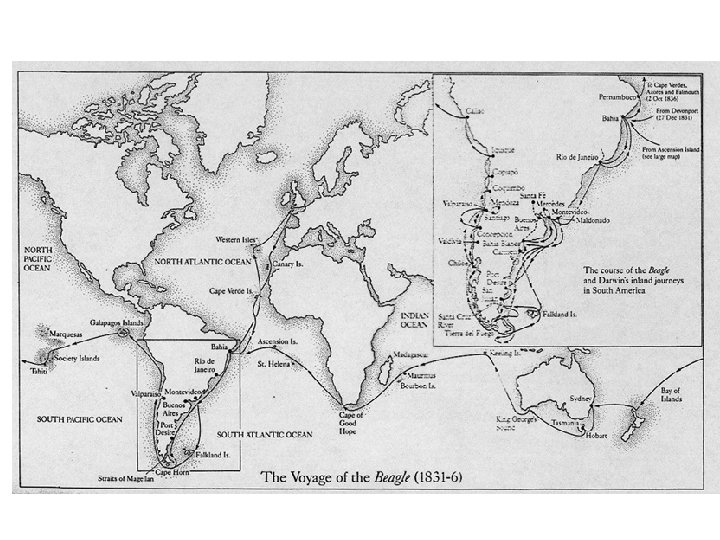
Biological Evolution • Charles Darwin- Naturalist aboard the HMS Beagle collected hundreds of specimens and made extremely detailed observations of the natural world on the 5 year scientific expedition. Developed the Theory of Natural Selection • Wrote (1845) his famous book “On the Origin of Species”
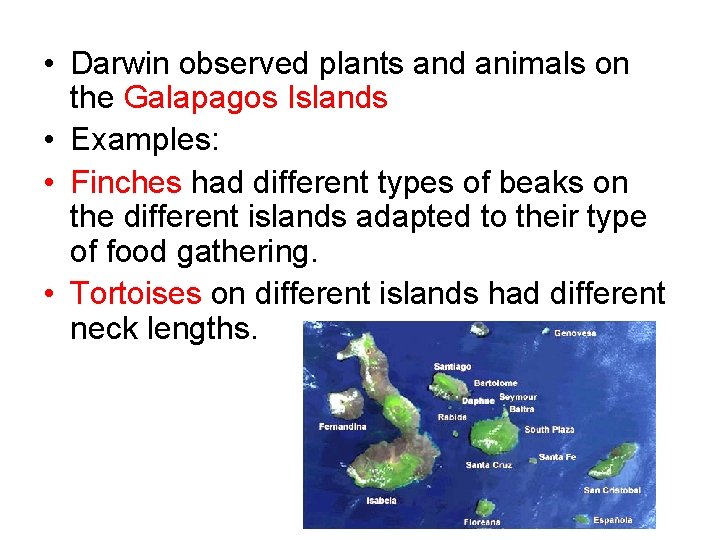
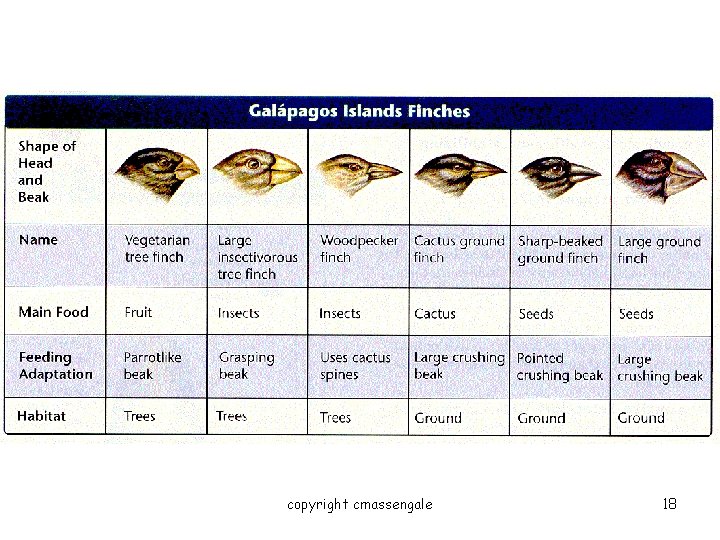
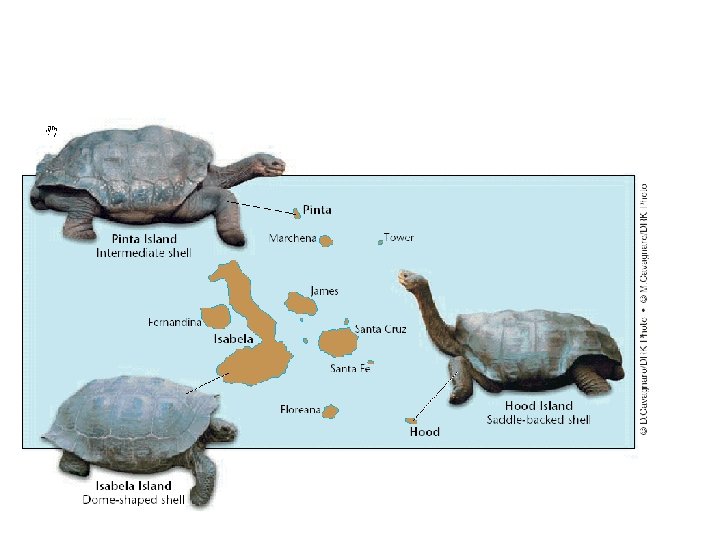
• Darwin observed plants and animals on the Galapagos Islands • Examples: • Finches had different types of beaks on the different islands adapted to their type of food gathering. • Tortoises on different islands had different neck lengths.
copyright cmassengale 18
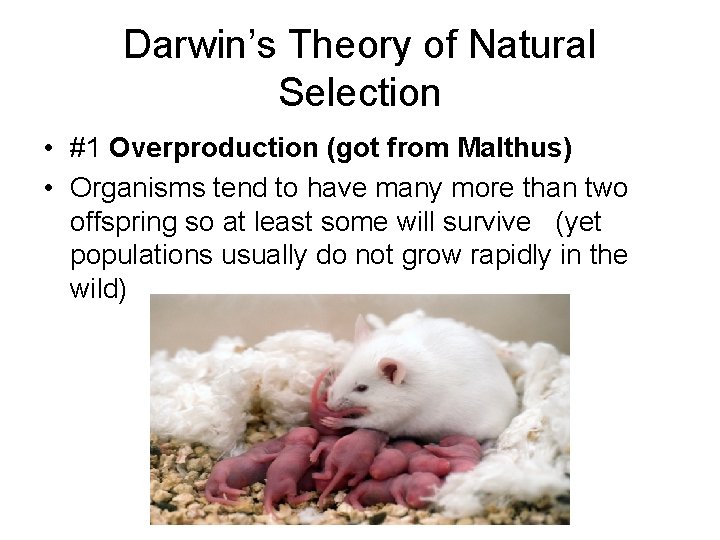
Darwin’s Theory of Natural Selection • #1 Overproduction (got from Malthus) • Organisms tend to have many more than two offspring so at least some will survive (yet populations usually do not grow rapidly in the wild)
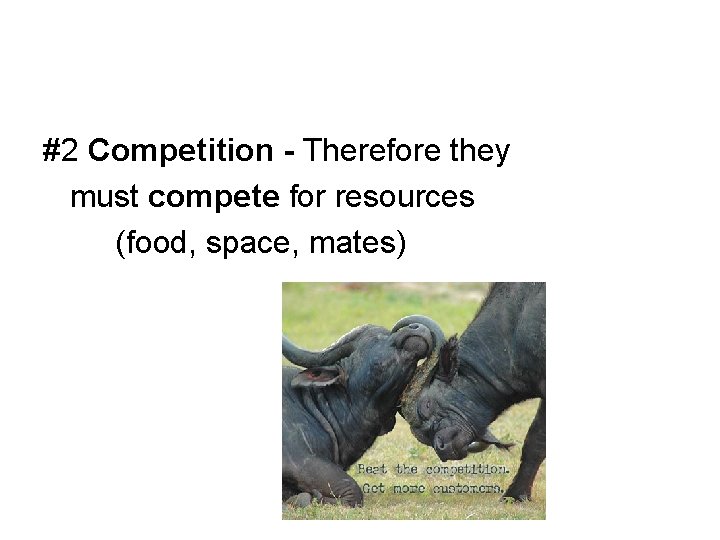
#2 Competition - Therefore they must compete for resources (food, space, mates)
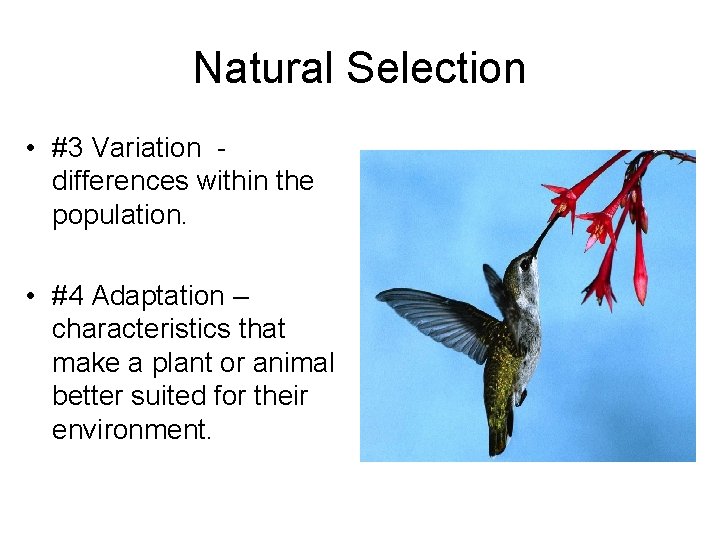
Natural Selection • #3 Variation differences within the population. • #4 Adaptation – characteristics that make a plant or animal better suited for their environment.
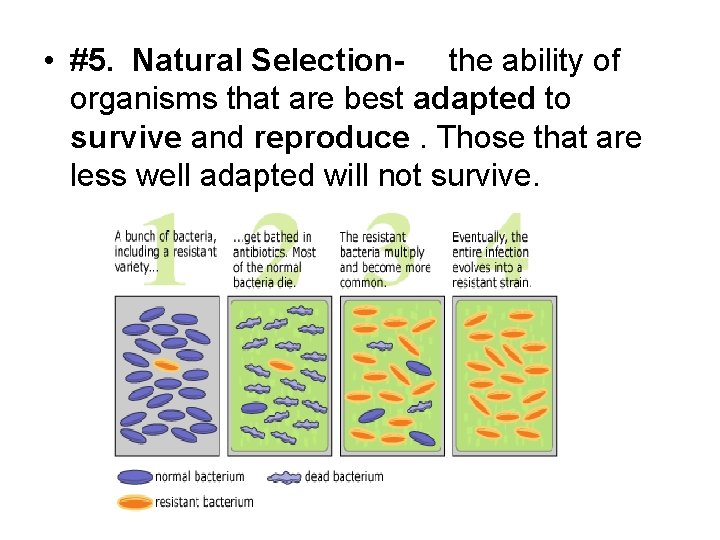
• #5. Natural Selection- the ability of organisms that are best adapted to survive and reproduce. Those that are less well adapted will not survive.
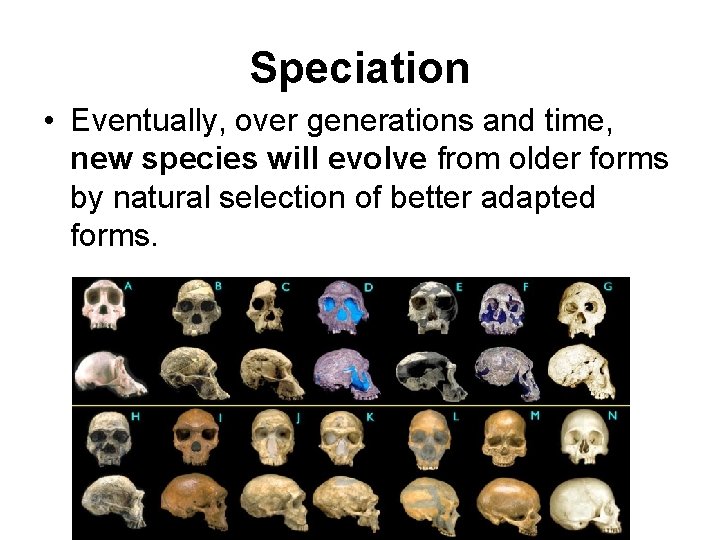
Speciation • Eventually, over generations and time, new species will evolve from older forms by natural selection of better adapted forms.
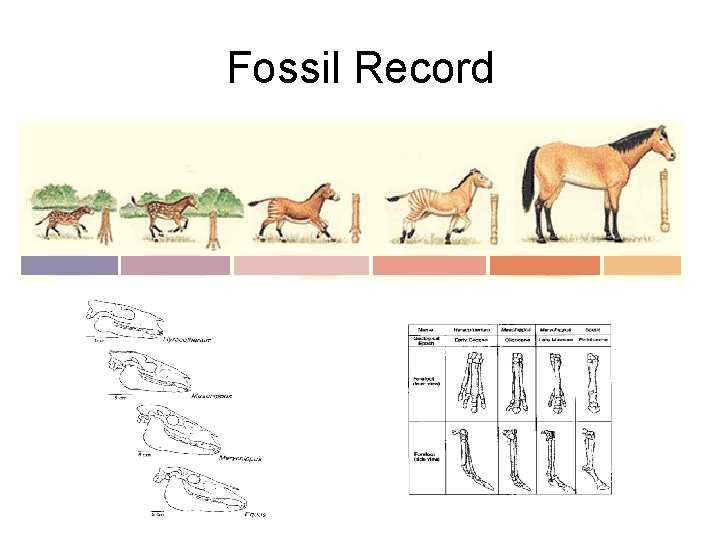
Evidence for Evolution • A. The Fossil Record – – Fossil: the remains or evidence of past life recorded in rock. (molds, impressions, bones, shells, teeth, preserved in ice, etc. ) 1. Fossils are found most often sedimentary rock. 2. Relative age can be determined by the fossils position in the layers. The oldest fossils are found below the younger ones. – 3. Absolute dating uses the principal of radioactive dating • The half-life of known radioactive compounds never changes. • (ex. Carbon 14 found in bones and shells can determine their actual age in years). • Ex. Fossil remains clearly show the gradual evolution of the modern horse.
Fossil Record
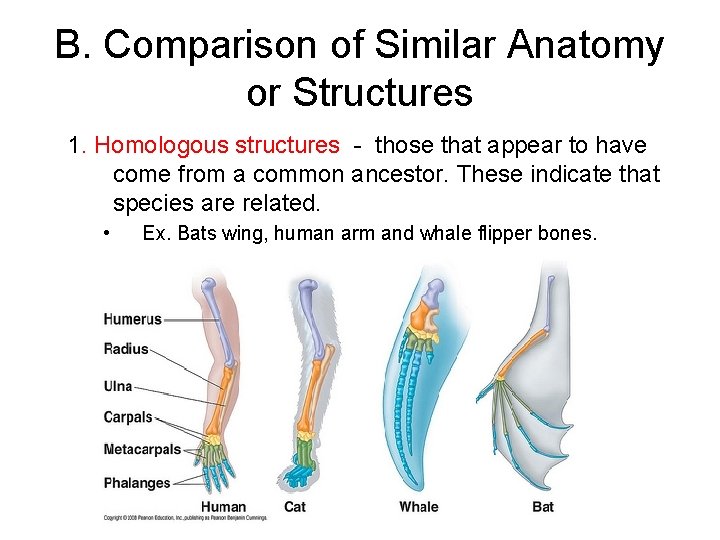
B. Comparison of Similar Anatomy or Structures 1. Homologous structures - those that appear to have come from a common ancestor. These indicate that species are related. • Ex. Bats wing, human arm and whale flipper bones.
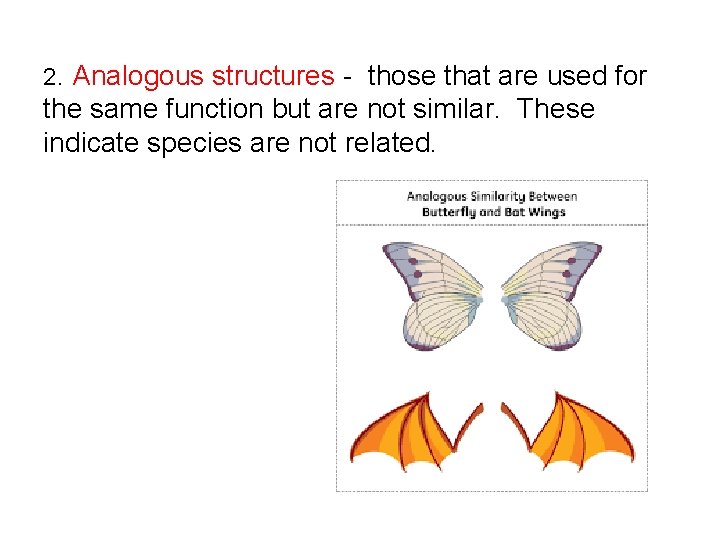
2. Analogous structures - those that are used for the same function but are not similar. These indicate species are not related.
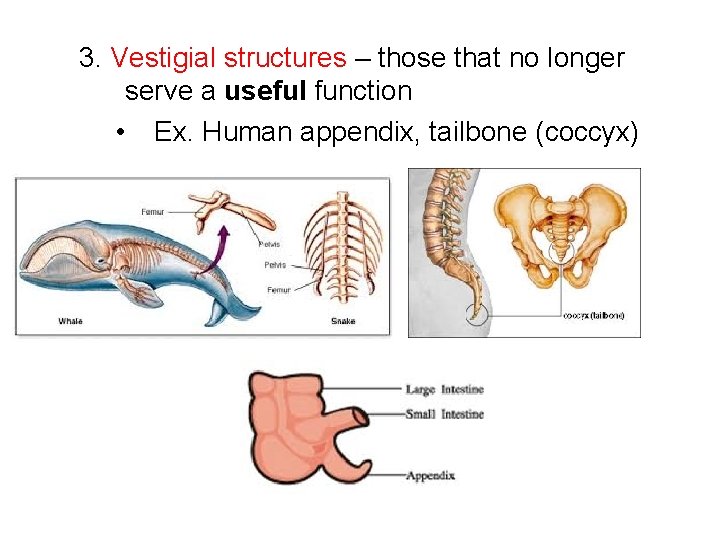
3. Vestigial structures – those that no longer serve a useful function • Ex. Human appendix, tailbone (coccyx)
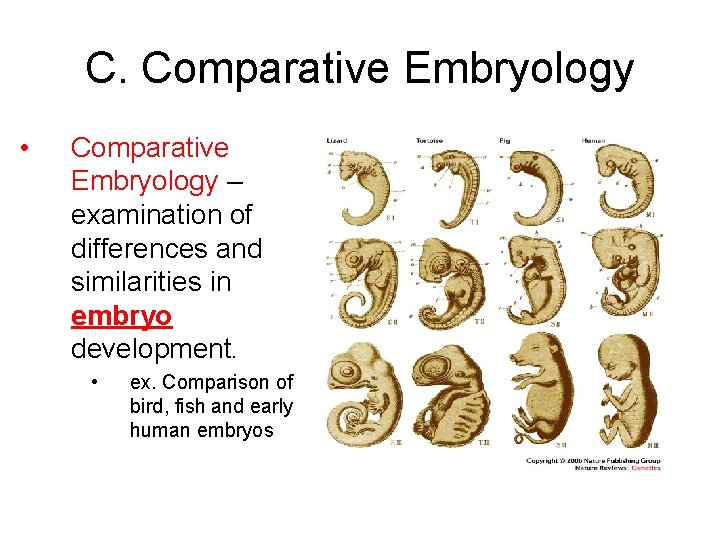
C. Comparative Embryology • Comparative Embryology – examination of differences and similarities in embryo development. • ex. Comparison of bird, fish and early human embryos
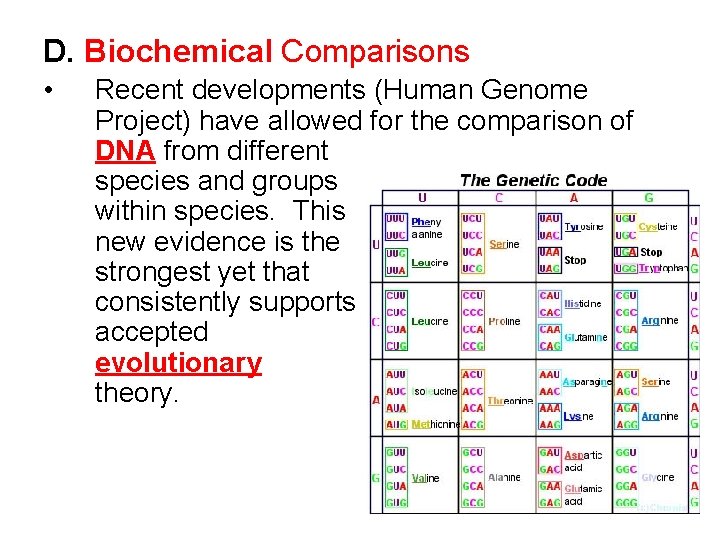
D. Biochemical Comparisons • Recent developments (Human Genome Project) have allowed for the comparison of DNA from different species and groups within species. This new evidence is the strongest yet that consistently supports accepted evolutionary theory.
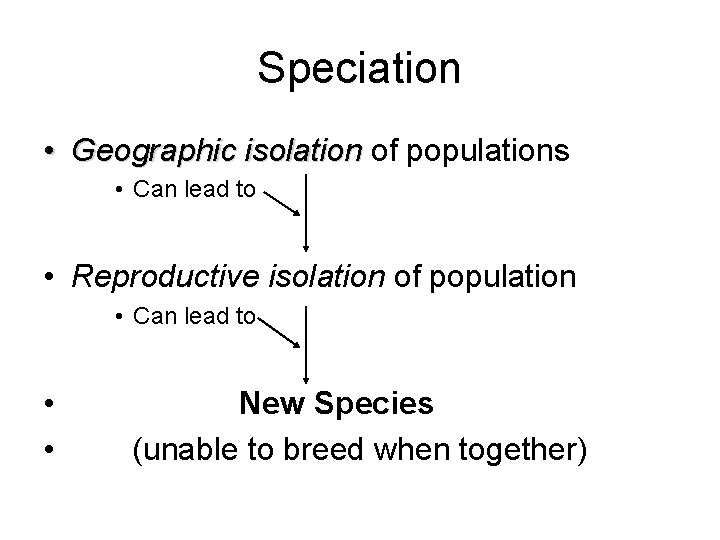
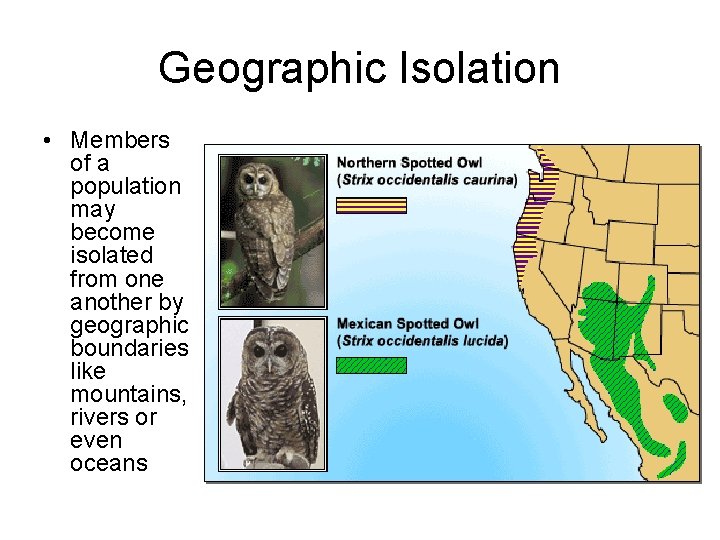
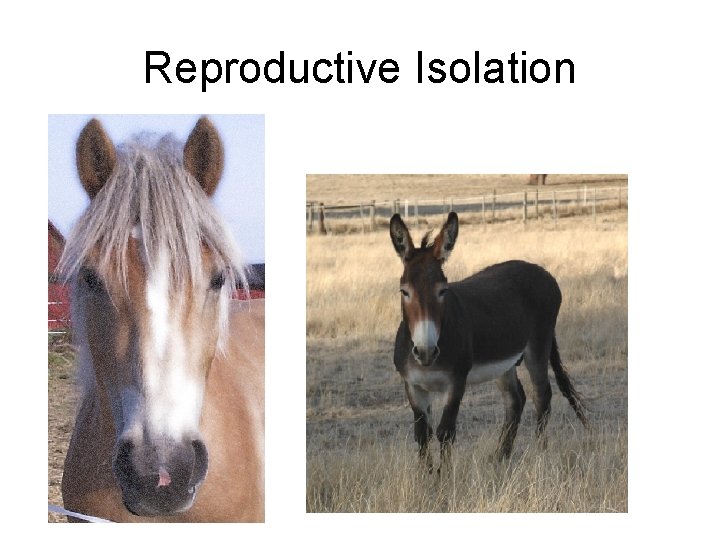
C. Speciation • • New species will arise more quickly if they are geographically isolated. Natural barriers such as mountains, deserts, rivers or landslides can separate members of a population. If they can no longer interbreed they may change enough by natural selection to become a separate species. (ex. Darwin’s finches) The loss of the ability to interbreed is called reproductive isolation. Sometimes this is caused by changes in reproductive organs such that the offspring will not survive. Sometimes this type of isolation is caused by changes in courtship behavior or the timing of mating cycles.
Speciation • Geographic isolation of populations • Can lead to • Reproductive isolation of population • Can lead to • • New Species (unable to breed when together)
Geographic Isolation • Members of a population may become isolated from one another by geographic boundaries like mountains, rivers or even oceans
Reproductive Isolation
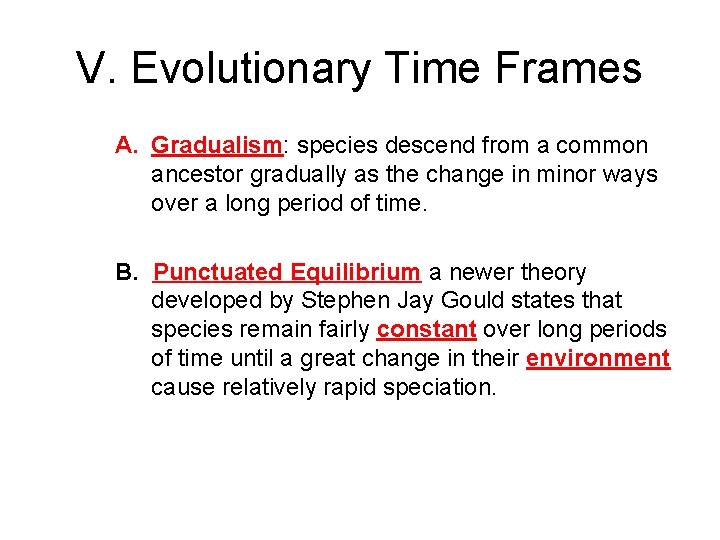
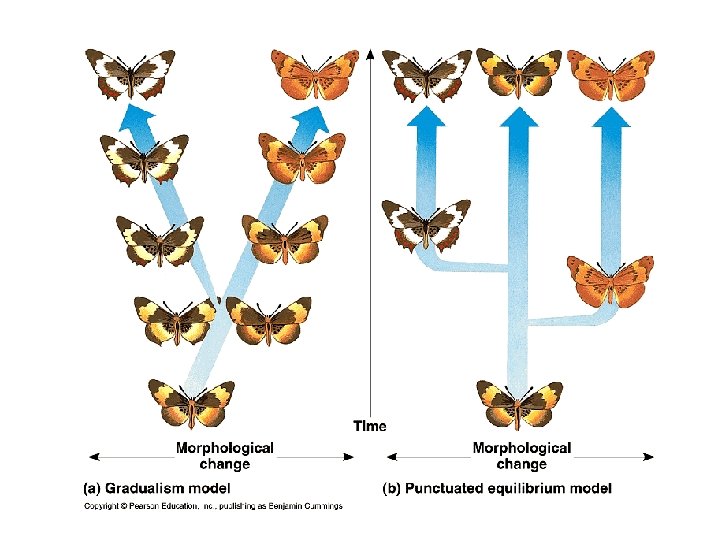
V. Evolutionary Time Frames A. Gradualism: species descend from a common ancestor gradually as the change in minor ways over a long period of time. B. Punctuated Equilibrium a newer theory developed by Stephen Jay Gould states that species remain fairly constant over long periods of time until a great change in their environment cause relatively rapid speciation.
Gradualism
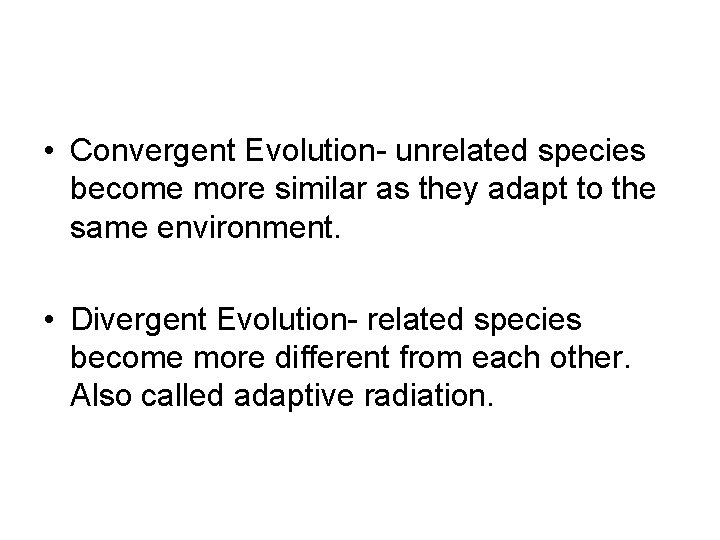
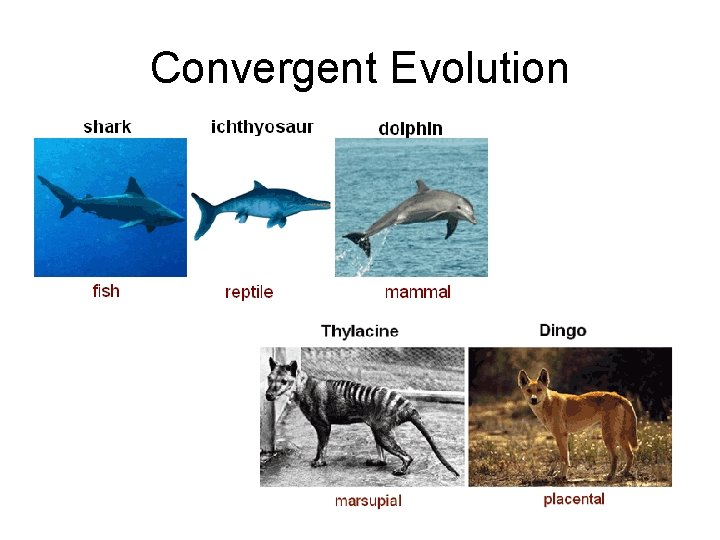
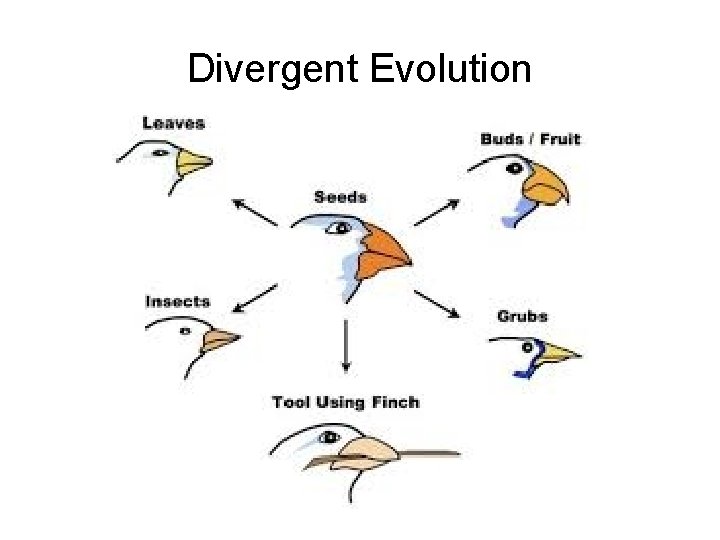
• Convergent Evolution- unrelated species become more similar as they adapt to the same environment. • Divergent Evolution- related species become more different from each other. Also called adaptive radiation.
Convergent Evolution
Divergent Evolution