
Theories of Play Froebel Montessori Froebel Friedrich Froebel
Theories of Play Froebel Montessori

Froebel
Friedrich Froebel • 1782 -1852 • Mother dies when very young-has effect on later thinking • Love of nature • Childhood is part of nature • Influenced by French philosopher Rousseau

Froebel • Humans are essentially creative and productive • Fulfilment comes from this and harmony with the world and God • Knowledge comes from engaging with the world
Froebel • • Children 3 -7 years-focus Children should be children ‘Play is a child’s work’ Loved outdoors-invented Kindergarten – children’s garden

Froebel • Let children learn by themselves rather than be told (think of the time/unusual) • Express self through play rather than learn by rote. 4 x 4 is 16, 4 x 5 is 20 4 x 6 is 24 • Symbolic and imaginative play-very important-shows high levels of learning
Froebel • Music and sound important – encouraged “mother songs” finger rhymes, counting/maths songs important • 3 forms of life – senses, nature, art and mathematics

Froebel Designed “gifts” and “occupations” • Gifts • Occupations – aid fine motor skills-cutting weaving, chalk, drawing
Froebel • Child centred • Children should actively discover and experience things for themselves • Roehampton University-Froebel Educational Institute
Tina Bruce • Bases her ideas on Froebel • Children should ‘wallow in play’ • Big resurgence in Froebelian ideas
Criticisms of Froebel • Gifts too difficult and focus too much on fine motor skills • Puts too much importance on women teachers? • Middle classes attended so needs of poorer classes not met
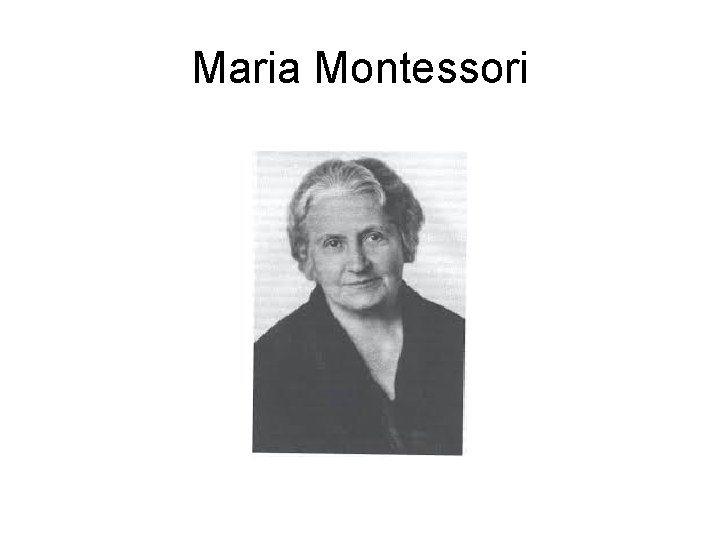
Maria Montessori
Montessori • 1870 -1952 • From a wealthy family • Doctor- unusual for the time
Montessori • • • Studied “idiot children” Theory based on developing skills Emphasis on social skills Receptive period to learning Learn using senses Play had to have a learning focus-did not believe in free play
Montessori • Child initiated and child led-adult steps back and only helps a child when they are ready for a new idea/concept • Children should be silent and focused so they can become absorbed in task
Montessori • • Explained layout of rooms Introduced child size furniture What teachers should wear What children should eat • She developed educational toys and activities (didactic toys-right/wrong way)
Montessori • Areas in setting divided into: • • • Daily living skills Education of the senses Language development Number concepts Science and exploration of the wider world
Criticisms • Susan Isaacs • Lack of games to inspire children’s imagination • Limited emphasis for maths, reading, writing-emphasis is on social and emotional development
- Slides: 18