
Theories of Motivation Hope Scale Activity Hope Scale

- Slides: 26
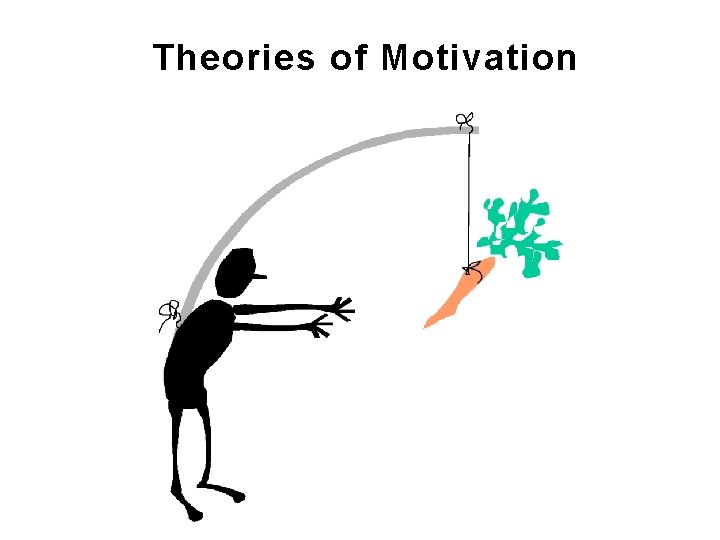
Theories of Motivation
Hope Scale (Activity)
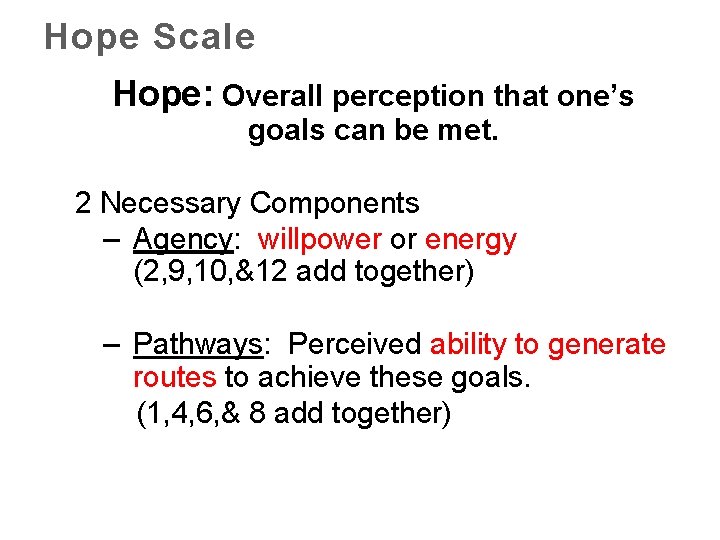
Hope Scale Hope: Overall perception that one’s goals can be met. 2 Necessary Components – Agency: willpower or energy (2, 9, 10, &12 add together) – Pathways: Perceived ability to generate routes to achieve these goals. (1, 4, 6, & 8 add together)
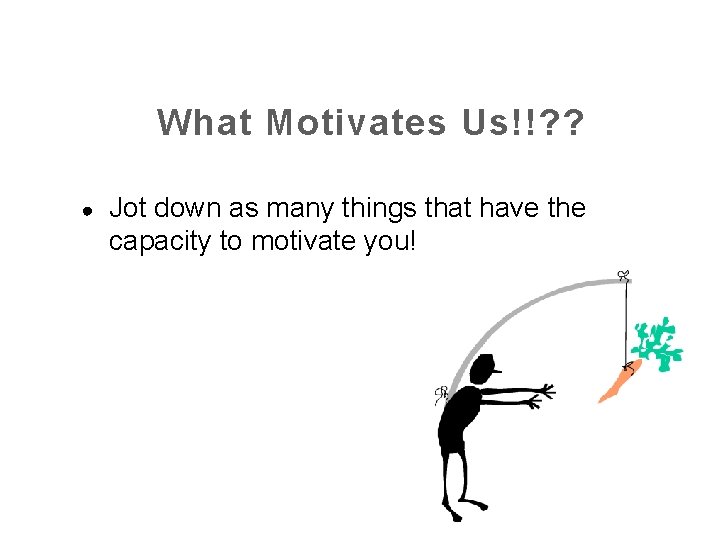
What Motivates Us!!? ? ● Jot down as many things that have the capacity to motivate you!
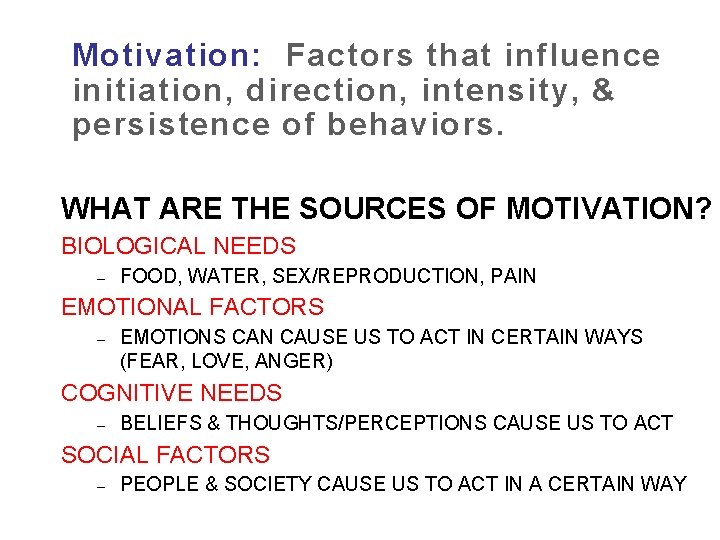
Motivation: Factors that influence initiation, direction, intensity, & persistence of behaviors. WHAT ARE THE SOURCES OF MOTIVATION? BIOLOGICAL NEEDS – FOOD, WATER, SEX/REPRODUCTION, PAIN EMOTIONAL FACTORS – EMOTIONS CAN CAUSE US TO ACT IN CERTAIN WAYS (FEAR, LOVE, ANGER) COGNITIVE NEEDS – BELIEFS & THOUGHTS/PERCEPTIONS CAUSE US TO ACT SOCIAL FACTORS – PEOPLE & SOCIETY CAUSE US TO ACT IN A CERTAIN WAY
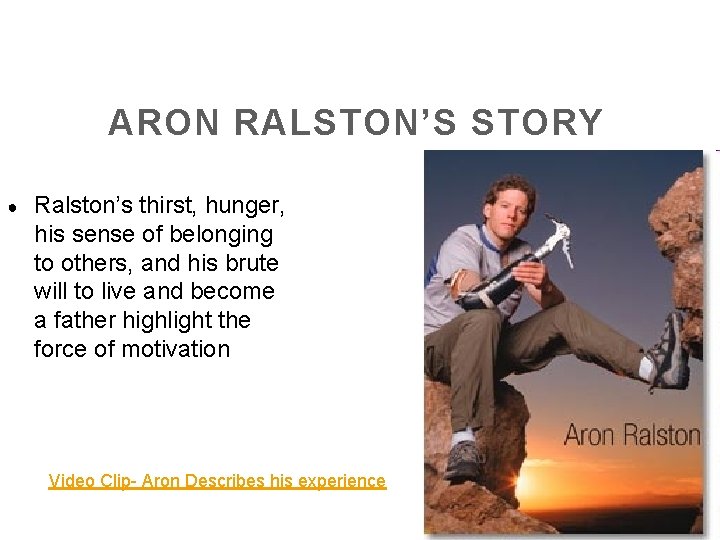
ARON RALSTON’S STORY ● Ralston’s thirst, hunger, his sense of belonging to others, and his brute will to live and become a father highlight the force of motivation Video Clip- Aron Describes his experience
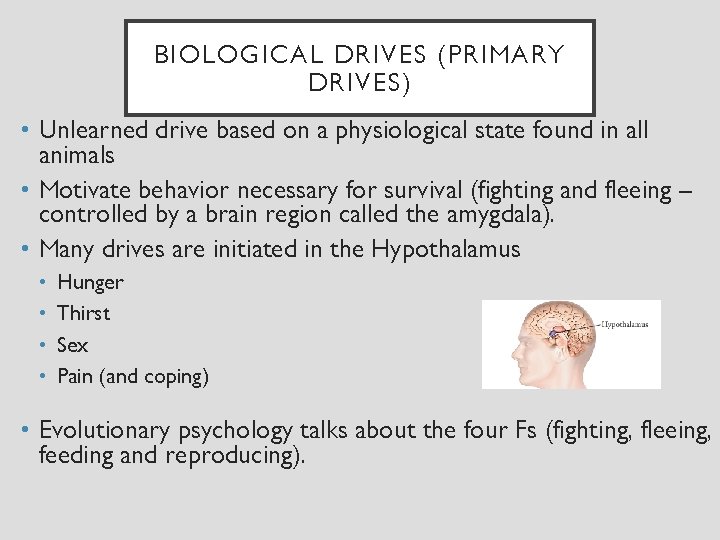
BIOLOGICAL DRIVES (PRIMARY DRIVES) • Unlearned drive based on a physiological state found in all animals • Motivate behavior necessary for survival (fighting and fleeing – controlled by a brain region called the amygdala). • Many drives are initiated in the Hypothalamus • • Hunger Thirst Sex Pain (and coping) • Evolutionary psychology talks about the four Fs (fighting, fleeing, feeding and reproducing).
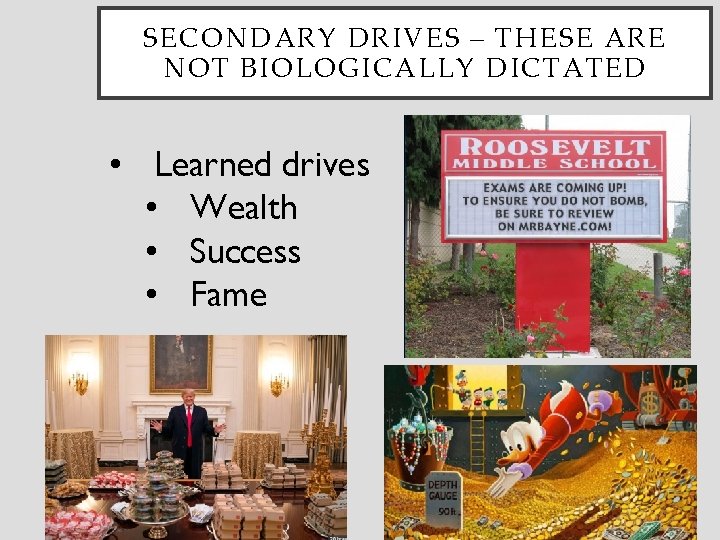
SECONDARY DRIVES – THESE ARE NOT BIOLOGICALLY DICTATED • Learned drives • Wealth • Success • Fame
PRIMARY VS. SECONDARY DRIVES • Primary (Biological) Drives push us to act. • Secondary Drives pull at our actions. • When BOTH are combined we are highly motivated.
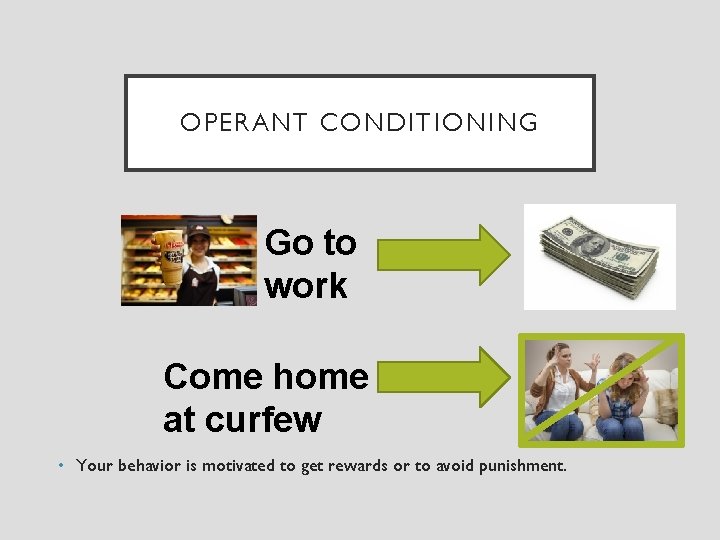
OPERANT CONDITIONING Go to work Come home at curfew • Your behavior is motivated to get rewards or to avoid punishment.
OPERANT CONDITIONING FACTORS • Incentives – environmental cues that trigger a motive(desire) for a reward. • When a stimulus in your environment creates goal-directed behavior.
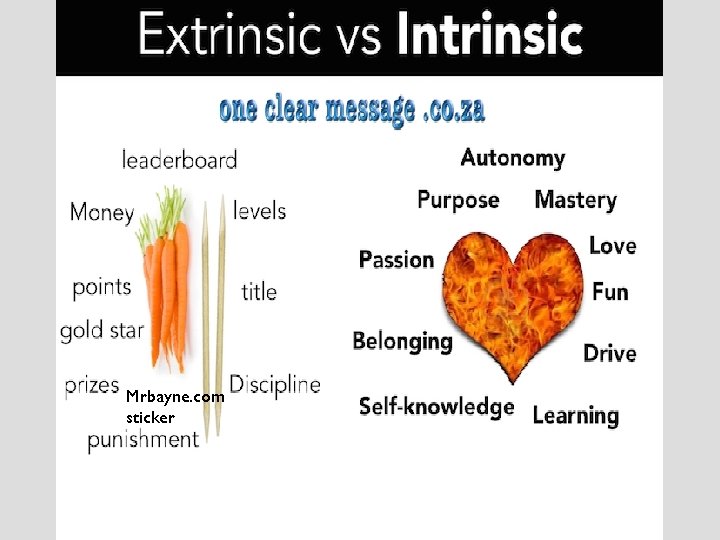
TWO GENERAL TYPES OF REWARDS • INtrinsic – from the action itself or from within • EXtrinsic – for something else
Mrbayne. com sticker
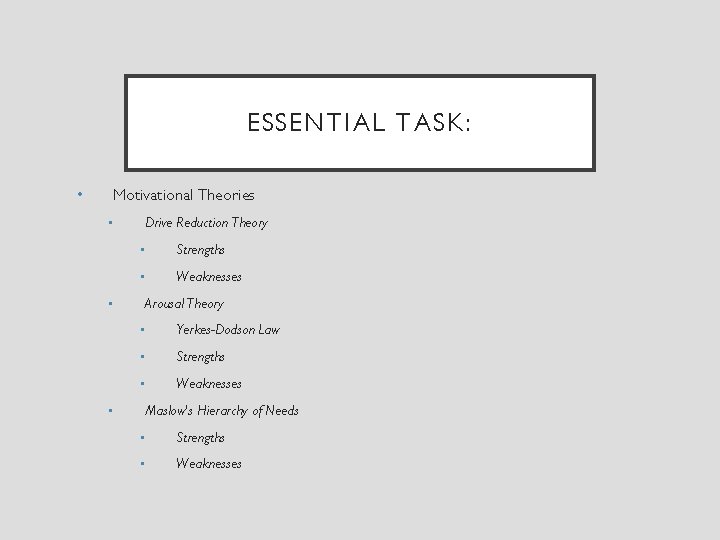
ESSENTIAL TASK: • Motivational Theories • Drive Reduction Theory • Strengths • Weaknesses • Arousal Theory • Yerkes-Dodson Law • Strengths • Weaknesses • Maslow's Hierarchy of Needs • Strengths • Weaknesses
THEORIES OF MOTIVATION 1. Drive-Reduction Theory 2. Arousal Theory 3. Hierarchy of Motives 15
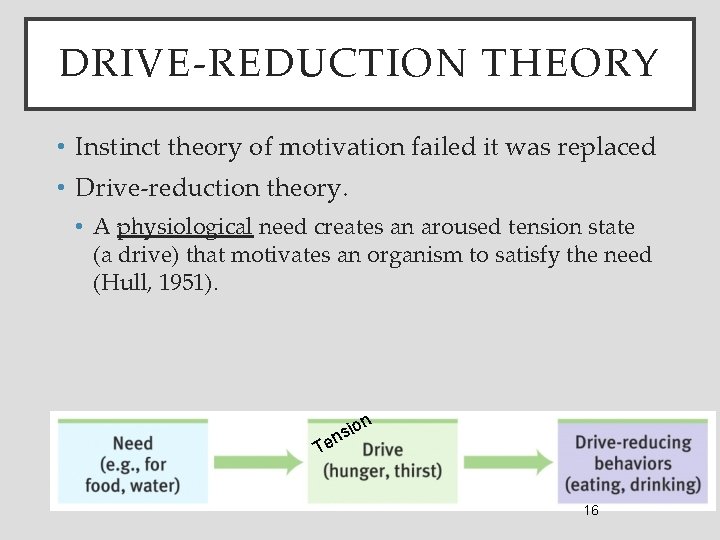
DRIVE-REDUCTION THEORY • Instinct theory of motivation failed it was replaced • Drive-reduction theory. • A physiological need creates an aroused tension state (a drive) that motivates an organism to satisfy the need (Hull, 1951). n sio n e T 16
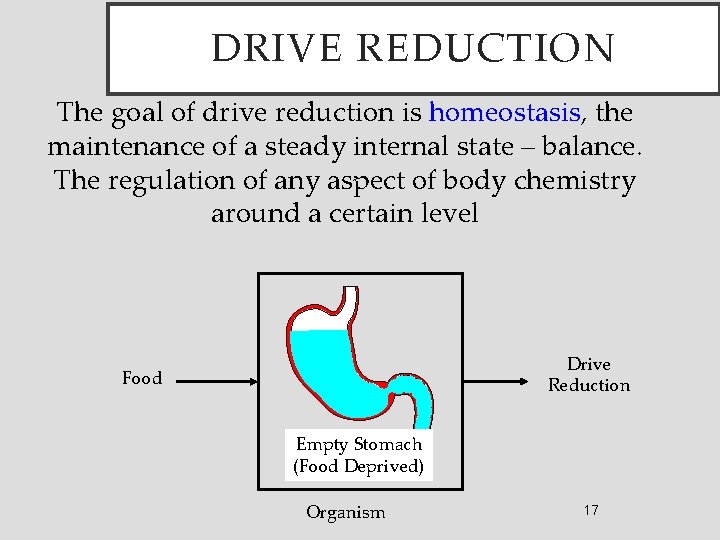
DRIVE REDUCTION The goal of drive reduction is homeostasis, the maintenance of a steady internal state – balance. The regulation of any aspect of body chemistry around a certain level Drive Reduction Food Empty Stomach Full (Food Deprived) Organism 17
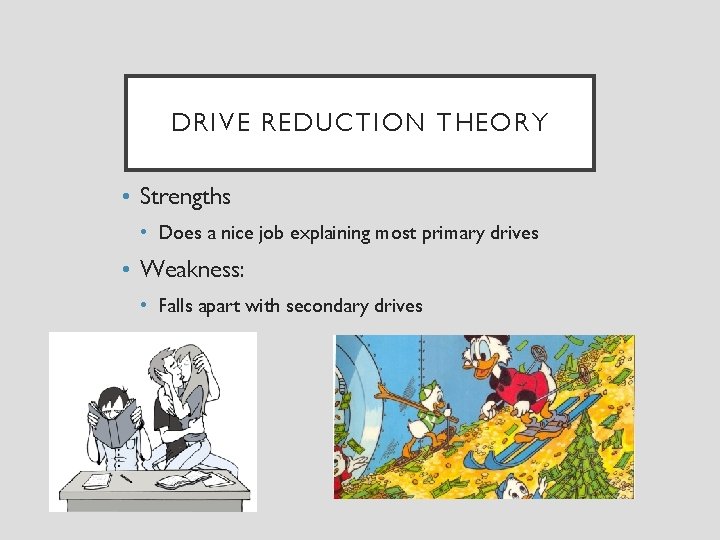
DRIVE REDUCTION THEORY • Strengths • Does a nice job explaining most primary drives • Weakness: • Falls apart with secondary drives
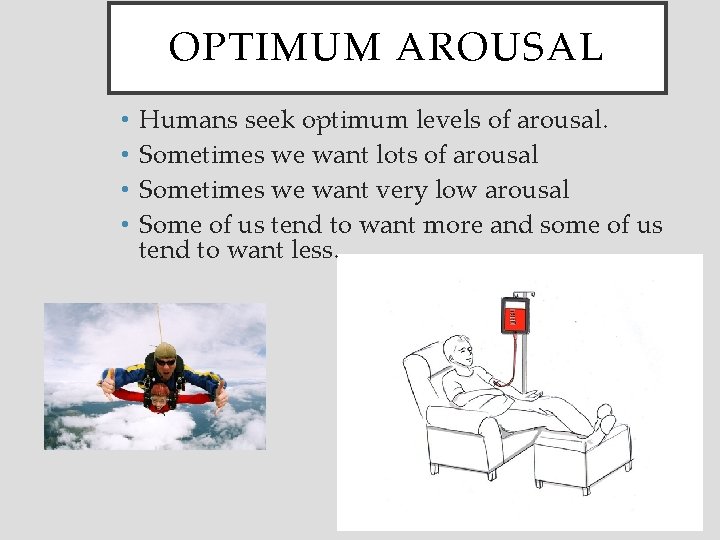
OPTIMUM AROUSAL • • Humans seek optimum levels of arousal. Sometimes we want lots of arousal Sometimes we want very low arousal Some of us tend to want more and some of us tend to want less.
AROUSAL THEORY • People do things in order to seek out an optimal level of excitement at any given moment. • I want a high level or arousal – let’s do something epic tonight. (Let’s go get mrbayne. com tattoos!) • I want a low level of arousal – let’s stay in tonight. (Let’s just click around on mrbayne. com and see where it takes us) • I am bored with my life I need a new job. (LOL) • I am stressed at work, let’s take a vacation. 20
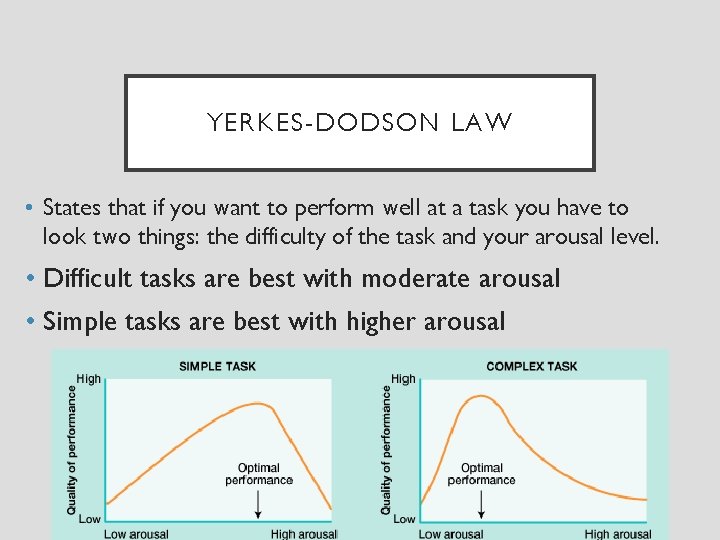
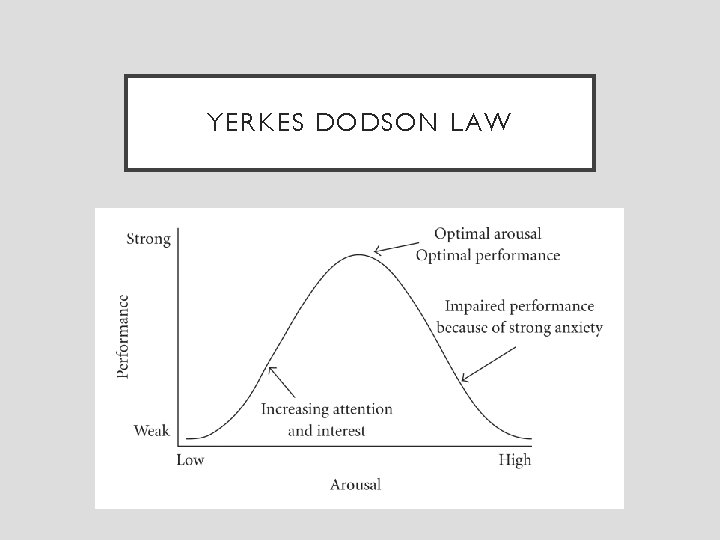
YERKES-DODSON LAW • States that if you want to perform well at a task you have to look two things: the difficulty of the task and your arousal level. • Difficult tasks are best with moderate arousal • Simple tasks are best with higher arousal
YERKES DODSON LAW
AROUSAL THEORY • Strengths • Does a nice job explaining most secondary drives. (Why we work hard fortune, wealth, happiness, etc…) • Weakness • Doesn’t explain why we do things to help society. • Doesn’t show we prioritize our motives. . .
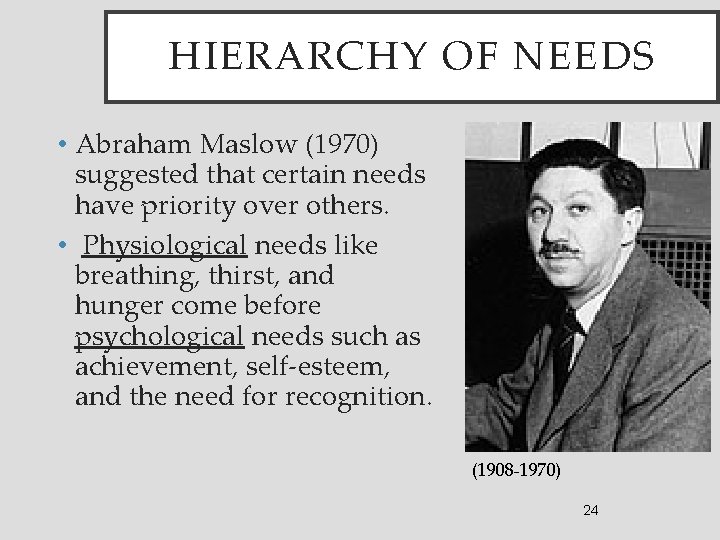
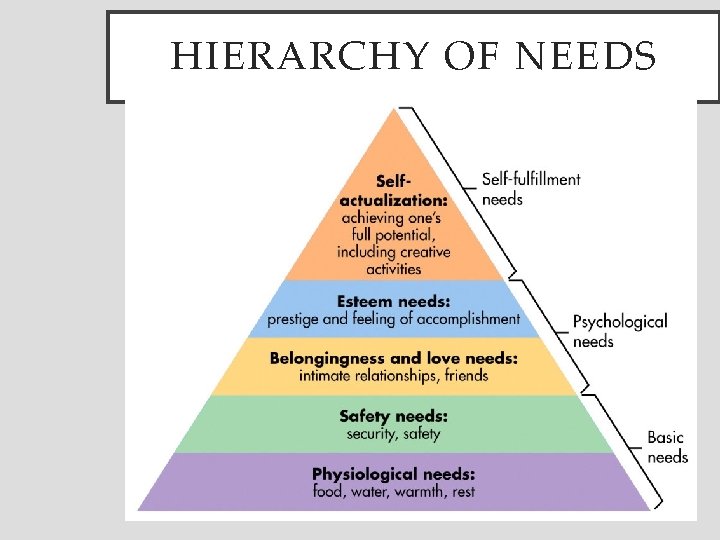
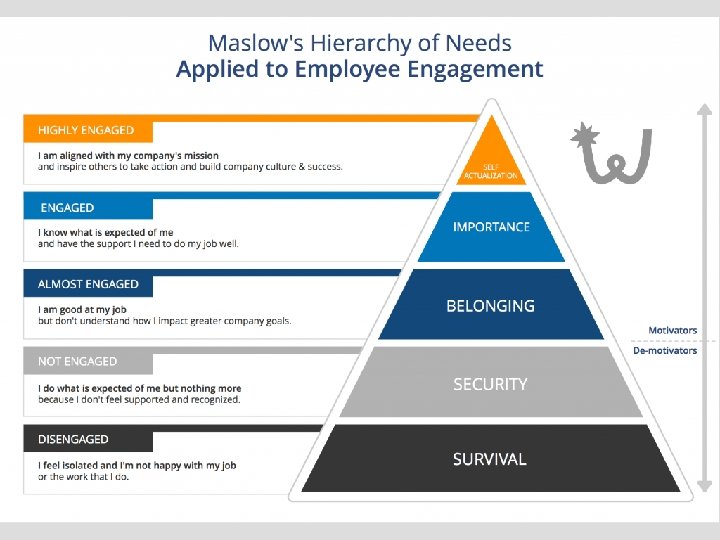
HIERARCHY OF NEEDS • Abraham Maslow (1970) suggested that certain needs have priority over others. • Physiological needs like breathing, thirst, and hunger come before psychological needs such as achievement, self-esteem, and the need for recognition. (1908 -1970) 24
HIERARCHY OF NEEDS 25