
Theories of Evolution of Organisms Lamarck Wallace Darwin
- Slides: 20
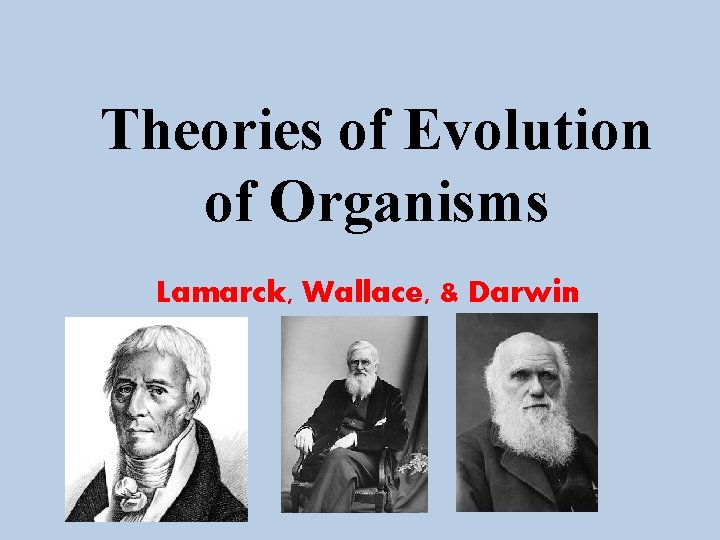
Theories of Evolution of Organisms Lamarck, Wallace, & Darwin
Theory of Evolution of organisms This involves three main ideas • Life on Earth has changed over time • Descent with modification - Passing on genes from parents with changes • Modern organisms have descended from ancient organisms
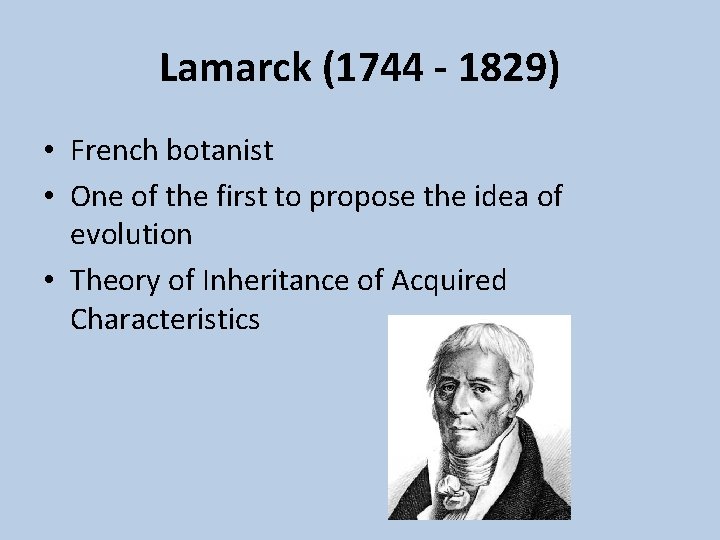
Lamarck (1744 - 1829) • French botanist • One of the first to propose the idea of evolution • Theory of Inheritance of Acquired Characteristics
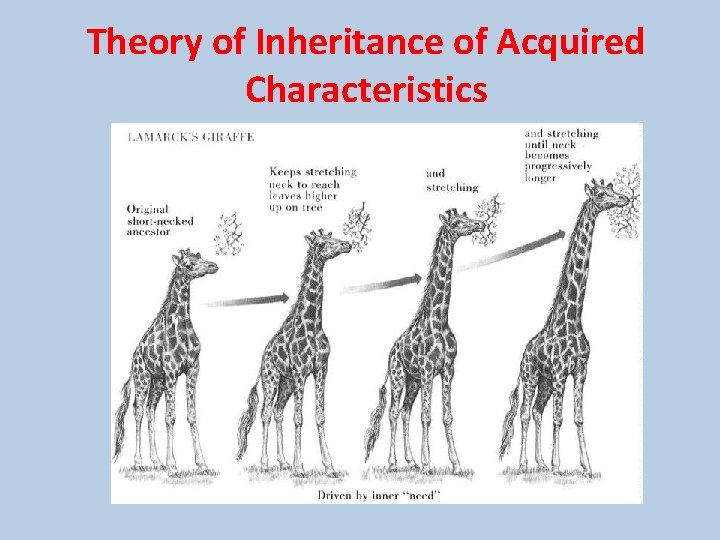
Theory of Inheritance of Acquired Characteristics
Theory of Inheritance of Acquired Characteristics • Lamarck believed that the environment caused the animal to change • His theory included that the first organisms came to be due to Spontaneous Generation • His theory also included that adaptation of organisms was due to the environment (use and disuse of parts of the body)
Alfred Wallace (1823 – 1913) • English naturalist and explorer • Co-created theory of natural selection • Travelled and explored the Malay islands & Amazon • Although he was the first to come up with the idea of natural selection, he did not come from a family with money, so he did not have any publishing means, so he just contributed to Darwin’s Origin of the Species (1859)
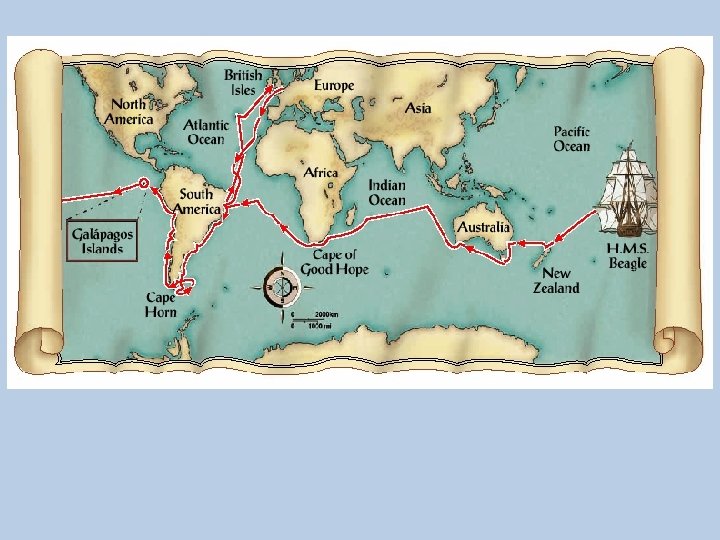
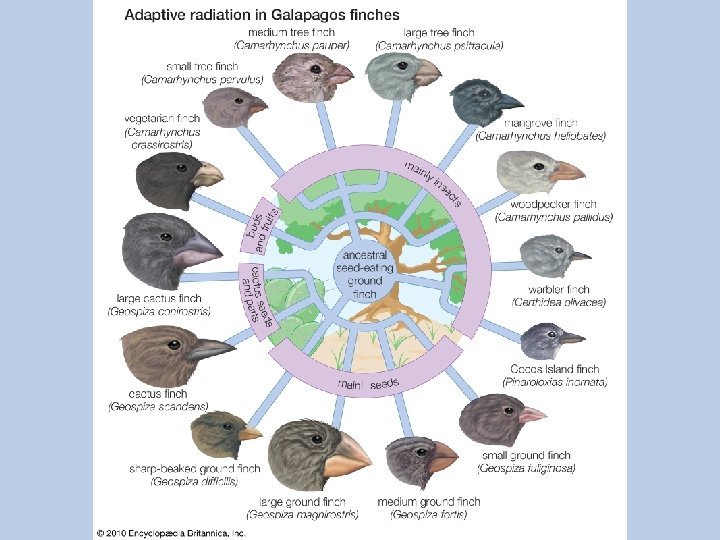
Charles Darwin (1809 – 1882) • English naturalist • All species have descended over time from a common ancestor • 5 year voyage on HMS Beagle • He brought back several preserved finches for further study
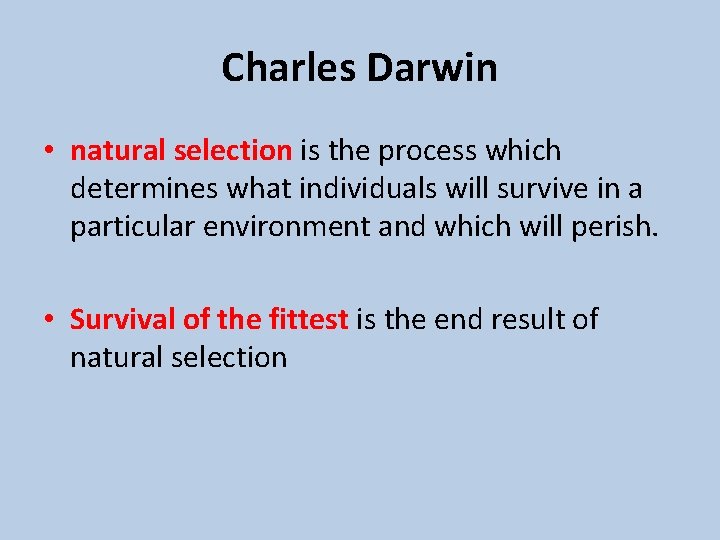
Charles Darwin • natural selection is the process which determines what individuals will survive in a particular environment and which will perish. • Survival of the fittest is the end result of natural selection
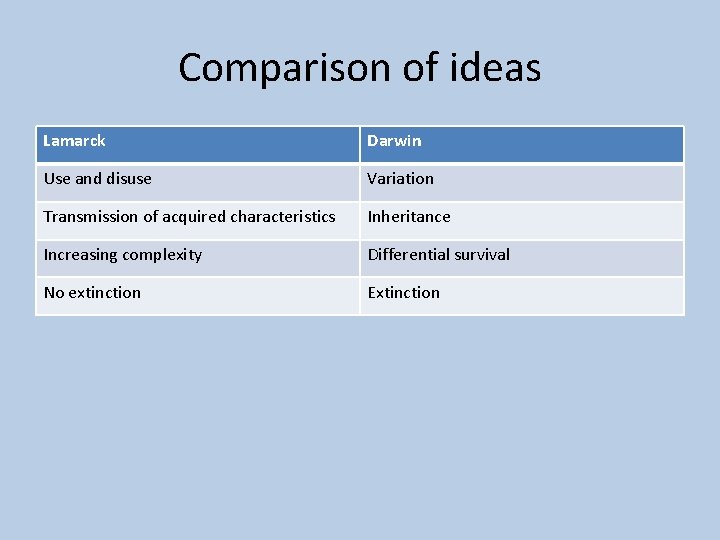
Comparison of ideas Lamarck Darwin Use and disuse Variation Transmission of acquired characteristics Inheritance Increasing complexity Differential survival No extinction Extinction
New knowledge since Darwin • Genes carry the information for inheritable characteristics • Variation is the result of mutations, meiosis (gamete production) and sexual reproduction. • Variation is totally random (not controlled or directed) and may or may not occur. • The environment “acts on” the variation and selects for the most beneficial trait (fittest)
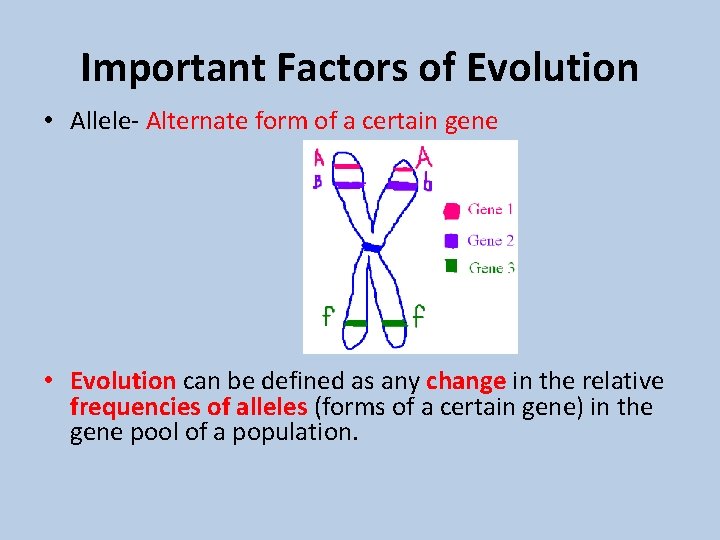
Important Factors of Evolution • Allele- Alternate form of a certain gene • Evolution can be defined as any change in the relative frequencies of alleles (forms of a certain gene) in the gene pool of a population.
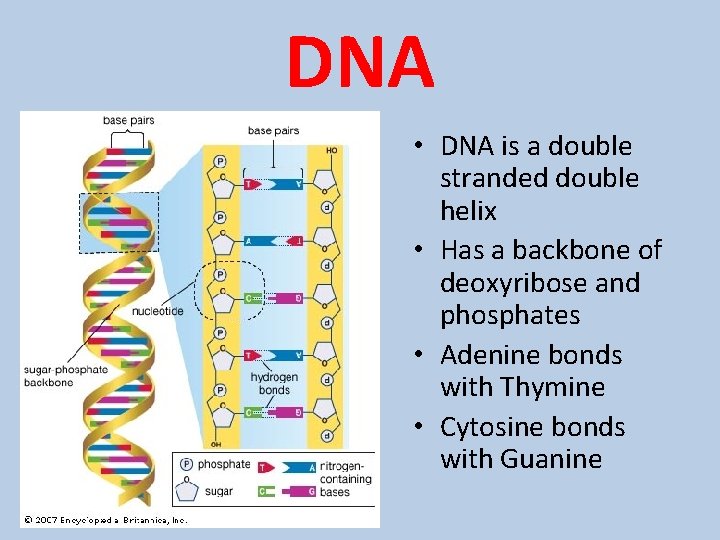
DNA • DNA is a double stranded double helix • Has a backbone of deoxyribose and phosphates • Adenine bonds with Thymine • Cytosine bonds with Guanine
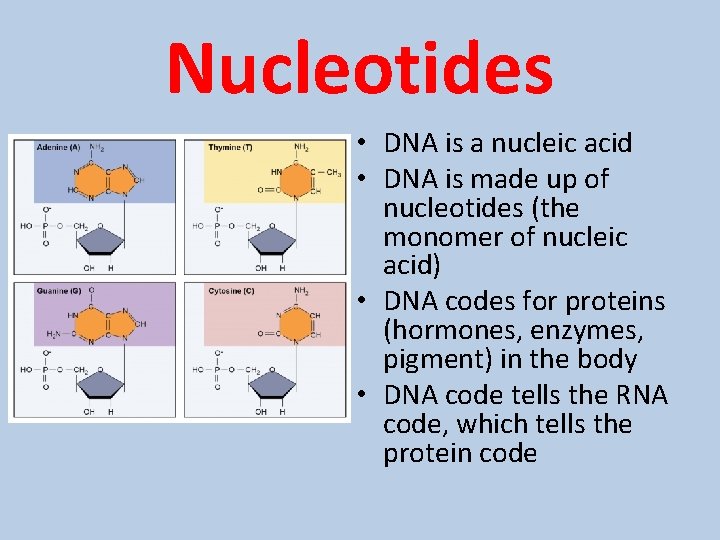
Nucleotides • DNA is a nucleic acid • DNA is made up of nucleotides (the monomer of nucleic acid) • DNA codes for proteins (hormones, enzymes, pigment) in the body • DNA code tells the RNA code, which tells the protein code
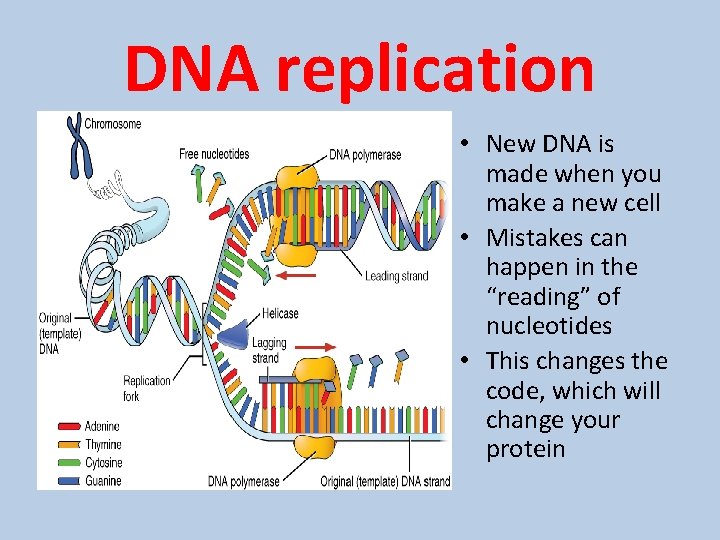
DNA replication • New DNA is made when you make a new cell • Mistakes can happen in the “reading” of nucleotides • This changes the code, which will change your protein
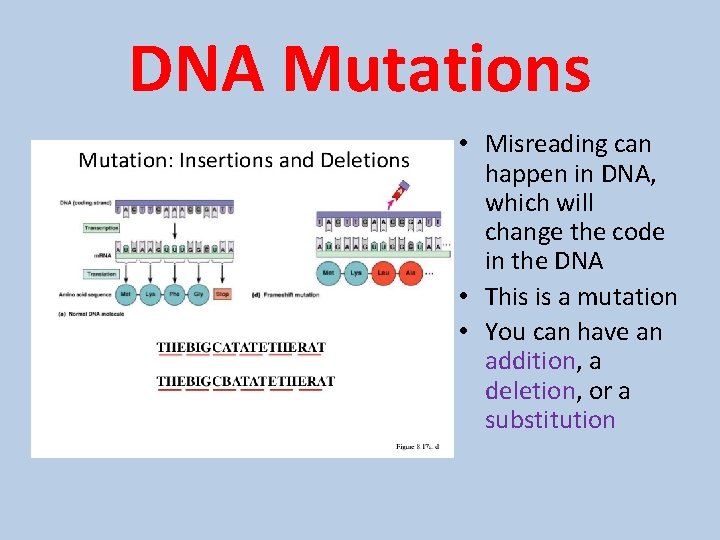
DNA Mutations • Misreading can happen in DNA, which will change the code in the DNA • This is a mutation • You can have an addition, a deletion, or a substitution
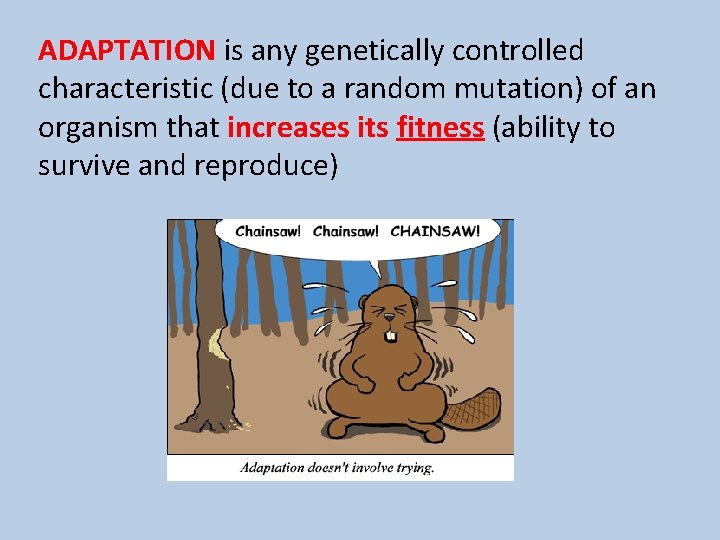
ADAPTATION is any genetically controlled characteristic (due to a random mutation) of an organism that increases its fitness (ability to survive and reproduce)
Crash Course Video Evidence of Evolution