
THEORIES OF DEVELOPMENT Theories of Development Childhood is

- Slides: 25
THEORIES OF DEVELOPMENT
Theories of Development ■ Childhood is important for development – Physical, cognitive, social, emotional ■ Psychoanalytic Theories – Early experiences and family affect development and personality – Eric Erikson ■ Social interactions are them more important in personality and development
Theories of Development ■ 8 stages of development – Lifelong process – Each stage named after the traits people may develop from them – Each stage there is an emotional crisis or turning point ■ If met successfully people will have normal healthy psychological development – Each stage will contribute to the next ■ https: //www. youtube. com/watch? v=g. Z_q. Xmxdg. GM
Stage 1: Trust vs. Mistrust ■ Infancy (birth to 1 year) – Babies trust others in their environment ■ food, comfort ■ Successful ■ ■ Needs are met Learn to trust others; expect life to be pleasant ■ Unsuccessful – Needs are not met or are inconsistent – Mistrust others, anxieties – believe world is unpredictable and inconsistent
Stage 2: Autonomy vs. Shame ■ Early Childhood (2 to 3 years) ■ Develop the desire to make own choices and can direct their own behaviour – toilet training, food choice, toy choice, walking ■ Successful – Learn to direct their own behaviour – Autonomy and independence
Stage 2: Autonomy vs. Shame and Doubt ■ Unsuccessful – Attempts at becoming independent are blocked, criticized or controlled – learn self-doubt and shame – lack self-esteem – become dependent on others
Stage 3: Initiative vs. Guilt ■ Preschool (4 to 5 years) – Direct their own play – Interact with others at school – develop interpersonal skills with others ■ Successful – feel successful in activities – Feel capable in abilities to take initiative and make their own decisions
Stage 3: Initiative vs. Guilt Unsuccessful Feel anxious, guilty, like they are a nuisance for asking questions Become a follower
Stage 4: Industry vs. Inferiority ■ Elementary School (6 to 12 years) – Learn and strive to master more complex tasks and skills ■ Successful – Succeed at learning new skills – Develop Industry or a sense of competence and self-esteem from their work and effort – confidence
Stage 4: Industry vs. Inferiority Unsuccessful fail to develop new abilities feel incompetent, inadequate and inferior
Stage 5: Identity vs. Role Confusion ■ Adolescence (12 to 18 years) – Try and find out who they are (friends, career, beliefs) – Want to fit in somewhere – May experiment with different roles • Successful – succeed in defining who they are and find a role for themselves – develop a strong sense of identity – Can resist peer pressure
Stage 5: Identity vs. Role Confusion ■ Unsuccessful – Role confusion - don’t know who they are or where they fit in ■ ■ ■ Become confused or withdraw from social groups want to blend in with the crowd May succumb to peer pressure
Stage 6: Intimacy vs. Isolation ■ Young Adulthood (19 to 30 years) – Want long term relationship with others – Forming loving relationships with other people ■ Successful – Will have intimate relationships – Feel commitment, safety, and caring ■ Unsuccessful – Will feel isolated from others – May suffer loneliness, isolation, and depression
Stage 7: Generativity vs. Stagnation ■ Middle Adulthood – Establish careers – Develop own families – Want to give back to society ■ Successful – Generativity is making accomplishments to make world a better place
Stage 7: Generativity vs. Stagnation ■ Unsuccessful – Stagnation is failure like feeling like contributed – feel that the world is not better off for them being alive – feel disconnected to society and unproductive
Stage 8: Integrity vs. Despair ■ Late Adulthood – Achieving wisdom and dignity – sense of wholeness and acceptance of his/her life – Reflect back on life whether it was fulfilled or have regret ■ Successful – Will feel integrity and have general feelings of satisfaction – Enjoy life and have no regrets
Stage 8: Integrity vs. Despair ■ Unsuccessful – Have despair and guilt for not accomplishing goals – Look back on life with regret, feel like life is empty
■ Video: https: //www. youtube. com/watch? v=Iz-Ae. GMhz. V 0
MY LIFE LINE • Indicate what significant accomplishments you have made in each stage of development up to stage 5: • Example: • Infancy: I learned to trust my grandma who was my primary caregiver. • Toddler: I learned to feed myself cheerios. • Preschool: I learned to ride a bike after falling off many times.
Identity ■ Do you think everyone goes through an identity crisis during adolescence? ■ Do you think it is important to explore various identities? ■ What are negative ways that people could explore their identities? ■ https: //www. youtube. com/watch? v=ik. GVWEv. Uz. NM
Video Discussion ■ What do you think the masks represent? ■ Do you think teenagers feel pressure to portray a cerain type of identity – What could they be influenced by?
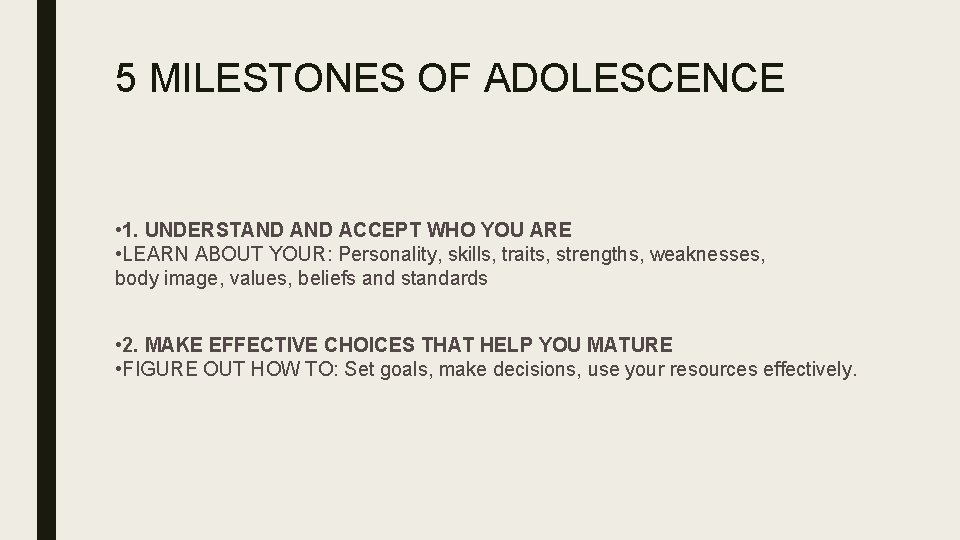
5 MILESTONES OF ADOLESCENCE • 1. UNDERSTAND ACCEPT WHO YOU ARE • LEARN ABOUT YOUR: Personality, skills, traits, strengths, weaknesses, body image, values, beliefs and standards • 2. MAKE EFFECTIVE CHOICES THAT HELP YOU MATURE • FIGURE OUT HOW TO: Set goals, make decisions, use your resources effectively.
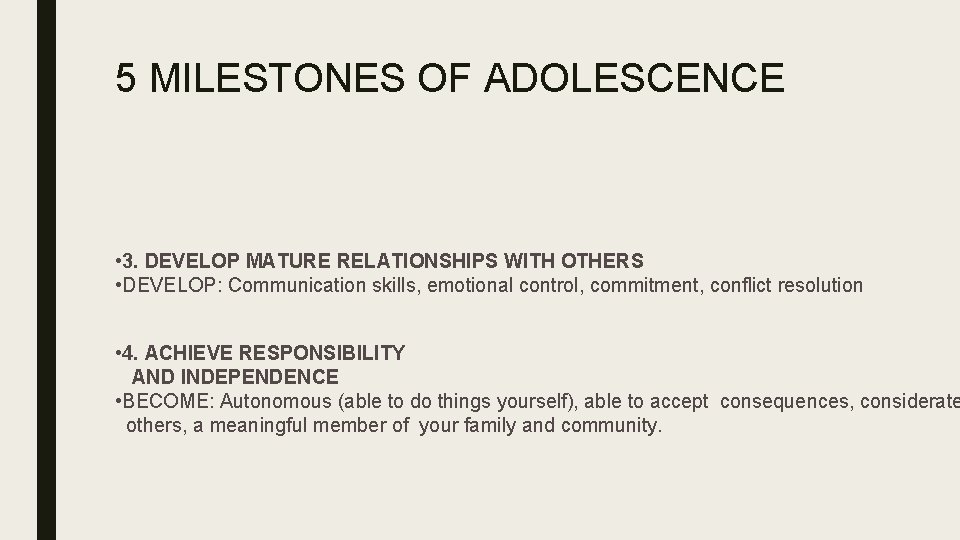
5 MILESTONES OF ADOLESCENCE • 3. DEVELOP MATURE RELATIONSHIPS WITH OTHERS • DEVELOP: Communication skills, emotional control, commitment, conflict resolution • 4. ACHIEVE RESPONSIBILITY AND INDEPENDENCE • BECOME: Autonomous (able to do things yourself), able to accept consequences, considerate others, a meaningful member of your family and community.
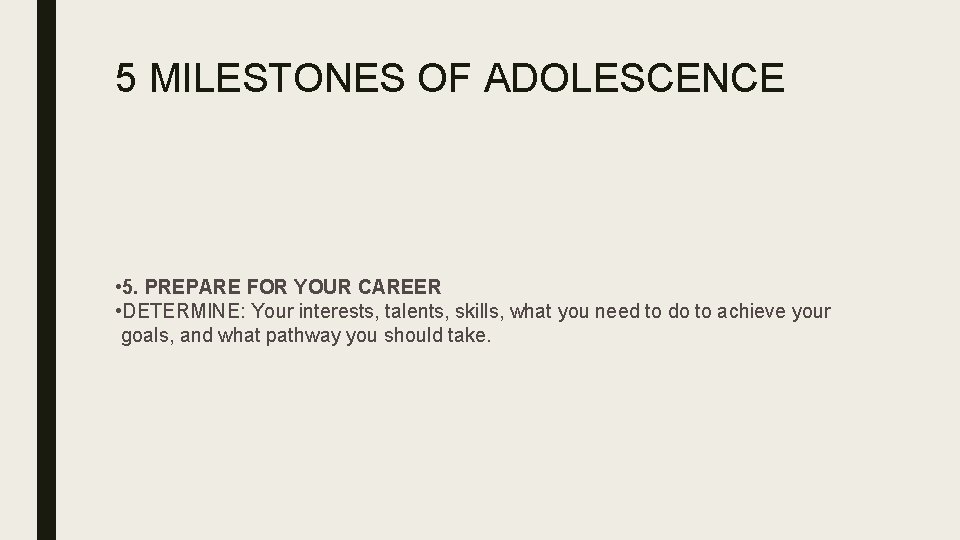
5 MILESTONES OF ADOLESCENCE • 5. PREPARE FOR YOUR CAREER • DETERMINE: Your interests, talents, skills, what you need to do to achieve your goals, and what pathway you should take.
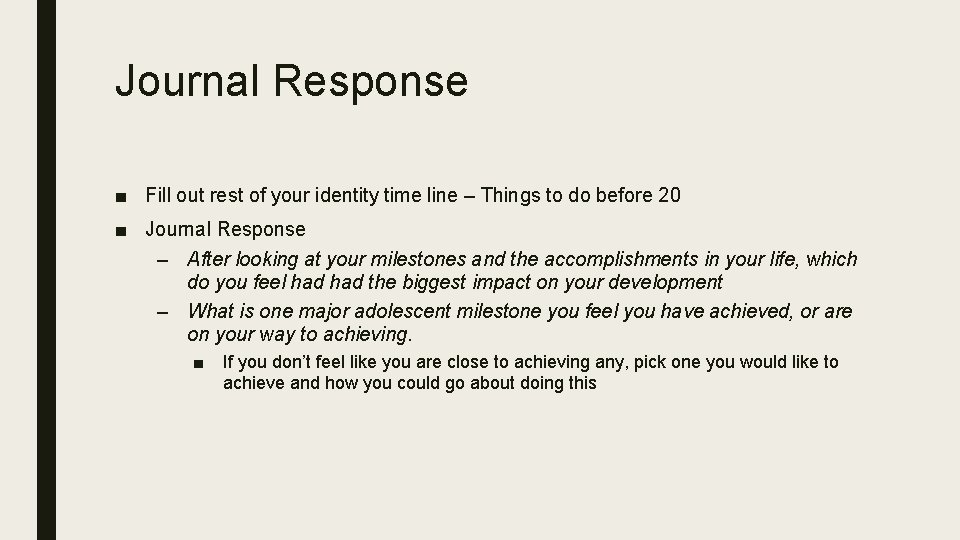
Journal Response ■ Fill out rest of your identity time line – Things to do before 20 ■ Journal Response – After looking at your milestones and the accomplishments in your life, which do you feel had the biggest impact on your development – What is one major adolescent milestone you feel you have achieved, or are on your way to achieving. ■ If you don’t feel like you are close to achieving any, pick one you would like to achieve and how you could go about doing this