
Theories about the universe KEY WORDS Solar system
Theories about the universe
KEY WORDS • Solar system: our Sun and all the planets and other bodies that rotate around it, including the Earth. • Galaxy: large system of related stars and planets. • Star: large sphere of hot gas. • Planet: large solid object that orbits a star. • Eclipse: when one object in space blocks the light that another object receives.
THEORIES ABOUT THE UNIVERSE Key words: B. C. before Christ A: C: after Christ Countless: too many to count Known: that we know Interstellar: between stars Isolated: alone Globular cluster: large star cluster, typically of old stars
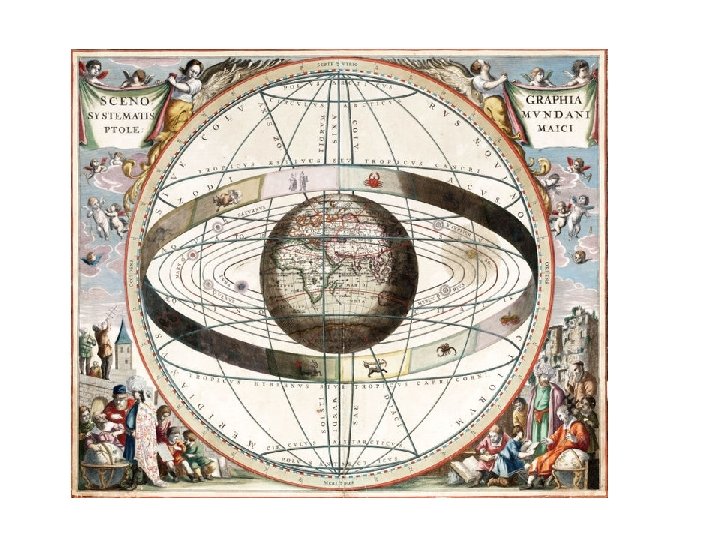
Two theories about the universe were: • The geocentric theory: the Earth is at the centre of the universe. • Who defended this theory? • ARISTOTLE (around 300 B. C. ) • PTOLEMY (around 200 A. C. )

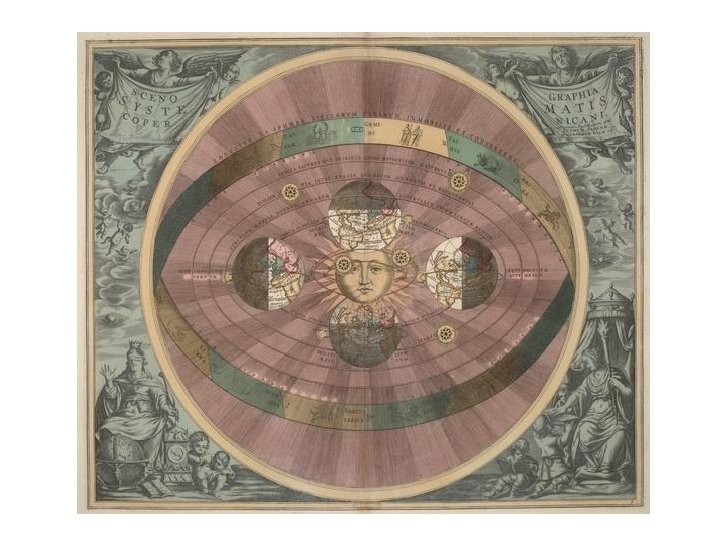
• The heliocentric theory: the Sun is at the centre of the universe. • • Who defended this theory? COPERNICUS (around 16 th Century) GALILEO GALILEI (17 th Century) JOHANNES KEPLER (17 th Century)
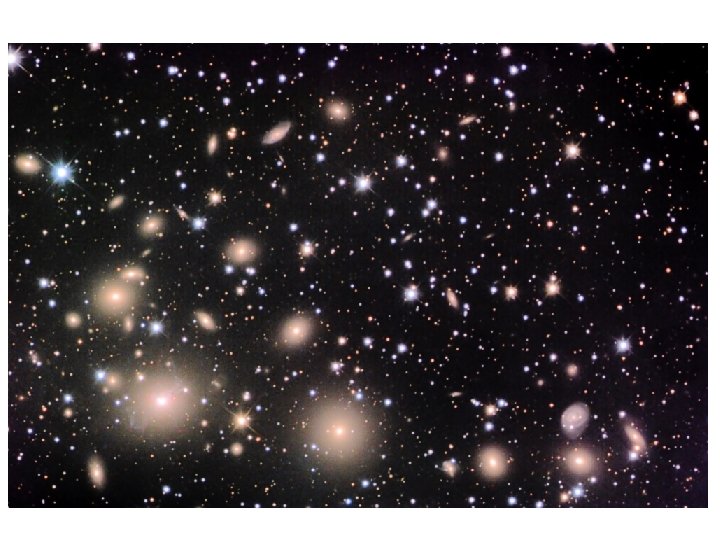
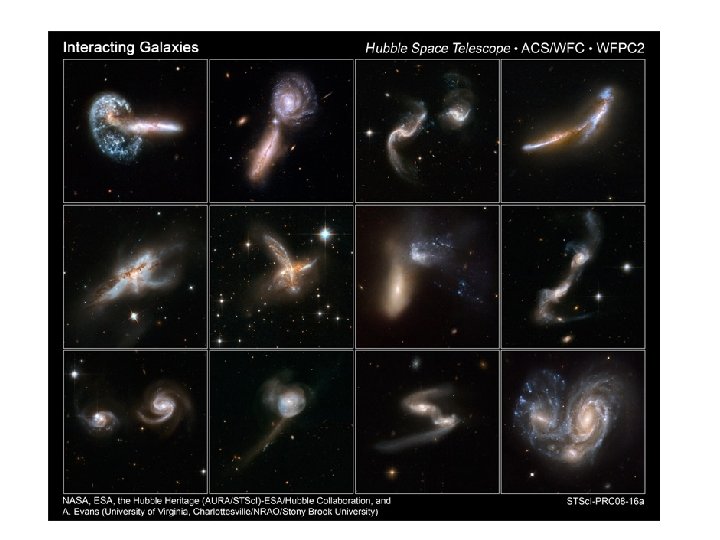
Today, we know that none of these theories are true. The known universe is composed by billions of galaxies. • Galaxies contain: a) Stars: large spheres of hidrogen and helium which release energy through nuclear fusion. b) Nebulae: very large clouds of dust and gas. c) Star clusters: related stars that are close to each other.
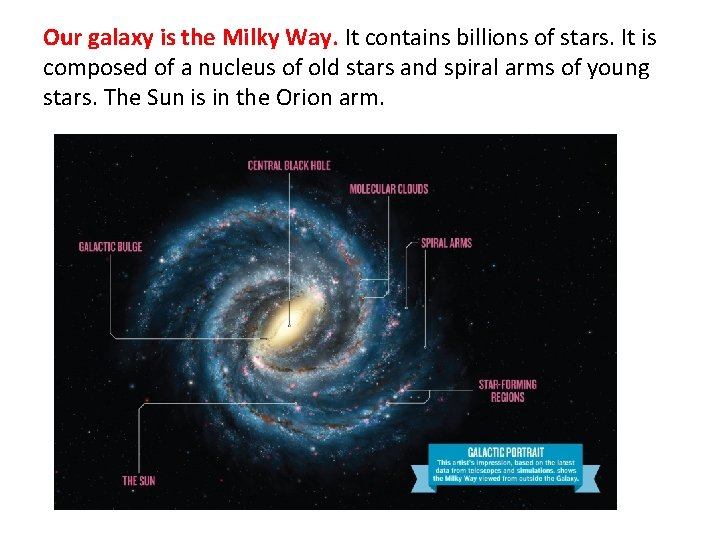
Our galaxy is the Milky Way. It contains billions of stars. It is composed of a nucleus of old stars and spiral arms of young stars. The Sun is in the Orion arm.
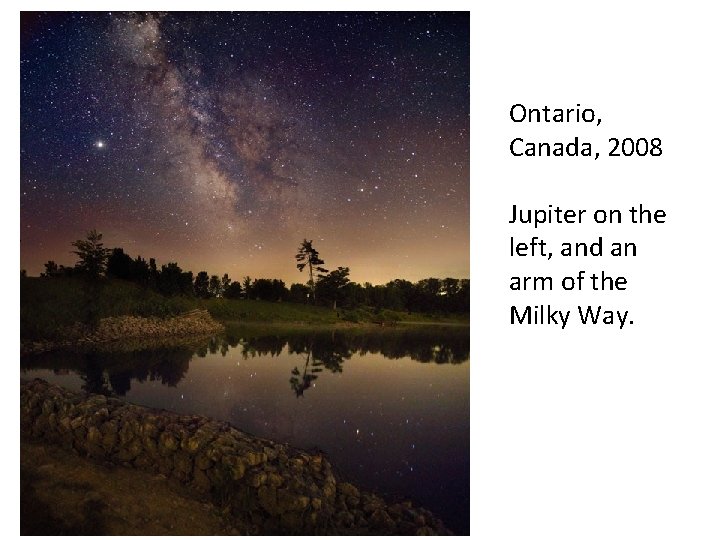
Ontario, Canada, 2008 Jupiter on the left, and an arm of the Milky Way.
- Slides: 12