
Theoretical perspectives Critical Theory Media Culture and Technology
- Slides: 33
Theoretical perspectives – Critical Theory Media Culture and Technology Spring Term 2011
Outline 1. 2. 3. 4. Historical background Key concepts Different views on mass culture Discussion
The social question first decades of the 20 th century • America: construction of a society and its institutions • Europe: mass-poverty, economic and political questions
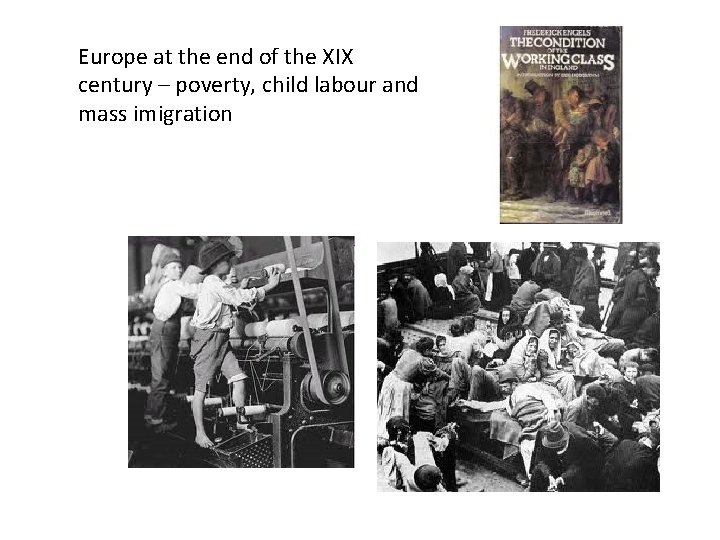
Europe at the end of the XIX century – poverty, child labour and mass imigration
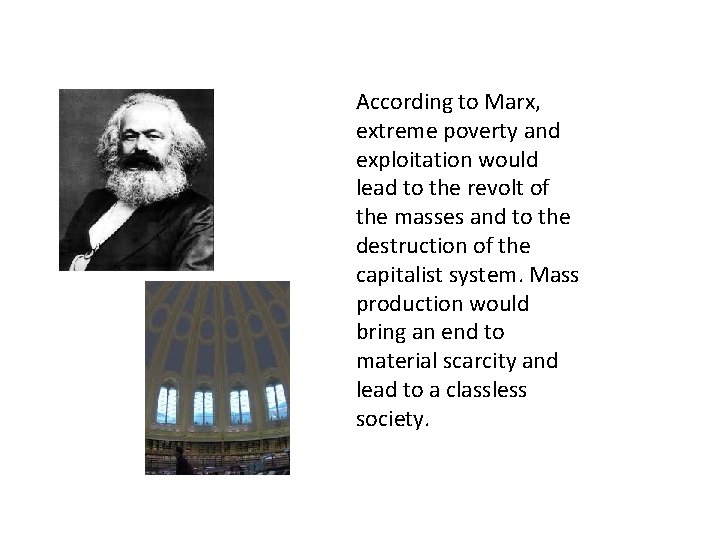
According to Marx, extreme poverty and exploitation would lead to the revolt of the masses and to the destruction of the capitalist system. Mass production would bring an end to material scarcity and lead to a classless society.
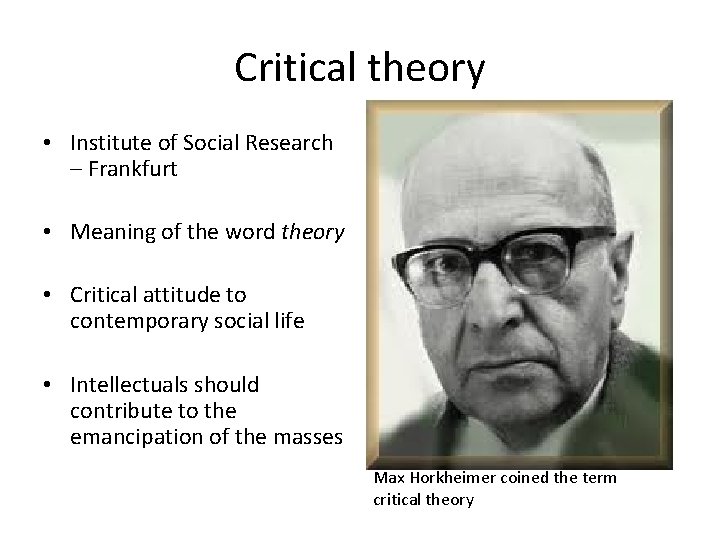
Critical theory • Institute of Social Research – Frankfurt • Meaning of the word theory • Critical attitude to contemporary social life • Intellectuals should contribute to the emancipation of the masses Max Horkheimer coined the term critical theory
Culture enters the scenario • In trying to thing of society-as-a-whole, it appeared that it had three structural elements: economic, political and cultural forms of life. • If now it seems obvious that a society as a totality is a complex formation of these three elements, that was something that had, in the first place, to be discovered.
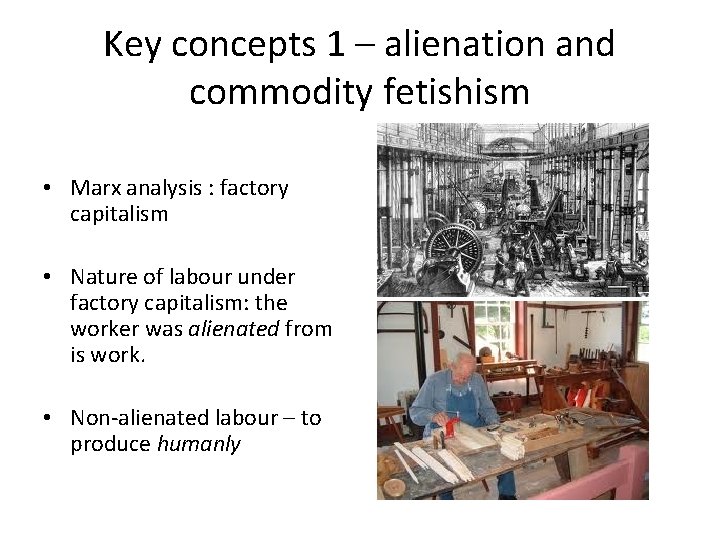
Key concepts 1 – alienation and commodity fetishism • Marx analysis : factory capitalism • Nature of labour under factory capitalism: the worker was alienated from is work. • Non-alienated labour – to produce humanly
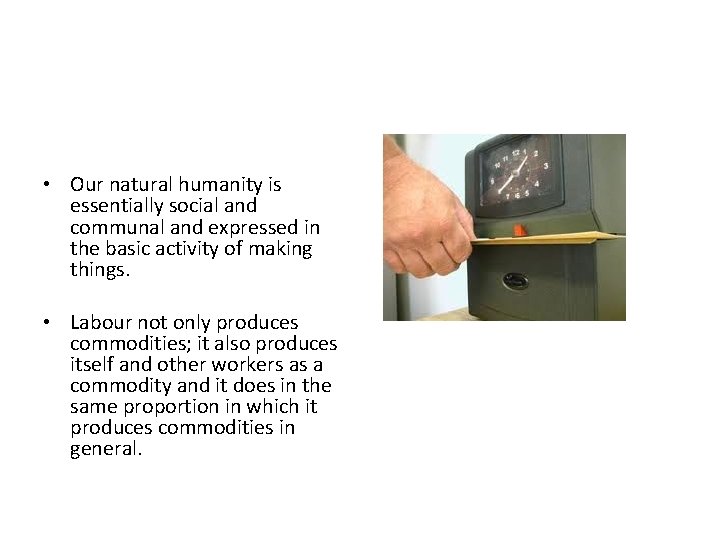
• Our natural humanity is essentially social and communal and expressed in the basic activity of making things. • Labour not only produces commodities; it also produces itself and other workers as a commodity and it does in the same proportion in which it produces commodities in general.
Alienation • The labourer is alienated from his labour because he has no control over the terms or conditions of work. • He does not control the process of production, he merely performs pre-allocated tasks. • Alienated labour indicates the commodification of the very conditions of labour: of the labourer himself, of the labour process and of the product of that process.
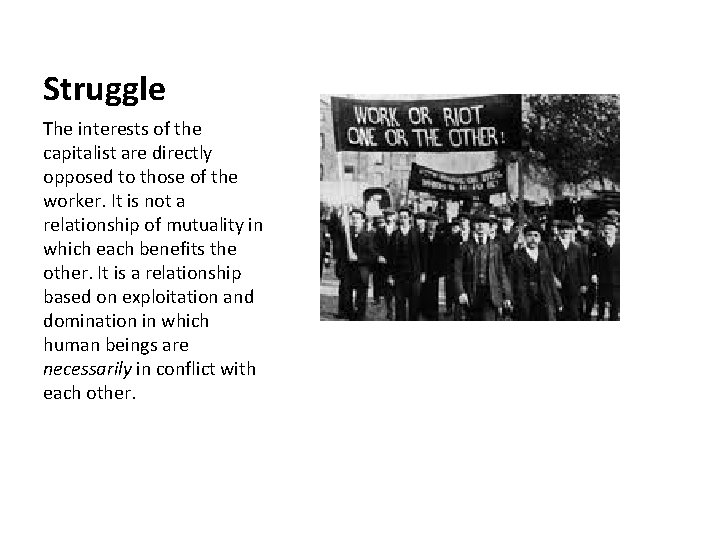
Struggle The interests of the capitalist are directly opposed to those of the worker. It is not a relationship of mutuality in which each benefits the other. It is a relationship based on exploitation and domination in which human beings are necessarily in conflict with each other.
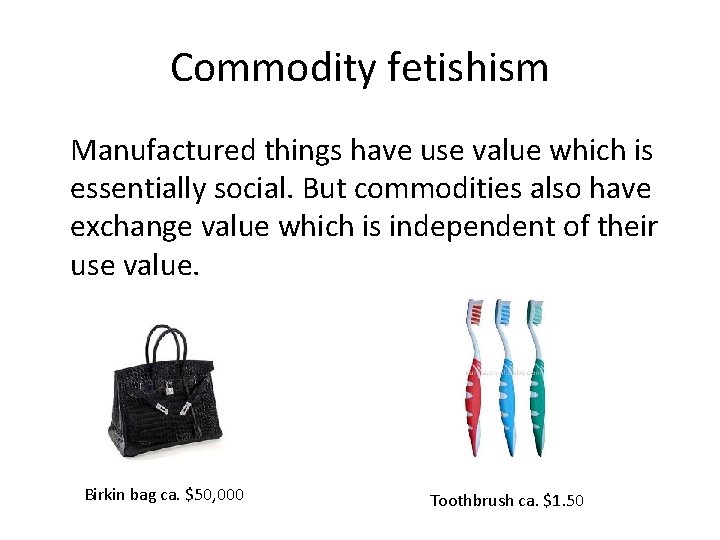
Commodity fetishism Manufactured things have use value which is essentially social. But commodities also have exchange value which is independent of their use value. Birkin bag ca. $50, 000 Toothbrush ca. $1. 50
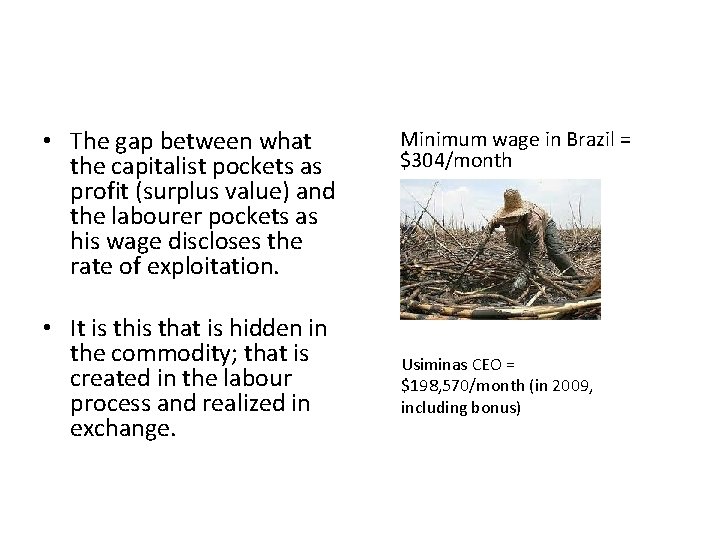
• The gap between what the capitalist pockets as profit (surplus value) and the labourer pockets as his wage discloses the rate of exploitation. • It is that is hidden in the commodity; that is created in the labour process and realized in exchange. Minimum wage in Brazil = $304/month Usiminas CEO = $198, 570/month (in 2009, including bonus)
’So far no chemist has ever discovered exchange value either in a pearl or diamond’ (Karl Marx) The value of a commodity is not a material property of the thing.
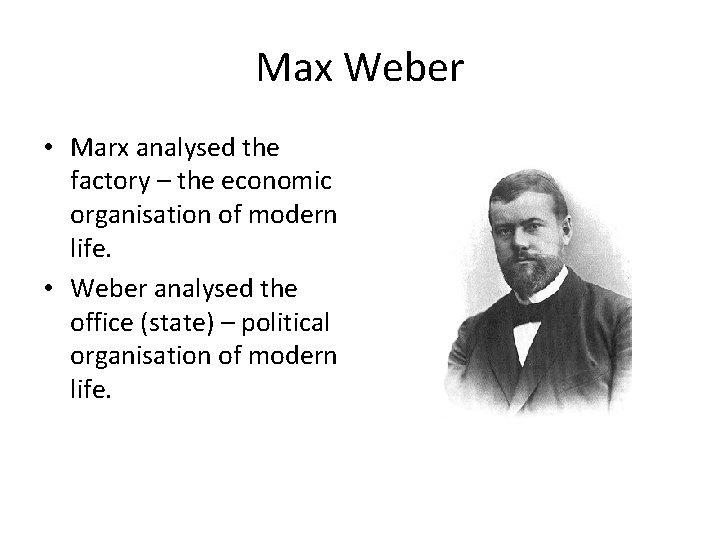
Max Weber • Marx analysed the factory – the economic organisation of modern life. • Weber analysed the office (state) – political organisation of modern life.
Instrumental reason - Weber • Substantive rationality – prioritizes the ends over means. Expresses a goal or purpose • Formal rationality – prioritizes the means over ends
• The substantive aims of the worker and the substantive aims of the capitalist are not only different but opposed to each other. • The resolution of substantive differences between individual or social groups was increasingly a matter to be decided through political or legal process.
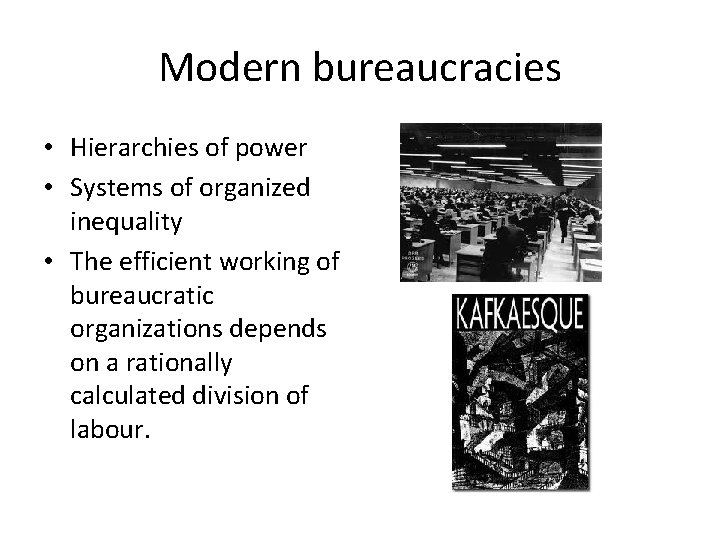
Modern bureaucracies • Hierarchies of power • Systems of organized inequality • The efficient working of bureaucratic organizations depends on a rationally calculated division of labour.
Reification of consciousness • Reification – thing-ification • How far does the character of commodity exchange affect the whole outer and inner life of modern societies? • Commodification process (Marx) and instrumental rationality (Weber) achieved a ruthless syntesis in the new ’scientific management’ – Fredrick W. Taylor.
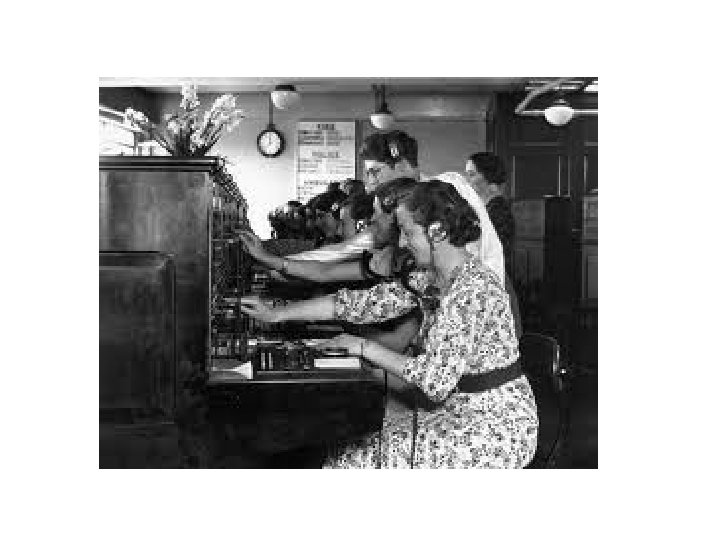
• The increasing rationalization of the work process – scientific management in the service of increasing technical efficiency and, of course, profit – fragments the labour to an extent that was unknown in Marx’s time. • As an example of definitive reification in this respect, Lukács offers us the example of the modern journalist who supressed his own subjectivity in exchange for a wage.
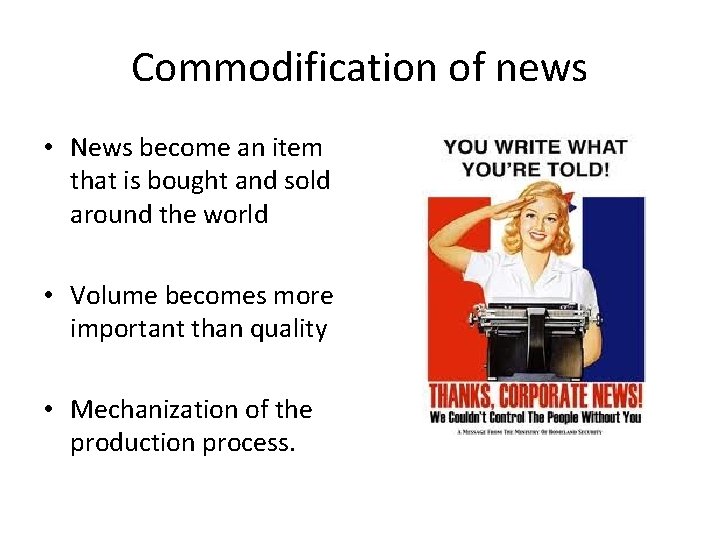
Commodification of news • News become an item that is bought and sold around the world • Volume becomes more important than quality • Mechanization of the production process.
Dialectic of Enlightment • The members of the Frankfurt School absorbed the ideas of Marx, Weber and Lukács into the critical tradition. • Critical tradition showed how enlightened selfinterest became transformed into instrumental reason which, concerned with the most efficient means in the pursuit of irrational ends, turned into powerful means of exploitation and political domination.
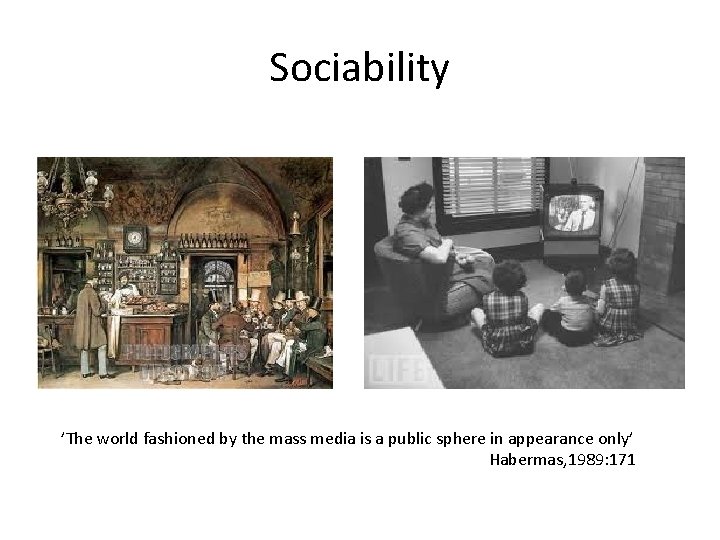
Refeudalization of public life Habermas • Culture of critical discussion 19 th century – Culture of comsumption • State intervention in social and family life – ’welfare state’ • The family is freed of its responsibilities – this free-time is filled with comsumption
Sociability ’The world fashioned by the mass media is a public sphere in appearance only’ Habermas, 1989: 171
Mass culture – culture industry • Culture industry ≠ Popular culture • Mass produced culture (1930, 40, 50)
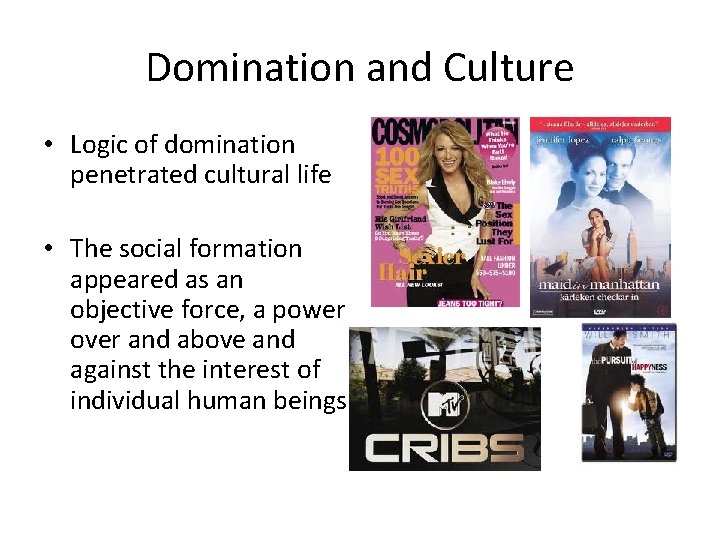
Domination and Culture • Logic of domination penetrated cultural life • The social formation appeared as an objective force, a power over and above and against the interest of individual human beings
Mass Culture • People worked at their free time (in pursuit of hobbies, or on mass-produced holidays). • Individuals were not free in any genuine sense. • Not free to realize their own, particular interests as the expression of their individuality. • Rather, everyone now did the same thing, bought the same records, watched the same movies, admired the same stars.
Art in the age of mechanical reproduction • Did art succumb to commodification? Could art resist fetishization? • Exchange of views betwen Adorno and Walter Benjamin • Art for art’s sake • Socialist realism – art for social change.
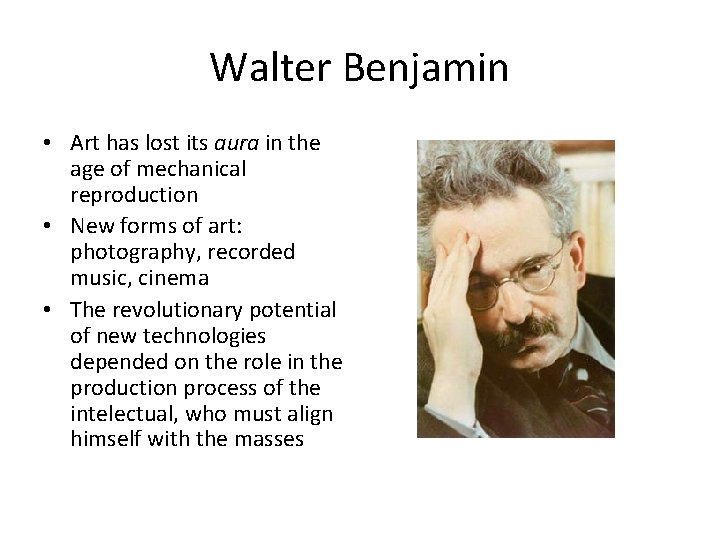
Walter Benjamin • Art has lost its aura in the age of mechanical reproduction • New forms of art: photography, recorded music, cinema • The revolutionary potential of new technologies depended on the role in the production process of the intelectual, who must align himself with the masses
A more positive view of mass communication • New forms of mass communication may transform consumers into active participants • Art and class-struggle • The newspaper belongs to the capital • Technologies of mass cultural production can have an intrinsic emancipatory potential
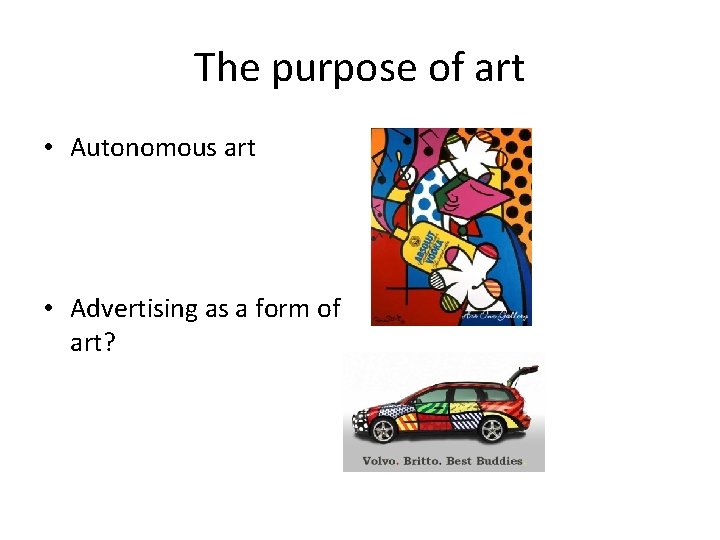
The purpose of art • Autonomous art • Advertising as a form of art?
The question of technology Do technologies themselves change the world or is it a question of how they are put to use by human beings?