
Theoretical Frameworks for Public Policy THIS PRESENTATION ADAPTED

Theoretical Frameworks for Public Policy THIS PRESENTATION ADAPTED FROM “THE POLICY STATES FRAMEWORK AND USE AT DOH” AT HTTPS: //DEPTS. WASHINGTON. EDU/NOPREN/DOCS/SITAKER-NOPREN 112910. PPTX.
Defining Issues and Problems Who decides what an issue is or is not? How can people get a problem on the national agenda? Why does government address some problems and not others? Can we be sure that a policy will resolve the problem?
Does Public Policy Serve the Greater Good?
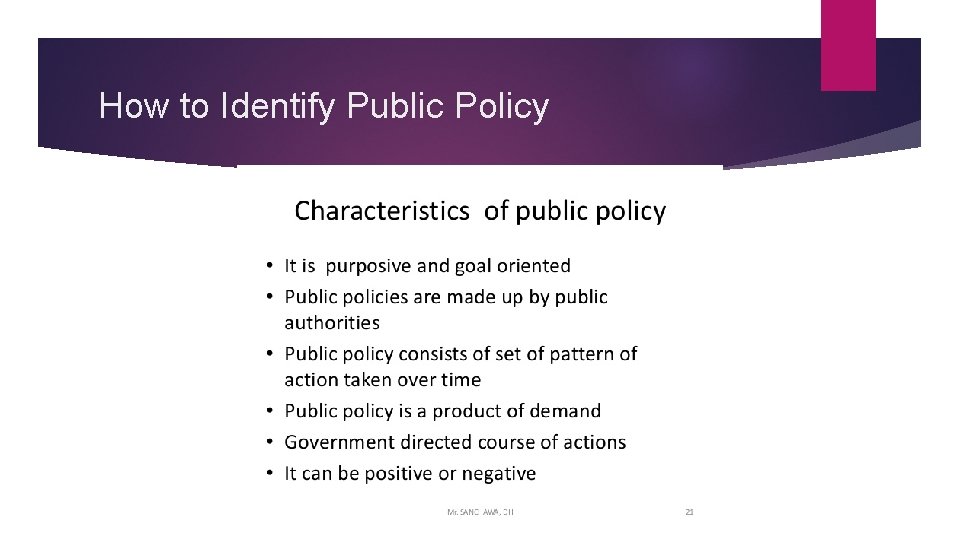
How to Identify Public Policy
AGENDA SETTING IS THE PROBLEM A “SERIOUS” ONE? CAN IT GET PAST THE “GATEKEEPERS”? CONVERGENCE THESIS: TIME AND CONTEXT DETERMINE WHICH ISSUES MAKE IT ONTO THE NATIONAL AGENDA ECONOMIC CYCLE THESIS: HARD TIMES FOCUS OUR ATTENTION ON LABOR AND EFFICIENCY, GOOD TIMES FOCUS OUR ATTENTION ON QUALITY OF LIFE AND WORKERS’ WAGES AND BENEFITS ELECTORAL CYCLES-WHICH PARTY IS IN POWER AT ELECTION TIME? POLICY MOOD: WHAT IDEAS ARE FLOATING IN THE ETHER?

Kingdon’s Three Process Streams Problem stream involves persuading policy makers to pay attention to one problem over others (aka agenda-setting). Policy proposals will rise to the top of the agenda when the associated problem is recognized as important. This depends on how it is framed or brought to policy maker’s attention (e. g. , through data or focusing events). Proposal stream is the process by which policy proposals are generated, debated, revised, and put forth for serious consideration. More likely to be successful if perceived as technically feasible, compatible with policymaker’s values, reasonable in cost, and appealing to the public. Politics stream refers to political factors that influence agendas, such as changes in elected officials, political climate or mood, and the voices of advocacy or opposition groups.
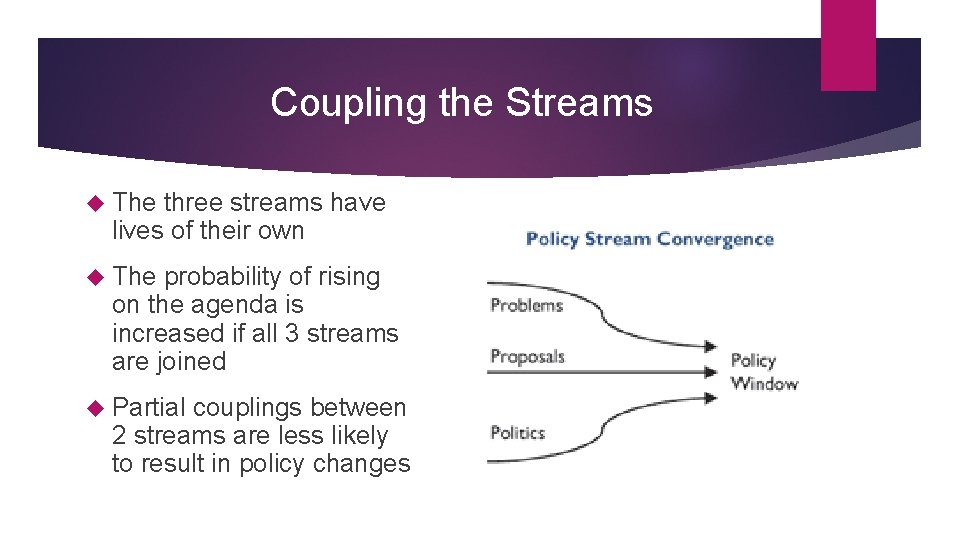
Coupling the Streams The three streams have lives of their own The probability of rising on the agenda is increased if all 3 streams are joined Partial couplings between 2 streams are less likely to result in policy changes
Policy Entrepreneurs Can be elected officials, career civil servants, lobbyists, academics, journalists Entrepreneurs: Highlight indicators of the problem to dramatize it Push for one kind of problem definition over another – invite policymakers to see for themselves Present specific policies as the solution to a problem on the agenda “Soften up” by writing papers, giving testimony, holding hearings, getting press coverage, meeting endlessly…. . Entrepreneurs convince officials to see the problem the way they want it to be seen—and to use the solutions they propose.
Windows of Opportunity Windows open when: Problems “float” by that advocates can attach their policy solutions to The political stream is advantageous Windows don’t stay open long. Policy can push their solutions when open. Make entrepreneurs windows of opportunity the critical couplings when policy windows open Political connections and negotiating skills add to ability to move policy forward
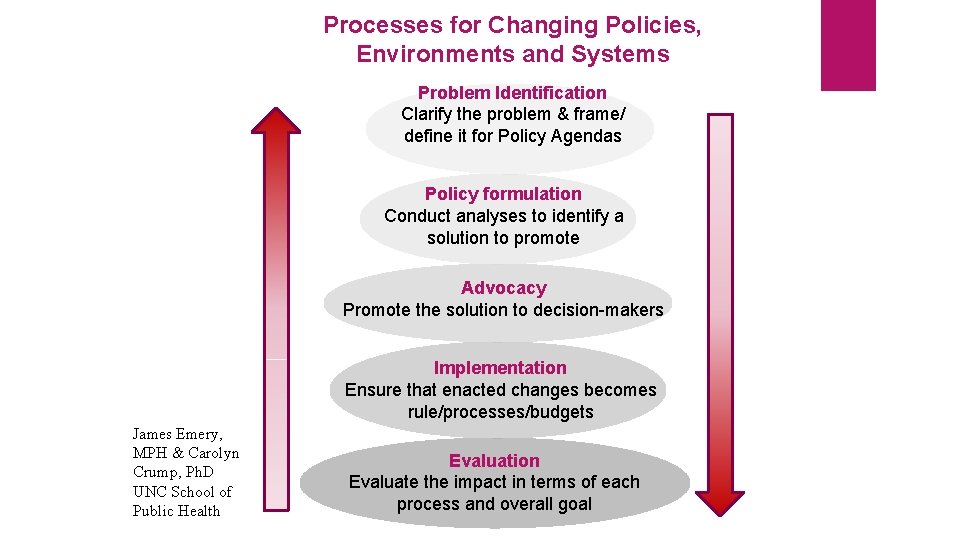
Processes for Changing Policies, Environments and Systems Problem Identification Clarify the problem & frame/ define it for Policy Agendas Policy formulation Conduct analyses to identify a solution to promote Advocacy Promote the solution to decision-makers Implementation Ensure that enacted changes becomes rule/processes/budgets James Emery, MPH & Carolyn Crump, Ph. D UNC School of Public Health Evaluation Evaluate the impact in terms of each process and overall goal
- Slides: 10