
Themes in the Study of Life Biology consists
Themes in the Study of Life Biology consists of more than memorizing factual details. Themes help to organize biological information
Overview: Inquiring About the World of Life Evolution is the process of change that has transformed life on Earth. l We will have many scientific discussions regarding evolution. We will define Evolution as the change in gene frequency in a population over time. l Biology is the scientific study of life l Biologists ask questions such as: l ¡ ¡ ¡ How a single cell develops into an organism How the human mind works How living things interact in communities
1. The Overarching Theme of Biology: EVOLUTION l EVOLUTION explains the unity and diversity that is observed in the natural world. ¡ ¡ Examples of Unity within diversity: Properties of life: l l Order Evolutionary adaptations l l Homeostasis (regulation) l l Growth and Development l l We will discuss the concepts of Evolution later in this chapter and throughout the course.
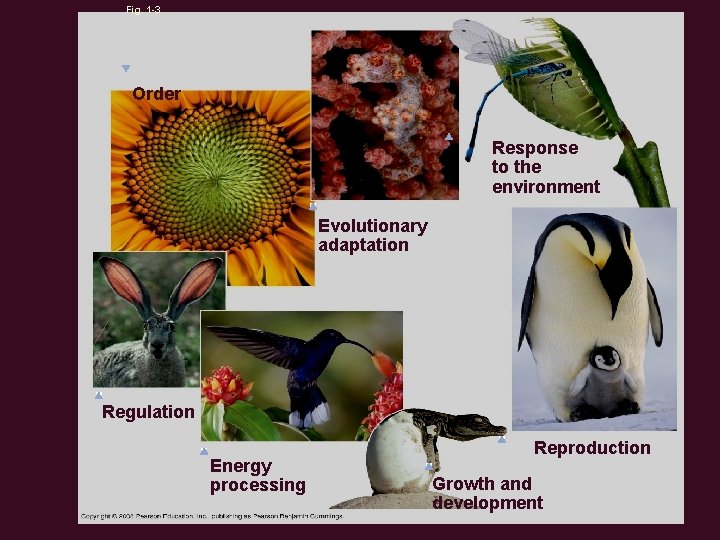
Fig. 1 -3 Order Response to the environment Evolutionary adaptation Regulation Energy processing Reproduction Growth and development
2. Theme: l Life can be studied at different levels from molecules to the entire living planet l The study of life can be divided into different levels of biological organization
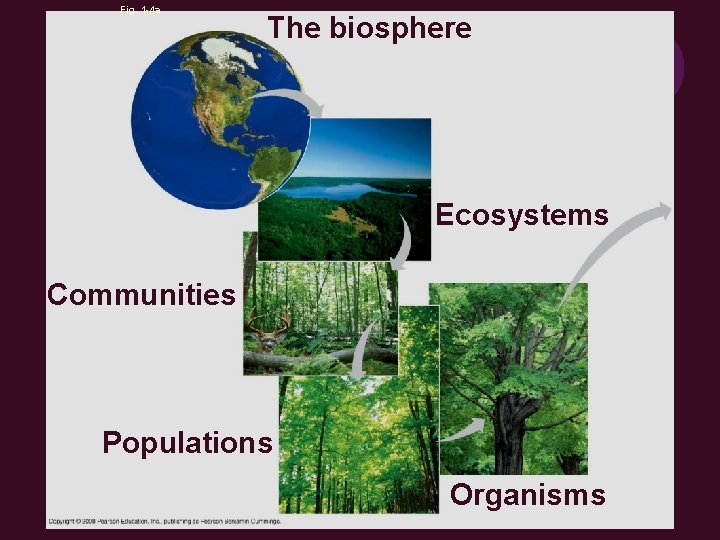
Fig. 1 -4 a The biosphere Ecosystems Communities Populations Organisms
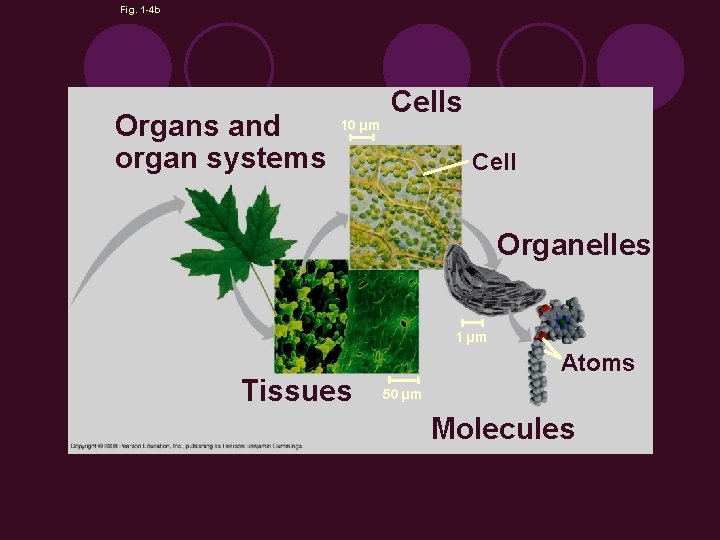
Fig. 1 -4 b Organs and organ systems 10 µm Cells Cell Organelles 1 µm Tissues Atoms 50 µm Molecules
Emergent Properties l Emergent properties characterize nonbiological entities as well ¡ For example, a functioning bicycle emerges only when all of the necessary parts connect in the correct way
The Power and Limitations of Reductionism is the reduction of complex systems to simpler components that are more manageable to study ¡ For example, the molecular structure of DNA l An understanding of biology balances reductionism with the study of emergent properties ¡ For example, new understanding comes from studying the interactions of DNA with other molecules l
Systems Biology l. A system is a combination of components that function together l ______ constructs models for the dynamic behavior of whole biological systems l The systems approach poses questions such as: ¡ How does a drug for blood pressure affect other organs? ¡ How does increasing CO 2 alter the biosphere?
3. Theme: Organisms interact with their environments, exchanging matter and energy Every organism interacts with its environment, including nonliving factors and other organisms l Both organisms and their environments are affected by the interactions between them ¡ For example, a tree takes up water and minerals from the soil and carbon dioxide from the air; the tree releases oxygen to the air and roots help form soil l
Ecosystem Dynamics l The dynamics of an ecosystem include two major processes: ¡ Cycling of nutrients, in which materials acquired by plants eventually return to the soil ¡ The flow of energy from sunlight to producers to consumers
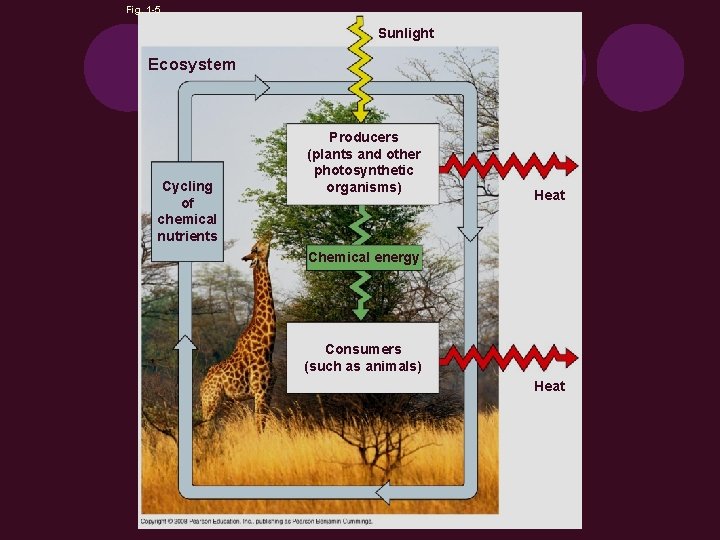
Fig. 1 -5 Sunlight Ecosystem Cycling of chemical nutrients Producers (plants and other photosynthetic organisms) Heat Chemical energy Consumers (such as animals) Heat
Energy Conversion l Work requires a source of ____ l Energy can be stored in different forms, for example, light, chemical, kinetic, or thermal l The energy exchange between an organism and its environment often involves energy transformations l Energy flows through an ecosystem, usually entering as light and exiting as heat
4. Theme: l Structure and function of living organisms are closely related ¡ For example, a leaf is thin and flat, maximizing the capture of light by chloroplasts
5. Theme: Cells are an organism’s basic units of structure and function l The cell is the _____ level of organization that can perform all activities required for life l All cells: ¡ Are enclosed by a ______ ¡ Use DNA as their genetic information l The ability of cells to divide is the basis of all reproduction, growth, and repair of multicellular organisms
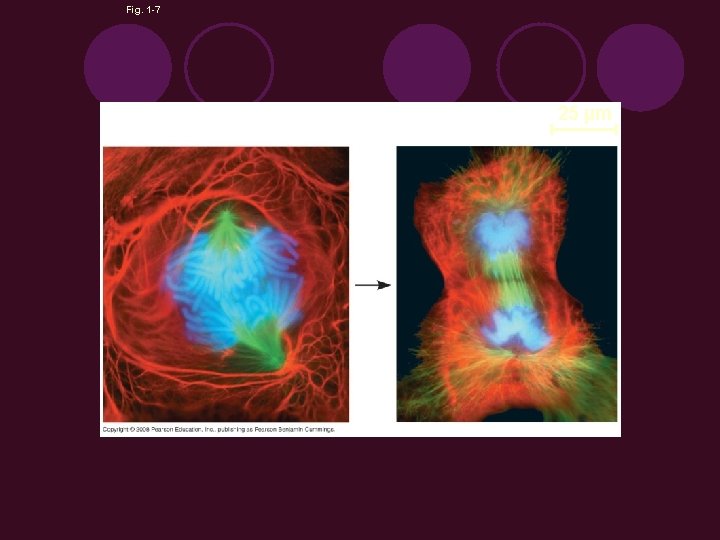
Fig. 1 -7 25 µm
l. A _______ cell has membrane-enclosed organelles, the largest of which is usually the nucleus l By comparison, a cell is simpler and usually smaller, and does not contain a nucleus or other membrane-enclosed organelles l Bacteria and Archaea are _______; plants, animals, fungi, and all other forms of life are eukaryotic
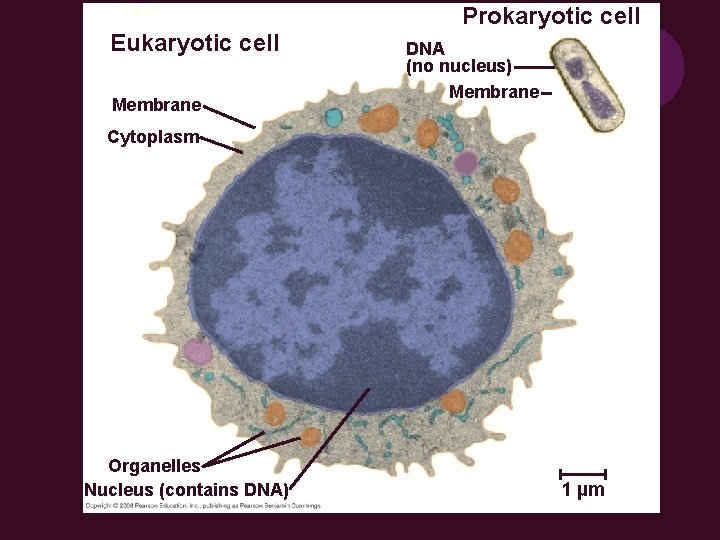
Fig. 1 -8 Eukaryotic cell Membrane Prokaryotic cell DNA (no nucleus) Membrane Cytoplasm Organelles Nucleus (contains DNA) 1 µm
6. Theme: The continuity of life is based on heritable information in the form of DNA (Deoxyribonucleic Acid) Chromosomes contain most of a cell’s genetic material in the form of DNA (deoxyribonucleic acid) l DNA is the substance of genes l Genes are the units of inheritance that transmit information from parents to offspring l
DNA Structure and Function l Each chromosome has one long DNA molecule with hundreds or thousands of genes. l l DNA controls the development and maintenance of organisms.
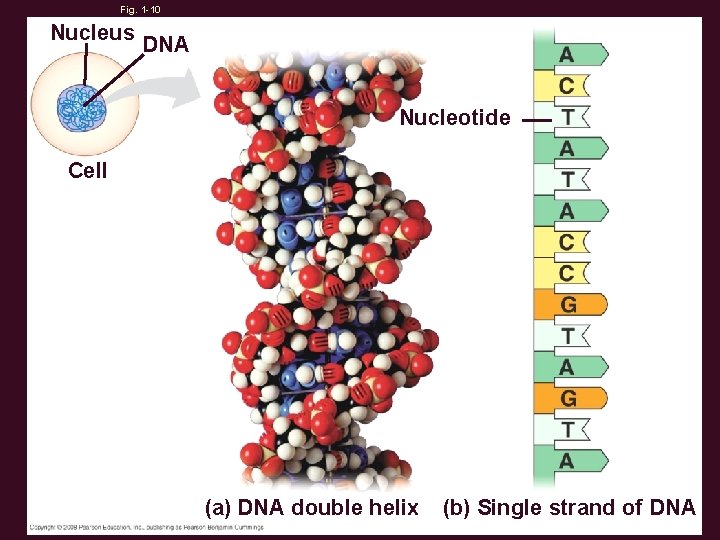
Fig. 1 -10 Nucleus DNA Nucleotide Cell (a) DNA double helix (b) Single strand of DNA
l Genes control protein production indirectly l DNA is transcribed into RNA then translated into a protein l An organism’s is its entire set of genetic instructions
7. Theme: Feedback mechanisms regulate biological systems Feedback mechanisms allow biological processes to self-regulate l means that as more of a product accumulates, the process that creates it slows and less of the product is produced l Positive feedback l
Feedback Animations l Positive Feedback animation l Negative Feedback animation
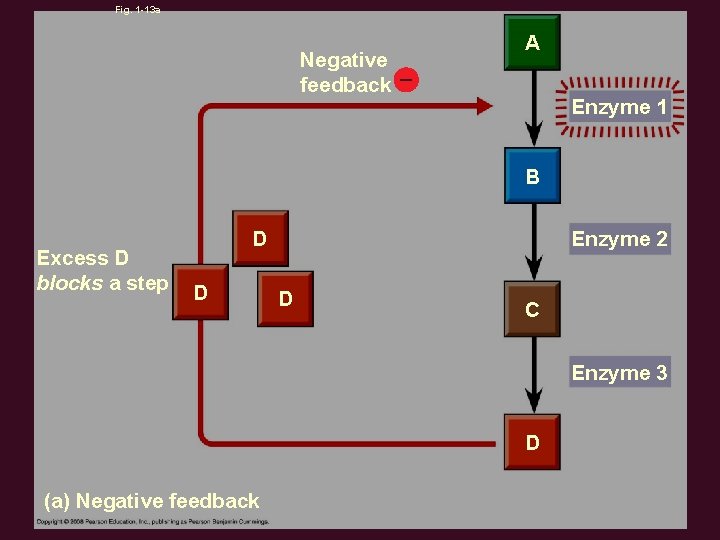
Fig. 1 -13 a Negative feedback – A Enzyme 1 B Excess D blocks a step D D Enzyme 2 D C Enzyme 3 D (a) Negative feedback
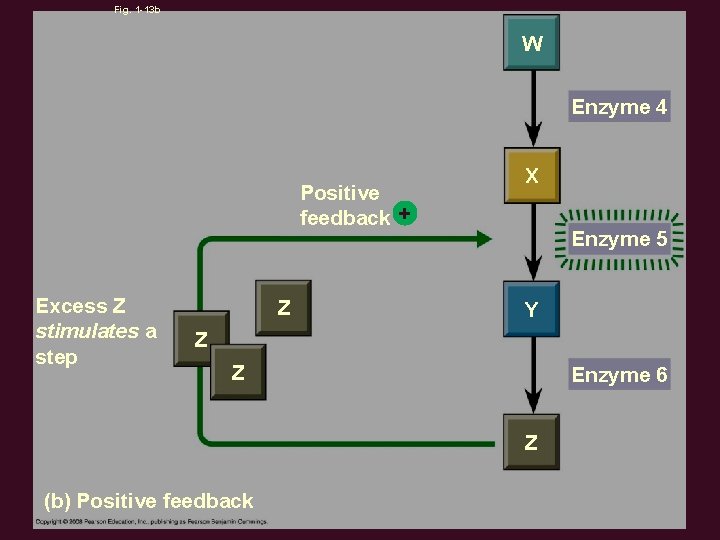
Fig. 1 -13 b W Enzyme 4 Positive feedback + Excess Z stimulates a step Z X Enzyme 5 Y Z Z Enzyme 6 Z (b) Positive feedback
The Core Theme: Evolution accounts for the unity and diversity of life l “Nothing in biology makes sense except in the light of evolution”—Theodosius Dobzhansky l Evolution unifies biology at different scales of size throughout the history of life on Earth Copyright © 2008 Pearson Education, Inc. , publishing as Pearson Benjamin Cummings
Organizing the Diversity of Life Approximately 1. 8 million species have been identified and named to date, and thousands more are identified each year l Estimates of the total number of species that actually exist range from 10 million to over 100 million l Taxonomy is the branch of biology that names and classifies species into groups of increasing breadth l Domains, followed by kingdoms, are the broadest units of classification l
The Three Domains of Life l The three-domain system is currently used, and replaces the old five-kingdom system l Domain _____ and domain ____ comprise the prokaryotes l Domain _____ includes all eukaryotic organisms Copyright © 2008 Pearson Education, Inc. , publishing as Pearson Benjamin Cummings
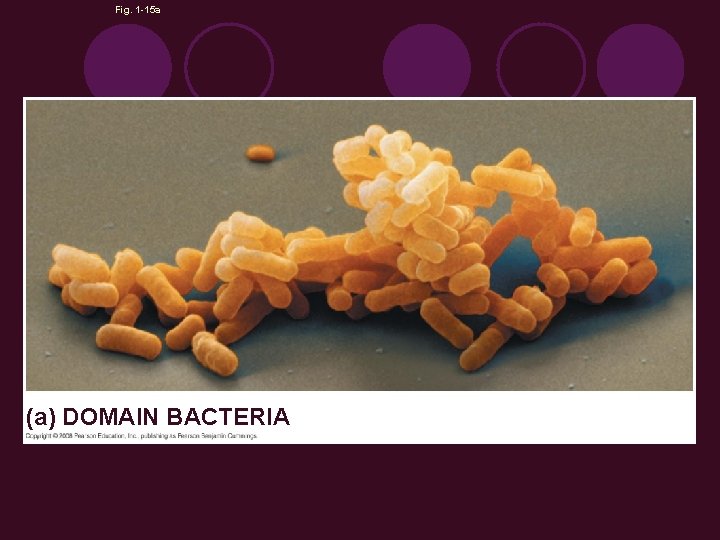
Fig. 1 -15 a (a) DOMAIN BACTERIA
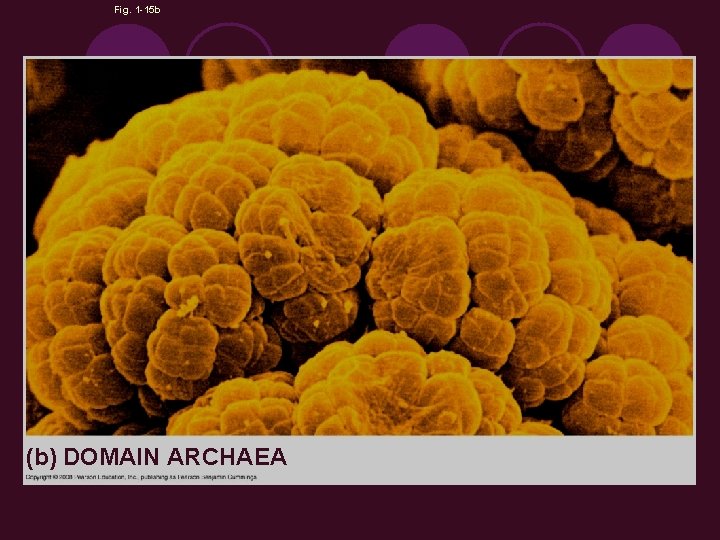
Fig. 1 -15 b (b) DOMAIN ARCHAEA
l The domain Eukarya includes three multicellular kingdoms: ¡ ¡ ¡ l Other eukaryotic organisms were formerly grouped into a kingdom called Protista, though these are now often grouped into many separate kingdoms Copyright © 2008 Pearson Education, Inc. , publishing as Pearson Benjamin Cummings
Unity in the Diversity of Life l. A striking unity underlies the diversity of life; for example: ¡ DNA is the universal genetic language common to all organisms ¡ Unity is evident in many features of cell structure
- Slides: 34