
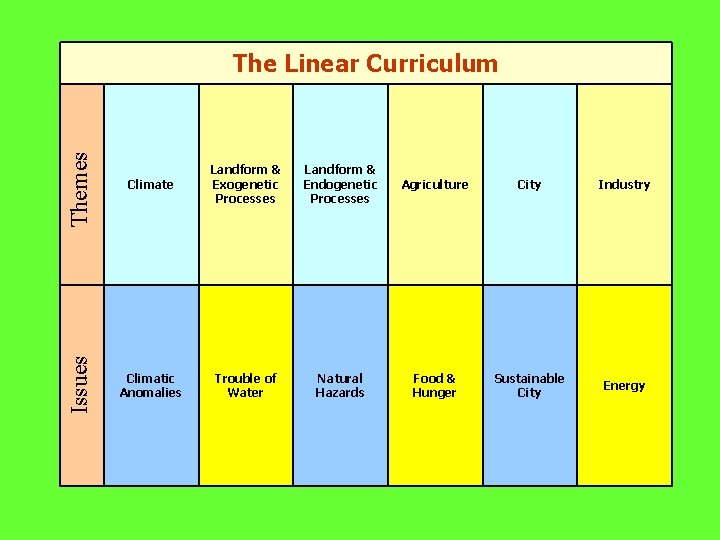
Themes Climate Landform Exogenetic Processes Landform Endogenetic Processes
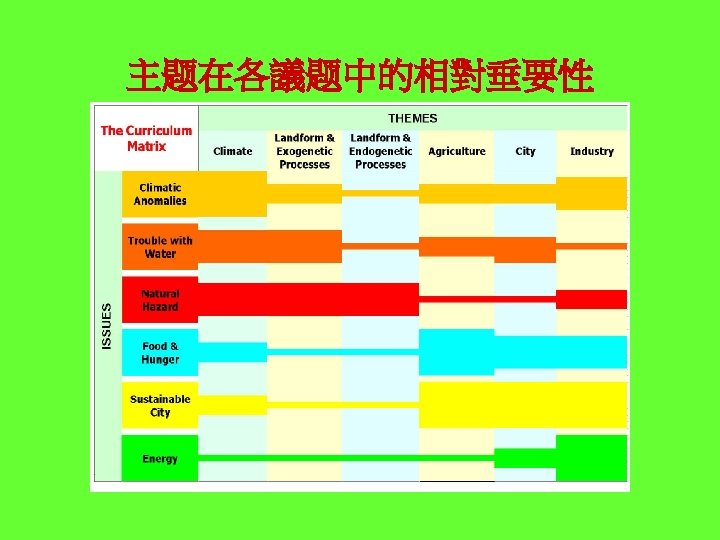

- Slides: 38
Themes Climate Landform & Exogenetic Processes Landform & Endogenetic Processes Agriculture City Industry Issues The Linear Curriculum Climatic Anomalies Trouble of Water Natural Hazards Food & Hunger Sustainable City Energy
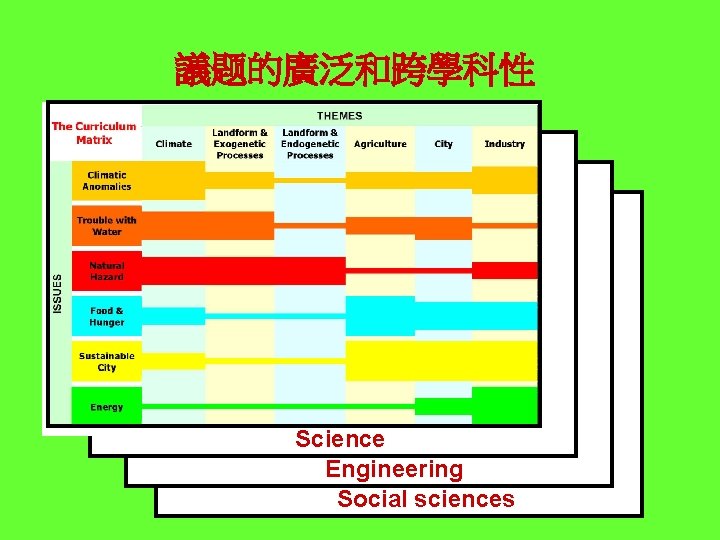
議题的廣泛和跨學科性 Science Engineering Social sciences
Part 2. Earthquake Hazards 地震災害 Chan Lung Sang 陳龍生 Department of Earth Sciences University of Hong Kong
Outline of Talk ØEarthquake Terminology 地震學基本詞彙 ØSignificant Earthquakes: Related Landform & Prediction Ø幾次重大地震災害 ØEarthquake Hazard of Hong Kong Region 香港地區地震風險
1. Earthquake Terminology 地震學詞彙
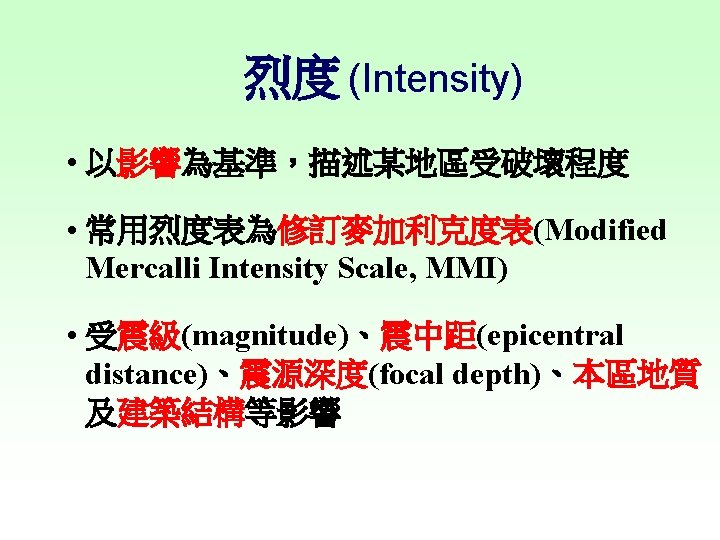
Commonly Misused Terms • Epicenter vs. Focus (Hypocenter) • Origin time, Travel time & Arrival time • Seismic waves and Seismic phases • Magnitude and Intensity
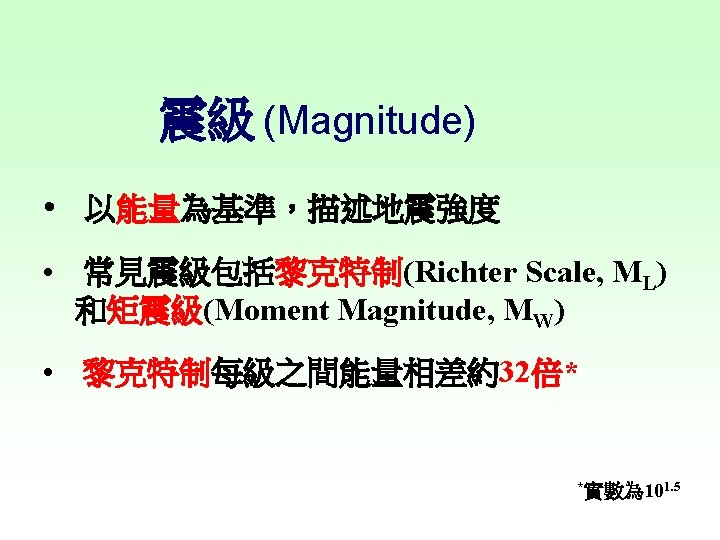
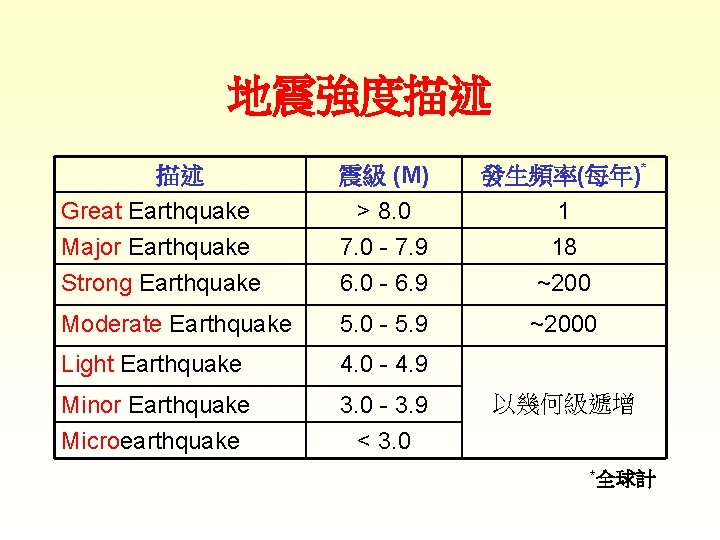
地震強度描述 震級 (M) 發生頻率(每年)* Great Earthquake Major Earthquake Strong Earthquake > 8. 0 7. 0 - 7. 9 6. 0 - 6. 9 1 18 ~200 Moderate Earthquake 5. 0 - 5. 9 ~2000 Light Earthquake 4. 0 - 4. 9 Minor Earthquake Microearthquake 3. 0 - 3. 9 < 3. 0 描述 以幾何級遞增 *全球計
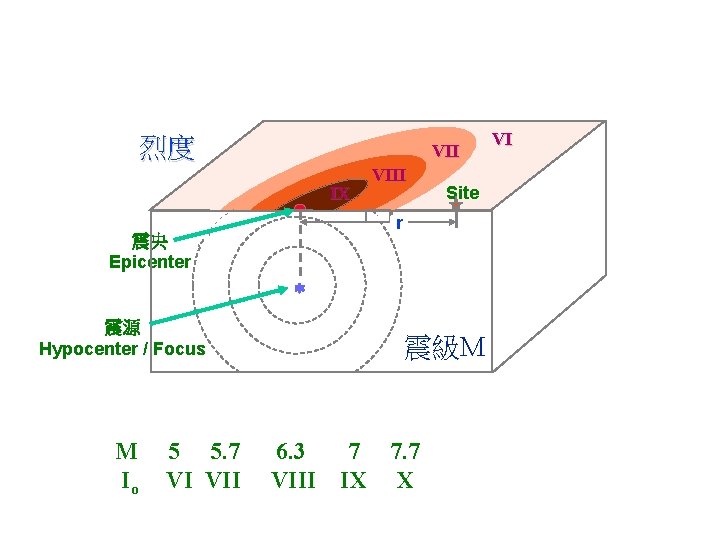
烈度 VII IX 震央 Epicenter 5 5. 7 VI VII Site r 震源 Hypocenter / Focus M Io VIII 震級M 6. 3 VIII 7 7. 7 IX X VI
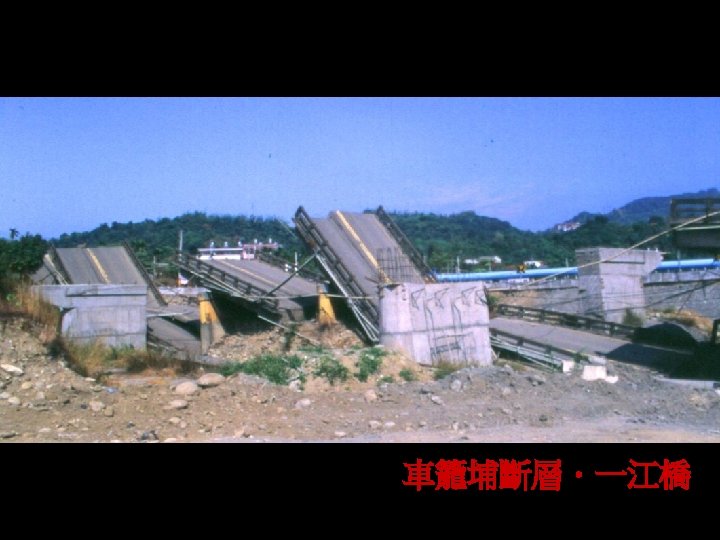
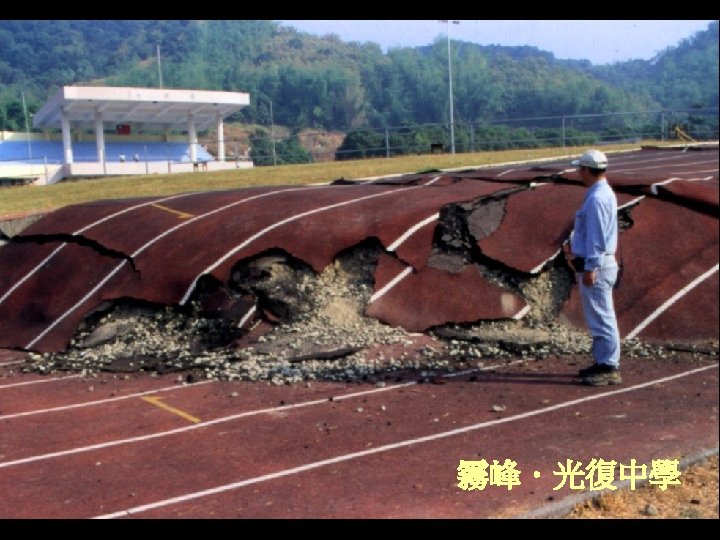
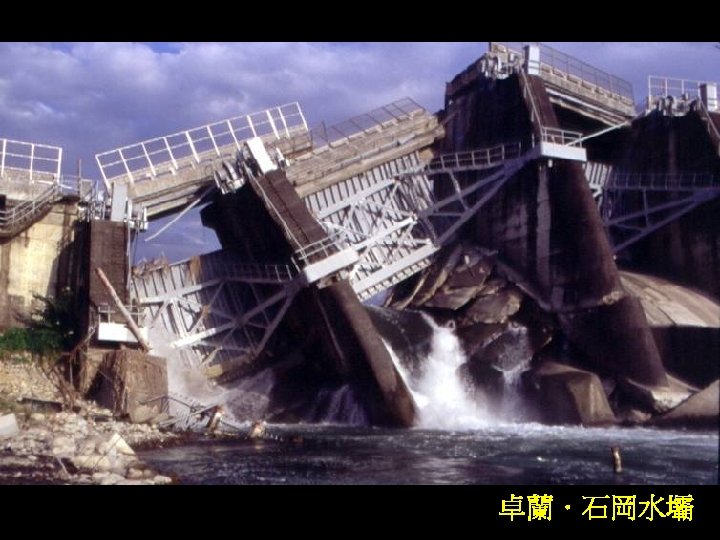
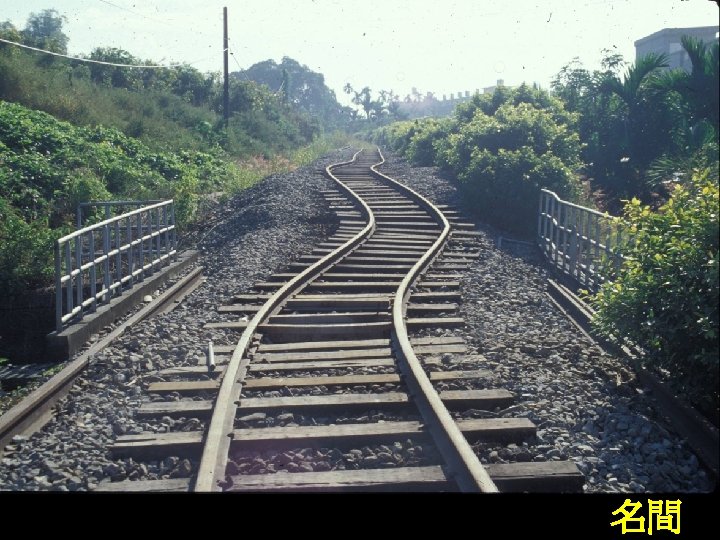
台灣地區構造 Tectonic Setting of Taiwan 921台灣地震 Taiwan Chi-Chi Earthquake 21 Sept. 1999 Mw=7. 3 Deaths ~2000
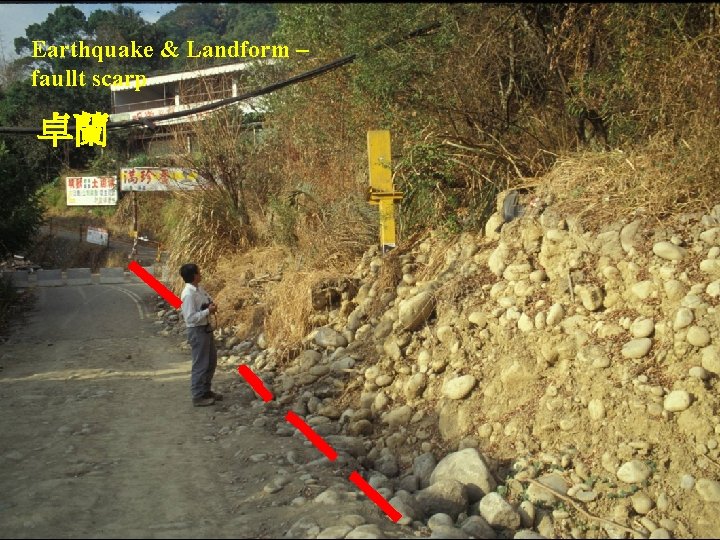
Earthquake & Landform – faullt scarp 卓蘭
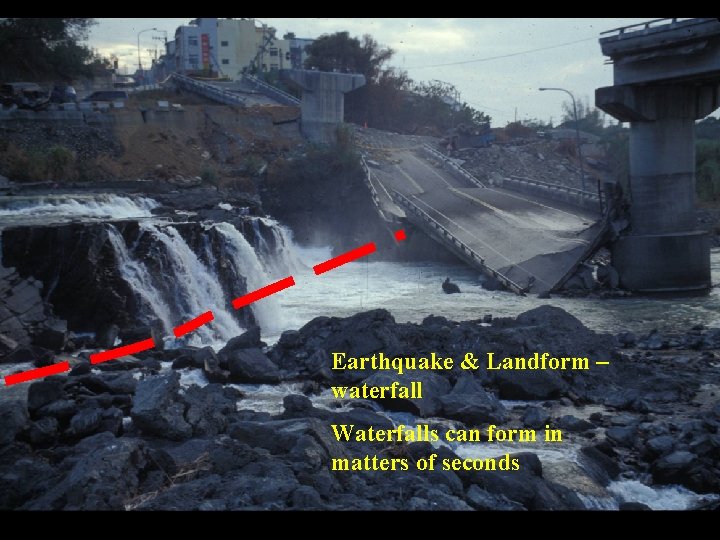
Earthquake & Landform – waterfall Waterfalls can form in matters of seconds
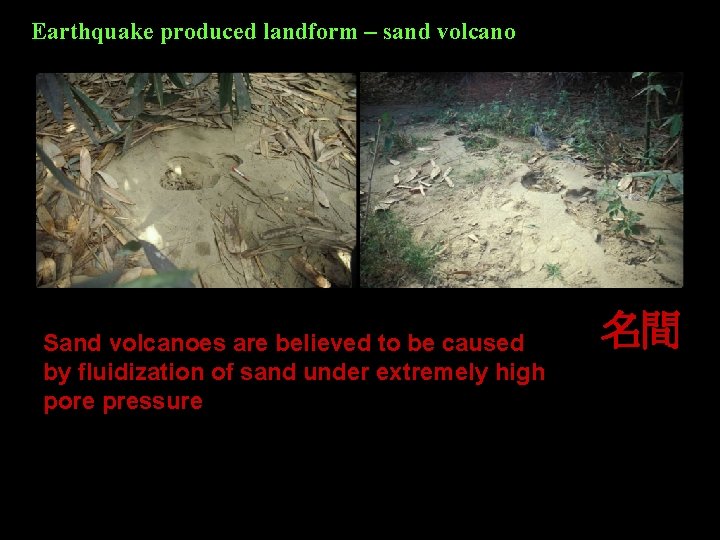
Earthquake produced landform – sand volcano Sand volcanoes are believed to be caused by fluidization of sand under extremely high pore pressure 名間
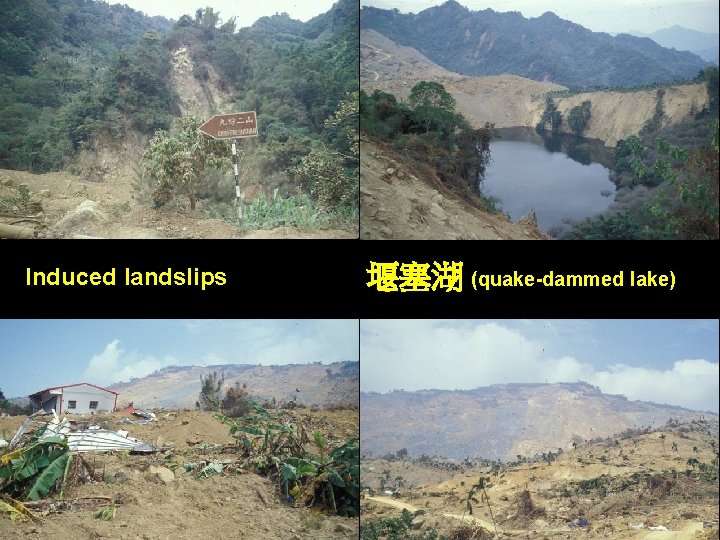
Induced landslips 堰塞湖 (quake-dammed lake)
3. Earthquake Hazard of Hong Kong Region 香港地區地震風險
Seismic Hazard (災害) & Seismic Risk (風險) • Seismic Hazard: 發生某一強度地震的 機率 • Seismic Risk: 地震的潛在損失
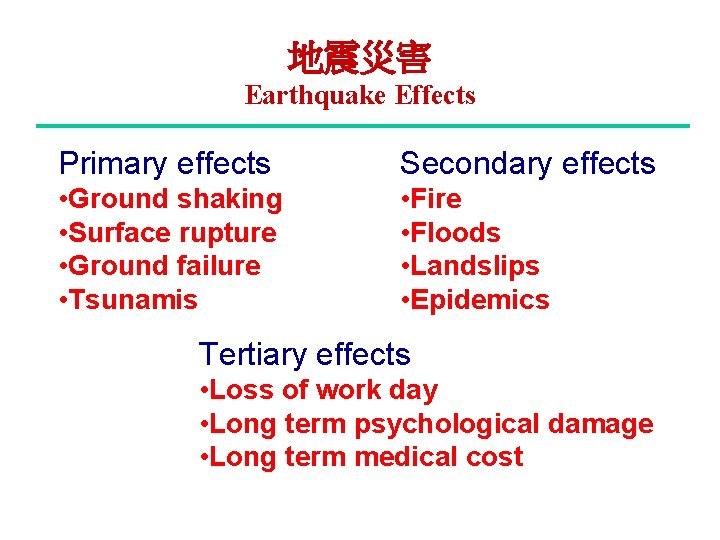
地震災害 Earthquake Effects Primary effects Secondary effects • Ground shaking • Surface rupture • Ground failure • Tsunamis • Fire • Floods • Landslips • Epidemics Tertiary effects • Loss of work day • Long term psychological damage • Long term medical cost
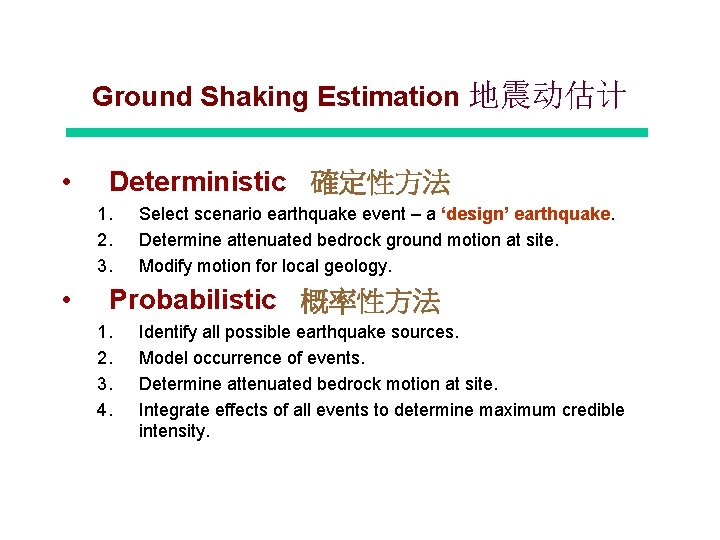
Ground Shaking Estimation 地震动估计 • Deterministic 確定性方法 1. 2. 3. • Select scenario earthquake event – a ‘design’ earthquake. Determine attenuated bedrock ground motion at site. Modify motion for local geology. Probabilistic 概率性方法 1. 2. 3. 4. Identify all possible earthquake sources. Model occurrence of events. Determine attenuated bedrock motion at site. Integrate effects of all events to determine maximum credible intensity.
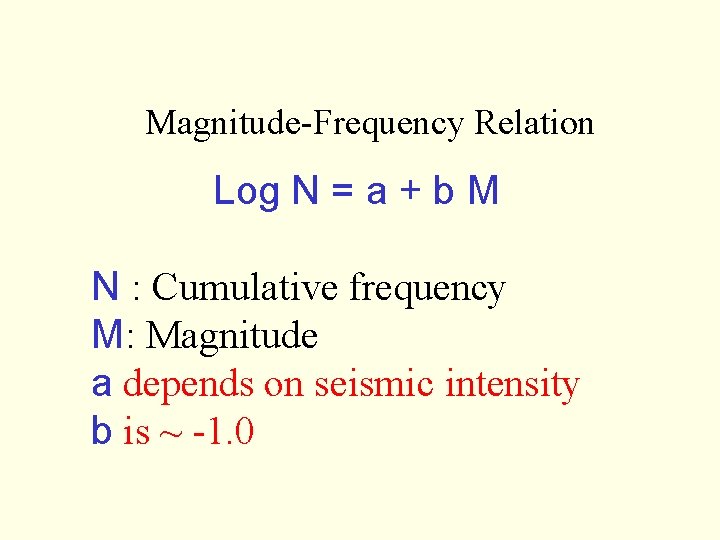
Magnitude-Frequency Relation Log N = a + b M N : Cumulative frequency M: Magnitude a depends on seismic intensity b is ~ -1. 0
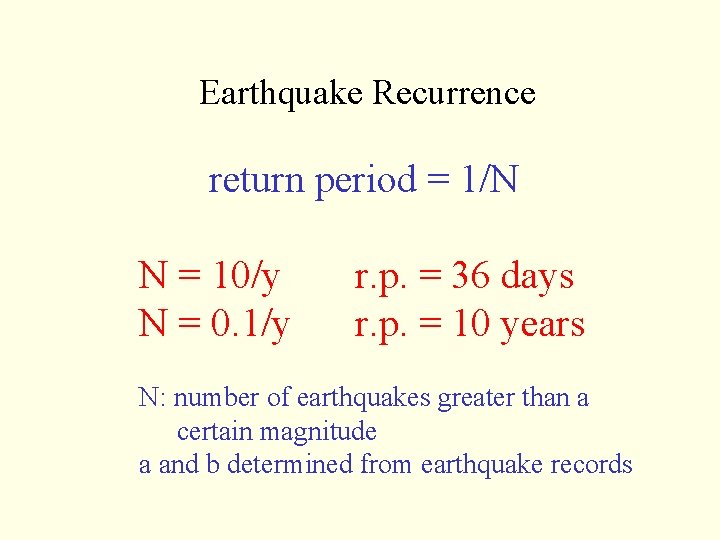
Earthquake Recurrence return period = 1/N N = 10/y N = 0. 1/y r. p. = 36 days r. p. = 10 years N: number of earthquakes greater than a certain magnitude a and b determined from earthquake records
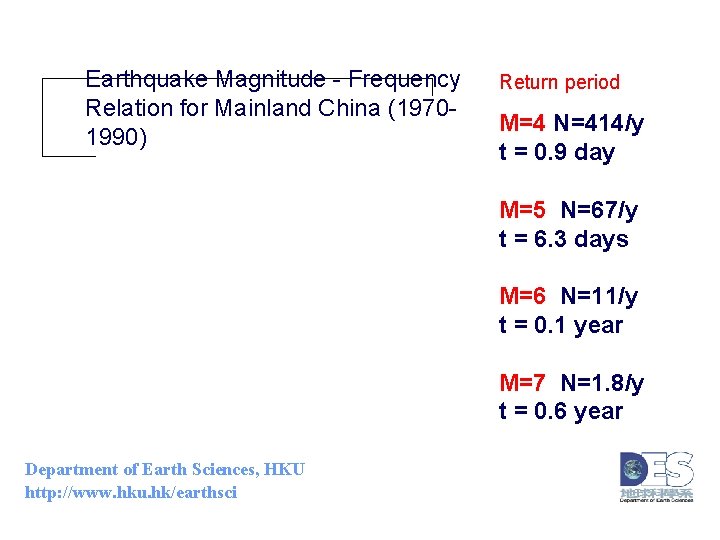
Earthquake Magnitude - Frequency Relation for Mainland China (19701990) Return period M=4 N=414/y t = 0. 9 day M=5 N=67/y t = 6. 3 days M=6 N=11/y t = 0. 1 year M=7 N=1. 8/y t = 0. 6 year Department of Earth Sciences, HKU http: //www. hku. hk/earthsci m
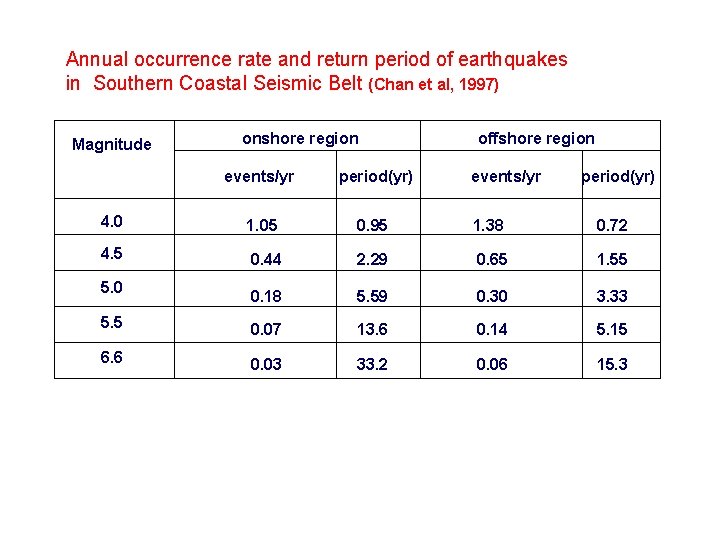
Annual occurrence rate and return period of earthquakes in Southern Coastal Seismic Belt (Chan et al, 1997) Magnitude onshore region offshore region events/yr period(yr) 4. 0 1. 05 0. 95 1. 38 0. 72 4. 5 0. 44 2. 29 0. 65 1. 55 0. 18 5. 59 0. 30 3. 33 5. 5 0. 07 13. 6 0. 14 5. 15 6. 6 0. 03 33. 2 0. 06 15. 3 5. 0 events/yr period(yr)
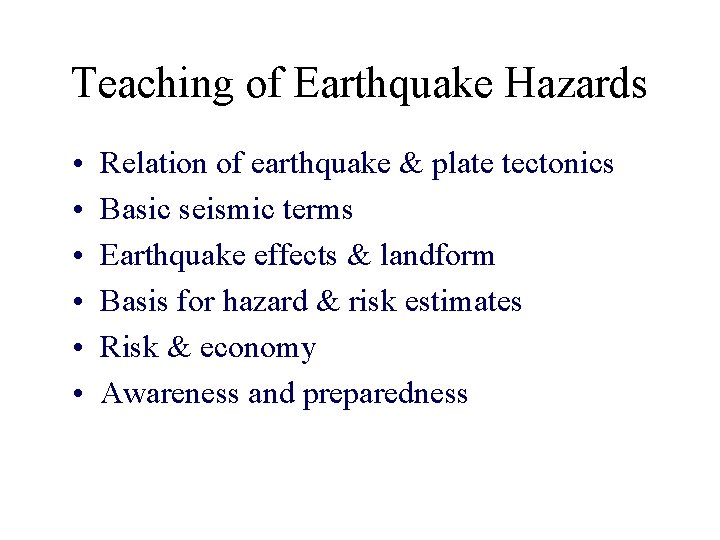
Teaching of Earthquake Hazards • • • Relation of earthquake & plate tectonics Basic seismic terms Earthquake effects & landform Basis for hazard & risk estimates Risk & economy Awareness and preparedness
Thank You! chanls@hku. hk Department of Earth Sciences, University of Hong Kong