
Theme number 11 World religions Buddhism 1 About
Theme number 11. World religions. Buddhism. 1. About founder of Buddhism. 2. Buddiyskoe teaching and its sources. 3. Rasprostranenie Buddhism.
Buddhism (Sanskrit बदध धरम , buddha dharma; Pali buddha dhamma, «Science and Spirituality") - the religious and philosophical teachings (dharma) of a spiritual awakening (bodhi). Sami its acolytes called it "Dharma" (Law, teaching) or "Buddhadharmoy" (Teachings of the Buddha). The term "Buddhism" was founded by Europeans in the XIX century
Buddhism One of the three world religions. Was born in India in the middle of I thousand years BC The opposition Brahmanism, which contained a caste system Having survived the flourishing there, entrenched in the minds and practices of the peoples of other regions: South, Southeast and Central Asia, the Far East. Now the followers of Buddhism in the world there are more than 800 million people.
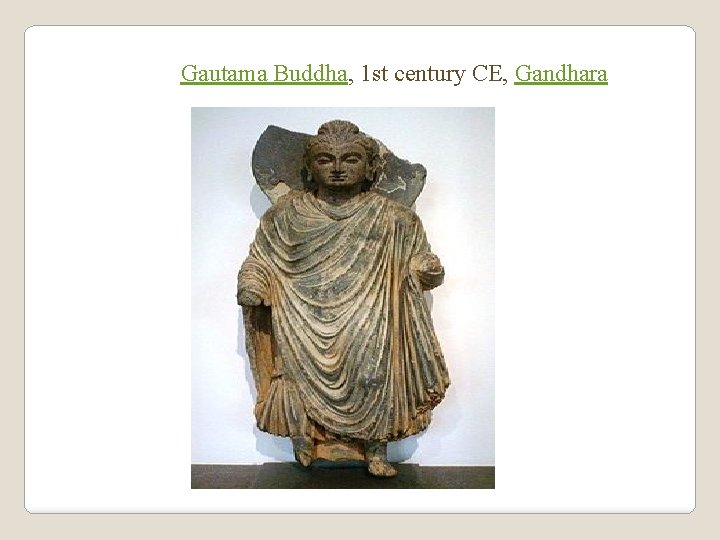
Gautama Buddha, 1 st century CE, Gandhara
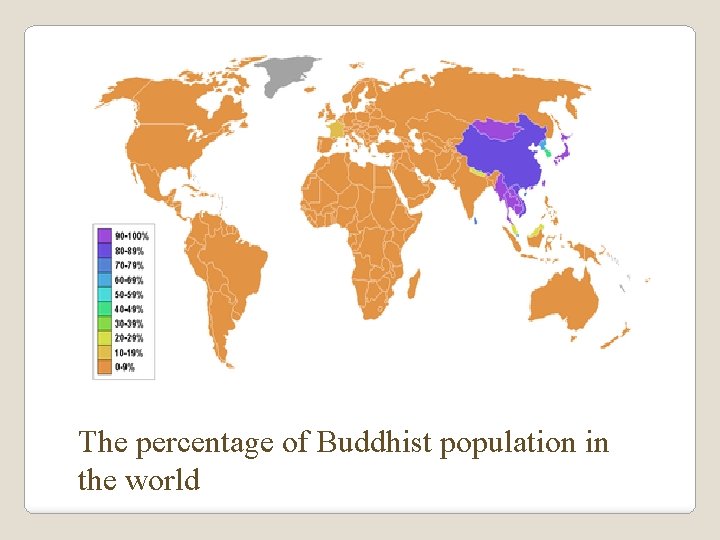
The percentage of Buddhist population in the world
The founder of Siddharth Gautama (563 -483 BC) - son of King Sakya (Sakya). About the Buddha there is a whole legend in her most important Four Great Summit - poverty, disease, old age and death.
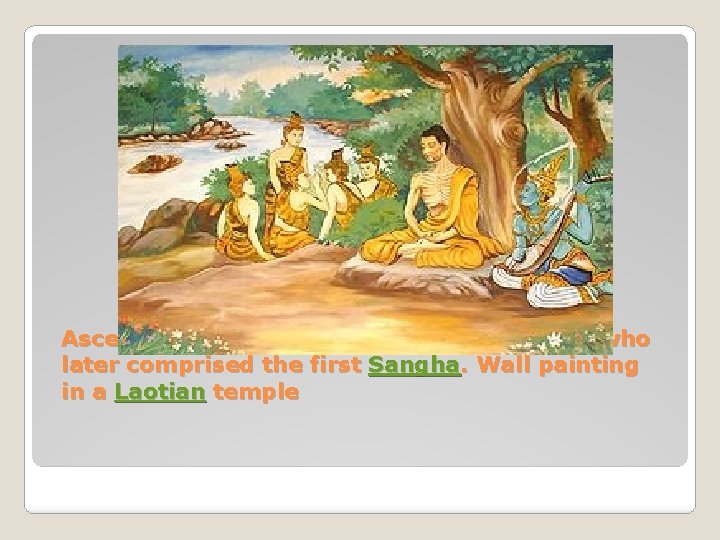
Ascetic Gautama with his five companions, who later comprised the first Sangha. Wall painting in a Laotian temple
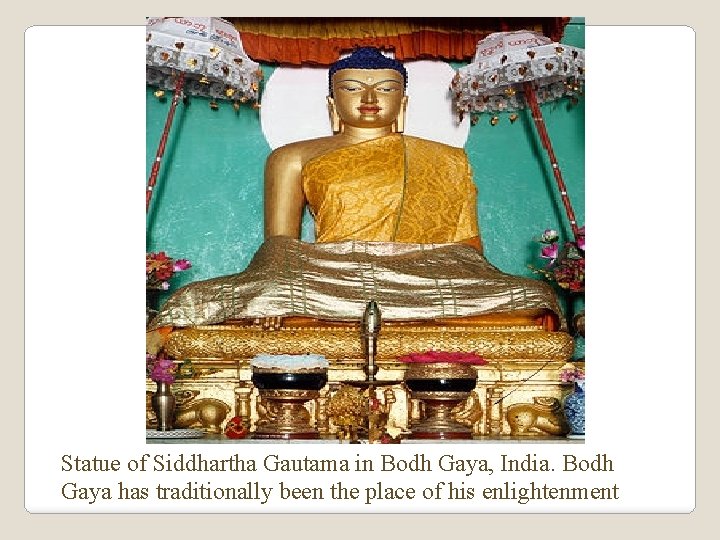
Statue of Siddhartha Gautama in Bodh Gaya, India. Bodh Gaya has traditionally been the place of his enlightenment
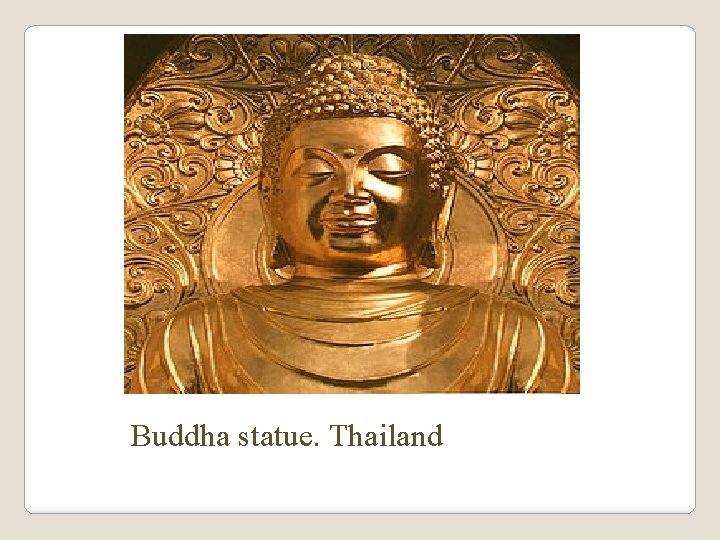
Buddha statue. Thailand
After leaving the palace and became an ascetic, after 7 years, 35 years of age reached a bodhi (enlightenment) and he opened four noble truths. Arriving at Sarnath near Benares, he gathered around him the five ascetics who were his students, and he read them his first sermon. This Benares sermon of the Buddha were summarized his teaching framework
"Four Noble Truths studies" which showed the way to salvation 1. Life is suffering. The birth and aging, sickness and death, separation from loved ones, and an alliance with the unloved, unreached goal and an unsatisfied desire - all this suffering. . 2. Suffering comes from the thirst of life, pleasure, creativity, power, eternal life, etc. 3. Destroy this insatiable thirst, desire to give up, renounce earthly vanity - that's the way to the destruction of suffering. 4. It was at the end of this path is the complete liberation, nirvana.
Developing their teaching, the Buddha developed a detailed so-called eight (octal) way, method of comprehending the truth and closer to nirvana.
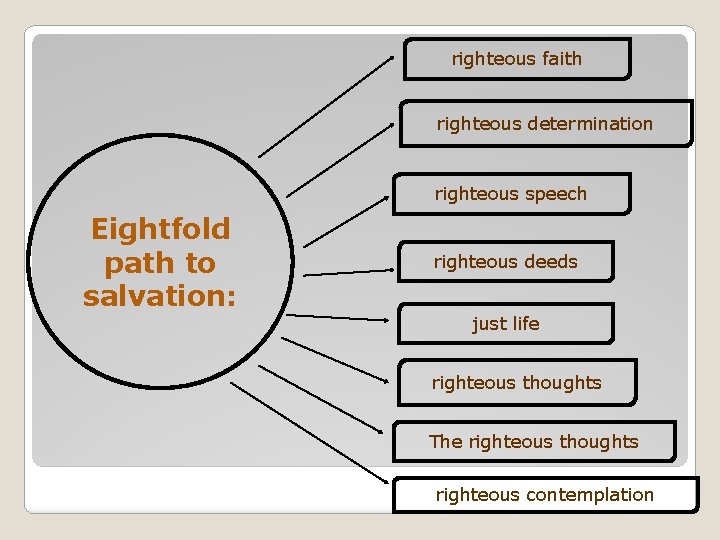
righteous faith righteous determination righteous speech Eightfold path to salvation: righteous deeds just life righteous thoughts The righteous thoughts righteous contemplation
�Buddha felt that he should tell people about it and show them the way to salvation, resist the temptation to sink into a state of nirvana. His teaching was called Dharma. His disciples came, and he founded a community. Next, all over India began to emerge of the community. Entered there shaved head, wore yellow robes, were vegetarians and were carrying the most necessary - mug to collect alms and water, a razor, a staff.
�Scientists Buddhist monks recorded ancient sacred texts, studied and commented on them. So there was a Scripture Buddhist Tripitaka (translated from Pali - triple basket. Buddhist canon was first written on palm branches, which took three baskets). It is composed of students of the Buddha and written in 80 BC. e. in Ceylon.
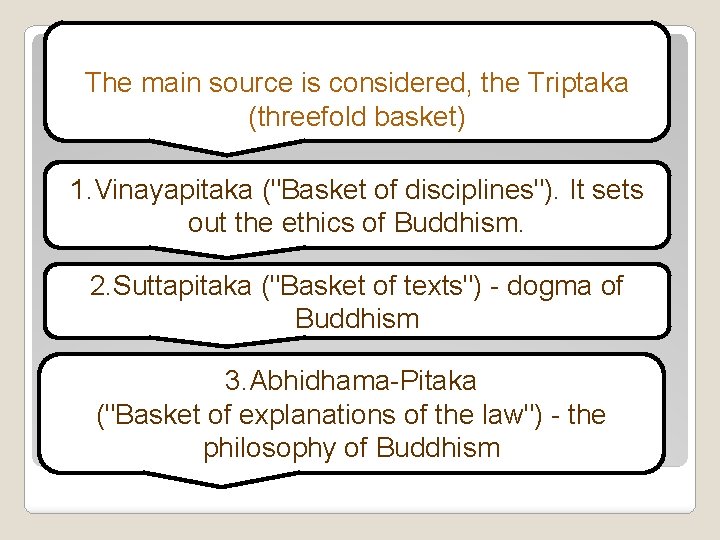
The main source is considered, the Triptaka (threefold basket) 1. Vinayapitaka ("Basket of disciplines"). It sets out the ethics of Buddhism. 2. Suttapitaka ("Basket of texts") - dogma of Buddhism 3. Abhidhama-Pitaka ("Basket of explanations of the law") - the philosophy of Buddhism
�The most effective factor in saving another person's life in Buddhism considered going beyond the real society, ie join the sangha - the monastic order. This meant loyalty to the Buddha, his teachings, the community, the rejection of caste, family, introduction to the world of strict rules and regulations, five of which are required for the laity and ten - for the clergy and ascetics (code "Panca Sila")
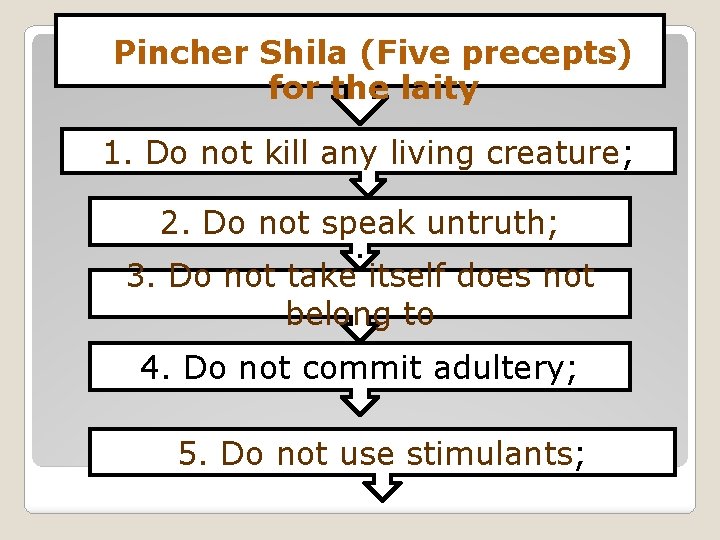
Pincher Shila (Five precepts) for the laity 1. Do not kill any living creature; 2. Do not speak untruth; 3. Do not take; itself does not belong to 4. Do not commit adultery; 5. Do not use stimulants;
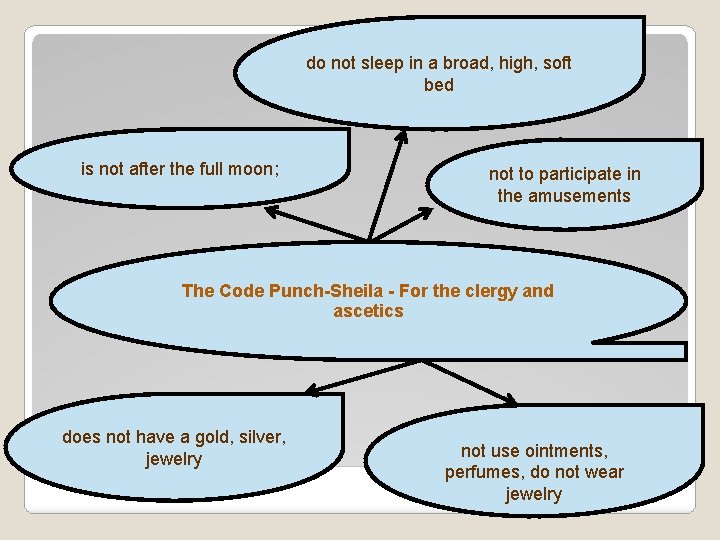
do not sleep in a broad, high, soft bed is not after the full moon; not to participate in the amusements The Code Punch-Sheila - For the clergy and ascetics does not have a gold, silver, jewelry not use ointments, perfumes, do not wear jewelry
�Buddhism originally interprets karma. Responsibility for their actions is the man himself, and changed his karma one, not even God, can not. In this sense, a new existence, rebirth - the result of actions (karma), recorded in the past.
�The supreme goal of Buddhism - Nirvana ("calm", "extinction"). Nirvana - not death (Buddhism denies the eternal death). It is regarded as a special condition, which can not be described in the images of the exact definition of the canonical texts do not. It is sometimes said that it was "bliss", "higher purpose" (in the sense of the cessation of suffering and the completion of the "path").
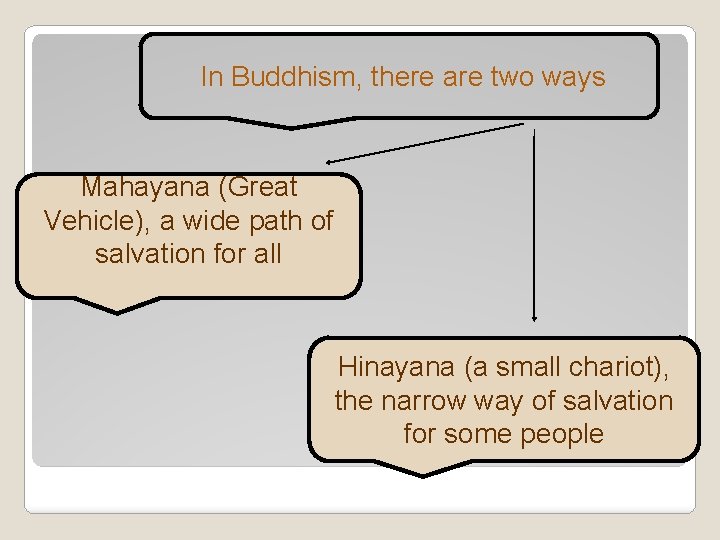
In Buddhism, there are two ways Mahayana (Great Vehicle), a wide path of salvation for all Hinayana (a small chariot), the narrow way of salvation for some people
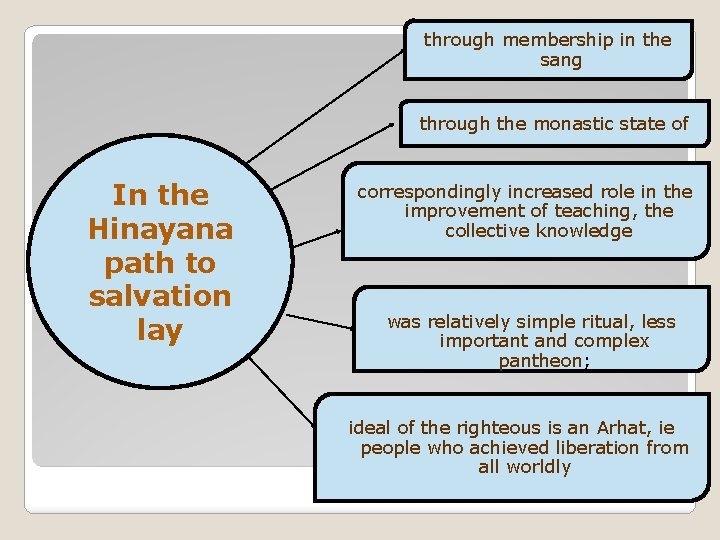
through membership in the sang through the monastic state of In the Hinayana path to salvation lay correspondingly increased role in the improvement of teaching, the collective knowledge was relatively simple ritual, less important and complex pantheon; ideal of the righteous is an Arhat, ie people who achieved liberation from all worldly
�In Mahayana, allowing the possibility of salvation lay, especially under the guidance of a compassionate bodhisattva. In Mahayana Buddhism, the purpose can be achieved more easily, rather, more simply. Therefore, in modern Mahayana Buddhism is more popular than the Hinayana. About 2 3 of all Buddhists the followers of the Mahayana.
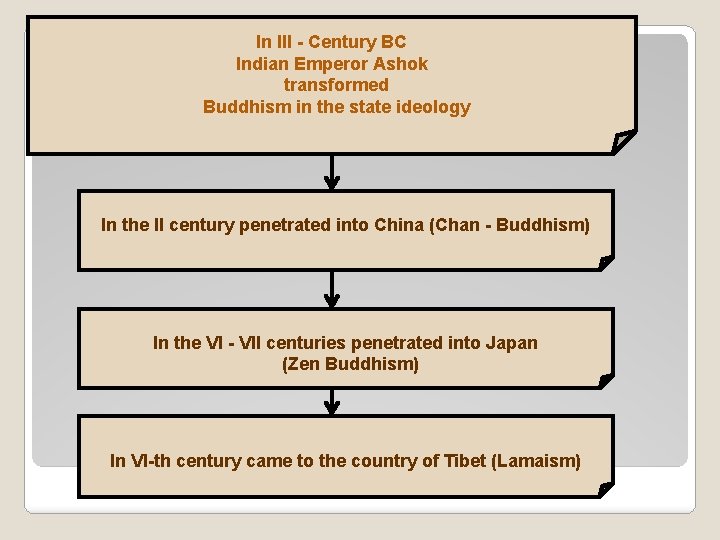
In III - Century BC Indian Emperor Ashok transformed Buddhism in the state ideology In the II century penetrated into China (Chan - Buddhism) In the VI - VII centuries penetrated into Japan (Zen Buddhism) In VI-th century came to the country of Tibet (Lamaism)
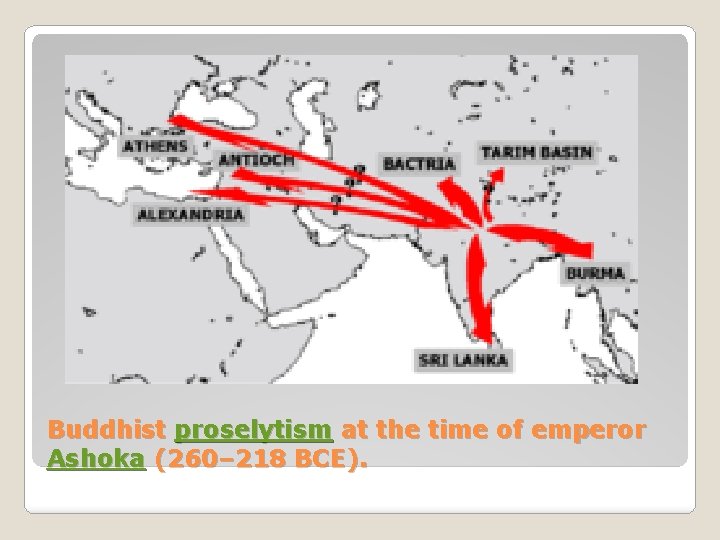
Buddhist proselytism at the time of emperor Ashoka (260– 218 BCE).
�Among the many sectarian tendencies of Buddhism is the most notable of Zen Buddhism - a specific modification of the Far Eastern Mahayana. "Zen" - means the silent contemplation, inner concentration on the basis of the doctrine of the ability to achieve the unexpected enlightenment (satori), lies in the sudden discovery of the wisdom of the Buddha in the individual consciousness of man.
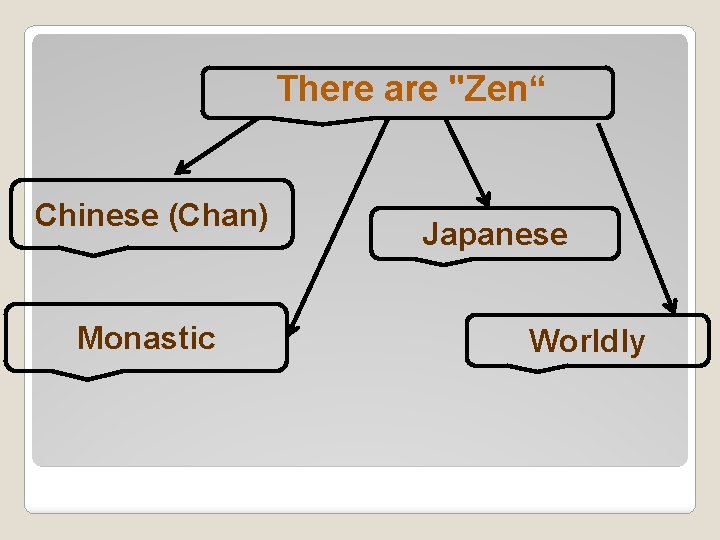
There are "Zen“ Chinese (Chan) Monastic Japanese Worldly
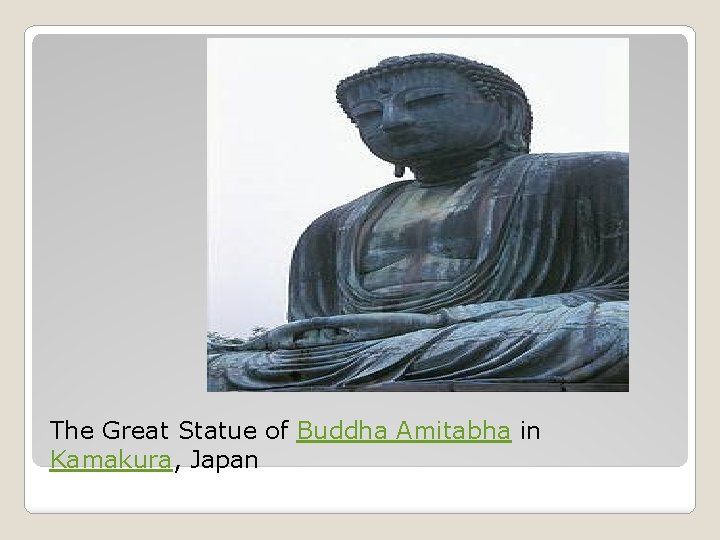
The Great Statue of Buddha Amitabha in Kamakura, Japan
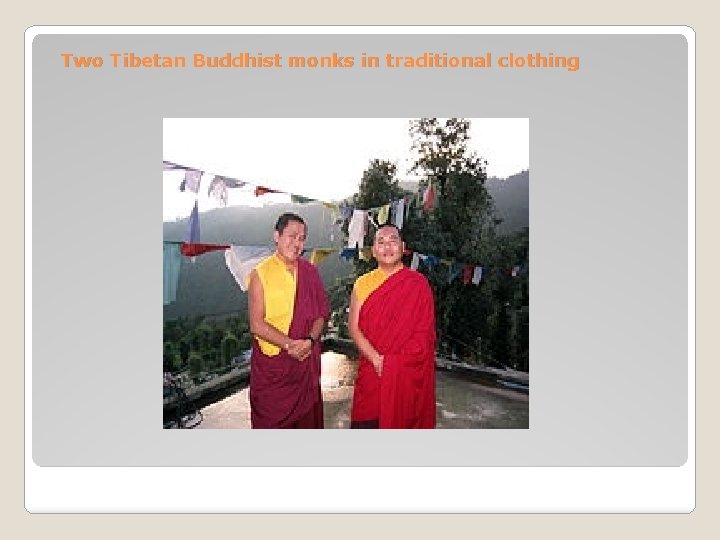
Two Tibetan Buddhist monks in traditional clothing
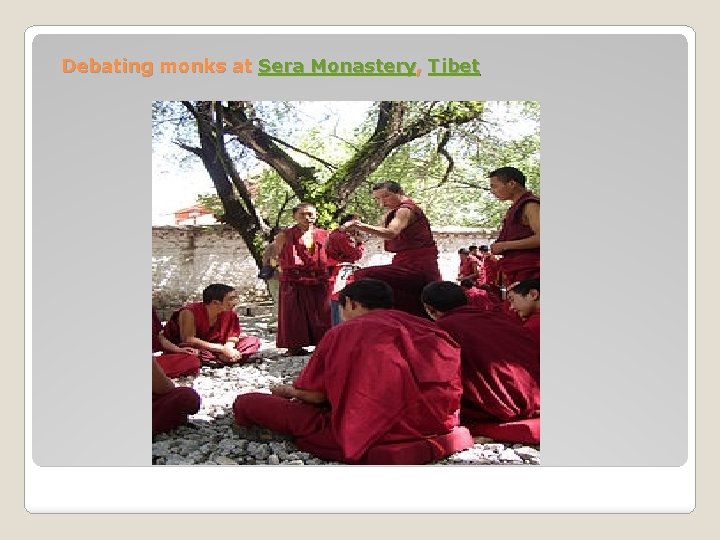
Debating monks at Sera Monastery, Tibet
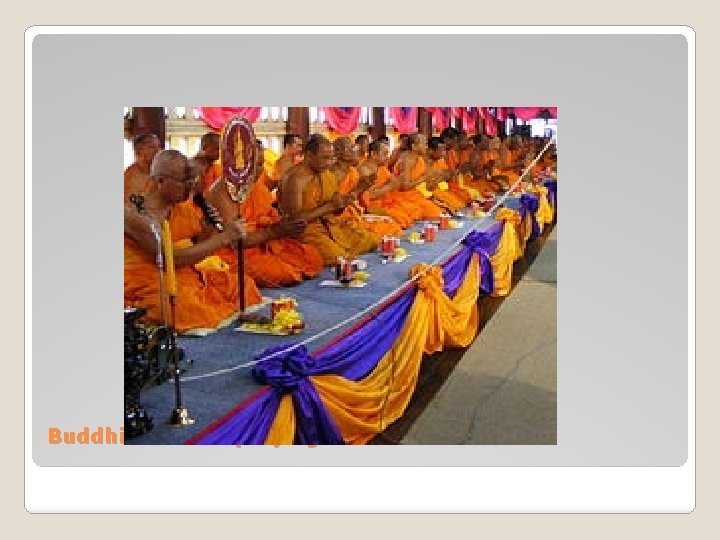
Buddhist monks praying in Thailand
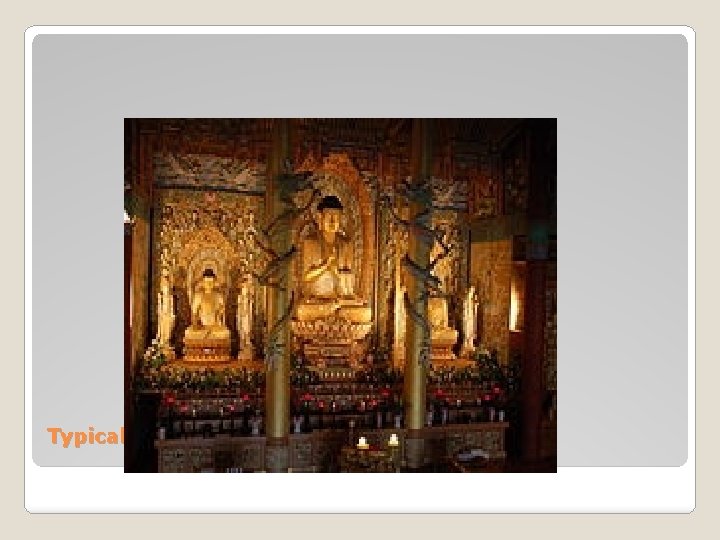
Typical interior of a temple in Korea
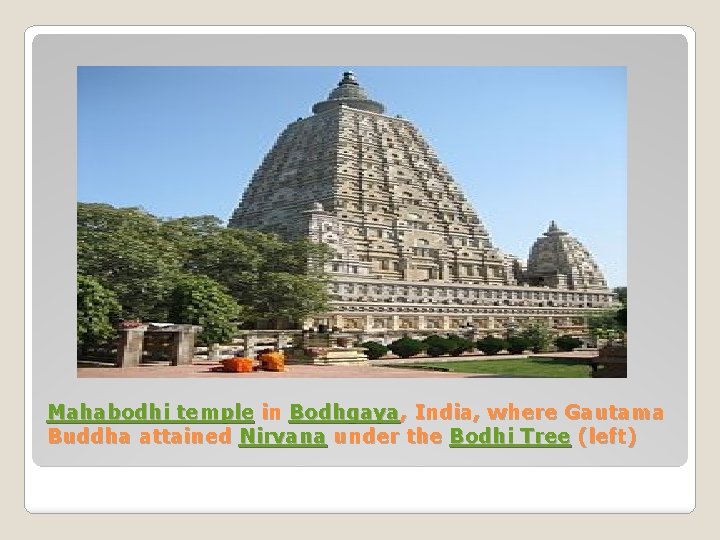
Mahabodhi temple in Bodhgaya, India, where Gautama Buddha attained Nirvana under the Bodhi Tree (left)
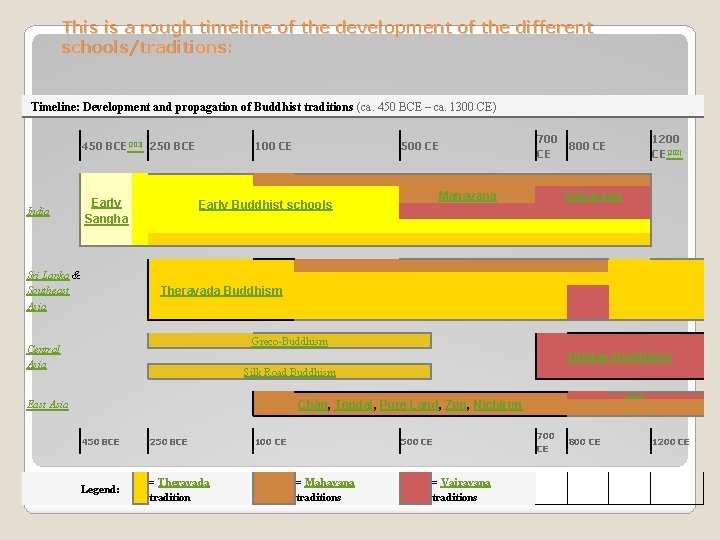
This is a rough timeline of the development of the different schools/traditions: Timeline: Development and propagation of Buddhist traditions (ca. 450 BCE – ca. 1300 CE) 450 BCE[202] 250 BCE India Early Sangha Sri Lanka & Southeast Asia 100 CE 500 CE 700 800 CE CE Mahayana Early Buddhist schools 1200 CE[203] Vajrayana Theravada Buddhism Greco-Buddhism Central Asia Tibetan Buddhism Silk Road Buddhism Shingon Chán, Tendai, Pure Land, Zen, Nichiren East Asia 450 BCE 250 BCE Legend: = Theravada tradition 100 CE 500 CE = Mahayana traditions = Vajrayana traditions 700 CE 800 CE 1200 CE
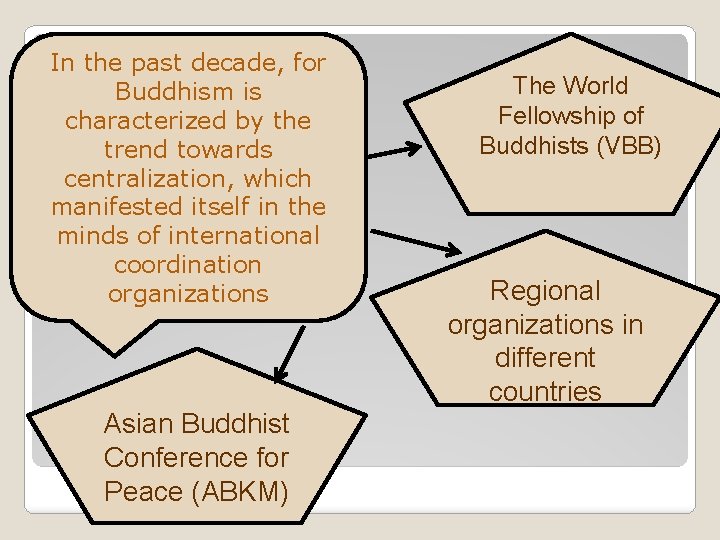
In the past decade, for Buddhism is characterized by the trend towards centralization, which manifested itself in the minds of international coordination organizations Asian Buddhist Conference for Peace (ABKM) The World Fellowship of Buddhists (VBB) Regional organizations in different countries
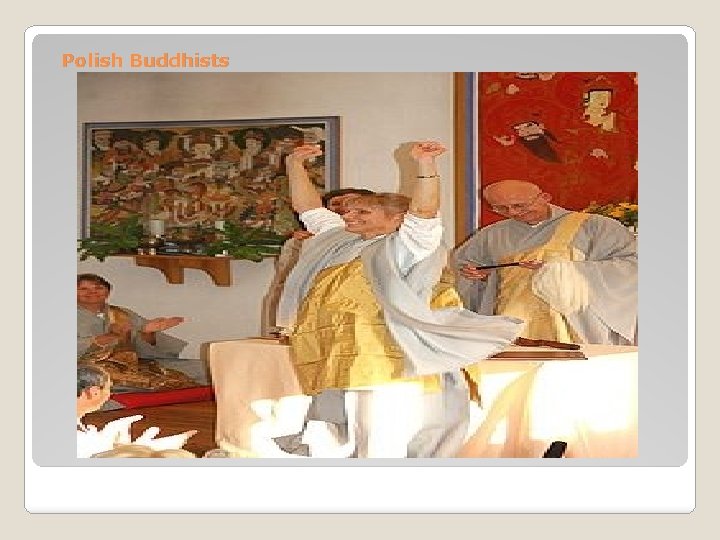
Polish Buddhists
Rites of Buddhism believers committed simple Repentance for the animals (dzul-Hur) The ceremony dedicated to the hermits, raised to the rank of a deity (naydani Hural) The ritual worship of the owners of the area (about) The ceremony dedicated to the master water (usu tyayalgi) funeral rites
- Slides: 38