
Theme Insights into Human Nature What Is Theme
- Slides: 12
Theme Insights into Human Nature
What Is Theme? Theme is the central idea or insight revealed by a work of literature. • Theme gives meaning to the story by providing some idea or insight about human life and human nature. • Sometimes a work has several themes. • Themes are often universal. They apply to people everywhere because people all over the world have common desires, needs, and experiences.
Agenda 8/28/14 1. Bellringer * Get out your phone or device & go to my website: mrspatrick. SCHS. weebly. com, find the English I website & look at the notes for today. 2. Finish characterization charts 3. Notes on theme 4. Ape Genius, if time.
Theme vs. Subject • The subject is what the story is about. • The subject of “The Most Dangerous Game” is hunting. • The theme states what the subject means.
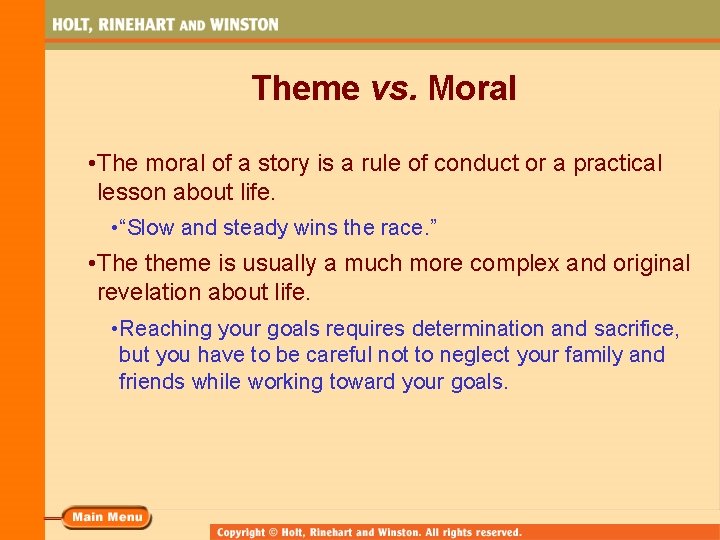
Theme vs. Moral • The moral of a story is a rule of conduct or a practical lesson about life. • “Slow and steady wins the race. ” • The theme is usually a much more complex and original revelation about life. • Reaching your goals requires determination and sacrifice, but you have to be careful not to neglect your family and friends while working toward your goals.
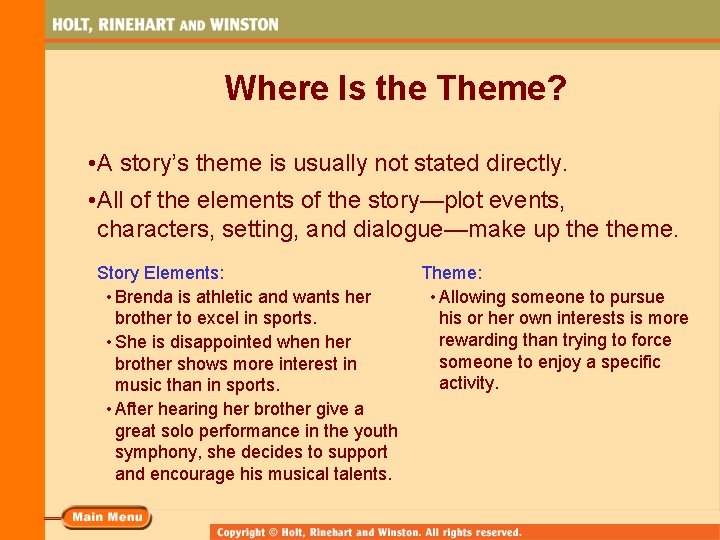
Where Is the Theme? • A story’s theme is usually not stated directly. • All of the elements of the story—plot events, characters, setting, and dialogue—make up theme. Story Elements: • Brenda is athletic and wants her brother to excel in sports. • She is disappointed when her brother shows more interest in music than in sports. • After hearing her brother give a great solo performance in the youth symphony, she decides to support and encourage his musical talents. Theme: • Allowing someone to pursue his or her own interests is more rewarding than trying to force someone to enjoy a specific activity.
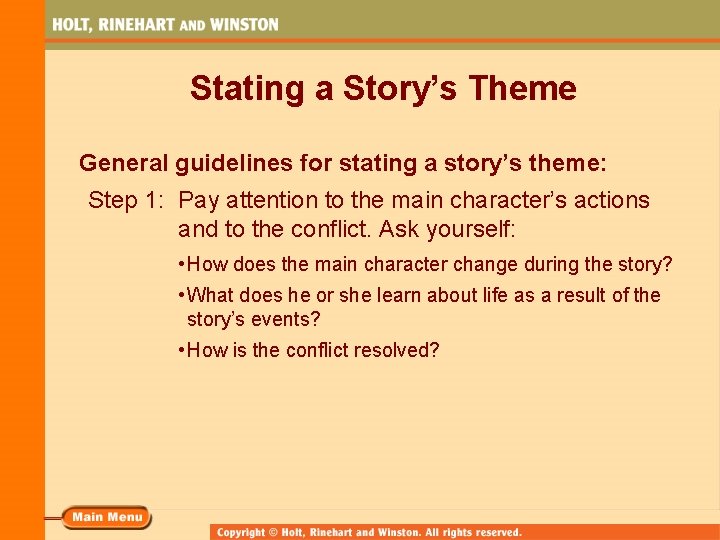
Stating a Story’s Theme General guidelines for stating a story’s theme: Step 1: Pay attention to the main character’s actions and to the conflict. Ask yourself: • How does the main character change during the story? • What does he or she learn about life as a result of the story’s events? • How is the conflict resolved?
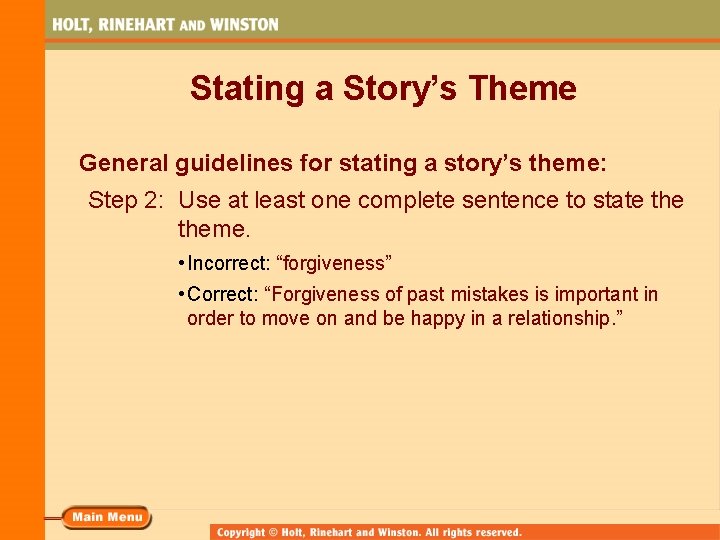
Stating a Story’s Theme General guidelines for stating a story’s theme: Step 2: Use at least one complete sentence to state theme. • Incorrect: “forgiveness” • Correct: “Forgiveness of past mistakes is important in order to move on and be happy in a relationship. ”
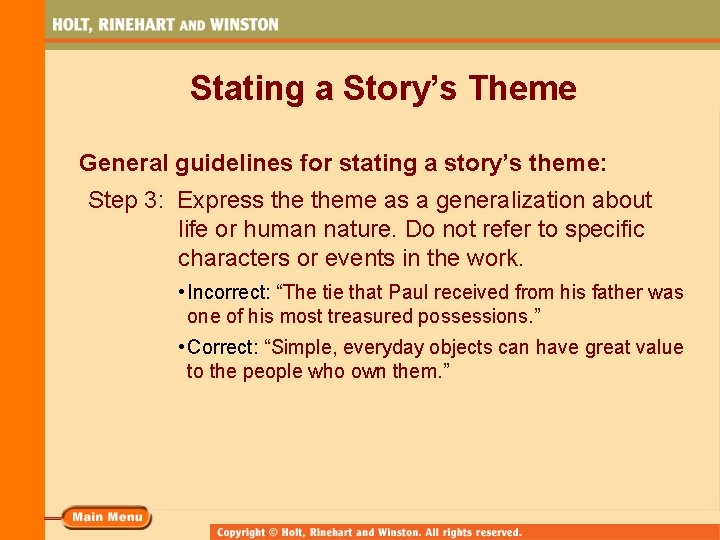
Stating a Story’s Theme General guidelines for stating a story’s theme: Step 3: Express theme as a generalization about life or human nature. Do not refer to specific characters or events in the work. • Incorrect: “The tie that Paul received from his father was one of his most treasured possessions. ” • Correct: “Simple, everyday objects can have great value to the people who own them. ”
Stating a Story’s Theme General guidelines for stating a story’s theme: Step 4: Remember that there’s more than one way to state a story’s theme. • Different people may interpret a story differently. • You may even find several themes in one story.
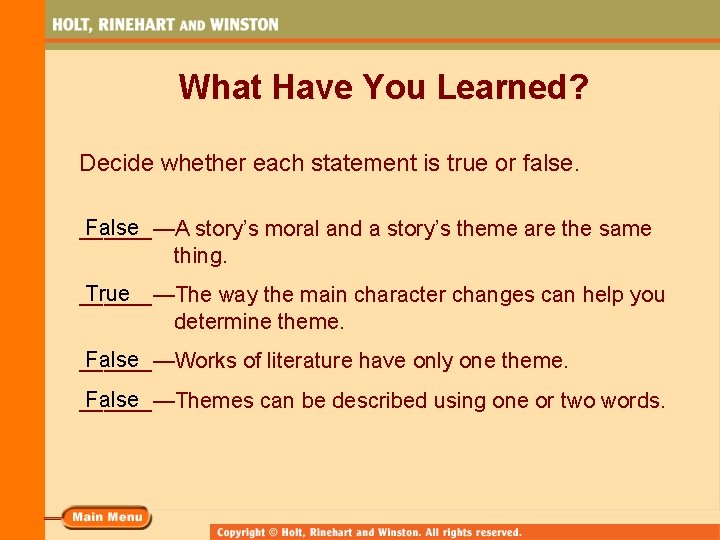
What Have You Learned? Decide whether each statement is true or false. False ______—A story’s moral and a story’s theme are the same thing. True ______—The way the main character changes can help you determine theme. False ______—Works of literature have only one theme. False ______—Themes can be described using one or two words.
The End