
Theme Central idea of a work of literature
- Slides: 5
Theme • Central idea of a work of literature. • A theme is not the same as a subject. – A subject of a work can be expressed in a word or two: love, childhood, death. – The theme is the idea the writer wishes to convey about the subject. – It is expressed in at least one complete sentence.
Theme (cont'd) • A theme is not the same as plot. – It is not just a statement about the characters in the story. Do not use character names in your theme statements. – It should describe human behavior in general, not events in the story. • A theme should be descriptive of the human condition and should not be a cliché.
More Theme • Sometimes authors state theme directly in a work of literature. • Most often, the reader has to think about all the elements of the work and use them to make an inference, or educated guess, about what theme is. – The theme be the story’s main observation; it should not ignore major parts of the story.
Theme Formula • Sometimes in/when (general situation) a person may (general description of behavior/emotion) because (explain). Example (from “The Sniper”): Sometimes in war a person may have difficulty distinguishing the innocent from the guilty because the issues may be complex.
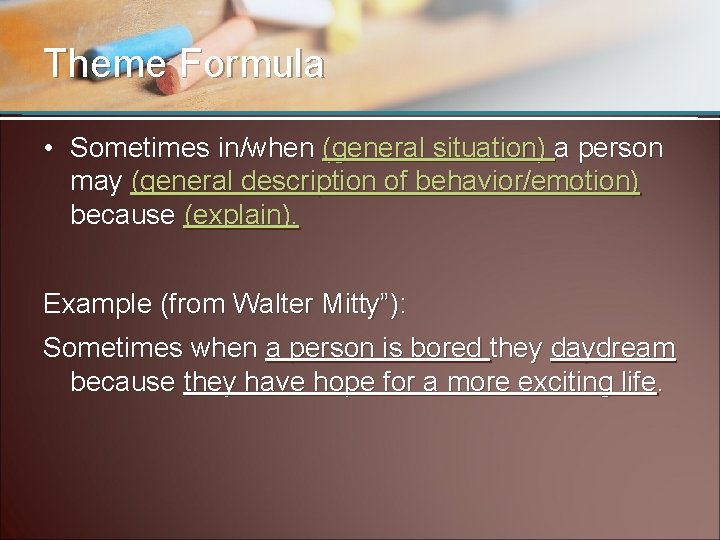
Theme Formula • Sometimes in/when (general situation) a person may (general description of behavior/emotion) because (explain). Example (from Walter Mitty”): Sometimes when a person is bored they daydream because they have hope for a more exciting life.