
THEME AND TONE FRANKENSTEIN BY MARY SHELLEY Loyda
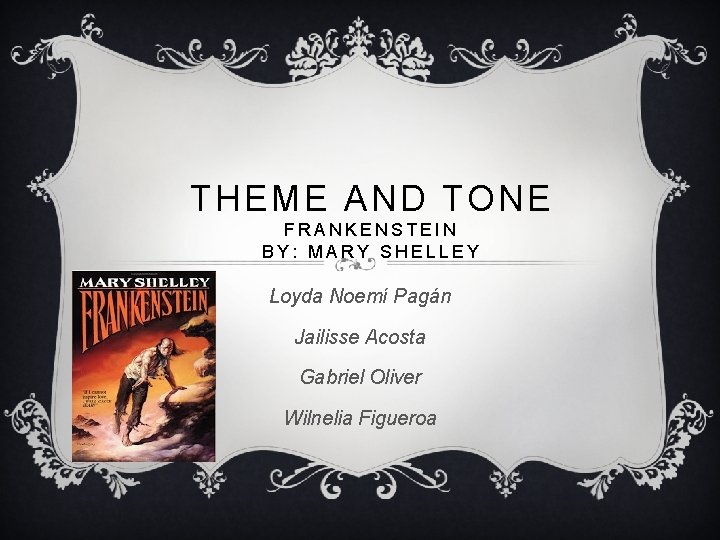
THEME AND TONE FRANKENSTEIN BY: MARY SHELLEY Loyda Noemí Pagán Jailisse Acosta Gabriel Oliver Wilnelia Figueroa
THEMES v. Primary theme: v. The consequences of obsession • Death • Affects ones that are close to you
THEMES v. Secondary themes: • • Dangerous of knowledge Monstrosity Death Search for acceptance and purpose
ALLUSIONS v Examples: • “But it was all a dream; no Eve soothed my sorrows nor shared my thoughts; I was alone. I remembered Adam's supplication to his Creator. But where was mine? " - Monster v “The modern day Prometheus” • Victor Frankenstein vs Prometheus • As a modern Prometheus, Victor creates a new species. • Prometheus feels love for his creation (unlike Victor) and he steals fire from Zeus. • Both will suffer the consequences of their actions.
SYMBOLS v. Light and fire • Duality • May seem positive until pursued too far

TONE v. The author’s attitude or tone can be described as: • • • fatalistic foreboding serious formal dark
IMPACT ON THE READER v Through complex dialogue, the mysterious mood is created. v It keeps the reader asking questions all the time.
v. The author achieves this tone by: • using words that reflect a dark feel (ruin, seized, poignant, torture, beast, monster) and curiosity (wonderful, supernatural). • being ambiguous in the text and letting the reader come to conclusions (whether it was about WHO was speaking or WHAT they meant).
EMOTIONAL ROLLERCOASTER v Although it may seem as there is an emotional rollercoaster when it comes to the feelings in the novel, the author follows a path that leads to the eerie or sinister ending.
UNBIASED v The author treats the subject seriously in most manners by expressing with all due respect the emotions and characteristics of whether vulnerability, anger, revenge, compassion or remorse through the characters. Not falling into a judgmental or biased opinion.
QUESTIONS?
- Slides: 11