
Theme 3 Christianity Social Developments in Religious Thought




- Slides: 25
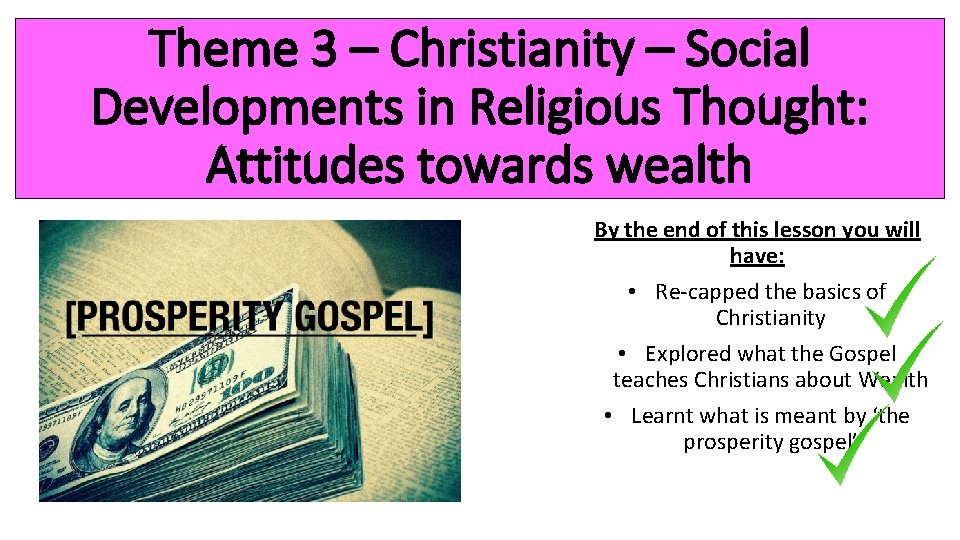
Theme 3 – Christianity – Social Developments in Religious Thought: Attitudes towards wealth By the end of this lesson you will have: • Re-capped the basics of Christianity • Explored what the Gospel teaches Christians about Wealth • Learnt what is meant by ‘the prosperity gospel’
Spec Check AO 1 AO 2 A) Social developments in religious thought – attitudes towards wealth: The dangers of wealth (with reference to Mark 10: 1725; Matthew 6: 25 -34; Luke 12: 33 -34, 1 Timothy 6: 10); apparent contradiction between biblical teaching on stewardship and the ascetic ideal; the prosperity gospel of the Word-Faith movement. * The extent to which wealth is a sign of God’s blessing. * Whether the ascetic ideal is compatible with Christianity.
Starter – Christianity Re-Cap • What is the difference between the old and new testament? • Who were Matthew, Mark, Luke and John? • What audiences were Matthew, Mark, Luke and John writing for? • What are the key concepts of Christianity we have studied so far? • (Nature of God, the trinity, atonement, faith and works, community of believers, key moral principles) • What are the religious figures and sacred texts that we have studied so far? • (Jesus’ birth, Jesus’ resurrection, the Bible as a source of wisdom)
Theme 3 – Christianity – Social Developments in Religious Thought: Attitudes towards wealth By the end of this lesson you will have: • Re-capped the basics of Christianity • Explored what the Gospel teaches Christians about Wealth • Learnt what is meant by ‘the prosperity gospel’
The Dangers of Wealth • Mark 10: 17 -25 • Matthew 6: 25 -34 • Luke 12: 33 -34 • 1 Timothy 6: 10 • There is tradition in most religions that wealth affects one’s soul • There are 4 gospel passages which warn us about wealth • In groups, you must complete the worksheet in your booklet on your given Gospel passage (use EDUQAS booklet to help you) • Be prepared to feedback to the class
The Dangers of Wealth • Mark 10: 17 -25 • Matthew 6: 25 -34 • Luke 12: 33 -34 • 1 Timothy 6: 10 Feedback and we will complete all the boxes as we go
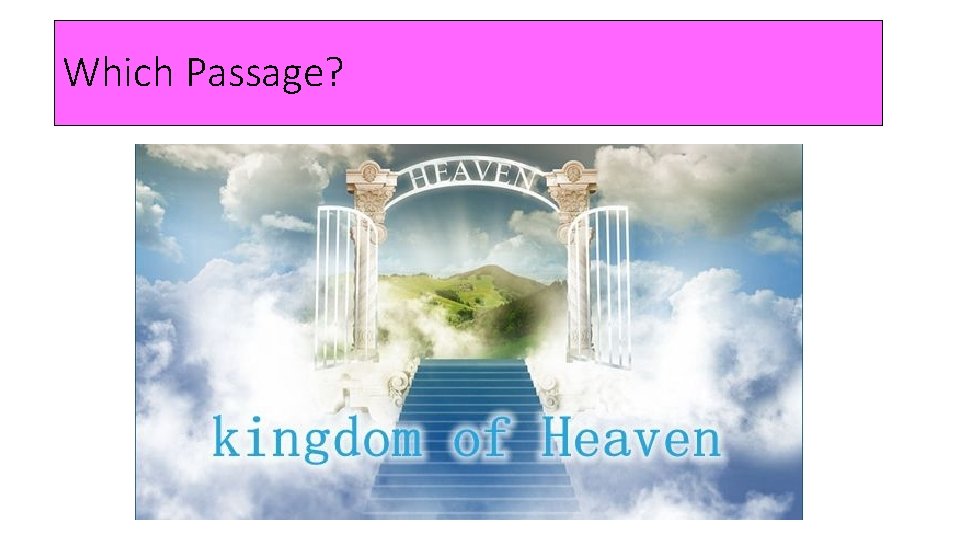
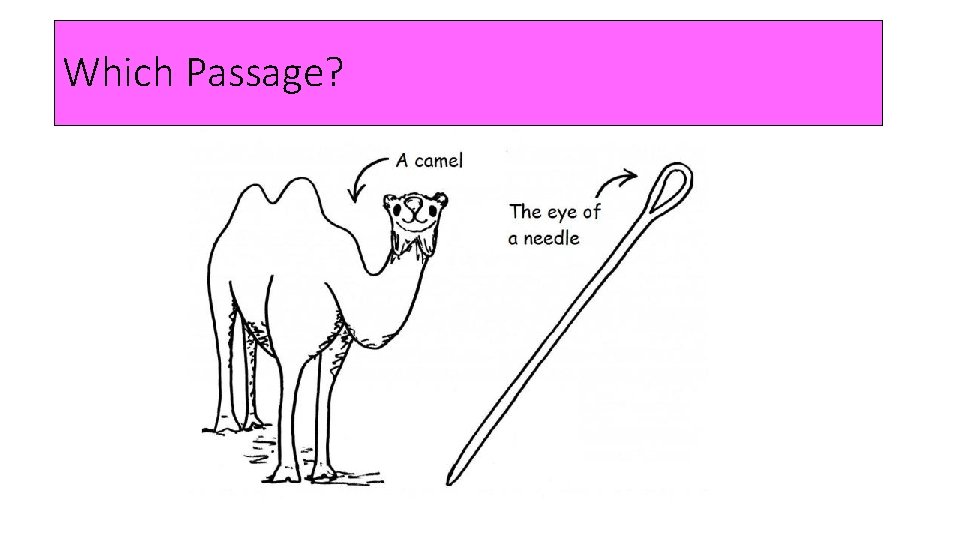
Which Passage?
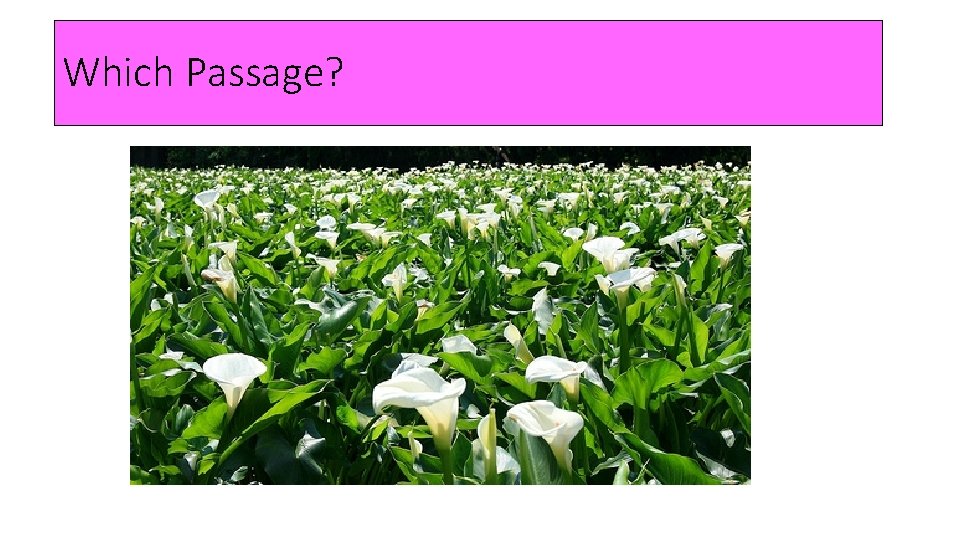
Which Passage?
Which Passage?
Which Passage?
Which Passage?
Which Passage?
Which Passage?
Biblical Teaching on Stewardship • Stewardship = administration or management • Stewardship stems from Biblical passages such as: • Creation story (God created the world – it was good, humans have dominion over the material world) • 10 commandments – humans have stewardship over their own private property • Psalms – Christians are encouraged to share the world’s resources out amongst the poor • Hebrew scriptures – Christians are encouraged to tithe and give 10% of their income to the Church • Therefore, money isn’t completely shunned in Biblical teachings. Instead Stewardship suggests that money needs to be managed wisely as a God given resource.
The Ascetic Ideal • Asceticism: Exercise or training • Acts 24 - The Christian lifestyle is represented as an ‘undertaking of a special discipline’ in the New Testament • Mark 8 - Jesus quoted ‘to be my follower deny yourself and take up your cross’ • However, • Luke 7 - Jesus also appears to be quoted as enjoying material goods more than some of his disciples (people gossiped that he was more of a drunkard and a glutton than John’.
History of Aceticism • Throughout history the ascetic ideal has taken on many different forms in the Church: • 2 nd Century – Origen theologian lives a secular life with fasting • Middle ages – monasteries created disciplined life – self-flagellation • Post-reformation – Protestant piety developed and a ‘Christian work ethic’ • Some of the best known ascetics are: • Anthony of Egypt (show from 17. 32 -20. 20) • Desert Fathers • Simeon Stylites (lived on top of a tower for 36 years)
Contradictions in Biblical Teachings • Think, Pair, Share: • ‘What are the contradictions between Biblical teachings on stewardship and the aesthetic ideal? ’ • Stewardship promotes a sense that the material world is good, whereas asceticism promotes an idea that we should separate ourselves from the material world • In some passages Jesus tells us to reject material wealth, but in other passages he is described as someone who enjoys food and wine • Asceticism ranges from all kinds of self exercise – some more mild (prayer) and others more serious (self-flagellation). How far are Christians expected to train themselves or ‘strive’ to live in such a way in which God wants
The Prosperity Gospel • Prosperity = the state of being materially successful • A new 20 th century development in Christian attitudes towards wealth comes from the prosperity gospel • The basic idea is through positive confessions of faith and sowing more seeds of faith, paying tithes and giving offerings to religious causes – God will award you with good health and good wealth • This idea became popular from televangelists • The claim is that one needs to profess out loud that they have good health and wealth (even if it isn’t true) and it will happen • This is linked to the healing powers of Jesus as found in the New Testament
The Prosperity Gospel • Think, Pair, Share: What contradictions are there between those who preach prosperity gospel, and stewardship and asceticism? • Clearly the prosperity gospel contradicts the idea of asceticism. As opposed to rejecting material gain, prosperity gospel actively encourages material gain
The Prosperity Gospel • Problems with prosperity gospel • Craig Blomberg rejects the use of the Gospel to achieve prosperity: • 1. God never promised prosperity to individual Israelites – it was promised to Israelite nation as a whole • 2. God only made promises of wealth to the nation of Israelites – not other nations • 3. No where does the New Testament promise wealth to followers of Jesus
Re-Cap • What are the four Bible passages which refer to wealth directly? • What is stewardship and how does this link to personal wealth fro Christians? • How does asceticism contradict a Christian view of stewardship? • What does the prosperity gospel preach about personal wealth? • What is your view on Christians and wealth?
Exam Skills • ‘Explain the developments of attitudes towards wealth in Christianity (20)’ • INDEPENDENTLY plan this essay in quick bullet points • You should now be used to planning for AO 1 questions without my help – if you are struggling use the book to help you OR the essay planning sheet in your workbook
Exam Skills • ‘Wealth is a sign of God’s blessing’. Discuss (30) • TASK: Split a piece of paper into 6 boxes • Walk around the classroom and collect three arguments for and against this point • TASK: Using your answers, complete an AO 2 planning sheet for the question above
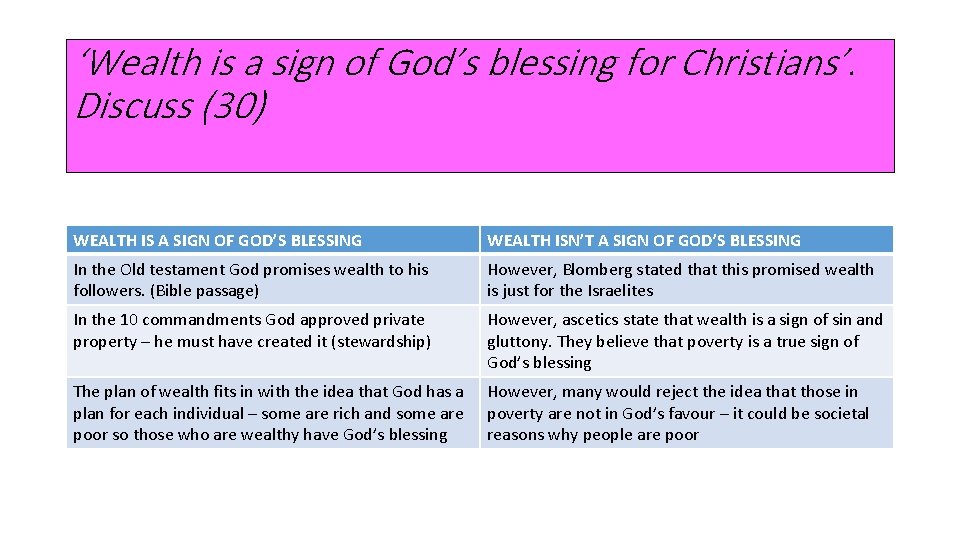
‘Wealth is a sign of God’s blessing for Christians’. Discuss (30) WEALTH IS A SIGN OF GOD’S BLESSING WEALTH ISN’T A SIGN OF GOD’S BLESSING In the Old testament God promises wealth to his followers. (Bible passage) However, Blomberg stated that this promised wealth is just for the Israelites In the 10 commandments God approved private property – he must have created it (stewardship) However, ascetics state that wealth is a sign of sin and gluttony. They believe that poverty is a true sign of God’s blessing The plan of wealth fits in with the idea that God has a plan for each individual – some are rich and some are poor so those who are wealthy have God’s blessing However, many would reject the idea that those in poverty are not in God’s favour – it could be societal reasons why people are poor
Theme 3 – Christianity – Social Developments in Religious Thought: Attitudes towards wealth By the end of this lesson you will have: • Re-capped the basics of Christianity • Explored what the Gospel teaches Christians about Wealth • Learnt what is meant by ‘the prosperity gospel’