
Theatrical Intervention as a Pathway to Moral Virtue







- Slides: 40
Theatrical Intervention as a Pathway to Moral Virtue Development Lijuan Wang, Psychology Deborah Mower, Philosophy Margaret Garvey, Theatre
Overview 1. Summary 2. 3. 4. 5. Importance Deep Integration Methodology Challenges Strategies Questions and
1. Summary and Importance
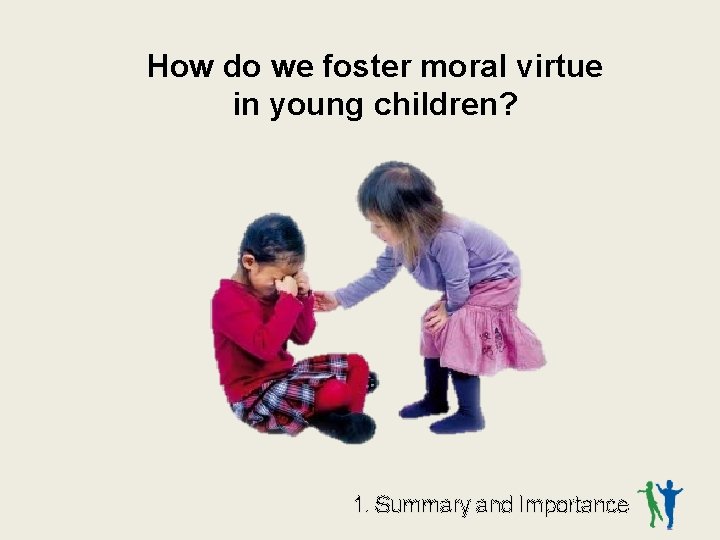
How do we foster moral virtue in young children? 1. Summary and Importance
Create a theatrical intervention that fosters moral character • Sensitive to needs and skills of children • Innovative approach for moral education 1. Summary and Importance
Practical and Theoretical Motivations • Practical moral education for parents and early childhood caregivers • Study beginnings of virtue development 1. Summary and Importance
2. Deep Integration
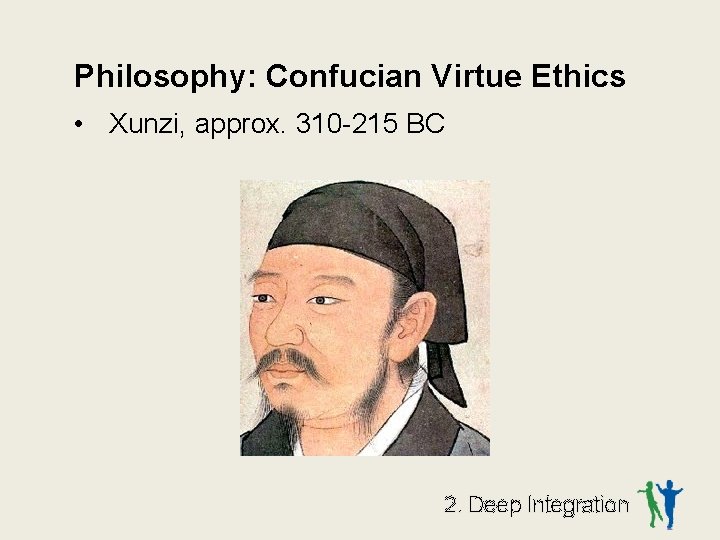
Philosophy: Confucian Virtue Ethics • Xunzi, approx. 310 -215 BC 2. Deep Integration
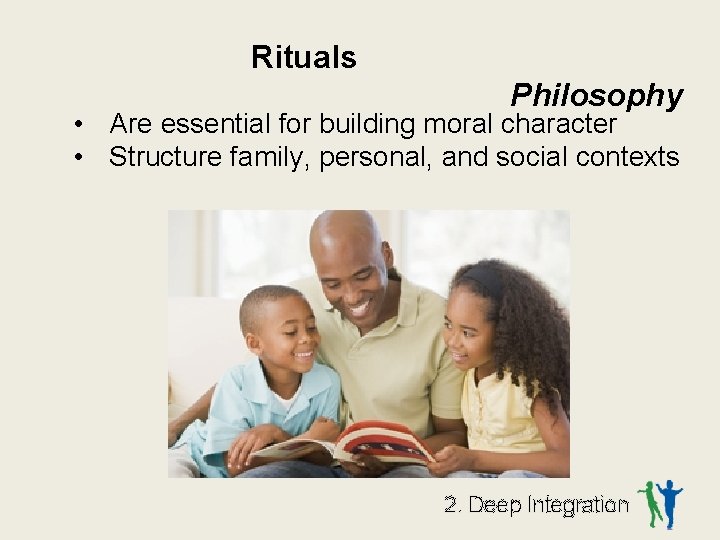
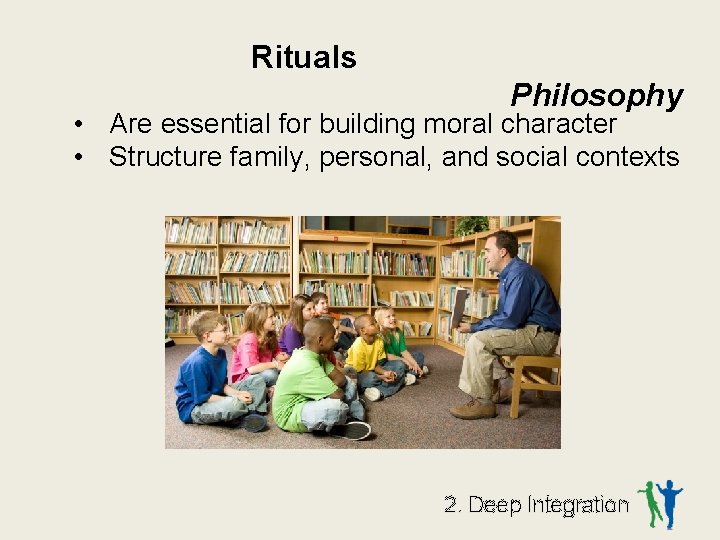
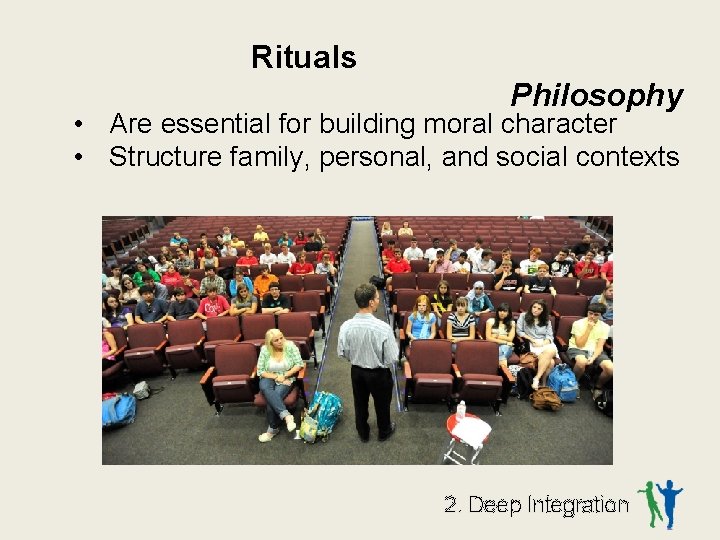
Rituals Philosophy • Are essential for building moral character • Structure family, personal, and social contexts 2. Deep Integration
Rituals Philosophy • Are essential for building moral character • Structure family, personal, and social contexts 2. Deep Integration
Rituals Philosophy • Are essential for building moral character • Structure family, personal, and social contexts 2. Deep Integration
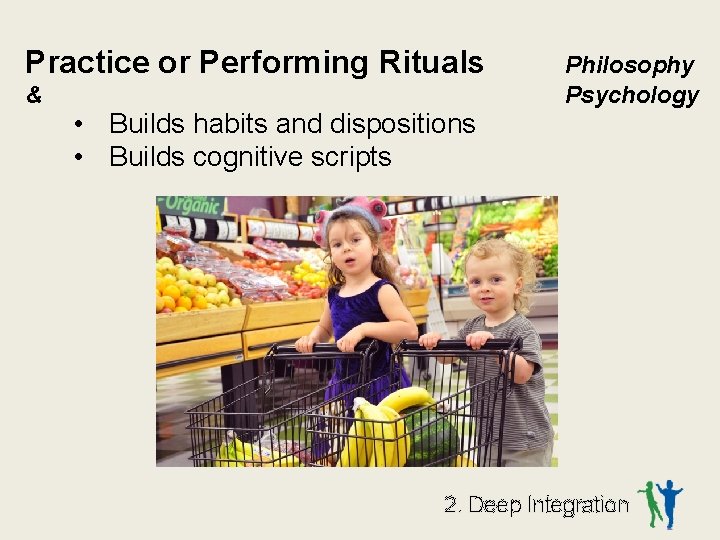
Practice or Performing Rituals & • Builds habits and dispositions • Builds cognitive scripts Philosophy Psychology 2. Deep Integration
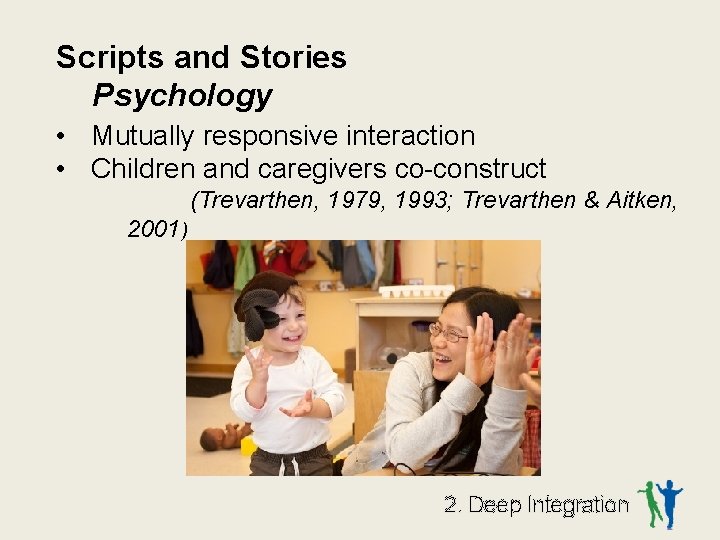
Scripts and Stories Psychology • Mutually responsive interaction • Children and caregivers co-construct (Trevarthen, 1979, 1993; Trevarthen & Aitken, 2001) 2. Deep Integration
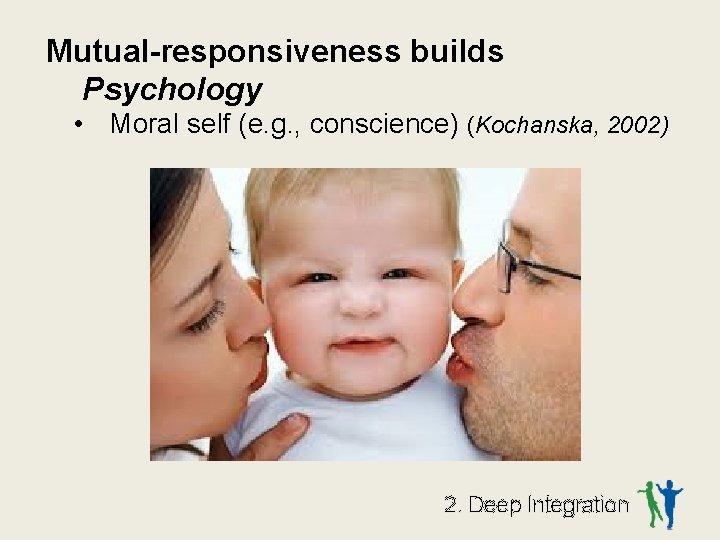
Mutual-responsiveness builds Psychology • Moral self (e. g. , conscience) (Kochanska, 2002) 2. Deep Integration
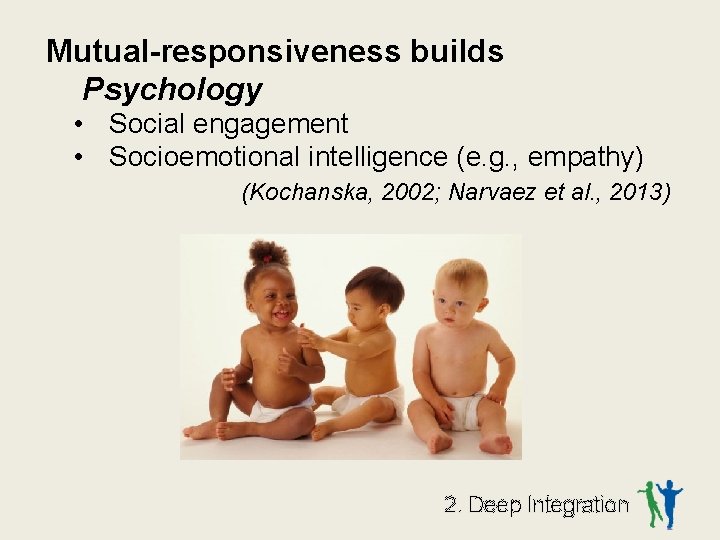
Mutual-responsiveness builds Psychology • Social engagement • Socioemotional intelligence (e. g. , empathy) (Kochanska, 2002; Narvaez et al. , 2013) 2. Deep Integration
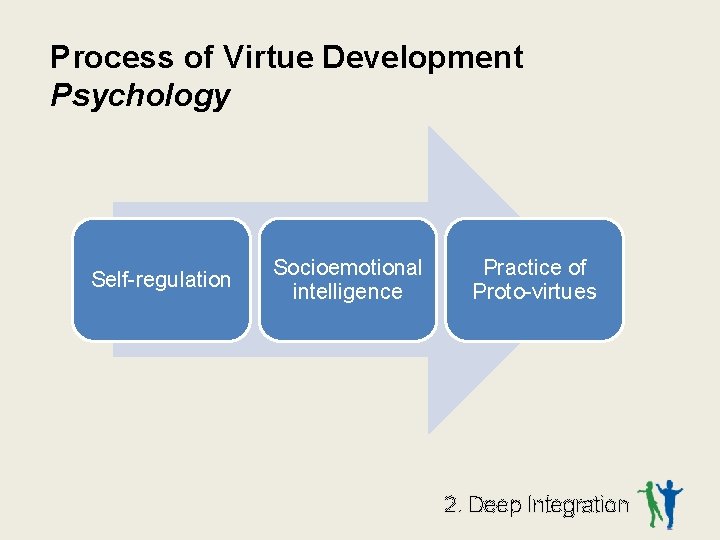
Process of Virtue Development Psychology Self-regulation Socioemotional intelligence Practice of Proto-virtues 2. Deep Integration
Scripts and Ritual Play Theatre • Enhance • Self-expression • Connection to audience • Responsiveness to other actors (Jacques Copeau, 1976) 2. Deep Integration
3. Methodology
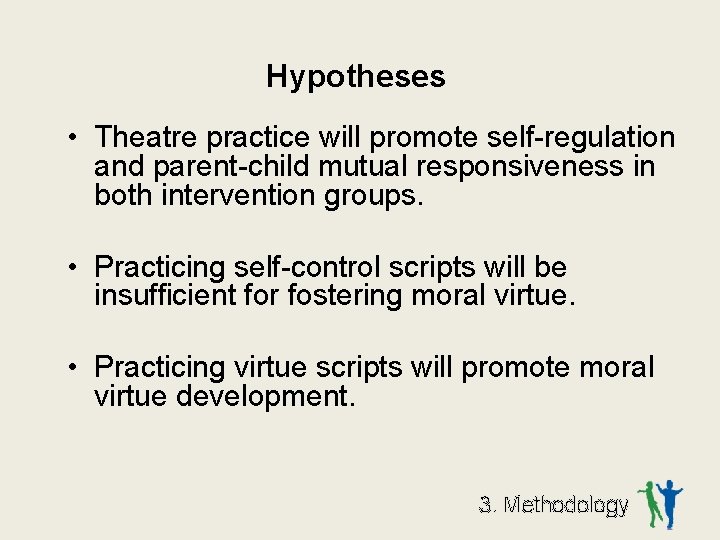
Hypotheses • Theatre practice will promote self-regulation and parent-child mutual responsiveness in both intervention groups. • Practicing self-control scripts will be insufficient for fostering moral virtue. • Practicing virtue scripts will promote moral virtue development. 3. Methodology
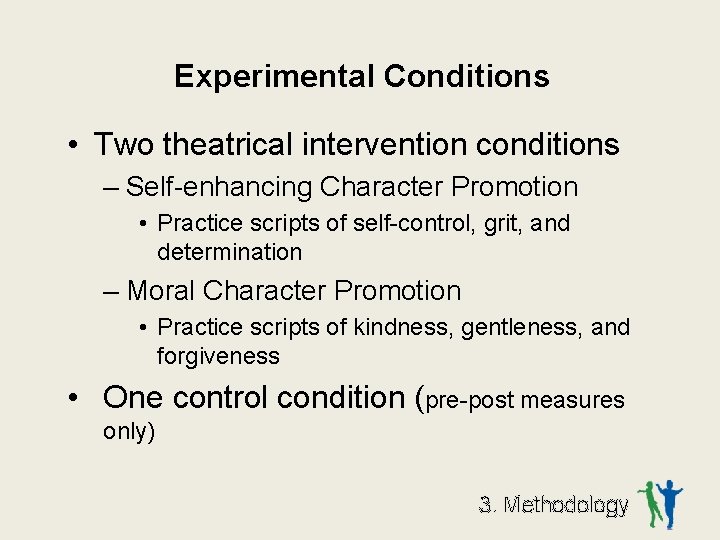
Experimental Conditions • Two theatrical intervention conditions – Self-enhancing Character Promotion • Practice scripts of self-control, grit, and determination – Moral Character Promotion • Practice scripts of kindness, gentleness, and forgiveness • One control condition (pre-post measures only) 3. Methodology
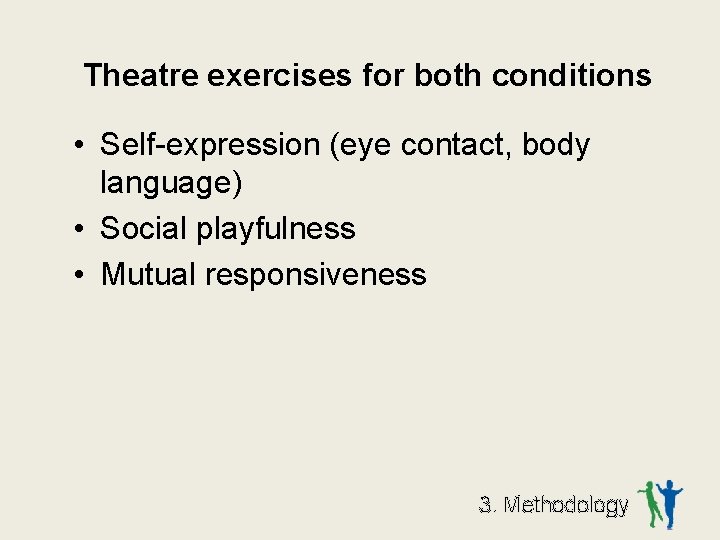
Theatre exercises for both conditions • Self-expression (eye contact, body language) • Social playfulness • Mutual responsiveness 3. Methodology
Study Design • 72 mother-child dyads • Each intervention condition – Two groups of 12 dyads (3 - to 5 -year-old and parent) – Meet once a week for 12 weeks (90 minutes) • Mixed methods: Pre-test, postintervention testing, 6 -month follow-up testing 3. Methodology
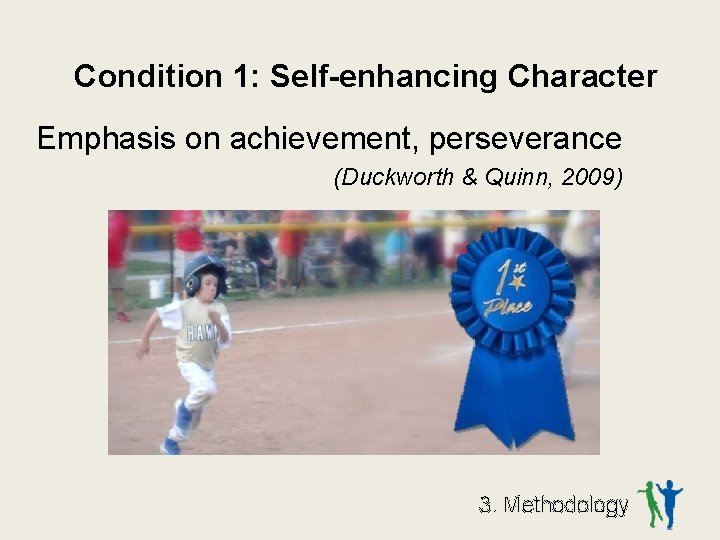
Condition 1: Self-enhancing Character Emphasis on achievement, perseverance (Duckworth & Quinn, 2009) 3. Methodology
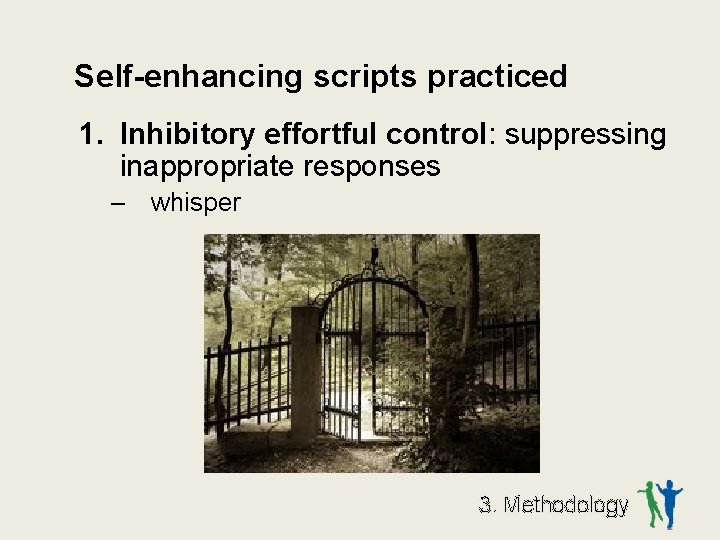
Self-enhancing scripts practiced 1. Inhibitory effortful control: suppressing inappropriate responses – whisper 3. Methodology
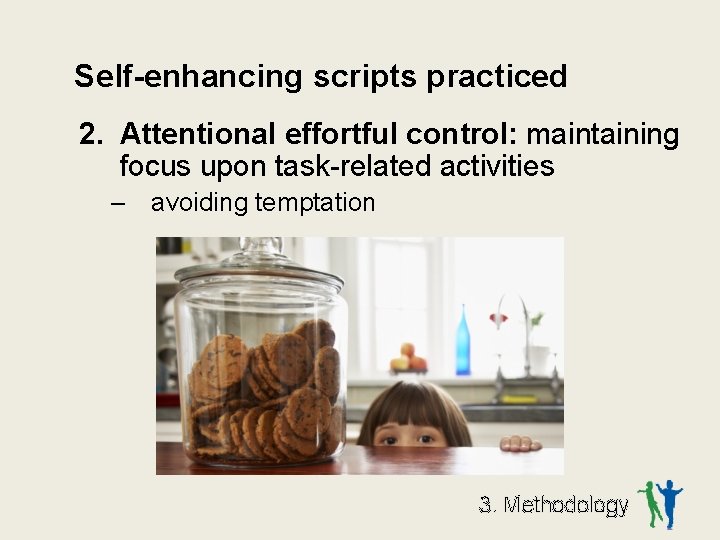
Self-enhancing scripts practiced 2. Attentional effortful control: maintaining focus upon task-related activities – avoiding temptation 3. Methodology
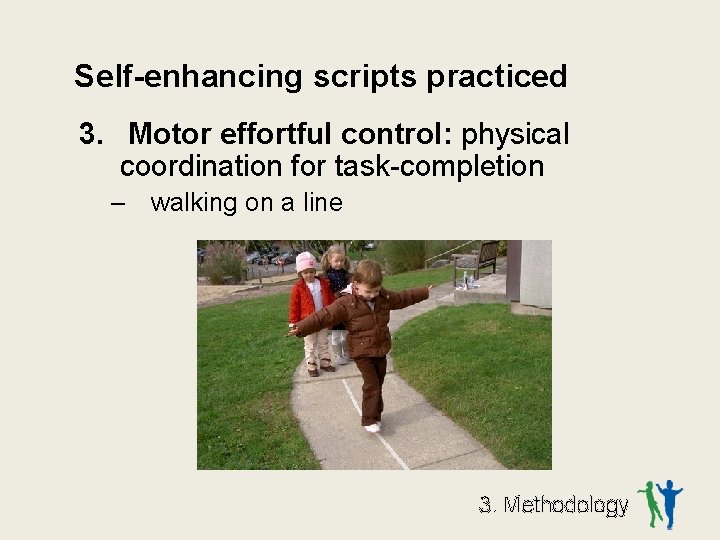
Self-enhancing scripts practiced 3. Motor effortful control: physical coordination for task-completion – walking on a line 3. Methodology
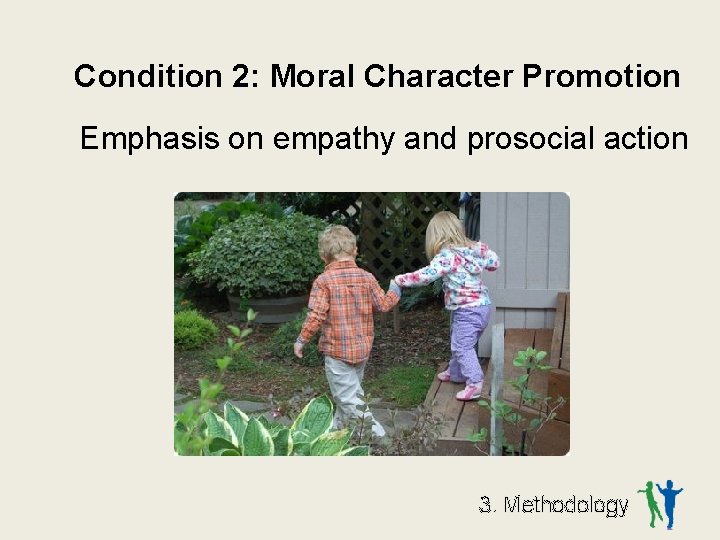
Condition 2: Moral Character Promotion Emphasis on empathy and prosocial action 3. Methodology
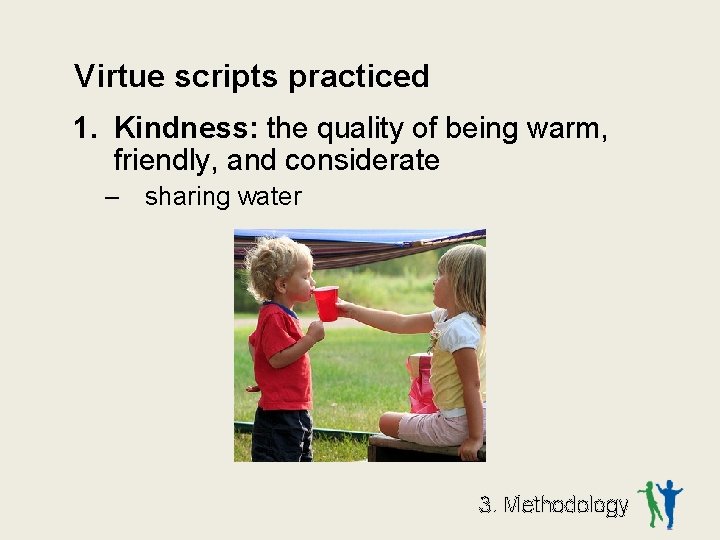
Virtue scripts practiced 1. Kindness: the quality of being warm, friendly, and considerate – sharing water 3. Methodology
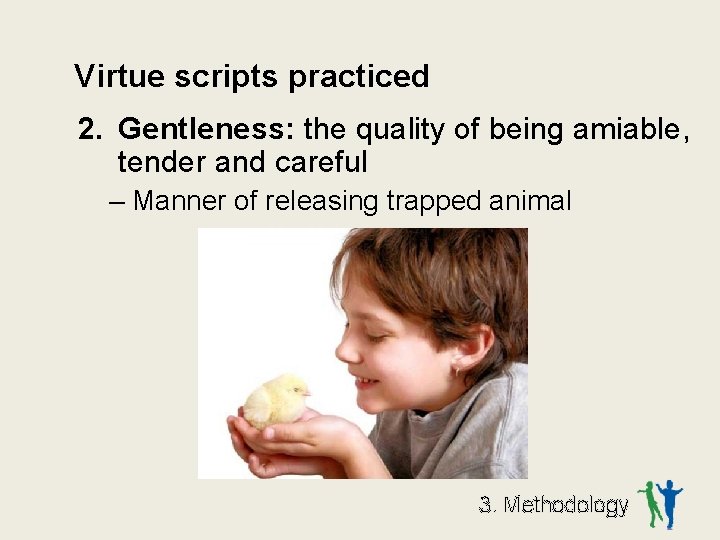
Virtue scripts practiced 2. Gentleness: the quality of being amiable, tender and careful – Manner of releasing trapped animal 3. Methodology
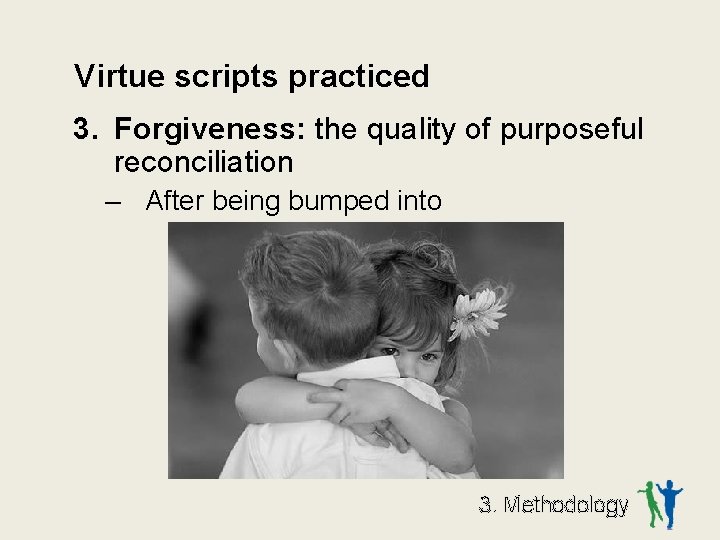
Virtue scripts practiced 3. Forgiveness: the quality of purposeful reconciliation – After being bumped into 3. Methodology
Data Collection Observation of children, parents with children • Video recording of pre and post observations 3. Methodology
Data Collection Surveys (pre/post) & Journals 3. Methodology
4. Challenges and Strategies
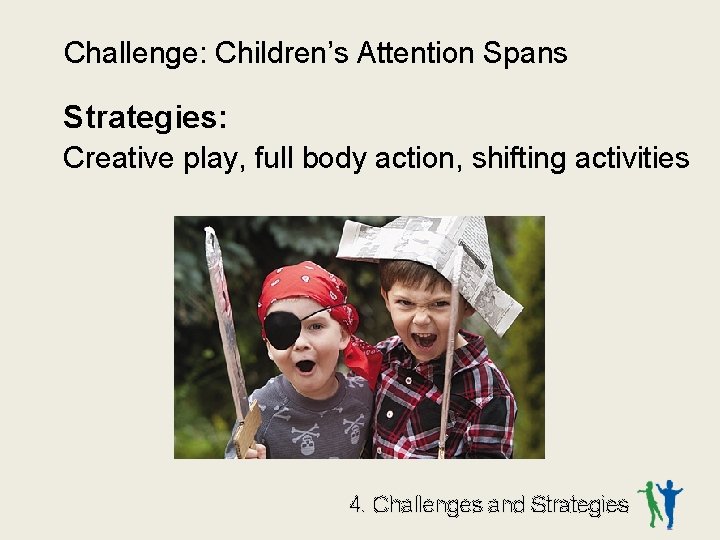
Challenge: Children’s Attention Spans Strategies: Creative play, full body action, shifting activities 4. Challenges and Strategies
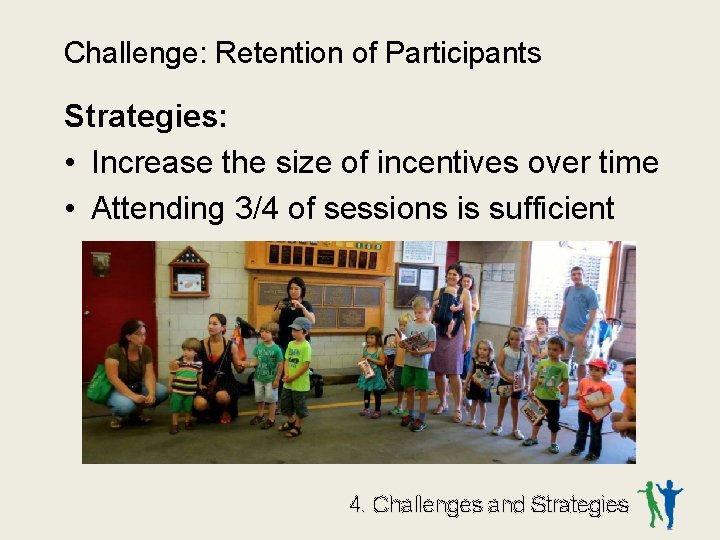
Challenge: Retention of Participants Strategies: • Increase the size of incentives over time • Attending 3/4 of sessions is sufficient 4. Challenges and Strategies
5. Questions
Thank you!