
Theatre overview o types of equipment o theatre


- Slides: 18
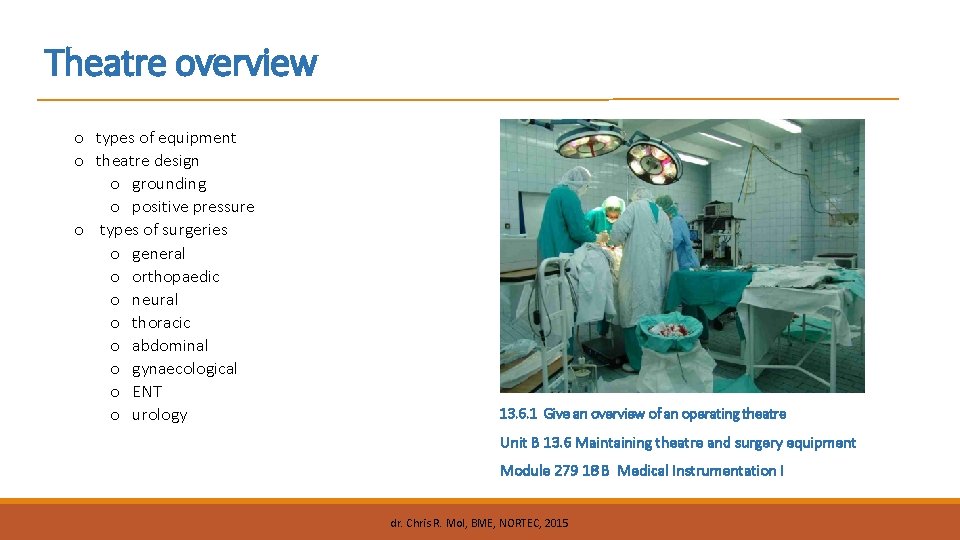
Theatre overview o types of equipment o theatre design o grounding o positive pressure o types of surgeries o general o orthopaedic o neural o thoracic o abdominal o gynaecological o ENT o urology 13. 6. 1 Give an overview of an operating theatre Unit B 13. 6 Maintaining theatre and surgery equipment Module 279 18 B Medical Instrumentation I dr. Chris R. Mol, BME, NORTEC, 2015
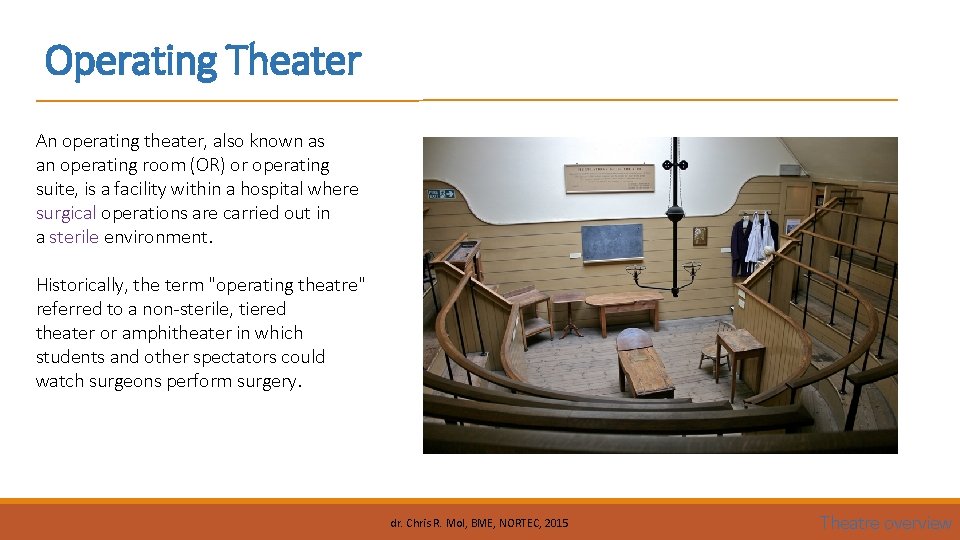
Operating Theater An operating theater, also known as an operating room (OR) or operating suite, is a facility within a hospital where surgical operations are carried out in a sterile environment. Historically, the term "operating theatre" referred to a non-sterile, tiered theater or amphitheater in which students and other spectators could watch surgeons perform surgery. dr. Chris R. Mol, BME, NORTEC, 2015 Theatre overview
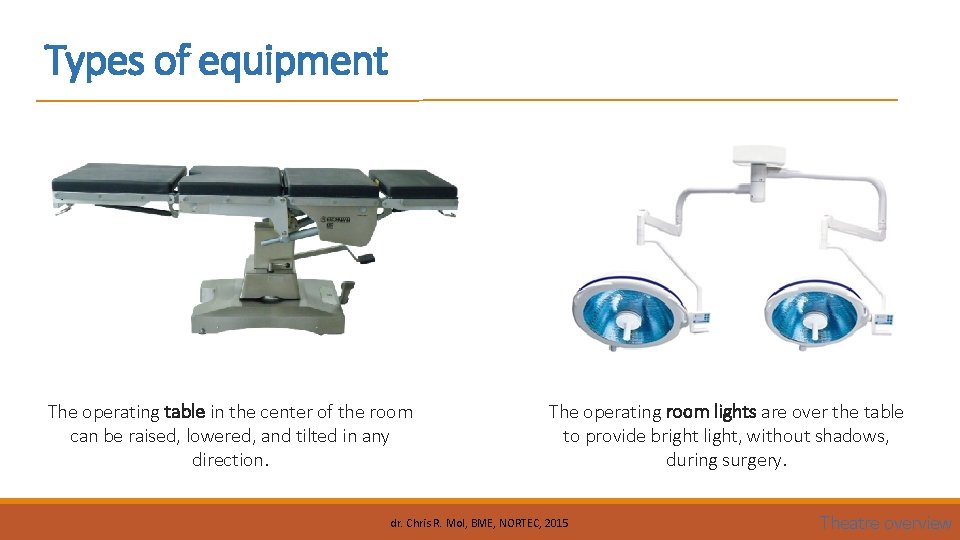
Types of equipment The operating table in the center of the room can be raised, lowered, and tilted in any direction. The operating room lights are over the table to provide bright light, without shadows, during surgery. dr. Chris R. Mol, BME, NORTEC, 2015 Theatre overview
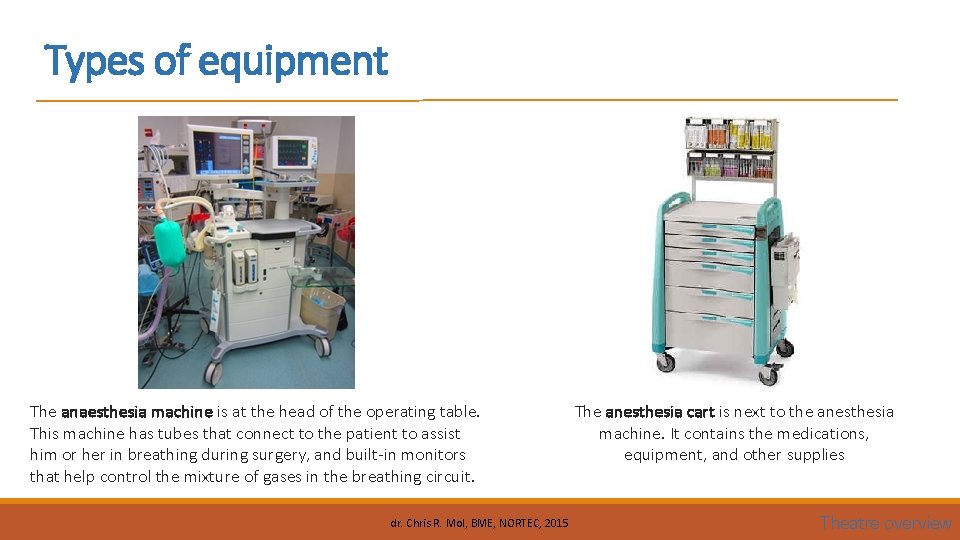
Types of equipment The anaesthesia machine is at the head of the operating table. This machine has tubes that connect to the patient to assist him or her in breathing during surgery, and built-in monitors that help control the mixture of gases in the breathing circuit. dr. Chris R. Mol, BME, NORTEC, 2015 The anesthesia cart is next to the anesthesia machine. It contains the medications, equipment, and other supplies Theatre overview
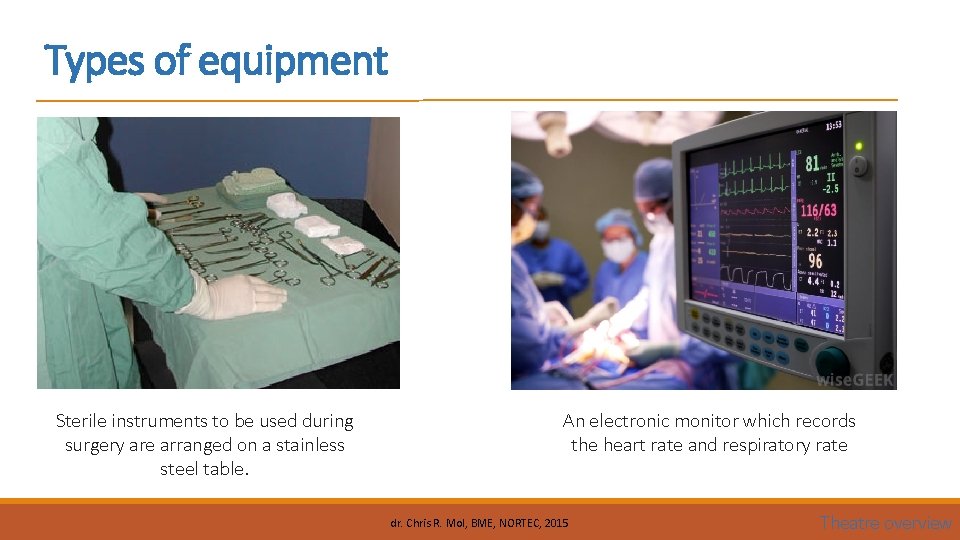
Types of equipment Sterile instruments to be used during surgery are arranged on a stainless steel table. An electronic monitor which records the heart rate and respiratory rate dr. Chris R. Mol, BME, NORTEC, 2015 Theatre overview
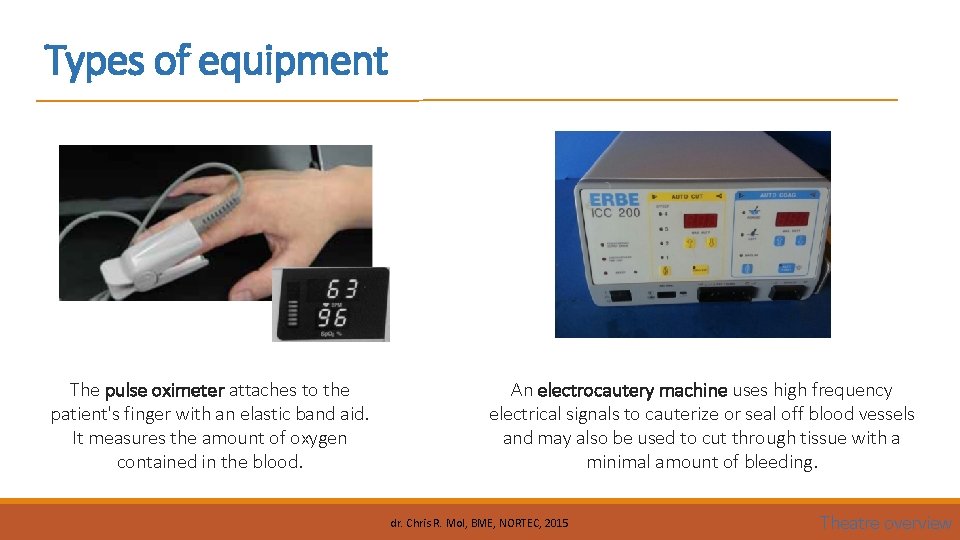
Types of equipment The pulse oximeter attaches to the patient's finger with an elastic band aid. It measures the amount of oxygen contained in the blood. An electrocautery machine uses high frequency electrical signals to cauterize or seal off blood vessels and may also be used to cut through tissue with a minimal amount of bleeding. dr. Chris R. Mol, BME, NORTEC, 2015 Theatre overview
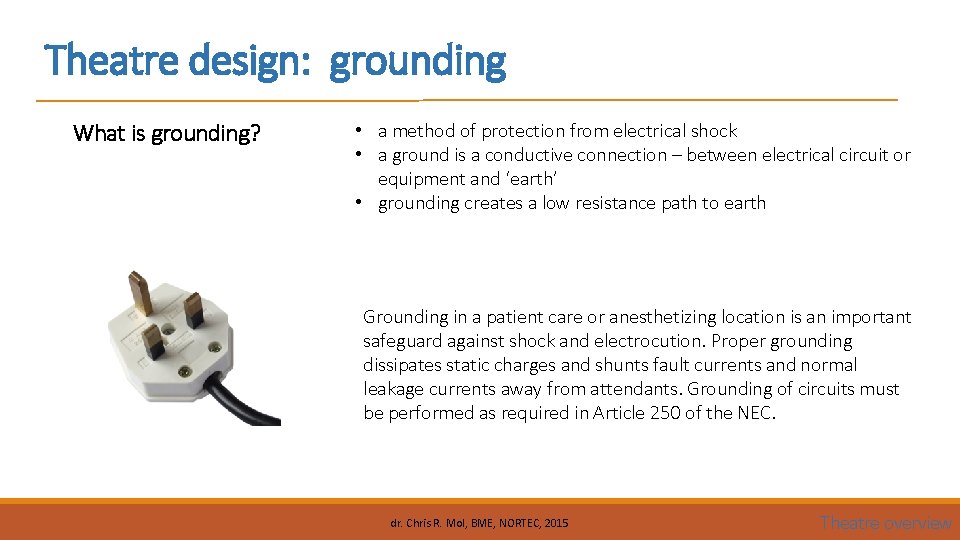
Theatre design: grounding What is grounding? • a method of protection from electrical shock • a ground is a conductive connection – between electrical circuit or equipment and ‘earth’ • grounding creates a low resistance path to earth Grounding in a patient care or anesthetizing location is an important safeguard against shock and electrocution. Proper grounding dissipates static charges and shunts fault currents and normal leakage currents away from attendants. Grounding of circuits must be performed as required in Article 250 of the NEC. dr. Chris R. Mol, BME, NORTEC, 2015 Theatre overview
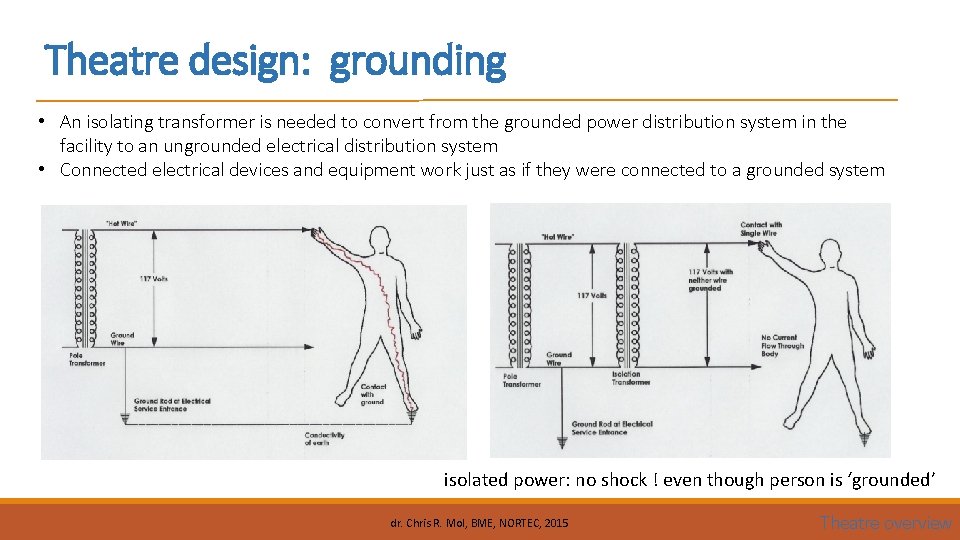
Theatre design: grounding • An isolating transformer is needed to convert from the grounded power distribution system in the facility to an ungrounded electrical distribution system • Connected electrical devices and equipment work just as if they were connected to a grounded system isolated power: no shock ! even though person is ‘grounded’ dr. Chris R. Mol, BME, NORTEC, 2015 Theatre overview
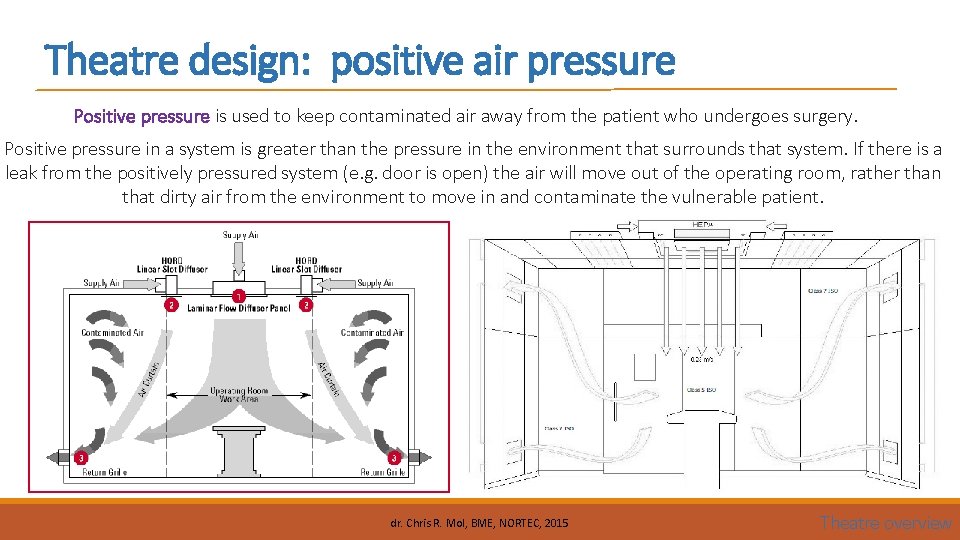
Theatre design: positive air pressure Positive pressure is used to keep contaminated air away from the patient who undergoes surgery. Positive pressure in a system is greater than the pressure in the environment that surrounds that system. If there is a leak from the positively pressured system (e. g. door is open) the air will move out of the operating room, rather than that dirty air from the environment to move in and contaminate the vulnerable patient. dr. Chris R. Mol, BME, NORTEC, 2015 Theatre overview
Types of surgeries: General surgery focuses on abdominal contents including: • oesophagus • stomach • small bowel • colon • liver • pancreas • gallbladder • bile ducts • thyroid gland • diseases involving the skin, breast, soft tissue and hernias dr. Chris R. Mol, BME, NORTEC, 2015 Theatre overview
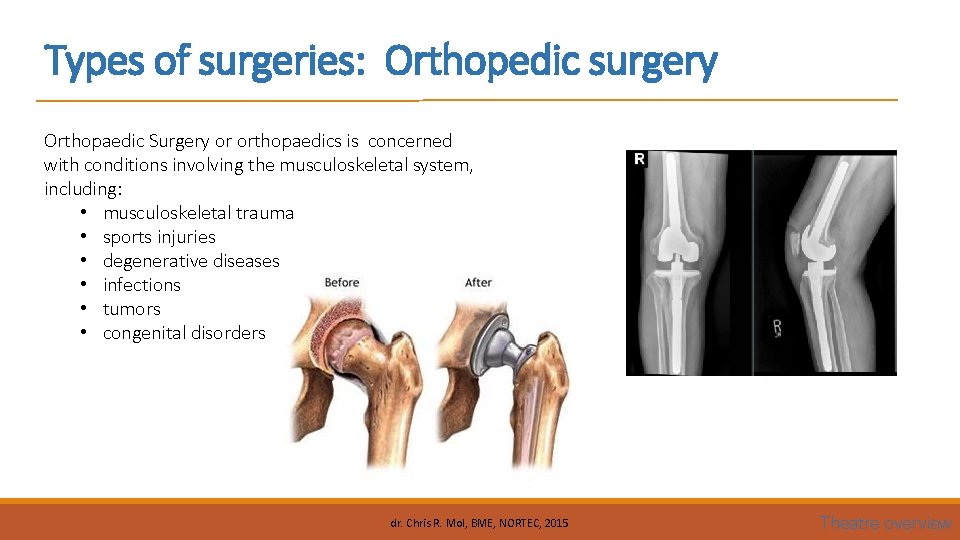
Types of surgeries: Orthopedic surgery Orthopaedic Surgery or orthopaedics is concerned with conditions involving the musculoskeletal system, including: • musculoskeletal trauma • sports injuries • degenerative diseases • infections • tumors • congenital disorders dr. Chris R. Mol, BME, NORTEC, 2015 Theatre overview
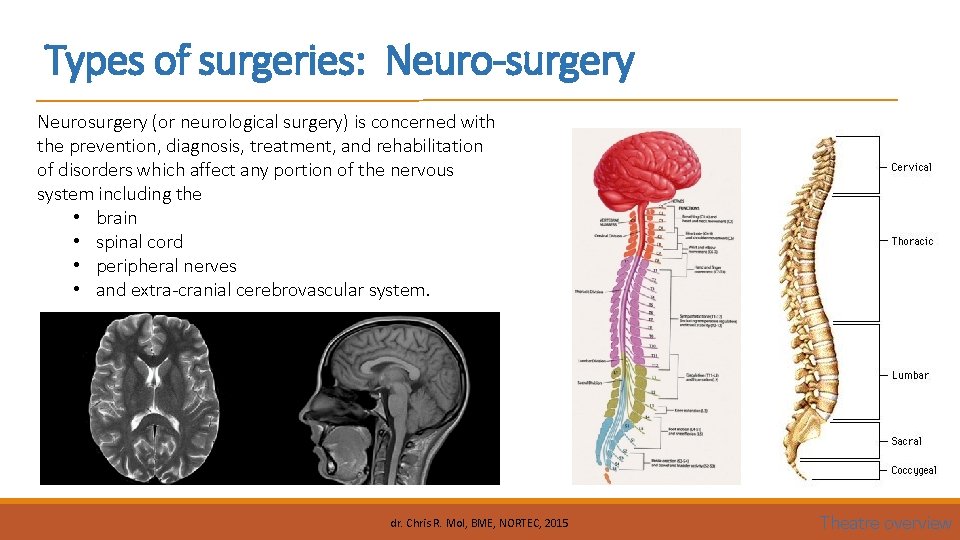
Types of surgeries: Neuro-surgery Neurosurgery (or neurological surgery) is concerned with the prevention, diagnosis, treatment, and rehabilitation of disorders which affect any portion of the nervous system including the • brain • spinal cord • peripheral nerves • and extra-cranial cerebrovascular system. dr. Chris R. Mol, BME, NORTEC, 2015 Theatre overview
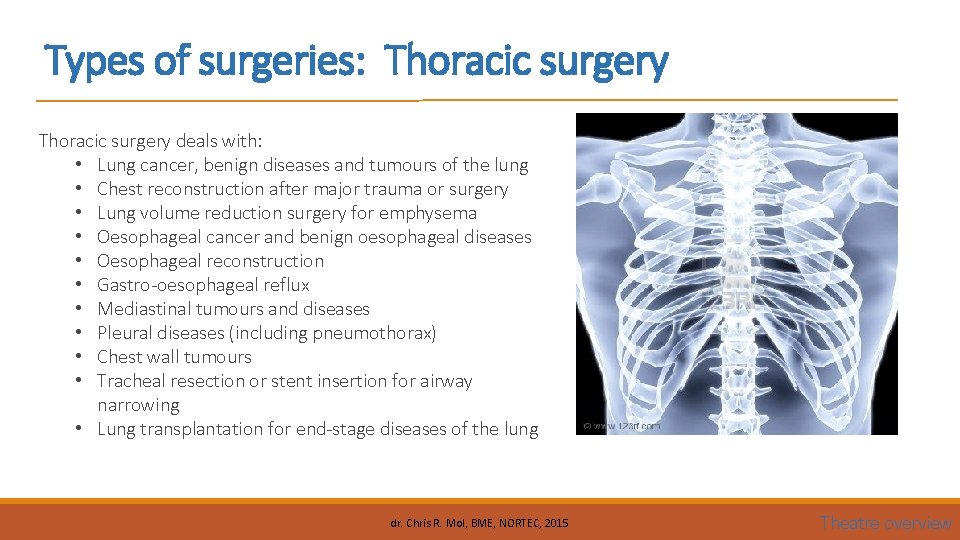
Types of surgeries: Thoracic surgery deals with: • Lung cancer, benign diseases and tumours of the lung • Chest reconstruction after major trauma or surgery • Lung volume reduction surgery for emphysema • Oesophageal cancer and benign oesophageal diseases • Oesophageal reconstruction • Gastro-oesophageal reflux • Mediastinal tumours and diseases • Pleural diseases (including pneumothorax) • Chest wall tumours • Tracheal resection or stent insertion for airway narrowing • Lung transplantation for end-stage diseases of the lung dr. Chris R. Mol, BME, NORTEC, 2015 Theatre overview
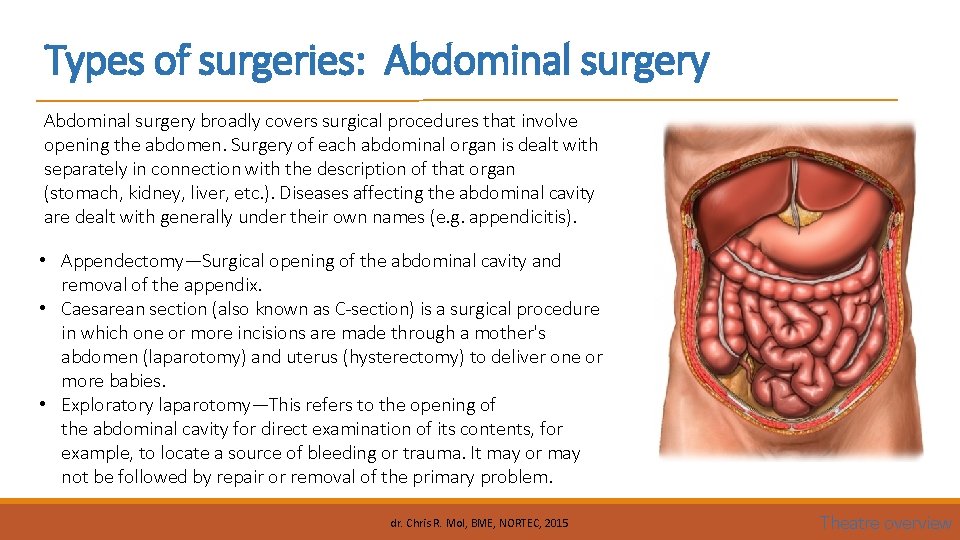
Types of surgeries: Abdominal surgery broadly covers surgical procedures that involve opening the abdomen. Surgery of each abdominal organ is dealt with separately in connection with the description of that organ (stomach, kidney, liver, etc. ). Diseases affecting the abdominal cavity are dealt with generally under their own names (e. g. appendicitis). • Appendectomy—Surgical opening of the abdominal cavity and removal of the appendix. • Caesarean section (also known as C-section) is a surgical procedure in which one or more incisions are made through a mother's abdomen (laparotomy) and uterus (hysterectomy) to deliver one or more babies. • Exploratory laparotomy—This refers to the opening of the abdominal cavity for direct examination of its contents, for example, to locate a source of bleeding or trauma. It may or may not be followed by repair or removal of the primary problem. dr. Chris R. Mol, BME, NORTEC, 2015 Theatre overview
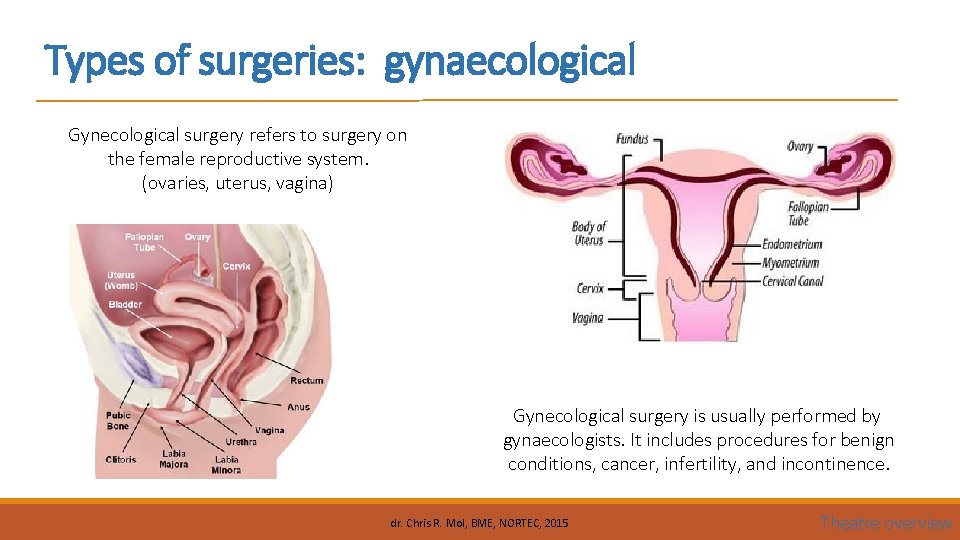
Types of surgeries: gynaecological Gynecological surgery refers to surgery on the female reproductive system. (ovaries, uterus, vagina) Gynecological surgery is usually performed by gynaecologists. It includes procedures for benign conditions, cancer, infertility, and incontinence. dr. Chris R. Mol, BME, NORTEC, 2015 Theatre overview
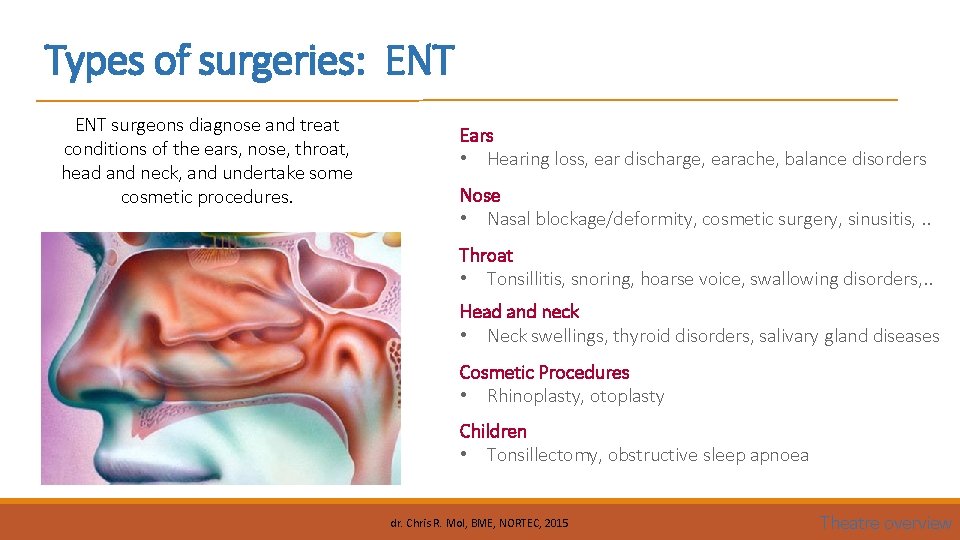
Types of surgeries: ENT surgeons diagnose and treat conditions of the ears, nose, throat, head and neck, and undertake some cosmetic procedures. Ears • Hearing loss, ear discharge, earache, balance disorders Nose • Nasal blockage/deformity, cosmetic surgery, sinusitis, . . Throat • Tonsillitis, snoring, hoarse voice, swallowing disorders, . . Head and neck • Neck swellings, thyroid disorders, salivary gland diseases Cosmetic Procedures • Rhinoplasty, otoplasty Children • Tonsillectomy, obstructive sleep apnoea dr. Chris R. Mol, BME, NORTEC, 2015 Theatre overview
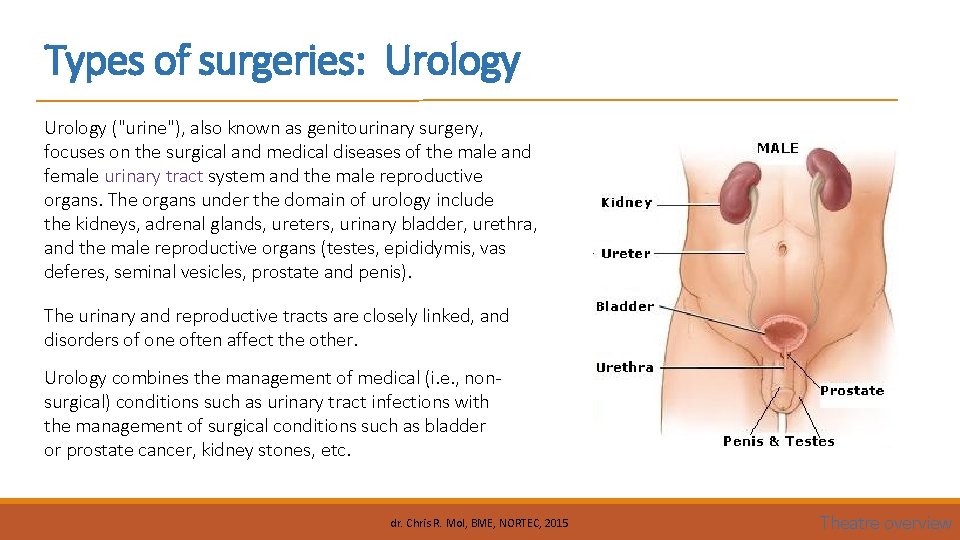
Types of surgeries: Urology ("urine"), also known as genitourinary surgery, focuses on the surgical and medical diseases of the male and female urinary tract system and the male reproductive organs. The organs under the domain of urology include the kidneys, adrenal glands, ureters, urinary bladder, urethra, and the male reproductive organs (testes, epididymis, vas deferes, seminal vesicles, prostate and penis). The urinary and reproductive tracts are closely linked, and disorders of one often affect the other. Urology combines the management of medical (i. e. , nonsurgical) conditions such as urinary tract infections with the management of surgical conditions such as bladder or prostate cancer, kidney stones, etc. dr. Chris R. Mol, BME, NORTEC, 2015 Theatre overview
END The creation of this presentation was supported by a grant from THET: see https: //www. thet. org/