
Theatre 1 2 presents Pantomime Non Verbal Communication
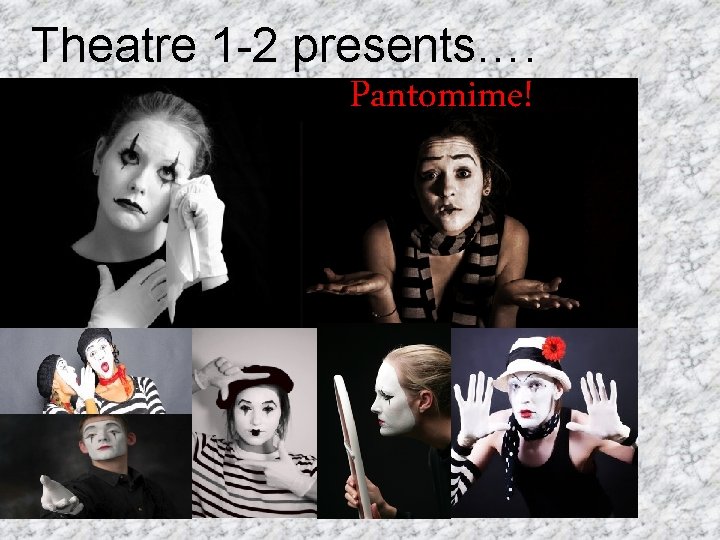
Theatre 1 -2 presents…. Pantomime!
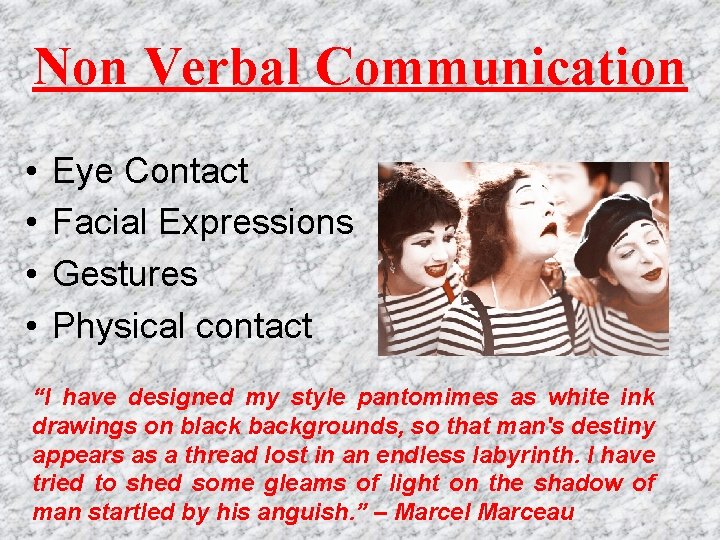
Non Verbal Communication • • Eye Contact Facial Expressions Gestures Physical contact “I have designed my style pantomimes as white ink drawings on black backgrounds, so that man's destiny appears as a thread lost in an endless labyrinth. I have tried to shed some gleams of light on the shadow of man startled by his anguish. ” – Marcel Marceau
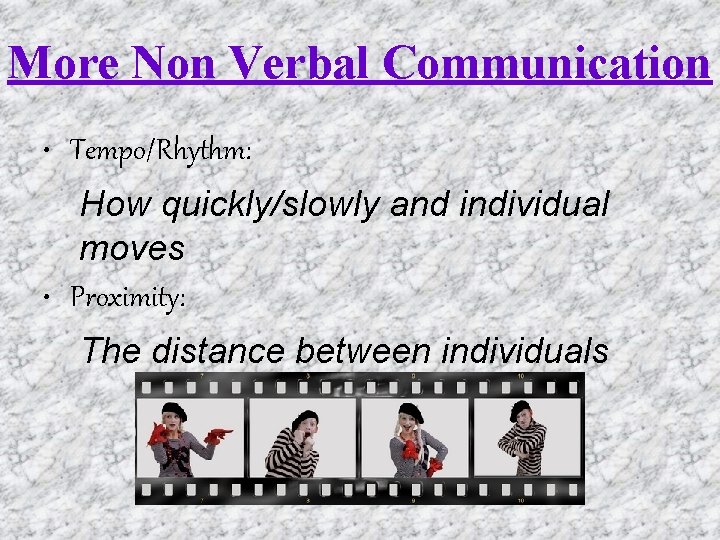
More Non Verbal Communication • Tempo/Rhythm: How quickly/slowly and individual moves • Proximity: The distance between individuals
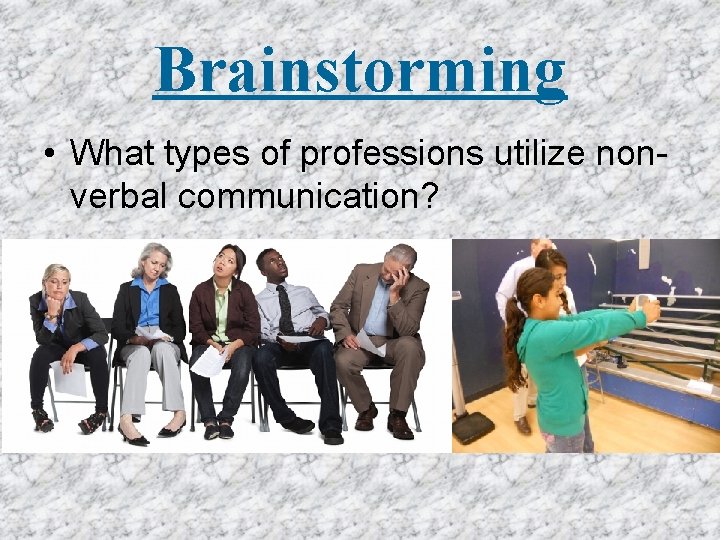
Brainstorming • What types of professions utilize nonverbal communication?
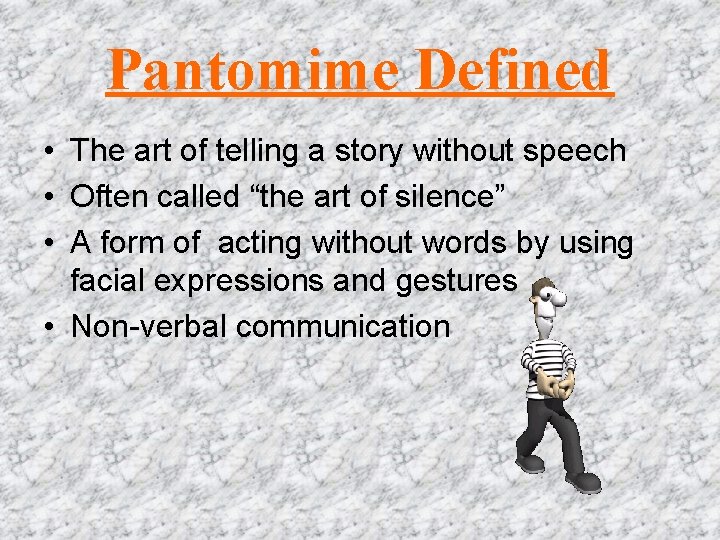
Pantomime Defined • The art of telling a story without speech • Often called “the art of silence” • A form of acting without words by using facial expressions and gestures • Non-verbal communication

Mime vs. Pantomime Often used interchangeably • Mime: art of using bodily movements to create an illusion of reality; more complex, based on theme, illusion and plot & often highly stylized (also can refer to the person performing the mime); usually expresses an idea • Pantomime: simple, chronological story lines; uses mime techniques to tell a story; usually expresses a specific action
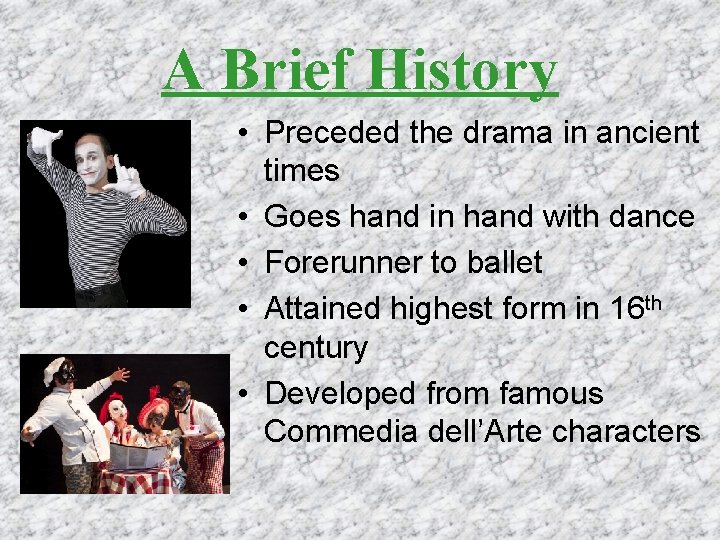
A Brief History • Preceded the drama in ancient times • Goes hand in hand with dance • Forerunner to ballet • Attained highest form in 16 th century • Developed from famous Commedia dell’Arte characters
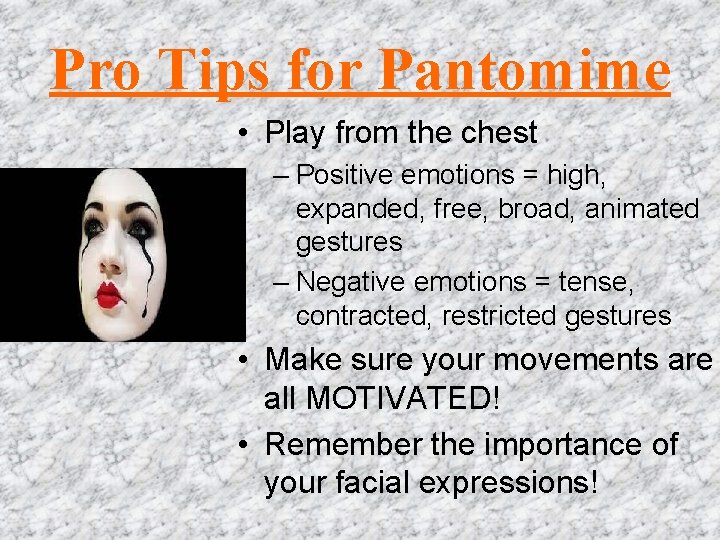
Pro Tips for Pantomime • Play from the chest – Positive emotions = high, expanded, free, broad, animated gestures – Negative emotions = tense, contracted, restricted gestures • Make sure your movements are all MOTIVATED! • Remember the importance of your facial expressions!
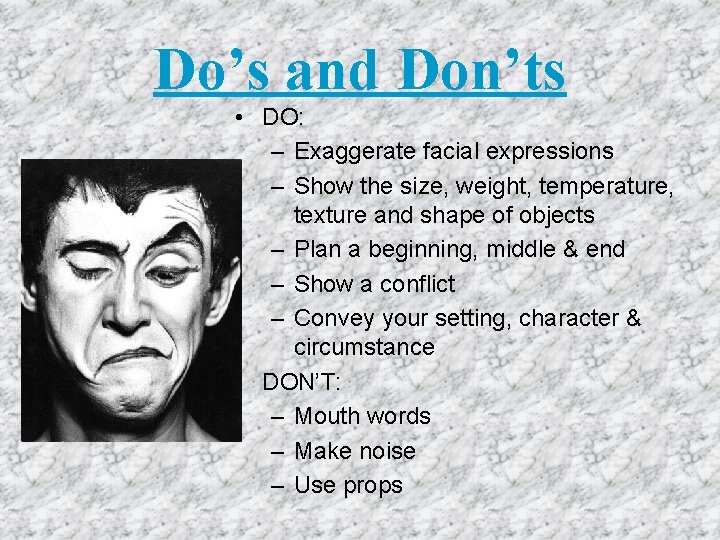
Do’s and Don’ts • DO: – Exaggerate facial expressions – Show the size, weight, temperature, texture and shape of objects – Plan a beginning, middle & end – Show a conflict – Convey your setting, character & circumstance • DON’T: – Mouth words – Make noise – Use props
Some Concepts to Know • Unity of Body – All the parts of your body should be in agreement for the idea/character you are trying to portray • Clean the Slate – A method of changing from one expression to the next
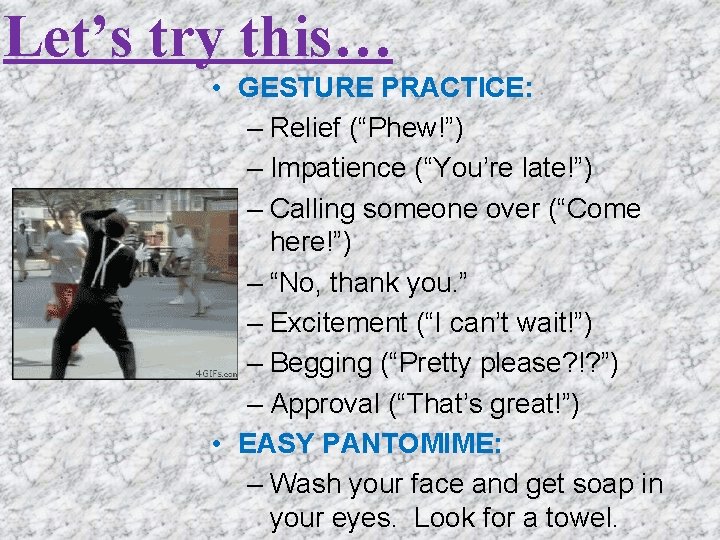
Let’s try this… • GESTURE PRACTICE: – Relief (“Phew!”) – Impatience (“You’re late!”) – Calling someone over (“Come here!”) – “No, thank you. ” – Excitement (“I can’t wait!”) – Begging (“Pretty please? !? ”) – Approval (“That’s great!”) • EASY PANTOMIME: – Wash your face and get soap in your eyes. Look for a towel.
Marcel Marceau

A pantomime: Rowan Atkinson
- Slides: 13