
The Young Republic Chapter 1 Section 2 Lecture
The Young Republic Chapter 1 Section 2
Lecture Focus Question n. What ideas and debates led to the Constitution and Bill of Rights? Explain.
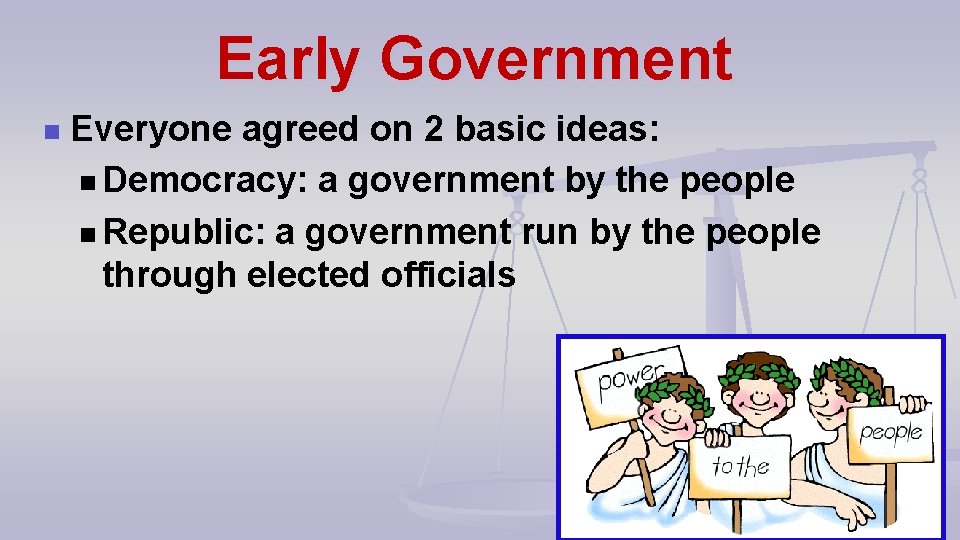
Early Government n Everyone agreed on 2 basic ideas: n Democracy: a government by the people n Republic: a government run by the people through elected officials
Plan “A” n Articles of Confederation: created a framework for limited national govt in the U. S. after the Revolution n Confederation: a group of individuals united together for a purpose n States retained most of the power n Consisted of only 1 branch: Congress to make laws and enforced laws
Weaknesses of A of C One vote for each state, regardless of population n Congress powerless to tax states n Congress powerless to enforce laws n No national court system to interpret laws n Changes/additions to the Articles required unanimous vote n
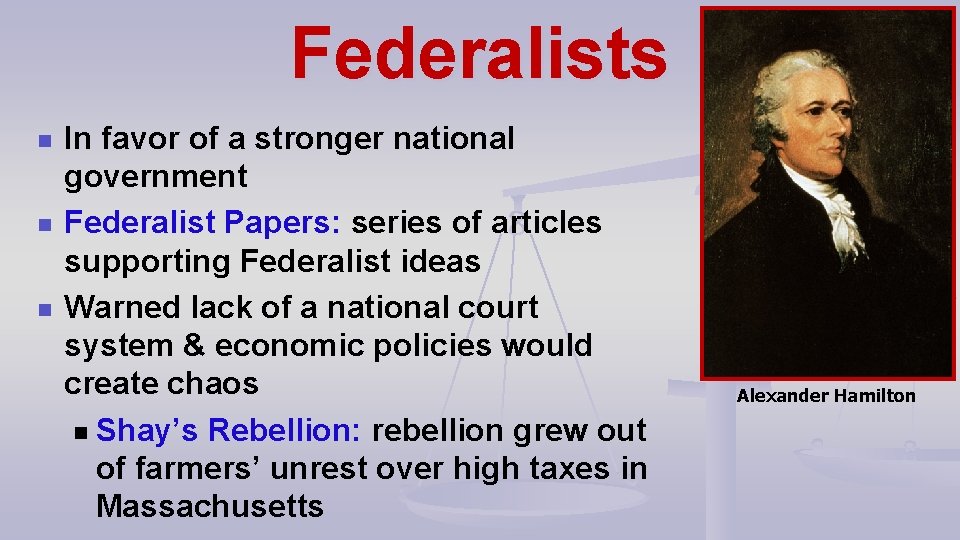
Federalists n n n In favor of a stronger national government Federalist Papers: series of articles supporting Federalist ideas Warned lack of a national court system & economic policies would create chaos n Shay’s Rebellion: rebellion grew out of farmers’ unrest over high taxes in Massachusetts Alexander Hamilton
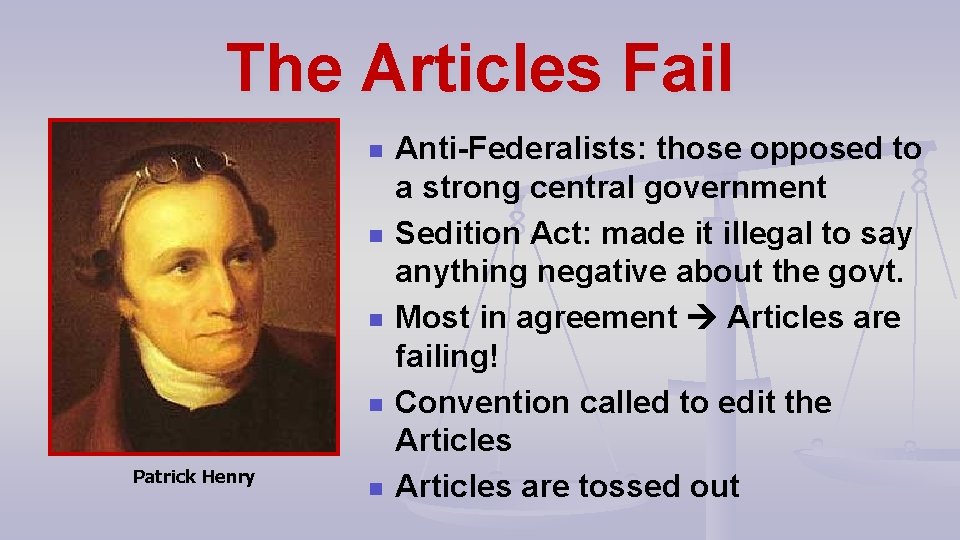
The Articles Fail n n n Patrick Henry n Anti-Federalists: those opposed to a strong central government Sedition Act: made it illegal to say anything negative about the govt. Most in agreement Articles are failing! Convention called to edit the Articles are tossed out
New Plans and Compromises n n Virginia Plan: representation based on population New Jersey Plan: equal representation for each state regardless of population n n Great Compromise: solved the issue of representation → combined the 2 plans Three-Fifths Compromise: counted each slave as 3/5 of a person for the purpose of Southern representation
Three Branches of Govt Legislative Branch: creates the law n Judicial Branch: interprets the law / power of judicial review n Executive Branch: enforces the law n Separation of powers: 3 branches, each with its own area of authority n Checks and balances: each branch has the ability to curb the power of the other branches n
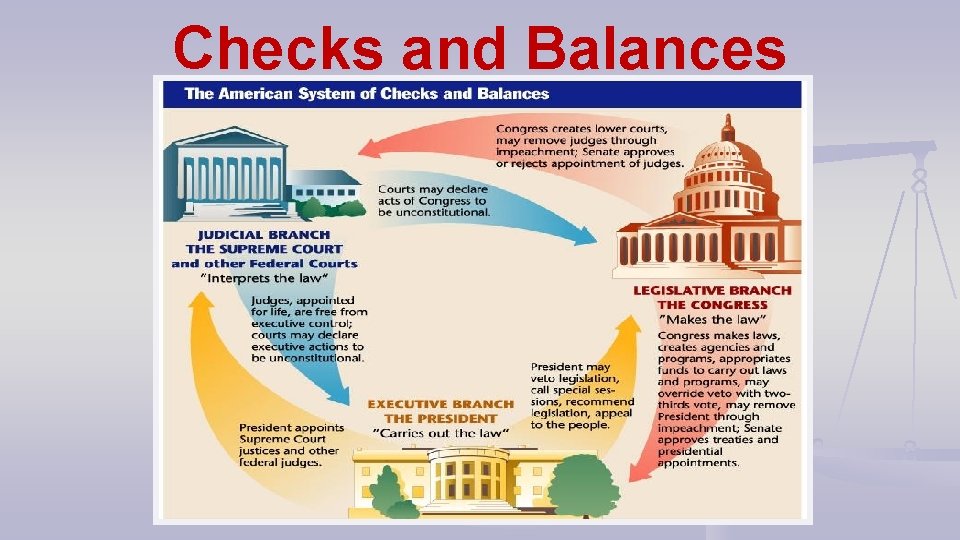
Checks and Balances
The U. S. Constitution n n Anti-Federalists argue Constitution takes away too much power from individuals/states James Madison writes/adds Bill of Rights to make Anti-Federalists happy Bill of Rights: first 10 amendments of the Constitution which protect individual rights U. S. Constitution is ratified!
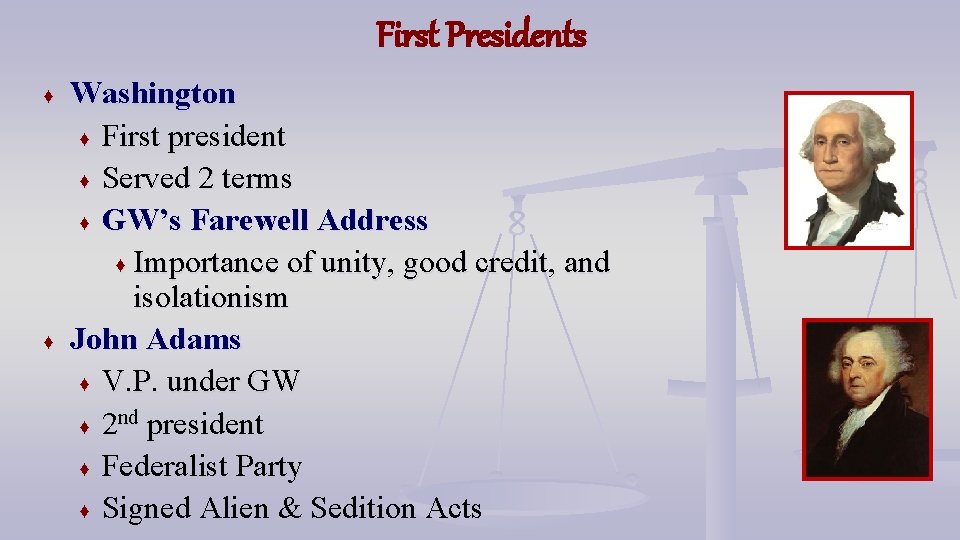
First Presidents ♦ ♦ Washington ♦ First president ♦ Served 2 terms ♦ GW’s Farewell Address ♦ Importance of unity, good credit, and isolationism John Adams ♦ V. P. under GW ♦ 2 nd president ♦ Federalist Party ♦ Signed Alien & Sedition Acts
Political Parties ♦ Alexander Hamilton: ♦ Federalist ♦ Secretary of Treasury under Washington ♦ Est. National Bank → needed for a strong economy ♦ Elastic Clause: “implied powers” in Constitution ♦ Thomas Jefferson: ♦ Democratic-Republican ♦ Secretary of State under Washington (3 rd president) ♦ Opposed National Bank → too much power in too few hands ♦ Limit federal govt to “enumerated powers” in Constitution
Election of 1800 ♦ ♦ ♦ Adams decided to not run for re-election due to unpopulartity over taxes and laws passed Jefferson won election against Burr, and he became Vice President Jefferson was committed to limiting central government ♦ ♦ ♦ Paid off debt Cut govt spending Removed whiskey tax
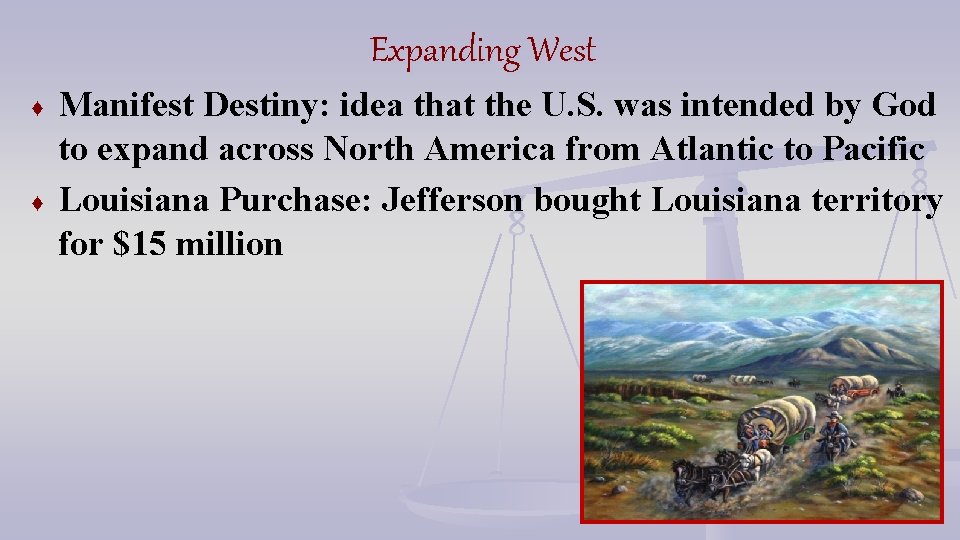
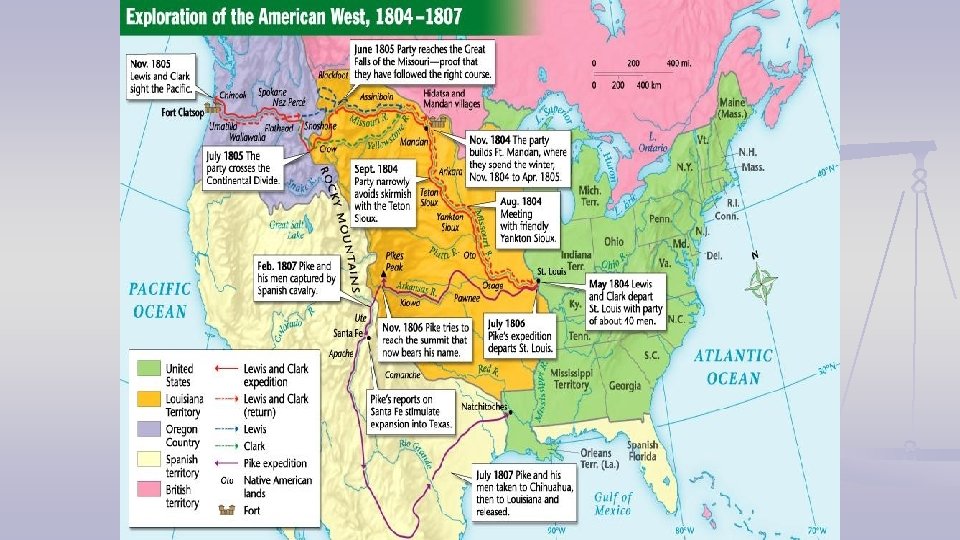
Expanding West ♦ ♦ Manifest Destiny: idea that the U. S. was intended by God to expand across North America from Atlantic to Pacific Louisiana Purchase: Jefferson bought Louisiana territory for $15 million
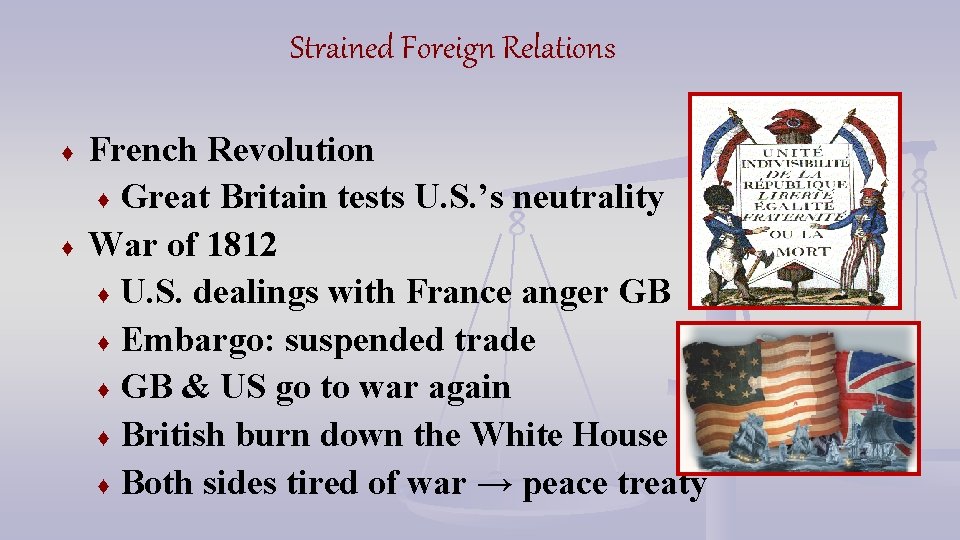
Strained Foreign Relations ♦ ♦ French Revolution ♦ Great Britain tests U. S. ’s neutrality War of 1812 ♦ U. S. dealings with France anger GB ♦ Embargo: suspended trade ♦ GB & US go to war again ♦ British burn down the White House ♦ Both sides tired of war → peace treaty
- Slides: 17