
The XE2100 WBC and Differential measurement Principles of
The XE-2100 WBC and Differential measurement
Principles of cell detection l Wbc and differential counts are determined using: – – l Flow Cytometry Method Semiconductor Laser. Blood cell information is obtained using: – – – Forward light scatter Lateral fluorescent light
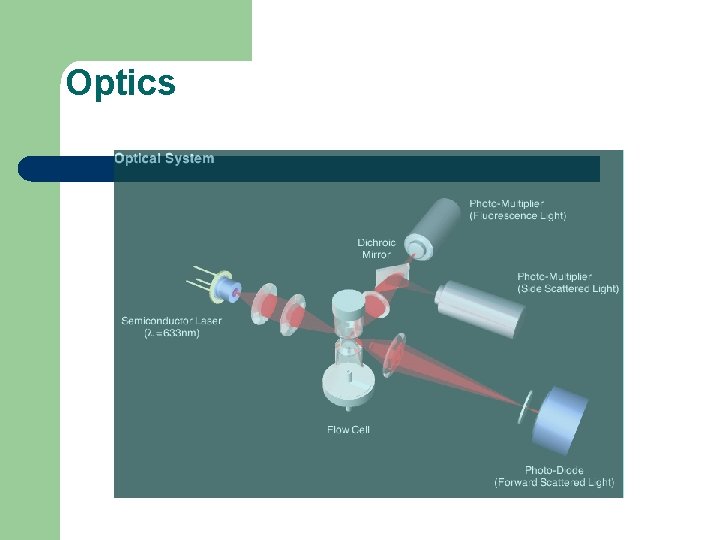
Optics
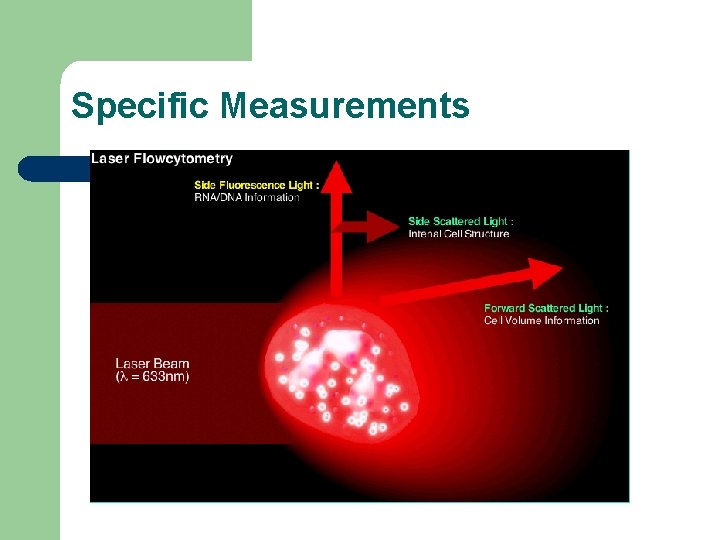
Specific Measurements
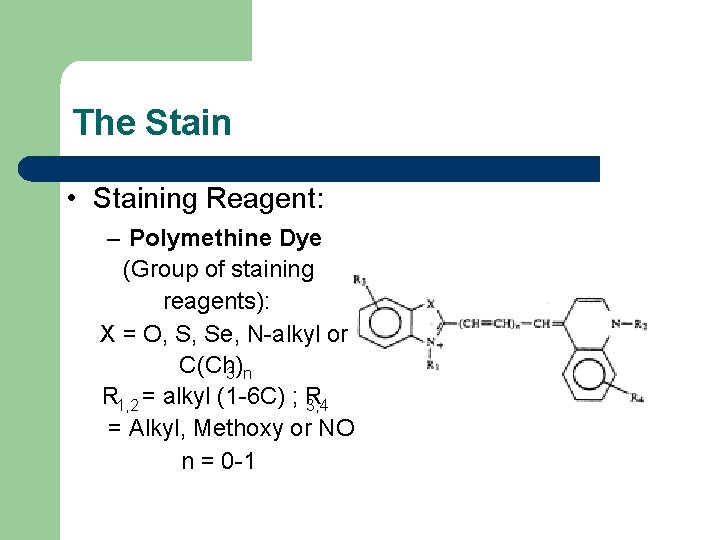
The Stain • Staining Reagent: – Polymethine Dye (Group of staining reagents): X = O, S, Se, N-alkyl or C(Ch 3)n R 1, 2 = alkyl (1 -6 C) ; R 3, 4 = Alkyl, Methoxy or NO n = 0 -1
The Wavelength l l l The new stain opens up the possibility of using a different laser wavelength on a compact laser system with little need of increases in power = 633 nm Red laser beam

Methodologies
WBC/BASO Channel l Blood sample is aspirated, diluted to a ratio of 1: 50 with STOMATOLYSER-FB. Diluted sample is sent to WBC/BASO detection chamber. In this channel, forward and side scatter signals are used to derive the WBC and BASO count.
Measurements l l Forward Scatter - Measurement of size Side Scatter - Measurement of internal structure i. e size of nucleus
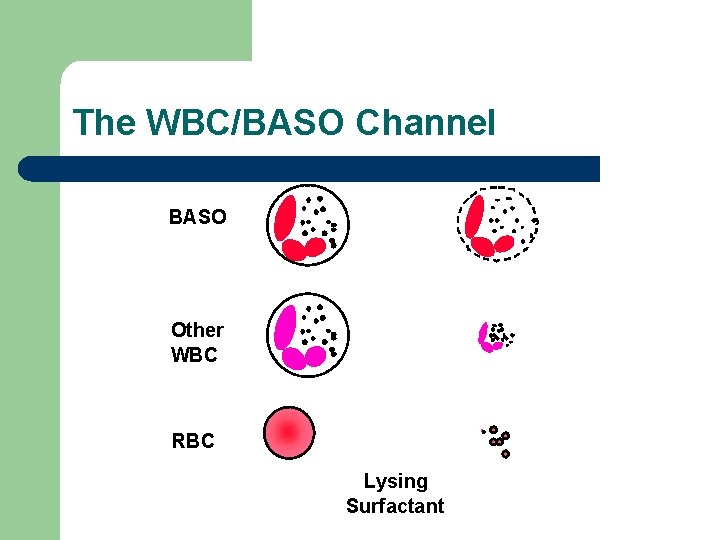
The WBC/BASO Channel BASO Other WBC RBC Lysing Surfactant
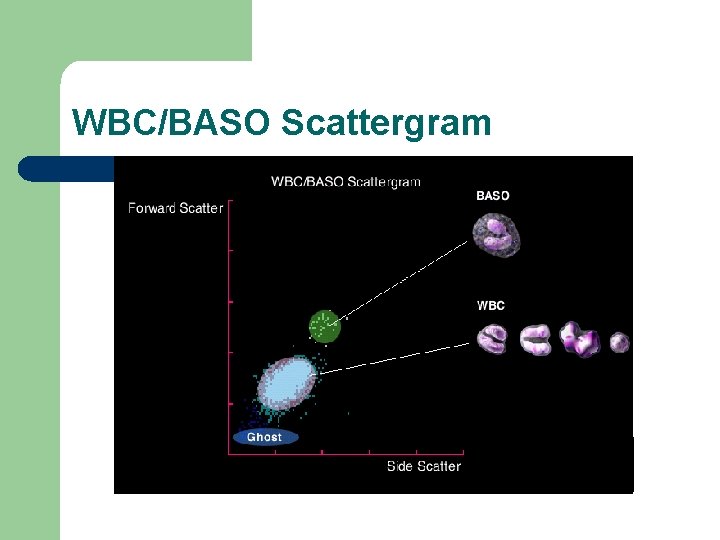
WBC/BASO Scattergram
WBC Classification l l l Blood sample is aspirated and diluted with: STOMATOLYSER-4 DL and STOMATOLYSER -4 DS. Diluted sample is sent to the detector chamber Cells are classified according to side scatter and fluorescence signals in the Diff channel.
Measurements l l Side scatter - measurement of internal structure. Fluorescence - measurement of nucleic acid content.
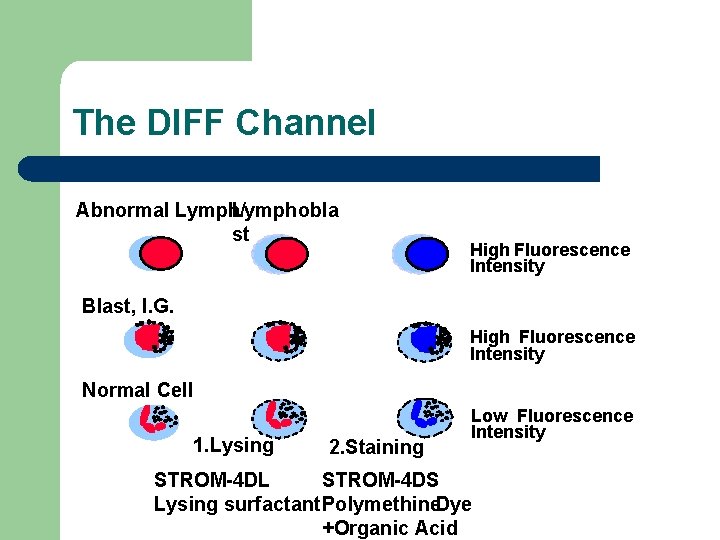
The DIFF Channel Lymphobla Abnormal Lymph/ st High Fluorescence Intensity Blast, I. G. High Fluorescence Intensity Normal Cell 1. Lysing 2. Staining Low Fluorescence Intensity STROM-4 DL STROM-4 DS Lysing surfactant Polymethine. Dye +Organic Acid

Diff Scattergram
Neutrophil Count l l This is a calculated parameter # Neut = Neut/Baso count(diff channel) - Baso count (WBC/Baso channel)
IMI Channel l discriminates between immature and mature white blood cells. l Detection is performed using RF/DC detection method.
Methodology l l l Blood is aspirated and diluted to a ratio of 1: 250 with STOMATOLYSER-IM. Diluted sample is sent to the IMI detector for analysis. A two-dimensional distribution of cell size and cell structure is drawn according to RF/DC detection method.
Measurements l l Direct current - measurement of cell volume Radio frequency - measurement of internal cell structure.

IMI Scattergram Platelet Clumps

ACAS & Advanced Discrimination
Adaptive Cluster Analysis System l Cells are classified by the process of cluster analysis which is based on learning algorithms. (An astronomical technique!) l This allows optimal adaptation to biological differences between samples including abnormal cells
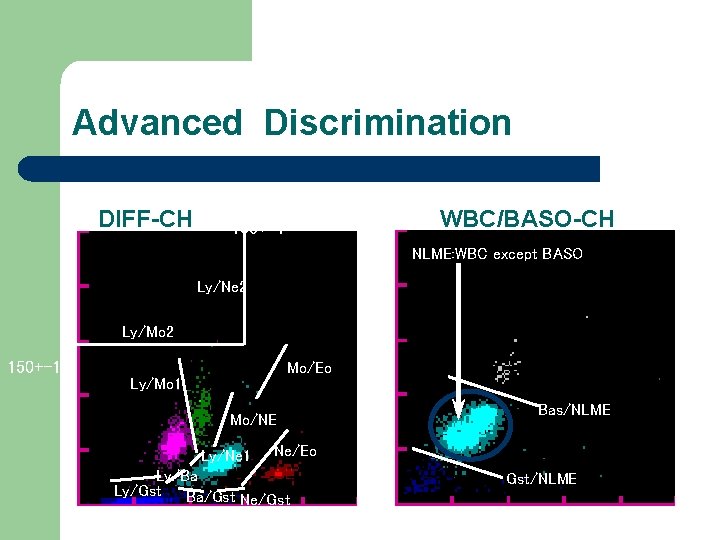
Advanced Discrimination DIFF-CH WBC/BASO-CH 150+-1 NLME: WBC except BASO Ly/Ne 2 Ly/Mo 2 150+-1 Mo/Eo Ly/Mo 1 Mo/NE Ly/Ne 1 Bas/NLME Ne/Eo Ly/Ba Ly/Gst Ba/Gst Ne/Gst Gst/NLME
Extended ACAS Principle l l l High adaptation to individual changes Moving clusters Moving discriminators Enhanced separation in abnormal cases Low “Vote Out” rate
- Slides: 24