
The World of New France Samuel de Champlain









- Slides: 25
The World of New France
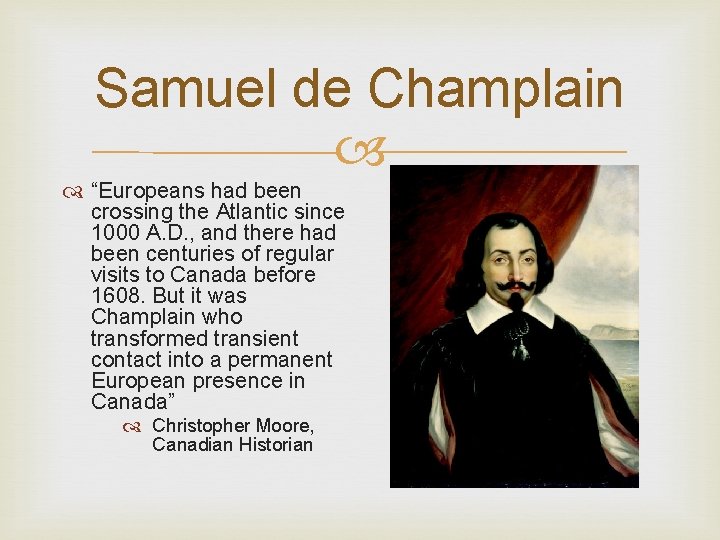
Samuel de Champlain “Europeans had been crossing the Atlantic since 1000 A. D. , and there had been centuries of regular visits to Canada before 1608. But it was Champlain who transformed transient contact into a permanent European presence in Canada” Christopher Moore, Canadian Historian
1604 BACKGROUND Champlain was a cartographer and enthusiastic explorer in a group led by Sieur de Monts. Colonies were set up in: Acadia 1604 Port Royal 1606 Quebec 1608
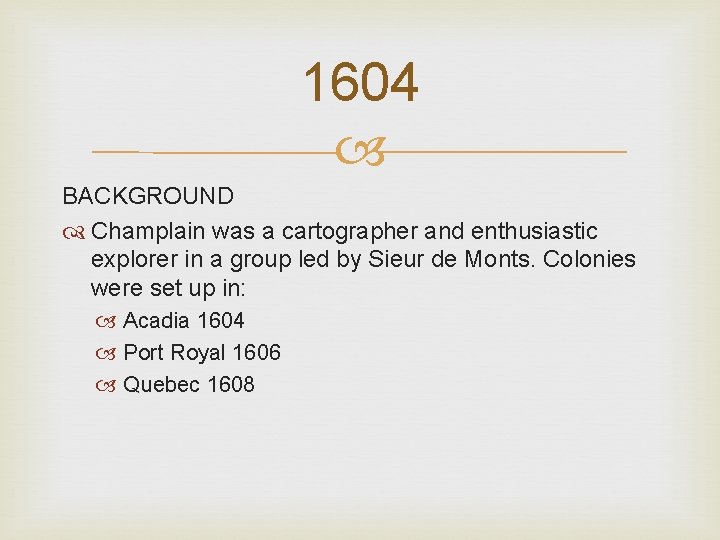
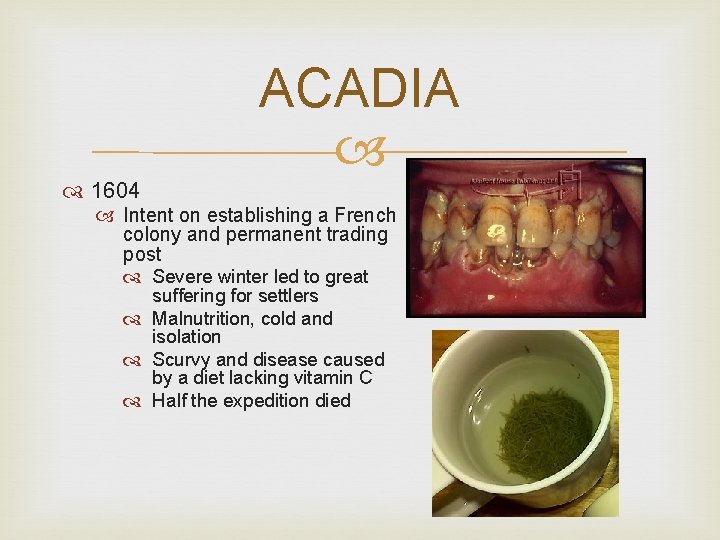
ACADIA 1604 Intent on establishing a French colony and permanent trading post Severe winter led to great suffering for settlers Malnutrition, cold and isolation Scurvy and disease caused by a diet lacking vitamin C Half the expedition died
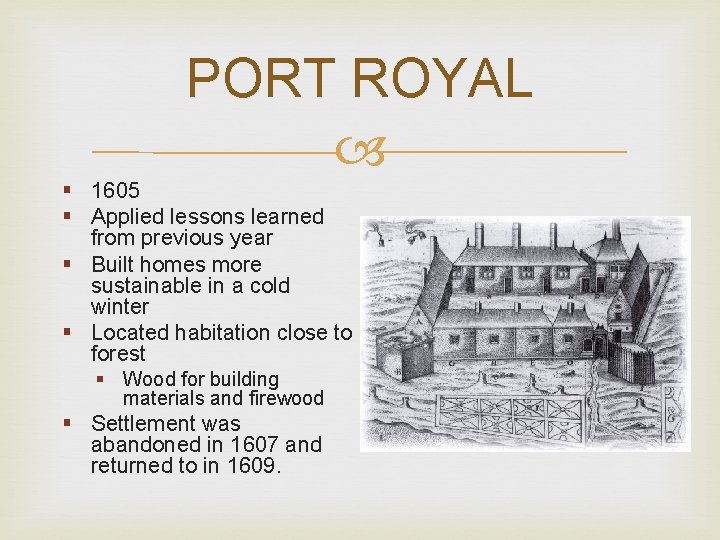
PORT ROYAL § 1605 § Applied lessons learned from previous year § Built homes more sustainable in a cold winter § Located habitation close to forest § Wood for building materials and firewood § Settlement was abandoned in 1607 and returned to in 1609.
Quebec Champlain became more interested in establishing lasting colony in New France Colony would serve to Christianize Native peoples Settlement would offer trade advantage Belief St. Lawrence would lead to riches of Asia Decided on site of Quebec because of fertile land military defense
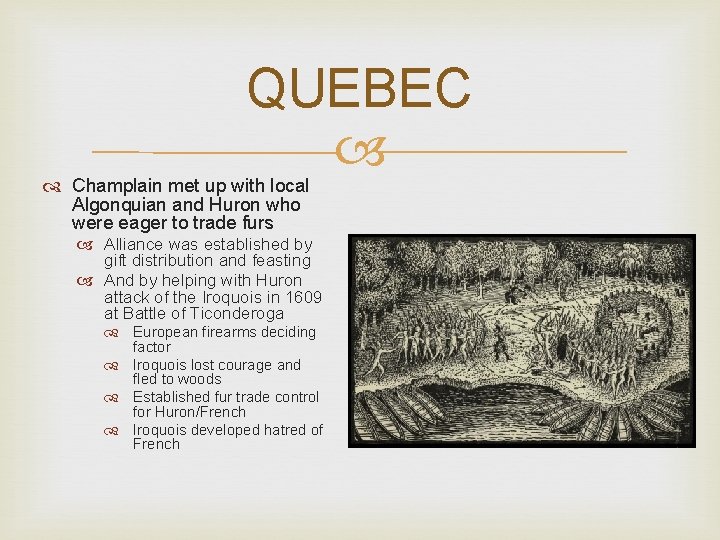
QUEBEC Champlain met up with local Algonquian and Huron who were eager to trade furs Alliance was established by gift distribution and feasting And by helping with Huron attack of the Iroquois in 1609 at Battle of Ticonderoga European firearms deciding factor Iroquois lost courage and fled to woods Established fur trade control for Huron/French Iroquois developed hatred of French
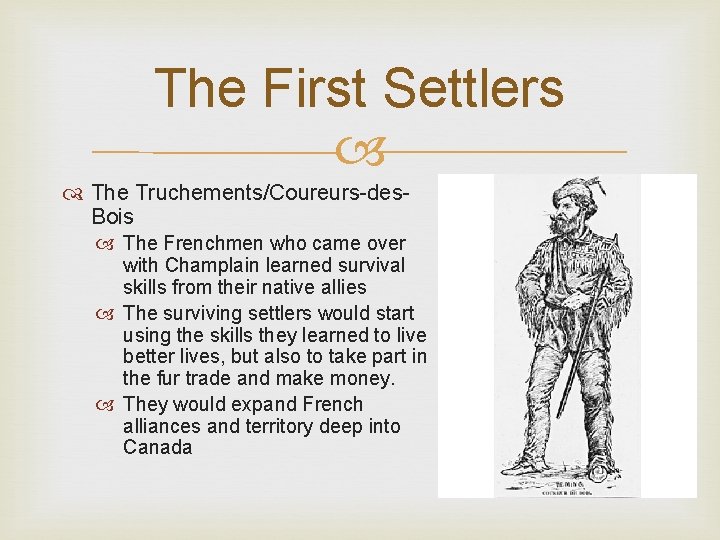
The First Settlers The Truchements/Coureurs-des. Bois The Frenchmen who came over with Champlain learned survival skills from their native allies The surviving settlers would start using the skills they learned to live better lives, but also to take part in the fur trade and make money. They would expand French alliances and territory deep into Canada
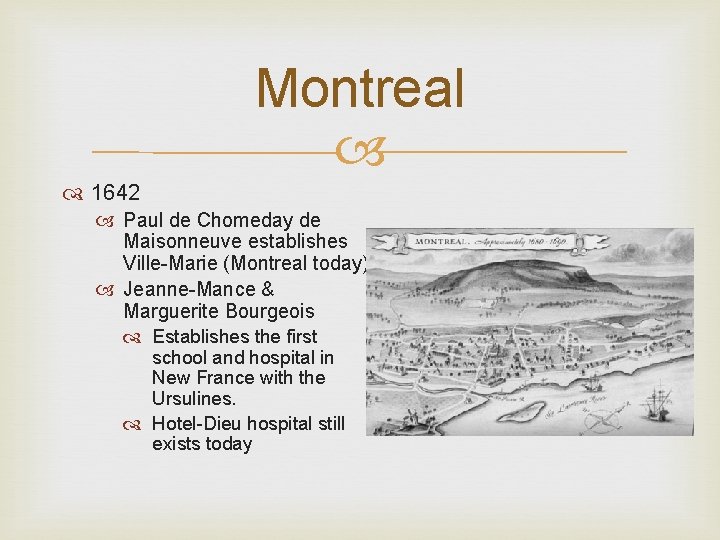
Montreal 1642 Paul de Chomeday de Maisonneuve establishes Ville-Marie (Montreal today) Jeanne-Mance & Marguerite Bourgeois Establishes the first school and hospital in New France with the Ursulines. Hotel-Dieu hospital still exists today
The Fur Trade Beaver fur is soft and pliable, excellent hat material Demand for more furs meant money for enterprising merchants, but also danger Few Frenchmen came to hunt, though native allies would often provide furs in exchange for goods. Thus the king of France started to sell a monopoly on fur trading rights, meaning only those he chose could legally sell beaver pelts.
Date Pre 1604 Chronology of the Fur Trade Ownership of Fur Trade Role of Aboriginals No monopoly, any European merchant could trade from their ships. Montagnais traded directly with the French. Usually traded beads, mirrors, knives, kettles and blankets Mi’kmaq acted as middlemen, trading with other tribes then the Europeans. 16031608 De Gua des Monts hold the monopoly. Had to settle 60 Frenchmen a year as part of its conditions. Many natives traded illegally with European merchants. Mi’kmaq expand their trade connections. 1608 More or less free trade among French merchants in the colonies. Huron start taking a bigger role in the Fur Trade 1612 De Monts and Champlain team up The Huron are now the major source and win the monopoly for French Fur Traders 1627 The Company of 100 associates is given the monopoly Agrees to settle 200 new people a year. The Huron form a strong alliance with the company, Jesuits start arriving as part of the deal.
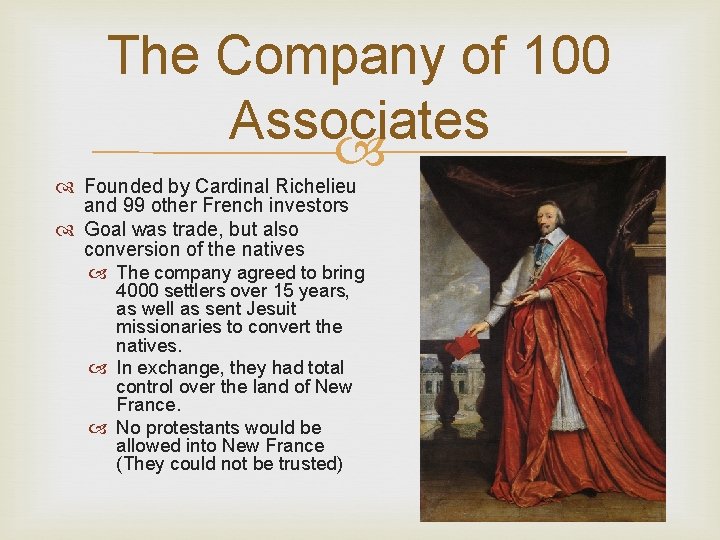
The Company of 100 Associates Founded by Cardinal Richelieu and 99 other French investors Goal was trade, but also conversion of the natives The company agreed to bring 4000 settlers over 15 years, as well as sent Jesuit missionaries to convert the natives. In exchange, they had total control over the land of New France. No protestants would be allowed into New France (They could not be trusted)
Religious Orders Jesuits and Ursulines Ran education and hospitals in the Colonies and missions They will write down translations for much of the Algonquin and Huron language Marie de L’Incarnation, a prominent Ursuline nun, is also one of our best sources for info on New France, as her letters to her son in France explain daily life in the colony.
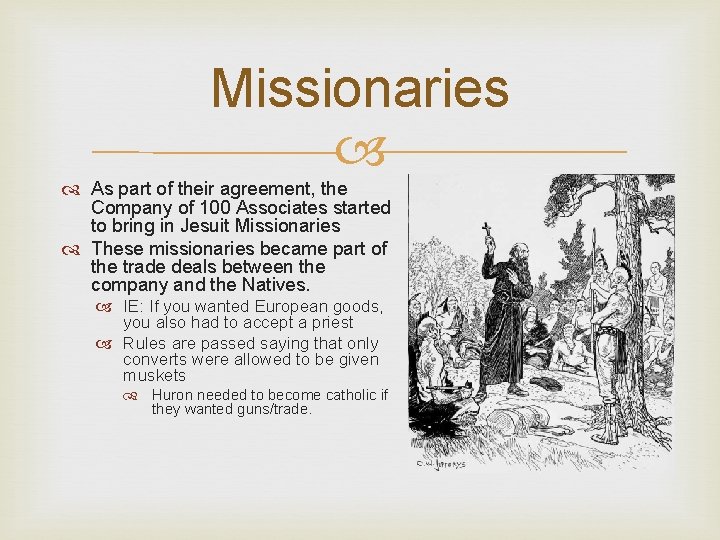
Missionaries As part of their agreement, the Company of 100 Associates started to bring in Jesuit Missionaries These missionaries became part of the trade deals between the company and the Natives. IE: If you wanted European goods, you also had to accept a priest Rules are passed saying that only converts were allowed to be given muskets Huron needed to become catholic if they wanted guns/trade.
Religious Tensions Brébeuf and Lalement are two Jesuits who travel to Huronia in 1634. There they try to convert the Huron to Catholicism They have limited success Build a mission house in 1639 Brébeuf writes a dictionary of the Huron language They have few converts however. Most of the Huron are happy with their own culture and religion, do not see a reason to change.
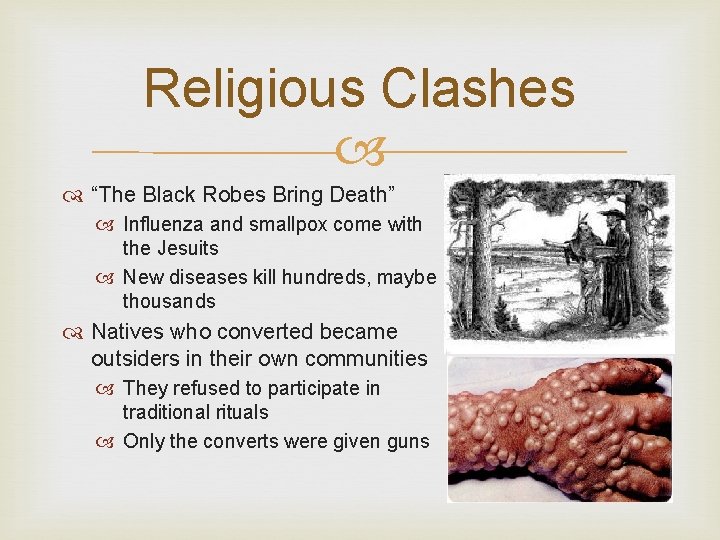
Religious Clashes “The Black Robes Bring Death” Influenza and smallpox come with the Jesuits New diseases kill hundreds, maybe thousands Natives who converted became outsiders in their own communities They refused to participate in traditional rituals Only the converts were given guns
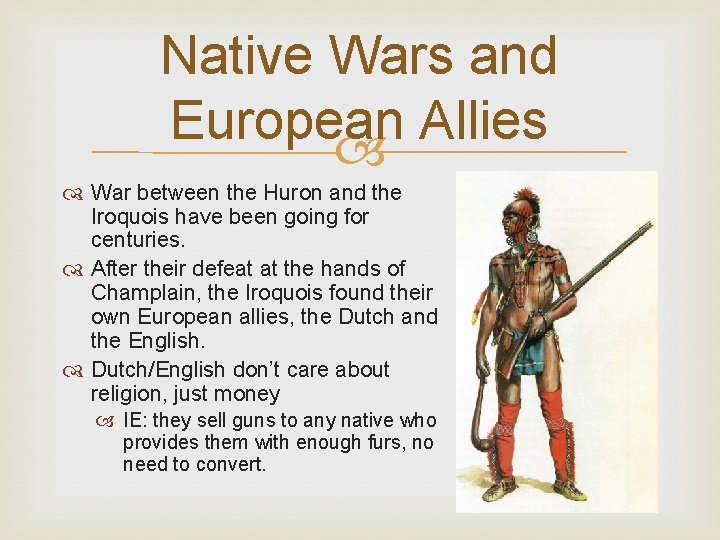
Native Wars and European Allies War between the Huron and the Iroquois have been going for centuries. After their defeat at the hands of Champlain, the Iroquois found their own European allies, the Dutch and the English. Dutch/English don’t care about religion, just money IE: they sell guns to any native who provides them with enough furs, no need to convert.
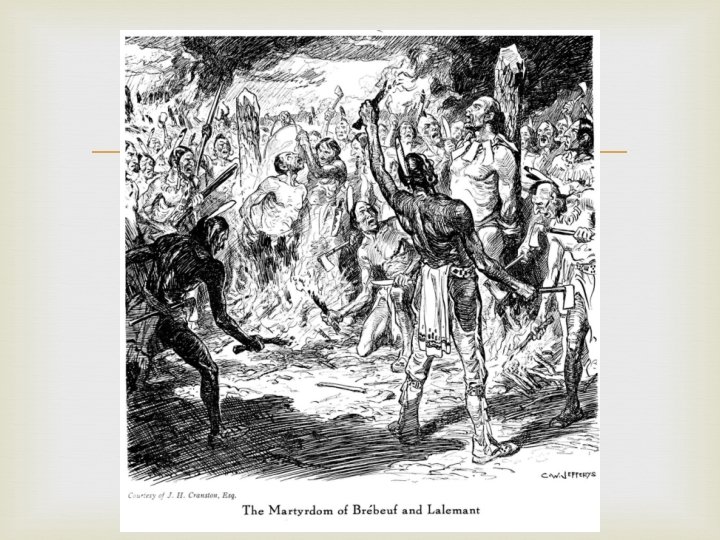
Native Wars and European Allies Huron were weakened by disease and conflict Iroquois raids in 1644 -1648 stop trade and kill Frenchmen 1649 Huronia is attacked and destroyed Survivors will flee to live near their allies (Algonquin/New France) or are taken as slaves Brébeuf and Lalemant are tortured to death.
Canadian Martyrs Brébeuf was tortured in several ways but refused to scream or cry out Cut by razor sharp shells Nails pulled out “Baptized” in boiling water Asked only that his converts/charges be set free After his death, he was claimed as a Catholic Martyr, and eventually Sainted. His bones are now considered holy relics and kept in a church in Midland, Ontario.
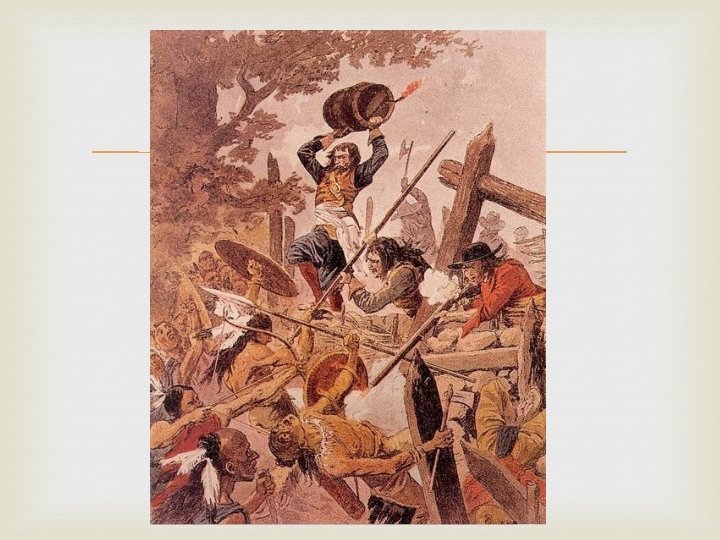
More Iroquois problems Iroquois are still raiding along the coast of the St. Lawrence, attacking the French settlers 1660 - Dollard-Des-Ormeaux leads an expeditions to fight the Iroquois before they can attack more of the colonists. Partial success Pyric victory 1689 - Lachine Massacre 375 colonists are killed by Iroquois in a night raid French troops will retaliate and destroy several Iroquois villages, killing everyone they see