
The World of Materials Linking Physics and Chemistry
- Slides: 33
The World of Materials Linking Physics and Chemistry to Engineering Prof. Subramaniam (“Subby”) D. Rajan, Prof. Narayanan Neithalath and Amie Baisley Graduate Students: Kirk Vance, Matt Aguayo, Joseph Harrington and Canio Hoffarth electrical, computer and energy engineering 20 -Jan-2010
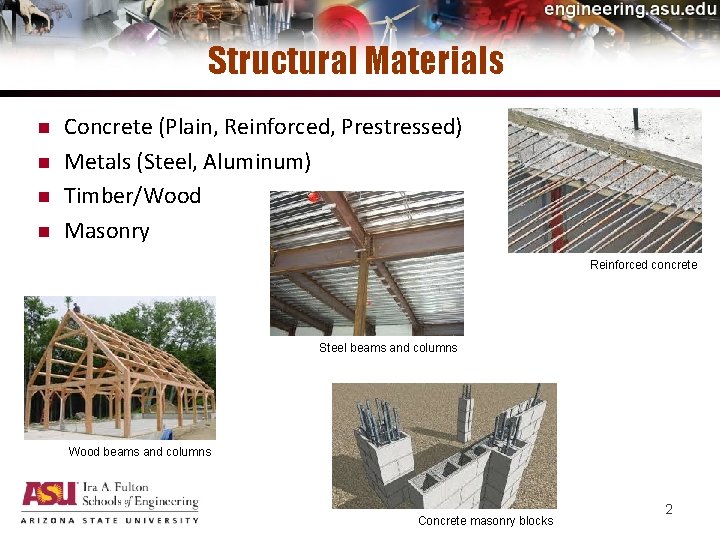
Structural Materials n n Concrete (Plain, Reinforced, Prestressed) Metals (Steel, Aluminum) Timber/Wood Masonry Reinforced concrete Steel beams and columns Wood beams and columns Concrete masonry blocks 2
What are all Materials made of? n n Fundamental chemistry – all materials are basically comprised of elements/molecules, which are comprised of atoms Investigate the periodic table. 3
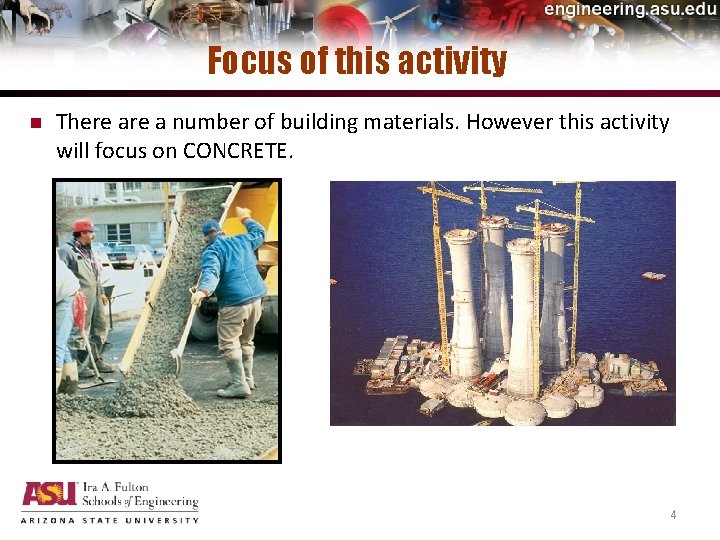
Focus of this activity n There a number of building materials. However this activity will focus on CONCRETE. 4
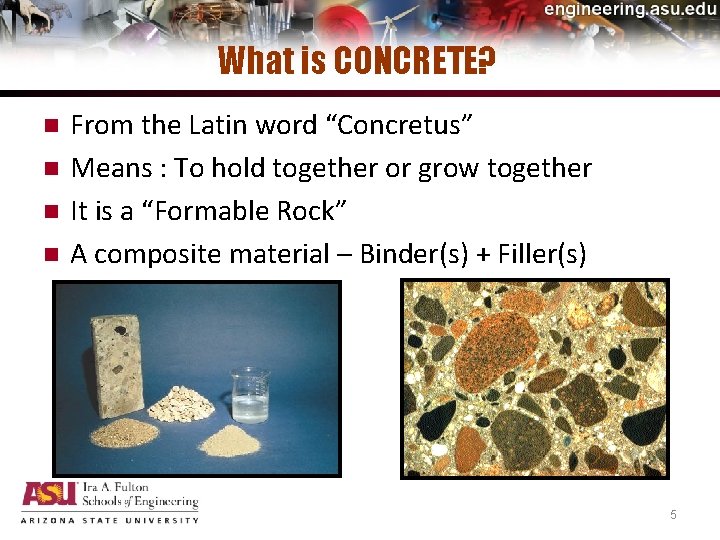
What is CONCRETE? n n From the Latin word “Concretus” Means : To hold together or grow together It is a “Formable Rock” A composite material – Binder(s) + Filler(s) 5
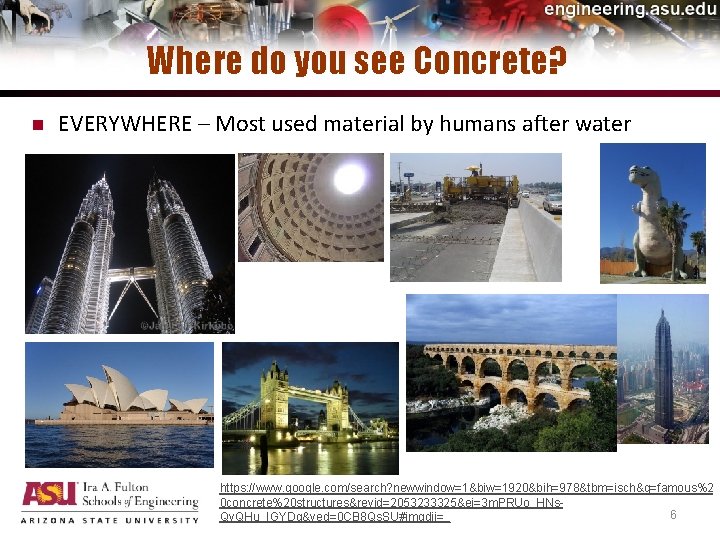
Where do you see Concrete? n EVERYWHERE – Most used material by humans after water https: //www. google. com/search? newwindow=1&biw=1920&bih=978&tbm=isch&q=famous%2 0 concrete%20 structures&revid=2053233325&ei=3 m. PRUo_HNs 6 Qy. QHu_IGYDg&ved=0 CB 8 Qs. SU#imgdii=_
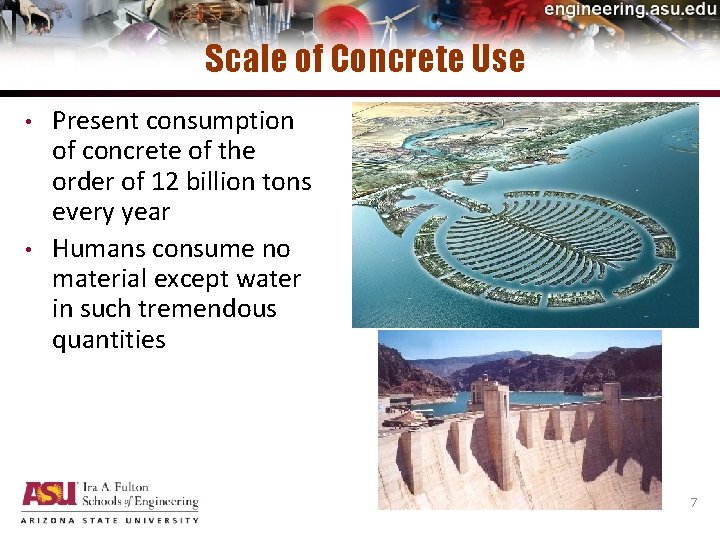
Scale of Concrete Use • • Present consumption of concrete of the order of 12 billion tons every year Humans consume no material except water in such tremendous quantities 7
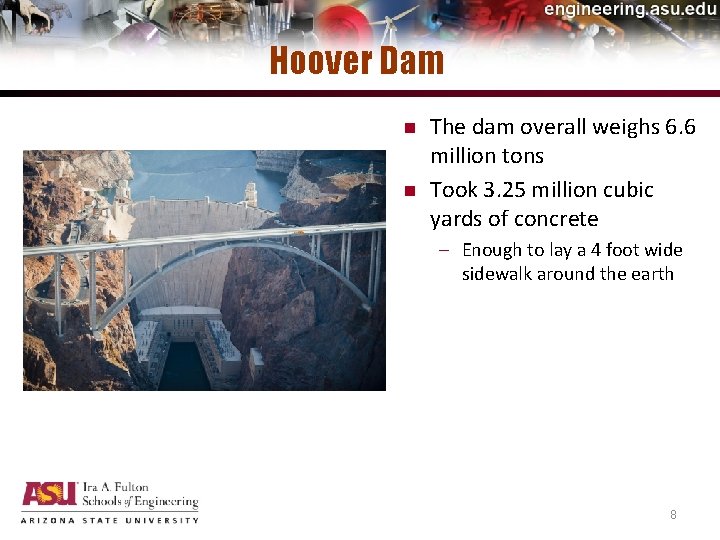
Hoover Dam n n The dam overall weighs 6. 6 million tons Took 3. 25 million cubic yards of concrete – Enough to lay a 4 foot wide sidewalk around the earth 8
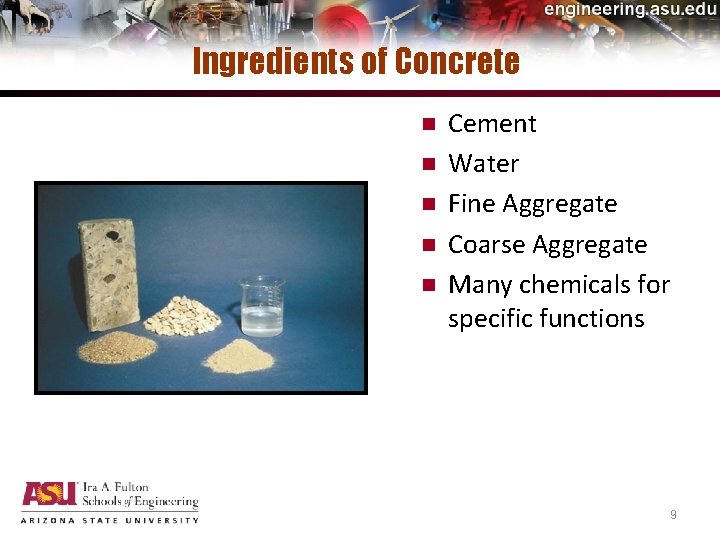
Ingredients of Concrete n n n Cement Water Fine Aggregate Coarse Aggregate Many chemicals for specific functions 9
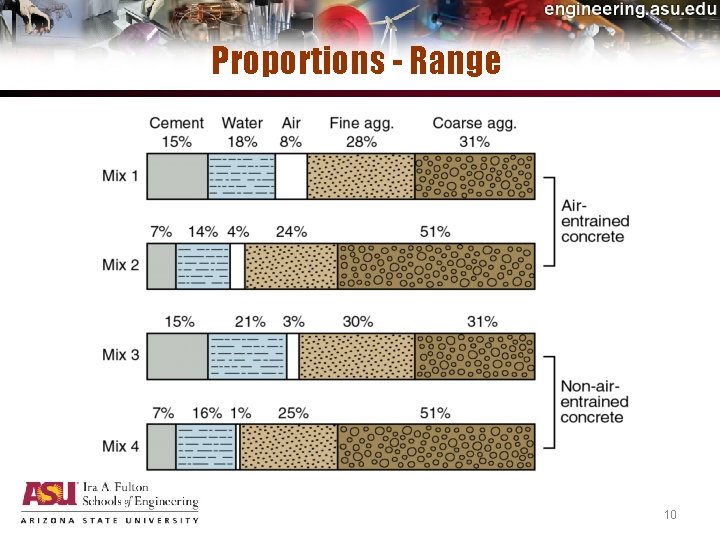
Proportions - Range 10
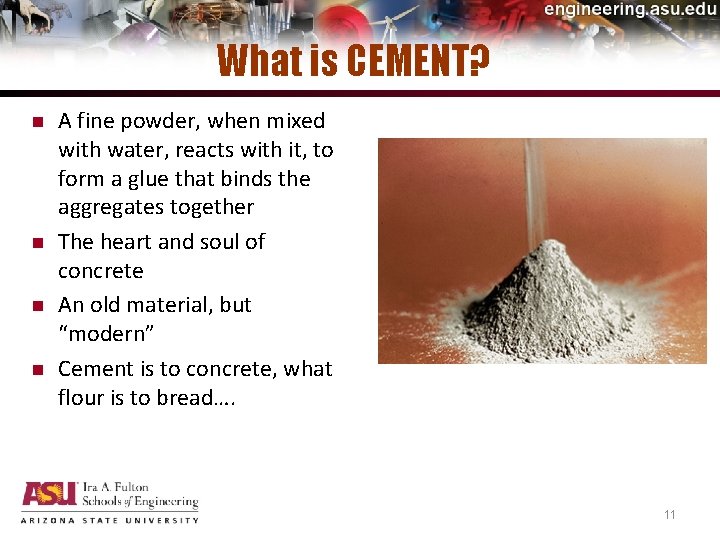
What is CEMENT? n n A fine powder, when mixed with water, reacts with it, to form a glue that binds the aggregates together The heart and soul of concrete An old material, but “modern” Cement is to concrete, what flour is to bread…. 11
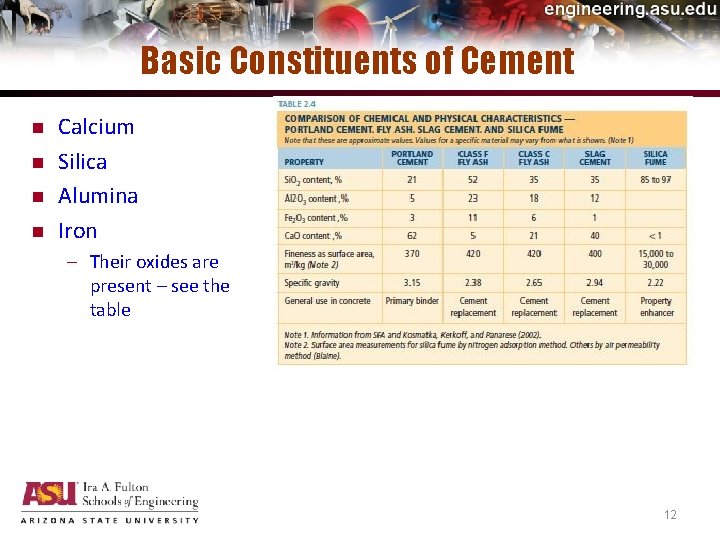
Basic Constituents of Cement n n Calcium Silica Alumina Iron – Their oxides are present – see the table 12
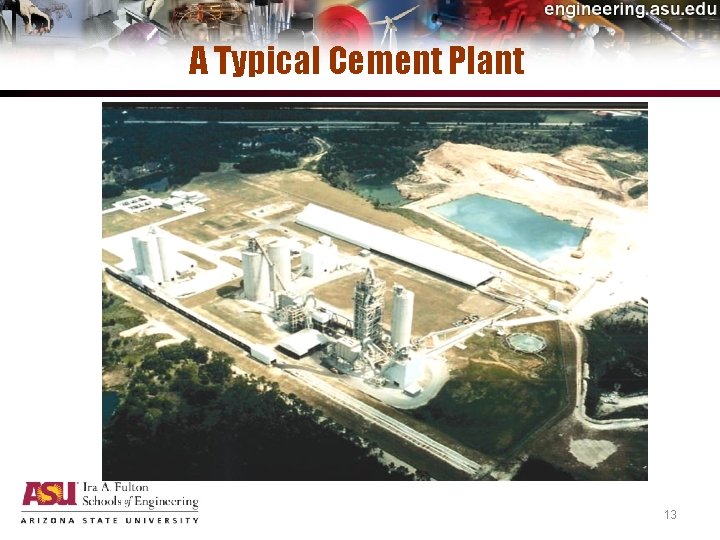
A Typical Cement Plant 13
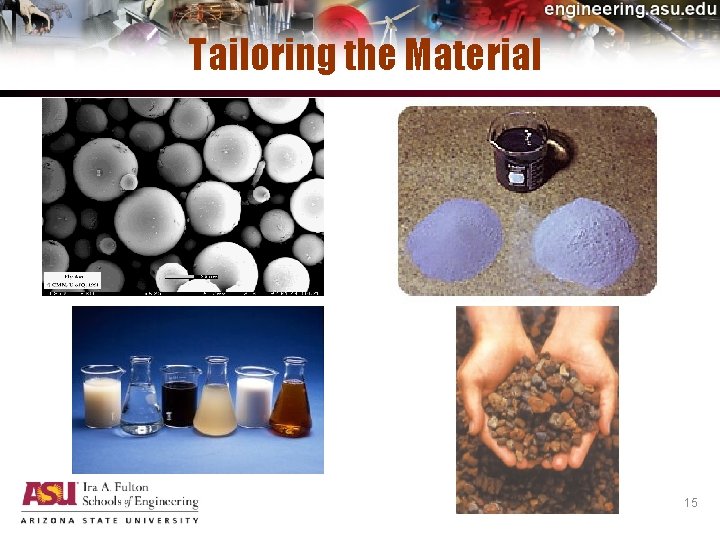
Other Constituents n Cement production is environmentally sensitive – Takes large amounts of energy – Releases a large amount of CO 2 into the atmosphere – GLOBAL WARMING - ? ? ? n Several waste materials from other sources used in concrete – Fly ash, slag etc. (look at the table in Slide 11 for their composition too) – They serve several functions in concrete n Chemical ingredients are also used to enhance concrete properties 14
Tailoring the Material 15
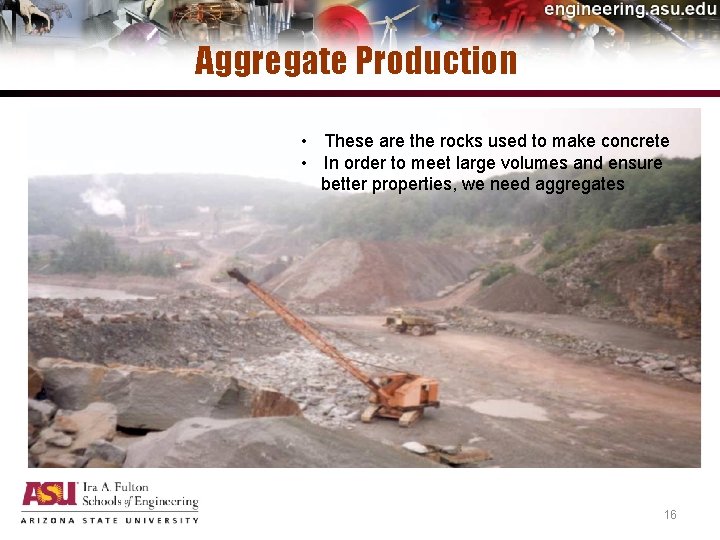
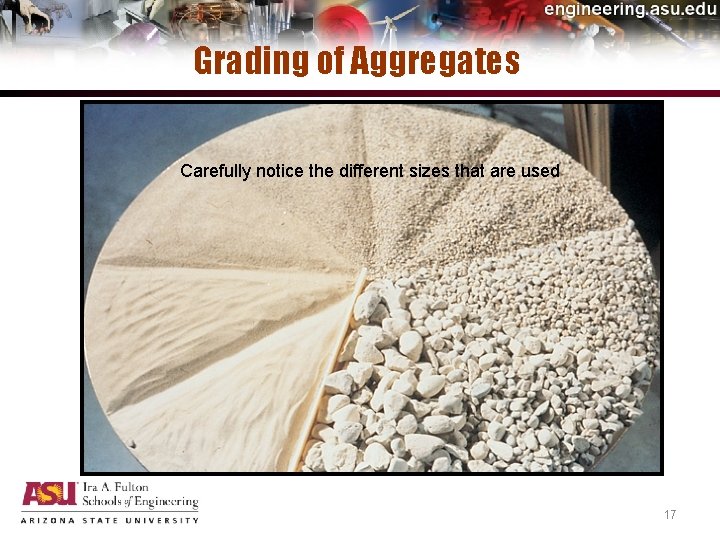
Aggregate Production • These are the rocks used to make concrete • In order to meet large volumes and ensure better properties, we need aggregates 16
Grading of Aggregates Carefully notice the different sizes that are used 17
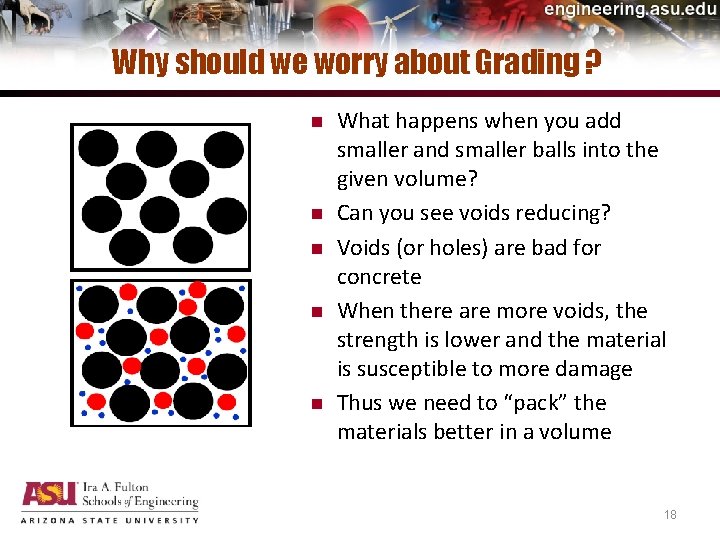
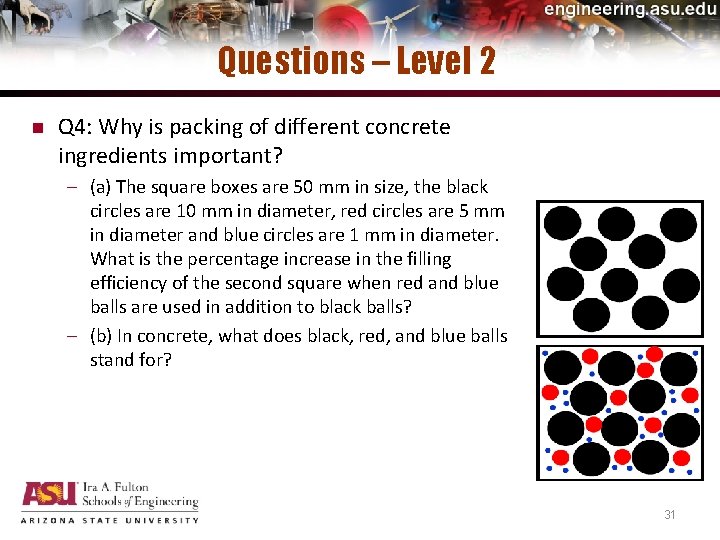
Why should we worry about Grading ? n n n What happens when you add smaller and smaller balls into the given volume? Can you see voids reducing? Voids (or holes) are bad for concrete When there are more voids, the strength is lower and the material is susceptible to more damage Thus we need to “pack” the materials better in a volume 18
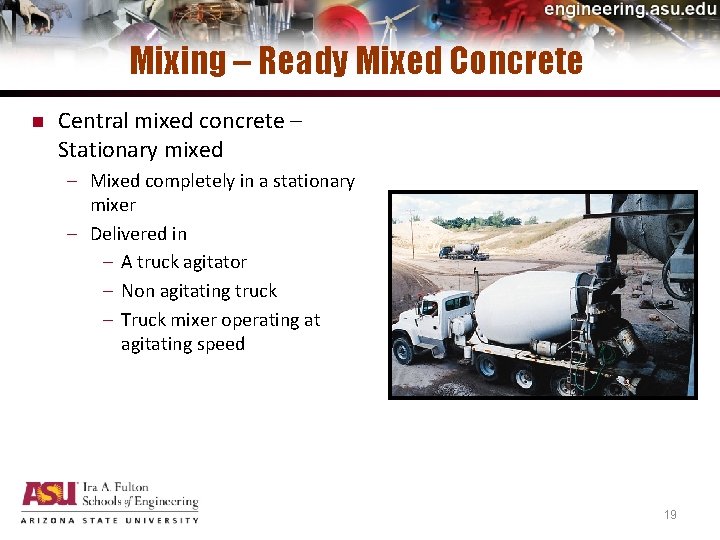
Mixing – Ready Mixed Concrete n Central mixed concrete – Stationary mixed – Mixed completely in a stationary mixer – Delivered in – A truck agitator – Non agitating truck – Truck mixer operating at agitating speed 19
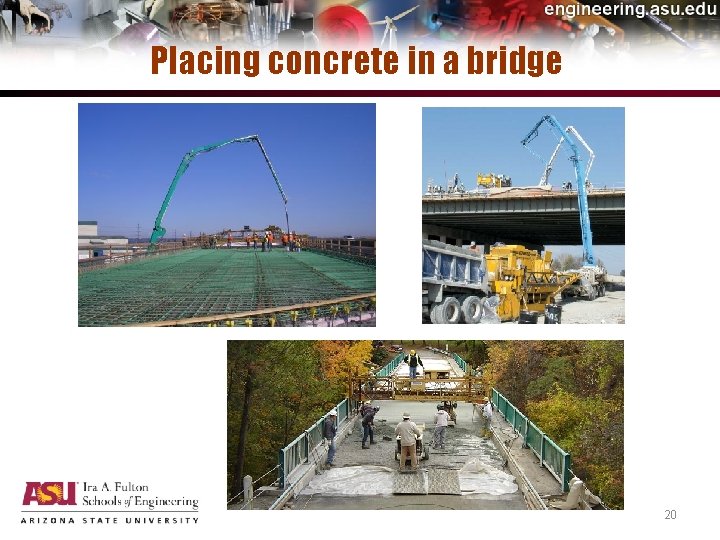
Placing concrete in a bridge 20
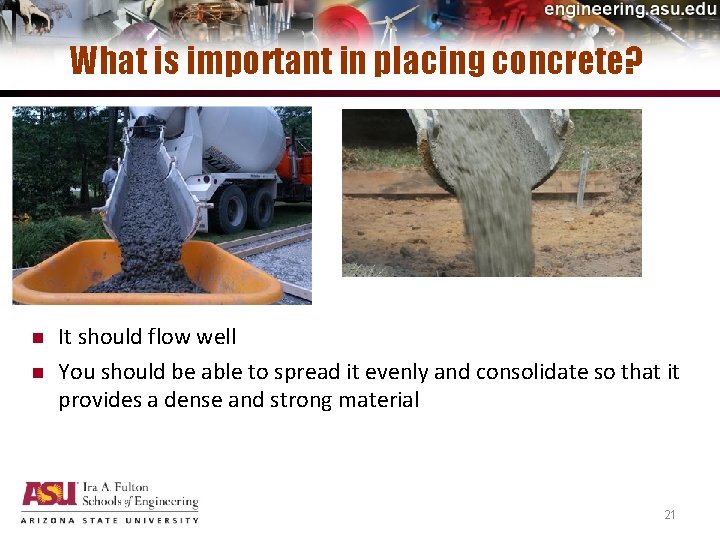
What is important in placing concrete? n n It should flow well You should be able to spread it evenly and consolidate so that it provides a dense and strong material 21
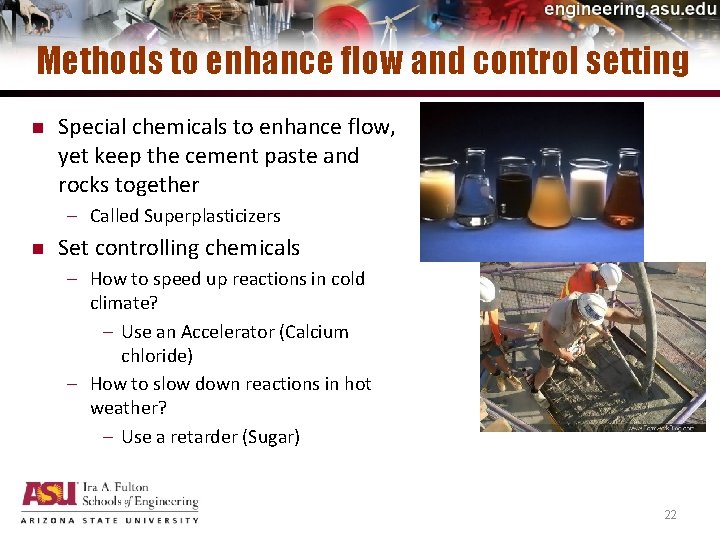
Methods to enhance flow and control setting n Special chemicals to enhance flow, yet keep the cement paste and rocks together – Called Superplasticizers n Set controlling chemicals – How to speed up reactions in cold climate? – Use an Accelerator (Calcium chloride) – How to slow down reactions in hot weather? – Use a retarder (Sugar) 22
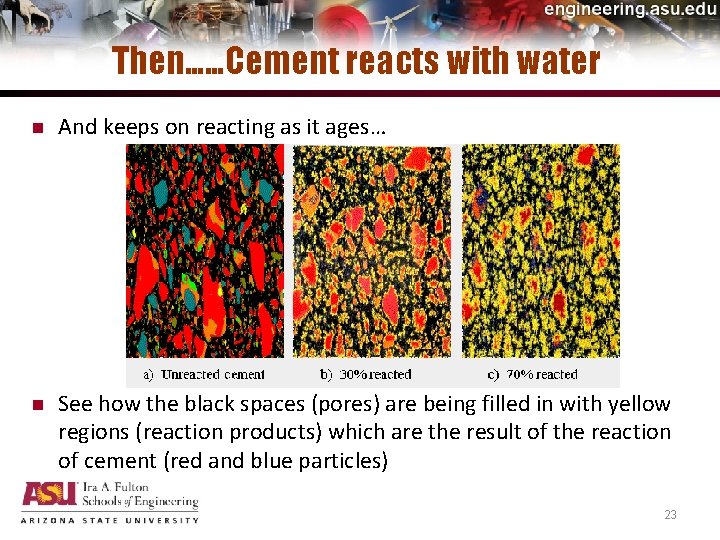
Then……Cement reacts with water n And keeps on reacting as it ages… n See how the black spaces (pores) are being filled in with yellow regions (reaction products) which are the result of the reaction of cement (red and blue particles) 23
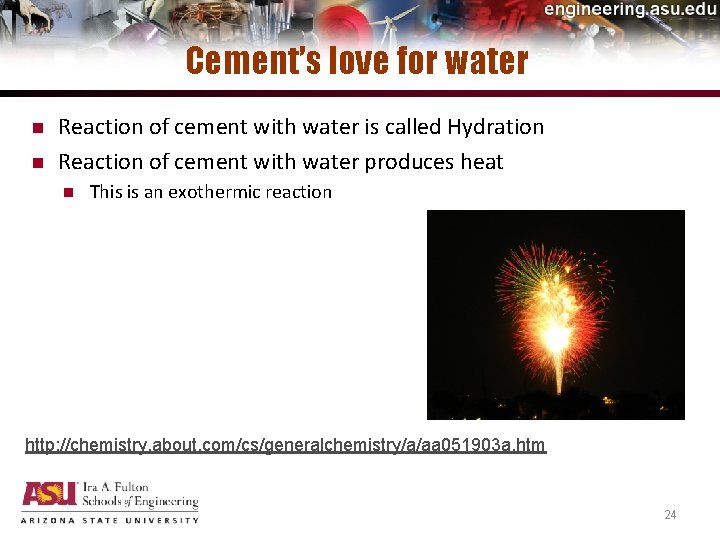
Cement’s love for water n n Reaction of cement with water is called Hydration Reaction of cement with water produces heat n This is an exothermic reaction http: //chemistry. about. com/cs/generalchemistry/a/aa 051903 a. htm 24
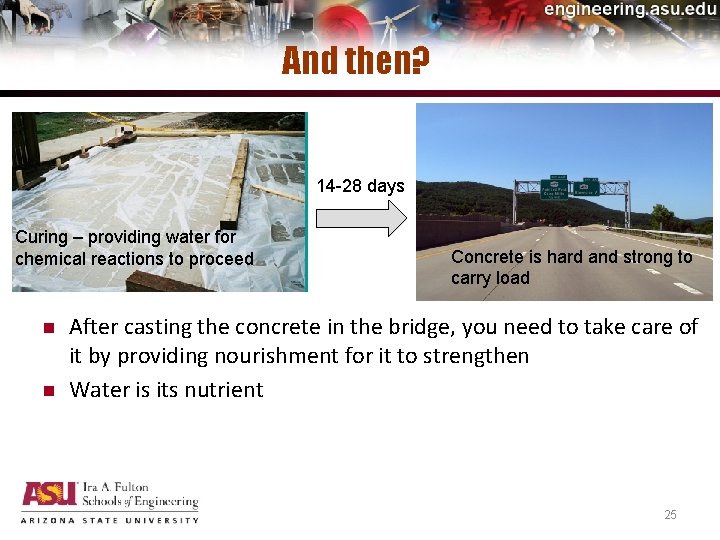
And then? 14 -28 days Curing – providing water for chemical reactions to proceed n n Concrete is hard and strong to carry load After casting the concrete in the bridge, you need to take care of it by providing nourishment for it to strengthen Water is its nutrient 25
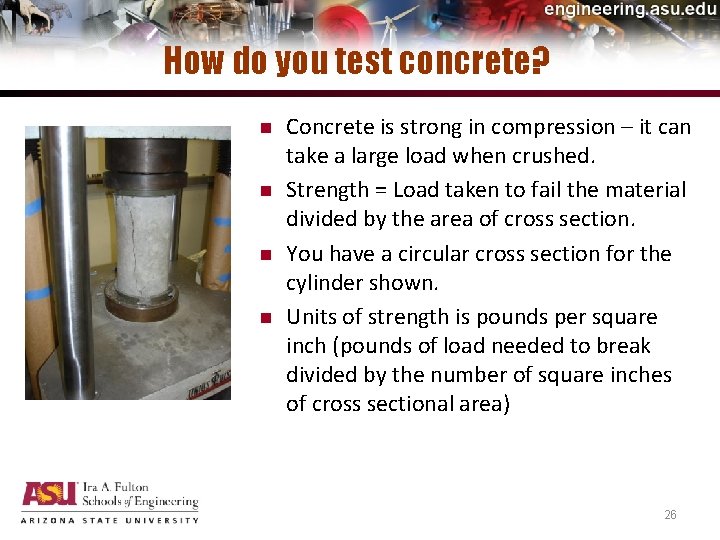
How do you test concrete? n n Concrete is strong in compression – it can take a large load when crushed. Strength = Load taken to fail the material divided by the area of cross section. You have a circular cross section for the cylinder shown. Units of strength is pounds per square inch (pounds of load needed to break divided by the number of square inches of cross sectional area) 26
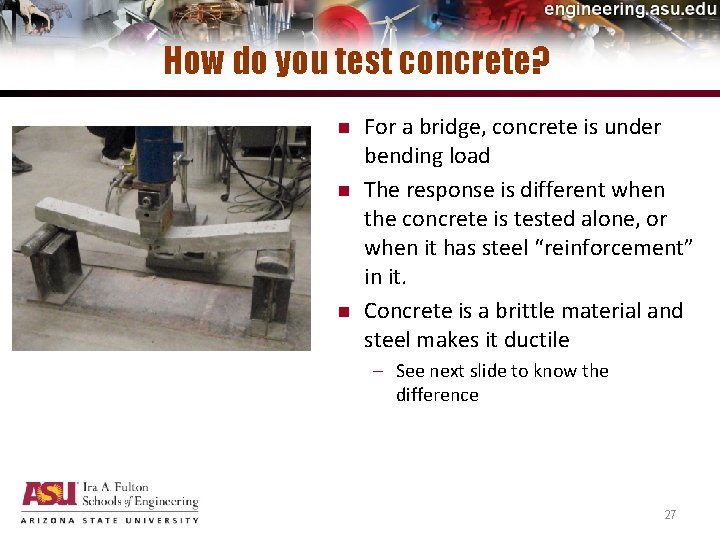
How do you test concrete? n n n For a bridge, concrete is under bending load The response is different when the concrete is tested alone, or when it has steel “reinforcement” in it. Concrete is a brittle material and steel makes it ductile – See next slide to know the difference 27
Brittle and Ductile Materials n Brittle and Ductile Property – Key to engineering / structural materials – Brittle materials do not deform (bend, as an example) much before it fails. Thus it is not desirable for structural applications such as in bridges. Examples of brittle materials include glass, cast iron etc. – Ductile materials deform significantly before failure. This is the most desirable set of materials for structural applications because they give you warning before failure in the form of deflections. Steel is a very good example – Since many common and cheaper materials are generally brittle, we can combine them with a ductile material (e. g. : steel + concrete) to make the “composite material” somewhat ductile. http: //www. youtube. com/watch? v=0 NSG 4 WSRxmg 28
Questions – Level 1 n Q 1: Materials in general applications – (a) What are all the elements in nature made of (fundamental building blocks)? – (b) What is the most abundant element in the earth’s crust? – (c) In the periodic table, you have metals and nonmetals. Enumerate the key structural and physical differences between them. n Q 2: Cement and Concrete – – – (a) Distinguish between cement and concrete. (b) What are the ingredients of concrete? (c) Name three items you have encountered today which are concrete. (d) How much concrete was used in Hoover Dam? (e) What is an exothermic and an endothermic reaction? Give examples. 29
Questions – Level 1 n Q 3: Why is concrete important? – (a) Enumerate one very critical use of concrete that no other material can satisfy. – (b) Can you think of an application for concrete for the future (i. e. , it is not used now, but can be used later)? 30
Questions – Level 2 n Q 4: Why is packing of different concrete ingredients important? – (a) The square boxes are 50 mm in size, the black circles are 10 mm in diameter, red circles are 5 mm in diameter and blue circles are 1 mm in diameter. What is the percentage increase in the filling efficiency of the second square when red and blue balls are used in addition to black balls? – (b) In concrete, what does black, red, and blue balls stand for? 31
Questions – Level 2 n Q 5: We will build on the concepts learned on Day 1 – Enumerate on why you chose the materials you chose to build the bridge. Think about both the concepts of ductility/brittleness and strength. – Cardboard as the bridge slab – what would have happened if you used a piece of glass? – Wooden columns – could you have used something else? – Suspension wires – would spaghetti work? 32
Research and Write on a Concrete Structure n Prepare a 2 -page technical document on a well known concrete structure (use internet to choose the structure) – – – – Introduction on what the structure is. Location, application What makes it unique/famous/innovative? Who designed and built it? What type of concrete and how much was used? Estimated construction cost Your assessment of what attracted you most to this structure. Illustrate your report with photographs, drawings, tables etc. 33