
The Workload Toolbox Practical Tools to Help You
The Workload Toolbox: Practical Tools to Help You Build a Case for and Maintain a Workload Model in Your School-Based Practice Mindy Garfinkel, OTD, OTR/L Francine M. Seruya, Ph. D, OTR/L
Mindy Garfinkel, OTD, OTR/L Francine M. Seruya, Ph. D, OTR/L
Goals for Today 1. Identify what a "reasonable caseload" is, and how it impacts on the success of a workload model in school-based practice. 2. Identify tools and strategies that are needed to implement and sustain a workload approach in school-based practice. 3. Share resources that can be provided to stakeholders for the purpose of advocating for the use of a workload approach in your school-based practice.
What do school-based OTPs actually do?
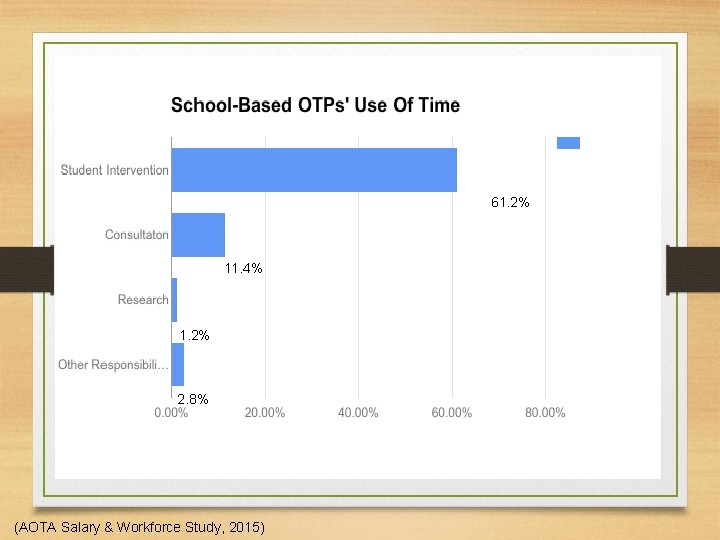
61. 2% 11. 4% 1. 2% 2. 8% (AOTA Salary & Workforce Study, 2015)
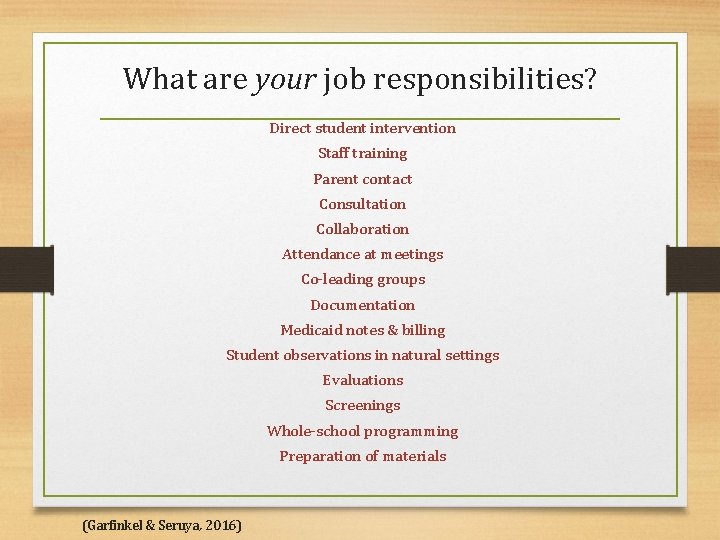
What are your job responsibilities? Direct student intervention Staff training Parent contact Consultation Collaboration Attendance at meetings Co-leading groups Documentation Medicaid notes & billing Student observations in natural settings Evaluations Screenings Whole-school programming Preparation of materials (Garfinkel & Seruya, 2016)
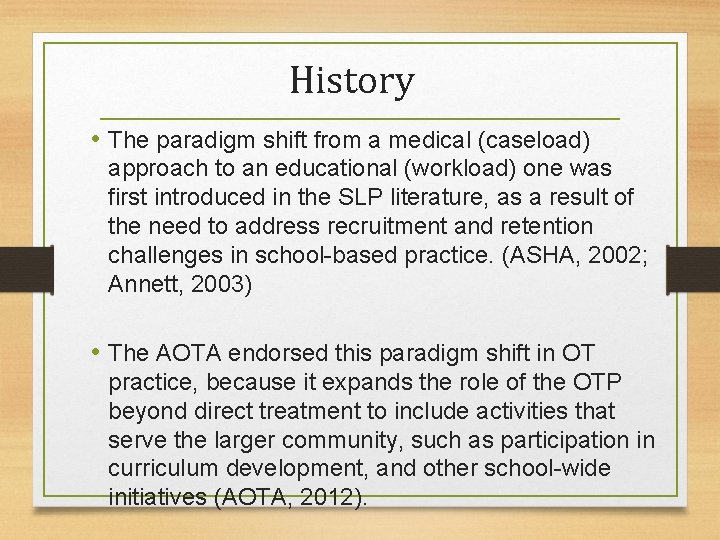
History • The paradigm shift from a medical (caseload) approach to an educational (workload) one was first introduced in the SLP literature, as a result of the need to address recruitment and retention challenges in school-based practice. (ASHA, 2002; Annett, 2003) • The AOTA endorsed this paradigm shift in OT practice, because it expands the role of the OTP beyond direct treatment to include activities that serve the larger community, such as participation in curriculum development, and other school-wide initiatives (AOTA, 2012).
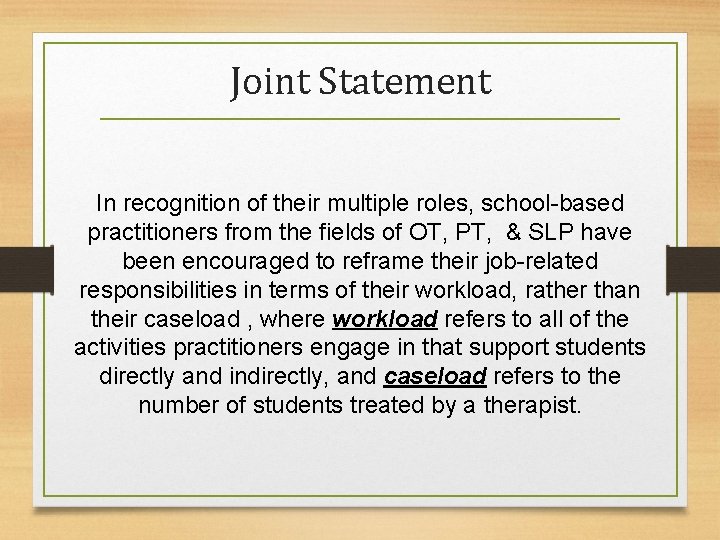
Joint Statement In recognition of their multiple roles, school-based practitioners from the fields of OT, PT, & SLP have been encouraged to reframe their job-related responsibilities in terms of their workload, rather than their caseload , where workload refers to all of the activities practitioners engage in that support students directly and indirectly, and caseload refers to the number of students treated by a therapist.
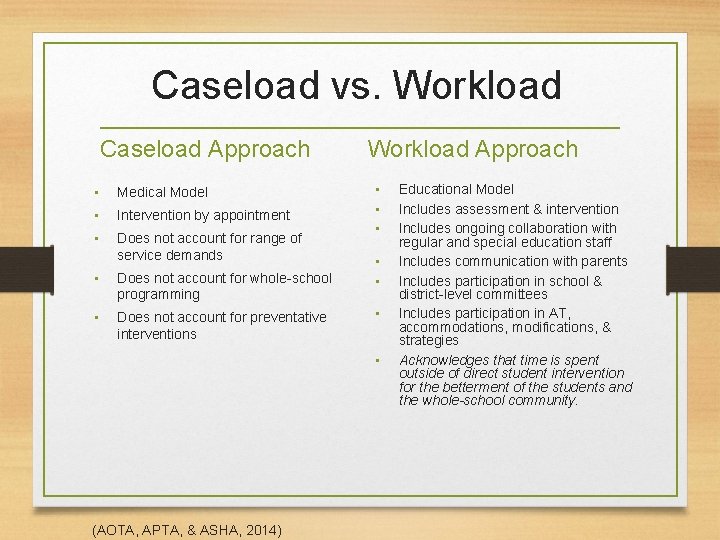
Caseload vs. Workload Caseload Approach • Medical Model • Intervention by appointment • Does not account for range of service demands • Does not account for whole-school programming • Does not account for preventative interventions Workload Approach • • (AOTA, APTA, & ASHA, 2014) Educational Model Includes assessment & intervention Includes ongoing collaboration with regular and special education staff Includes communication with parents Includes participation in school & district-level committees Includes participation in AT, accommodations, modifications, & strategies Acknowledges that time is spent outside of direct student intervention for the betterment of the students and the whole-school community.
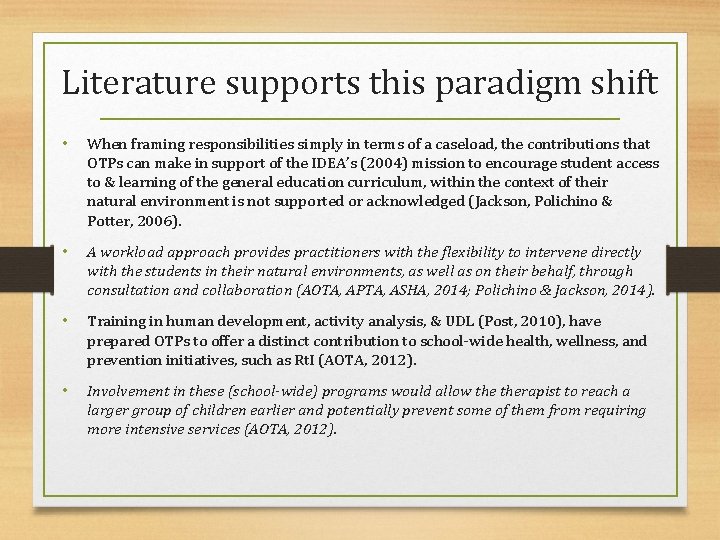
Literature supports this paradigm shift • When framing responsibilities simply in terms of a caseload, the contributions that OTPs can make in support of the IDEA’s (2004) mission to encourage student access to & learning of the general education curriculum, within the context of their natural environment is not supported or acknowledged (Jackson, Polichino & Potter, 2006). • A workload approach provides practitioners with the flexibility to intervene directly with the students in their natural environments, as well as on their behalf, through consultation and collaboration (AOTA, APTA, ASHA, 2014; Polichino & Jackson, 2014). • Training in human development, activity analysis, & UDL (Post, 2010), have prepared OTPs to offer a distinct contribution to school-wide health, wellness, and prevention initiatives, such as Rt. I (AOTA, 2012). • Involvement in these (school-wide) programs would allow therapist to reach a larger group of children earlier and potentially prevent some of them from requiring more intensive services (AOTA, 2012).
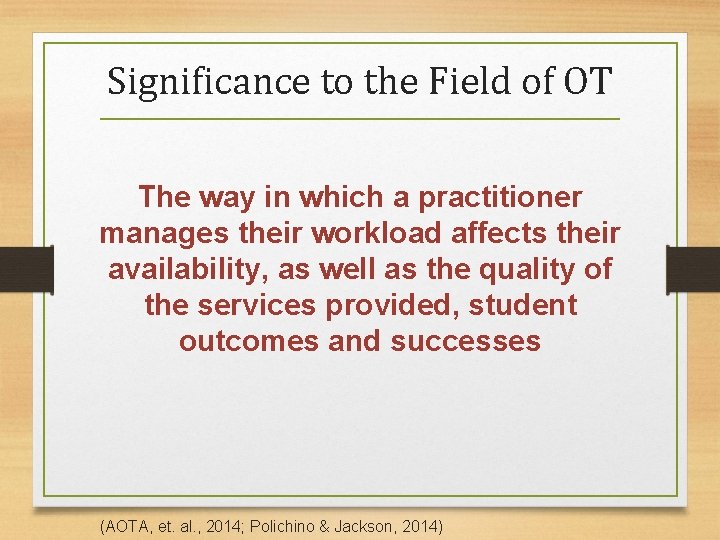
Significance to the Field of OT The way in which a practitioner manages their workload affects their availability, as well as the quality of the services provided, student outcomes and successes (AOTA, et. al. , 2014; Polichino & Jackson, 2014)
If a workload approach is supported by the literature, and it would allow us to address all of our job responsibilities, why aren’t we all using it?
Barriers to the Adoption (and Sustainability) of a Workload Service Delivery Model Ø Time & Scheduling Ø Perceptions of Stakeholders Ø Large/Unreasonable Caseload Numbers
1. Factors Influencing Time and Scheduling • School hours • Therapist’s hours • School-specific considerations (such as block scheduling) • Staff’s willingness to be flexible • IEP mandates regarding service delivery models: • individual • group • frequency of intervention • location of service delivery • Caseload numbers
2. Factors Influencing the Perceptions of Stakeholder s • Accessibility • Helpfulness/Value • Communication • Accountability
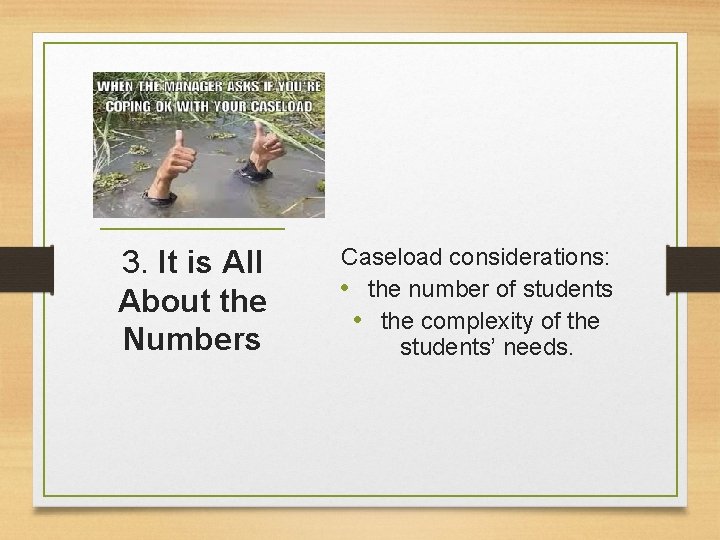
3. It is All About the Numbers Caseload considerations: • the number of students • the complexity of the students’ needs.
Caseload size impacts: 1. 2. 3. 4. 5. 6. 7. 8. 9. planning & reflection time the opportunity to collaborate with others availability to train others availability for professional development ability to complete paperwork in a timely fashion ability to engage in best practice student outcomes recruitment & retention of therapists the provision of a Free and Appropriate Public Education (FAPE) as mandated by IDEA
What is a Reasonable Caseload?
A reasonable caseload allows us to: • meet the needs of our students • Provide services as mandated by the student’s IEP • engage in evidence-based, best practice • complete documentation & billing within the hours of the school day • comply with federal and local regulations/guidelines
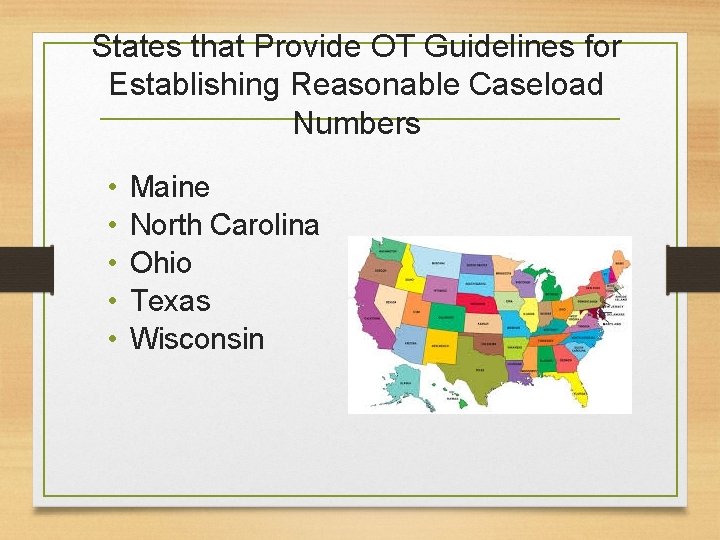
States that Provide OT Guidelines for Establishing Reasonable Caseload Numbers • • • Maine North Carolina Ohio Texas Wisconsin
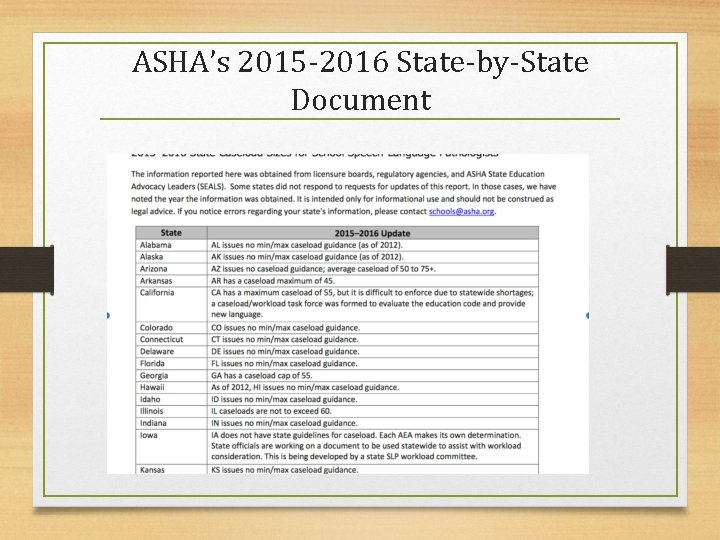
ASHA’s 2015 -2016 State-by-State Document

Prepare to Build
• Federal, state, and local regulations • IDEA • Practice Act • State Guidelines • Licensure Laws 1. Gather Information • District policies • Job Description • Speak to others • OTPs, SLPs, PTs • employees of neighboring districts
• What is your work style? Type A? Or laid back? • Do you use your time efficiently/productively? • Organizational skills? 2: Self. Reflection • Comfort level with medical vs. educational model? • Do you work on skill acquisition, occupation, or both? • Using evidence-based practice? • How are your advocacy skills?
• Your caseload • Number, significance of disabilities, & mandates 3: Reflect on Your Practice • Service delivery models • direct/indirect • integrated/non-integrated • group/individual • caseload or workloadbased • Your time • Perform a Time Study • Resources & liabilities • Perform a SWOT analysis
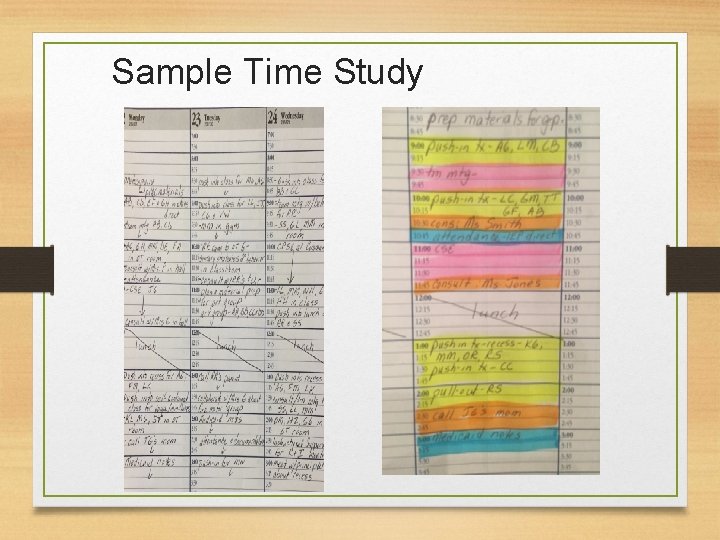
Sample Time Study
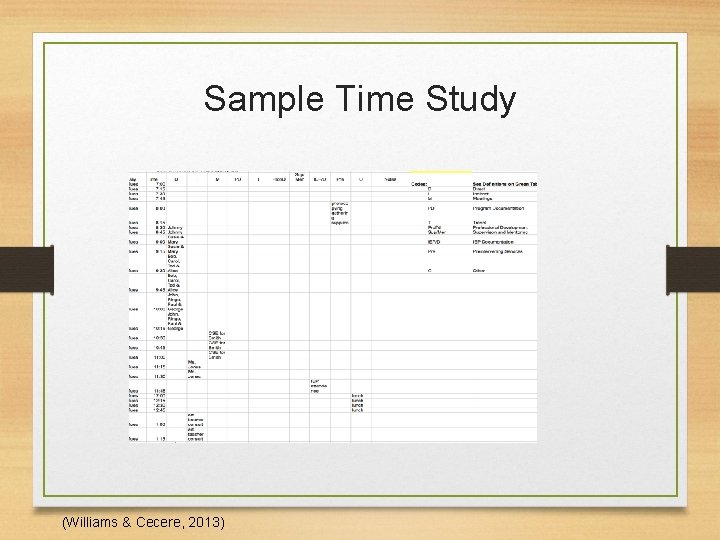
Sample Time Study (Williams & Cecere, 2013)
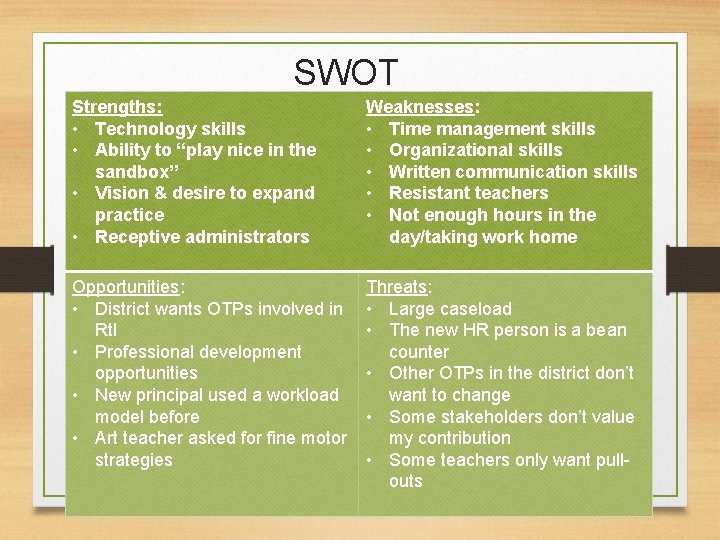
SWOT Strengths: • Technology skills • Ability to “play nice in the sandbox” • Vision & desire to expand practice • Receptive administrators Weaknesses: • Time management skills • Organizational skills • Written communication skills • Resistant teachers • Not enough hours in the day/taking work home Opportunities: • District wants OTPs involved in Rt. I • Professional development opportunities • New principal used a workload model before • Art teacher asked for fine motor strategies Threats: • Large caseload • The new HR person is a bean counter • Other OTPs in the district don’t want to change • Some stakeholders don’t value my contribution • Some teachers only want pullouts
Start to Build Your Case
1. Change The Way You Work Use a service delivery model that fits • • • 3: 1 block scheduling fading plans consultation services embedded services telehealth
2. If You Do It, Document It Accountability • IEPs and 504 s • include consultation time • include team meeting time • programmed teaming
3. Lighten Your Load by Empowering Others • Train staff • typical development, equipment, AT, strategies • Do you always have to be the gatekeeper? • consider other ways to make equipment and strategies available to staff (an Rt. I cart? ) • Put it in their hands • activities • written/digitized materials
4. Get Tech-nical • Create a Web-Page • educational materials & home programs • local resources • links to websites & AOTA documents • Make a video or Power. Point • instructional (individualized, or general) • child development • strategies • Try a Telehealth Service Delivery Model • parent training • parent-teacher conference
5. Finding time and resources to build your case • Do not re-invent the wheel • Use Staff Development Days • Spend it now, save it later • Grants

Sell Your Case: Promote & Advocate
1. Assess Your Stakeholders • Do they see a need 2. Back Your Case With Evidence • • for change? • Share your vision • • Explain the need • • Provide evidence • IDEA compliance Best practice Early Intervention Whole-school programming Health, wellness, and prevention programming
3. Demonstrate Accountability 4. Become an advocate • Consider how you • Advocacy style could document your based on SWOT use of time. Google written- proposal docs, daily electronic research logs, weekly • Advocacy to spreadsheets, etc. leverage your opportunities • Knowledge is the basis of advocacy

The Realities of Change 1. You will not be popular-change is not easy! 2. Administration needs to support you-at least one person in leadership 3. Leverage your reputation-reap what you sow 4. Use principles of “change management”-be people oriented
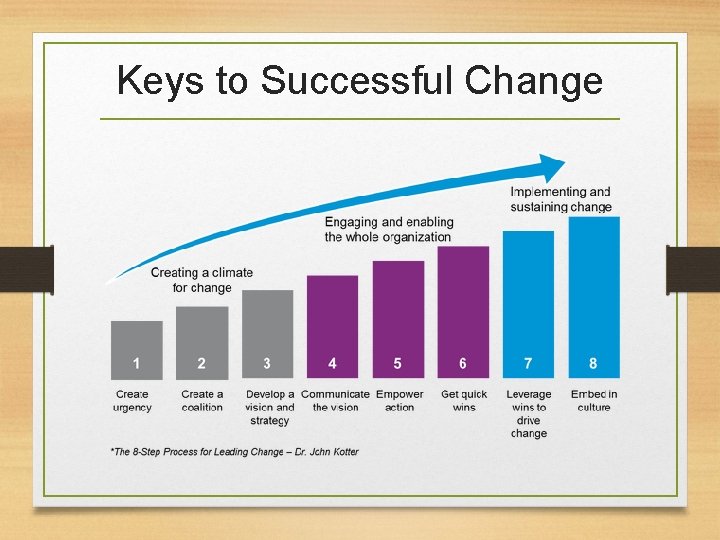
Keys to Successful Change
Considerations to Make Change • Articulate how change impacts and effects everyone-the how does it affect me personally piece • The rational but the emotional need for change -passion is linked to motivation • Be the role model-do onto others • Community ownership of change-A school is a village • Create new cultures-Embedding change in the system
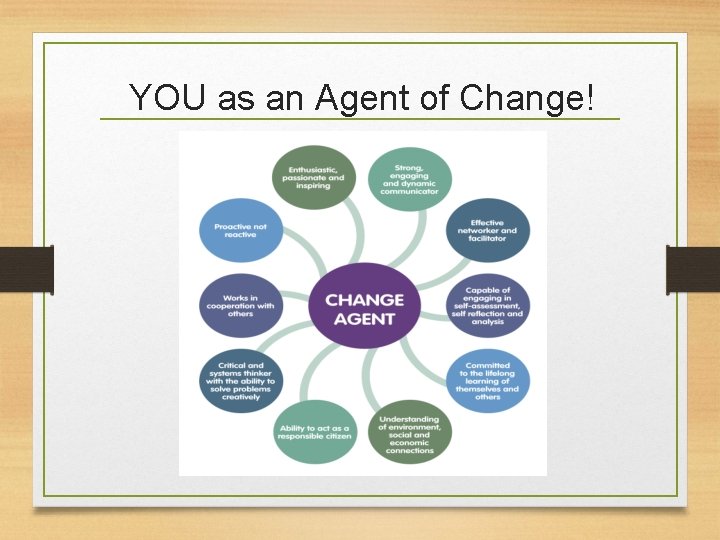
YOU as an Agent of Change!
Sustainability: Maintaining a Workload Model
1. Collect Data • Periodically perform time studies • feedback on efficacy • tweak service delivery models • demonstrate a need for additional staff
2. Remain Current • Explore the literature • AOTA website and publications • ASHA and APTA websites and publications • Social Media • OT Connections • Facebook • Pinterest
3. Collaborate • Helps with buy-in and targeting your interventions. • Easier to collaborate if you are embedded into the school environment (classroom, specials, etc. )
Conduct Research & Collect Evidence • Create a pre- and post- survey to explore the effectiveness of your training(s) • Complete a pilot study on the effectiveness of your innovative programs • Survey the staff and/or family members to gather their perceptions of the online tools that you developed. • Use this information to inform change/tweak programs and service

References American Occupational Therapy Association (2015). Salary and Workforce Study. Retrieved from: https: //www. aota. org/Education-Careers/Advance-Career/Salary-Workforce-Survey. aspx American Occupational Therapy Association (2015). Collection of OT/PT state guidelines for school based practice. Retrieved from: https: //www. aota. org/~/media/Corporate/Files/Secure/Practice/Children/State%20 Guidelines%20 for%20 School%20 B ased%20 Practice. pdf American Occupational Therapy Association (2014). Occupational therapy practice framework: Domain and practice (3 rd Ed. ) American Journal of Occupational Therapy, 68, S 1 -S 51 American Occupational Therapy Association (2012). AOTA practice advisory on occupational therapy in response to intervention. Retrieved from: http: //www. aota. org//media/Corporate/Files/Practice/Children/Browse/School/Rt. I/AOTA%20 Rt. I%20 Practice%20 Adv%20 final%20%20101612. pdf [American Occupational Therapy Association, American Physical Therapy Association, & American Speech. Language-Hearing Association]. (2015, January 24). Paradigm shift: Workload approach for related service providers. [Video File. ]. Retrieved from https: //www. youtube. com/watch? v=6 UMfm 5 r. Sge. U&feature=youtu. be
References American Occupational Therapy Association, American Physical Therapy Association, & American Speech. Language-Hearing Association (2014). Workload approach: A paradigm shift for positive impact on student outcomes. Retrieved from: http: //www. aota. org/-/media/Corporate/Files/Practice/Children/APTA-ASHA-AOTA-Joint-Doc. Workload-Approach-Schools-2014. pdf American Speech Hearing Language Association (2016). 2015 -2016 State caseload sizes for school speech-language pathologists. Retrieved from: http: //www. asha. org/uploaded. Files/ASHA/Practice_Portal/Professional_Issues/Caseload_and_Workload/2015 -2016 State-Caseload-Sizes-for-School-SLPs. pdf American Speech Hearing Language Association (2002). A workload analysis approach for establishing speechlanguage caseload standards in the schools: Guidelines. American Speech Hearing Association Desk Reference, 3, 409418. Annett, M. (2003). Beyond school caseloads: Looking at total workload. American Speech Hearing Leader Online. Retrieved from http: //professional. asha. org/searchresults. cfm Case-Smith, J. , & Holland, T. (2009). Making decisions about service delivery in early childhood programs. Language, Speech & Hearing Services in Schools, 40, 416 -423. Dunn, W. (1991). Consultation as a process: How, when, and why? In C. B. Royeen (ED. ), AOTA self study series: school-based practice for related services (pp. 7 -41). Rockville, MD: American Occupational Therapy Association, Inc.
References Gardner, C. & Lisbona, B. (2014). The 3: 1 model: Creating successful school outcomes [Power. Point slides]. The American Occupational Therapy Association National Conference 2014. Retrieved from: https: //docs. google. com/gview? url=http: //www. njota. org/associations/11734/files/SC%2010%203 in 1 model. ppt Garfinkel, M. & Seruya, F. M. (2016). Therapists’ perceptions of a workload-oriented service delivery model in school -based practice. The American Journal of Occupational Therapy, 70, (4_Supplement_1): 7011505145 p 1, Aug 2016 Retrieved from: http: //ajot. aota. org/article. aspx? articleid=2582658 Handley-More, D. , Wall, E. , Orentilcher, M. L. , Hollenbeck, J. (2013). Working in early intervention and school settings: Current views of best practice. Early Intervention & School Special Interest Section Quarterly, American Journal of Occupational Therapy, 20, 1 -4. Harshak, A. , Aguirre, D. , & Brown, B. (2010). Making Change Happen, and Making It Stick. http: //www. strategy-business. com/article/00057? gko=39 ed 2 Individuals with Disabilities Education Improvement Act of 2004, P. L. 108 -446, 20 U. S. C. Chapter 33. Ivy Exec. (n. d. ). Want to Advocate for Change? Here are 3 Realities You Need to Know. Retrieved from: https: //www. ivyexec. com/executive-insights/2016/advocate-for-change/ Jackson, L. , Polichino, J. , & Potter, K. (2006). Transforming caseload to workload in school-based and early intervention occupational therapy services. Practical Tips for Occupational Therapists and Occupational Therapy Assistants From the American Occupational Therapy Association. Retrieved from: http: //www. aota. org/-/media/ /Corporate/Files/Practice/Children/Resources/Transforming%20 Caseload. ashx
References Kingsley, K. , & Mailloux, Z. (2013). Evidence for the effectiveness of different service delivery models in early intervention services. American Journal of Occupational Therapy, 67, 431 -436. Maine Department of Education (n. d. ). Caseload. Retrieved from: http: //www. maine. gov/doe/specialed/support/policies/faq/caseload. html Ohio OTPTAT Board (2011). Determination of appropriate caseload for school-based occupational therapy and physical therapy practice position paper. Retrieved from: http: //otptat. ohio. gov/Portals/0/Pubs/School%20 Based%20 OTPT%20 Caseload%20 Position%20 Paper%20 June%202011. pdf Polichino, J. E. , & Jackson, L. (2014). Frequently asked questions: Transforming caseload to workload in school-based occupational therapy services. Retrieved from: http: //www. aota. org//media/Corporate/Files/Secure/Practice/Children/Workload-fact. pdf Post, K. M. (2010). Occupational therapy and Universal Design for Learning. Retrieved from: http: //www. aota. org//media/Corporate/Files/About. OT/Profesionals/What. Is. OT/CY/Fact-Sheets/UDL%20 fact%20 sheet. pdf Ray, L. , Holahan, L. , Flynn, P. (n. d. ). Guidance in determining FTE & workload for occupational therapy, physical therapy, and speech-language pathology staff. North Carolina Department of Public Instruction. Retrieved from https: //www. med. unc. edu/ahs/physical/schoolbasedpt/sb-pt-files/recruitment-resources/FTE%204_16. pdf
References Sayers, B. R. (2008). Collaboration in school settings: A critical appraisal of the topic. Journal of Occupational Therapy, Schools, & Early Intervention, 1, 170 -179. Doi. org/10. 1080%2 F 19411240802384318 United States Department of Education (2017). Individuals with disabilities education act. Retrieved from: https: //www. 2 ed. gov/about/offices/list/osers/osep-idea. html Williams, J. K. , & Cecere, S. W. (2013). School-based workload: What’s the magic formula? [Power. Point slides] Retrieved from: http: //www. marylandpublicschools. org/msde/divisions/earlyinterv/commission/docs/04162014/Materials/11%20 Williams %20&%20 Cecere%20 AOTA%202013. pdf Williams, J. K. & Cecere, S. W. (2013). Workload Time Survey Instructions. Retrieved from: https: //otpt 13. wikispaces. com/file/view/Workload. Time. Survey. Instructions. Clusters. B. ASHA. pdf/537208726/Workload. Ti me. Survey. Instructions. Clusters. B. ASHA. pdf
- Slides: 53