
The Work of the National Patient Safety Agency

- Slides: 43
The Work of the National Patient Safety Agency Joan Russell Safer Practice Lead-Emergency Care
Overview • Patient safety – what, why and how big is the problem? • Seven steps to patient safety and the tools to make a difference • Ambulance Service Risk Assessment
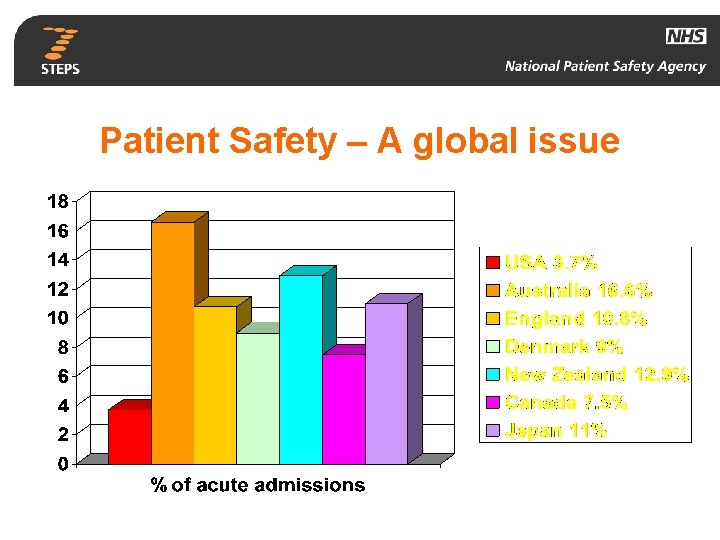
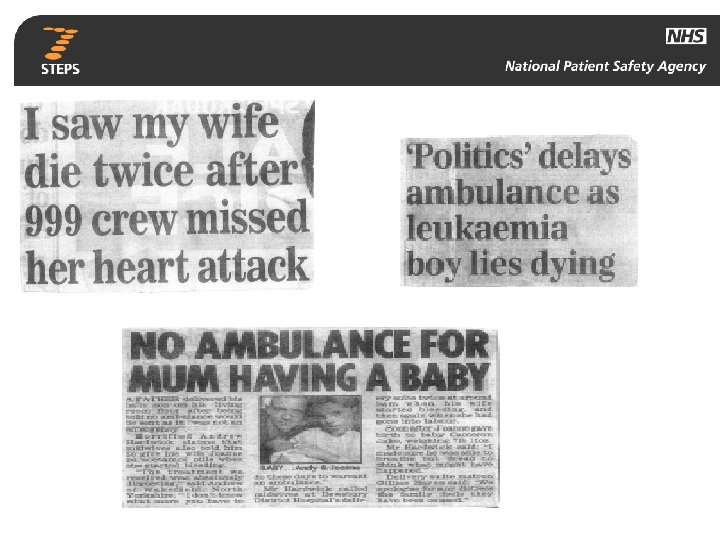
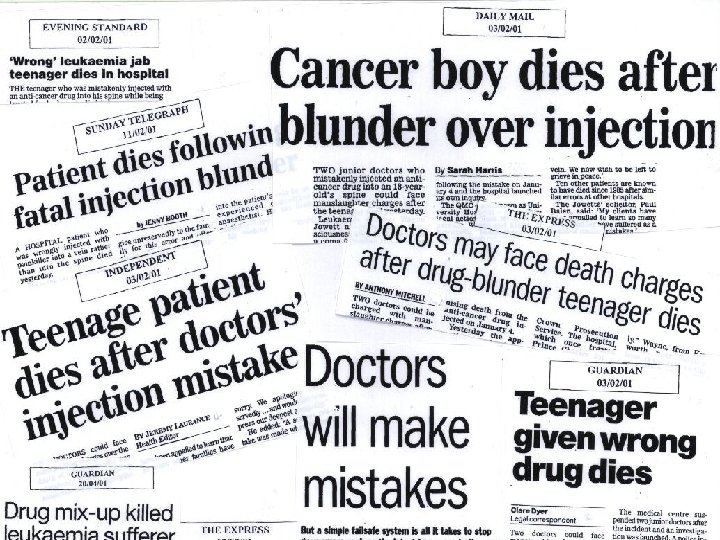
Patient Safety – A global issue
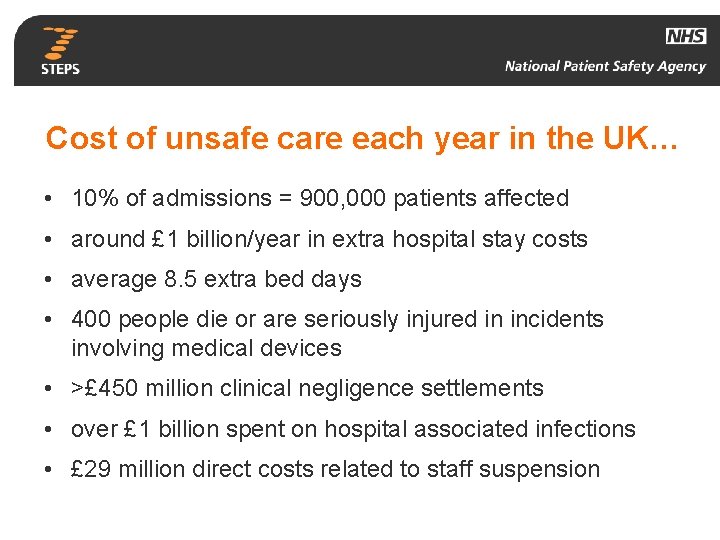
Cost of unsafe care each year in the UK… • 10% of admissions = 900, 000 patients affected • around £ 1 billion/year in extra hospital stay costs • average 8. 5 extra bed days • 400 people die or are seriously injured in incidents involving medical devices • >£ 450 million clinical negligence settlements • over £ 1 billion spent on hospital associated infections • £ 29 million direct costs related to staff suspension
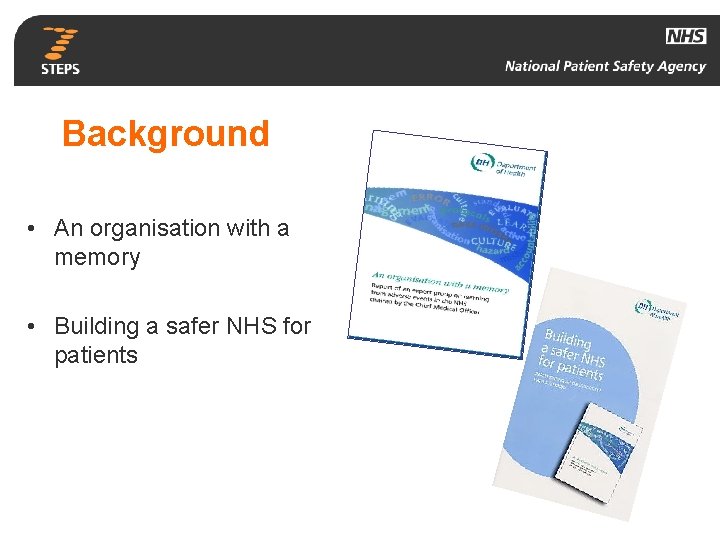
Background • An organisation with a memory • Building a safer NHS for patients
Seven Steps 1. 2. 3. 4. 5. 6. 7. Build a safety culture that is open and fair Lead and support your staff in patient safety Integrate your risk management activity Promote reporting Involve patients and the public Learn and share safety lessons Implement solutions to prevent harm
Step 1 - Build a safety culture that is open and fair • Safety is considered in everything you do • There is a balanced approach when things go wrong - you ask why and not who • Constant vigilance
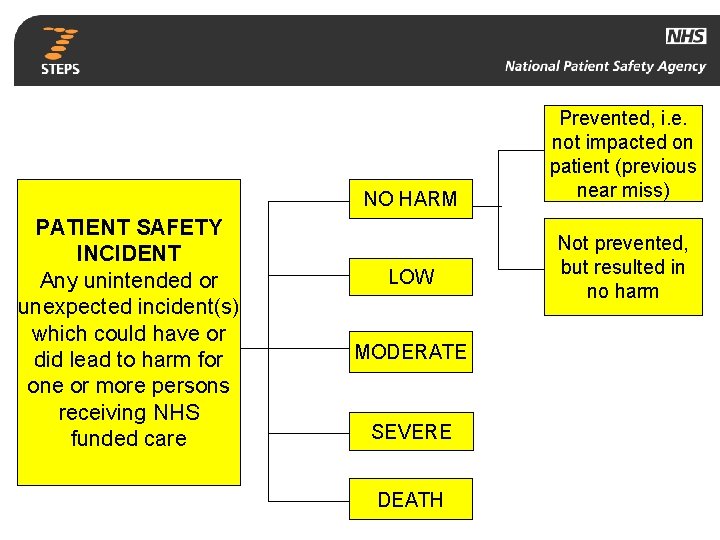
NPSA Definitions NO HARM PATIENT SAFETY INCIDENT Any unintended or unexpected incident(s) which could have or did lead to harm for one or more persons receiving NHS funded care LOW MODERATE SEVERE DEATH Prevented, i. e. not impacted on patient (previous near miss) Not prevented, but resulted in no harm
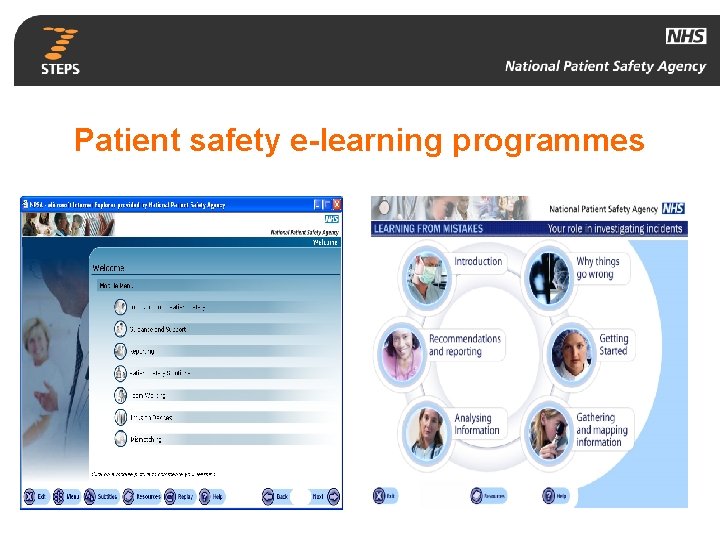
Patient safety e-learning programmes
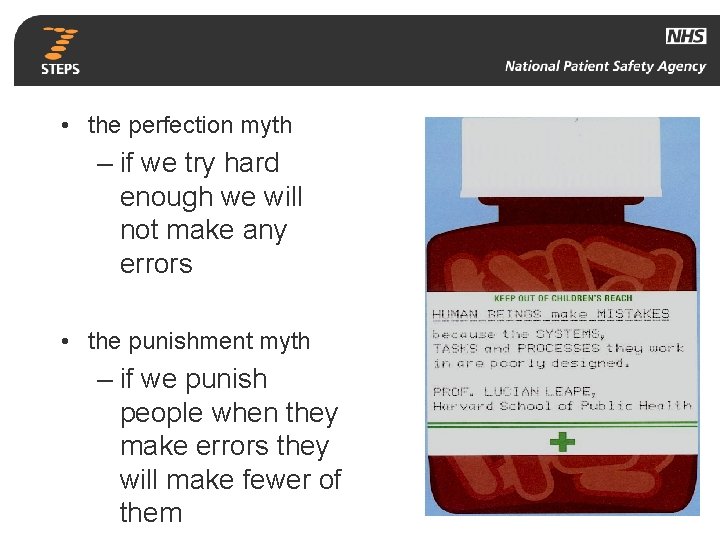
• the perfection myth – if we try hard enough we will not make any errors • the punishment myth – if we punish people when they make errors they will make fewer of them
Incident Decision Tree
Step 2 Leadership and support Leadership advised to: • Undertake executive walkabouts • Develop team safety briefing and debriefing • Appoint patient safety clinical champions • Undertake safety culture and team culture assessments
Step 3 - Integrated risk management • • • all risk management functions and information: –patient safety, –health and safety, –complaints, –clinical litigation, –employment litigation, –financial and environmental risk training, management, analysis, assessment and investigations processes and decisions about risks into business and strategic plans
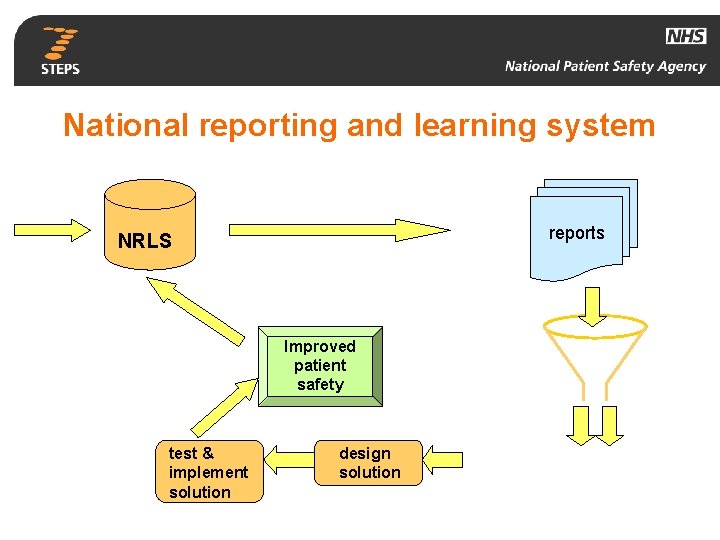
Step 4 Promote reporting • National reporting and learning system (NRLS) • Reporting via: – local risk management systems – E-form on NHS net – E-form on www • Anonymous (names of patients and staff) • Confidential (names of organisations)
National reporting and learning system NHS reports NRLS monitor impact test & implement solution Improved patient safety design solution identification of issues prioritisation of solution work
Step 5 Involve and communicate with patients and the public Being Open Ask about medicines leaflets SPEAK UP Involve in investigation
Step 6 Learn and share safety lessons • NPSA Root Cause Analysis Programme • Over 5000 NHS staff trained in RCA methodology • E-learning toolkit • Guidance • Aggregated themed RCA • RCA data capture • Training for independent investigations
Step 7 Solutions to Prevent Harm • Address root causes • Make designs of equipment, systems, processes, more intuitive • Make wrong actions more difficult • Make incorrect actions correct • Make it easier to discover error “Telling people to be more careful doesn’t work”
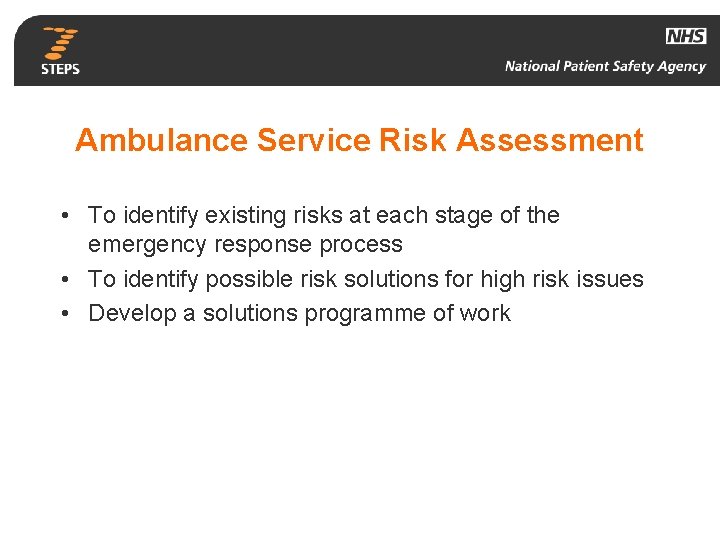
Ambulance Service Risk Assessment • To identify existing risks at each stage of the emergency response process • To identify possible risk solutions for high risk issues • Develop a solutions programme of work
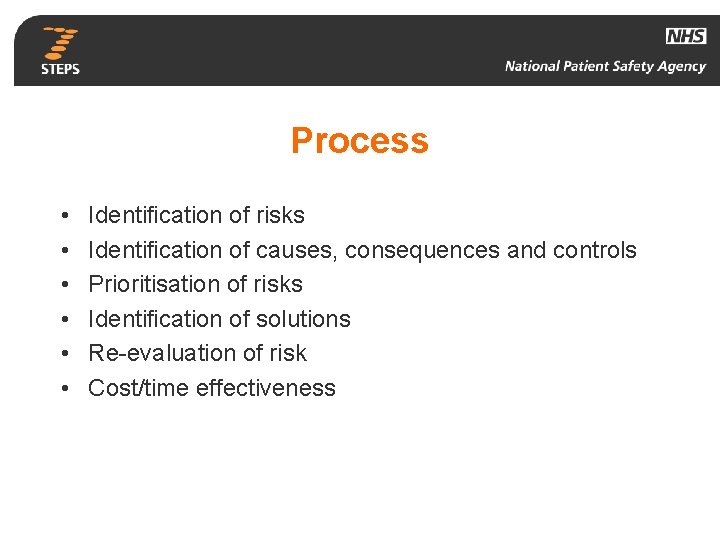
Process • • • Identification of risks Identification of causes, consequences and controls Prioritisation of risks Identification of solutions Re-evaluation of risk Cost/time effectiveness
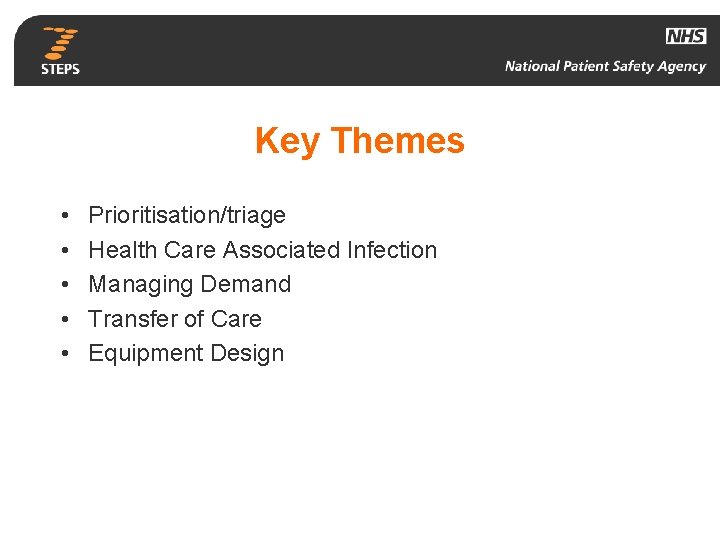
Key Themes • • • Prioritisation/triage Health Care Associated Infection Managing Demand Transfer of Care Equipment Design
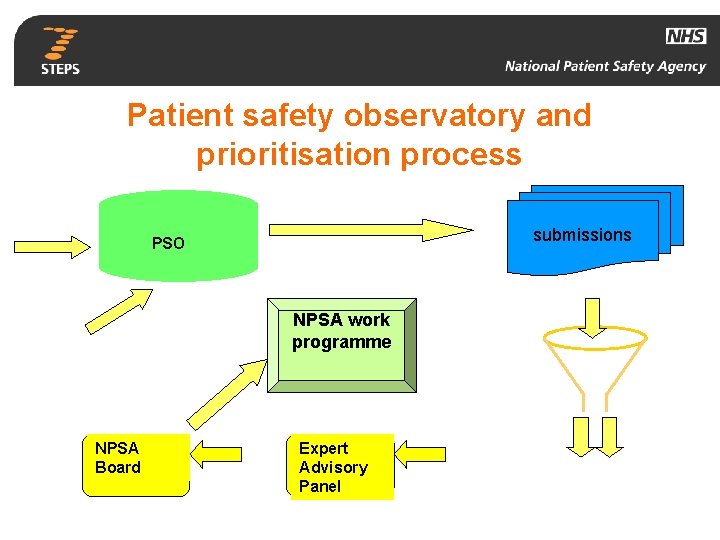
Patient Safety Info Patient safety observatory and prioritisation process submissions PSO NRLS and other data sources NPSA work programme NPSA Board Expert Advisory Panel Filtering of submissions
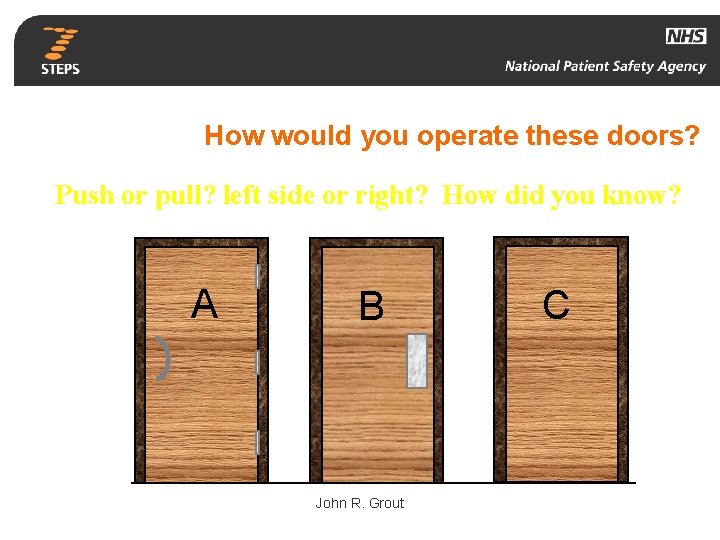
Affordances How would you operate these doors? Push or pull? left side or right? How did you know? A B John R. Grout C
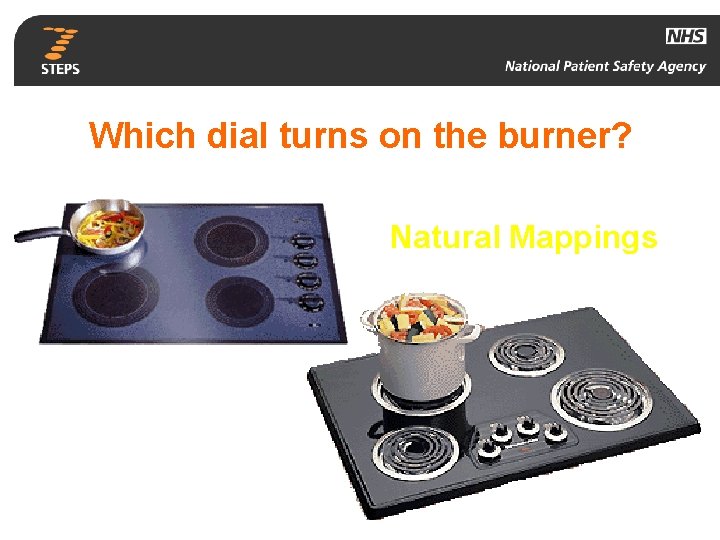
Which dial turns on the burner? Natural Mappings Stove A Stove B
What Can Be Done to Remove Problems ? • • • Design out the problem Change the system Change practice Train the staff Involve patients
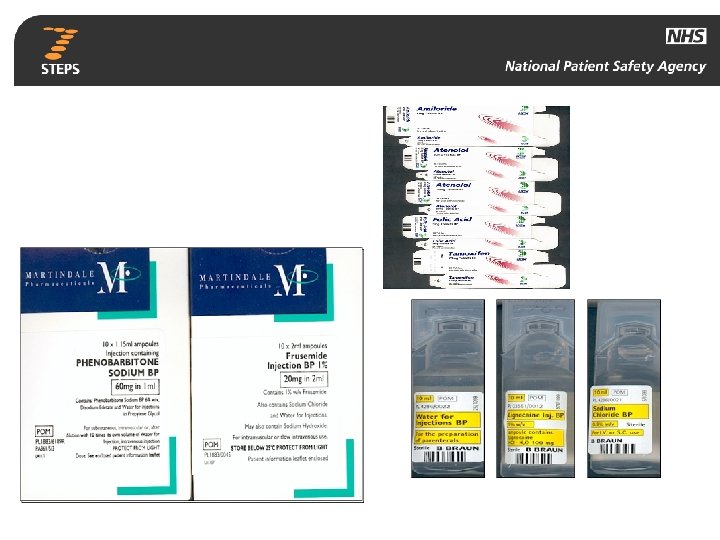
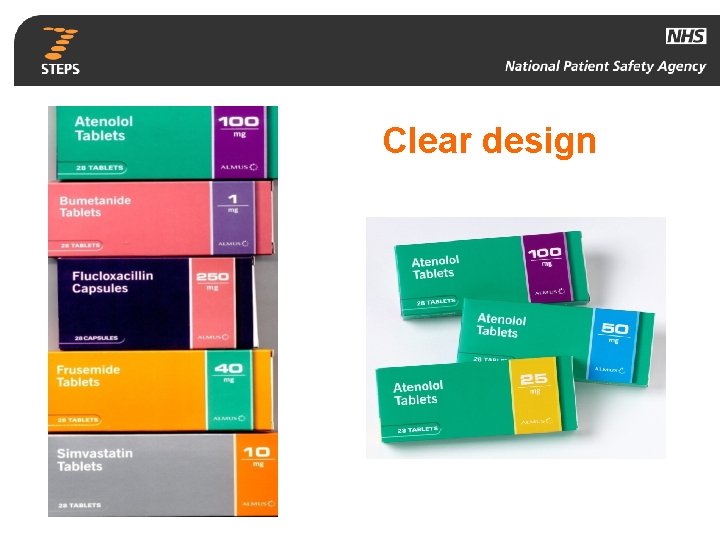
• Design out the problem (design solution)
Clear design
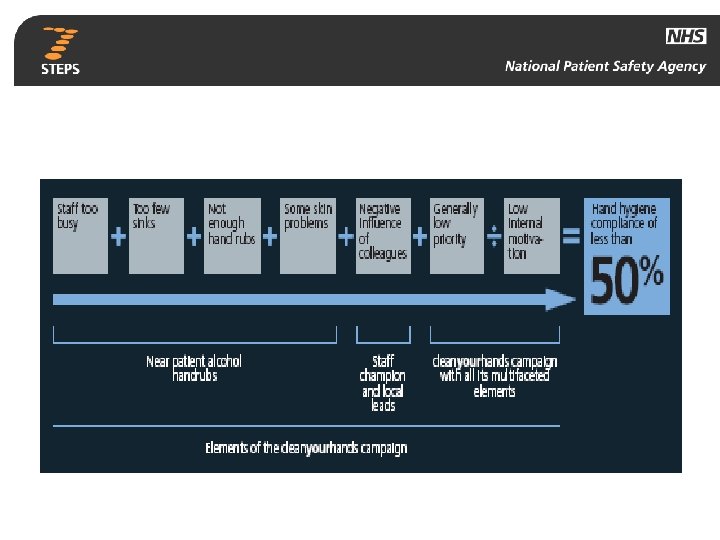
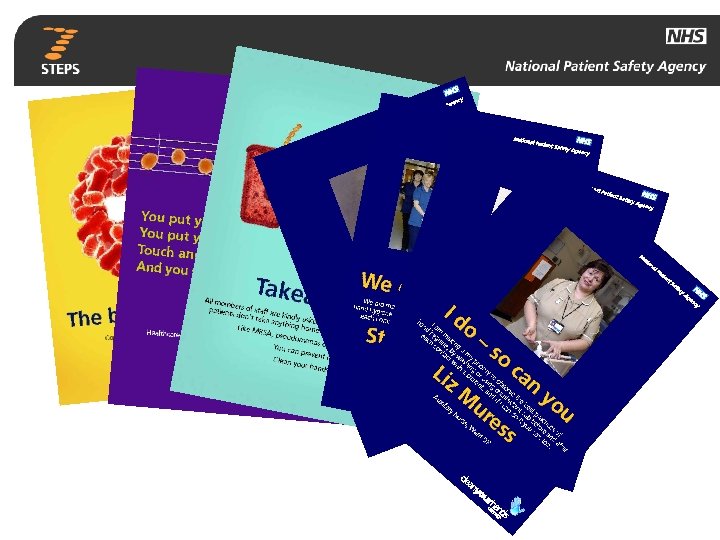
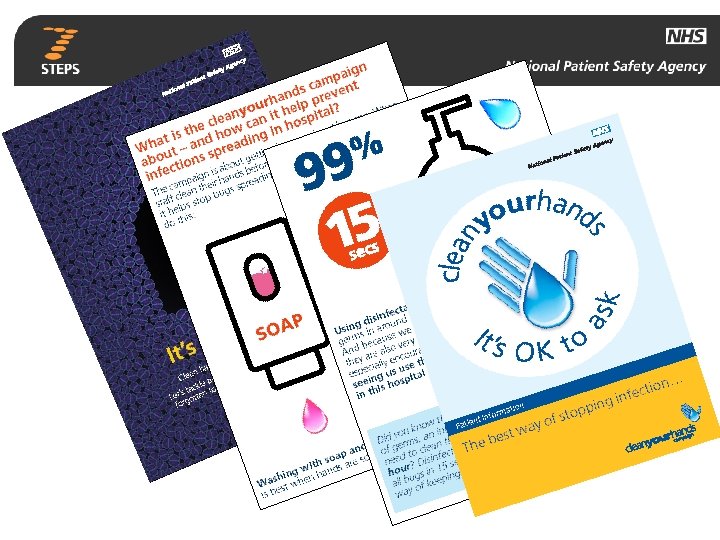
Case Examples Cleanyourhands campaign
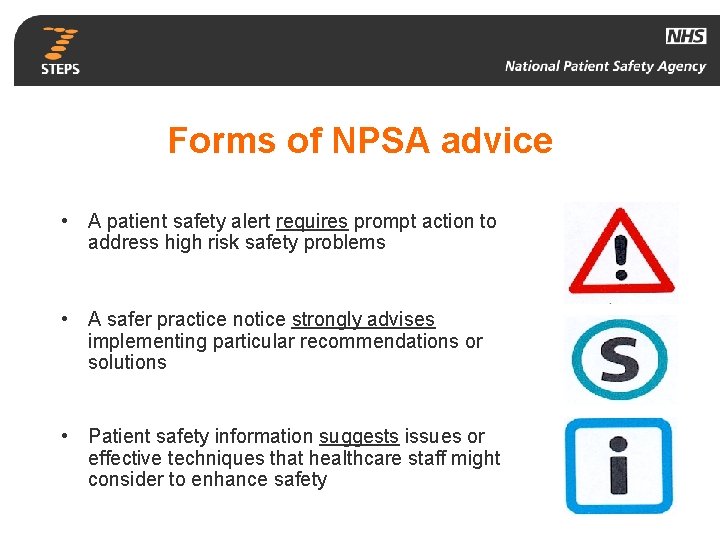
Forms of NPSA advice • A patient safety alert requires prompt action to address high risk safety problems • A safer practice notice strongly advises implementing particular recommendations or solutions • Patient safety information suggests issues or effective techniques that healthcare staff might consider to enhance safety
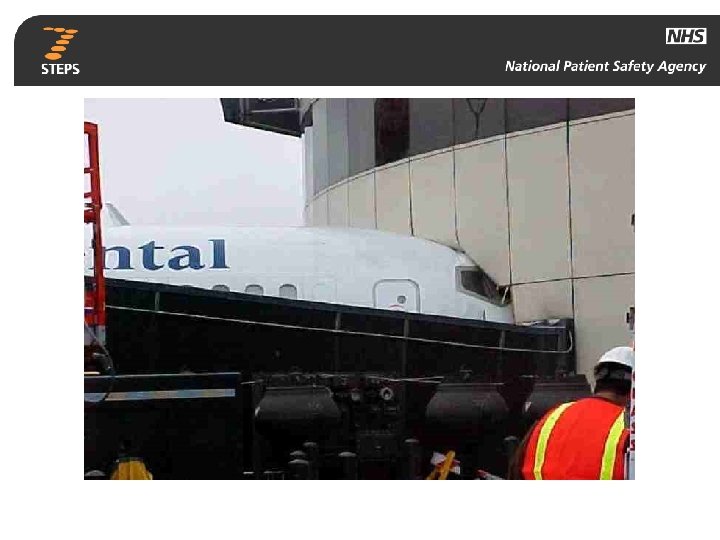
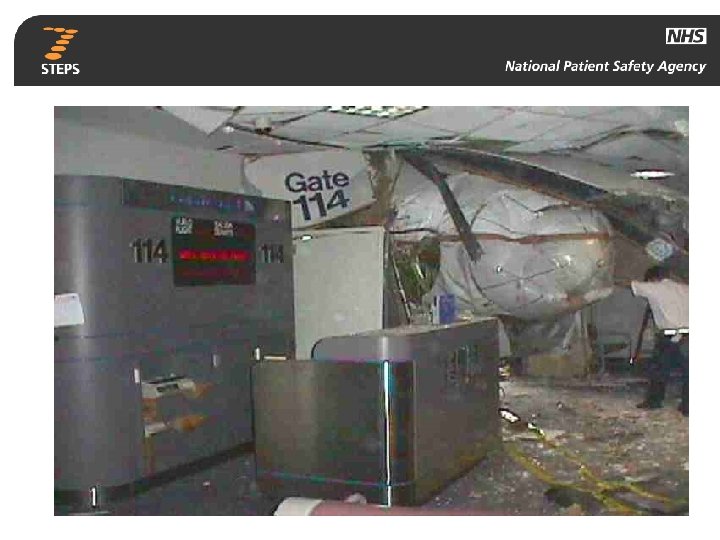
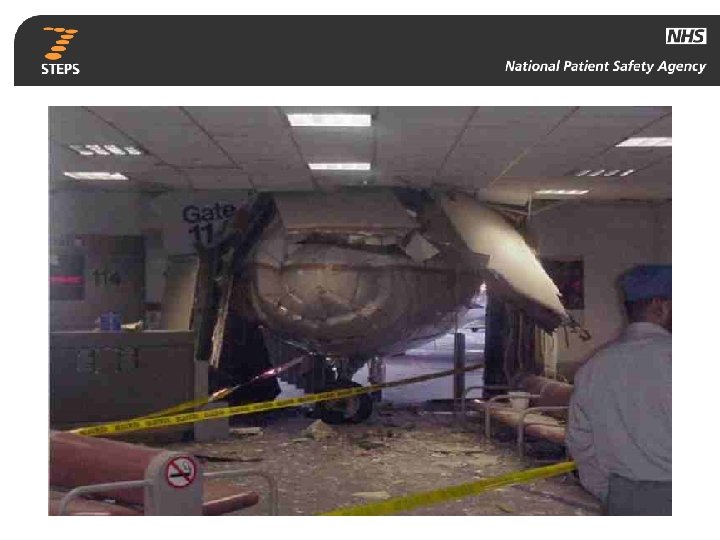
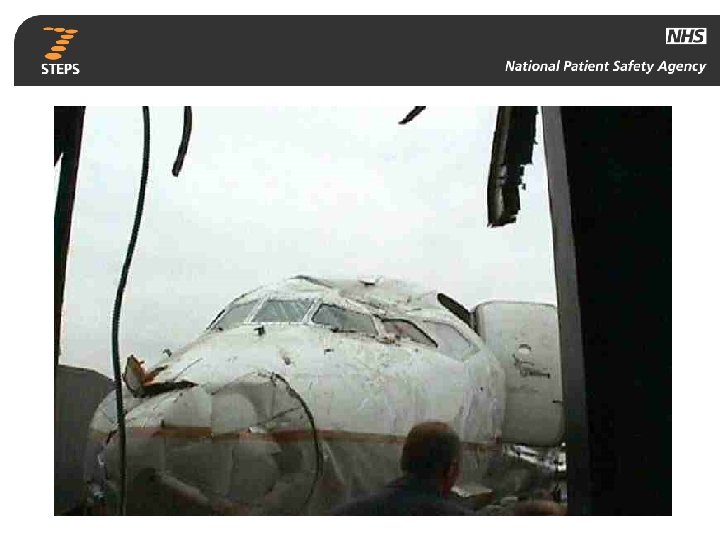
1 st team of engineers… Task-‘replace centre console light panel around the throttle quadrant’ • Throttle levers in full power position • Take-off warning horn silenced • Circuit breaker pulled
Next engineer… Task-‘trouble shoot a reported engine oil quantity discrepancy’ Requirement of task-undertake an engine run Guidance-’Pre Power On’ Taxi/Towing Checklist • Check circuit breakers • Throttle levers to idle • Parking break set
To err is human To cover up is unforgivable To fail to learn is inexcusable Sir Liam Donaldson Chief Medical Officer England
Thank you for listening Any questions? Need help contact; www. npsa. nhs. uk