
The Work of Gregor Mendel Mendels Experiments Peas
- Slides: 27
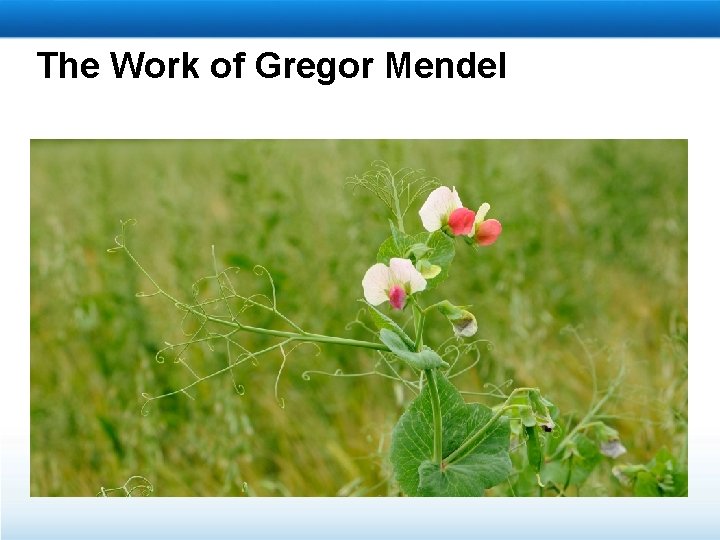
The Work of Gregor Mendel
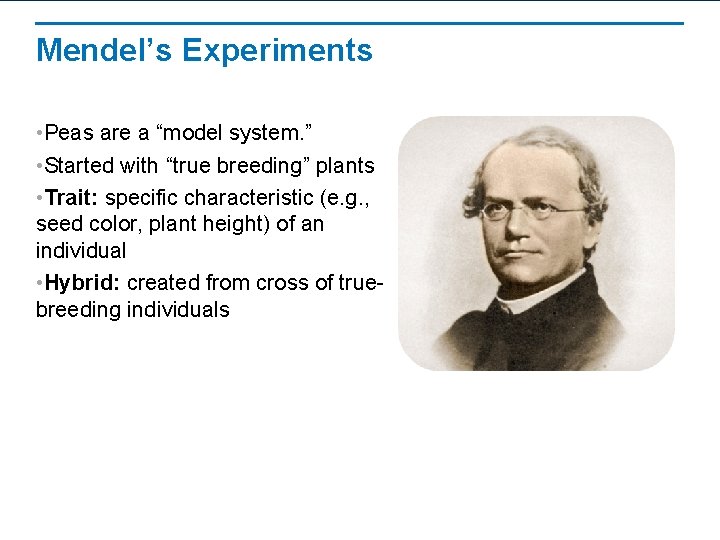
Mendel’s Experiments • Peas are a “model system. ” • Started with “true breeding” plants • Trait: specific characteristic (e. g. , seed color, plant height) of an individual • Hybrid: created from cross of truebreeding individuals
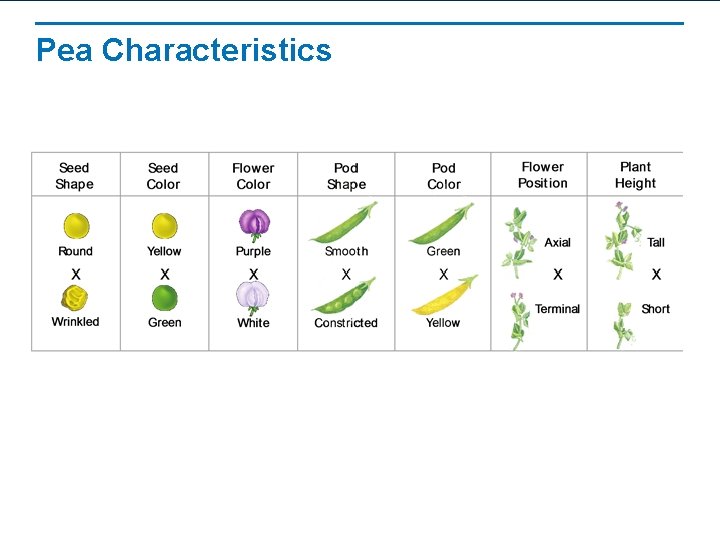
Pea Characteristics
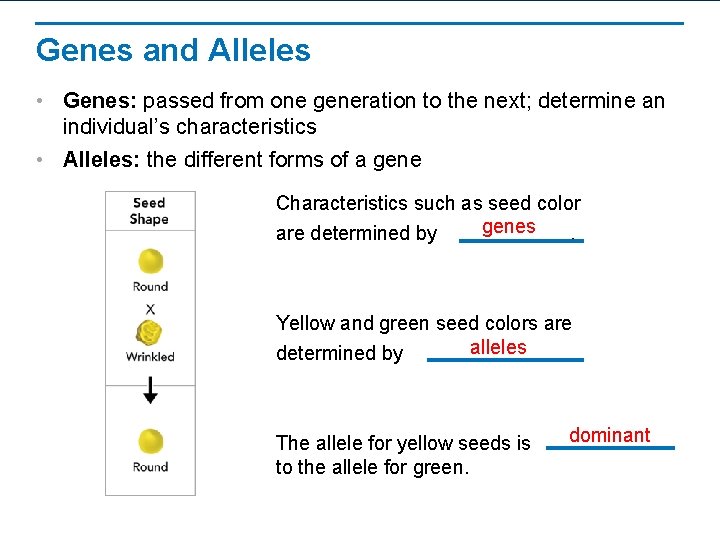
Genes and Alleles • Genes: passed from one generation to the next; determine an individual’s characteristics • Alleles: the different forms of a gene Characteristics such as seed color genes are determined by. Yellow and green seed colors are alleles determined by. The allele for yellow seeds is to the allele for green. dominant
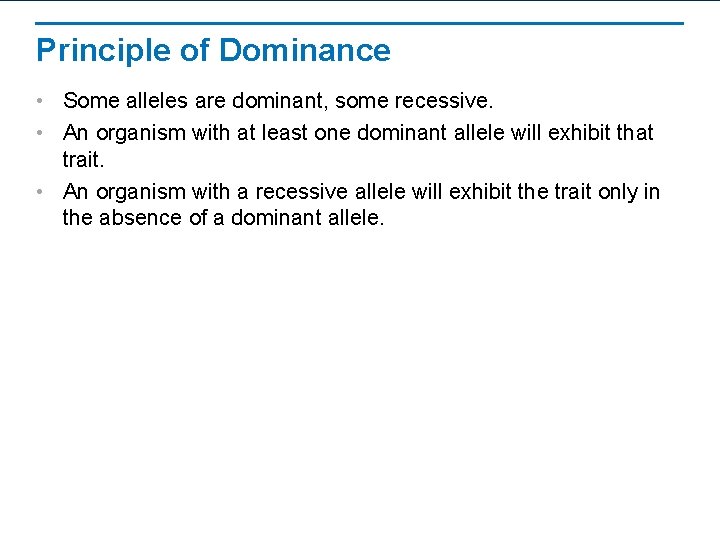
Principle of Dominance • Some alleles are dominant, some recessive. • An organism with at least one dominant allele will exhibit that trait. • An organism with a recessive allele will exhibit the trait only in the absence of a dominant allele.
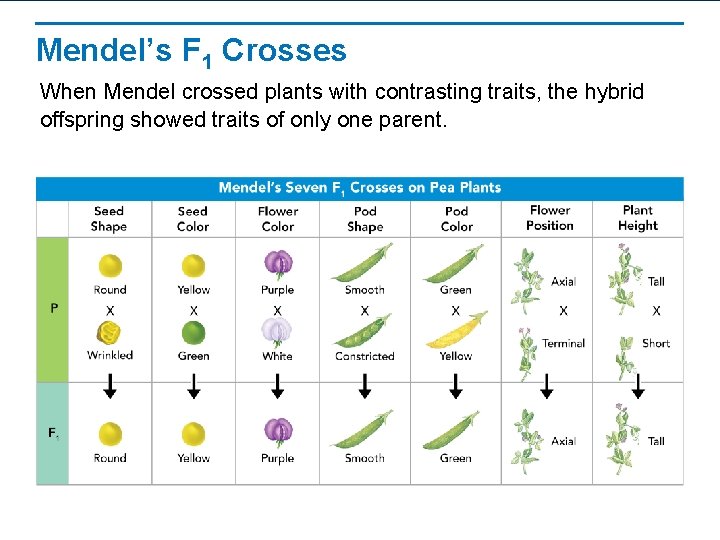
Mendel’s F 1 Crosses When Mendel crossed plants with contrasting traits, the hybrid offspring showed traits of only one parent.
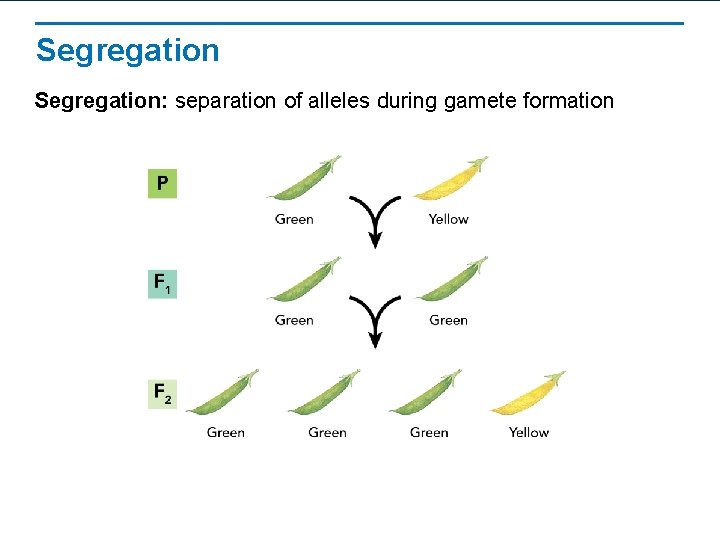
Segregation: separation of alleles during gamete formation
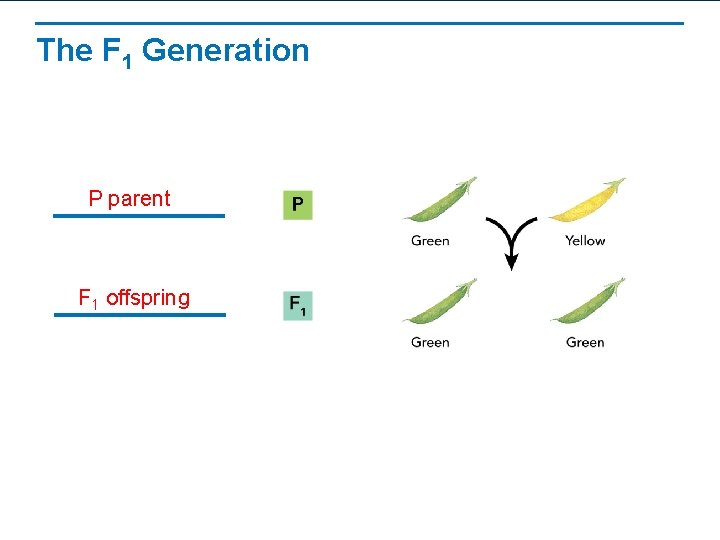
The F 1 Generation P parent F 1 offspring
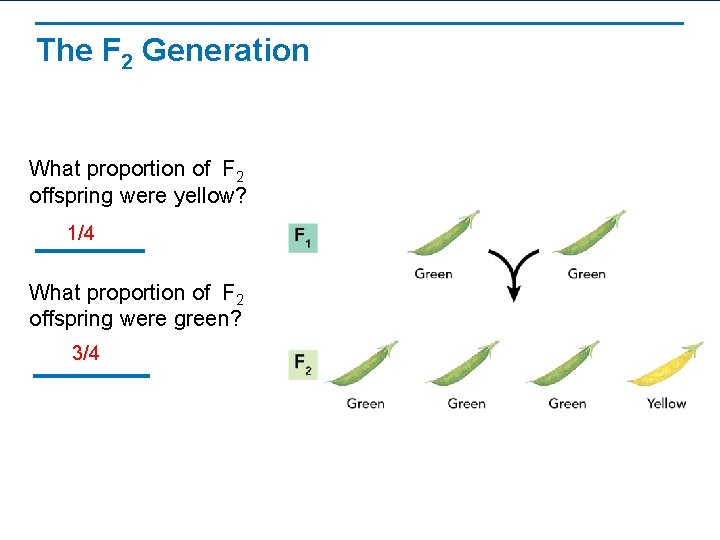
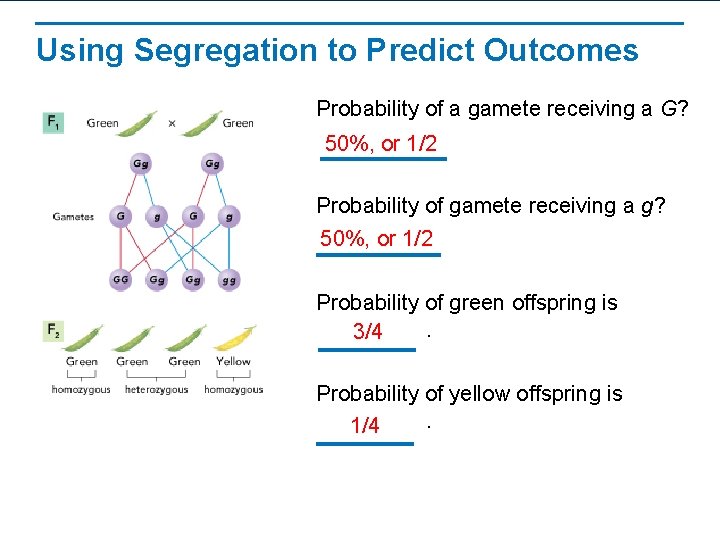
The F 2 Generation What proportion of F 2 offspring were yellow? 1/4 What proportion of F 2 offspring were green? 3/4
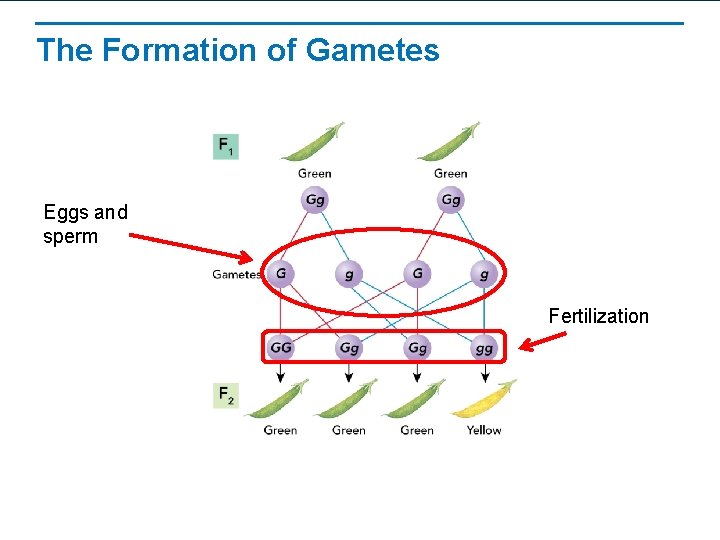
The Formation of Gametes Eggs and sperm Fertilization
Applying Mendel’s Principles
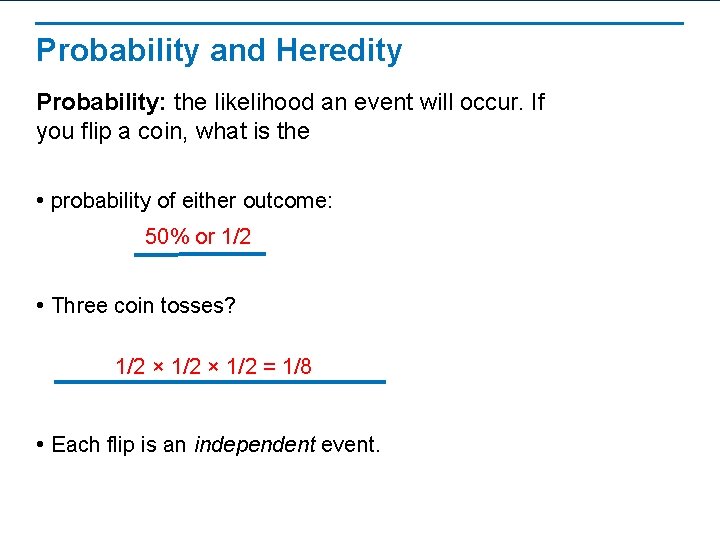
Probability and Heredity Probability: the likelihood an event will occur. If you flip a coin, what is the • probability of either outcome: 50% or 1/2 • Three coin tosses? 1/2 × 1/2 = 1/8 • Each flip is an independent event.
Using Segregation to Predict Outcomes Probability of a gamete receiving a G? 50%, or 1/2 Probability of gamete receiving a g? 50%, or 1/2 Probability of green offspring is. 3/4 Probability of yellow offspring is. 1/4
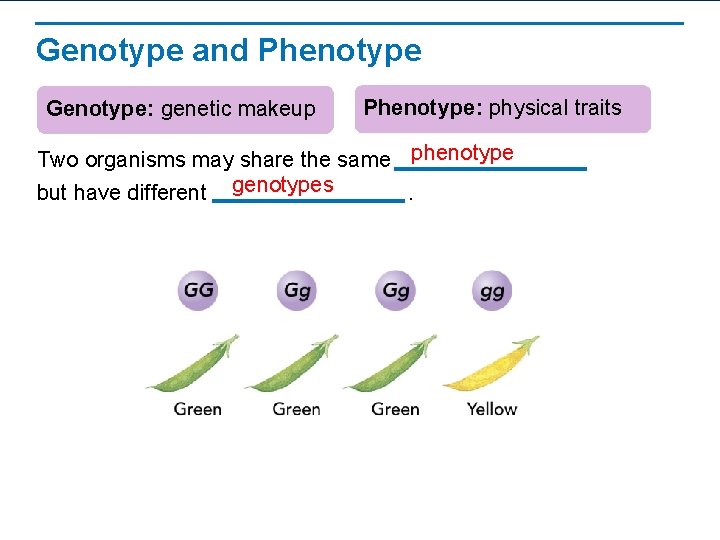
Genotype and Phenotype Genotype: genetic makeup Phenotype: physical traits Two organisms may share the same phenotype but have different genotypes.
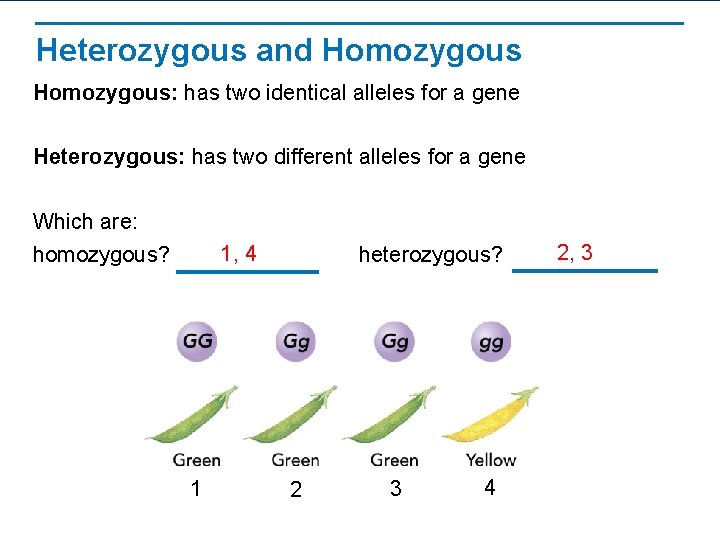
Heterozygous and Homozygous: has two identical alleles for a gene Heterozygous: has two different alleles for a gene Which are: homozygous? 1, 4 1 heterozygous? 2 3 4 2, 3
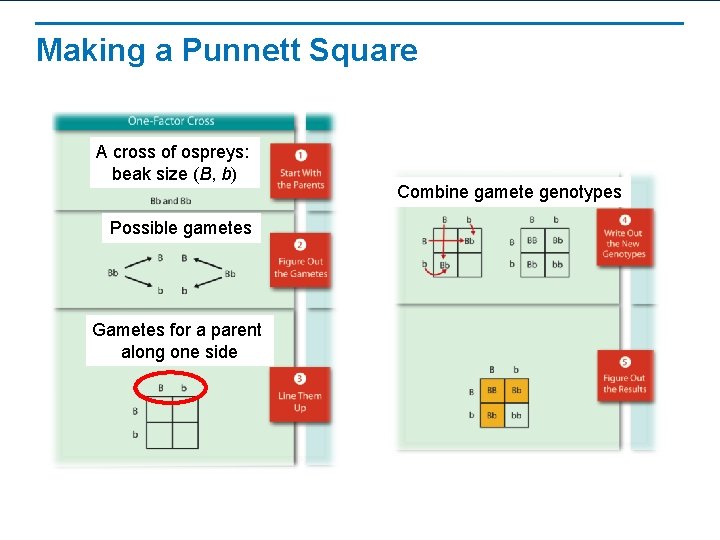
Making a Punnett Square A cross of ospreys: beak size (B, b) Possible gametes Gametes for a parent along one side Combine gamete genotypes
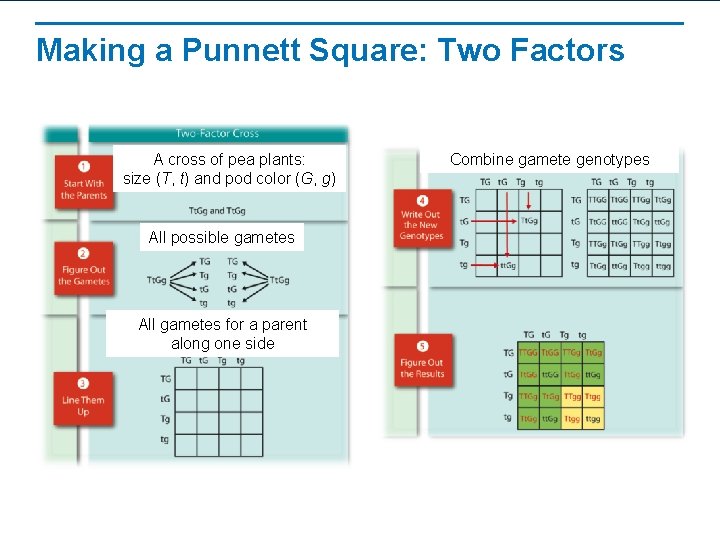
Making a Punnett Square: Two Factors A cross of pea plants: size (T, t) and pod color (G, g) All possible gametes All gametes for a parent along one side Combine gamete genotypes
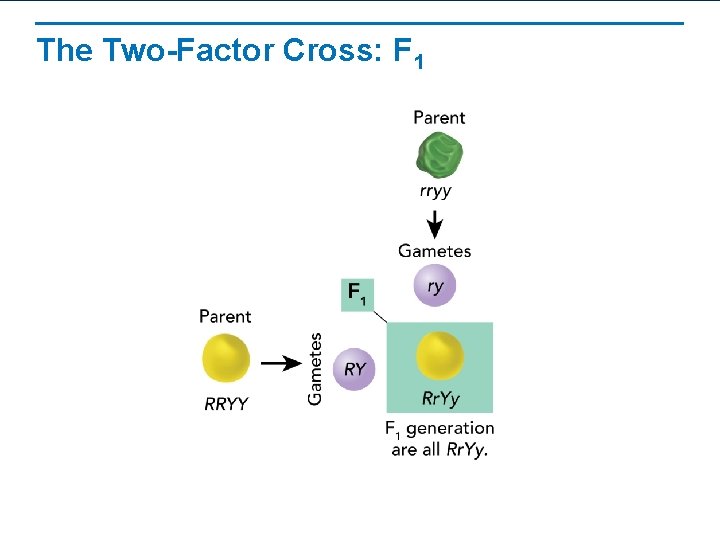
The Two-Factor Cross: F 1
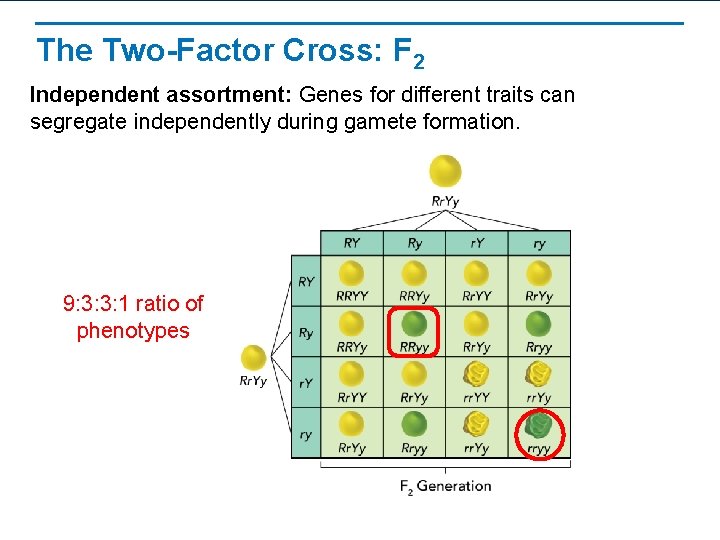
The Two-Factor Cross: F 2 Independent assortment: Genes for different traits can segregate independently during gamete formation. 9: 3: 3: 1 ratio of phenotypes
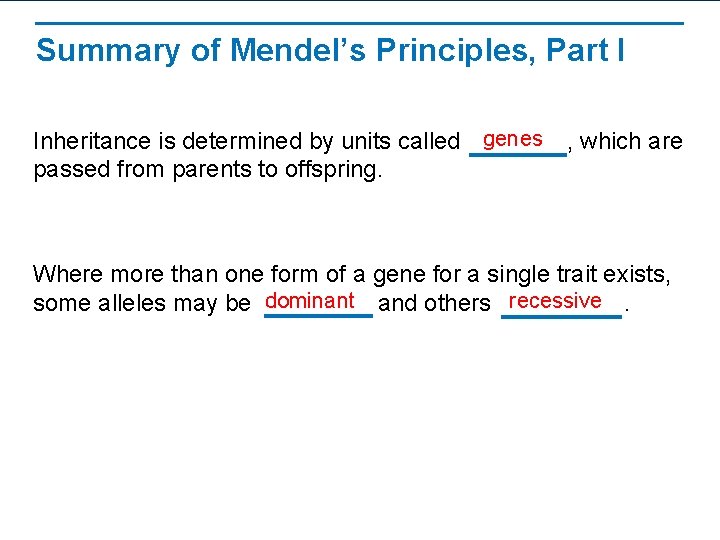
Summary of Mendel’s Principles, Part I Inheritance is determined by units called genes passed from parents to offspring. , which are Where more than one form of a gene for a single trait exists, some alleles may be dominant and others recessive.
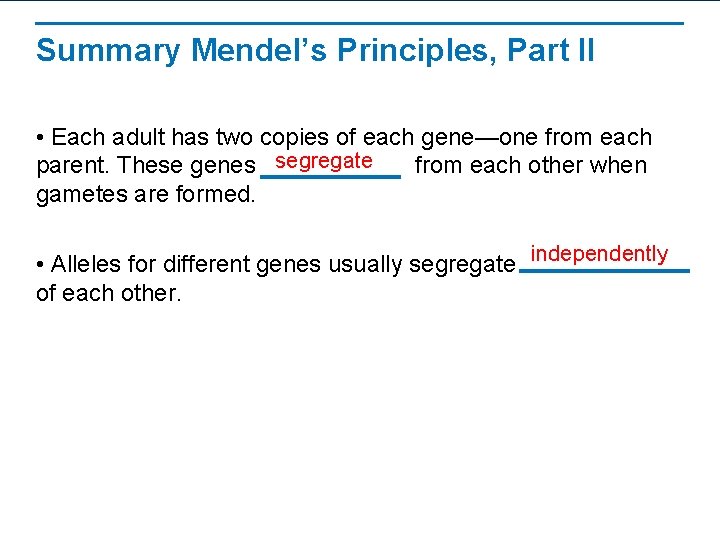
Summary Mendel’s Principles, Part II • Each adult has two copies of each gene—one from each parent. These genes segregate from each other when gametes are formed. • Alleles for different genes usually segregate independently of each other.
Other Patterns of Inheritance
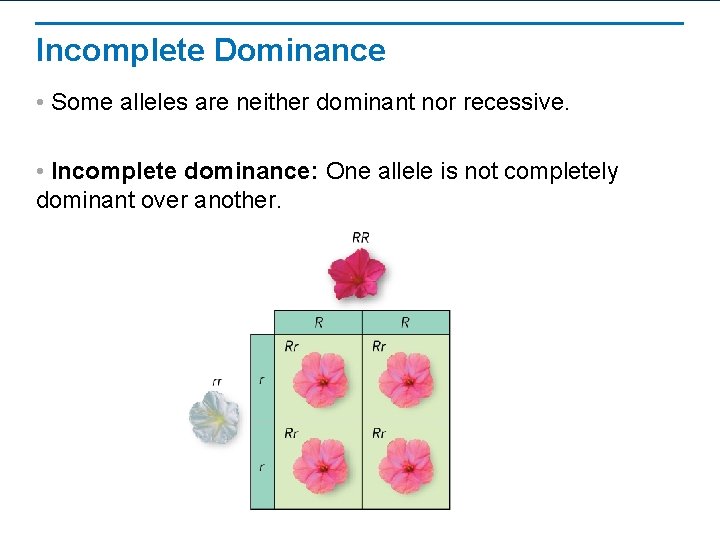
Incomplete Dominance • Some alleles are neither dominant nor recessive. • Incomplete dominance: One allele is not completely dominant over another.
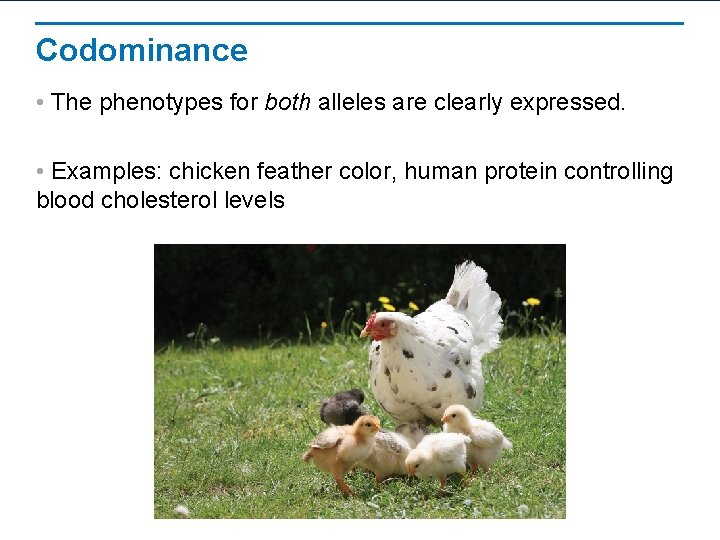
Codominance • The phenotypes for both alleles are clearly expressed. • Examples: chicken feather color, human protein controlling blood cholesterol levels
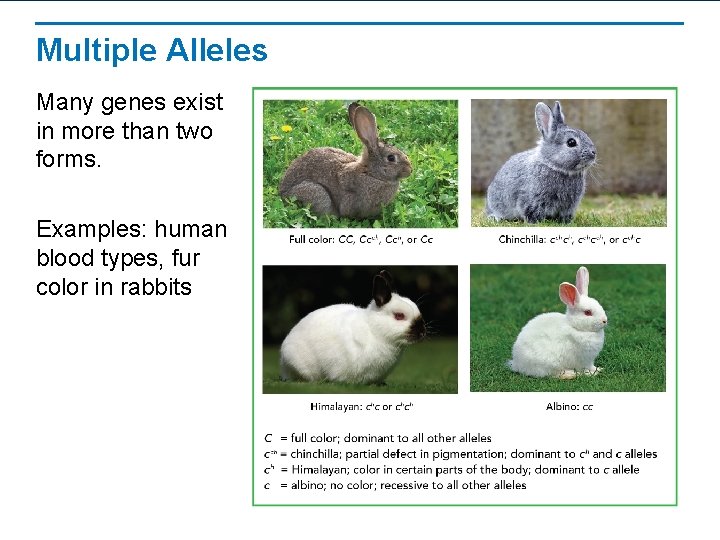
Multiple Alleles Many genes exist in more than two forms. Examples: human blood types, fur color in rabbits
Polygenic Traits • Many traits are produced by the interaction of several genes. • Examples: eye color in fruit flies, coat color in dogs • Traits typically show a wide variety of phenotypes.
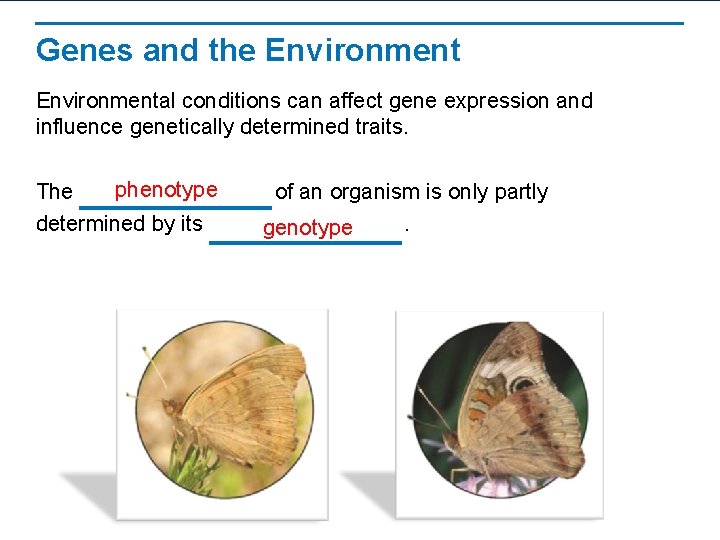
Genes and the Environmental conditions can affect gene expression and influence genetically determined traits. phenotype The determined by its of an organism is only partly. genotype