
The Wonders of Discovery in Chemistry Observation Inference
The Wonders of Discovery in Chemistry Observation, Inference, Scientific Method
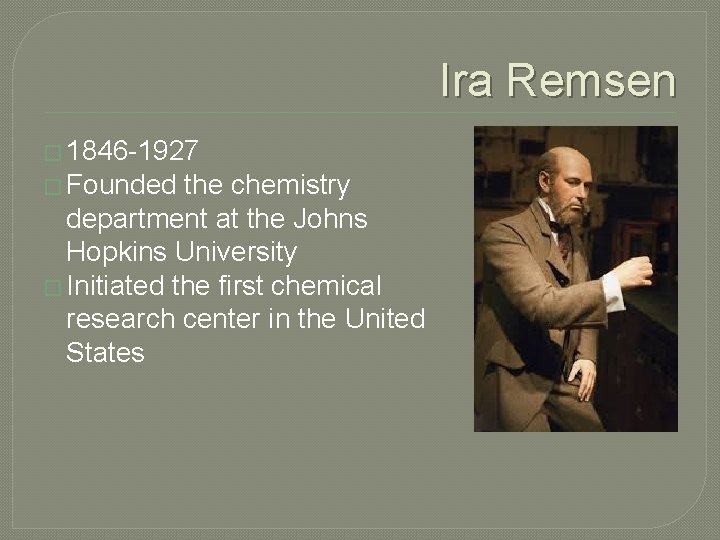
Ira Remsen � 1846 -1927 � Founded the chemistry department at the Johns Hopkins University � Initiated the first chemical research center in the United States
“While reading a textbook on chemistry, I came upon a statement ‘ nitric acid acts upon copper. ’ I was getting tired of reading such absurd stuff and I determined to see w hat it meant. Copper was more or less familiar to me, for copper pennies were then in use. I had seen a bottle marked ‘nitric acid’ on a table in the doctor’s office where I was then ‘doing time’! I did not know its peculiarities but I was getting on and likely to learn what the words ‘act upon’ meant. Then the statement, ‘nitric acid acts upon copper’ would be something more than mere words. ”
“All was still. In the interest of knowledge I was even willing to sacrifice one of the few copper cents then in my possession. I put one of them on the table; opened the bottle marked ‘nitric acid’; poured some of the liquid on the copper; and prepared to make an observation. ” What is the difference between an observation and an inference?
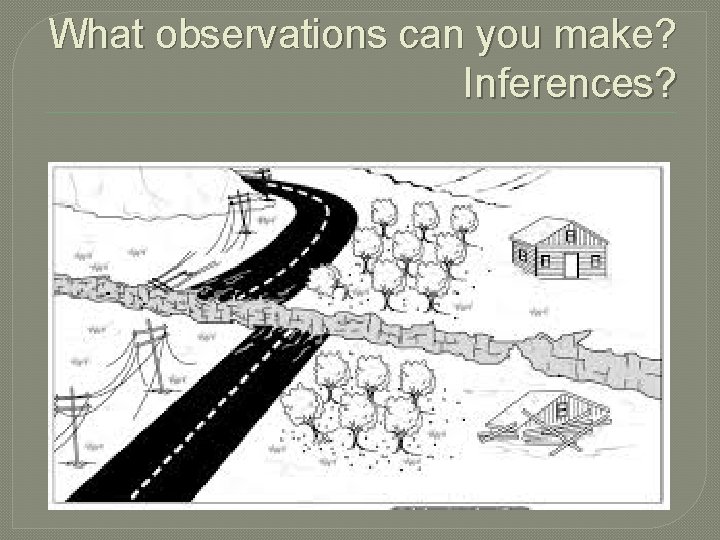
What observations can you make? Inferences?
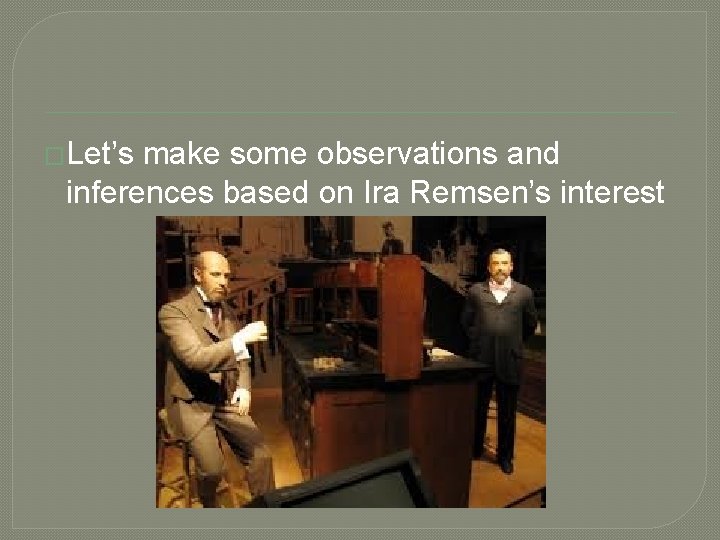
�Let’s make some observations and inferences based on Ira Remsen’s interest
“…but what was this wonderful thing which I beheld? The cent was already changed, and it was no small change either. A greenish, blue liquid foamed and fumed over the cent and over the table. The air in the neighborhood of the performance became dark and red. A great colored cloud arose. This was disagreeable and suffocating-how should I stop this? I tried to get rid of the objectionable mess by picking it up and throwing it out of the window, which I had meanwhile opened. I learned another fact- nitric acid not only acts upon copper but it acts upon fingers. The pain led to yet another unpremeditated experiment. I drew my fingers across my trousers and another fact discovered. Nitric acid also acts upon trousers. Taking everything into consideration, that was the most impressive experiment, and relatively, probably the most costly experiment I have ever performed. I tell of it even now with interest. It was a revelation to me. It resulted in a desire on my own part to learn more about that remarkable kind of action. Plainly the only way to learn about it was to see its results, to experiment, to work in the laboratory. ”
References Getman, F. H. J. Chem. Ed. 1940, 9. “A Demo A Day: A year of Chemical Demonstrations” by G. R. Gross, B. Bilash II, and J. K. Koob
- Slides: 8