
The Whys and Hows of Interdisciplinary Research Collaboration
The Whys and Hows of Interdisciplinary Research: Collaboration between Social and Natural Scientists Joyce Tait, Director, ESRC Innogen Centre 1

Types of interdisciplinary research Discipline focused – Mode 1 – Often longer-term collaborations; helps disciplines to evolve, e. g. bioinformatics, ecological economics Problem focused – Mode 2 - Shorter term interdisciplinary collaborations directed to specific real world problems 2
Mode 1 Interdisciplinary Research Multidisciplinary communications challenge learning to do systems biology research Muffy Calder Department of Computing Science University of Glasgow Biochemical Pathway Simulator and Analyser 3
Interdisciplinary Research • Has … changed my life • Previously … – Concurrency and process algebra, automated reasoning, model checking and induction, feature interaction analysis • applications: telecommunications services, medical devices, protocols • Now … still concurrent systems, but in a new context – Dynamic behaviour of signalling pathways • stochastic process algebra population dynamics • differential equations • model checking stochastic temporal properties 4

Confidence curve full of ideas grant awarded application rock bottom 6 months time now Not to scale! 5
Mode 1 Examples Systems Biology – DTI Beacon Projects Synthetic Genomics Disciplines: Genomics, cell imaging, databases, machine learning, computer modelling, toxicology, computer engineering, computer programming, chemistry, biochemistry, physics, mathematics, Joining ‘dry and hard’ with ‘wet and sticky’ 6
From Mode 1 to Mode 2 interdisciplinary research Mode 1: Knowledge comes from depth and specialisation (or creation of new specialisms); creating knowledge from data Mode 2: Wisdom comes from breadth and integration 7
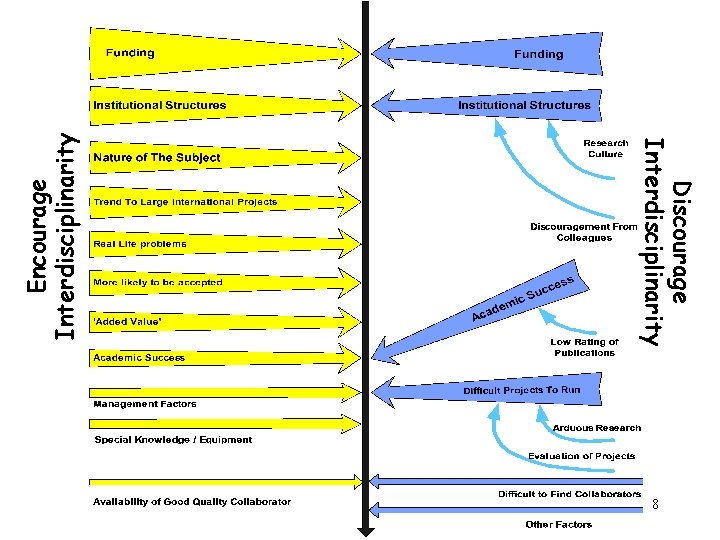
Encourage Interdisciplinarity Discourage Interdisciplinarity 8
ESRC Survey of Interdisciplinarity • No evidence of ESRC inhibition of inter-disciplinarity, but also no active encouragement • Role of Programme Director and individual researchers in influencing degree of interdisciplinarity (note PACCIT) • Impact of user involvement was ambiguous – researchers often had a better understanding of user problems than users themselves • More time and effort is needed for networking and team-building in interdisciplinary projects, often leading to a perception of poorer value for money 9
Challenges for individual researchers • Difficult to develop a career based on continuous interdisciplinary research • Shifting peer group • Finding high status outlets for publications • Managing publication overload • Lack of institutional support 10
Skills needs for individual researchers • Understanding the languages, research methods and cultures of different disciplines • High tolerance of ambiguity – personality more important than discipline base • Willingness to learn from other disciplines • Good communicator • Open minded • Able to absorb information and its implications rapidly 11
Skills needs for research managers • interdisciplinary background • respect for all disciplines • good interpersonal and team building skills • proactive in engaging with other partners • not too ambitious in their own field • interested in a wide range of subjects 12
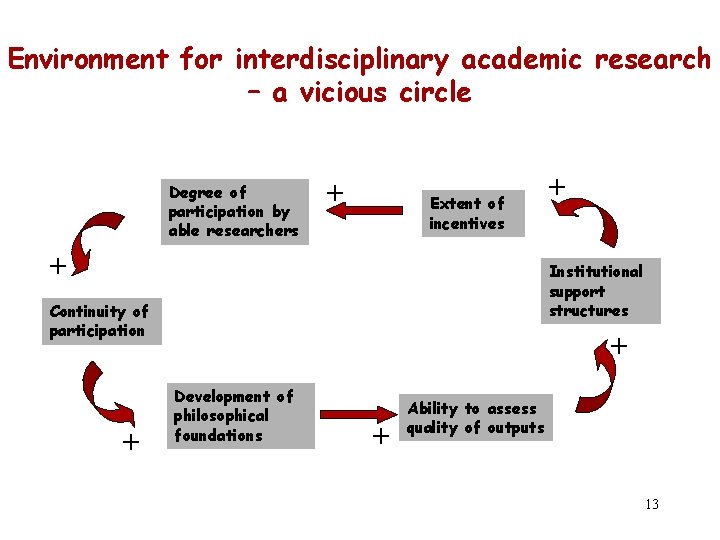
Environment for interdisciplinary academic research – a vicious circle Degree of participation by able researchers + Extent of incentives + Institutional Extent support of incentives structures Continuity of participation + + + Development of philosophical foundations + Ability to assess quality of outputs 13
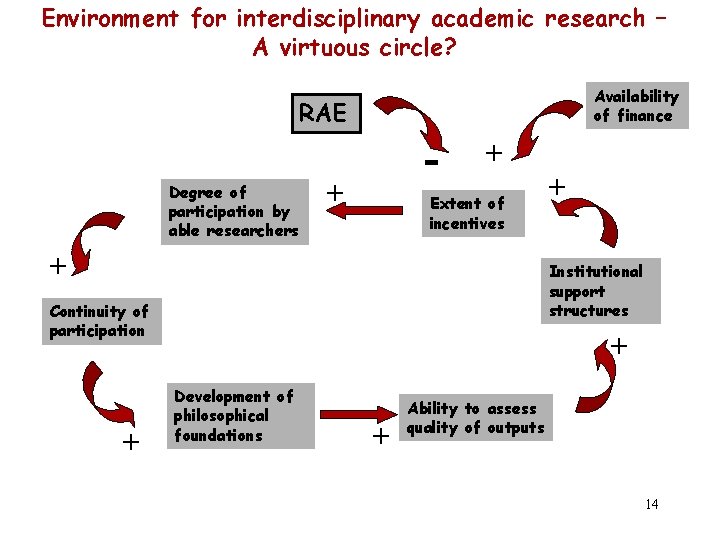
Environment for interdisciplinary academic research – A virtuous circle? Availability of finance RAE Degree of participation by able researchers - + + Extent of incentives + Institutional support structures Continuity of participation + + + Development of philosophical foundations + Ability to assess quality of outputs 14
So how do you do interdisciplinary research? • Three examples: • DIID Foresight Infectious Diseases Project • Appropriate regulatory systems • Regulation Innovation interactions 15
Foresight Infectious Diseases: preparing for the future 16
The role of risk analysis in the detection and identification of infectious disease Drawing on the best available evidence: review and compare future risks from infectious diseases using a common set of metrics; identify the factors driving changes in risk; assess how the size and nature of risks are evolving and indicate the range of plausible future patterns of risk 17
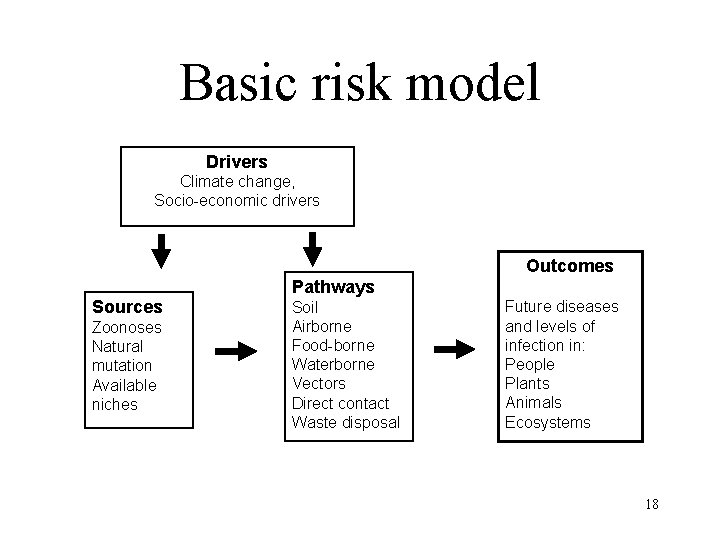
Basic risk model Drivers Climate change, Socio-economic drivers Outcomes Pathways Sources Zoonoses Natural mutation Available niches Soil Airborne Food-borne Waterborne Vectors Direct contact Waste disposal Future diseases and levels of infection in: People Plants Animals Ecosystems 18
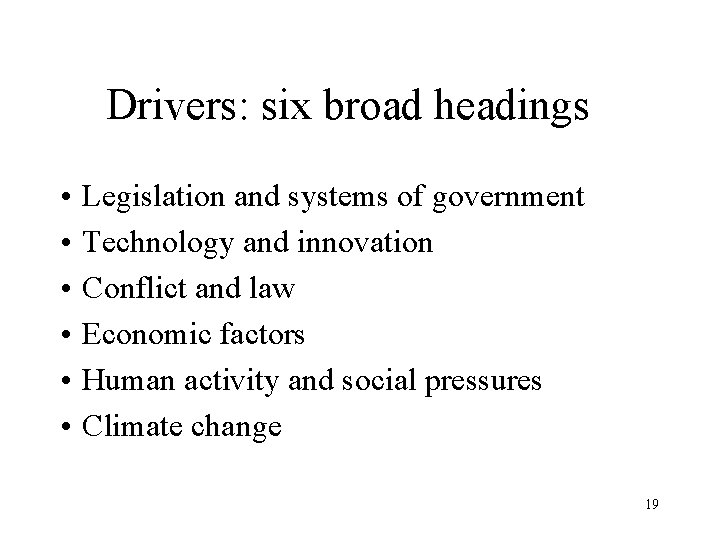
Drivers: six broad headings • Legislation and systems of government • Technology and innovation • Conflict and law • Economic factors • Human activity and social pressures • Climate change 19
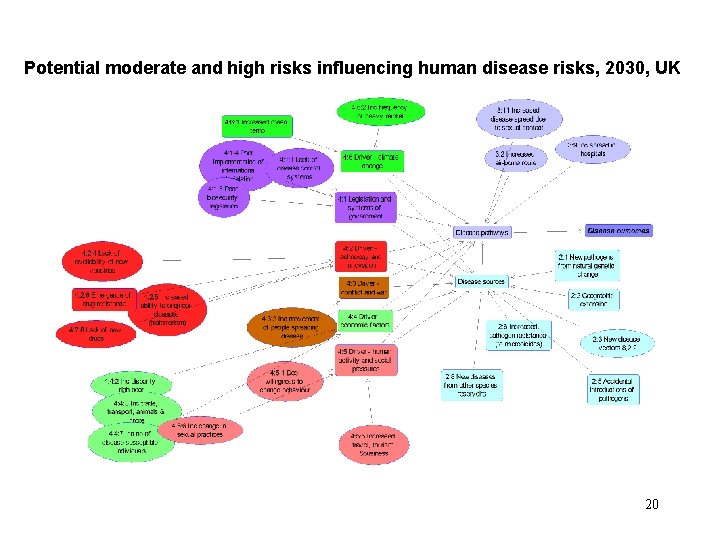
Potential moderate and high risks influencing human disease risks, 2030, UK 20
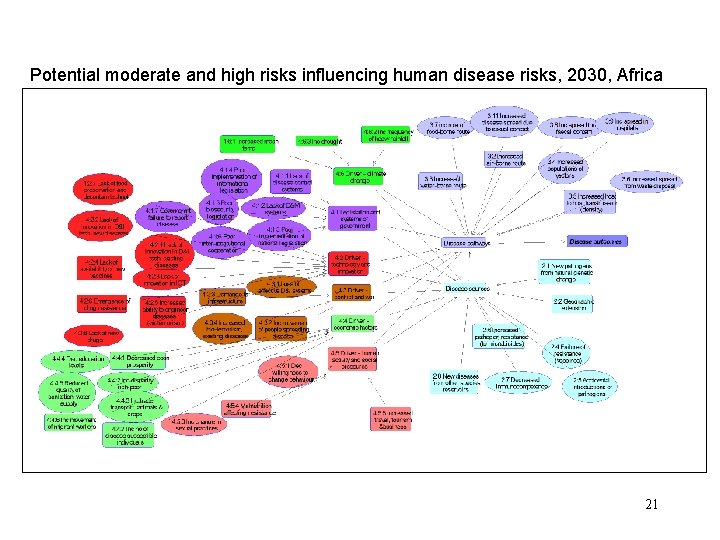
Potential moderate and high risks influencing human disease risks, 2030, Africa 21
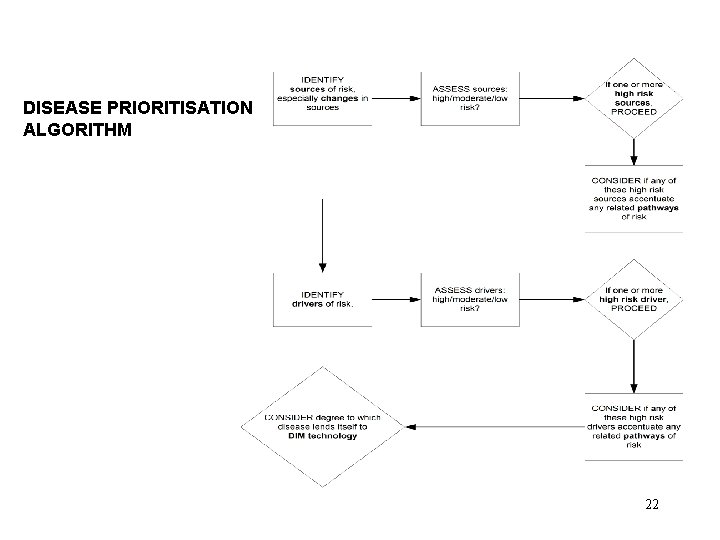
DISEASE PRIORITISATION ALGORITHM 22
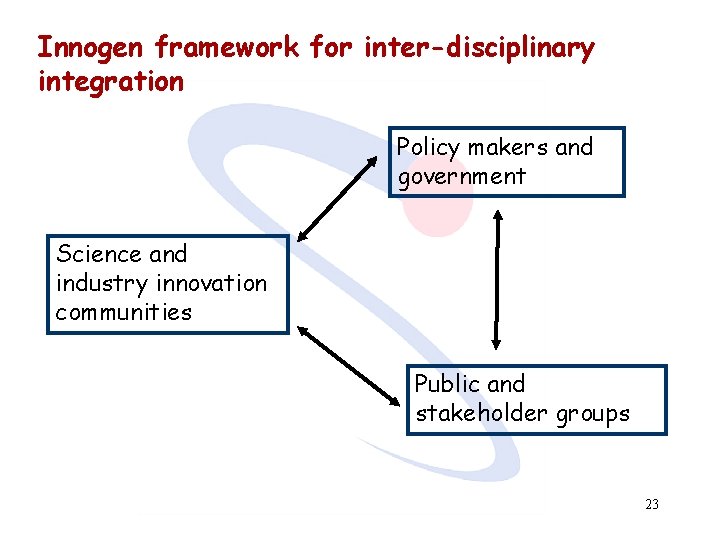
Innogen framework for inter-disciplinary integration Policy makers and government Science and industry innovation communities Public and stakeholder groups 23
Policy innovation interactions Enabling vs constraining Discriminating vs indiscriminate regulation Path-breaking vs path dependent innovation; Path breaking vs path dependent regulation 24
What can social science and Mode 2 interdisciplinary research learn from Mode 1 in the natural sciences? 25
- Slides: 25