
The Who What Why and How of Worship

- Slides: 31
The Who, What, Why, and How of Worship What Is That Called? Why Do We Do That? And More! Northern Great Lakes Synod Assembly Rev. Ken Ranos Faith Lutheran Church Three Lakes, WI
ADIAPHORA
ADIAPHORA “Indifferent things” Things that aren't essential to the faith, but are permissible. Include both ancient and modern traditions, as well as matters of personal preference.
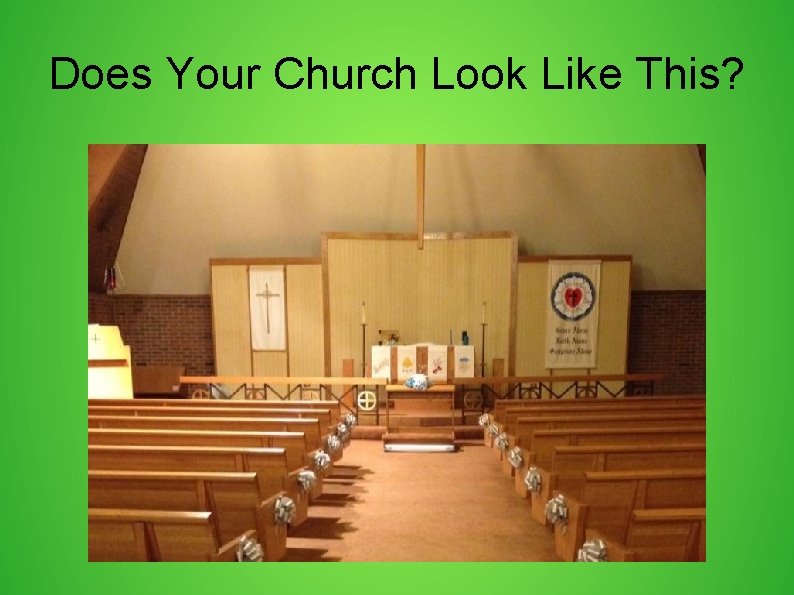
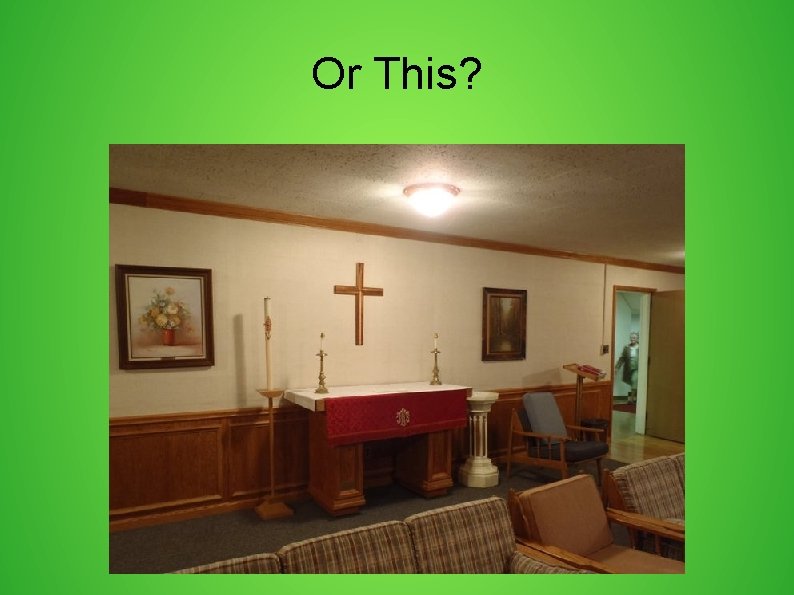
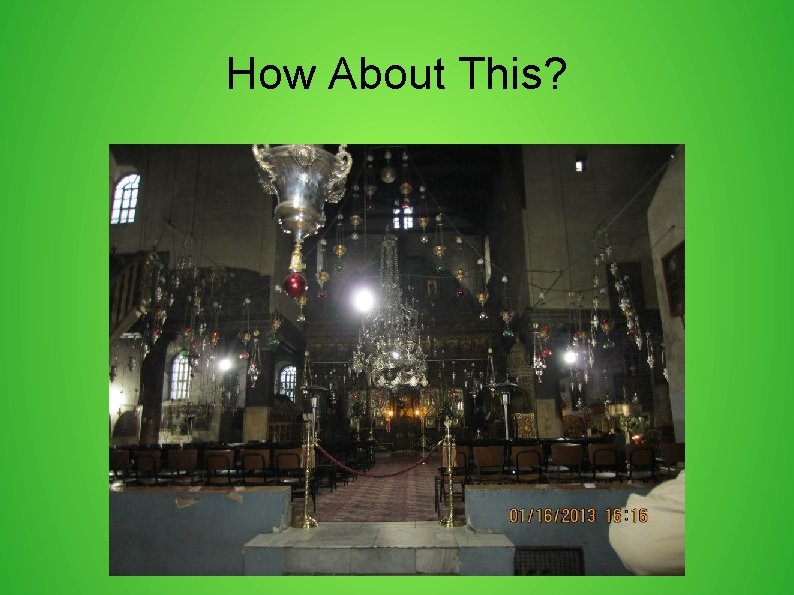
Does Your Church Look Like This?
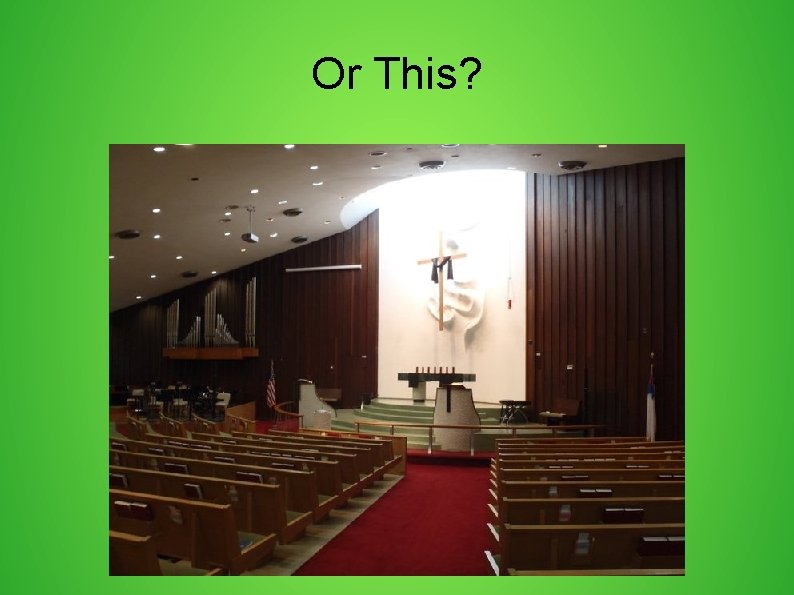
Or This?
Or This?
How About This?
Why Is Our Space and Our Stuff Important? Principles for Worship S-1: Worship and worship space are linked in a vital relationship. S-2: The place of worship expresses the church’s faith and serves God’s mission. S-3: Spaces used for worship vary from place to place and from culture to culture, accommodating a common liturgical pattern. S-5: Art and architecture proclaim the gospel, enrich the assembly’s participation in the word and sacraments, and reinforce themes of the occasion and season. Liturgical art animates the life and faith of the community.
Liturgical Colors Blue: Advent – season of hope White: Christmas, Easter, festivals – purity, joy, celebration Green: Time after Epiphany and Pentecost – growth Purple: Lent (Holy Week) – repentance and solemnity Scarlet: Holy Week – the deep color of blood Red: Pentecost and martyrs – fire and blood Gold: Easter Vigil/Day – the “queen of feasts” Black: Ash Wednesday – the color of ashes (nothing): Good Friday
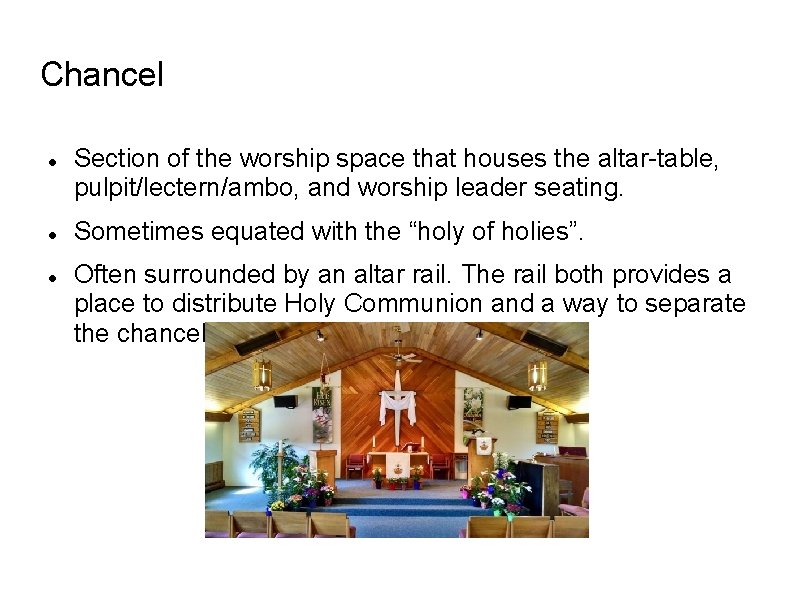
Chancel Section of the worship space that houses the altar-table, pulpit/lectern/ambo, and worship leader seating. Sometimes equated with the “holy of holies”. Often surrounded by an altar rail. The rail both provides a place to distribute Holy Communion and a way to separate the chancel from the rest of the sanctuary.
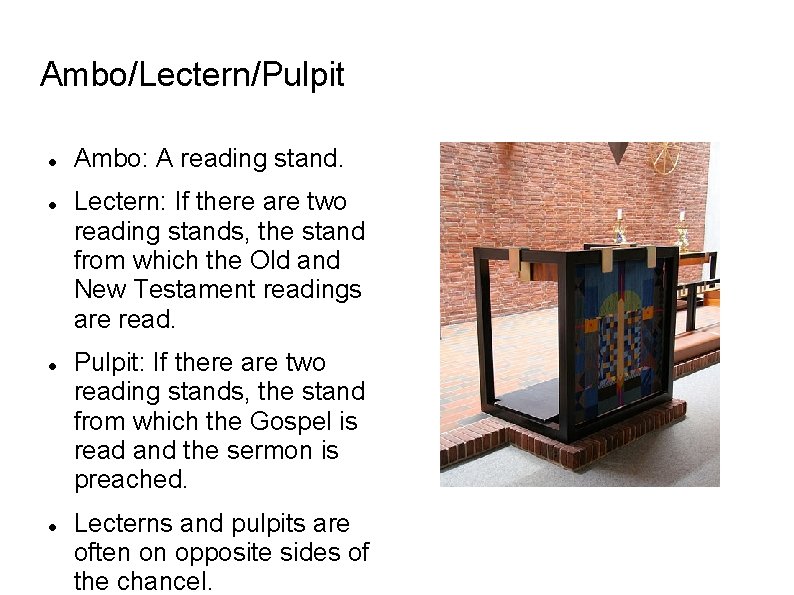
Ambo/Lectern/Pulpit Ambo: A reading stand. Lectern: If there are two reading stands, the stand from which the Old and New Testament readings are read. Pulpit: If there are two reading stands, the stand from which the Gospel is read and the sermon is preached. Lecterns and pulpits are often on opposite sides of the chancel.
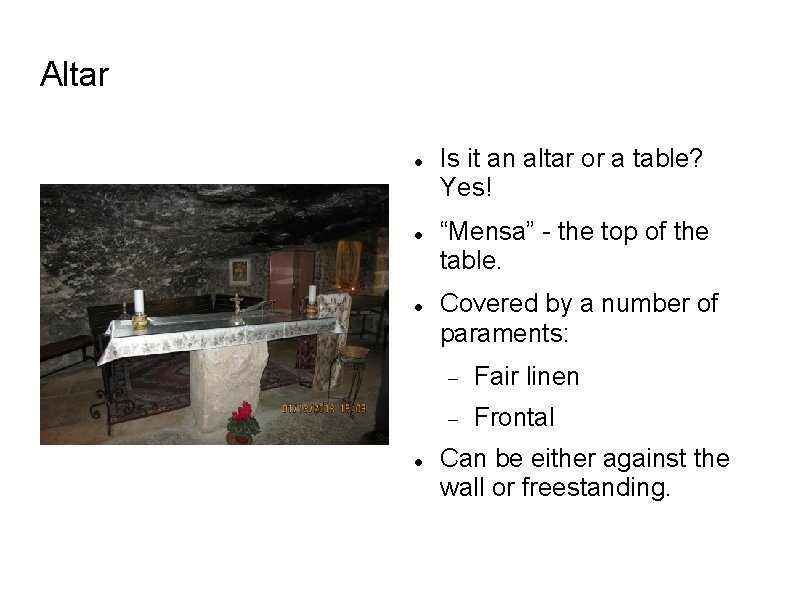
Altar Is it an altar or a table? Yes! “Mensa” - the top of the table. Covered by a number of paraments: Fair linen Frontal Can be either against the wall or freestanding.
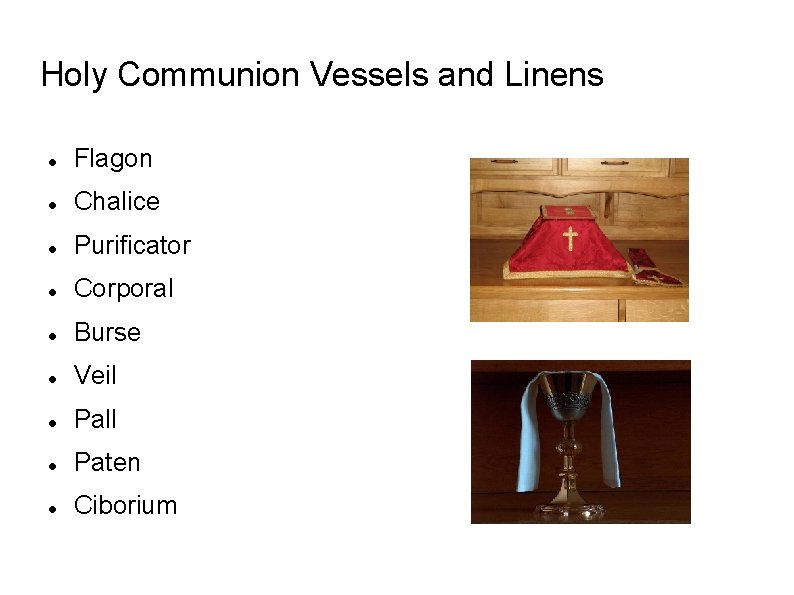
Holy Communion Vessels and Linens Flagon Chalice Purificator Corporal Burse Veil Pall Paten Ciborium
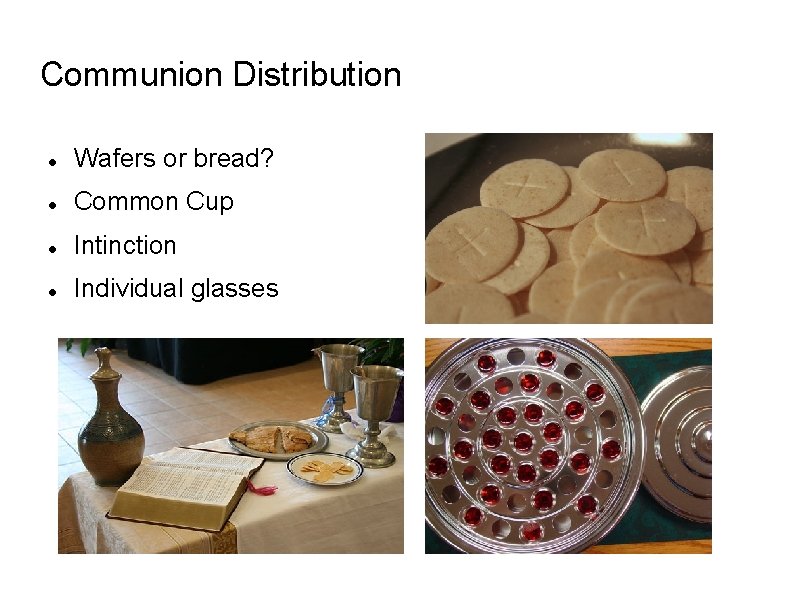
Communion Distribution Wafers or bread? Common Cup Intinction Individual glasses
Other Sanctuary Items Eternal Light / Sanctuary Light Traditionally used to denote when the reserved sacrament is stored in the. . . Tabernacle Small box/cupboard used to store the reserved sacrament. Musical Instruments Baptismal Fonts Bowls, immersion, running, pouring. Flags?
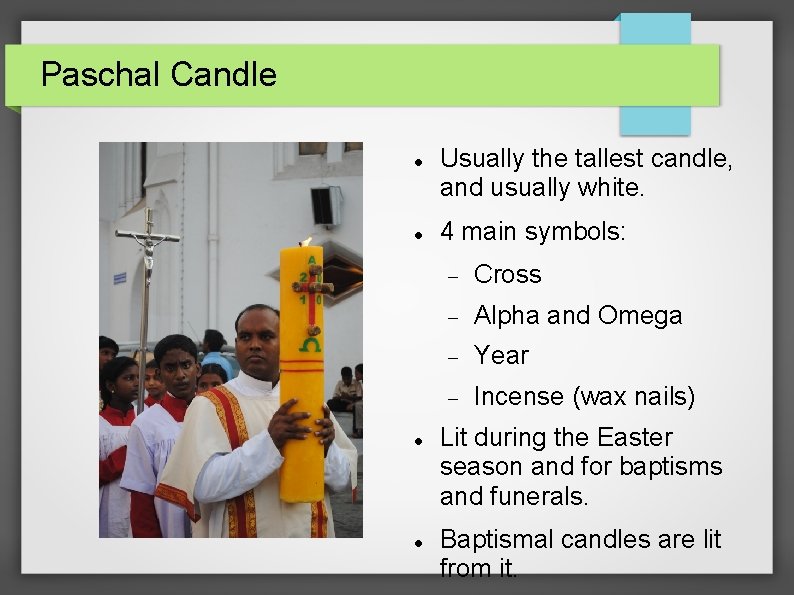
Paschal Candle Usually the tallest candle, and usually white. 4 main symbols: Cross Alpha and Omega Year Incense (wax nails) Lit during the Easter season and for baptisms and funerals. Baptismal candles are lit from it.
Vestments have their origins in ancient festive garments (“Sunday Best” goes back a long way!). Though vestments are often fancy and ornamental, originally, they served very practical purposes. Vestments aren't just for pastors! While some denote an ordained presiding minister, others are for any leader in the assembly.
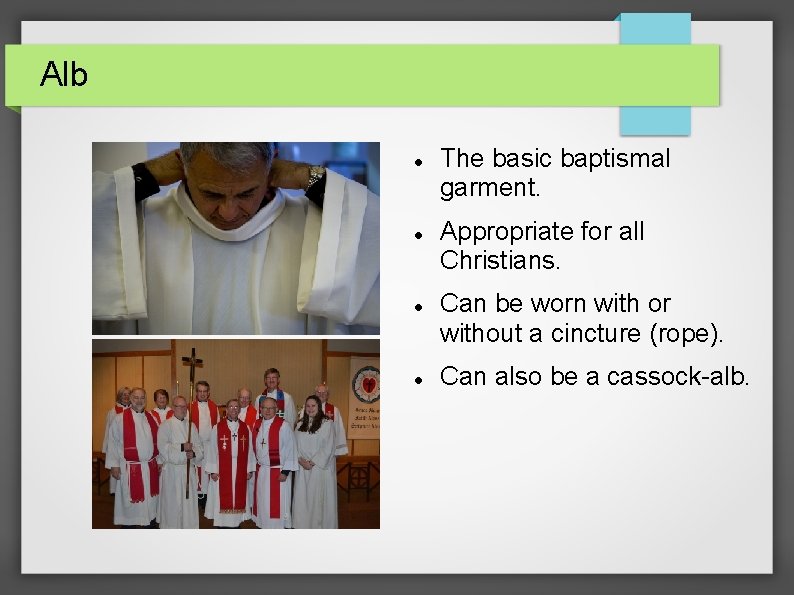
Alb The basic baptismal garment. Appropriate for all Christians. Can be worn with or without a cincture (rope). Can also be a cassock-alb.
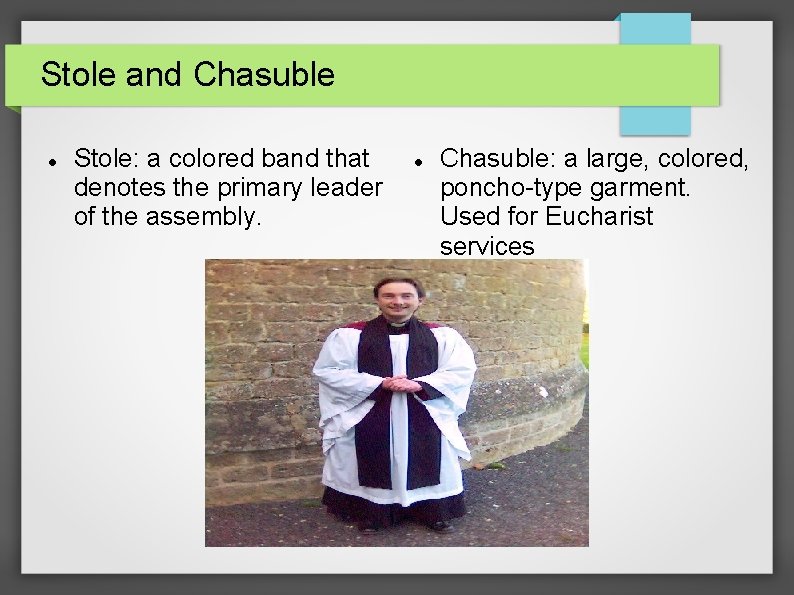
Stole and Chasuble Stole: a colored band that denotes the primary leader of the assembly. Chasuble: a large, colored, poncho-type garment. Used for Eucharist services
Cassock and Surplice “Choir dress”, or non. Eucharist vestments. Cassock: black robe that used to be the everyday clothing of priests. Surplice: a “short alb” worn over a cassock. Tippet: a “preaching scarf”.
Other Vestments Cope Tunicle Miter Dalmatic Pectoral Cross Amice Rochet Academic gown Zucchetto Academic hood Maniple Preaching tabs Humeral veil Ruff Biretta
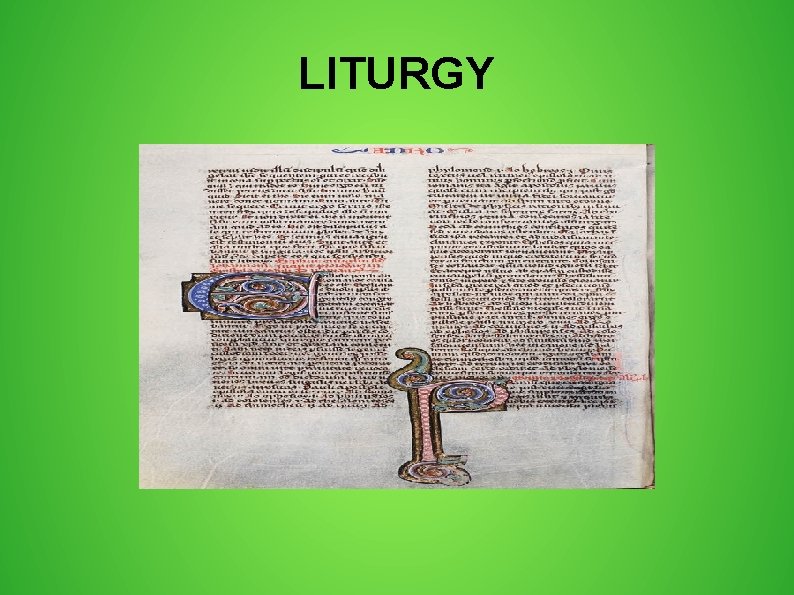
LITURGY
What Is Liturgy? Greek word: “work of the people” or “public service” Any “order”, or usual way of conducting worship, no matter how formal, organized, or planned, is liturgy. One of the earliest and best descriptions of the Christian liturgy is from Justin Martyr's First Apology, written sometime around 150 C. E. Justin's Sunday celebration followed this basic pattern: Gathering, Readings, Sermon, Prayer, Eucharist, Offering
Who Can Lead in Worship? Worship leadership is for Everybody! Leaders of prayer Readers/lectors Cantors Ministers of communion (including bringing it to those in the community who can't attend worship) Ushers/greeters Acolytes Aspergers Thurifers Altar guild / sacristan
Gathering Confession / Thanksgiving for Baptism Opening Music/songs Hymns Kyrie (“kyrie eleison” = Lord, have mercy) Hymn of Praise “Glory to God” - useful during most of the year, especially during the Christmas season. “This is the Feast” - Isaiah 25 and Revelation – useful during Easter season and festivals. Apostolic Greeting (from 2 Corinthians 13: 13) Prayer of the Day
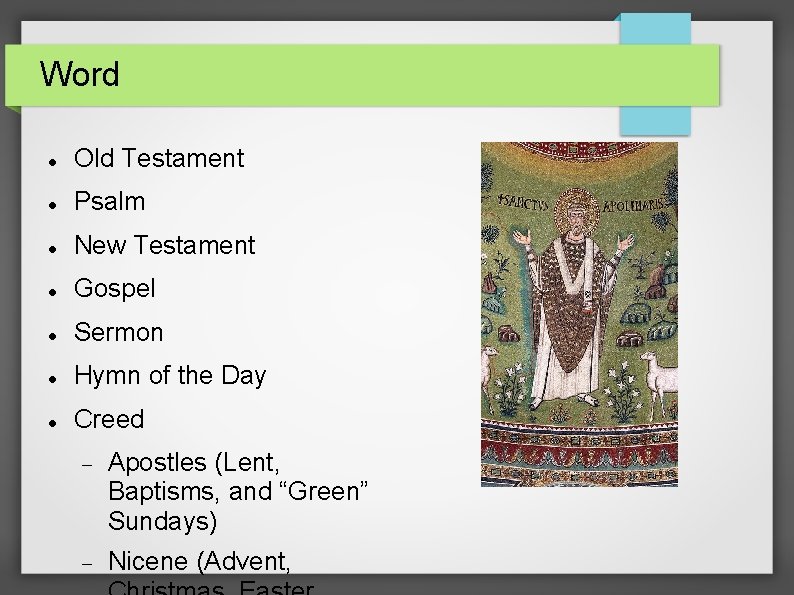
Word Old Testament Psalm New Testament Gospel Sermon Hymn of the Day Creed Apostles (Lent, Baptisms, and “Green” Sundays) Nicene (Advent,
Meal Offering Communion Great Thanksgiving Communion Song Preface Holy, Holy Dialogue (appears at least as early as 315 C. E. ) Isaiah 6, Revelation 4 Eucharistic Prayer Hymns “Agnus Dei” (Lamb of God) Simeon's Song Prayer after Communion
Sending Songs Blessing Dismissal The Sending sends us back in the cycle, ready to Gather again.
Hand Gestures The Greeting “Orans” posture Sign of the Cross The sign of the Trinity Raising the eucharistic elements Laying on of hands
Resources Used Brugh, Lorraine S. and Gordon W. Lathrop. The Sunday Assembly: Using Evangelical Lutheran Worship Volume 1. Minneapolis: Augsburg Fortress, 2008. Christopherson, Rev. D. Foy. The Place Where We Worship. Evangelical Lutheran Church in America, 2002. http: //download. elca. org/ELCA Resource Repository/Formation_The_Place_Where_We_Worship. pdf Deiss, Lucien, CSSp. Springtime of the Liturgy. Collegeville, MN: The Liturgical Press, 1979. Evangelical Lutheran Church in America. “The Meaning and Use of Liturgical Colors. ” 2013. http: //download. elca. org/ELCA Resource Repository/What_is_the_meaning_and_use_of_liturgical_c olors. pdf.
Media Credits “Welon, bursa i stula” by Łukasz Szczurowski is licensed under CC BY-SA 3. 0. “Purificatorium on chalice” by Paterm is licensed under CC BY-SA 3. 0. “Communion Wafers” by The Episcopal Diocese of Central Florida is licensed under CC BY 2. 0. “Communion Cups in Tray 1” by fcor 1614 is licensed under CC BY-NC 2. 0. “Eucharist. ELCA” by Jonathunder is licensed under GFDL 1. 2. “ 141105 -F-NL 936 -114” by Staff Sgt. Andrew Lee (Airman Magazine) is licensed under CC BY-NC 2. 0. leading thepresentation, entrance procession © “Priest Ken Ranos. This availablewith at lighted Paschal