
The White Dwarf in SS Cygni FUSE HST
- Slides: 26
The White Dwarf in SS Cygni: FUSE + HST Spectral Analysis Edward M. Sion, Patrick Godon, Janine Myszka Department of Astronomy and Astrophysics Villanova University
Outline of Talk 1. CV White Dwarf Overview 2. 2. The White Dwarf in the SS Cygni 3. 3. Comments on Accretion Heating 4. of CV White Dwarfs 4. The Big Picture of CV White Dwarf 5. Surface Temperatures 6. 5. Conclusion
CATACLYSMIC VARIABLE WHITE DWARFS: Extreme Accretion Laboratories White Dwarfs undergoing extreme accretion Debris Disk accretion: ~ 10^8 g/s Cataclysmic Disk accretion: ~ 10^18 g/s
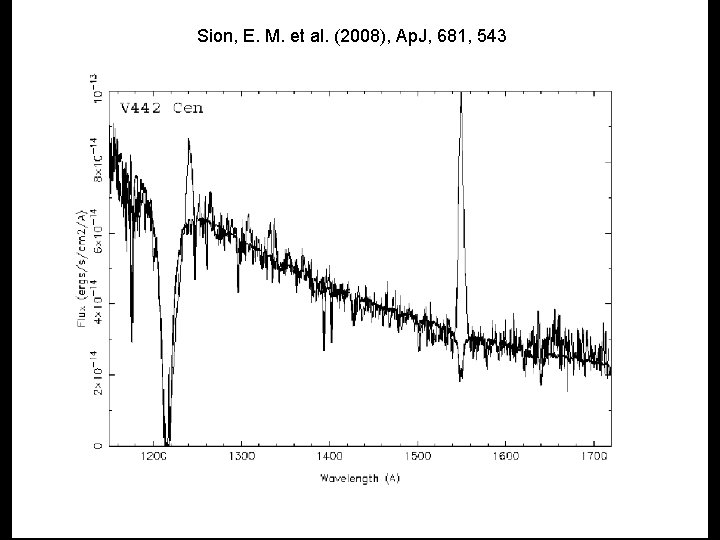
Sion, E. M. et al. (2008), Ap. J, 681, 543 Figure 6
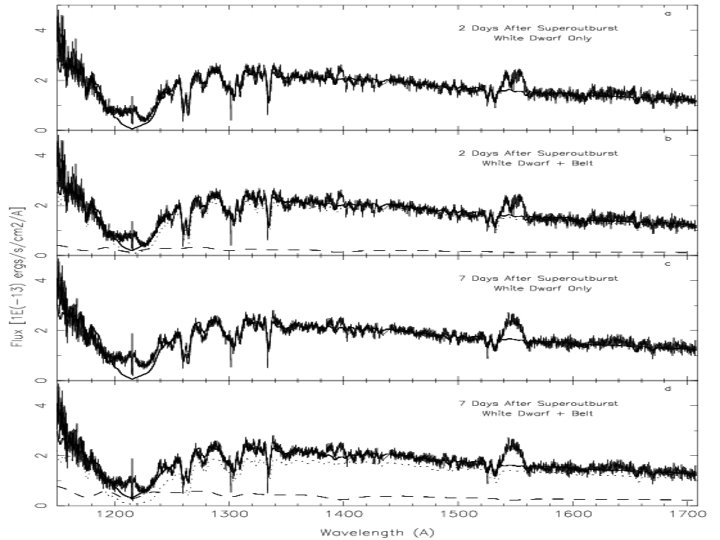
Godon, P. et al. (2008), Ap. J, in press SS Aur
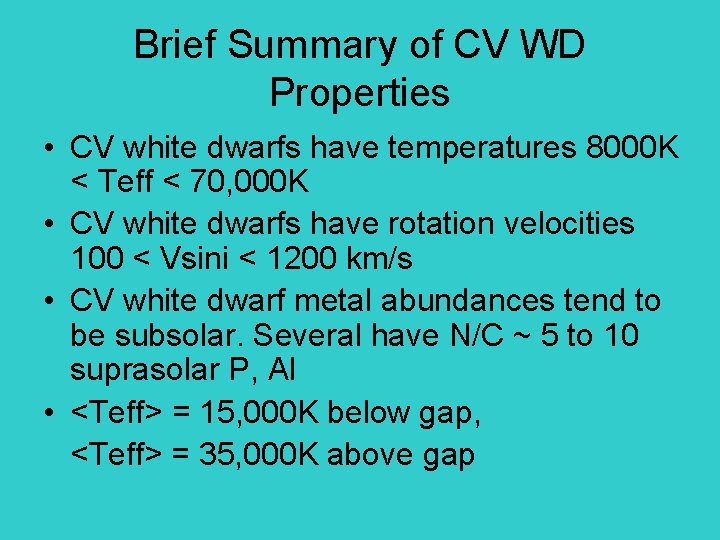
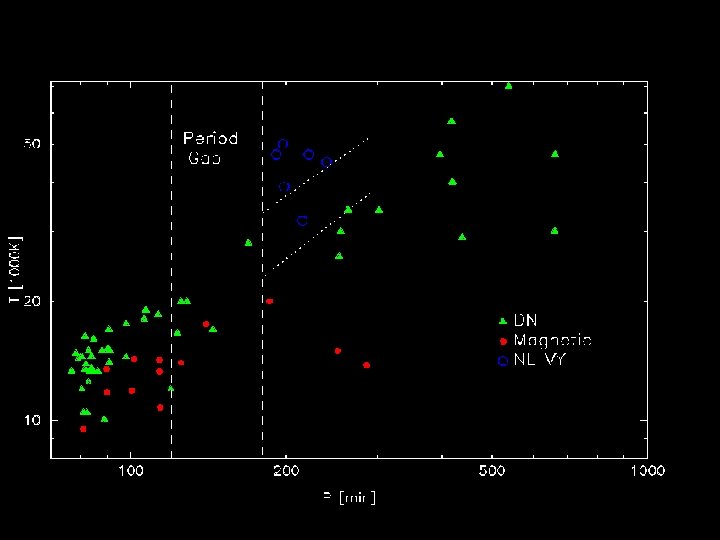
Brief Summary of CV WD Properties • CV white dwarfs have temperatures 8000 K < Teff < 70, 000 K • CV white dwarfs have rotation velocities 100 < Vsini < 1200 km/s • CV white dwarf metal abundances tend to be subsolar. Several have N/C ~ 5 to 10 suprasolar P, Al • <Teff> = 15, 000 K below gap, <Teff> = 35, 000 K above gap
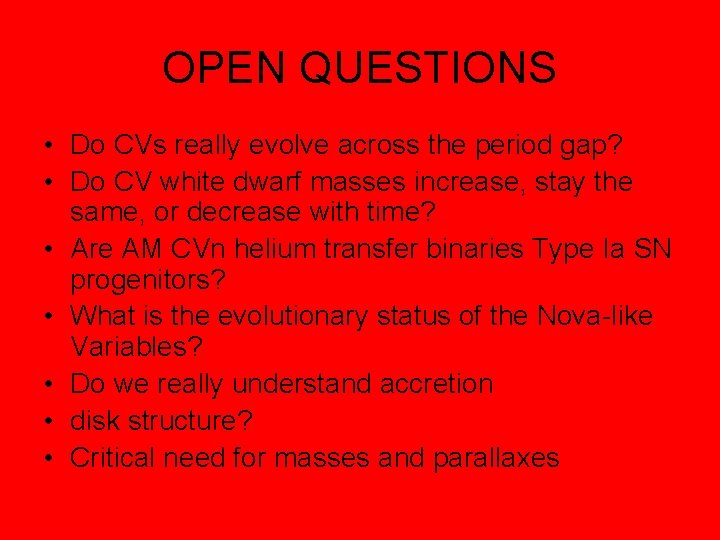
OPEN QUESTIONS • Do CVs really evolve across the period gap? • Do CV white dwarf masses increase, stay the same, or decrease with time? • Are AM CVn helium transfer binaries Type Ia SN progenitors? • What is the evolutionary status of the Nova-like Variables? • Do we really understand accretion • disk structure? • Critical need for masses and parallaxes
Far Ultraviolet Spectra § IUE Archival § HST FOS, GHRS, STIS, COS § FUSE § EUVE
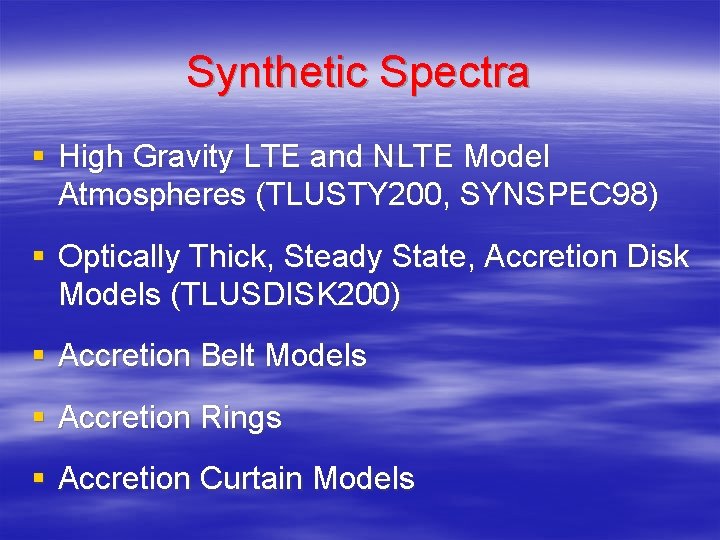
Synthetic Spectra § High Gravity LTE and NLTE Model Atmospheres (TLUSTY 200, SYNSPEC 98) § Optically Thick, Steady State, Accretion Disk Models (TLUSDISK 200) § Accretion Belt Models § Accretion Rings § Accretion Curtain Models
Evolutionary Model Simulations of Accretion § 1 D Quasi-Static Evolutionary Code, § 2 D Hydrodynamic Code § OPAL Opacities § Time-variable accretion with compressional heating and boundary layer irradiation with stellar rotation (Sion, E. 1995, Ap. J, 438, 876) § Equations of State (ideal gas to relativistic degeneracy)
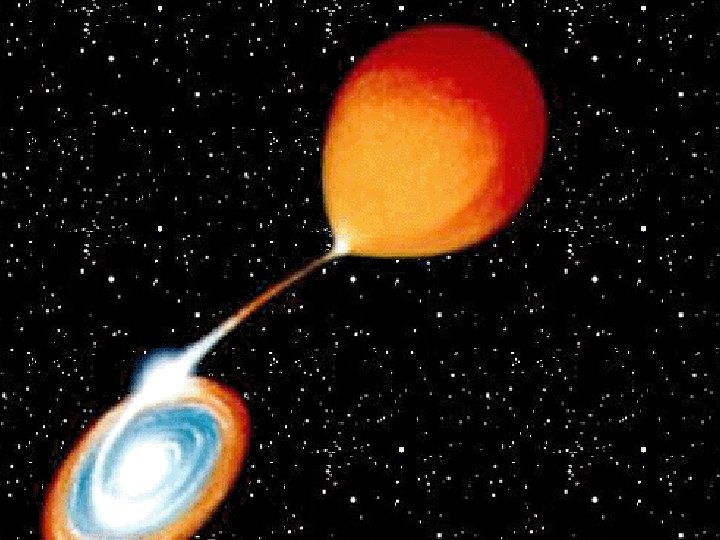
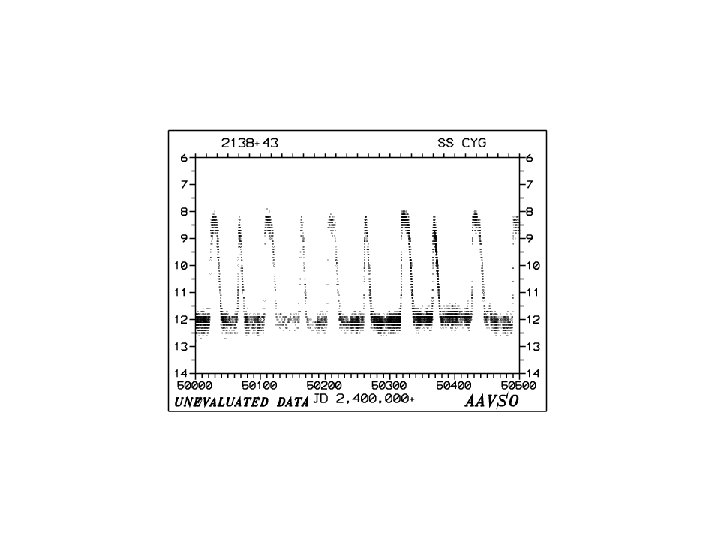
SS Cygni The Brightest Dwarf Nova One of the first CVs Shown to be a Binary White Dwarf + K 4 -5 V Roche-lobe filling companion P_orb = 0. 27513 days (6. 6 hours) Distance = 166 pc +/- 12 pc(Trig. parallax; Harrison et al. 1999) (but see Schreiber&Lasota, 2007, A&A, 473, 897; Schreiber&Gaensicke, 2002, A&A, 382, 124) <t_rec> = 50 days <t_ob> = 10. 76 days <t_quies> = 37. 81 days
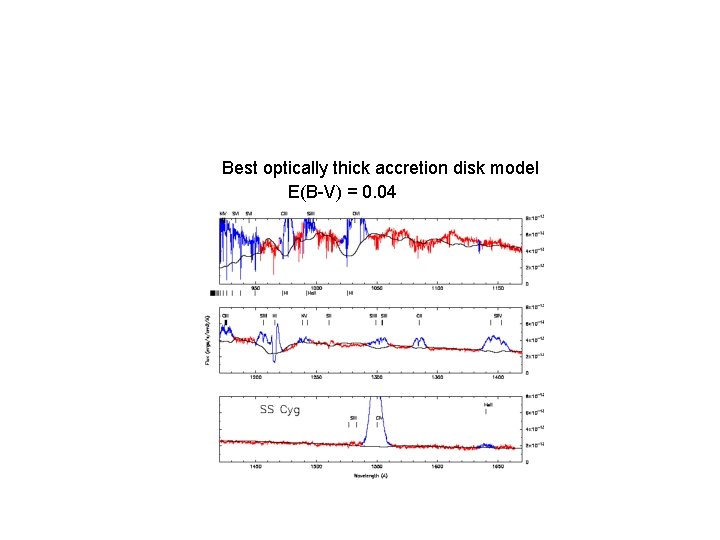
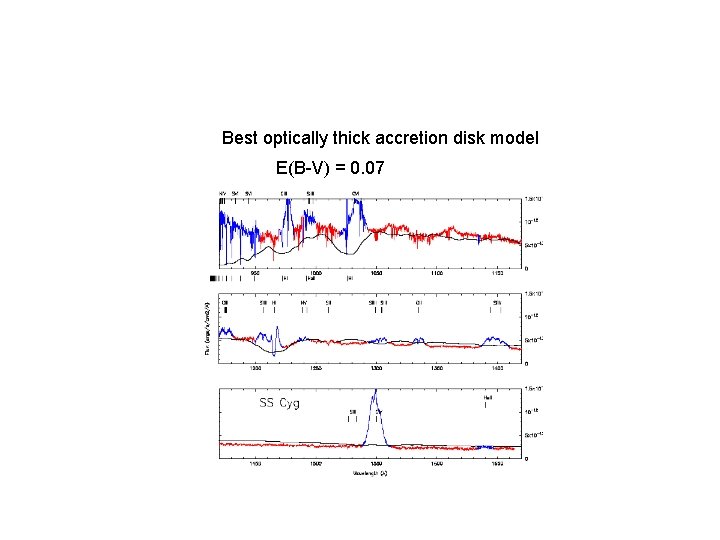
Best optically thick accretion disk model E(B-V) = 0. 04
Best optically thick accretion disk model E(B-V) = 0. 07
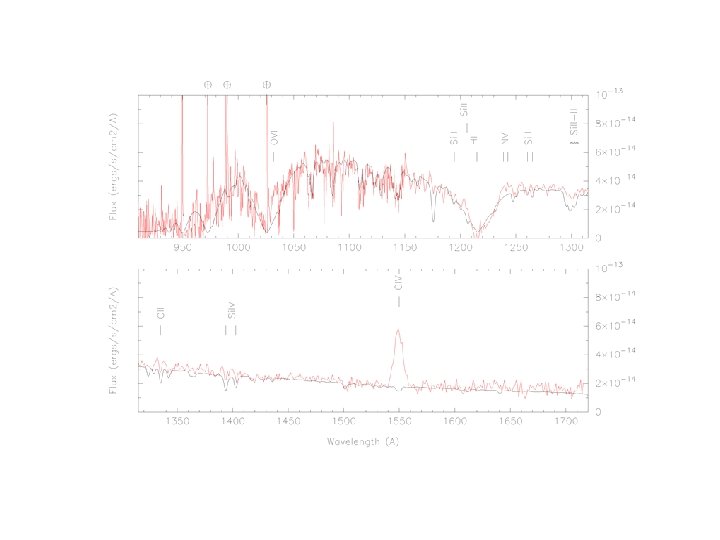
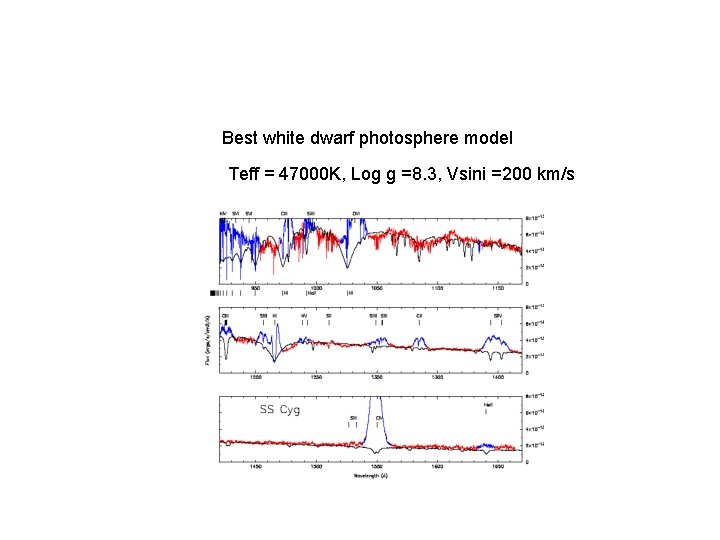
Best white dwarf photosphere model Teff = 47000 K, Log g =8. 3, Vsini =200 km/s
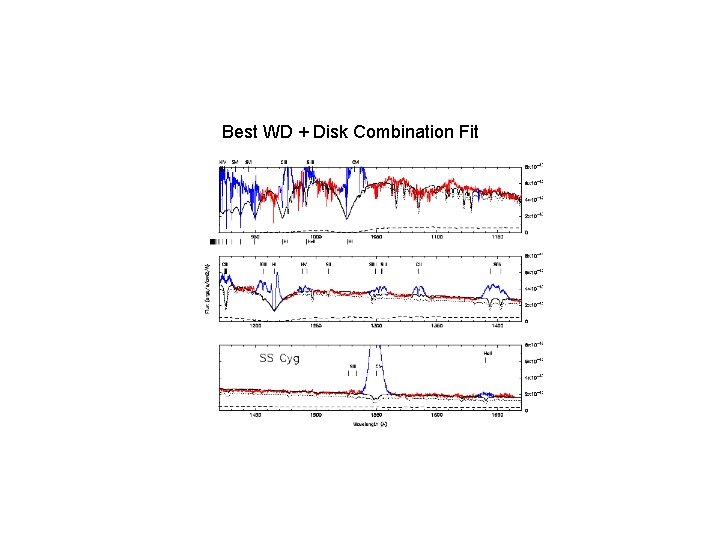
Best WD + Disk Combination Fit
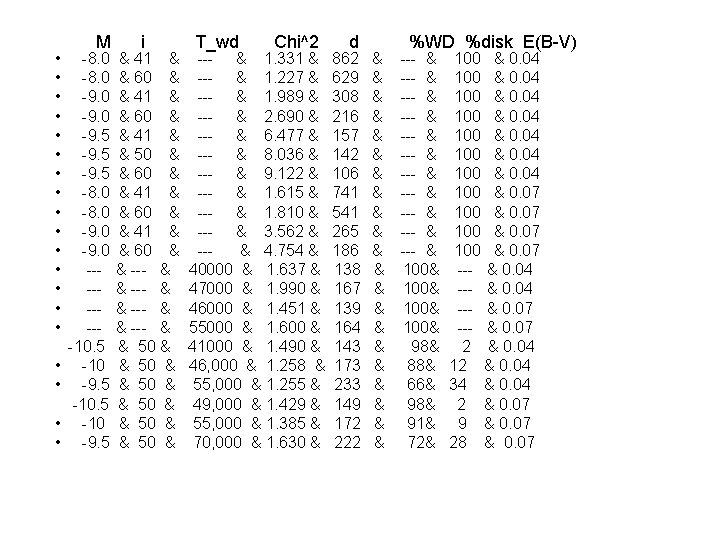
M i T_wd Chi^2 d %WD %disk E(B-V) • -8. 0 & 41 & --- & 1. 331 & 862 & --- & 100 & 0. 04 • -8. 0 & 60 & --- & 1. 227 & 629 & --- & 100 & 0. 04 • -9. 0 & 41 & --- & 1. 989 & 308 & --- & 100 & 0. 04 • -9. 0 & 60 & --- & 2. 690 & 216 & --- & 100 & 0. 04 • -9. 5 & 41 & --- & 6. 477 & 157 & --- & 100 & 0. 04 • -9. 5 & 50 & --- & 8. 036 & 142 & --- & 100 & 0. 04 • -9. 5 & 60 & --- & 9. 122 & 106 & --- & 100 & 0. 04 • -8. 0 & 41 & --- & 1. 615 & 741 & --- & 100 & 0. 07 • -8. 0 & 60 & --- & 1. 810 & 541 & --- & 100 & 0. 07 • -9. 0 & 41 & --- & 3. 562 & 265 & --- & 100 & 0. 07 • -9. 0 & 60 & --- & 4. 754 & 186 & --- & 100 & 0. 07 • --- & 40000 & 1. 637 & 138 & 100& --- & 0. 04 • --- & 47000 & 1. 990 & 167 & 100& --- & 0. 04 • --- & 46000 & 1. 451 & 139 & 100& --- & 0. 07 • --- & 55000 & 1. 600 & 164 & 100& --- & 0. 07 -10. 5 & 50 & 41000 & 1. 490 & 143 & 98& 2 & 0. 04 • -10 & 50 & 46, 000 & 1. 258 & 173 & 88& 12 & 0. 04 • -9. 5 & 50 & 55, 000 & 1. 255 & 233 & 66& 34 & 0. 04 -10. 5 & 50 & 49, 000 & 1. 429 & 149 & 98& 2 & 0. 07 • -10 & 50 & 55, 000 & 1. 385 & 172 & 91& 9 & 0. 07 • -9. 5 & 50 & 70, 000 & 1. 630 & 222 & 72& 28 & 0. 07
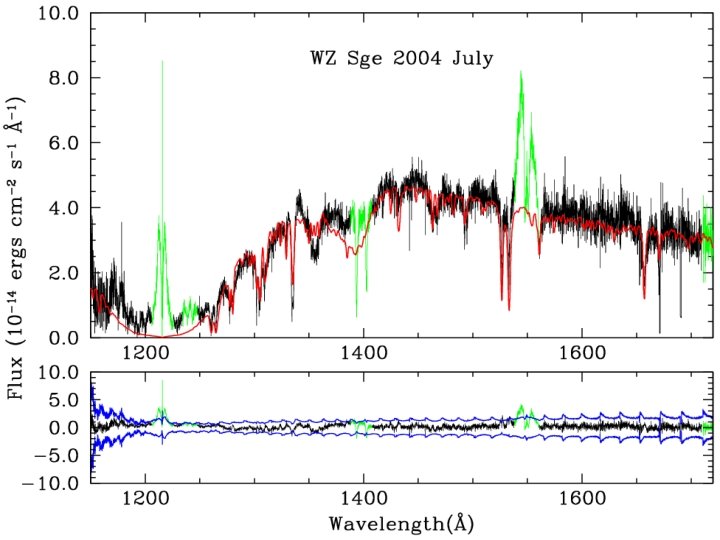
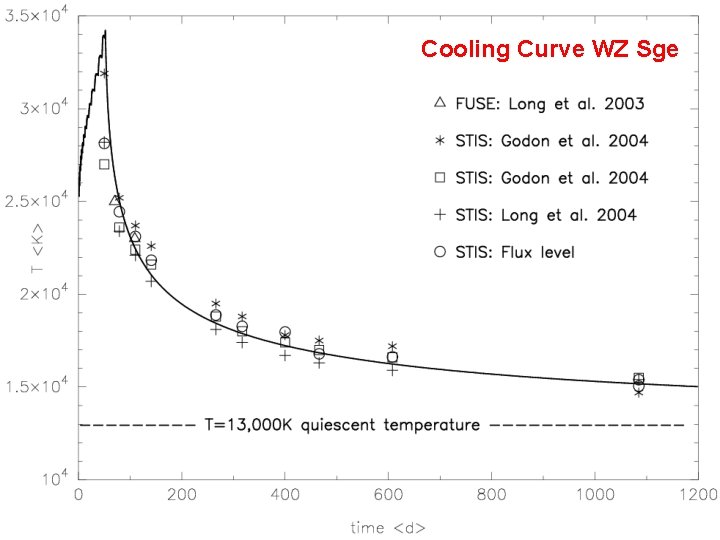
Cooling Curve WZ Sge
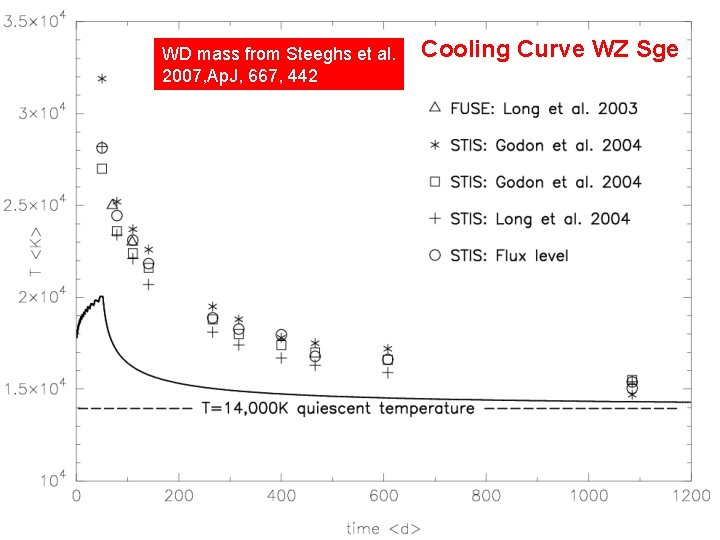
WD mass from Steeghs et al. 2007, Ap. J, 667, 442 Cooling Curve WZ Sge
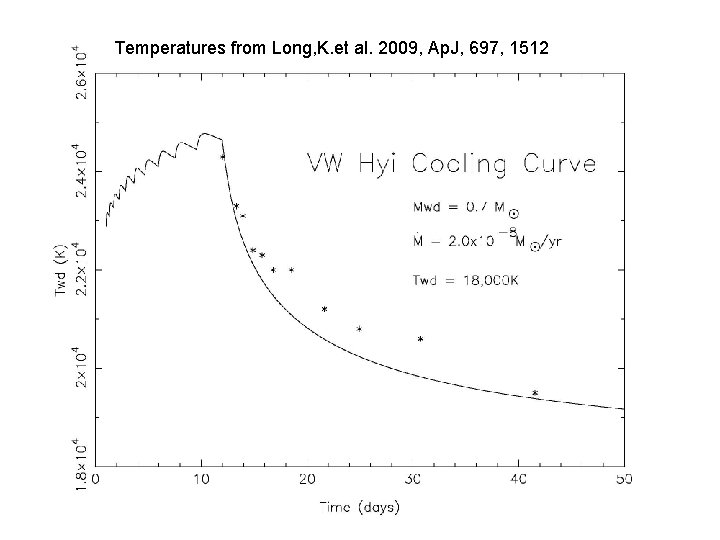
Temperatures from Long, K. et al. 2009, Ap. J, 697, 1512
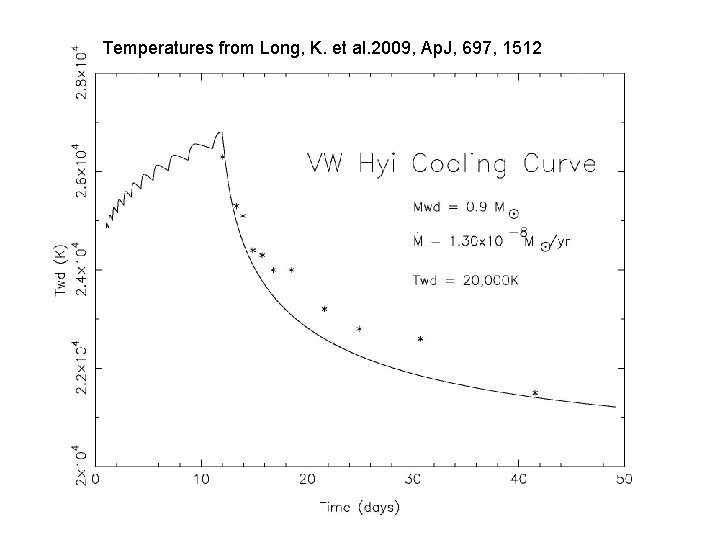
Temperatures from Long, K. et al. 2009, Ap. J, 697, 1512
Summary 1. The white dwarf in SS Cygni dominates the quiescent FUV 2. flux from the Lyman Limit to 2000 A. 3. 4. 5. 6. 2. With M_wd = 0. 81 Msun(Bitner, Robinson & Behr 2007, Ap. J, 662, 564) the WD surface temperature is in the range of 46000 K < T_eff < 55000 K depending upon whether E(B-V) =0. 04 or 0. 07. 3. 4. 5. 6. Compressional heating ALONE may not explain the cooling of the superoutburst accretion-heated white dwarfs in two of the best studied dwarf novae, WZ Sge and VW Hydri. 4. 5. 6. 7. The very broad distribution of CV white dwarf temperatures, versus <Mdot>, above the period gap poses a severe challenge to our understanding of CV evolution.