
The Wheel of Life and Dependent Origination Realms
- Slides: 25
The Wheel of Life and Dependent Origination Realms, Nidanas and philosophies
Samsara � Samsara is a view of reality. � A way Buddhists describe a cyclical existence, it is the constant round of birth and death that we fall into because of spiritual ignorance. � Nirvana is another view of reality, which transcends the cycle of birth and death. This distinction between Samsara and Nirvana is provisional, meaning that we can only judge the characteristics of them from our current point of perception. � There is, possibly, probably, only one reality. The distinction, from an enlightened point of view, is really that they are awake and we are asleep.
Samsara – 1 st Wrong View � Buddhist believe that an enlightened individual can see reality as it is, whereas we see reality in a topsyturvy, perverse way. � For instance, we see what is changing as permanent. This does not mean that we think nothing ever changes – that would be perverse indeed – but we behave and live our lives as if we and the transient things of the world were permanent. � Perhaps we see this most clearly when we suffer a loss. If our partner decides to leave us, we get upset because having believed in eternal romance, we can’t cope with the inevitable loss. If we lose our favourite pen, or our bicycle is stolen or our TV breaks down, we get upset and annoyed and rail against the injustice because we are attached to things and want them always to remain the same and remain with us.
Samsara – 2 nd Wrong View � We also hold to the topsy-turvy view that satisfaction is to be gained where satisfaction cannot be gained. � For instance, many people are convinced that life would be easy, if only they had enough money. With money they could do whatever they wanted, go on holiday whenever they liked, they wouldn’t have to work and so on. But it is also well known that very wealthy people are not necessarily happy and, in fact, are frequently unhappy. Money cannot buy existential wholeness, or even love for that matter. � Many people also think they will be really happy if only they find the right partner – Mr. Right or Ms. Right. And sometimes people will go through many relationships before it dawns on them that the perfect person of their dreams is just a dream, is just a projection of their own mind and will not be found outside them.
Samsara – 3 rd Wrong View � Some people stake their happiness on security in the future (i. e. old age). � They decide to work hard and put by enough savings and earn a good pension so that when they retire they will be able to do all those things they enjoy; travelling and golf and gardening and going to theatre and so on. It is a big gamble. � They may not be able to do those things when they are older, due to ill health or even loss of interest. Or the whole financial and political order that savings and pensions depend upon may not be quite as stable as it seems. It is only as stable as the human beings who operate it and that is not very stable at all
Samsara – 4 th Wrong View �The fourth ‘topsy-turvy’ view that Buddhists recognise as an element of Samsara is the feeling that what is ugly is really beautiful. It is easy to misunderstand this. It is not saying that there is no beauty in the world. �What it is saying is that we normally consider to be beautiful is relatively ugly compared to the greater beauty of Nirvana (in other words reality).
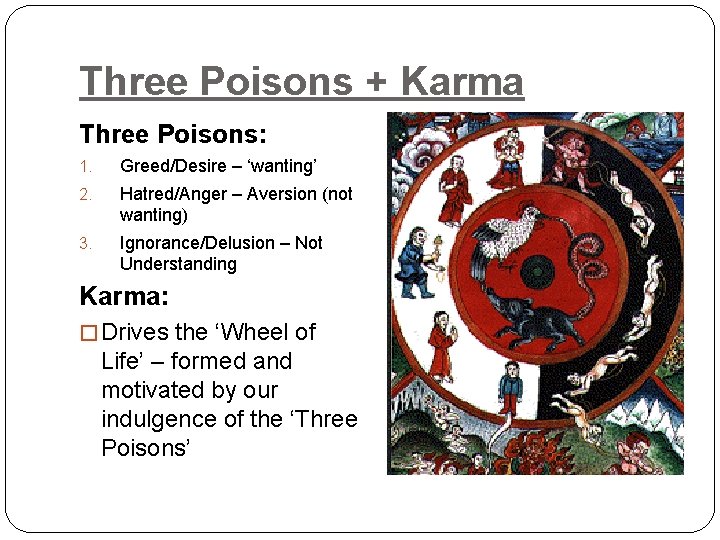
Three Poisons + Karma Three Poisons: 1. Greed/Desire – ‘wanting’ 2. Hatred/Anger – Aversion (not wanting) 3. Ignorance/Delusion – Not Understanding Karma: � Drives the ‘Wheel of Life’ – formed and motivated by our indulgence of the ‘Three Poisons’
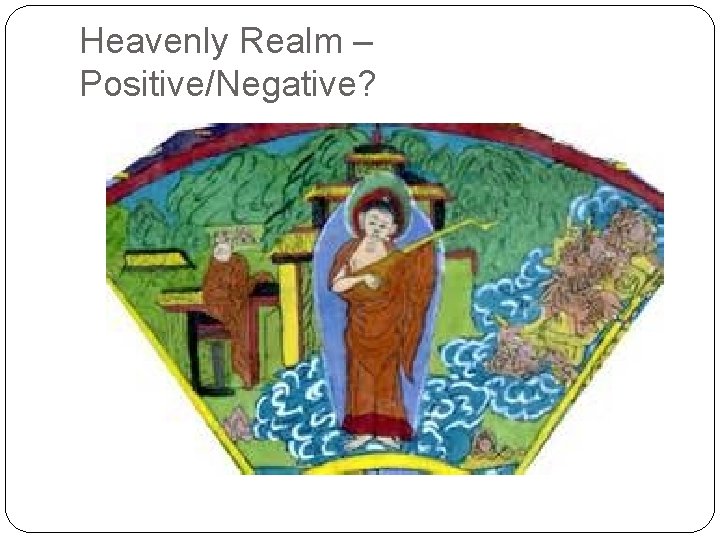
Heavenly Realm – Positive/Negative?
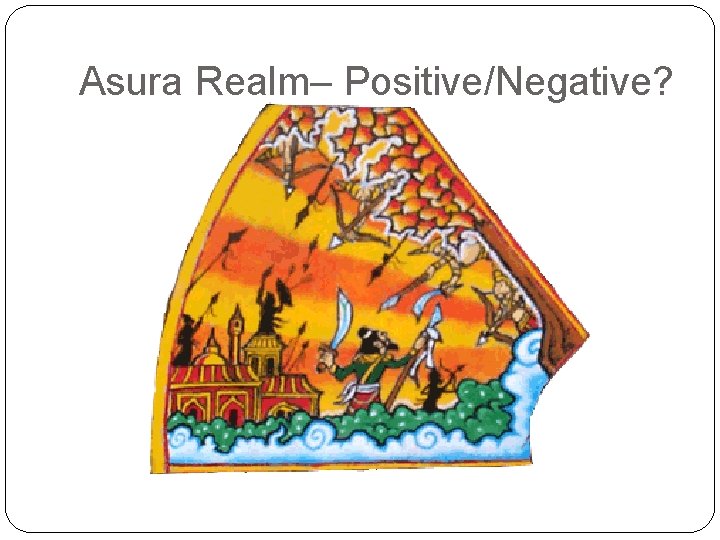
Asura Realm– Positive/Negative?
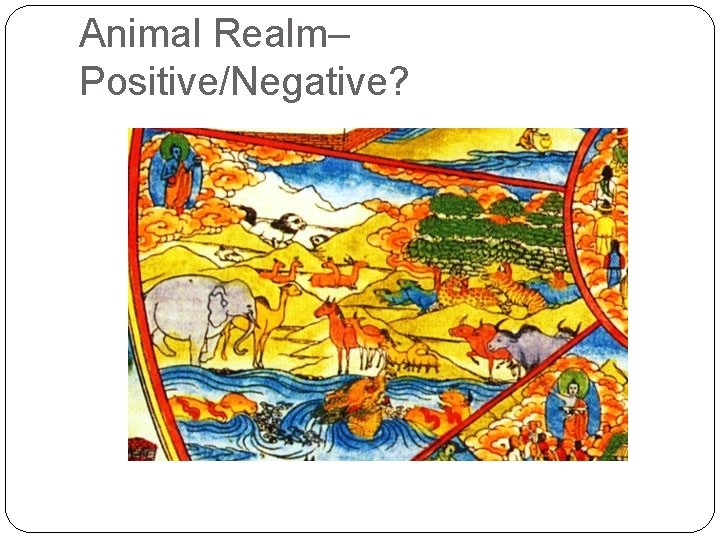
Animal Realm– Positive/Negative?
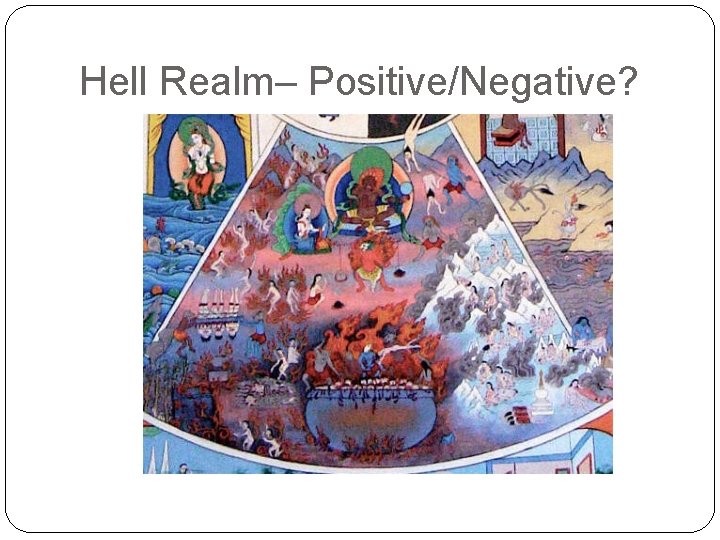
Hell Realm– Positive/Negative?
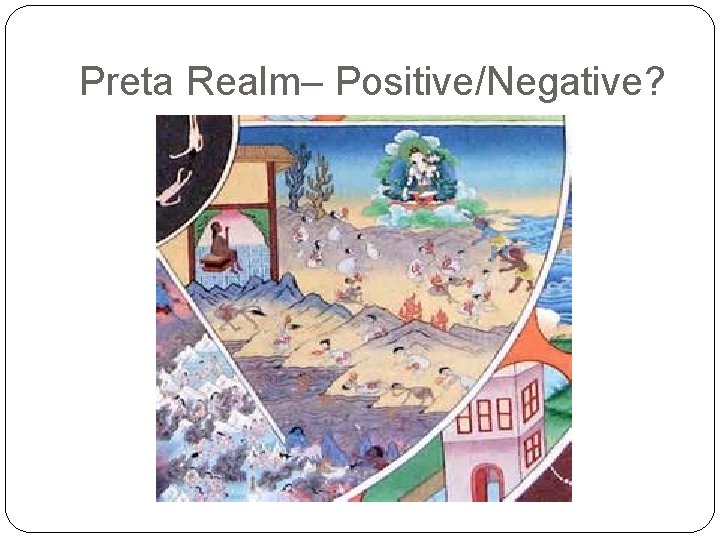
Preta Realm– Positive/Negative?
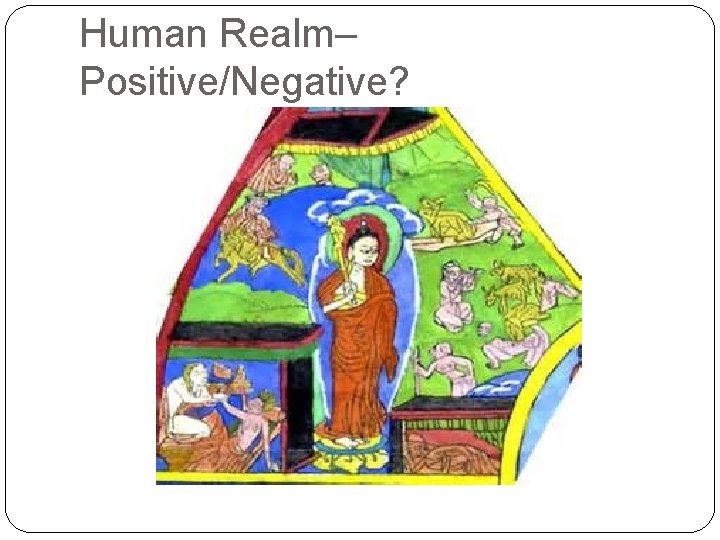
Human Realm– Positive/Negative?
Last Bits �Yama - Lord of Impermanence: Understandings of the ‘Wheel’ �Literal Teaches what? �Buddha – Outside the ‘Wheel’: Teaches what? �Mythologica l �Dharma – Pointed to by the Buddha: Teaches what? �Symbolic of Reality
Examine the teachings found within the Wheel of Life A 01 Essay – 20 marks 20 minutes Point: The three poisons Explain: How/why they cause us to gain Karma Link: What do they teach us to do?
Dependent Origination in one sentence? There is nothing that comes into being through its own power or volition.
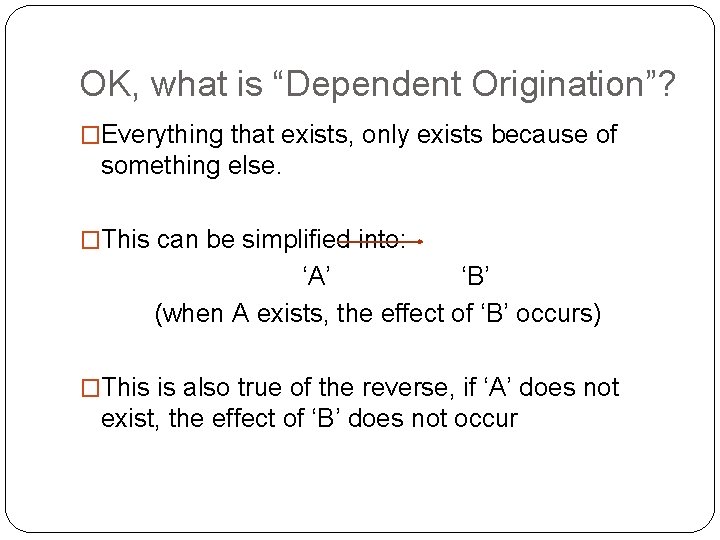
OK, what is “Dependent Origination”? �Everything that exists, only exists because of something else. �This can be simplified into: ‘A’ ‘B’ (when A exists, the effect of ‘B’ occurs) �This is also true of the reverse, if ‘A’ does not exist, the effect of ‘B’ does not occur
What can we deduce from this in terms of Buddhist belief?
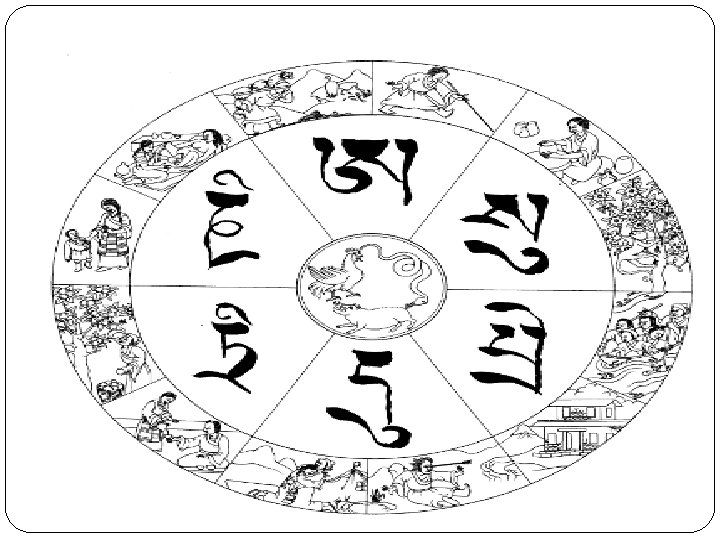
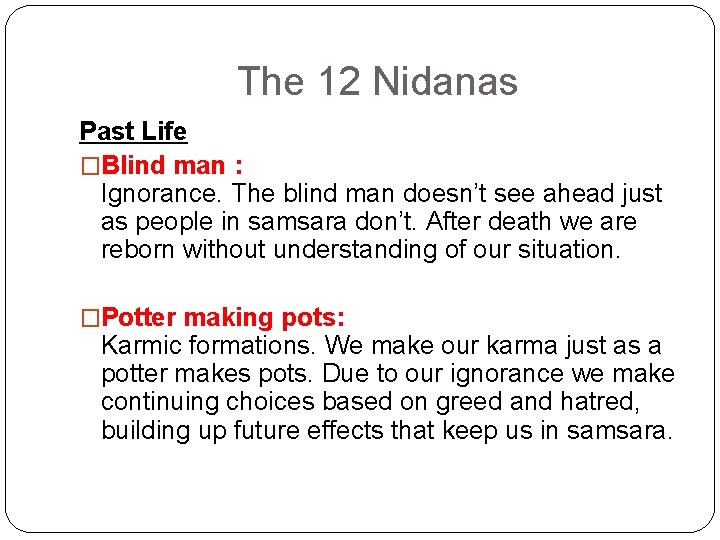
The 12 Nidanas Past Life �Blind man : Ignorance. The blind man doesn’t see ahead just as people in samsara don’t. After death we are reborn without understanding of our situation. �Potter making pots: Karmic formations. We make our karma just as a potter makes pots. Due to our ignorance we make continuing choices based on greed and hatred, building up future effects that keep us in samsara.
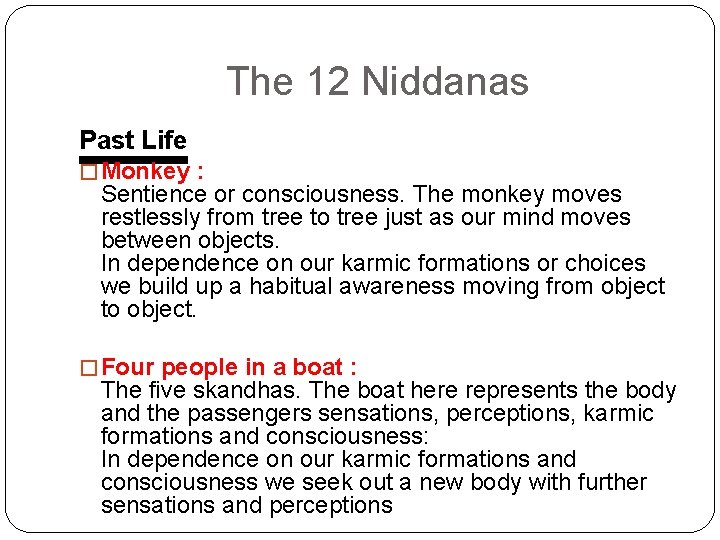
The 12 Niddanas Past Life � Monkey : Sentience or consciousness. The monkey moves restlessly from tree to tree just as our mind moves between objects. In dependence on our karmic formations or choices we build up a habitual awareness moving from object to object. � Four people in a boat : The five skandhas. The boat here represents the body and the passengers sensations, perceptions, karmic formations and consciousness: In dependence on our karmic formations and consciousness we seek out a new body with further sensations and perceptions
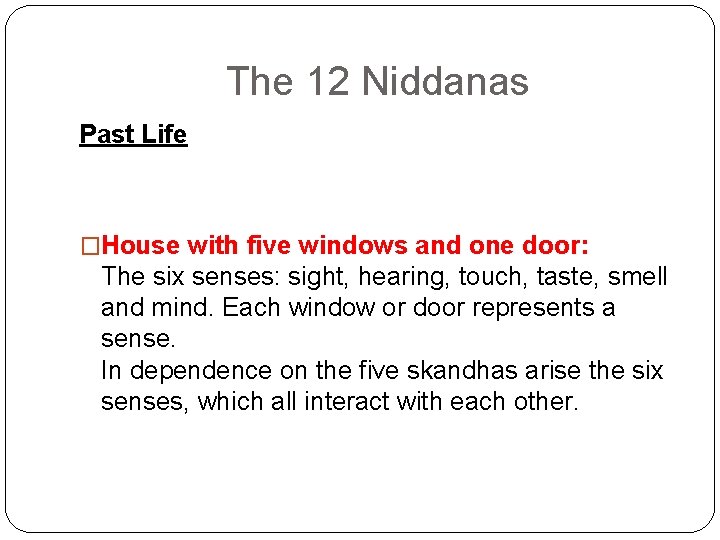
The 12 Niddanas Past Life �House with five windows and one door: The six senses: sight, hearing, touch, taste, smell and mind. Each window or door represents a sense. In dependence on the five skandhas arise the six senses, which all interact with each other.
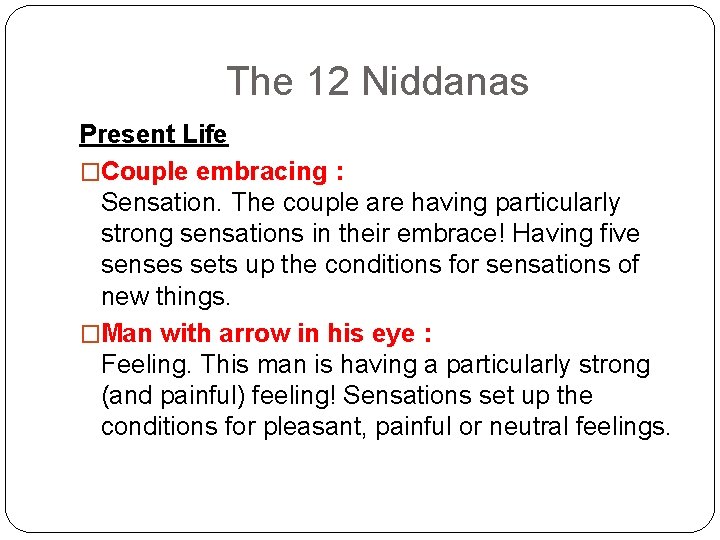
The 12 Niddanas Present Life �Couple embracing : Sensation. The couple are having particularly strong sensations in their embrace! Having five senses sets up the conditions for sensations of new things. �Man with arrow in his eye : Feeling. This man is having a particularly strong (and painful) feeling! Sensations set up the conditions for pleasant, painful or neutral feelings.
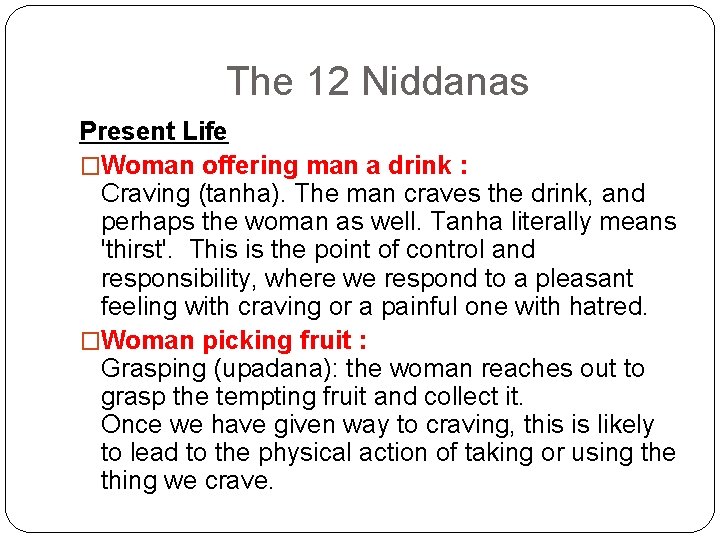
The 12 Niddanas Present Life �Woman offering man a drink : Craving (tanha). The man craves the drink, and perhaps the woman as well. Tanha literally means 'thirst'. This is the point of control and responsibility, where we respond to a pleasant feeling with craving or a painful one with hatred. �Woman picking fruit : Grasping (upadana): the woman reaches out to grasp the tempting fruit and collect it. Once we have given way to craving, this is likely to lead to the physical action of taking or using the thing we crave.
The 12 Niddanas Future Life � Pregnant woman : Becoming: in traditional Buddhist belief rebirth begins at fertilisation following entry of the karmic formations. Grasping leads to rebirth as we continue the habit of relating to the things we want. We grasp at a new rebirth after death. � Woman giving birth : Birth - Re-becoming (rebirth into one’s mother’s womb) leads inevitably to birth into the world again. � Corpse : Death Birth leads inevitably to the further suffering associated with death, and thus back to ignorance.