
The West Great Plains Oklahoma Kansas Nebraska Wyoming
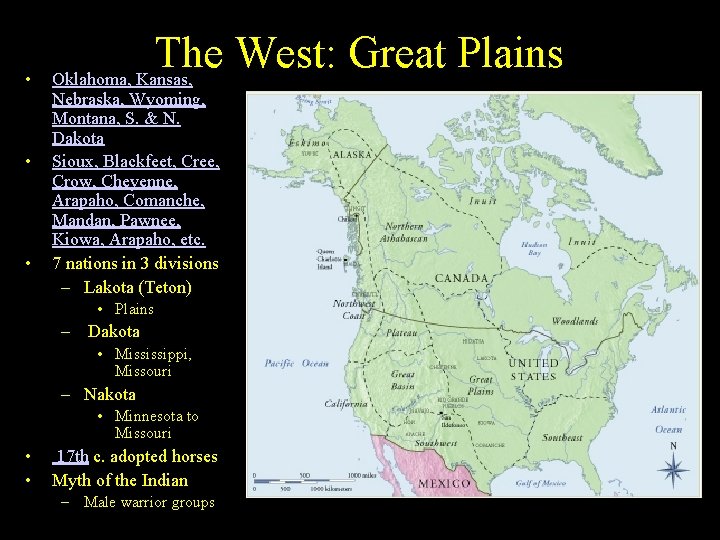
• • • The West: Great Plains Oklahoma, Kansas, Nebraska, Wyoming, Montana, S. & N. Dakota Sioux, Blackfeet, Cree, Crow, Cheyenne, Arapaho, Comanche, Mandan, Pawnee, Kiowa, Arapaho, etc. 7 nations in 3 divisions – Lakota (Teton) • Plains – Dakota • Mississippi, Missouri – Nakota • Minnesota to Missouri • • 17 th c. adopted horses Myth of the Indian – Male warrior groups

Colleen Cutschall, Sons of the Wind, Lakota, 1992 • Oral tradition • Origin of the world & Supernaturals • Medicine Wheel pole axis mundi • 4 directions • 4 sacred Colors

Petroglyphs, Great Lakes, Pre-contact period • • Pre-contact Algonkian Shamanistic rites Abstract human and animal designs • Anthropomorphic, zoomorphic • Manitos/Manitou – Sunburst figure – Supernatural beings • Fertility, ceremony, cult of celestial deities

Dragonfly hair ornaments, Cheyenne, 1880 • Speed, agility • Capture characteristics • Battle ceremony • “something sacred wears me”
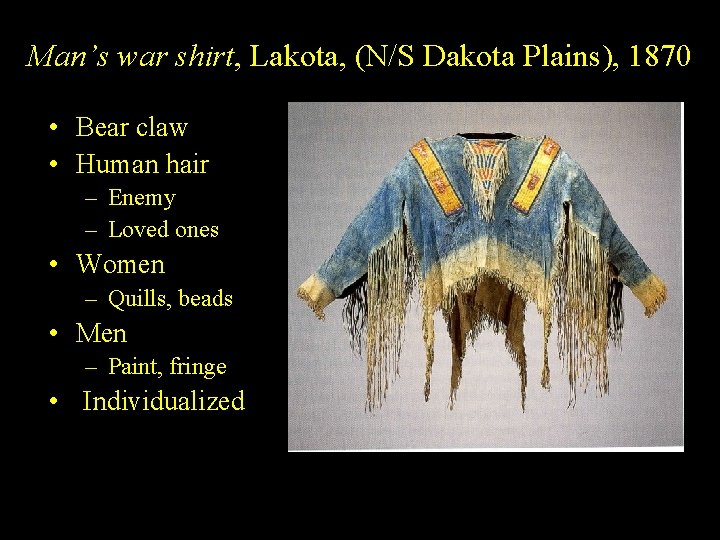
Man’s war shirt, Lakota, (N/S Dakota Plains), 1870 • Bear claw • Human hair – Enemy – Loved ones • Women – Quills, beads • Men – Paint, fringe • Individualized
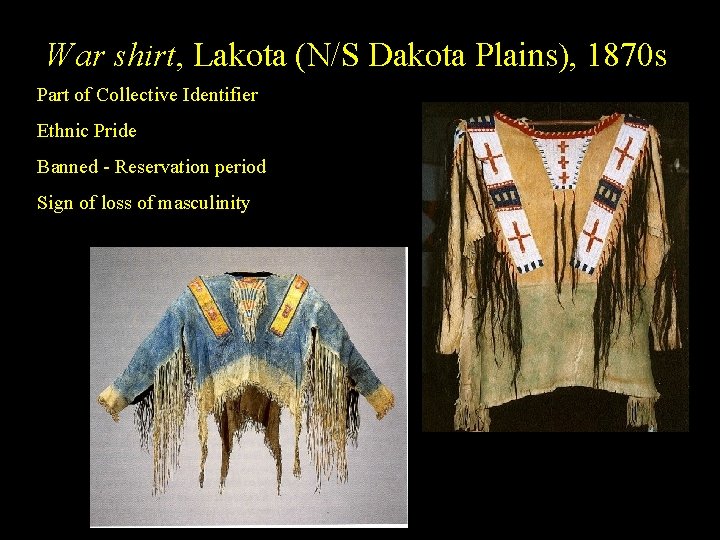
War shirt, Lakota (N/S Dakota Plains), 1870 s Part of Collective Identifier Ethnic Pride Banned - Reservation period Sign of loss of masculinity

WOMEN’S ARTS Parfleche (turn away arrows), 1885 Blackfeet, N. Montana • Rawhide & pigment • Carrying case/storage • Design (Communication) – Nature, Universe Cheyenne
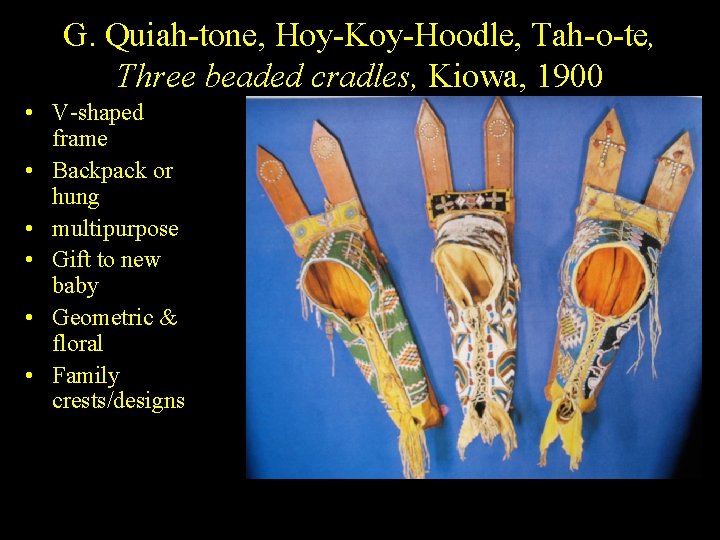
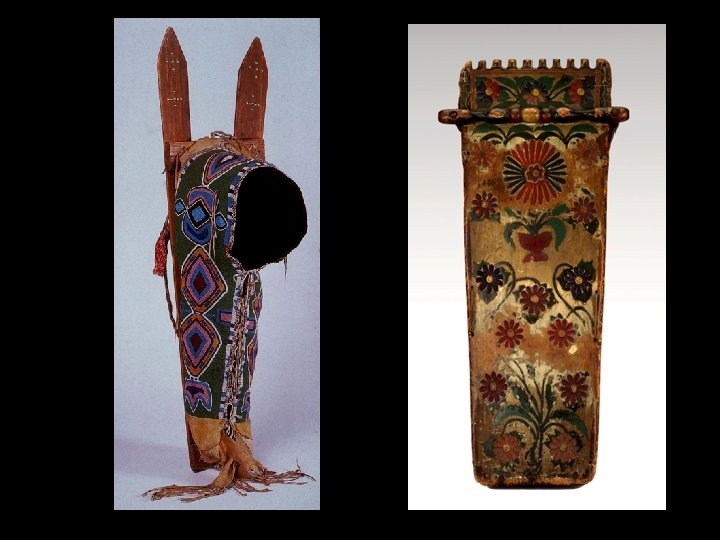
G. Quiah-tone, Hoy-Koy-Hoodle, Tah-o-te, Three beaded cradles, Kiowa, 1900 • V-shaped frame • Backpack or hung • multipurpose • Gift to new baby • Geometric & floral • Family crests/designs

Kiowa cradle
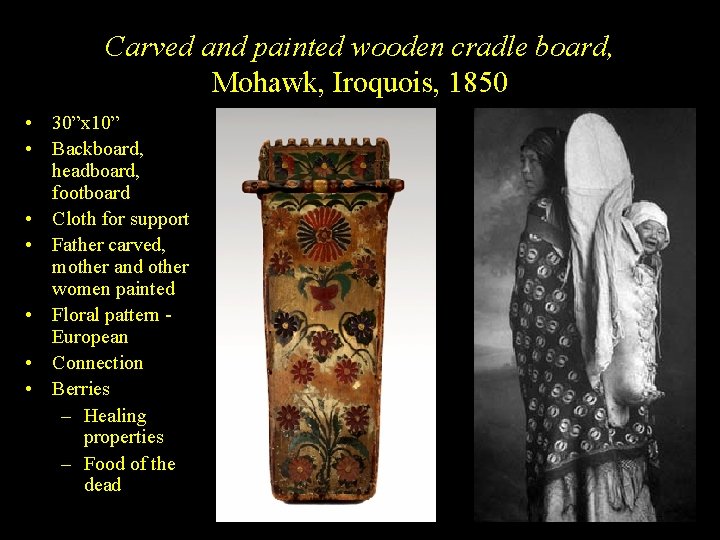
Carved and painted wooden cradle board, Mohawk, Iroquois, 1850 • 30”x 10” • Backboard, headboard, footboard • Cloth for support • Father carved, mother and other women painted • Floral pattern European • Connection • Berries – Healing properties – Food of the dead
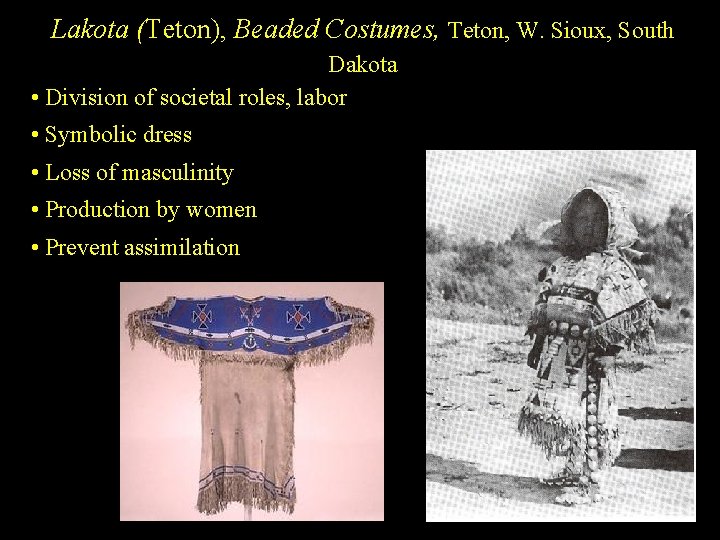
Lakota (Teton), Beaded Costumes, Teton, W. Sioux, South Dakota • Division of societal roles, labor • Symbolic dress • Loss of masculinity • Production by women • Prevent assimilation
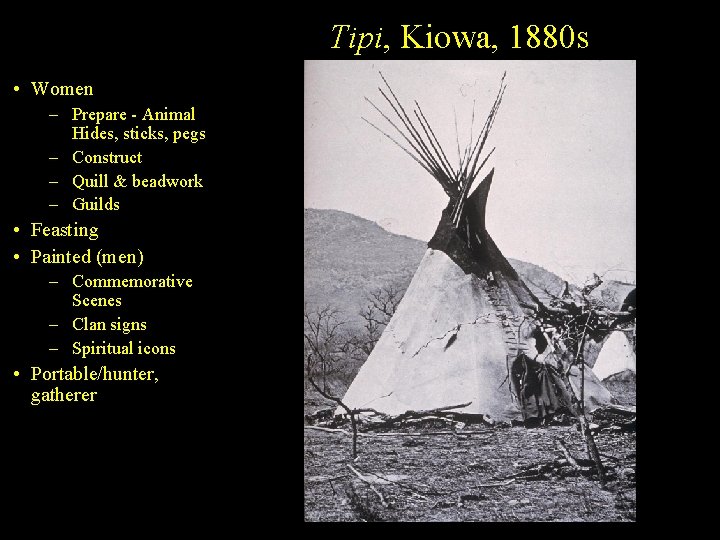
Tipi, Kiowa, 1880 s • Women – Prepare - Animal Hides, sticks, pegs – Construct – Quill & beadwork – Guilds • Feasting • Painted (men) – Commemorative Scenes – Clan signs – Spiritual icons • Portable/hunter, gatherer
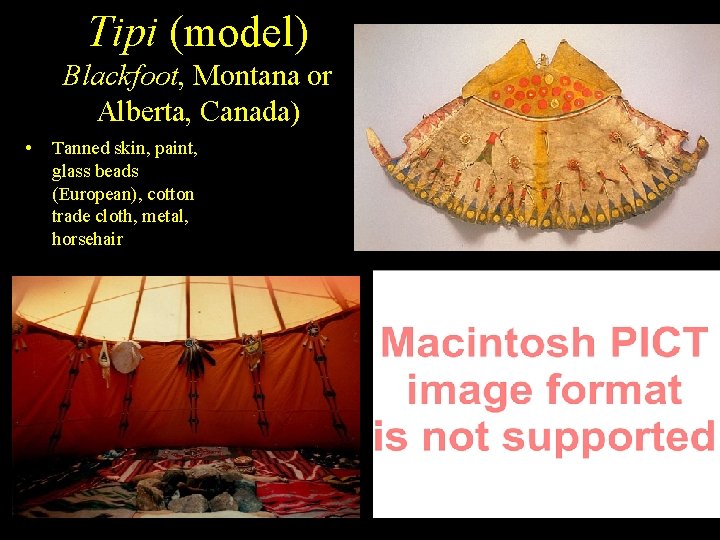
Tipi (model) Blackfoot, Montana or Alberta, Canada) • Tanned skin, paint, glass beads (European), cotton trade cloth, metal, horsehair
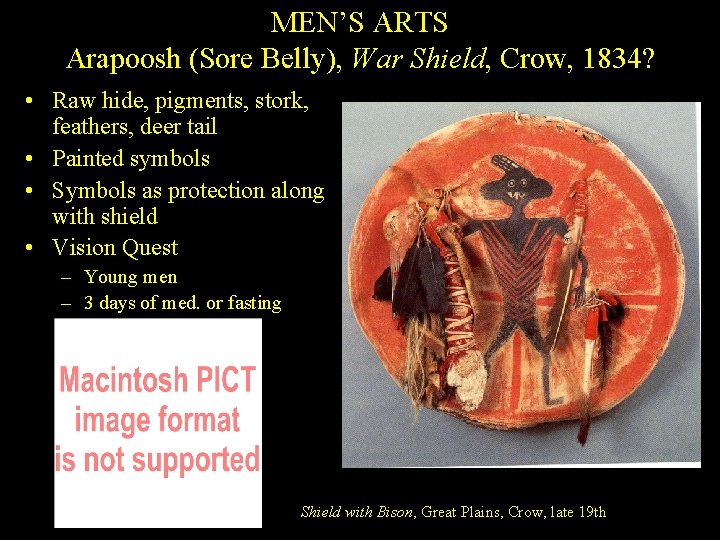
MEN’S ARTS Arapoosh (Sore Belly), War Shield, Crow, 1834? • Raw hide, pigments, stork, feathers, deer tail • Painted symbols • Symbols as protection along with shield • Vision Quest – Young men – 3 days of med. or fasting Shield with Bison, Great Plains, Crow, late 19 th
Bison Robe, Arapaho (Plains) • Men and women painted • Designs – Women Geometric – Men Figurative • Symbolism – Paths, migration, battle
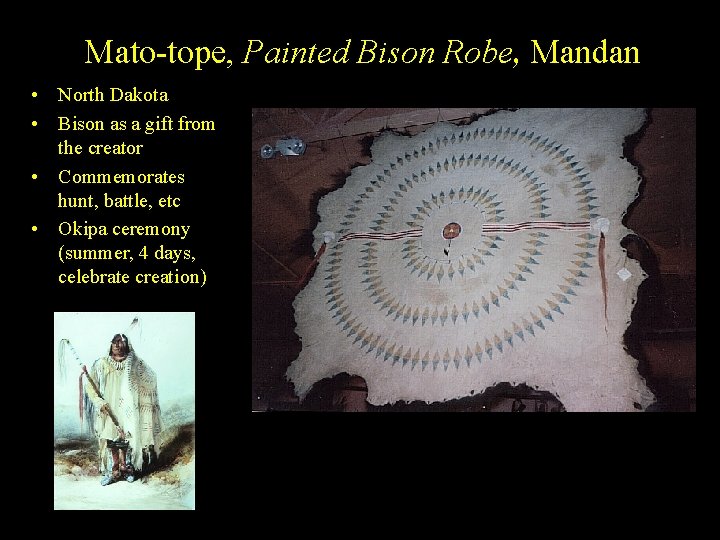
Mato-tope, Painted Bison Robe, Mandan • North Dakota • Bison as a gift from the creator • Commemorates hunt, battle, etc • Okipa ceremony (summer, 4 days, celebrate creation)
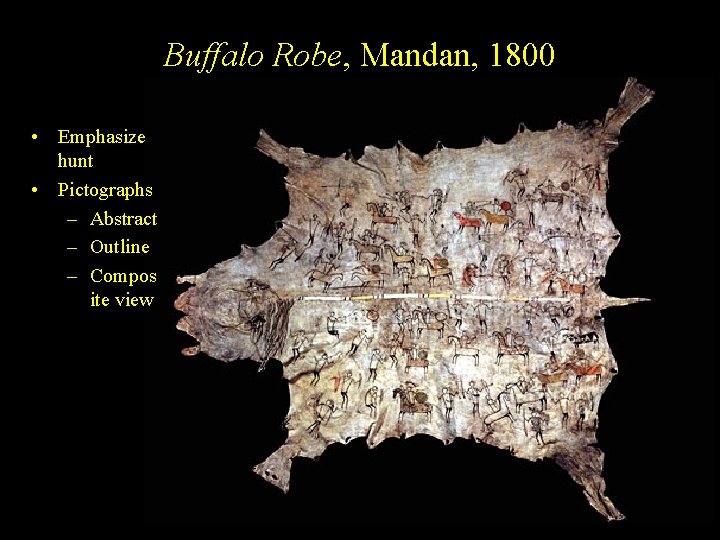
Buffalo Robe, Mandan, 1800 • Emphasize hunt • Pictographs – Abstract – Outline – Compos ite view
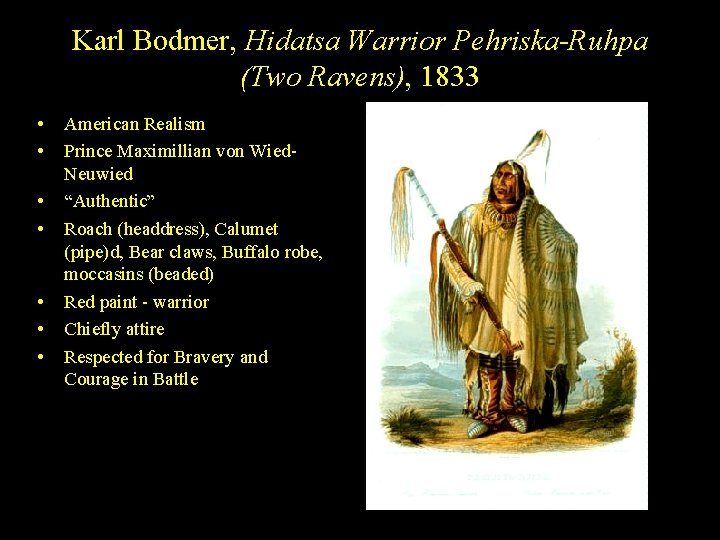
Karl Bodmer, Hidatsa Warrior Pehriska-Ruhpa (Two Ravens), 1833 • • American Realism Prince Maximillian von Wied. Neuwied “Authentic” Roach (headdress), Calumet (pipe)d, Bear claws, Buffalo robe, moccasins (beaded) Red paint - warrior Chiefly attire Respected for Bravery and Courage in Battle
Karl Bodmer, Kiasax (Bear on the left), Piegan Blackfeet Man, 1832 -4 • Red warrior paint • Feathered staff • Stripped blanket
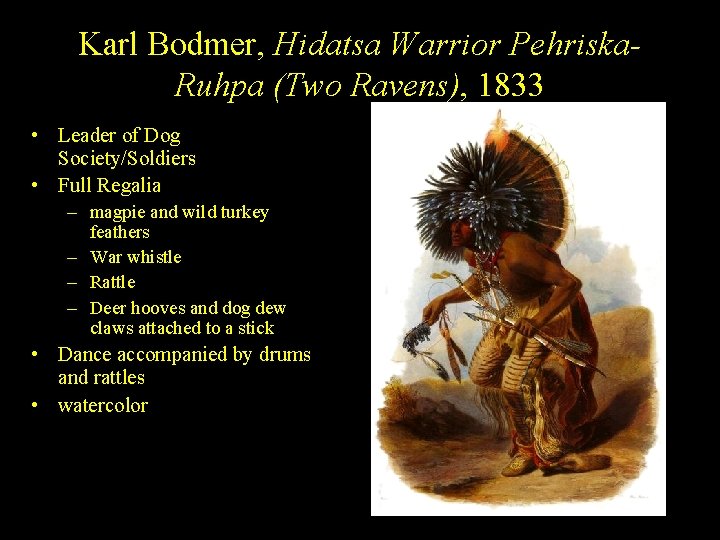
Karl Bodmer, Hidatsa Warrior Pehriska. Ruhpa (Two Ravens), 1833 • Leader of Dog Society/Soldiers • Full Regalia – magpie and wild turkey feathers – War whistle – Rattle – Deer hooves and dog dew claws attached to a stick • Dance accompanied by drums and rattles • watercolor
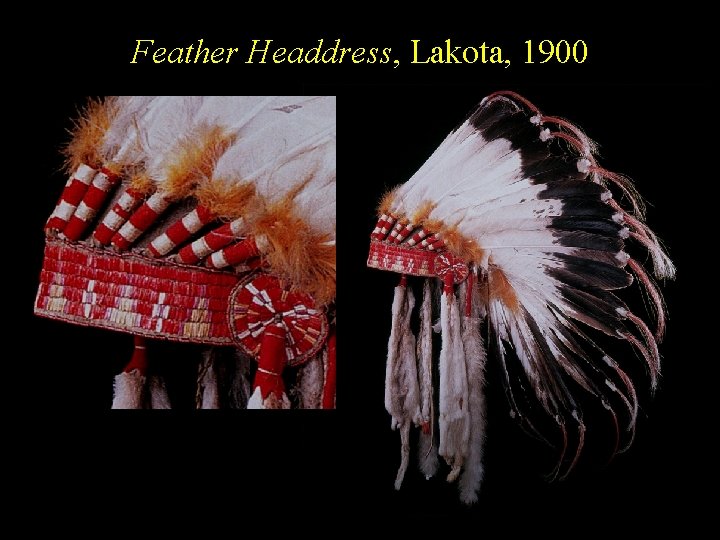
Feather Headdress, Lakota, 1900
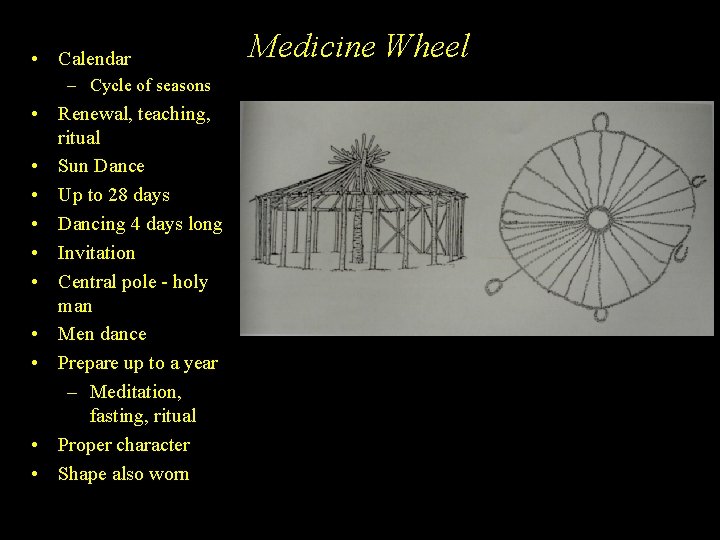
• Calendar – Cycle of seasons • Renewal, teaching, ritual • Sun Dance • Up to 28 days • Dancing 4 days long • Invitation • Central pole - holy man • Men dance • Prepare up to a year – Meditation, fasting, ritual • Proper character • Shape also worn Medicine Wheel

Big Horn Medicine Wheel, Wyoming Medicine Wheel Park, Valley City, North Dakota
Medicine Wheel Symbolism

Medicine Wheel Commercial Jewelry
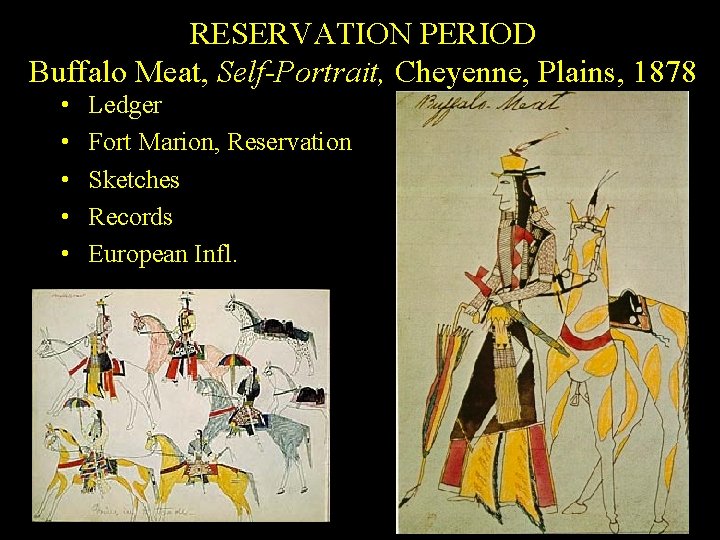
RESERVATION PERIOD Buffalo Meat, Self-Portrait, Cheyenne, Plains, 1878 • • • Ledger Fort Marion, Reservation Sketches Records European Infl.
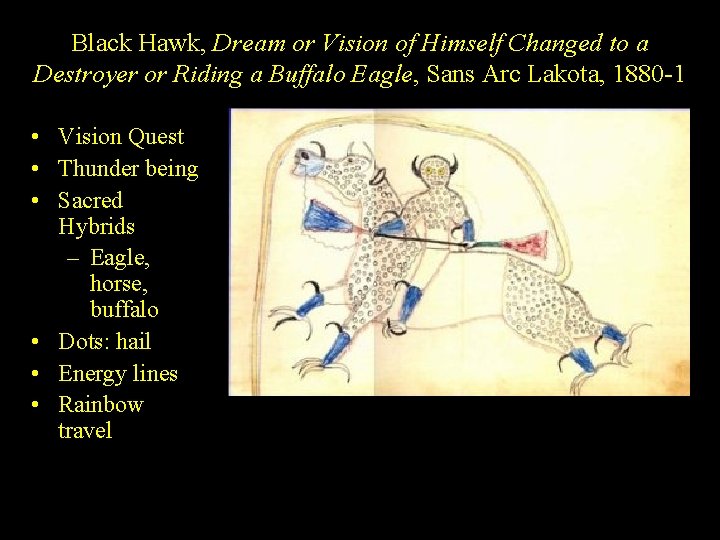
Black Hawk, Dream or Vision of Himself Changed to a Destroyer or Riding a Buffalo Eagle, Sans Arc Lakota, 1880 -1 • Vision Quest • Thunder being • Sacred Hybrids – Eagle, horse, buffalo • Dots: hail • Energy lines • Rainbow travel

Black Hawk, Sans Arc Lakota Ledger Book, 1880 -1
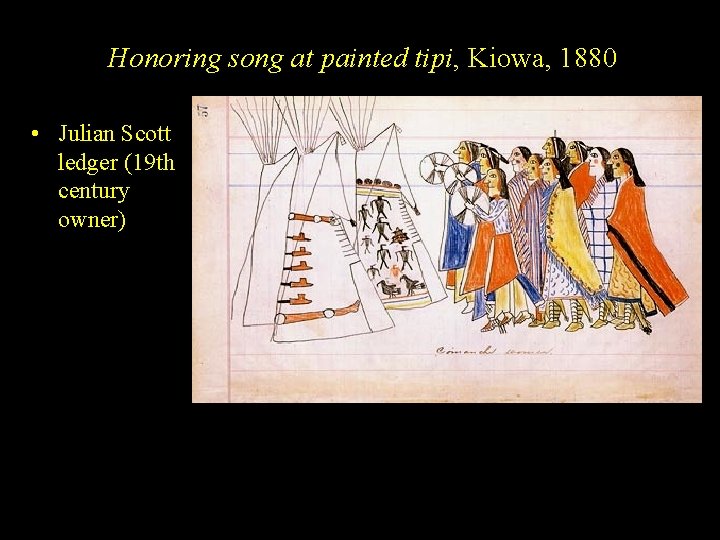
Honoring song at painted tipi, Kiowa, 1880 • Julian Scott ledger (19 th century owner)
Wohaw (Beef Cow), Between two Worlds, Kiowa, 1876 • Buffalo and Bull – Past and Present • Sun, Moon, Morning star • Peace pipe • Peace between two worlds
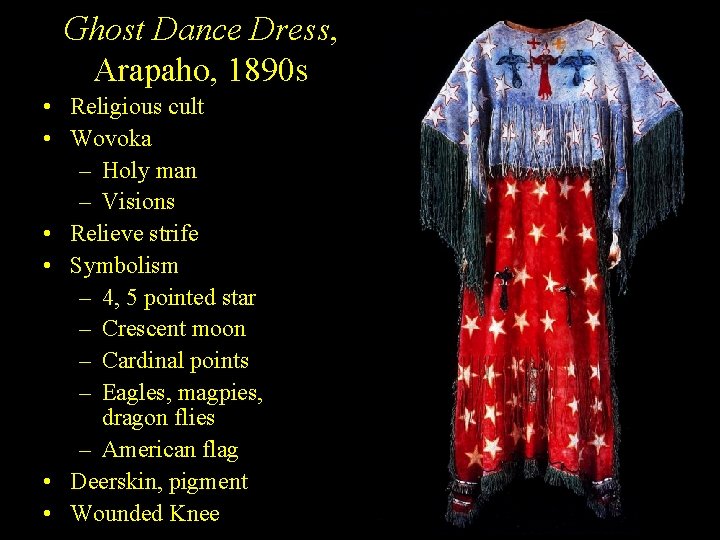
Ghost Dance Dress, Arapaho, 1890 s • Religious cult • Wovoka – Holy man – Visions • Relieve strife • Symbolism – 4, 5 pointed star – Crescent moon – Cardinal points – Eagles, magpies, dragon flies – American flag • Deerskin, pigment • Wounded Knee
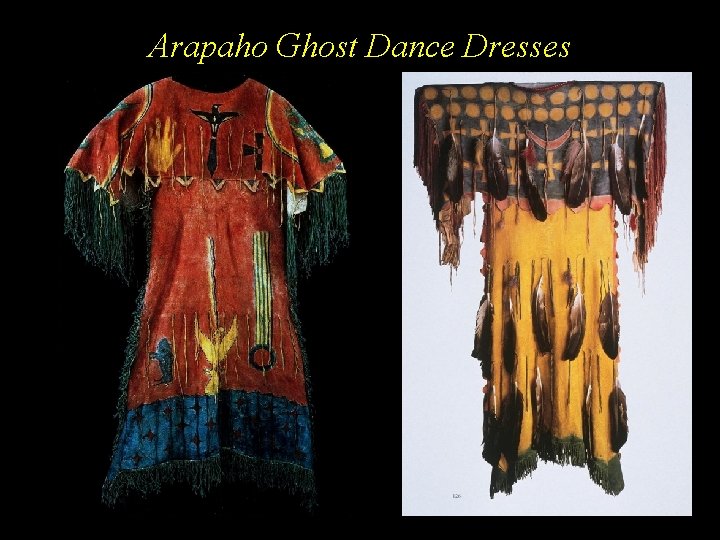
Arapaho Ghost Dance Dresses

Exam #2 SECTION I Slide Identification: Artist (if known), Group/Style, Title, Medium, Location (for architecture), Question (30 points) SECTION II (You may use 3 x 5 and photocopies for this section) 15 Short Answer Questions (30 points) 1 Essay (40 Points)
- Slides: 34