
The West and the World Imperialism Fueled industrialization
- Slides: 22
The West and the World
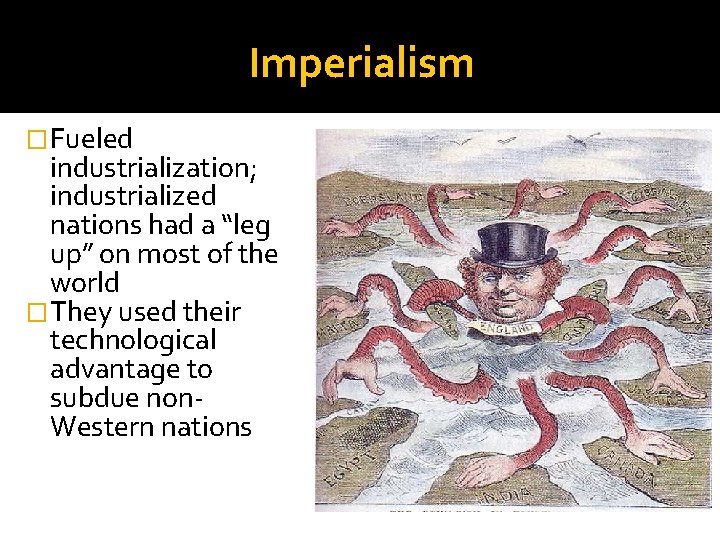
Imperialism �Fueled industrialization; industrialized nations had a “leg up” on most of the world �They used their technological advantage to subdue non. Western nations
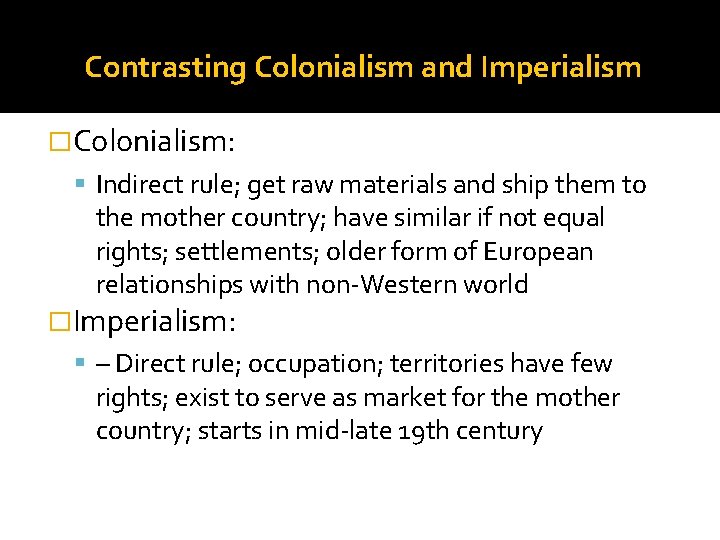
Contrasting Colonialism and Imperialism �Colonialism: Indirect rule; get raw materials and ship them to the mother country; have similar if not equal rights; settlements; older form of European relationships with non-Western world �Imperialism: – Direct rule; occupation; territories have few rights; exist to serve as market for the mother country; starts in mid-late 19 th century
Welcome Back… � Bell ringer… � Define Imperialism… � What is the difference between Imperialism and Colonialism? � Objective: Through notes, document analysis, and discussion students will understand the motives behind imperialism.
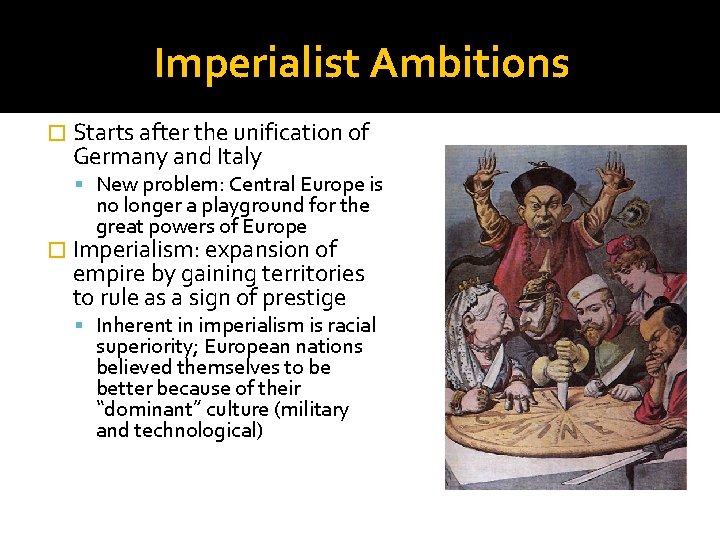
Imperialist Ambitions � Starts after the unification of Germany and Italy New problem: Central Europe is no longer a playground for the great powers of Europe � Imperialism: expansion of empire by gaining territories to rule as a sign of prestige Inherent in imperialism is racial superiority; European nations believed themselves to be better because of their “dominant” culture (military and technological)
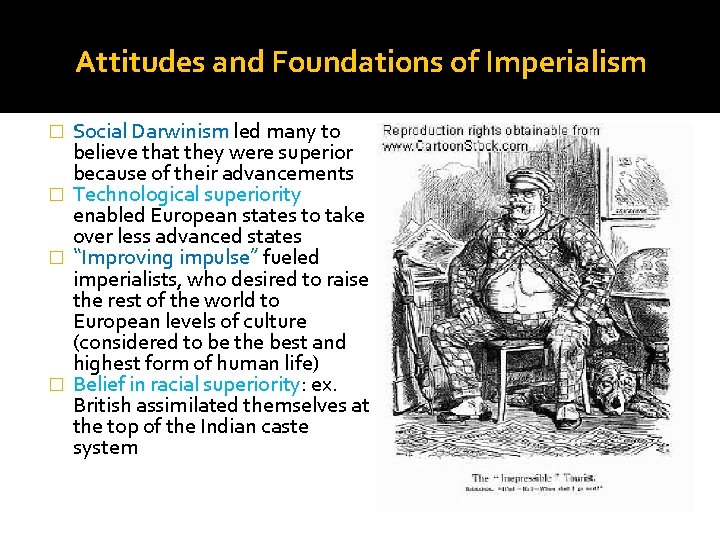
Attitudes and Foundations of Imperialism Social Darwinism led many to believe that they were superior because of their advancements � Technological superiority enabled European states to take over less advanced states � “Improving impulse” fueled imperialists, who desired to raise the rest of the world to European levels of culture (considered to be the best and highest form of human life) � Belief in racial superiority: ex. British assimilated themselves at the top of the Indian caste system �
European Economic Dominance �As industry continues to grow, new markets and raw material sources were sought �European nations found overseas possessions to be the answer to both problems � By owning these lands, European powers continued to enrich themselves and simultaneously export their own culture and ideals
Communication Improvements �Telegraph, telephone and rapid sea transit through steam powered vessels makes ruling easier �European monarchs and presidents are able to rule through intermediaries such as viceroys and other people immediately accountable to the heads of state �European dominance asserted through impressive military victories and native peoples are subdued (ex. Omdurman)
Good morning… � Bell Ringer… � Review documents. What are the motivations for Imperialism?
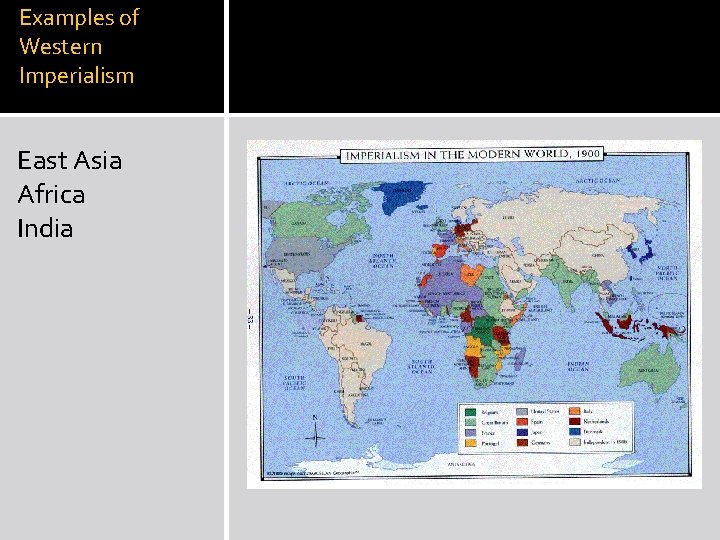
Examples of Western Imperialism East Asia Africa India
Country/Continent Japan China India Africa Egypt Reasons for Imperialism Major events Outcomes
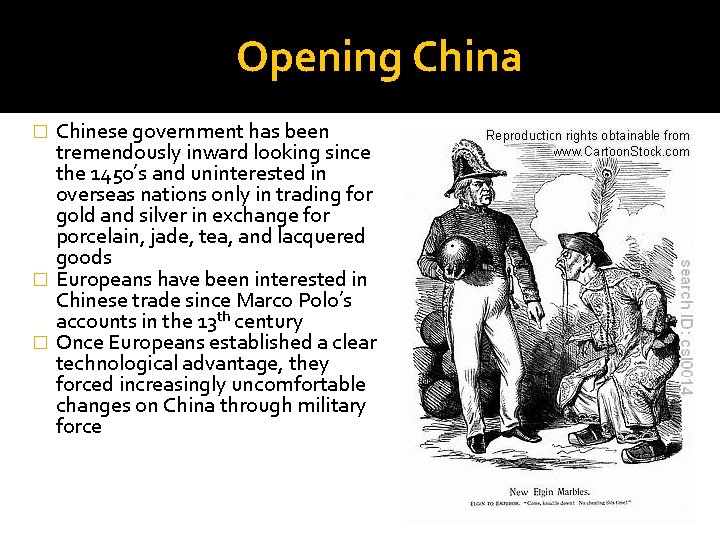
Opening China Chinese government has been tremendously inward looking since the 1450’s and uninterested in overseas nations only in trading for gold and silver in exchange for porcelain, jade, tea, and lacquered goods � Europeans have been interested in Chinese trade since Marco Polo’s accounts in the 13 th century � Once Europeans established a clear technological advantage, they forced increasingly uncomfortable changes on China through military force �
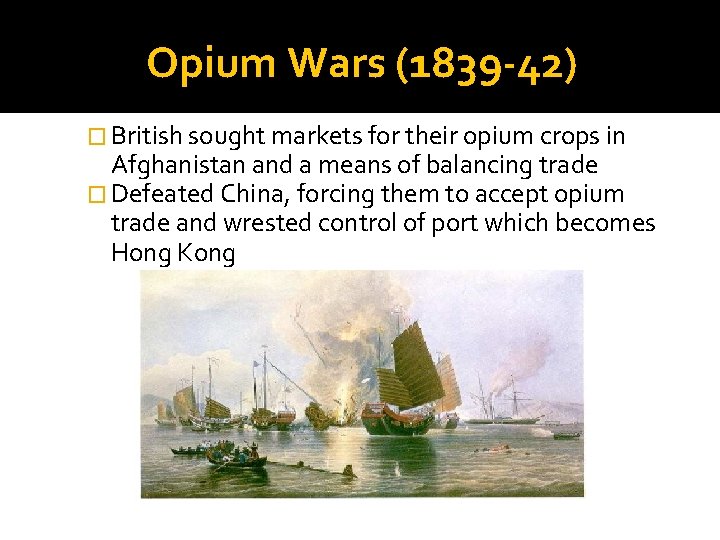
Opium Wars (1839 -42) � British sought markets for their opium crops in Afghanistan and a means of balancing trade � Defeated China, forcing them to accept opium trade and wrested control of port which becomes Hong Kong
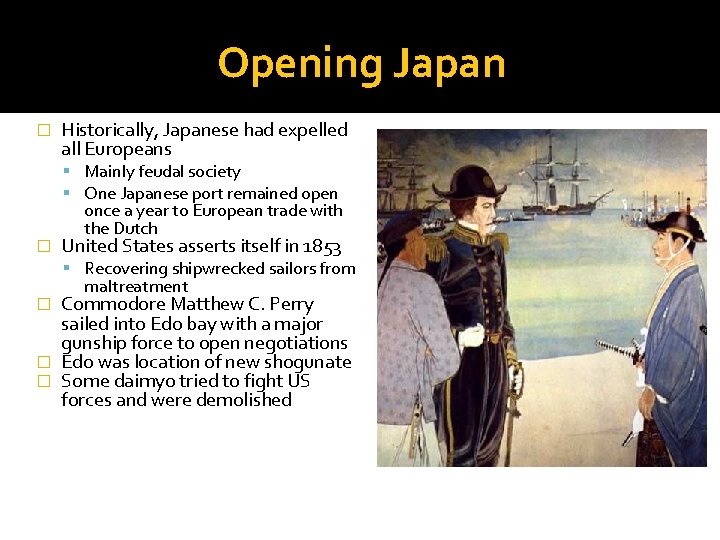
Opening Japan � Historically, Japanese had expelled all Europeans Mainly feudal society One Japanese port remained open � once a year to European trade with the Dutch United States asserts itself in 1853 Recovering shipwrecked sailors from maltreatment Commodore Matthew C. Perry sailed into Edo bay with a major gunship force to open negotiations � Edo was location of new shogunate � Some daimyo tried to fight US forces and were demolished �
European Migration �Europeans migrated in huge numbers seeking economic opportunity and civil freedoms �Not only to the United States, but also: South America – Uruguay, Argentina, Brazil Asia – Hong Kong, Southeast Asia Australia and New Zealand Africa – Kenya, South Africa, Mozambique
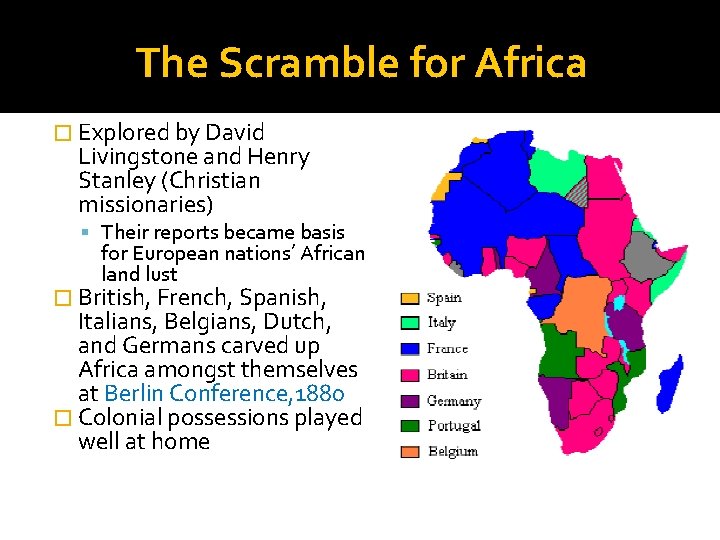
The Scramble for Africa � Explored by David Livingstone and Henry Stanley (Christian missionaries) Their reports became basis for European nations’ African land lust � British, French, Spanish, Italians, Belgians, Dutch, and Germans carved up Africa amongst themselves at Berlin Conference, 1880 � Colonial possessions played well at home
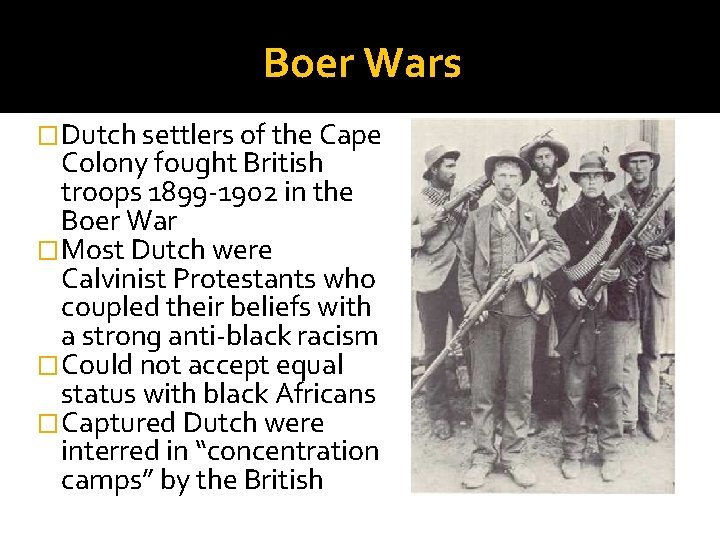
Boer Wars �Dutch settlers of the Cape Colony fought British troops 1899 -1902 in the Boer War �Most Dutch were Calvinist Protestants who coupled their beliefs with a strong anti-black racism �Could not accept equal status with black Africans �Captured Dutch were interred in “concentration camps” by the British
Opposition to Imperialism �Socialists critiqued imperialism for exploiting new workers and failing to care adequately for original working class people �Native peoples who were educated in European liberties and freedoms saw the inequality of their own situations Modernizers and westernizers vs. traditionalists �Examples: Sepoy Mutiny (Sepoy Rebellion) Russo-Japanese War Boxer Rebellion
Sepoy Rebellion (Mutiny) � Native Indian troops, both Muslim and Hindu, rebelled at rumors of usage of animal fat-greased gunpowder packing � British East India Company lost control of India to the British crown PM Benjamin Disraeli presented Queen Victoria with title “Empress of India” � British introduced many improvements to modernize India and make it like the rest of Britain � Educated Hindus formed the Indian National Congress to press for greater rights of native peoples
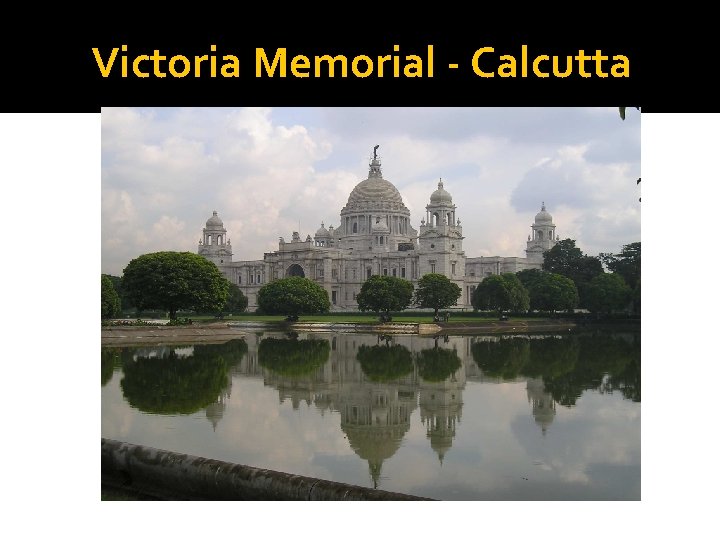
Victoria Memorial - Calcutta
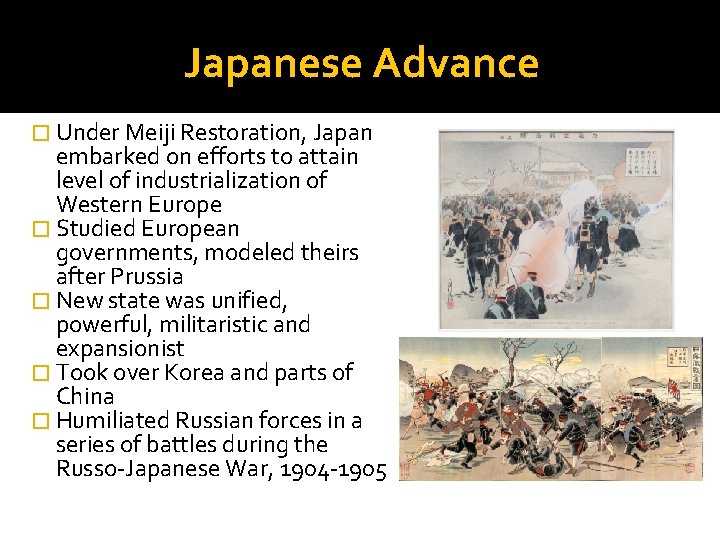
Japanese Advance � Under Meiji Restoration, Japan embarked on efforts to attain level of industrialization of Western Europe � Studied European governments, modeled theirs after Prussia � New state was unified, powerful, militaristic and expansionist � Took over Korea and parts of China � Humiliated Russian forces in a series of battles during the Russo-Japanese War, 1904 -1905
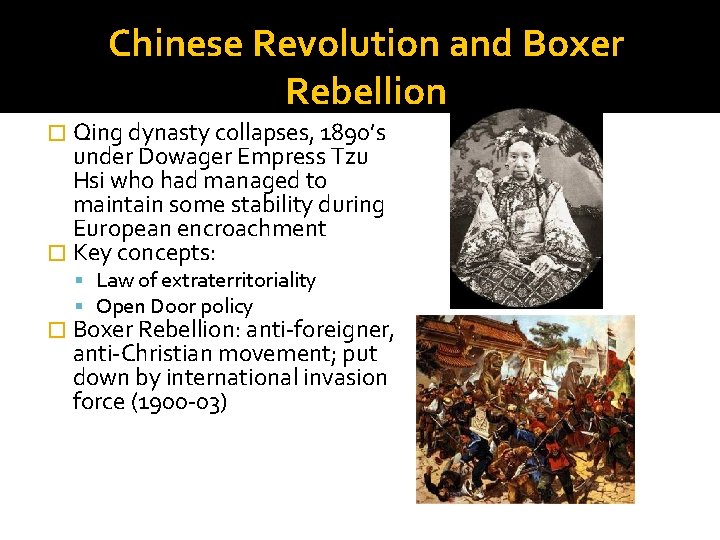
Chinese Revolution and Boxer Rebellion � Qing dynasty collapses, 1890’s under Dowager Empress Tzu Hsi who had managed to maintain some stability during European encroachment � Key concepts: Law of extraterritoriality Open Door policy � Boxer Rebellion: anti-foreigner, anti-Christian movement; put down by international invasion force (1900 -03)