
The Wax Tryin Wax Tryin Verify Change Occlusal

- Slides: 45
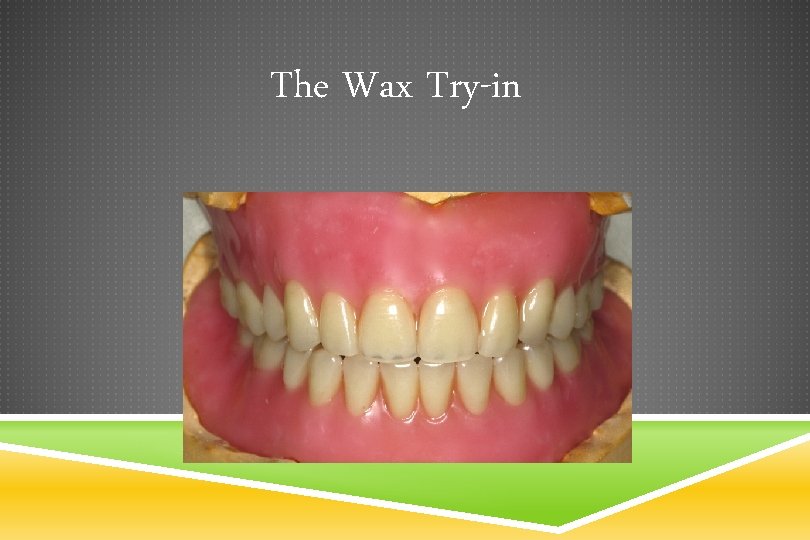
The Wax Try-in
Wax Try-in Verify & Change: Occlusal relationships Appearance Phonetics Patient comfort
Two Try-in Appointments Initial wax try-in Verify centric, protrusive Confirm esthetics, phonetics Final wax try-in Ensure balanced (if applicable), wax- up complete
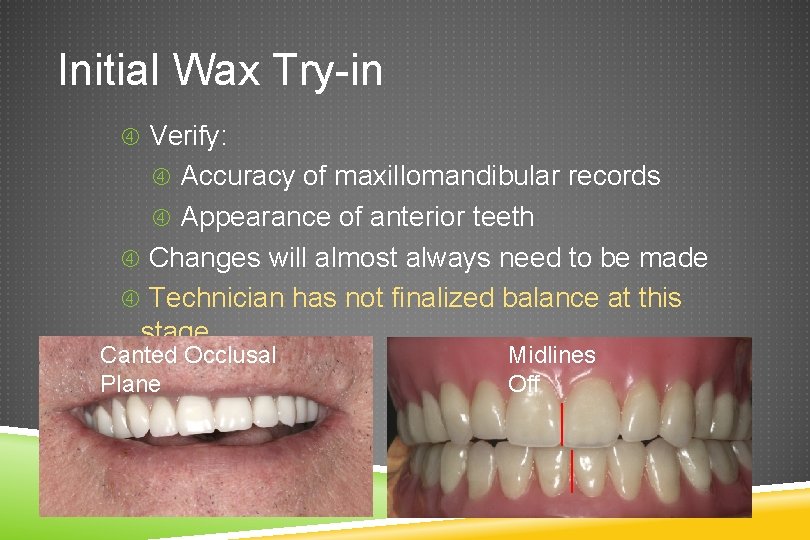
Initial Wax Try-in Verify: Accuracy of maxillomandibular records Appearance of anterior teeth Changes will almost always need to be made Technician has not finalized balance at this stage Canted Occlusal Plane Midlines Off
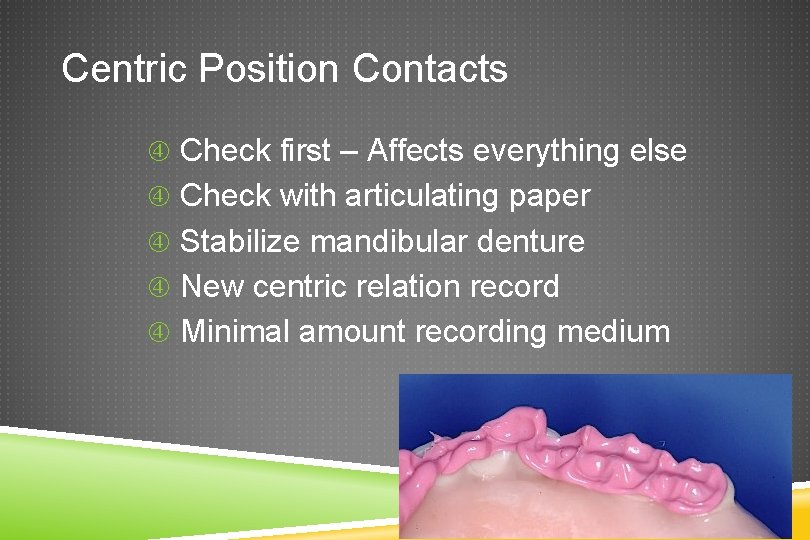
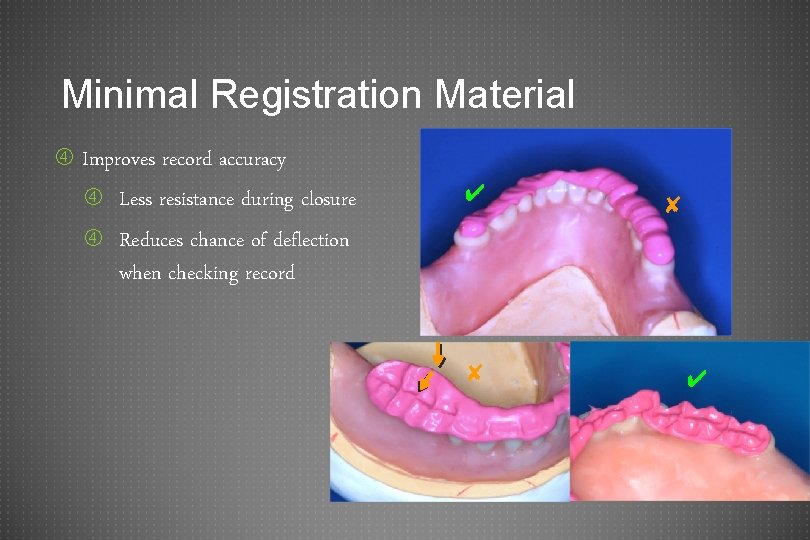
Centric Position Contacts Check first – Affects everything else Check with articulating paper Stabilize mandibular denture New centric relation record Minimal amount recording medium
Minimal Registration Material Improves record accuracy Less resistance during closure ✔ ✘ Reduces chance of deflection when checking record ✘ ✔
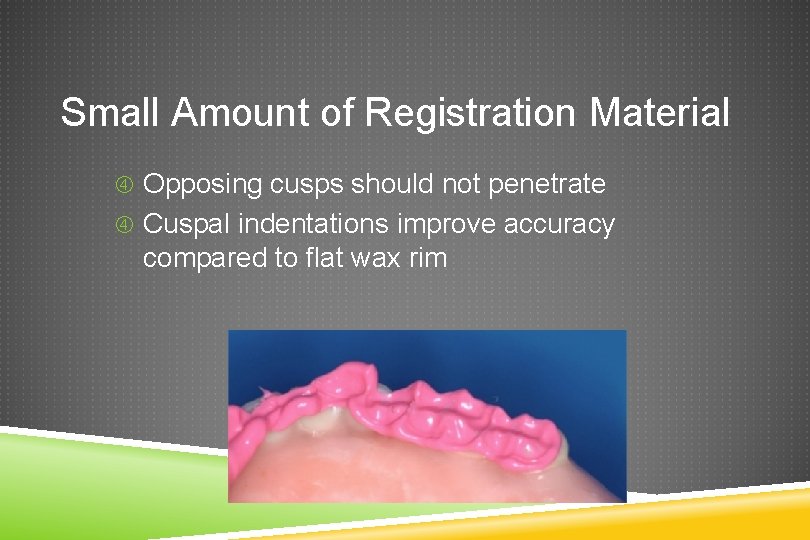
Small Amount of Registration Material Opposing cusps should not penetrate Cuspal indentations improve accuracy compared to flat wax rim
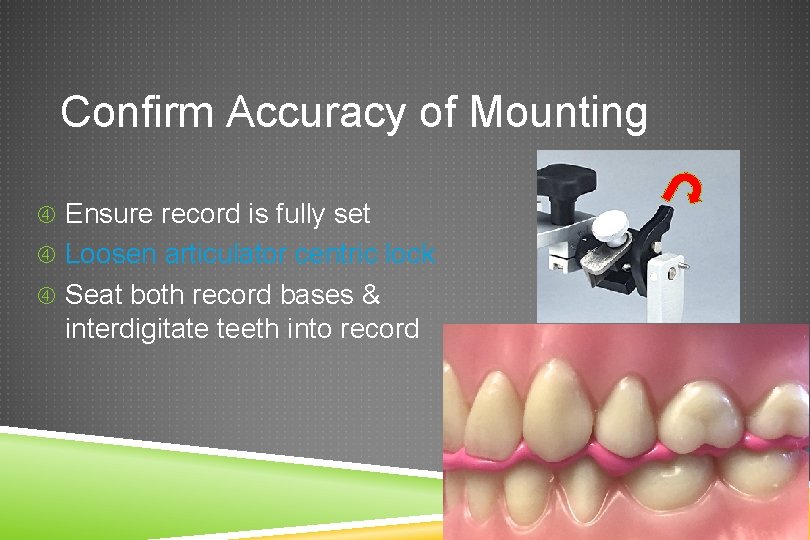
Confirm Accuracy of Mounting Ensure record is fully set Loosen articulator centric lock Seat both record bases & interdigitate teeth into record
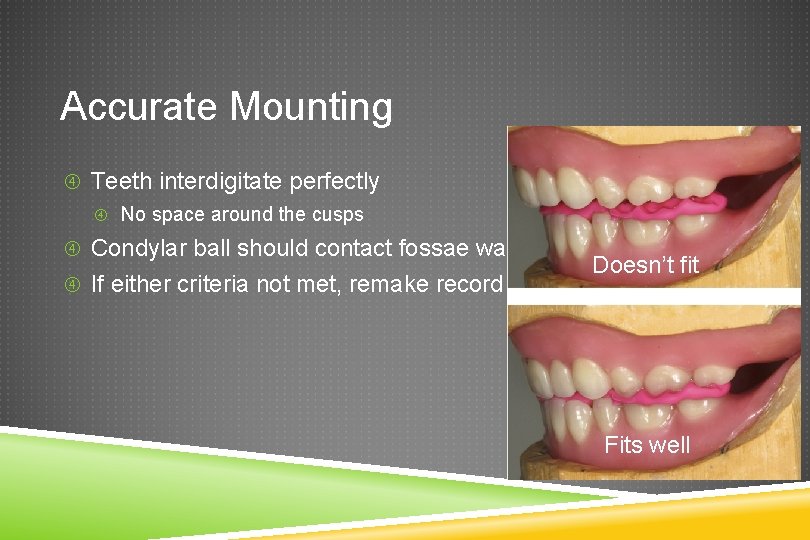
Accurate Mounting Teeth interdigitate perfectly No space around the cusps Condylar ball should contact fossae wall If either criteria not met, remake record Doesn’t fit Fits well
Second Record Used to Confirm Inaccurate Mounting Mandibular cast removed from mounting ring Mounting plaster ground thinner Cast remounted, using the new record
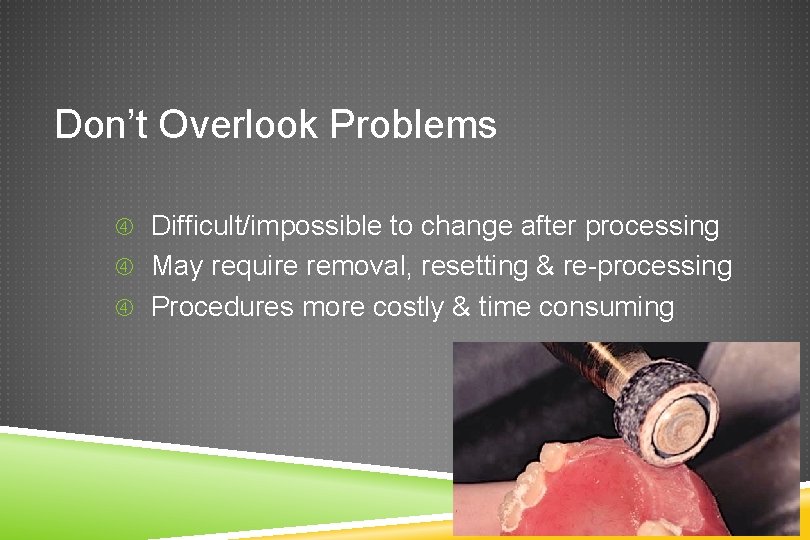
Don’t Overlook Problems Difficult/impossible to change after processing May require removal, resetting & re-processing Procedures more costly & time consuming
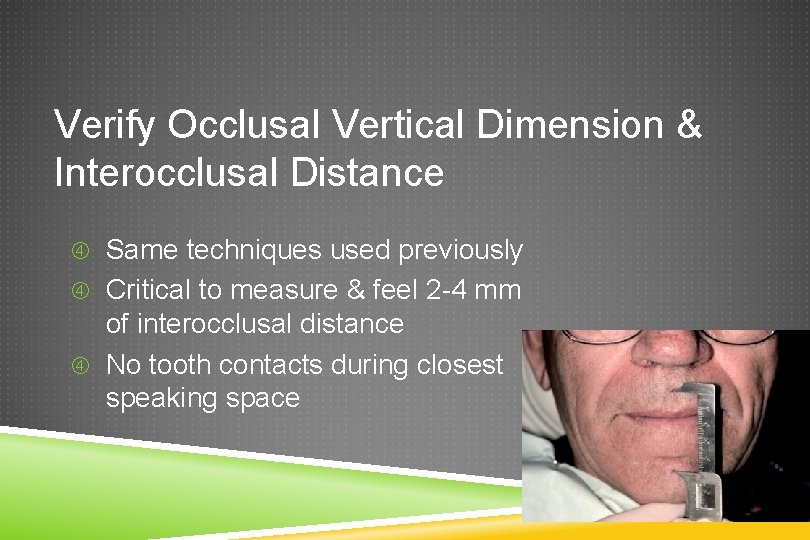
Verify Occlusal Vertical Dimension & Interocclusal Distance Same techniques used previously Critical to measure & feel 2 -4 mm of interocclusal distance No tooth contacts during closest speaking space
Changing OVD Effects: Occlusion Facial esthetics
• As mandible moves downward (opening or increasing OVD) • Incisal edge moves back • Increases overjet • Helpful in Angles Class III • Problem in Angles Class II
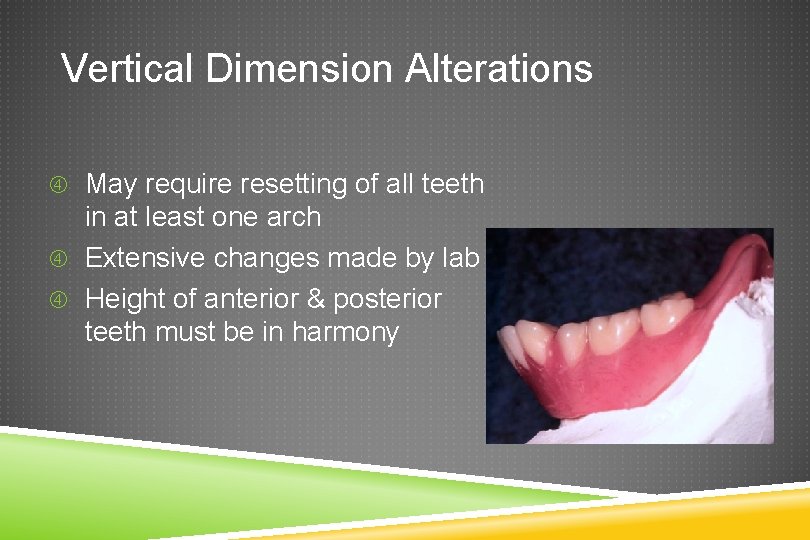
Vertical Dimension Alterations May require resetting of all teeth in at least one arch Extensive changes made by lab Height of anterior & posterior teeth must be in harmony
Vertical Dimension Alterations If only posterior teeth are changed Undesired effect on: Overbite relationships Esthetics Nonworking contacts Assess how changes will affect overall appearance
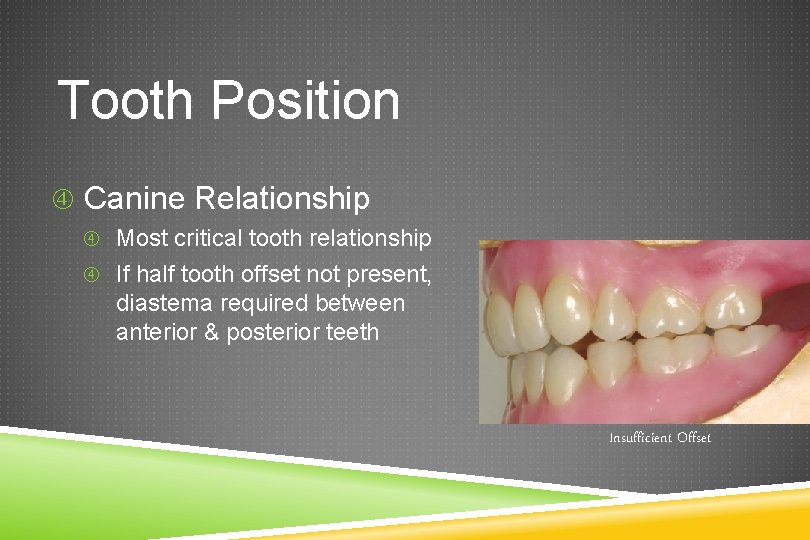
Tooth Position Canine Relationship Most critical tooth relationship If half tooth offset not present, diastema required between anterior & posterior teeth Insufficient Offset
Canine Relationship Problems encountered when: Jaw size discrepancies Malocclusions Improper contouring of occlusal rims
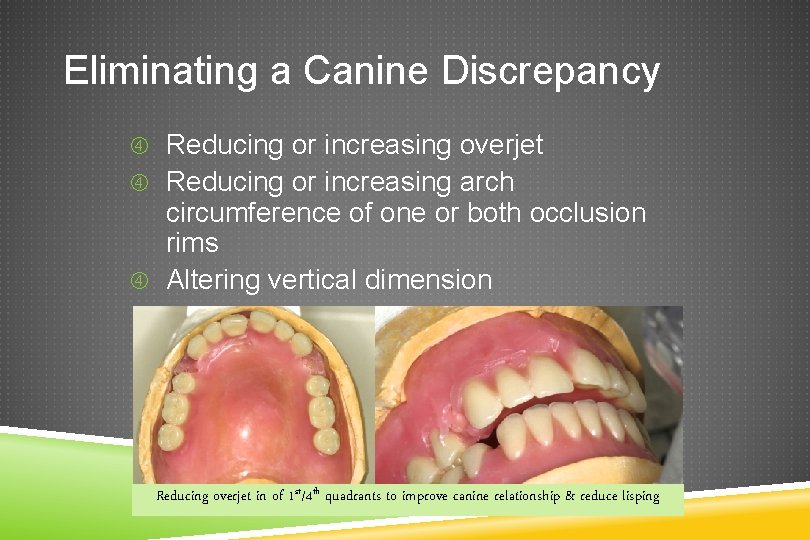
Eliminating a Canine Discrepancy Reducing or increasing overjet Reducing or increasing arch circumference of one or both occlusion rims Altering vertical dimension Reducing overjet in of 1 st/4 th quadrants to improve canine relationship & reduce lisping
Eliminating a Canine Discrepancy Bodily moving teeth facially/lingually Changing axial inclination (tilting)
Prior to resetting teeth, the dentist should determine how to eliminate a canine discrepancy
Excursive Contacts Evaluate visually and with articulating paper Intraoral/articulator discrepancies: Remake protrusive record Check/reset condylar inclination
Verify Comfort: Tongue Space Ask patient to comment on: Comfort Ability to speak
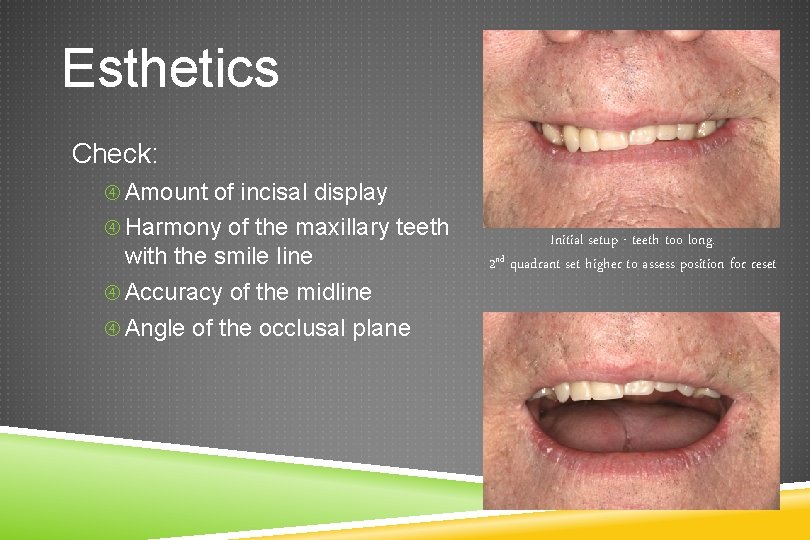
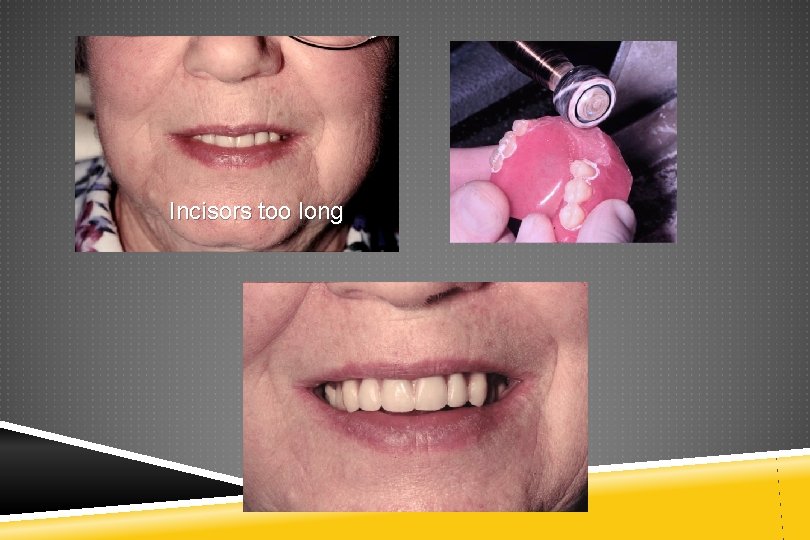
Esthetics Check: Amount of incisal display Harmony of the maxillary teeth with the smile line Accuracy of the midline Angle of the occlusal plane Initial setup - teeth too long. 2 nd quadrant set higher to assess position for reset
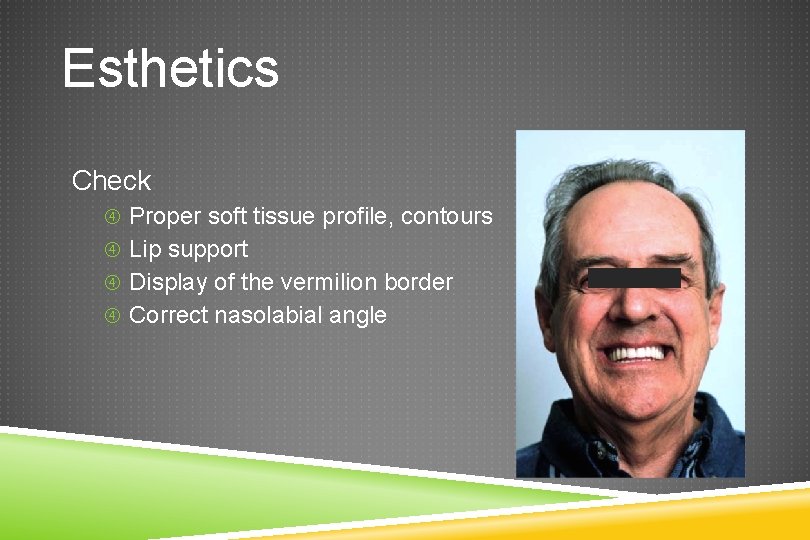
Esthetics Check Proper soft tissue profile, contours Lip support Display of the vermilion border Correct nasolabial angle
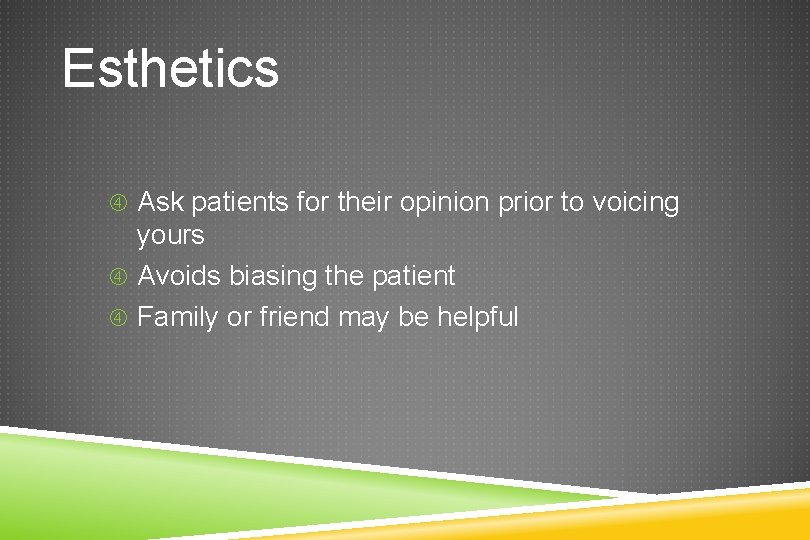
Esthetics Ask patients for their opinion prior to voicing yours Avoids biasing the patient Family or friend may be helpful
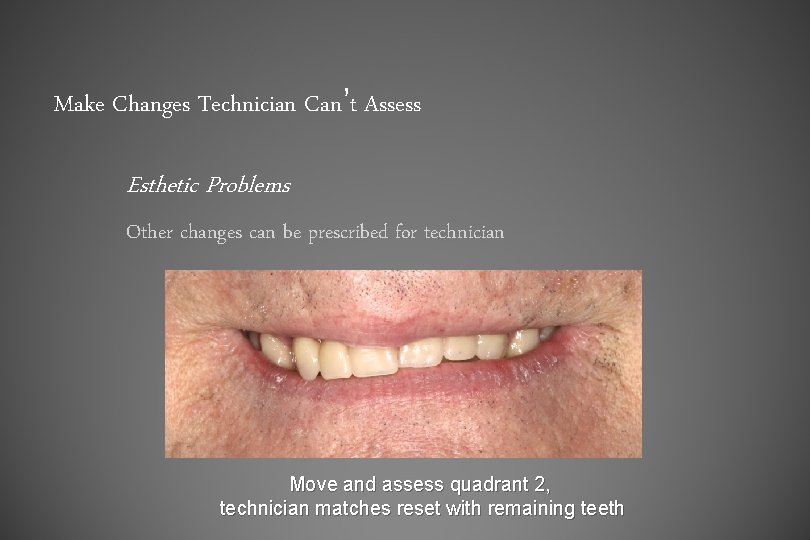
Make Changes Technician Can’t Assess Esthetic Problems Other changes can be prescribed for technician Move and assess quadrant 2, technician matches reset with remaining teeth
Esthetics If you or the patient have reservations about appearance Resolve prior to final processing Never attempt to persuade a patient out of a concern Problems will be yours later, if patient does not like appearance
Incisors too long
Phonetics Easier to assess Teeth have replaced bulky rims Crowded tongue space can adversely affect phonetics
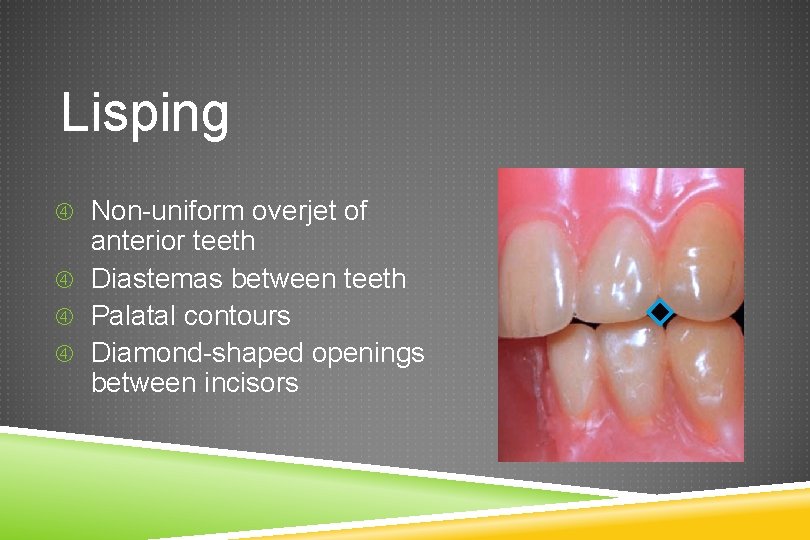
Lisping Non-uniform overjet of anterior teeth Diastemas between teeth Palatal contours Diamond-shaped openings between incisors
Phonetics If have not worn dentures for extended period or Dramatic changes (Contour, Tooth Position, OVD) Allow the patient to read a OUT LOUD for 5 -10 minutes to assess phonetics and comfort
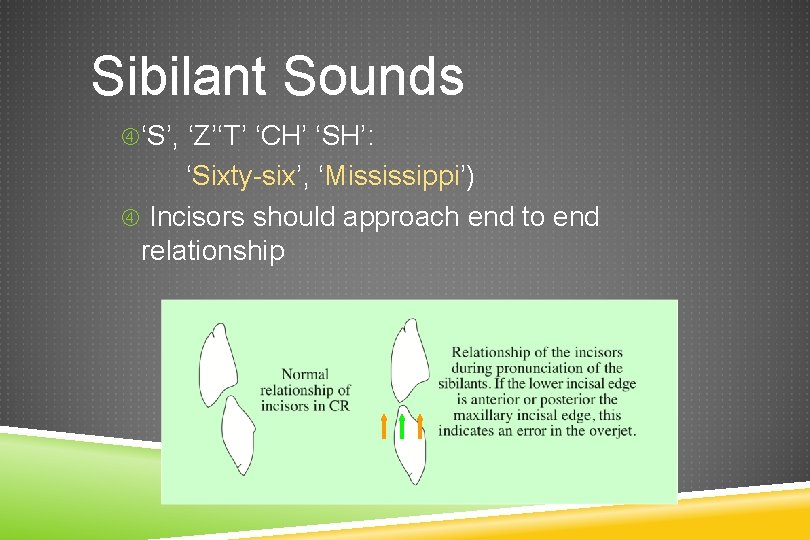
Sibilant Sounds ‘S’, ‘Z’‘T’ ‘CH’ ‘SH’: ‘Sixty-six’, ‘Mississippi’) Incisors should approach end to end relationship
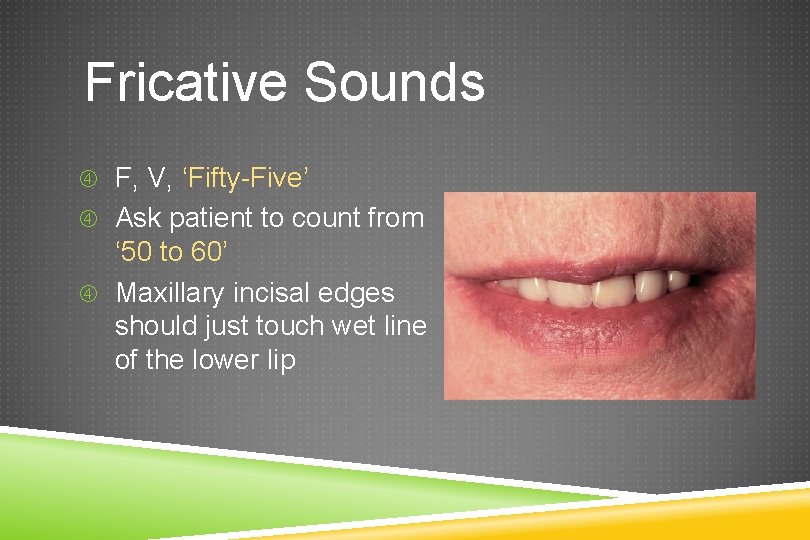
Fricative Sounds F, V, ‘Fifty-Five’ Ask patient to count from ‘ 50 to 60’ Maxillary incisal edges should just touch wet line of the lower lip
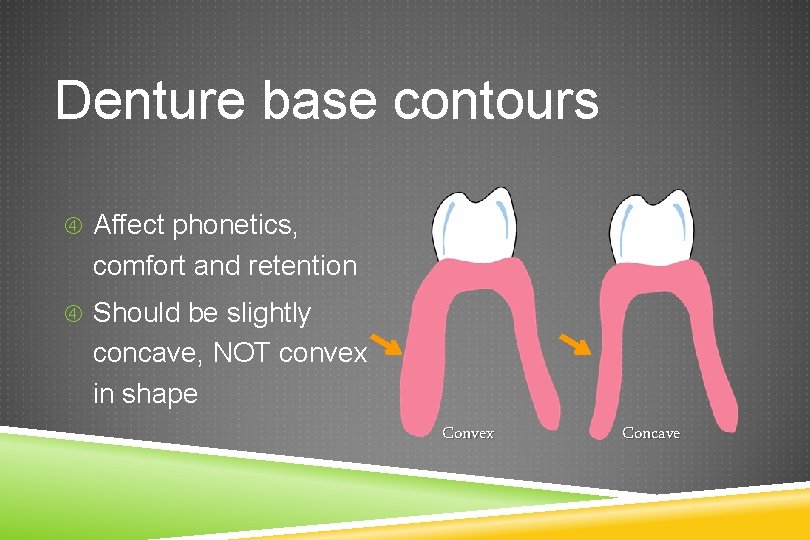
Denture base contours Affect phonetics, comfort and retention Should be slightly concave, NOT convex in shape Convex Concave
Denture Base Contours Ensure that denture base is not unduly thick or thin Excess bulk will impair comfort Feel between index finger & thumb Base that is too thin will be weakened Should not be able to see through
Patient Input Use open ended questions “How do you like the appearance? ”, rather than “Don’t the new dentures look great? ”
Patient Input If the patient sounds unconvinced Ask more questions Do not rush this step to save time!
Final Wax Try-in Confirm that prescribed changes are acceptable Making further alterations if required Diastemas should be closed Phonetics should be acceptable
Laboratory Prescription Request: Processing, finishing & polishing Laboratory remount of the dentures Adjustment of occlusion to compensate for processing changes
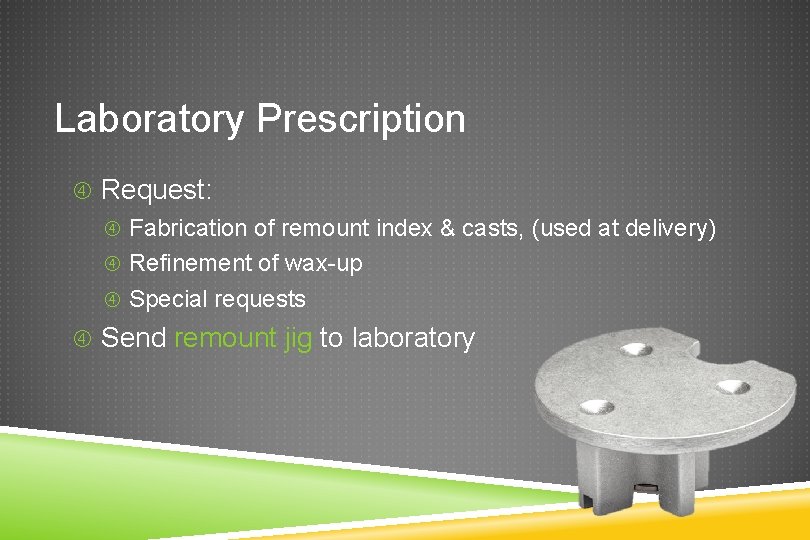
Laboratory Prescription Request: Fabrication of remount index & casts, (used at delivery) Refinement of wax-up Special requests Send remount jig to laboratory
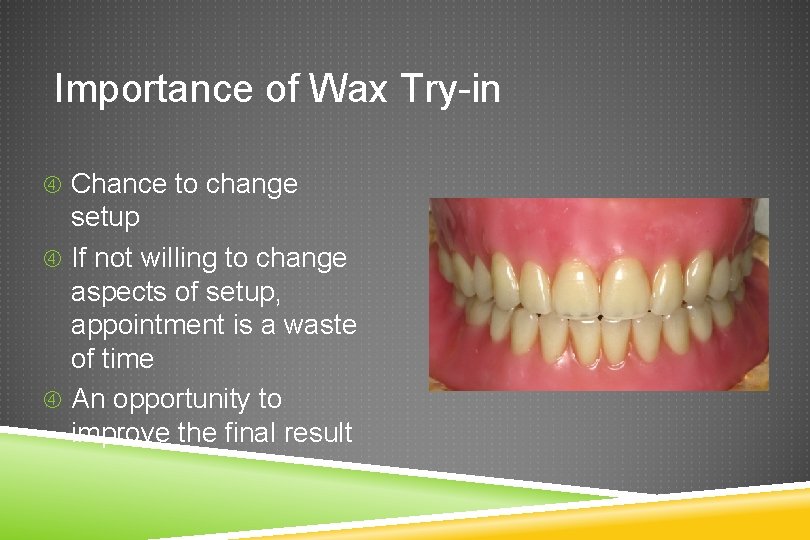
Importance of Wax Try-in Chance to change setup If not willing to change aspects of setup, appointment is a waste of time An opportunity to improve the final result
Checklist Centric record verified with recording medium Vertical dimension verified: a. 2 -3 mm between lip closure and teeth touching b. Phonetics tests ("50`s-60`s" or "Mississippi") - space between rims c. Lips appear and feel unstrained Tooth form, arrangement & shade verified Phonetics verified ("S", "F" and "M" sounds) Balanced occlusion, anterior teeth only grazing in protrusion
Videos Analyzing & Adjusting Centric Contacts Adjust Lateral Contacts Adjust Protrusive Contacts
Denture Tooth Setup Project Set Posterior Teeth Check Centric contacts Ensure even on all posterior teeth Check visually from facial and tongue space Move in wax if far from contact Adjust with bur if minor prematurities Ensure sufficient overjet Begin checking lateral & protrusive contacts