
The Wave Nature of Light Section 6 1
- Slides: 20
The Wave Nature of Light Section 6. 1
Objectives Study light (radiant energy or electromagnetic radiation) as having wavelike properties. Identify the characteristics of wavelength, frequency, and speed
Key Terms Electromagnetic radiation Wavelength Frequency Speed
Why Study Light? Our understanding of the electronic structure of atoms came from the analysis of light either emitted or absorbed
Visible Light we can see with our eyes An example of electromagnetic radiation
Electromagnetic Radiation Energy that travels through space a. k. a radiant energy Many types of ER Visible light Radio waves X rays
Radio AND X rays? ? All ER share fundamental wave characteristics Travel through a vacuum as the speed of light: 3. 00 x 108 m/s
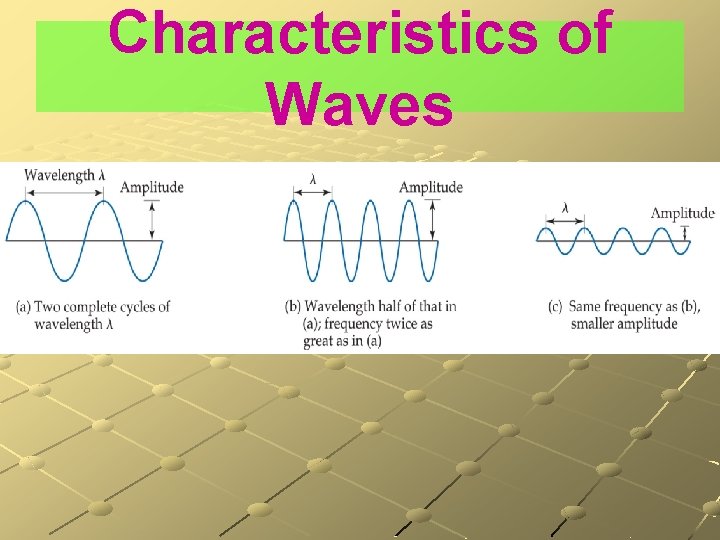
Wavelength, Shortest distance between equivalent points on a continuous wave Between 2 adjacent peaks or troughs
Frequency, Number of complete wavelengths or cycles that pass a given point per second. Measured in Hz (Hertz)
Amplitude Wave’s height from the origin to a peak, or from the origin to a trough Relates to the intensity of the radiation
Characteristics of Waves
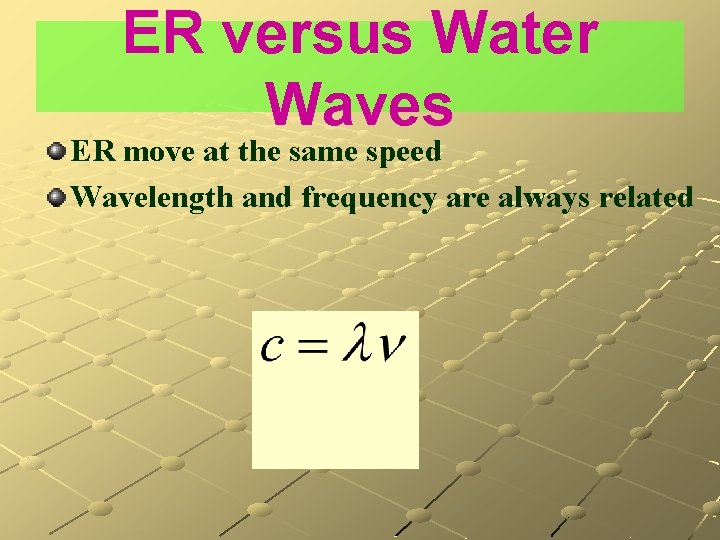
ER versus Water Waves ER move at the same speed Wavelength and frequency are always related
Why Your Radio Won’t Take an X ray ER have different properties as a result of their varying wavelengths
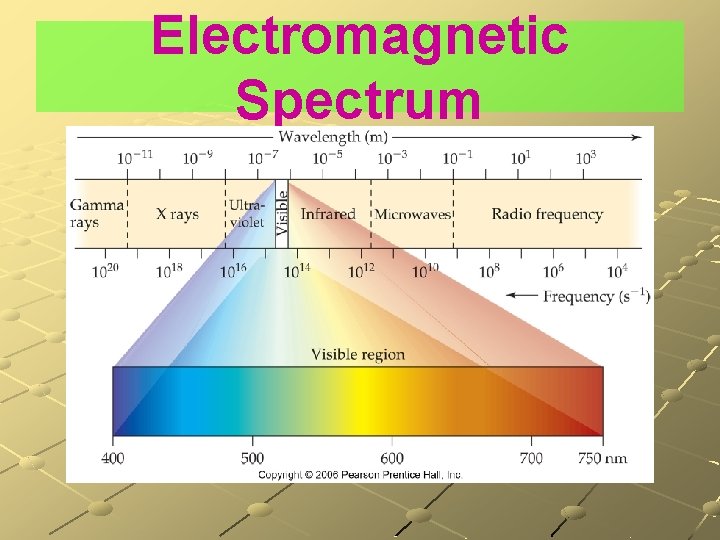
Electromagnetic Spectrum
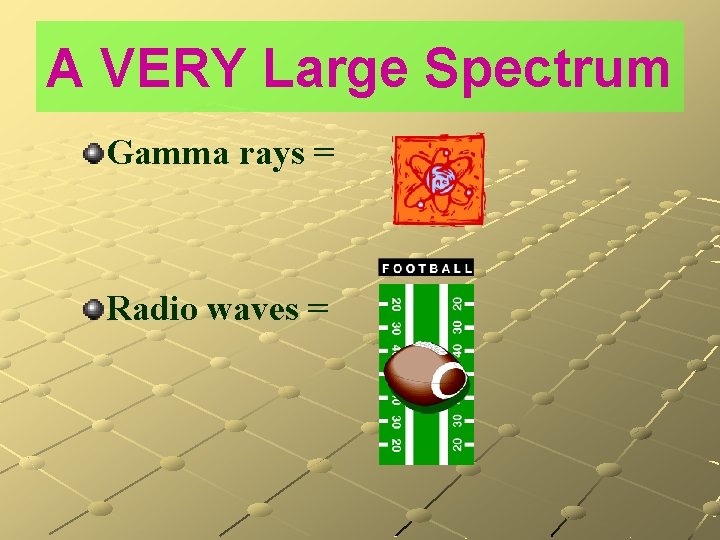
A VERY Large Spectrum Gamma rays = Radio waves =
Don’t Forget… ROY G BIV Order of colors (L S) on the visible spectrum
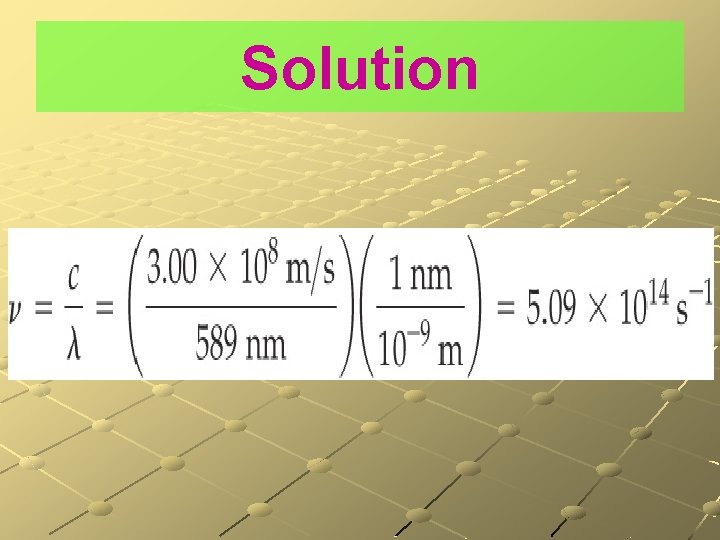
Practice Problem • The yellow light given off by a sodium vapor lamp used for public lighting has a wavelength of 589 nm. What is the frequency of this radiation?
Solution
Assignment Wave Nature of Light Practice Problems Worksheet