
The Water Cycle Water on Earth Oceans cover
- Slides: 36
The Water Cycle
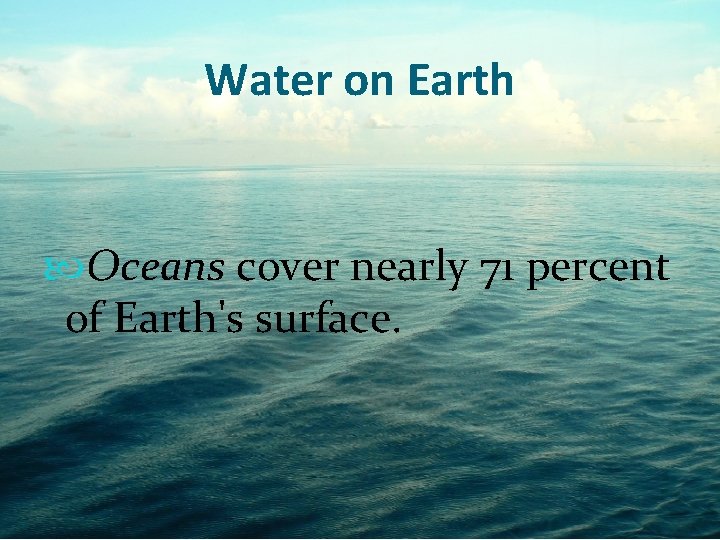
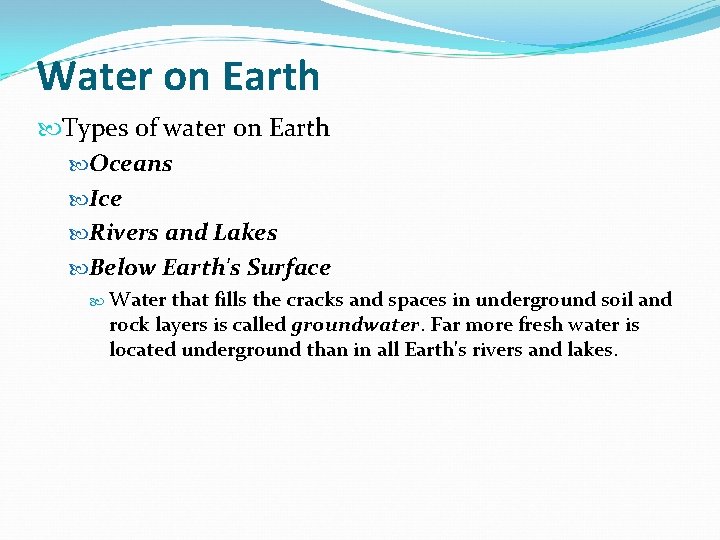
Water on Earth Oceans cover nearly 71 percent of Earth's surface.
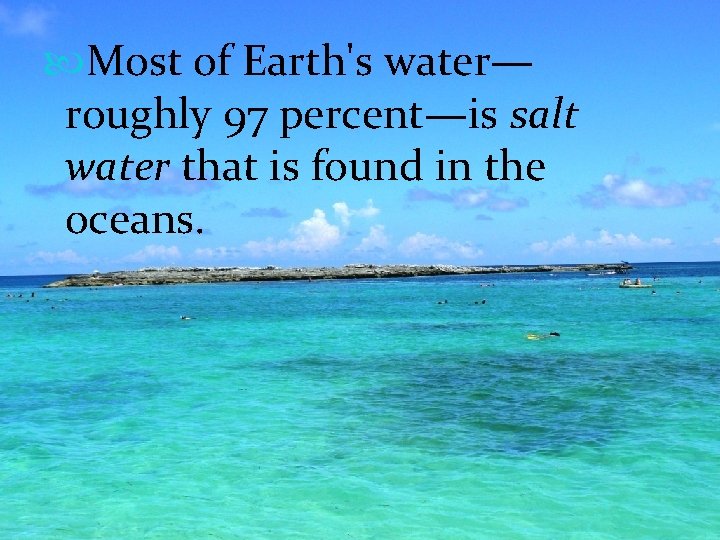
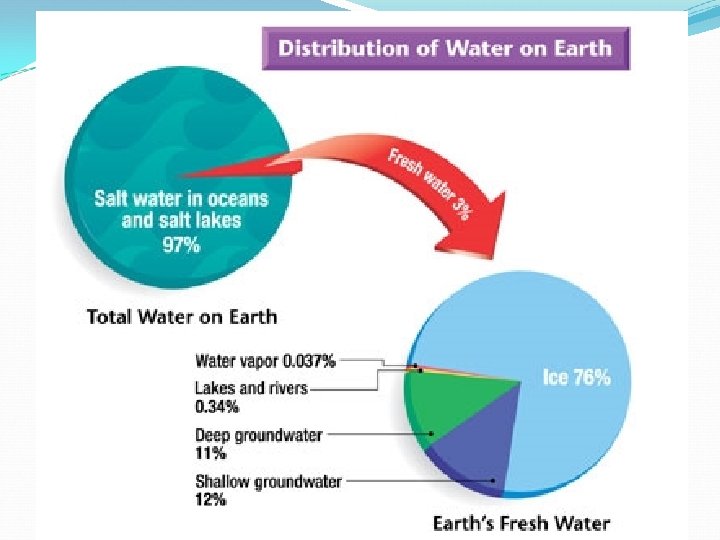
Most of Earth's water— roughly 97 percent—is salt water that is found in the oceans.
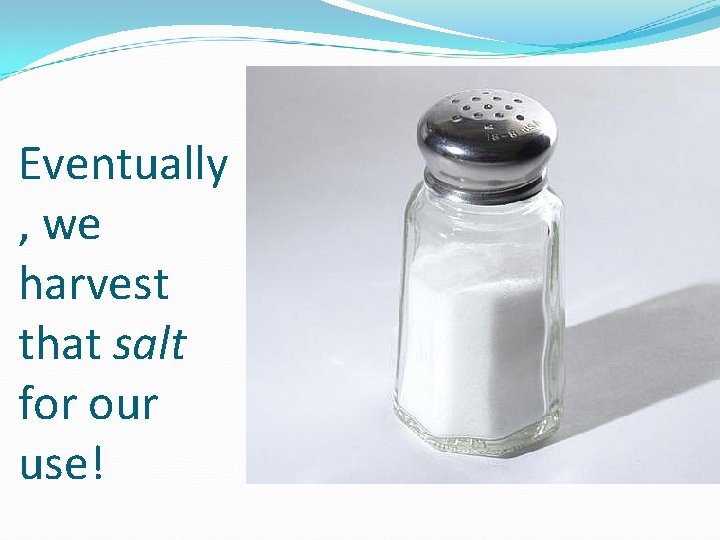
Eventually , we harvest that salt for our use!
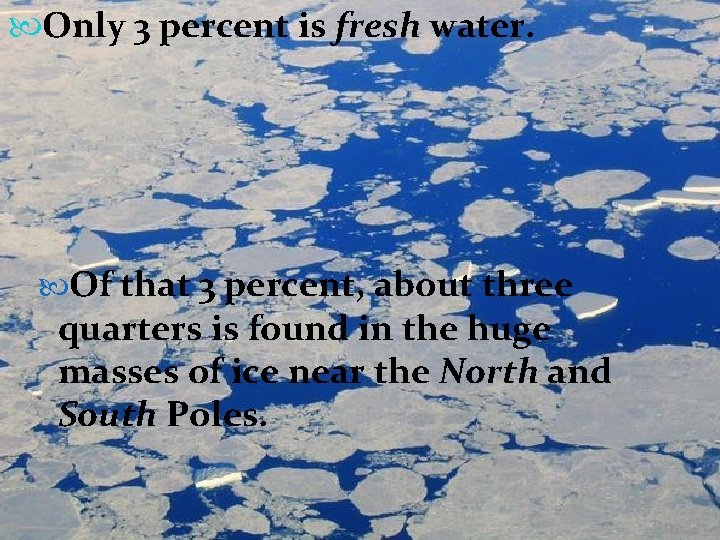
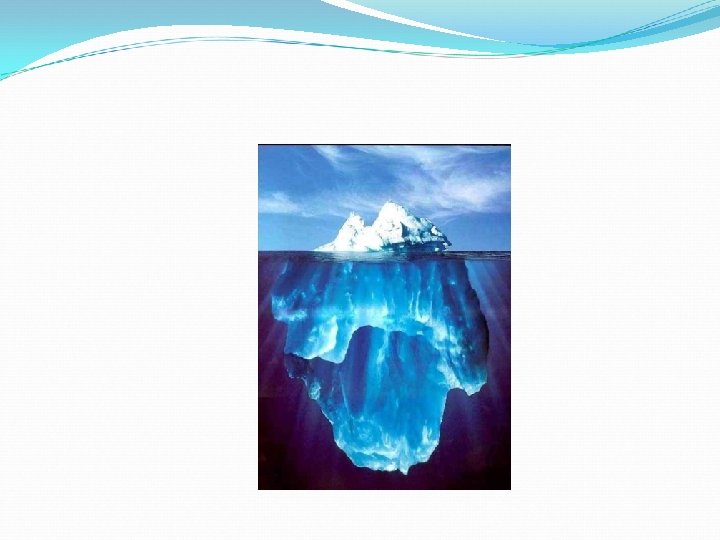
Only 3 percent is fresh water. Of that 3 percent, about three quarters is found in the huge masses of ice near the North and South Poles.
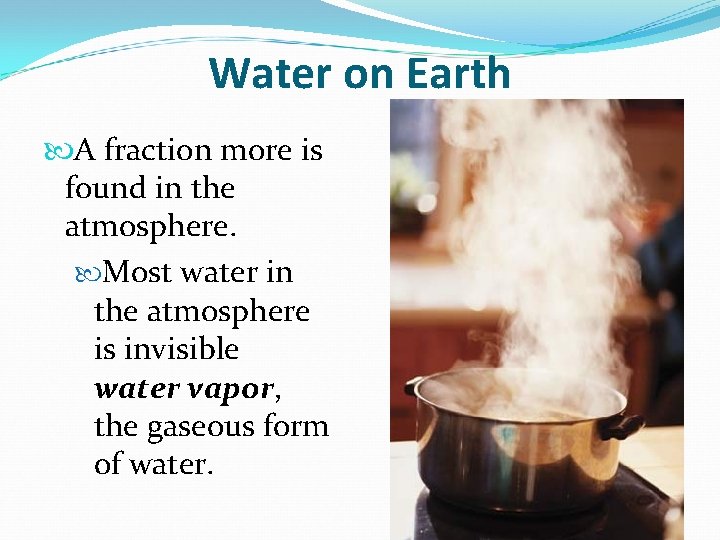
Water on Earth A fraction more is found in the atmosphere. Most water in the atmosphere is invisible water vapor, the gaseous form of water.
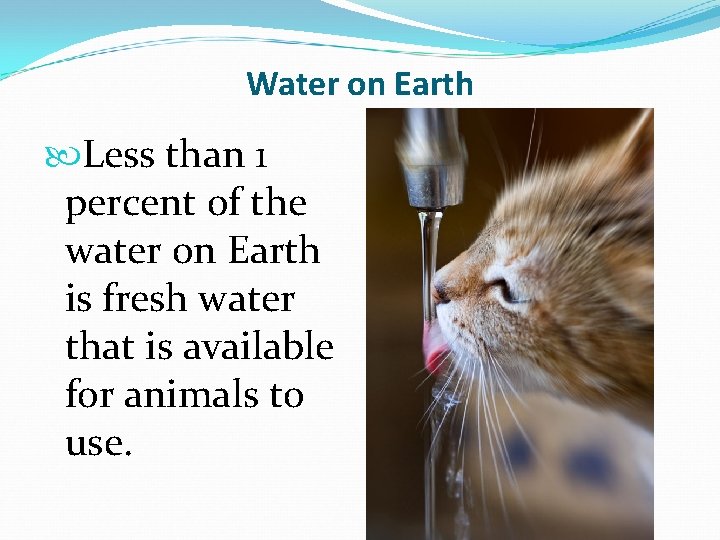
Water on Earth Less than 1 percent of the water on Earth is fresh water that is available for animals to use.
Water on Earth
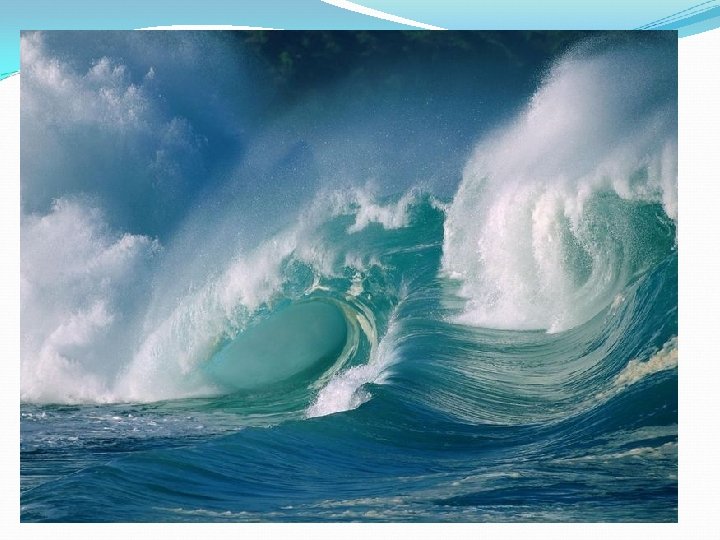
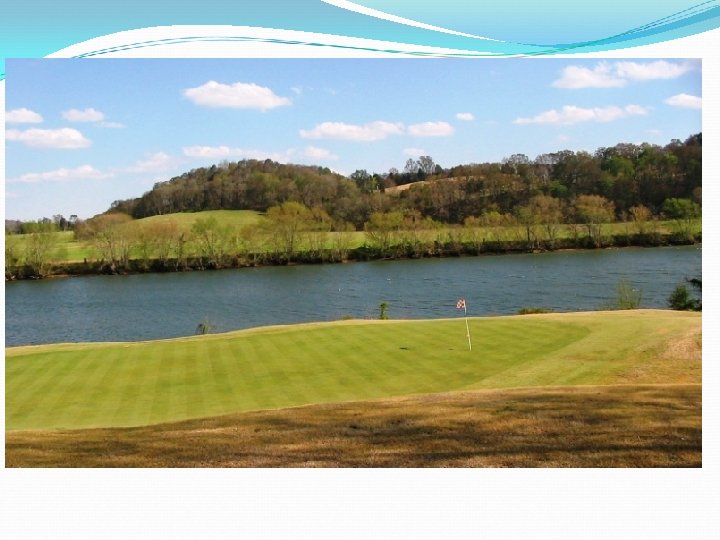
Water on Earth Types of water on Earth Oceans Ice Rivers and Lakes Below Earth's Surface Water that fills the cracks and spaces in underground soil and rock layers is called groundwater. Far more fresh water is located underground than in all Earth's rivers and lakes.
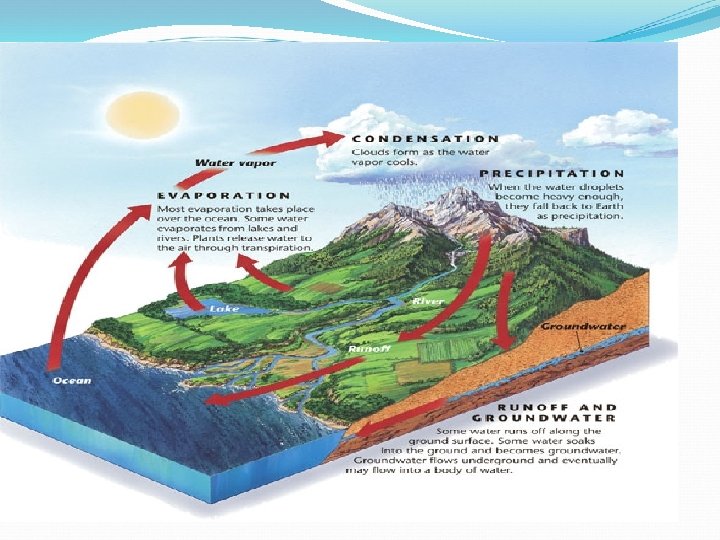
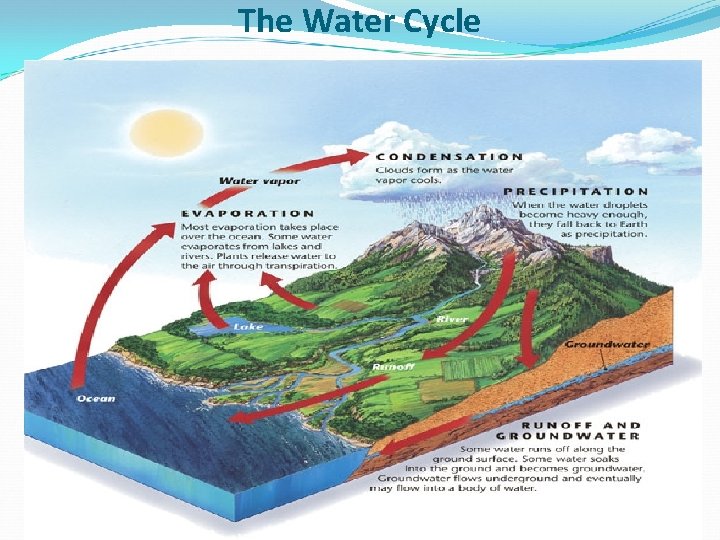
The Water Cycle Water is naturally recycled through the water cycle. The water cycle is the continuous process by which water moves through the living and nonliving parts of the environment. The sun is the source of energy that drives the water cycle. In the water cycle, water moves from bodies of water, land, and living things on Earth's surface to the atmosphere and back to Earth's surface.
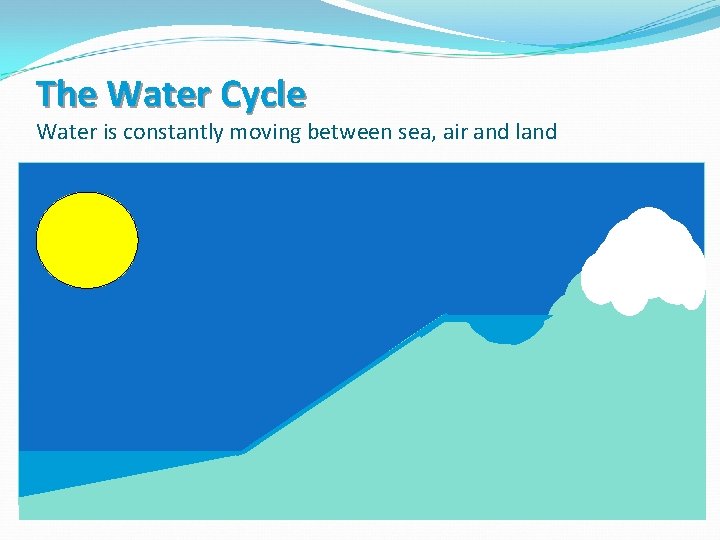
The Water Cycle Water is constantly moving between sea, air and land
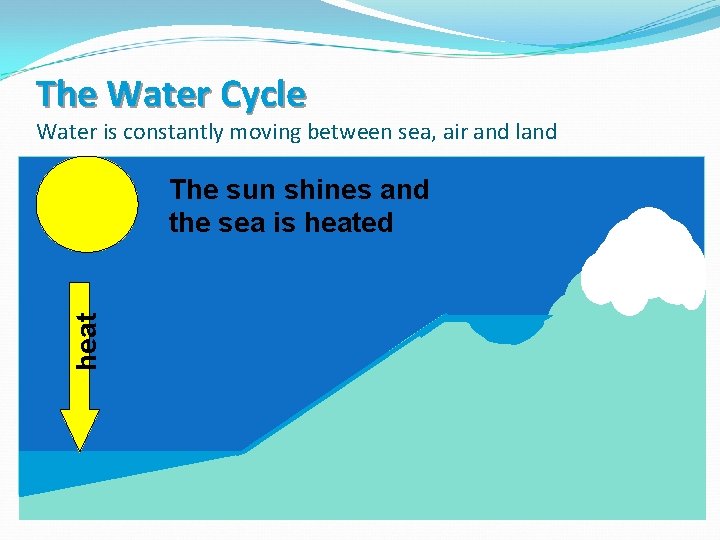
The Water Cycle Water is constantly moving between sea, air and land heat The sun shines and the sea is heated
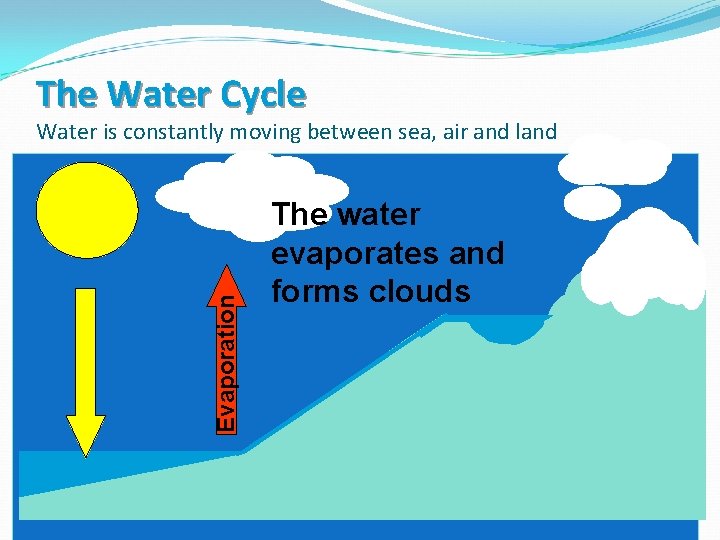
The Water Cycle Evaporation Water is constantly moving between sea, air and land The water evaporates and forms clouds
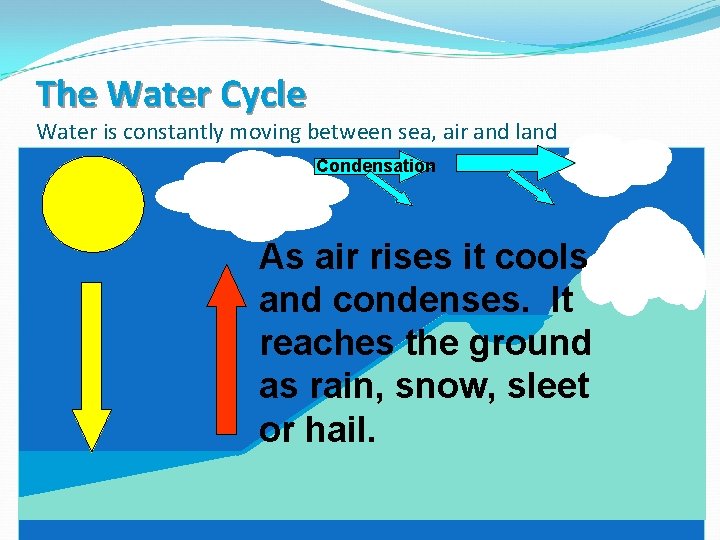
The Water Cycle Water is constantly moving between sea, air and land Condensation As air rises it cools and condenses. It reaches the ground as rain, snow, sleet or hail.
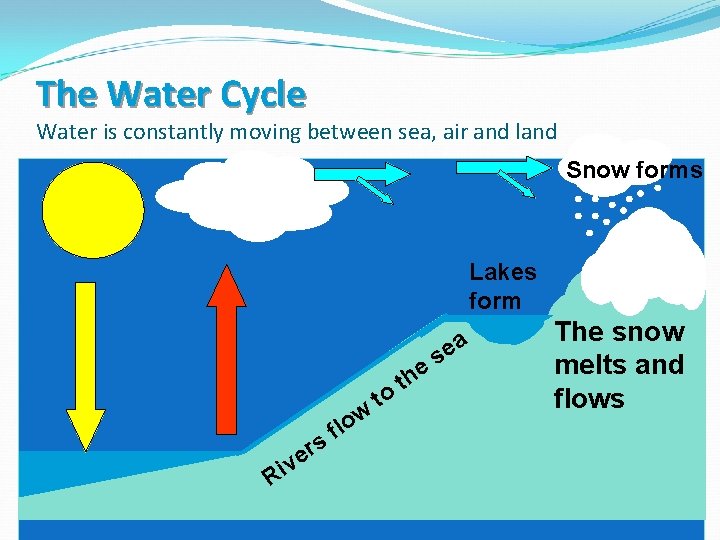
The Water Cycle Water is constantly moving between sea, air and land Snow forms Lakes form ea R s r ive w lf o to s e th The snow melts and flows
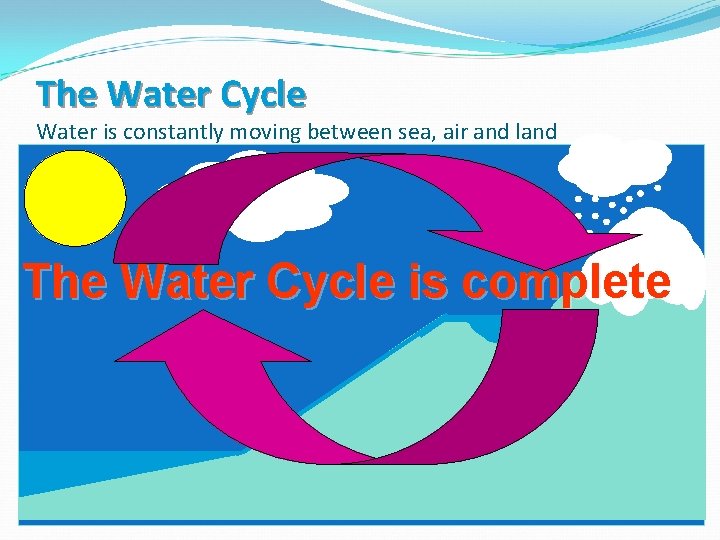
The Water Cycle Water is constantly moving between sea, air and land The Water Cycle is complete
The Water Cycle Steps of the Water Cycle Water Evaporates Clouds Form Water Falls as Precipitation And then it starts again
Water Evaporates Evaporation is the process by which molecules at the surface of a liquid absorb enough energy to change to the gaseous state. Water can evaporate from where? Ocean Lakes Soil, puddles, and even from your skin Plants Eventually the water is given off through the leaves as water vapor in a process called transpiration
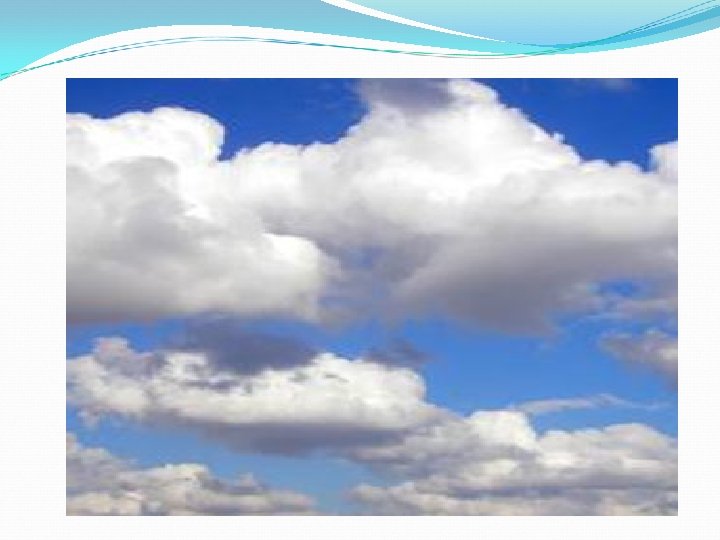
Clouds Form Water molecules find their way into the atmosphere, warm air carries it upward. Higher up, air tends to become much colder. Cold air holds less water vapor than warm air. Some of the water vapor cools and condenses into liquid water. Condensed droplets of water clump together around tiny dust particles in the air, forming clouds
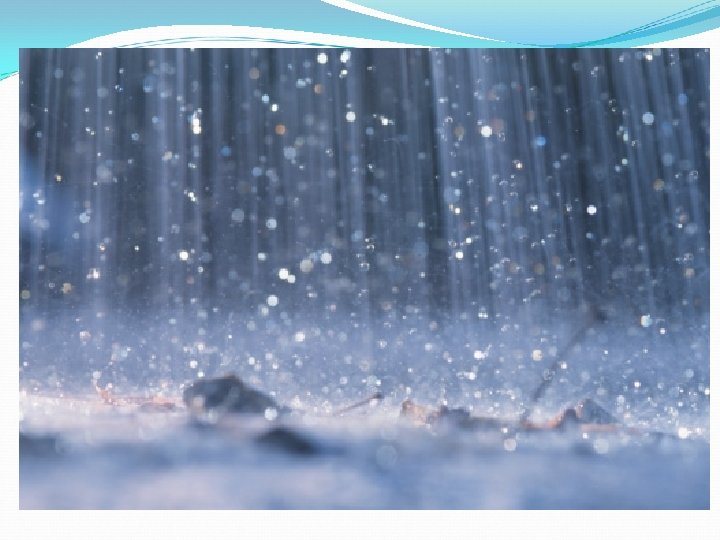
Water Falls as Precipitation As more water vapor condenses, water droplets in a cloud eventually become so heavy that they fall back to Earth. Water that falls to Earth as rain, snow, hail, or sleet is called precipitation. Most precipitation falls directly into the oceans. Precipitation is the source of all fresh water on and below Earth's surface. The water cycle renews the usable supply of fresh water on Earth.
The Water Cycle
How Do People Use Water? The water people use at home is just a small percentage of all the water used in the United States. In addition to household purposes, people use water for Agriculture Industry Transportation Recreation
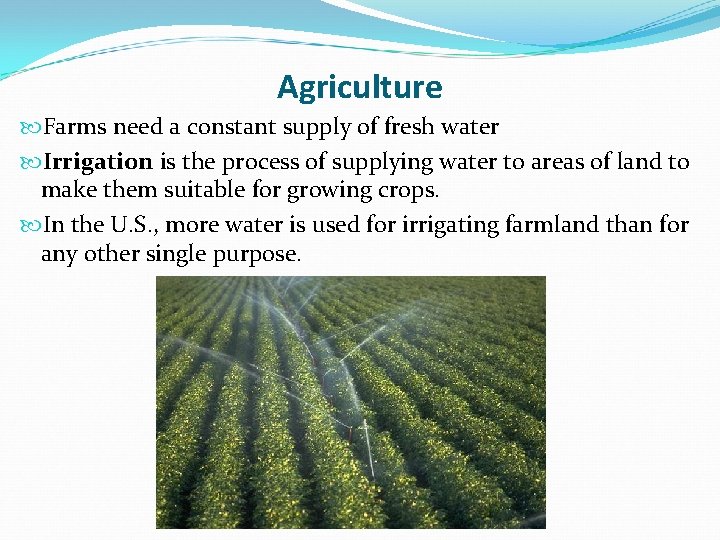
Agriculture Farms need a constant supply of fresh water Irrigation is the process of supplying water to areas of land to make them suitable for growing crops. In the U. S. , more water is used for irrigating farmland than for any other single purpose.
Industry What objects require water to produce them? Water is needed to produce most objects. Water plays a role in the industrial processes that created them. Power plants and steel mills both need huge volumes of water to cool down hot machinery.
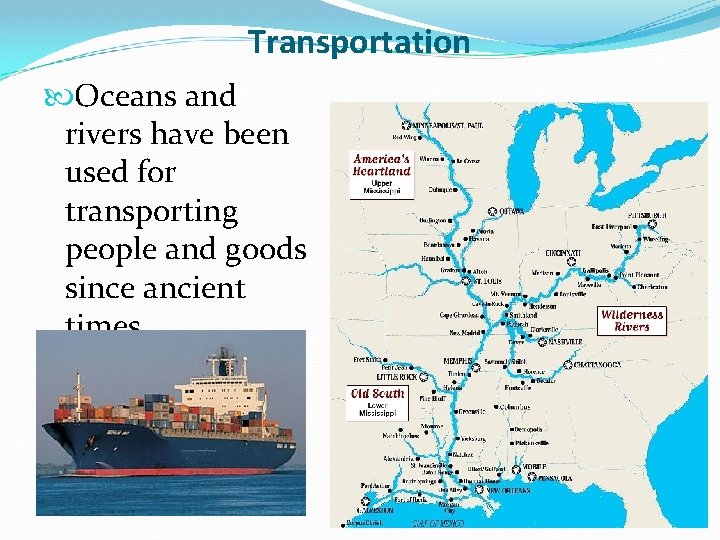
Transportation Oceans and rivers have been used for transporting people and goods since ancient times
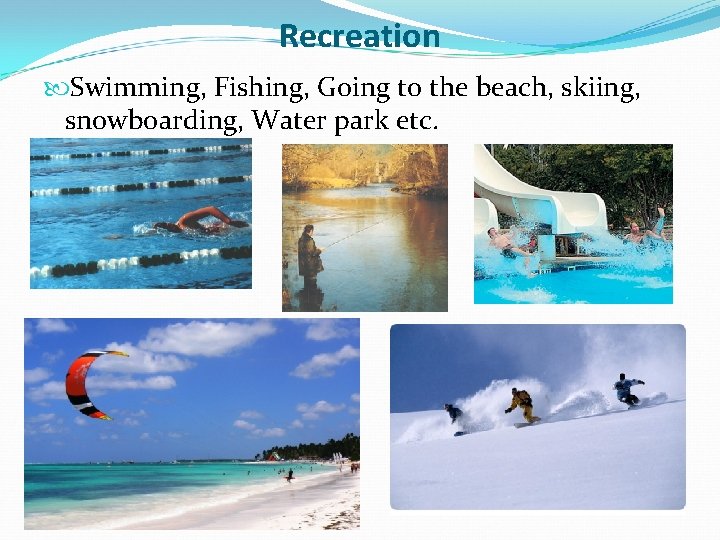
Recreation Swimming, Fishing, Going to the beach, skiing, snowboarding, Water park etc.
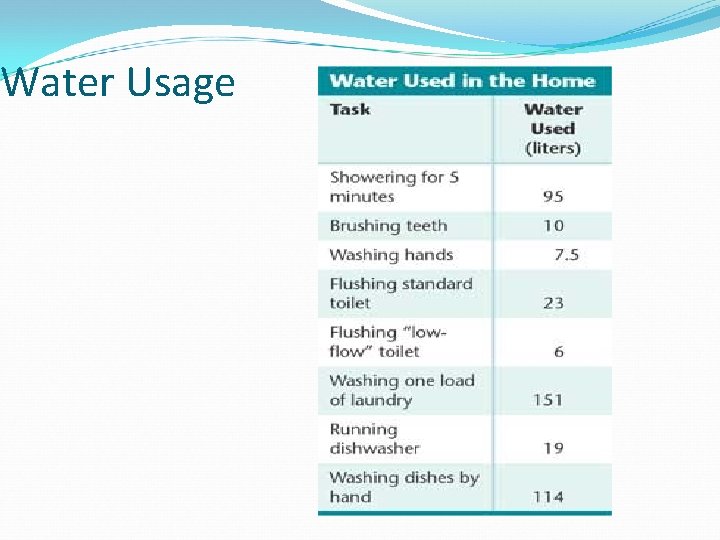
Water Usage
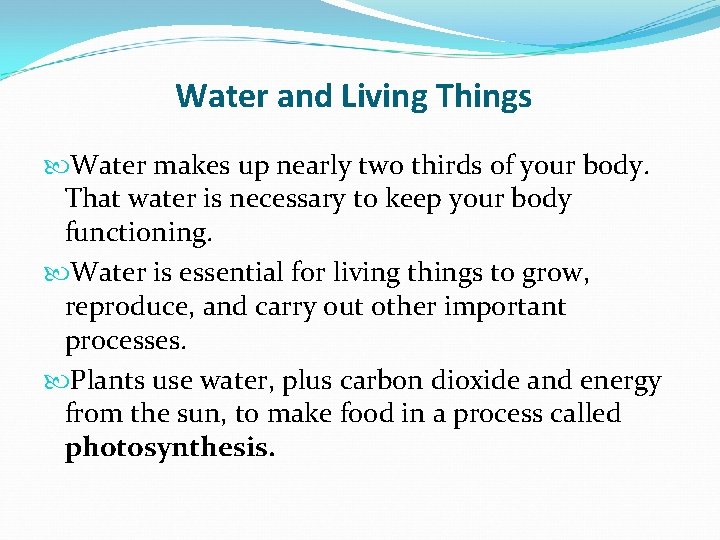
Water and Living Things Water makes up nearly two thirds of your body. That water is necessary to keep your body functioning. Water is essential for living things to grow, reproduce, and carry out other important processes. Plants use water, plus carbon dioxide and energy from the sun, to make food in a process called photosynthesis.
COMPREHENSION CHECK-TOTD Write an explanation of the water cycle beginning with two drops of water in the ocean. You must use key vocabulary words (evaporation, precipitation, condensation, etc).