
The Water Cycle Groundwaterwater under the ground where


- Slides: 34
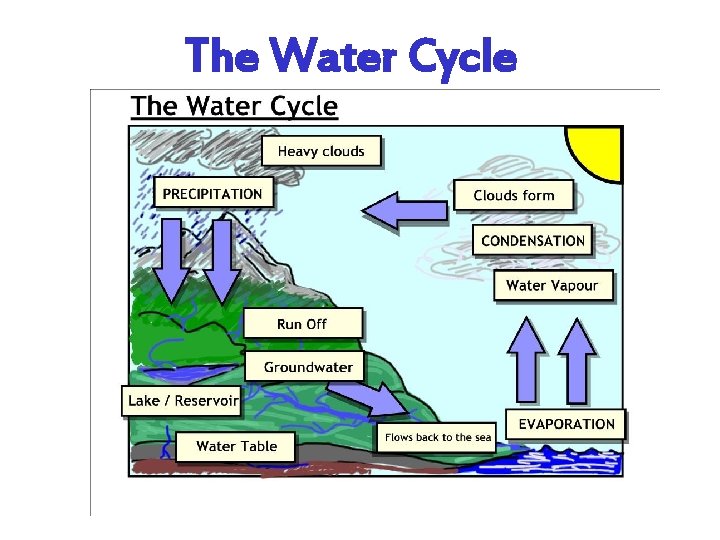
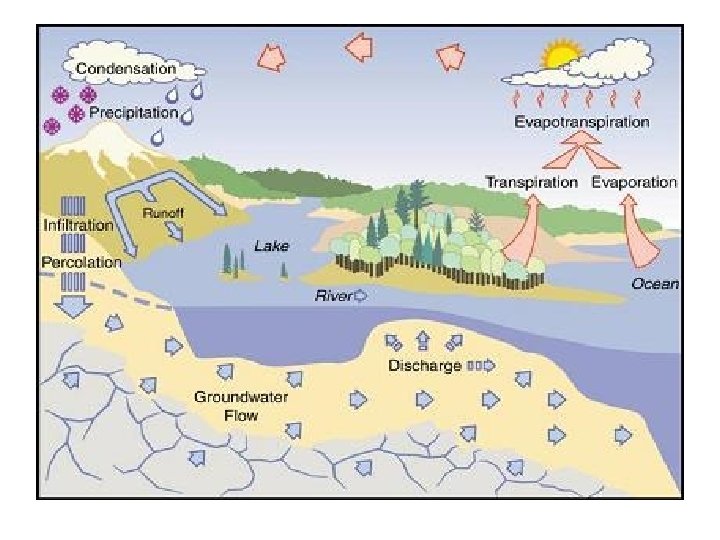
The Water Cycle
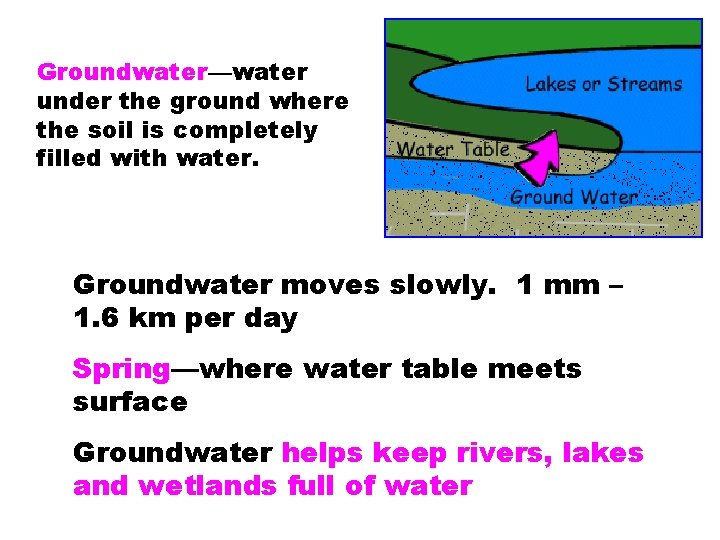
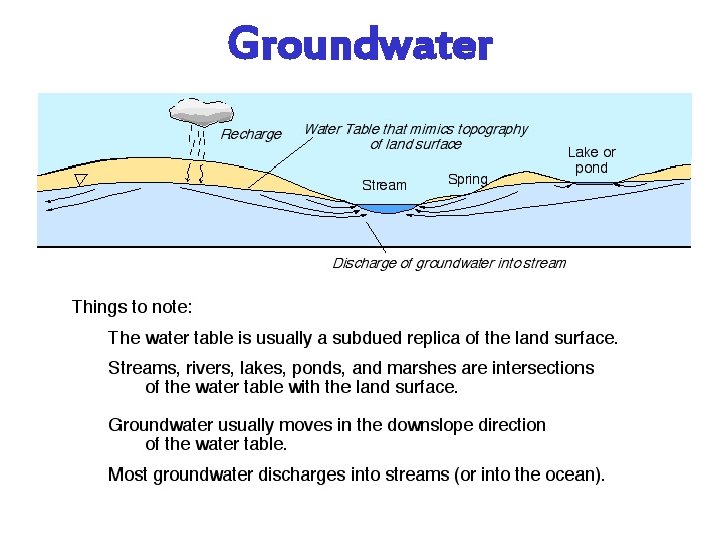
Groundwater—water under the ground where the soil is completely filled with water. Groundwater moves slowly. 1 mm – 1. 6 km per day Spring—where water table meets surface Groundwater helps keep rivers, lakes and wetlands full of water
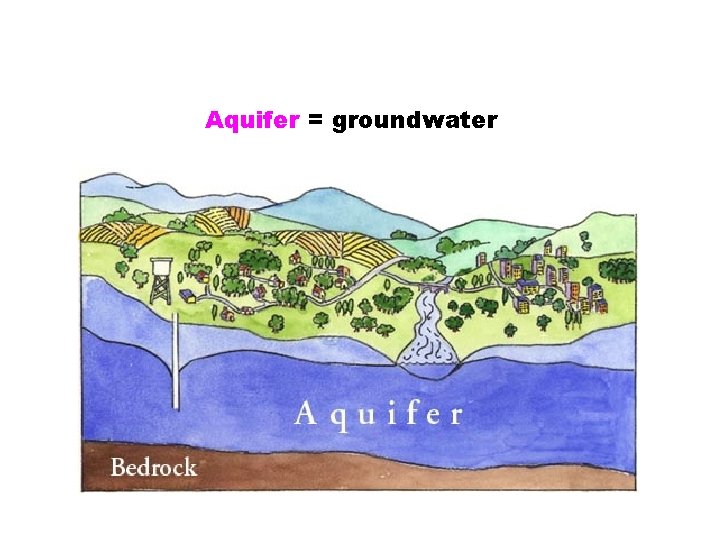
Aquifer = groundwater
Groundwater
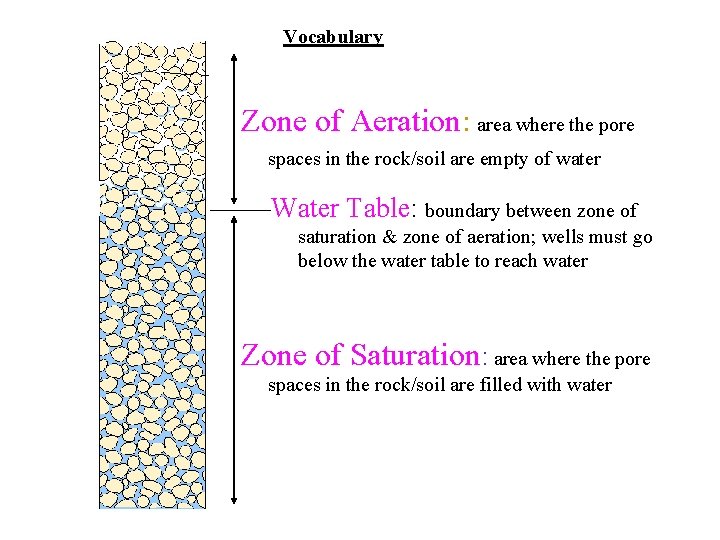
Vocabulary Zone of Aeration: area where the pore spaces in the rock/soil are empty of water Water Table: boundary between zone of saturation & zone of aeration; wells must go below the water table to reach water Zone of Saturation: area where the pore spaces in the rock/soil are filled with water
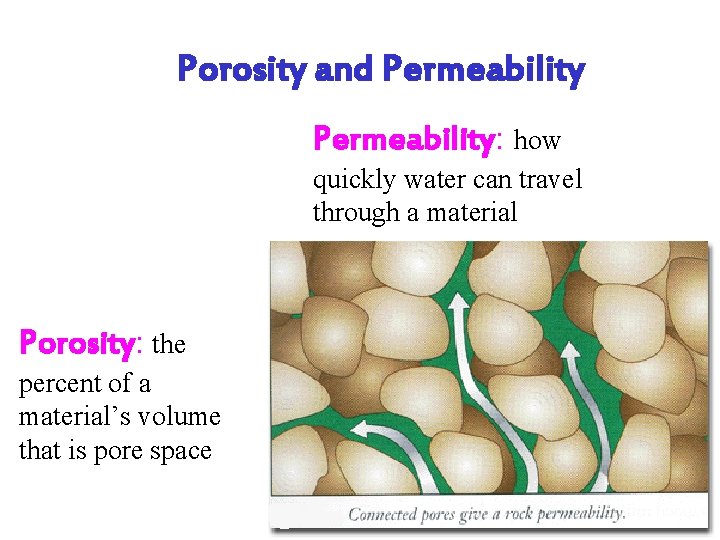
Porosity and Permeability: how quickly water can travel through a material Porosity: the percent of a material’s volume that is pore space
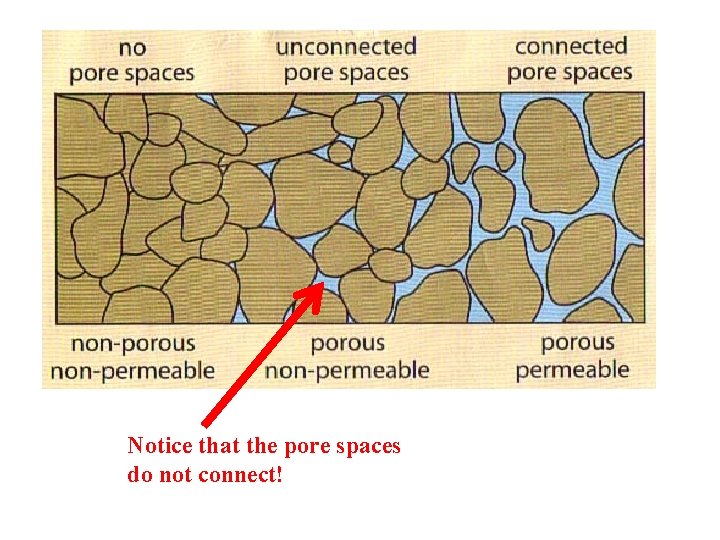
Notice that the pore spaces do not connect!
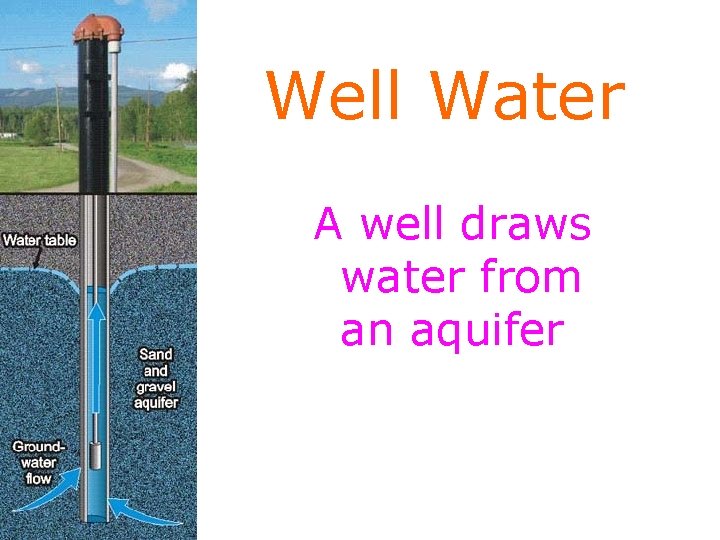
Well Water A well draws water from an aquifer
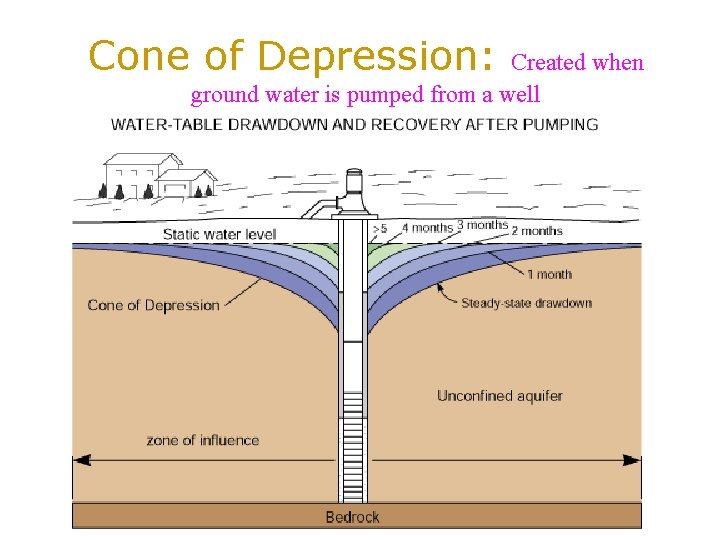
Cone of Depression: Created when ground water is pumped from a well
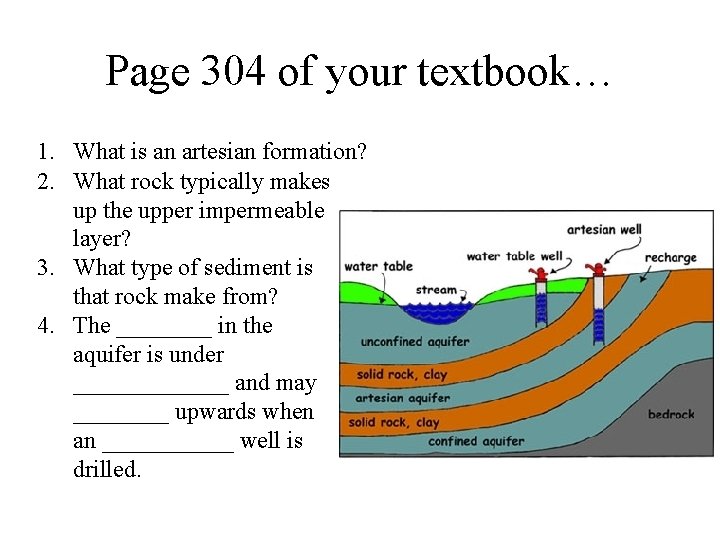
Page 304 of your textbook… 1. What is an artesian formation? 2. What rock typically makes up the upper impermeable layer? 3. What type of sediment is that rock make from? 4. The ____ in the aquifer is under _______ and may ____ upwards when an ______ well is drilled.
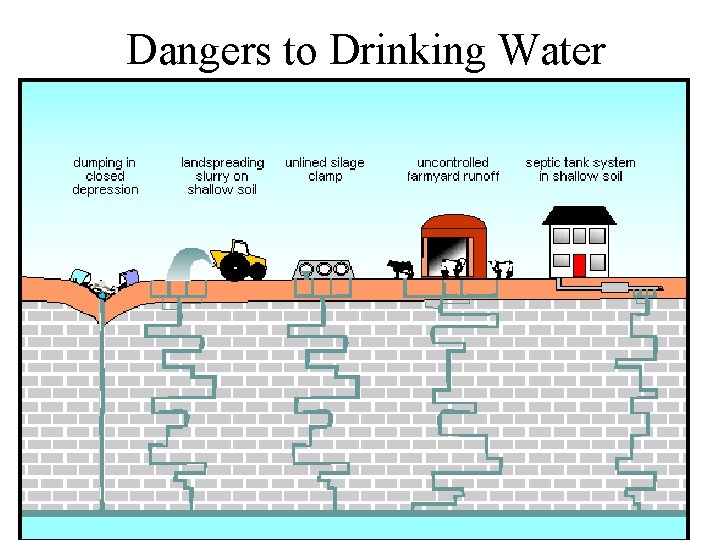
Dangers to Drinking Water
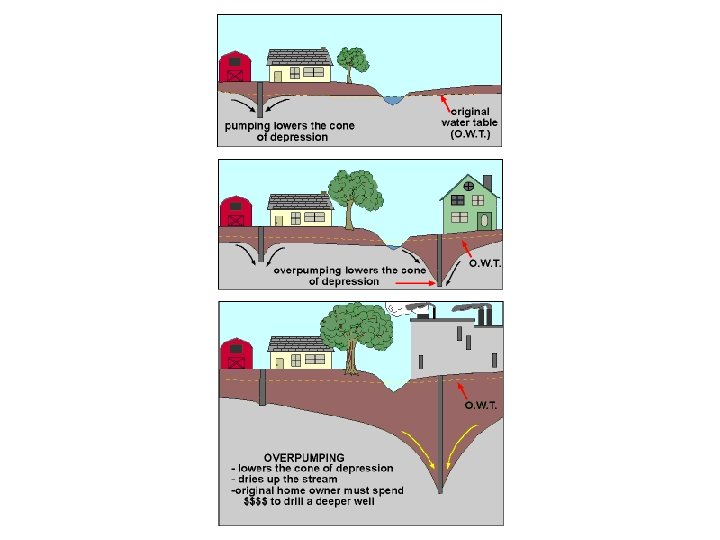
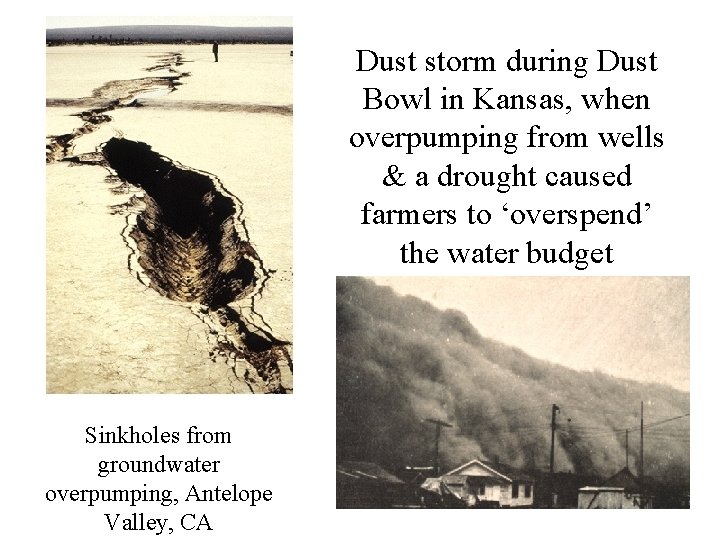
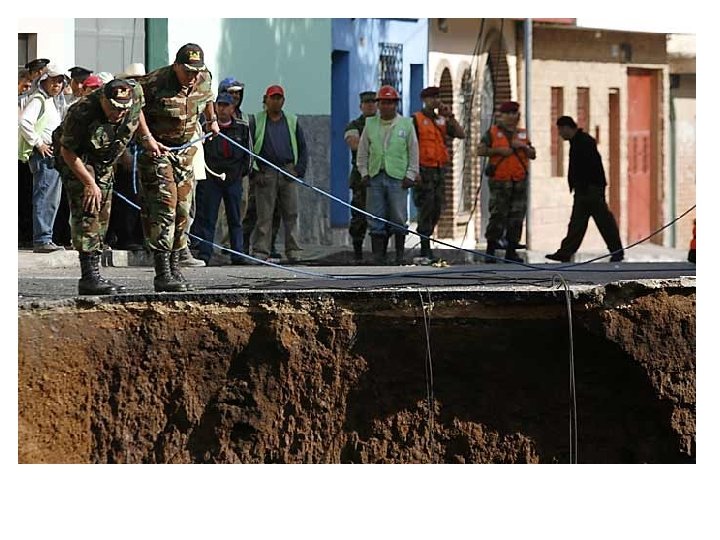
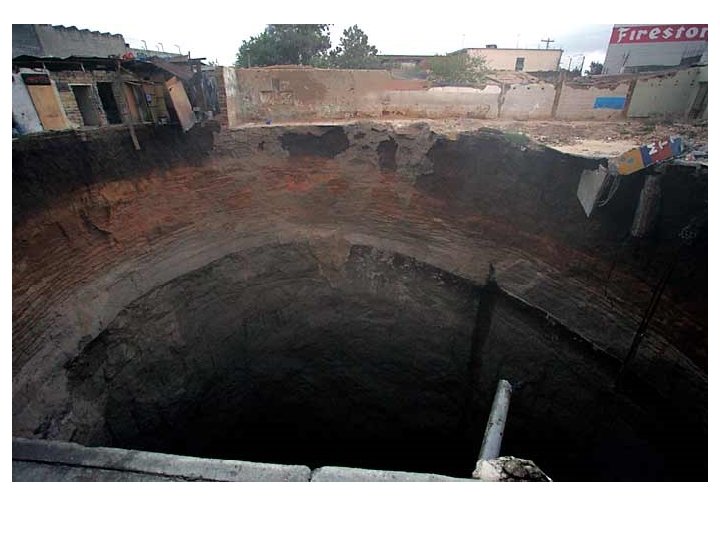
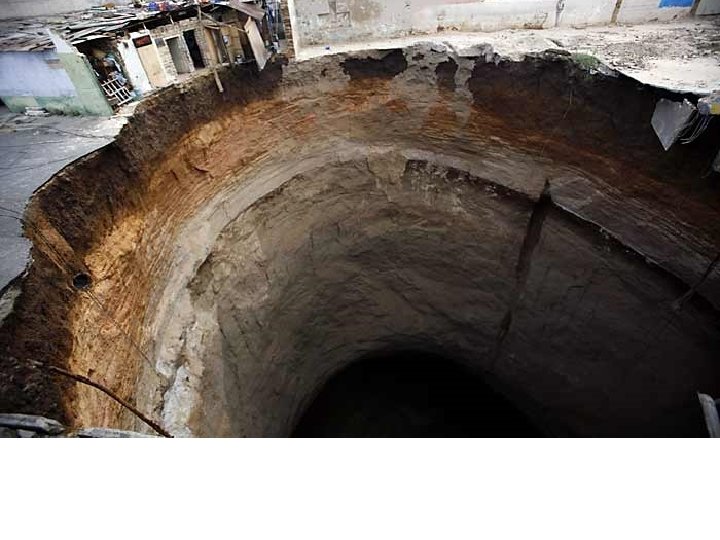
Dust storm during Dust Bowl in Kansas, when overpumping from wells & a drought caused farmers to ‘overspend’ the water budget Sinkholes from groundwater overpumping, Antelope Valley, CA
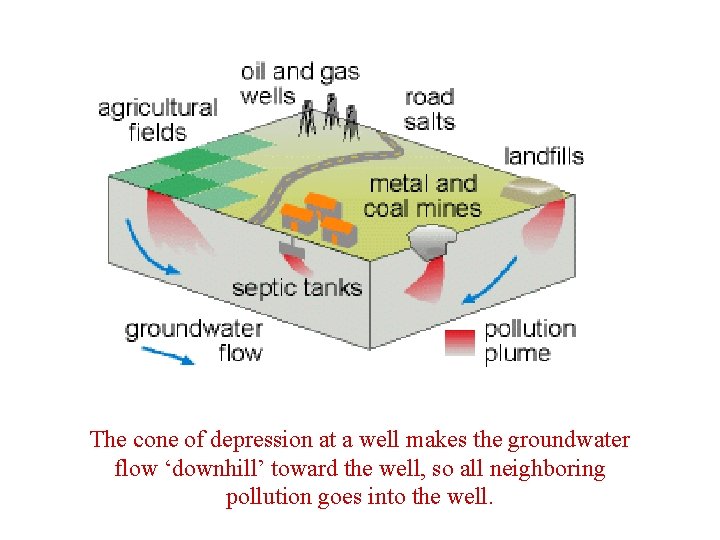
The cone of depression at a well makes the groundwater flow ‘downhill’ toward the well, so all neighboring pollution goes into the well.
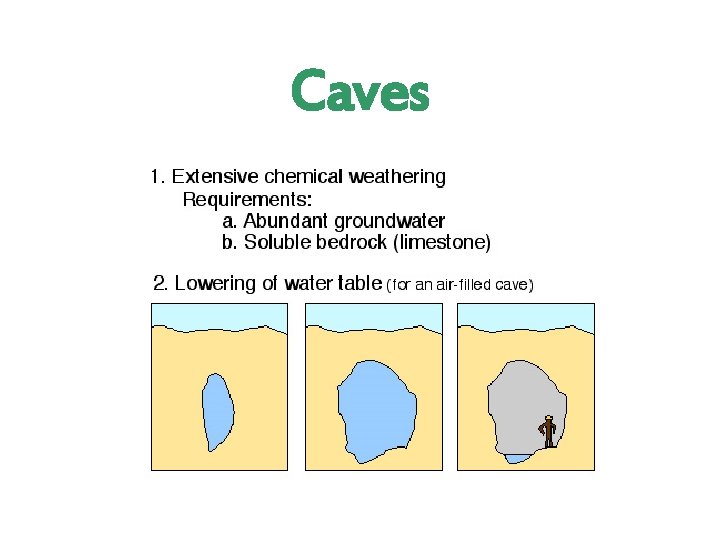
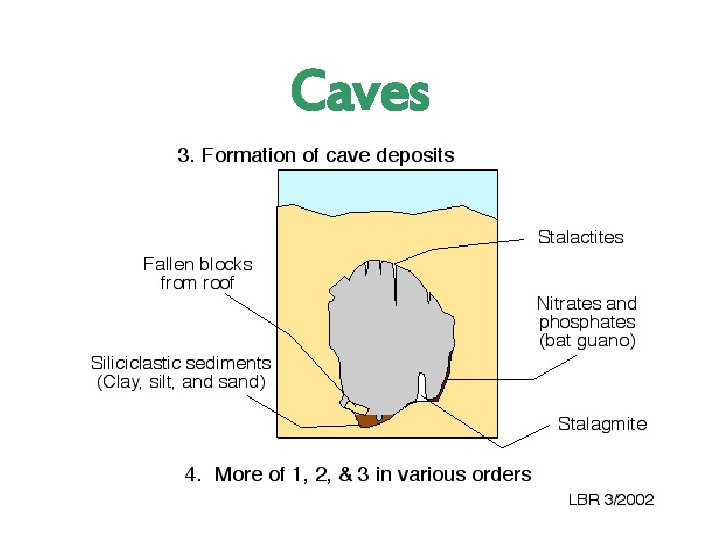
Caves
Caves
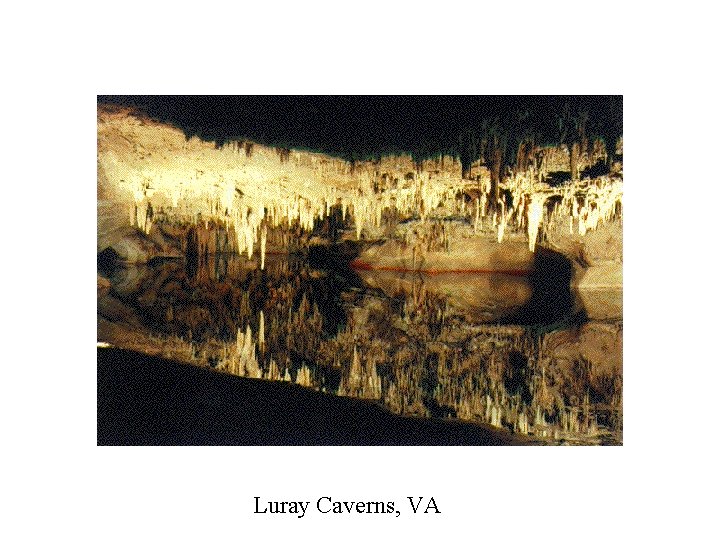
Luray Caverns, VA
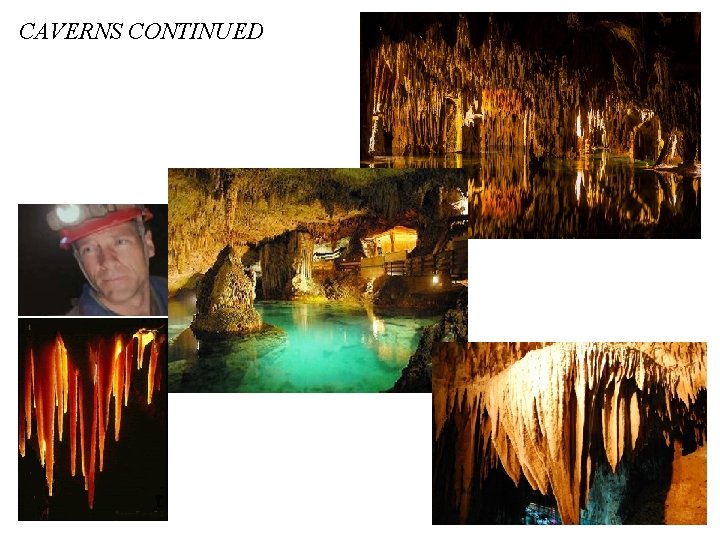
CAVERNS CONTINUED
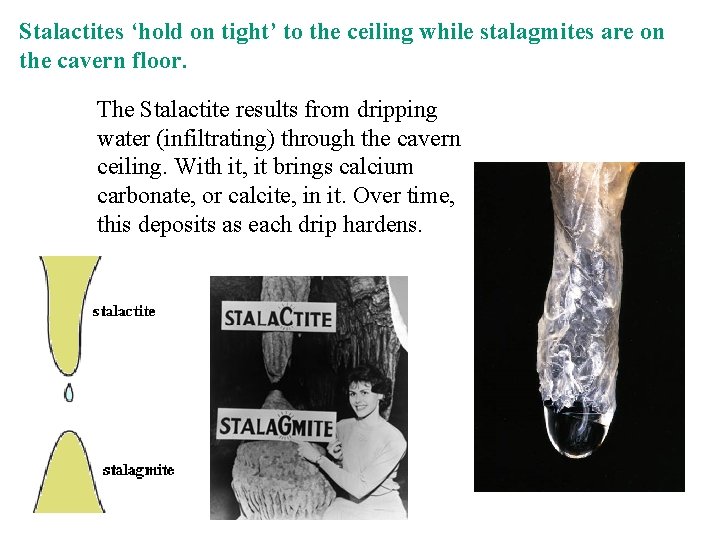
Stalactites ‘hold on tight’ to the ceiling while stalagmites are on the cavern floor. The Stalactite results from dripping water (infiltrating) through the cavern ceiling. With it, it brings calcium carbonate, or calcite, in it. Over time, this deposits as each drip hardens.
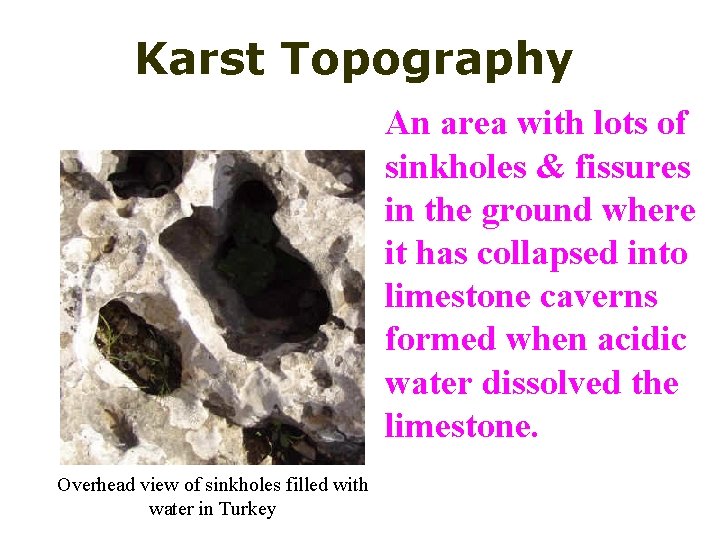
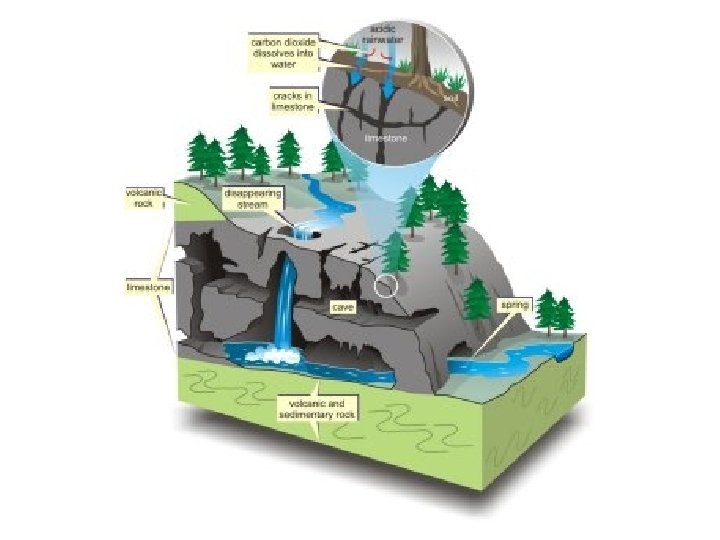
Karst Topography An area with lots of sinkholes & fissures in the ground where it has collapsed into limestone caverns formed when acidic water dissolved the limestone. Overhead view of sinkholes filled with water in Turkey
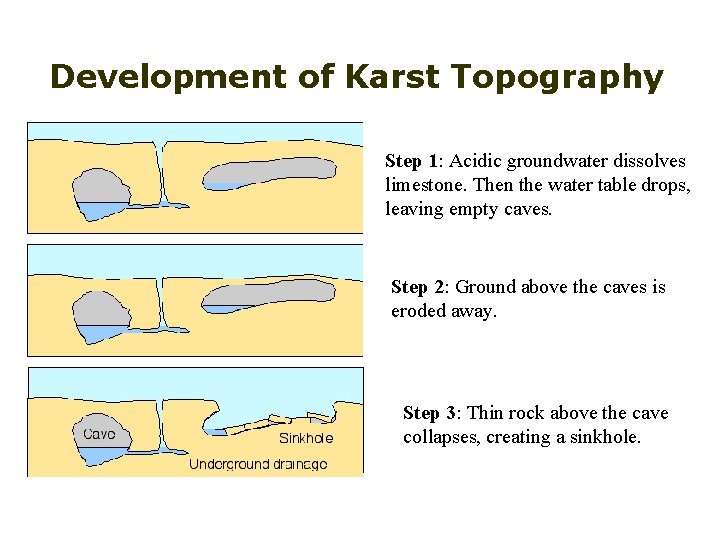
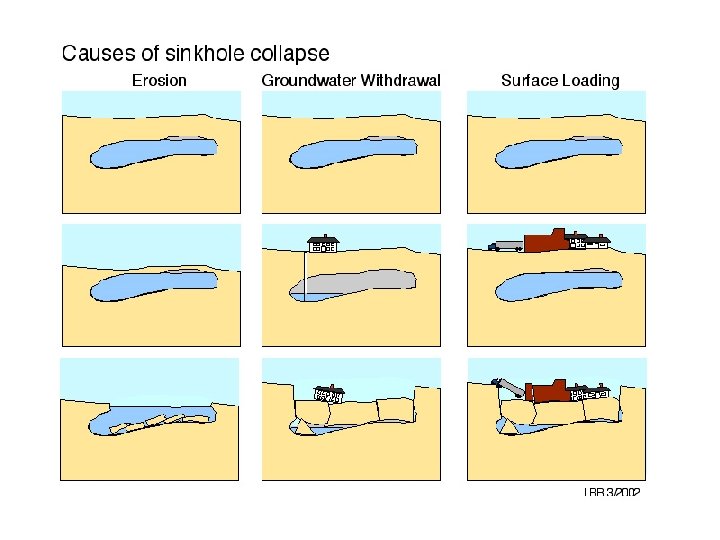
Development of Karst Topography Step 1: Acidic groundwater dissolves limestone. Then the water table drops, leaving empty caves. Step 2: Ground above the caves is eroded away. Step 3: Thin rock above the cave collapses, creating a sinkhole.
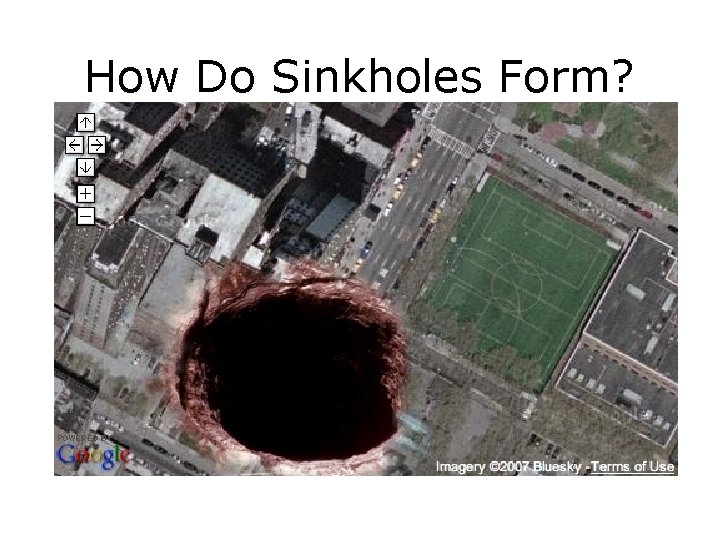
How Do Sinkholes Form?
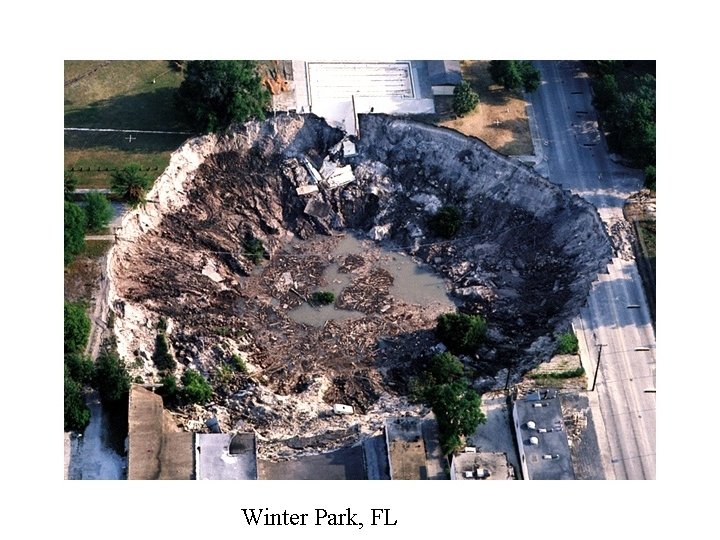
Winter Park, FL
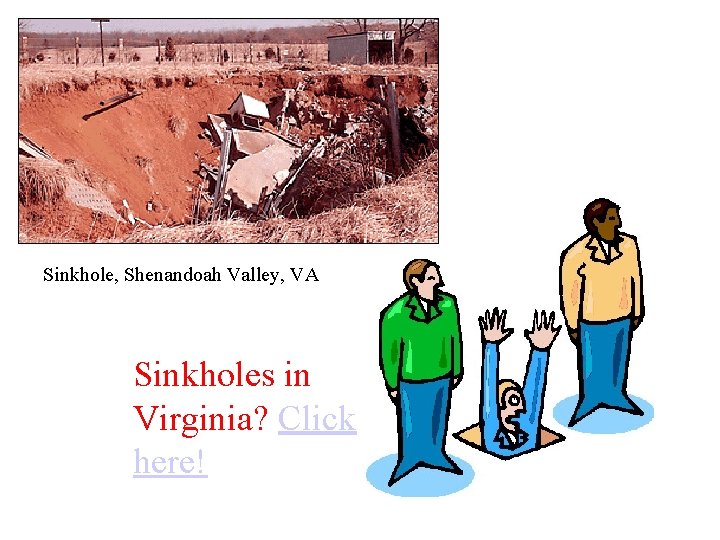
Sinkhole, Shenandoah Valley, VA Sinkholes in Virginia? Click here!
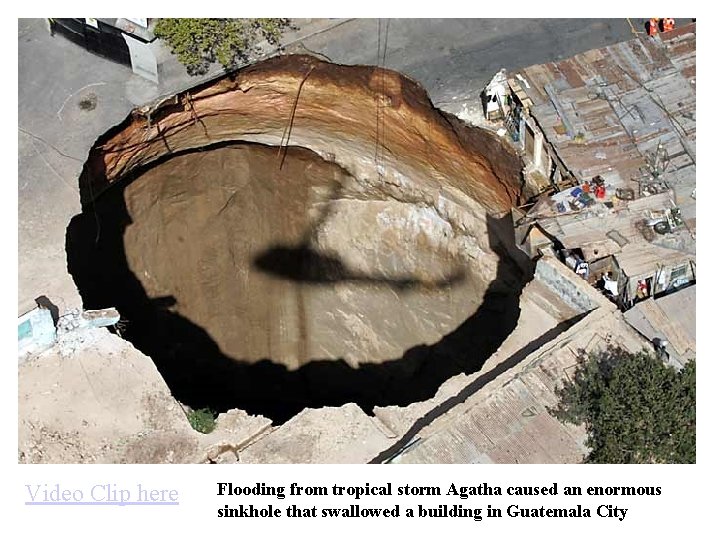
Video Clip here Flooding from tropical storm Agatha caused an enormous sinkhole that swallowed a building in Guatemala City
WATER REVIEW!!!! Objective: To construct a 10 -question multiple choice quiz focused on the Water material. All questions must be in multiple choice format. You must include 3 to 4 possible answers for each question. CIRCLE THE CORRECT ANSWER FOR EACH ONE. Include at least 1 diagram. Chapter 13 Surface Water, 5 Questions Chapter 14, Ground Water, 5 Questions STAPLE THIS HAND-WRITTEN PAGE TO THE END OF YOUR TAKE-HOME UNIT.
CONGRATS. . YOU ARE FINISHED! • Double-check that all portions of your takehome packet are filled in correctly. • Make sure your 10 -question review quiz is stapled at the end (and written neatly). • BE CAREFUL IN THAT ALL WORK YOU SUBMIT IS INDIVIDUAL AND SHOULD NOT BE COMPLETED AS A GROUP EFFORT.