
The Water Cycle By Ms Sugg Water never
The Water Cycle By Ms. Sugg
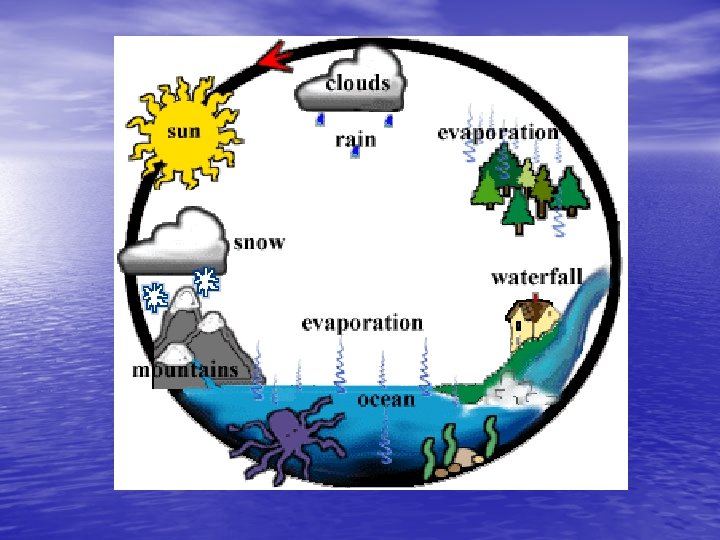
Water never leaves the Earth. It is constantly being cycled through the atmosphere, ocean, and land. This process, known as the water cycle, is driven by energy from the sun. The water cycle is crucial to the existence of life on our planet.
The Water Cycle
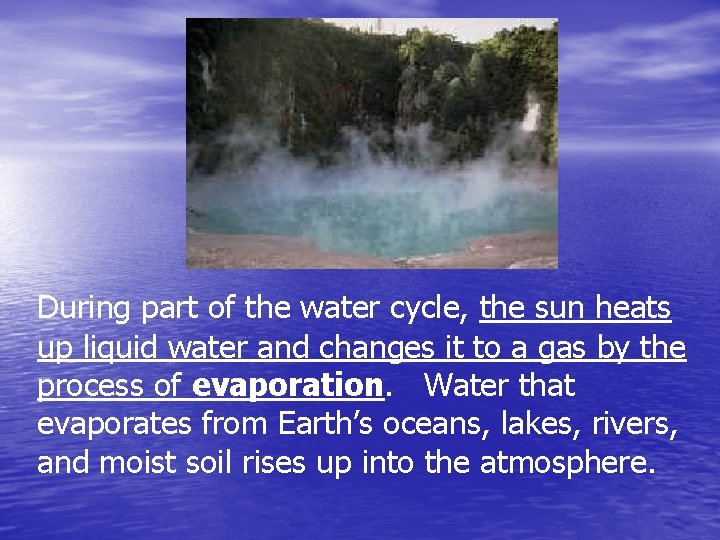
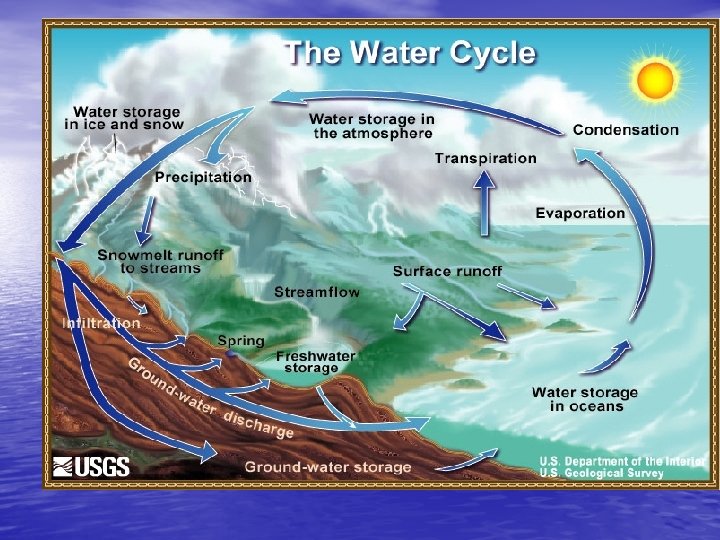
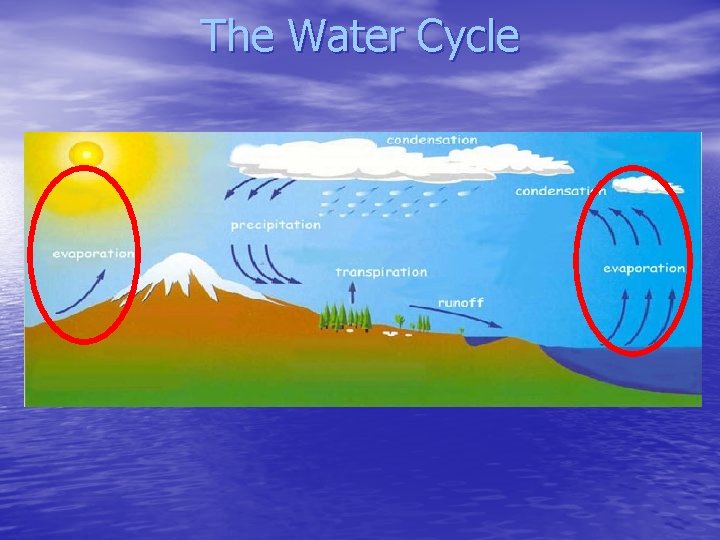
During part of the water cycle, the sun heats up liquid water and changes it to a gas by the process of evaporation. Water that evaporates from Earth’s oceans, lakes, rivers, and moist soil rises up into the atmosphere.
Evaporation = liquid to gas
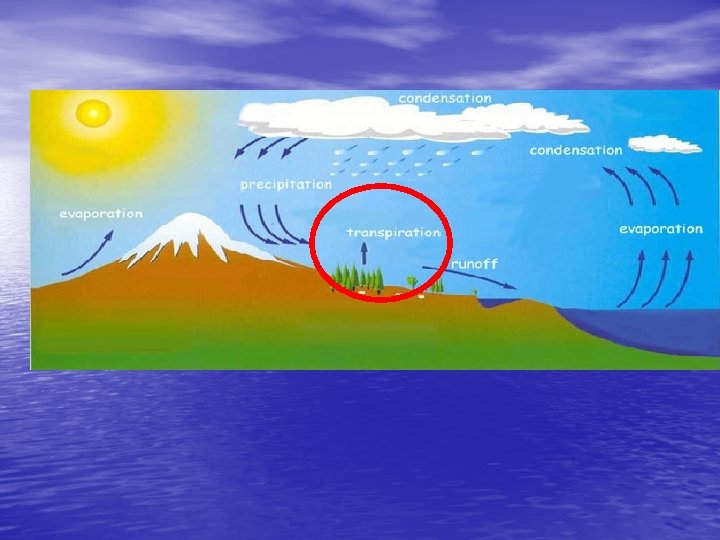

The process of evaporation from plants is called transpiration. (In other words, it’s like plants and trees sweating. )
Transpiration = tree sweat
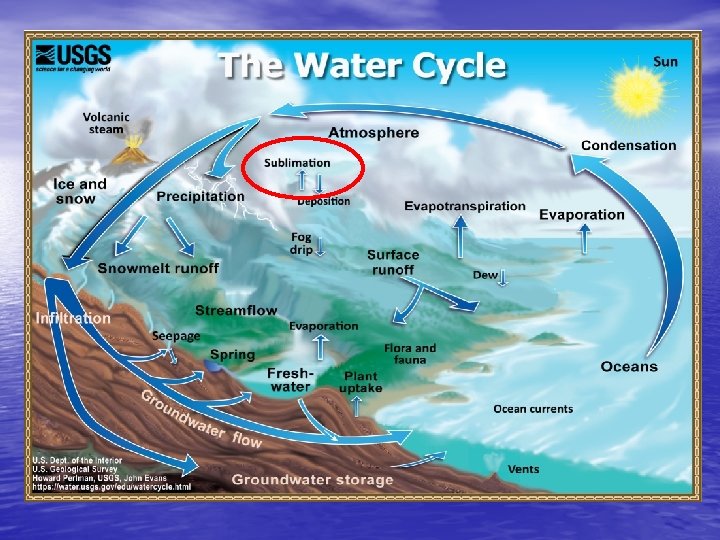
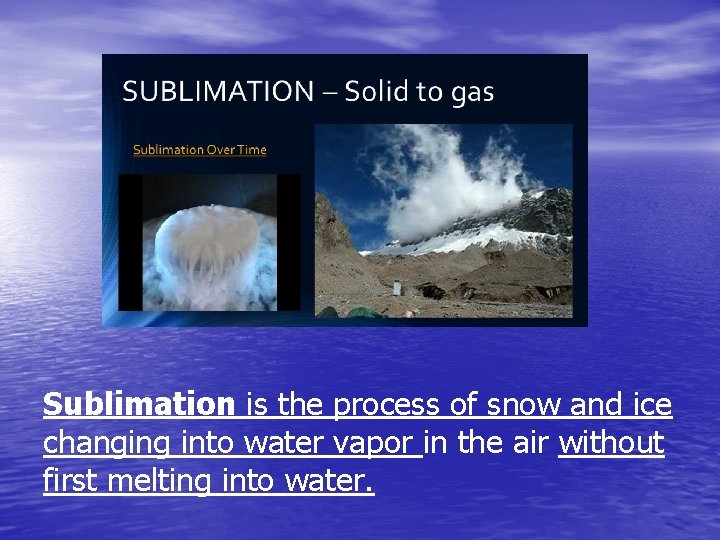
Sublimation is the process of snow and ice changing into water vapor in the air without first melting into water.
Sublimation = solid to gas
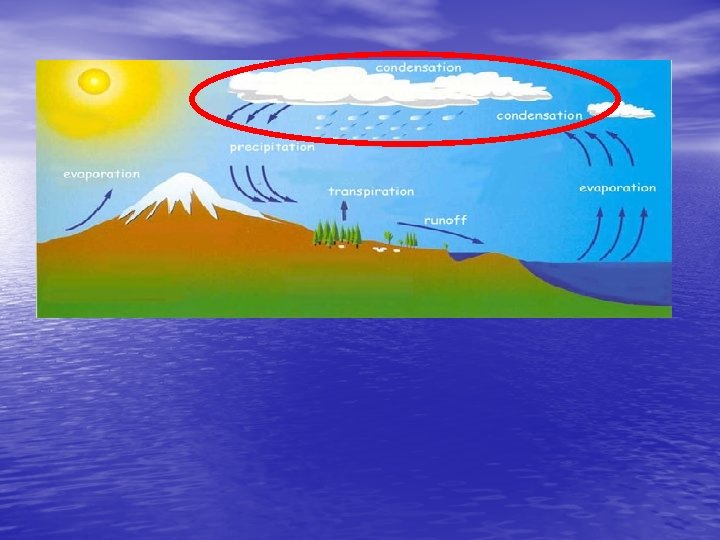
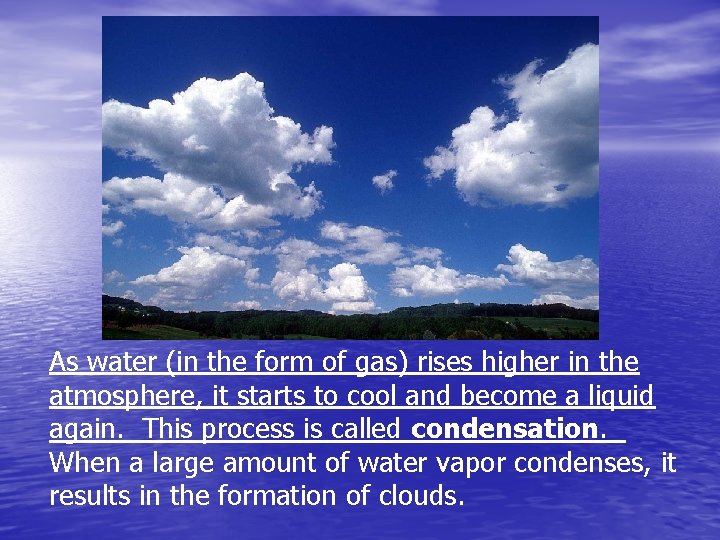
As water (in the form of gas) rises higher in the atmosphere, it starts to cool and become a liquid again. This process is called condensation. When a large amount of water vapor condenses, it results in the formation of clouds.
Condensation = gas cools turns to liquid in clouds
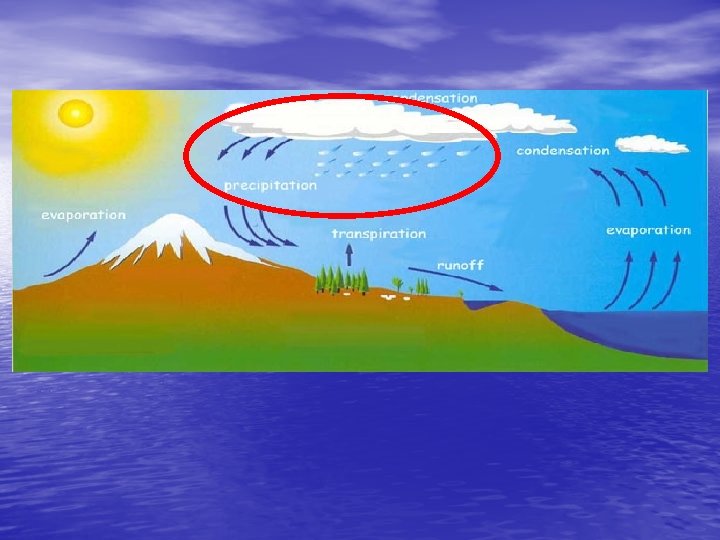
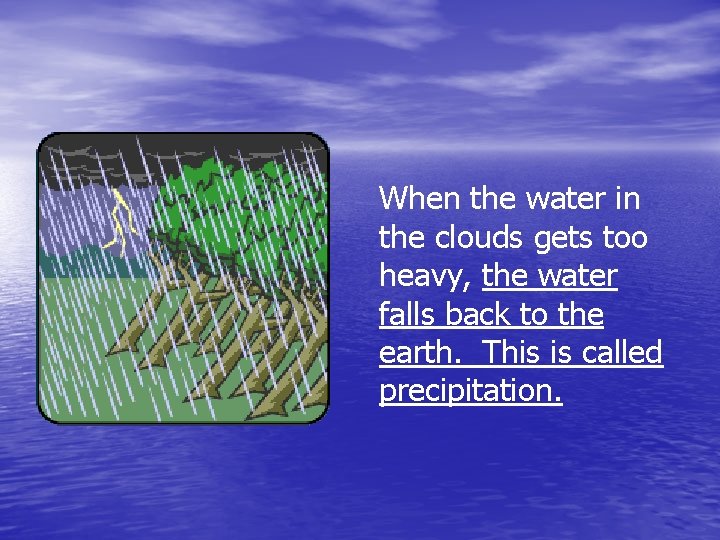
When the water in the clouds gets too heavy, the water falls back to the earth. This is called precipitation.
Precipitation = liquid in clouds falls to ground as rain, snow, sleet, or hail
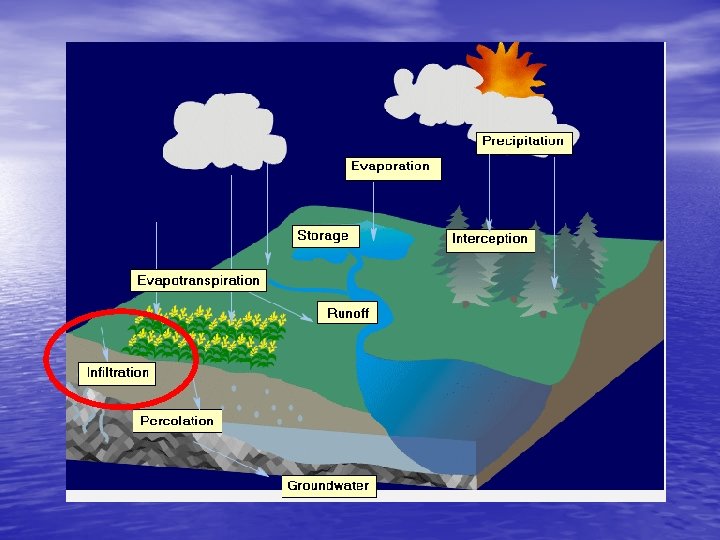
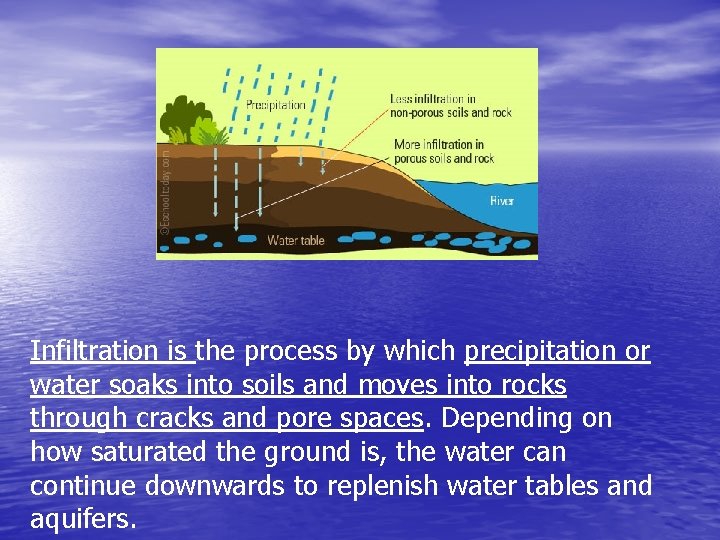
Infiltration is the process by which precipitation or water soaks into soils and moves into rocks through cracks and pore spaces. Depending on how saturated the ground is, the water can continue downwards to replenish water tables and aquifers.
Infiltration = liquid on ground soaks into ground and runs underground
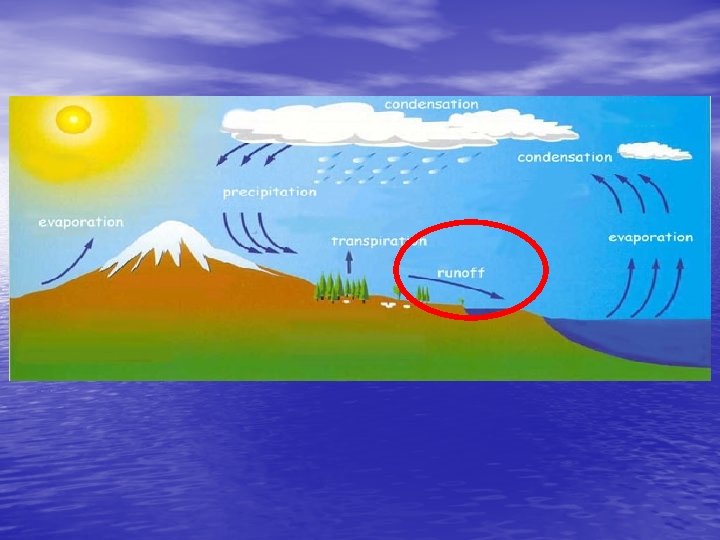
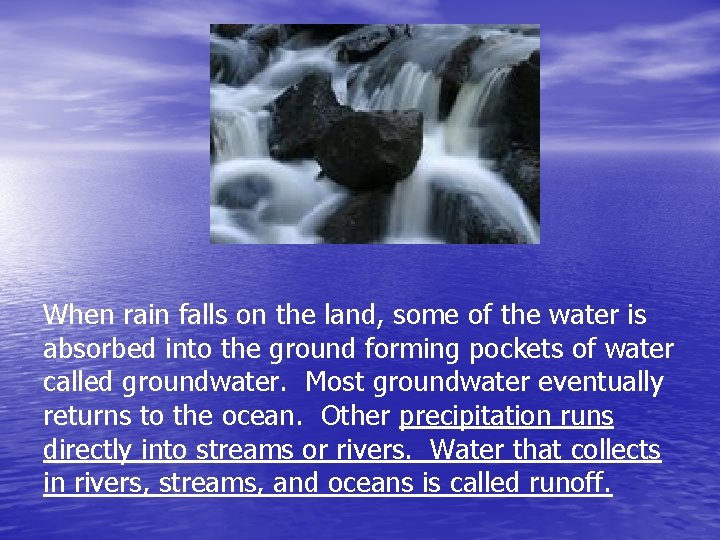
When rain falls on the land, some of the water is absorbed into the ground forming pockets of water called groundwater. Most groundwater eventually returns to the ocean. Other precipitation runs directly into streams or rivers. Water that collects in rivers, streams, and oceans is called runoff.
Runoff = liquid runs across land to a body of water.
- Slides: 25