
The Water Cycle and Weather By Kelly Tanner
The Water Cycle and Weather By : Kelly Tanner
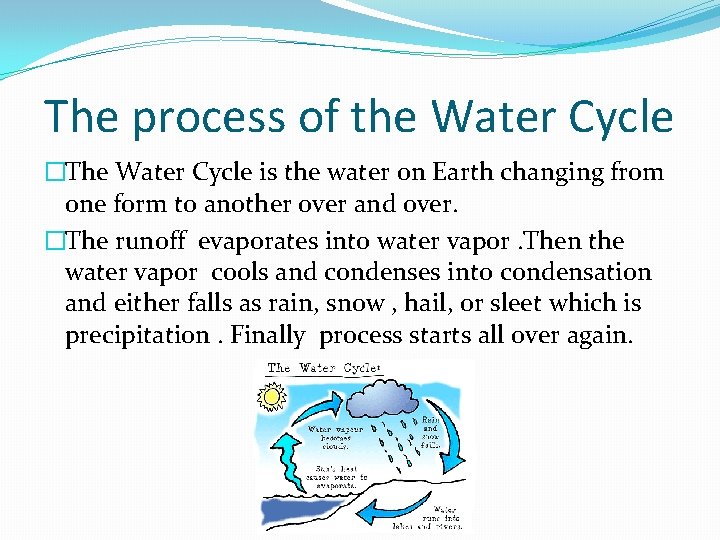
The process of the Water Cycle �The Water Cycle is the water on Earth changing from one form to another over and over. �The runoff evaporates into water vapor. Then the water vapor cools and condenses into condensation and either falls as rain, snow , hail, or sleet which is precipitation. Finally process starts all over again.
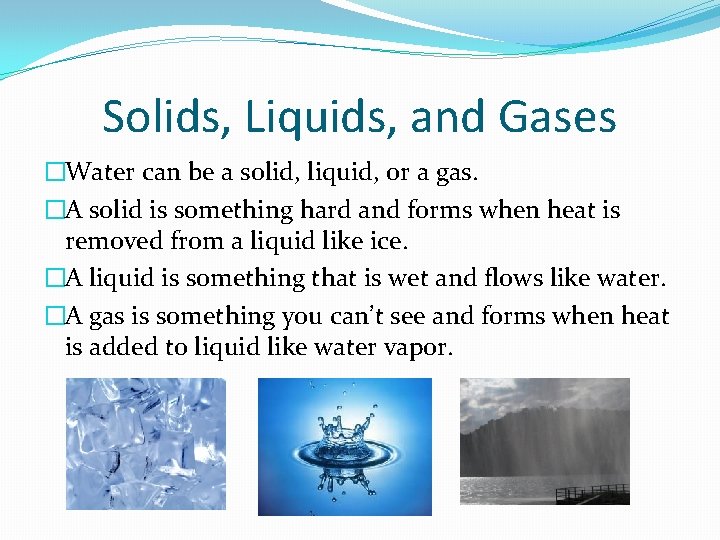
Solids, Liquids, and Gases �Water can be a solid, liquid, or a gas. �A solid is something hard and forms when heat is removed from a liquid like ice. �A liquid is something that is wet and flows like water. �A gas is something you can’t see and forms when heat is added to liquid like water vapor.
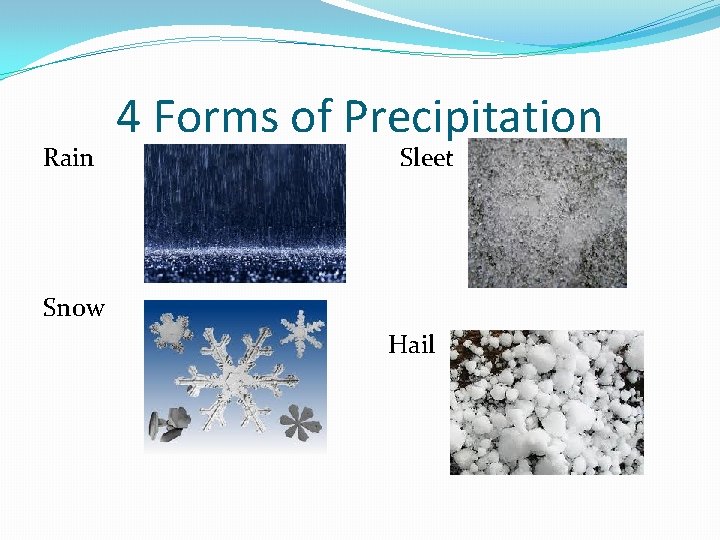
Rain 4 Forms of Precipitation Sleet Snow Hail
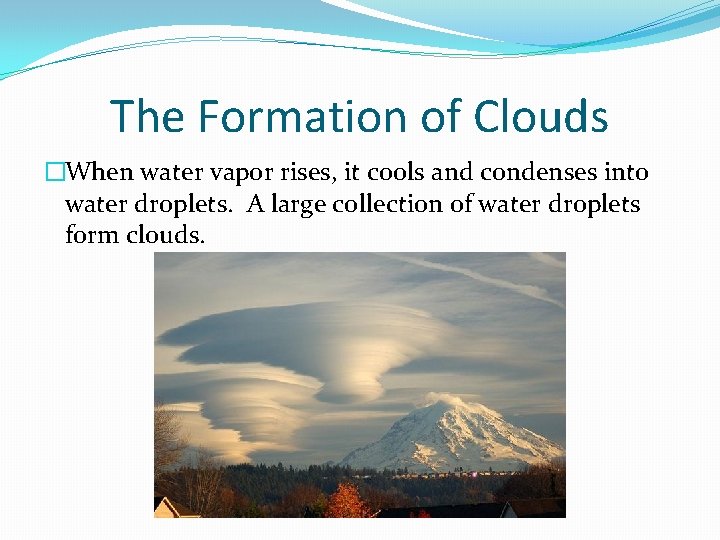
The Formation of Clouds �When water vapor rises, it cools and condenses into water droplets. A large collection of water droplets form clouds.
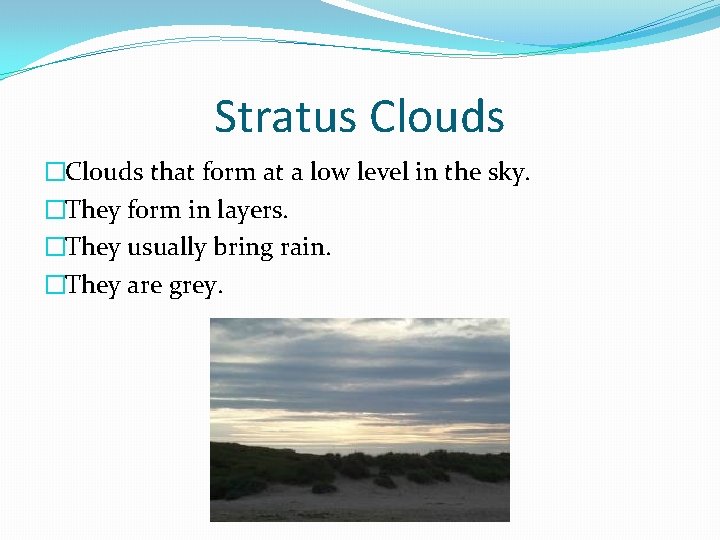
Stratus Clouds �Clouds that form at a low level in the sky. �They form in layers. �They usually bring rain. �They are grey.
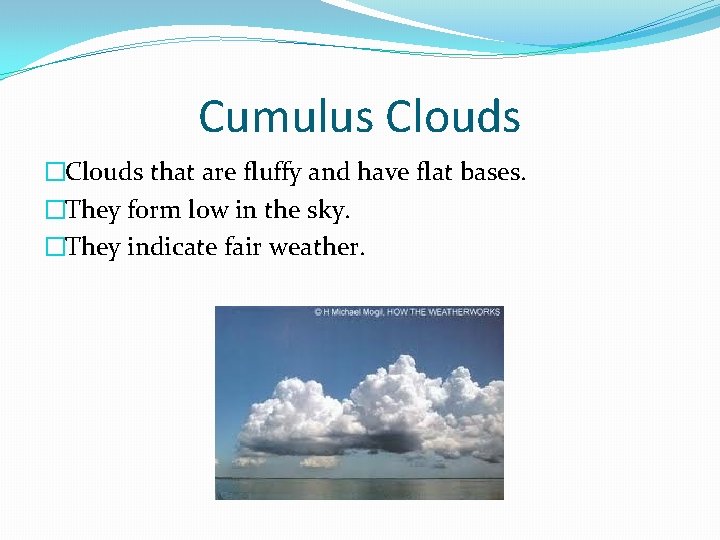
Cumulus Clouds �Clouds that are fluffy and have flat bases. �They form low in the sky. �They indicate fair weather.
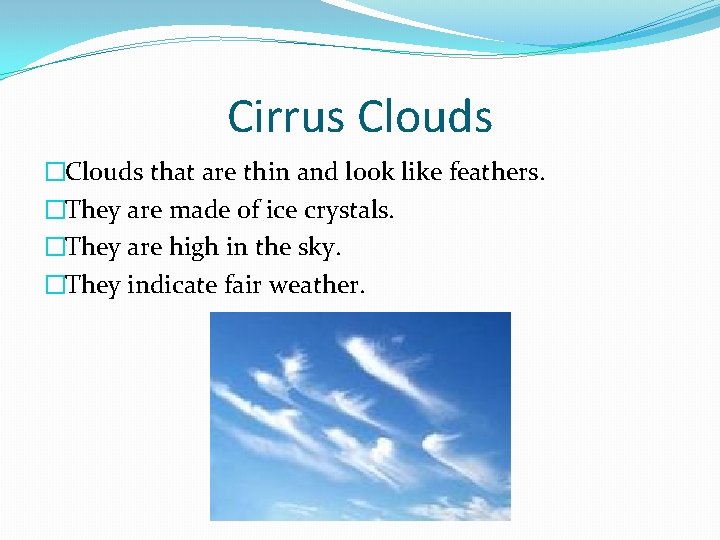
Cirrus Clouds �Clouds that are thin and look like feathers. �They are made of ice crystals. �They are high in the sky. �They indicate fair weather.
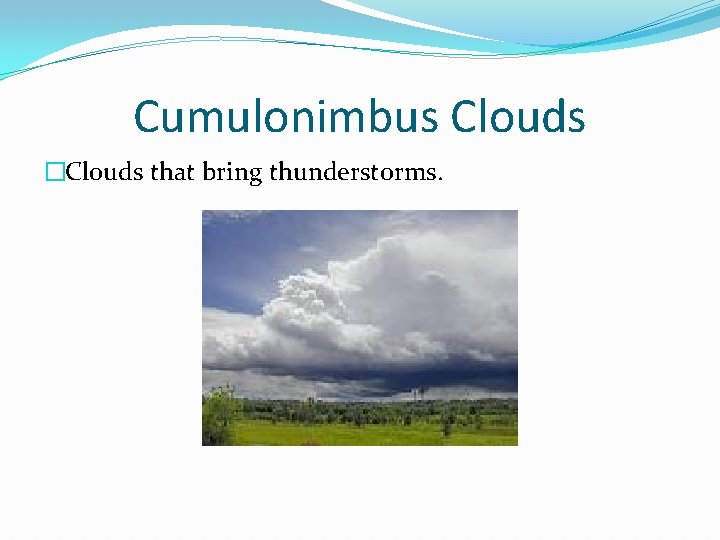
Cumulonimbus Clouds �Clouds that bring thunderstorms.
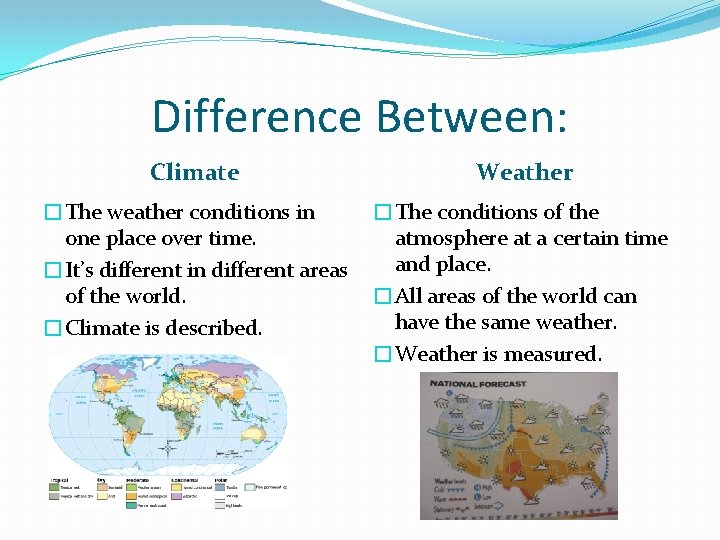
Difference Between: Climate Weather �The weather conditions in one place over time. �It’s different in different areas of the world. �Climate is described. �The conditions of the atmosphere at a certain time and place. �All areas of the world can have the same weather. �Weather is measured.
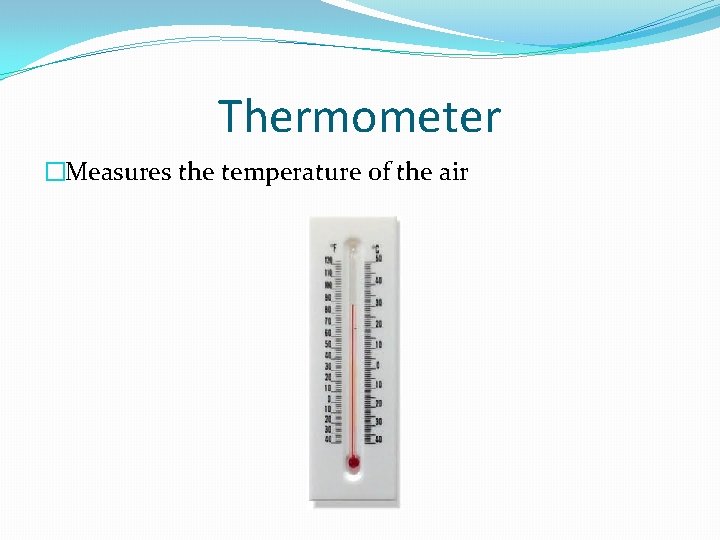
Thermometer �Measures the temperature of the air
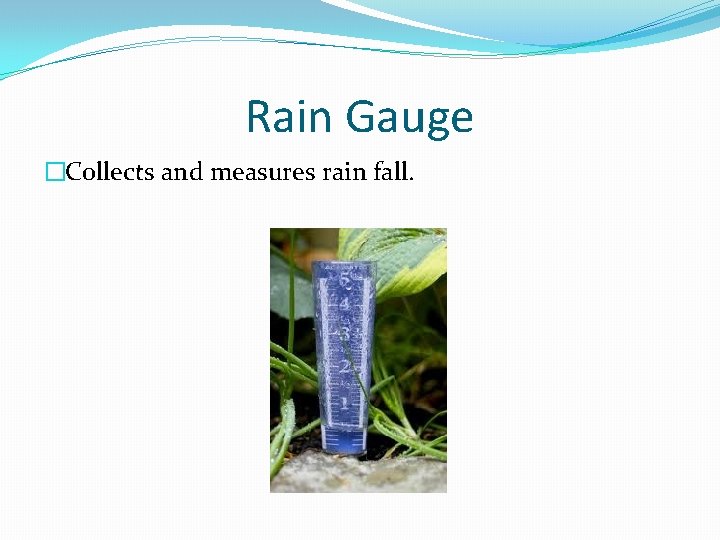
Rain Gauge �Collects and measures rain fall.
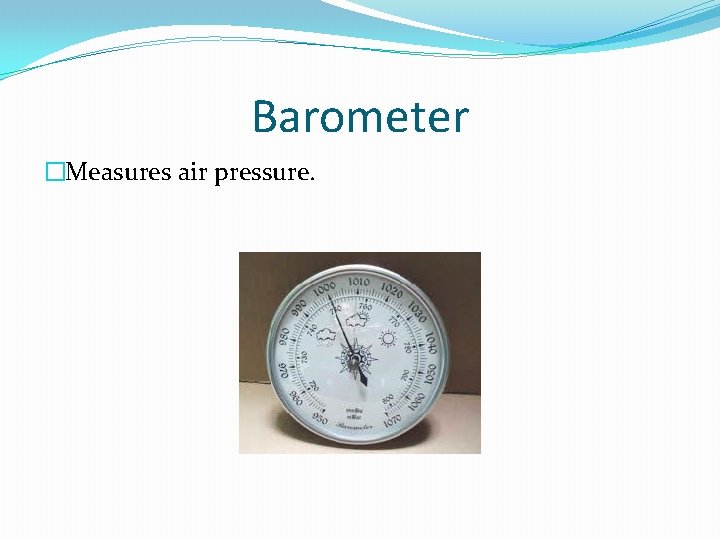
Barometer �Measures air pressure.
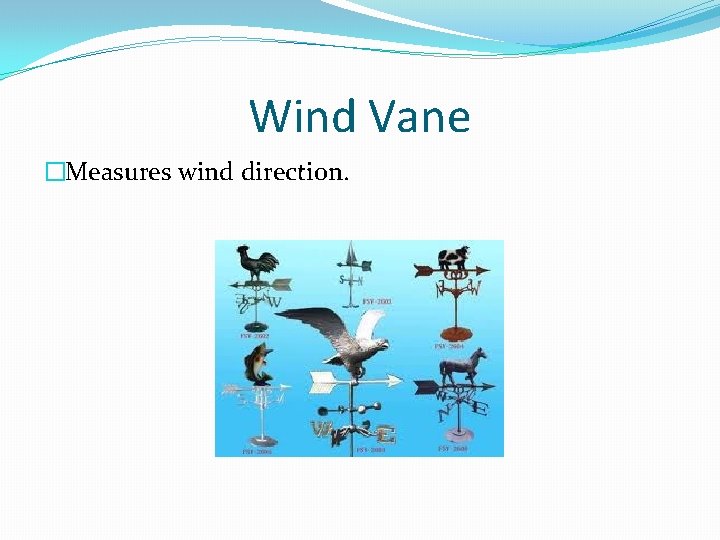
Wind Vane �Measures wind direction.
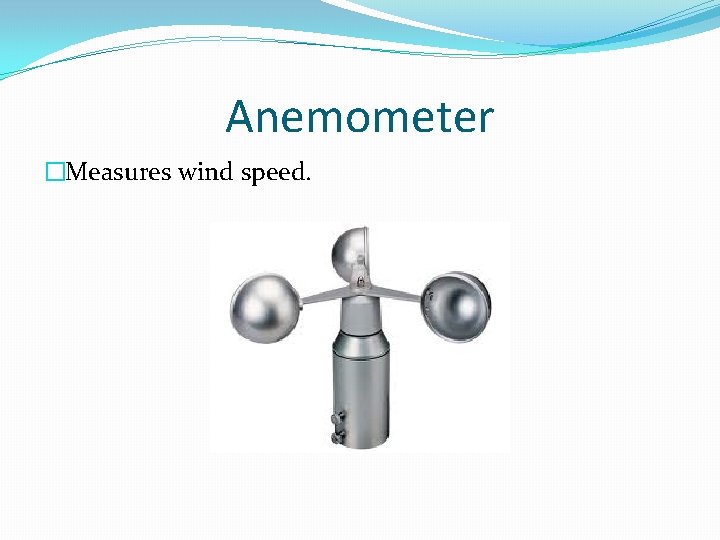
Anemometer �Measures wind speed.
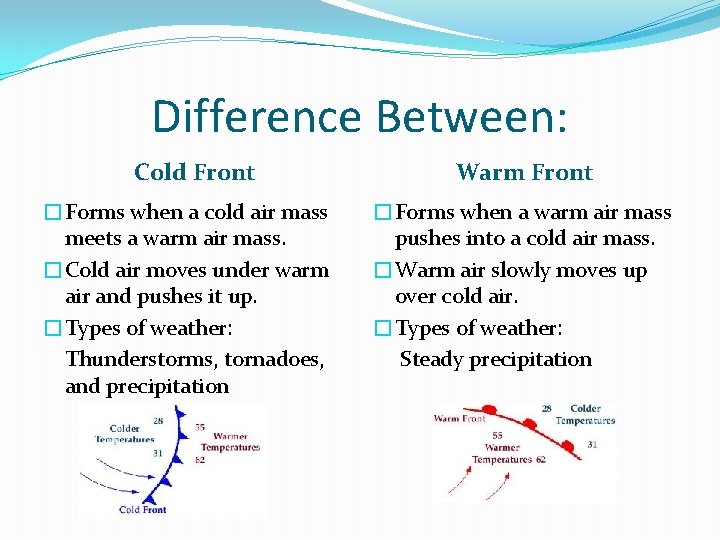
Difference Between: Cold Front �Forms when a cold air mass meets a warm air mass. �Cold air moves under warm air and pushes it up. �Types of weather: Thunderstorms, tornadoes, and precipitation Warm Front �Forms when a warm air mass pushes into a cold air mass. �Warm air slowly moves up over cold air. �Types of weather: Steady precipitation
Summary �I learned about weather, what makes up air, and clouds. �I learned how to define solids, liquids, and gases. �I also learned what a barometer, thermometer anemometer, wind vane, and a rain gauge measures. �My favorite part in this unit was when the class learned what the different clouds are , how to identify them, and what they do.
Sources �I used my Science workbook. �I used my Science journal. �I used my brain. �I used Google.
- Slides: 18