
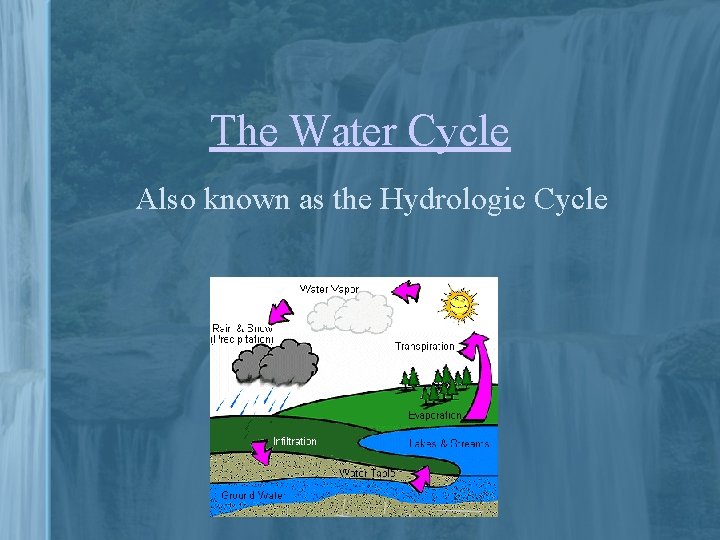
The Water Cycle Also known as the Hydrologic
- Slides: 21
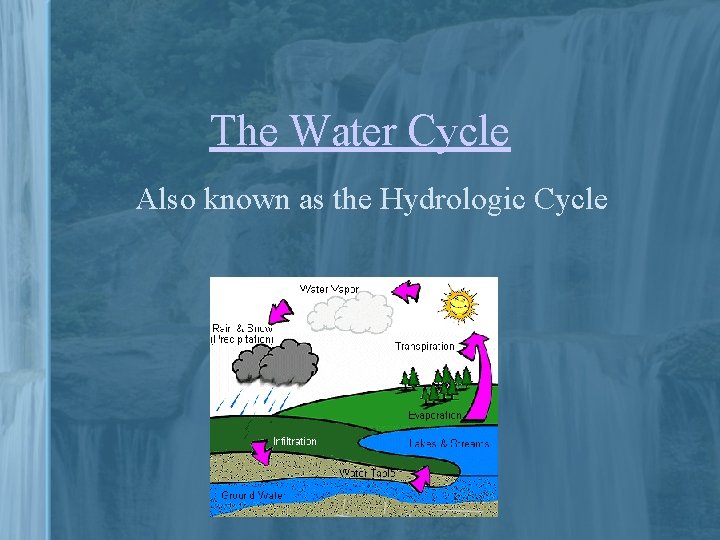
The Water Cycle Also known as the Hydrologic Cycle
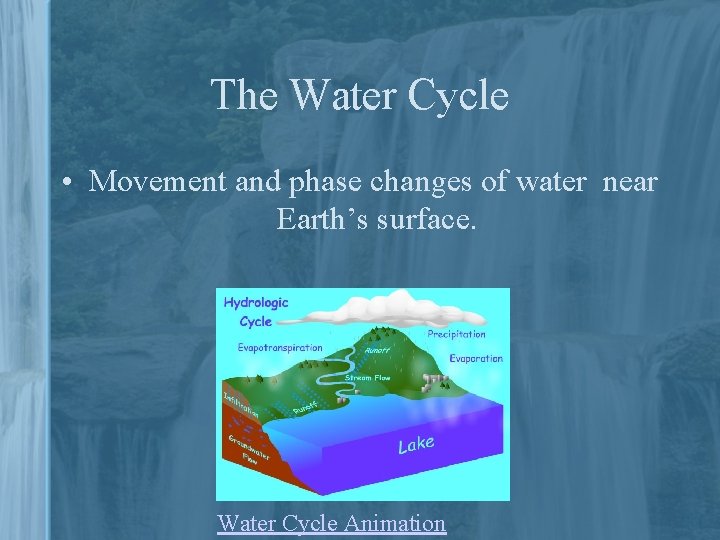
The Water Cycle • Movement and phase changes of water near Earth’s surface. Water Cycle Animation
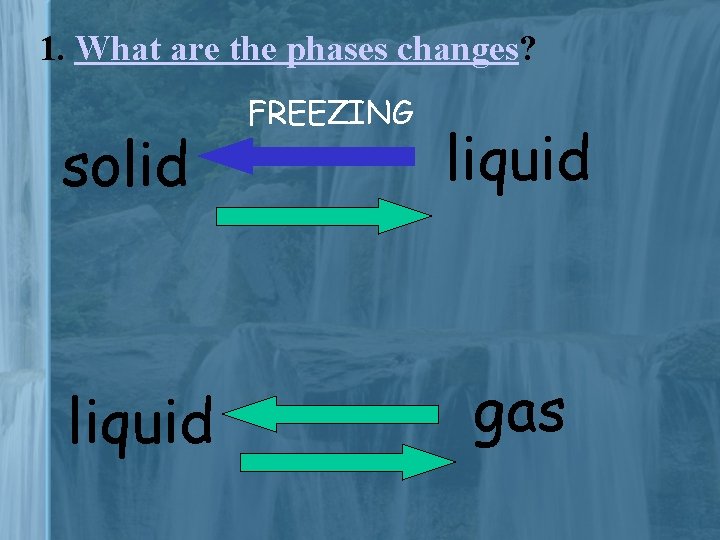
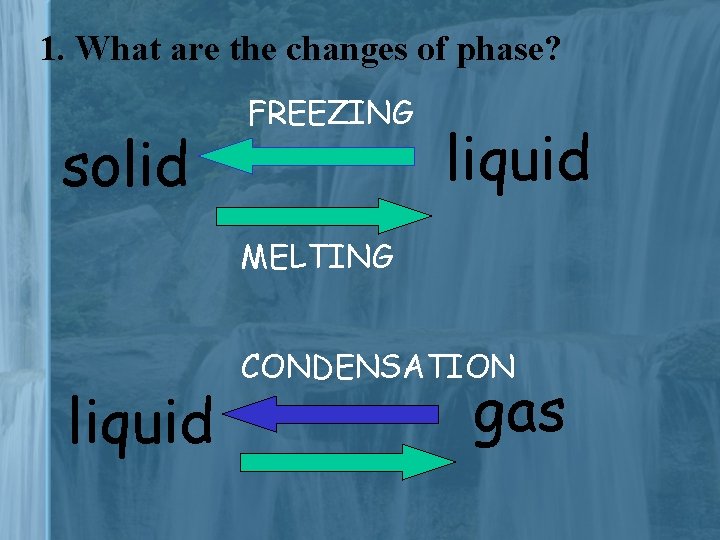
1. What are the phases changes? solid liquid FREEZING liquid gas
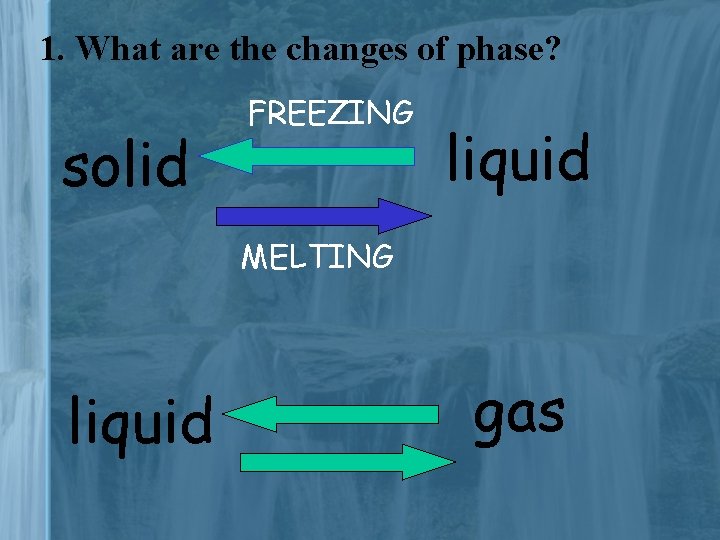
1. What are the changes of phase? solid FREEZING liquid MELTING liquid gas
1. What are the changes of phase? solid FREEZING liquid MELTING liquid CONDENSATION gas
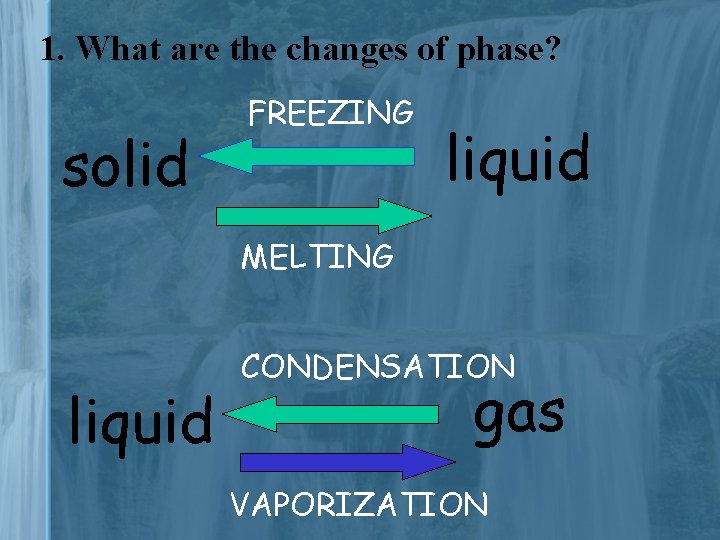
1. What are the changes of phase? solid FREEZING liquid MELTING liquid CONDENSATION gas VAPORIZATION
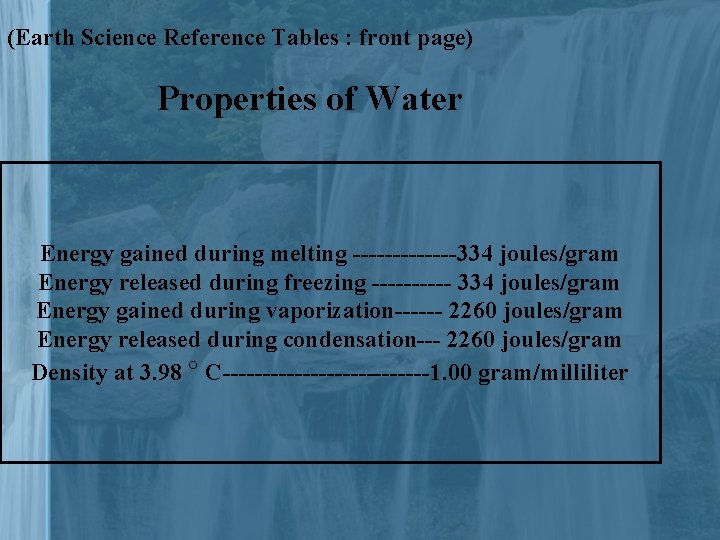
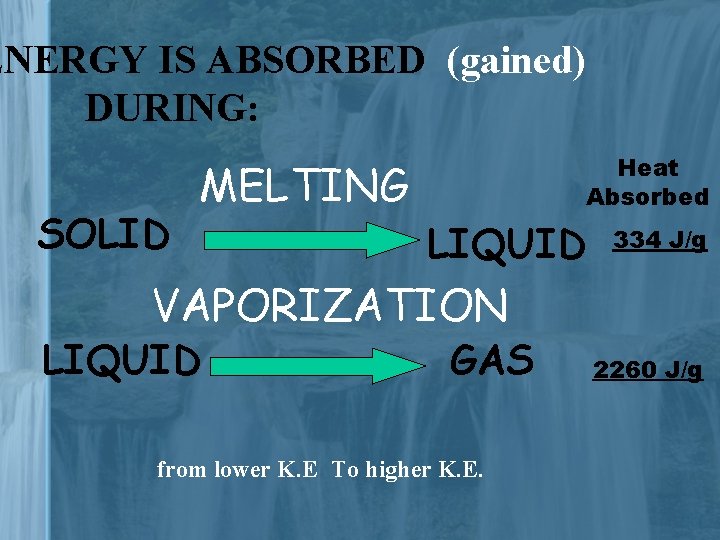
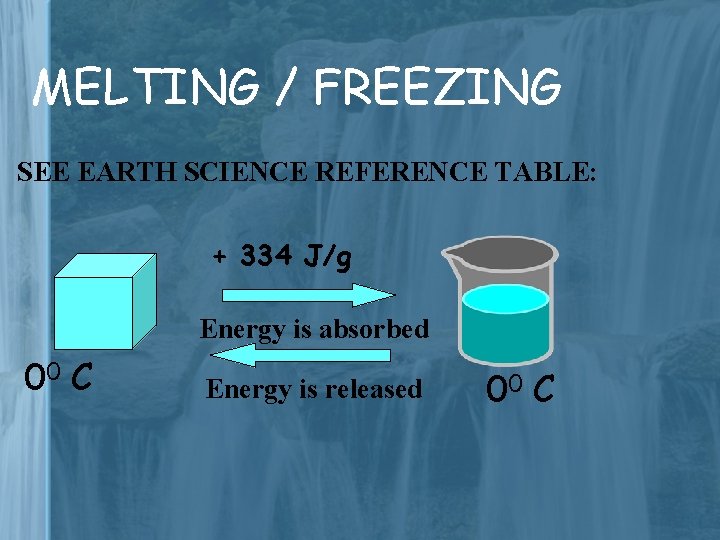
(Earth Science Reference Tables : front page) Properties of Water Energy gained during melting -------334 joules/gram Energy released during freezing ----- 334 joules/gram Energy gained during vaporization------ 2260 joules/gram Energy released during condensation--- 2260 joules/gram Density at 3. 98 ° C-------------1. 00 gram/milliliter
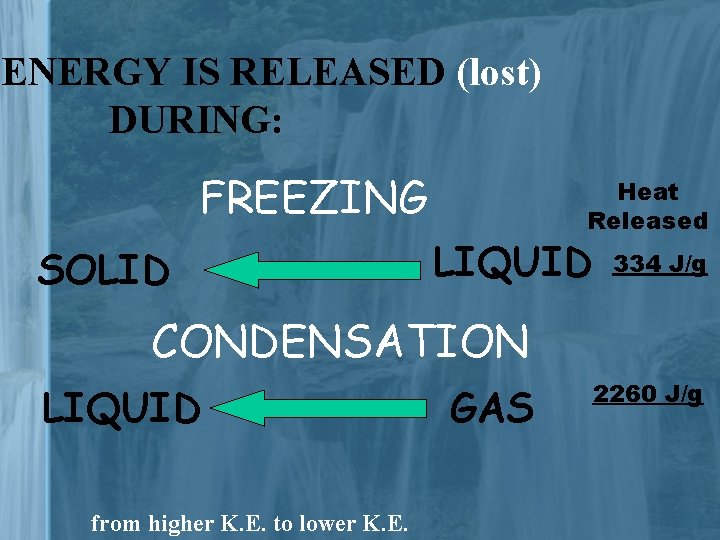
ENERGY IS RELEASED (lost) DURING: FREEZING SOLID Heat Released LIQUID 334 J/g CONDENSATION LIQUID from higher K. E. to lower K. E. GAS 2260 J/g
ENERGY IS ABSORBED (gained) DURING: SOLID MELTING Heat Absorbed LIQUID 334 J/g VAPORIZATION LIQUID GAS from lower K. E To higher K. E. 2260 J/g
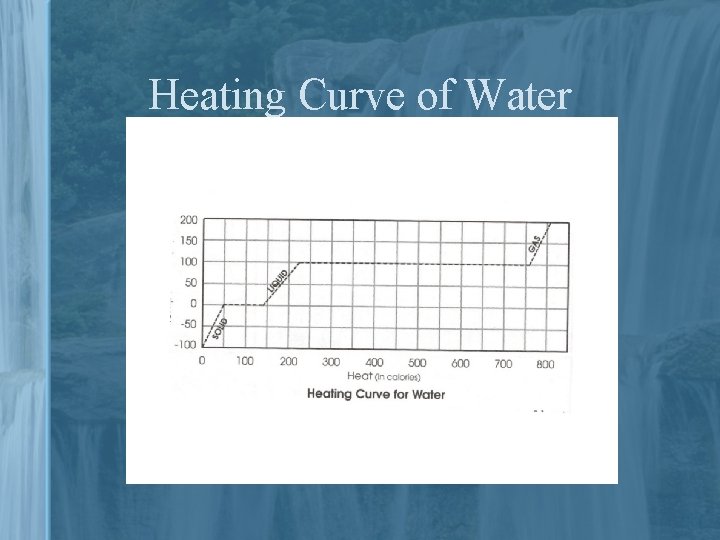
Heating Curve of Water
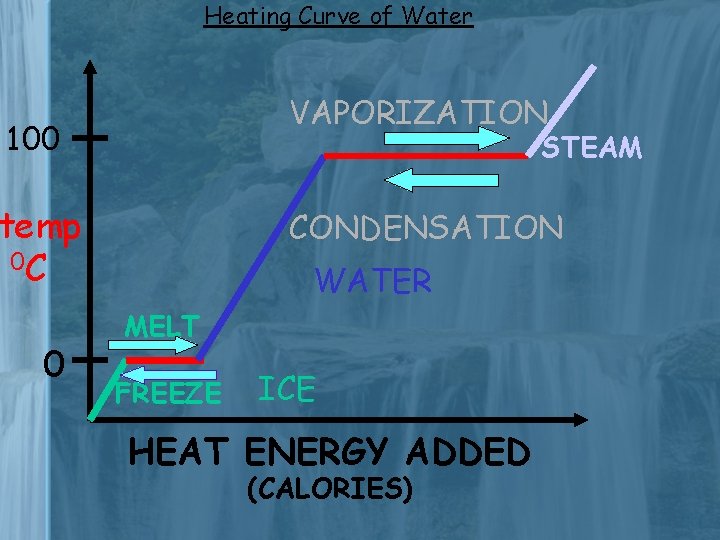
Heating Curve of Water VAPORIZATION 100 STEAM temp 0 C 0 CONDENSATION WATER MELT FREEZE ICE HEAT ENERGY ADDED (CALORIES)
MELTING / FREEZING SEE EARTH SCIENCE REFERENCE TABLE: + 334 J/g Energy is absorbed 00 C Energy is released 00 C
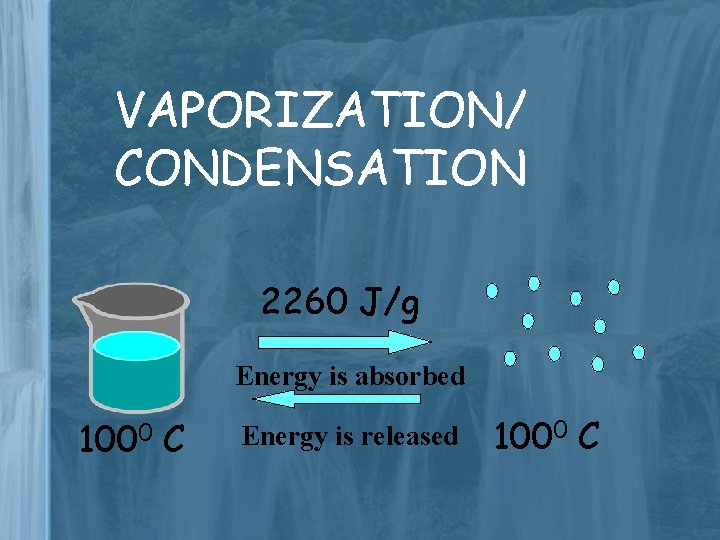
VAPORIZATION/ CONDENSATION 2260 J/g Energy is absorbed 1000 C Energy is released 1000 C
Latent heat (hidden heat) Is the potential energy that is absorbed or released when matter changes phase. There is no change in temperature (kinetic energy) when matter changes phases, but potential energy does change.
The Water Cycle Also known as the Hydrologic Cycle
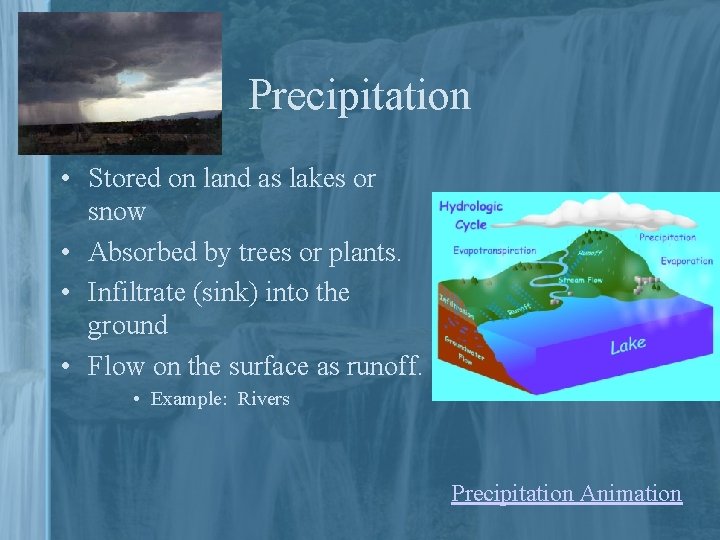
Precipitation • Stored on land as lakes or snow • Absorbed by trees or plants. • Infiltrate (sink) into the ground • Flow on the surface as runoff. • Example: Rivers Precipitation Animation
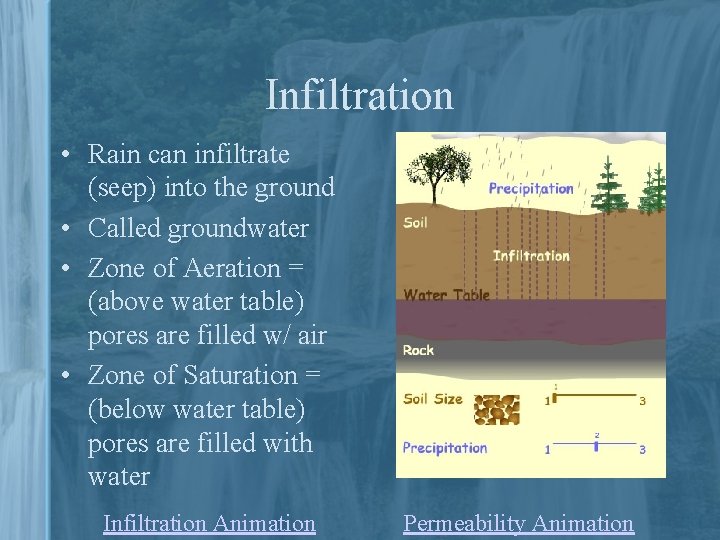
Infiltration • Rain can infiltrate (seep) into the ground • Called groundwater • Zone of Aeration = (above water table) pores are filled w/ air • Zone of Saturation = (below water table) pores are filled with water Infiltration Animation Permeability Animation
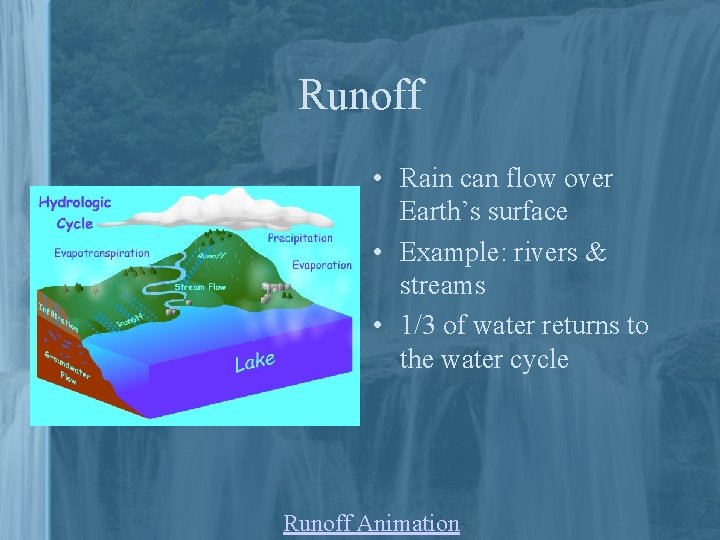
Runoff • Rain can flow over Earth’s surface • Example: rivers & streams • 1/3 of water returns to the water cycle Runoff Animation
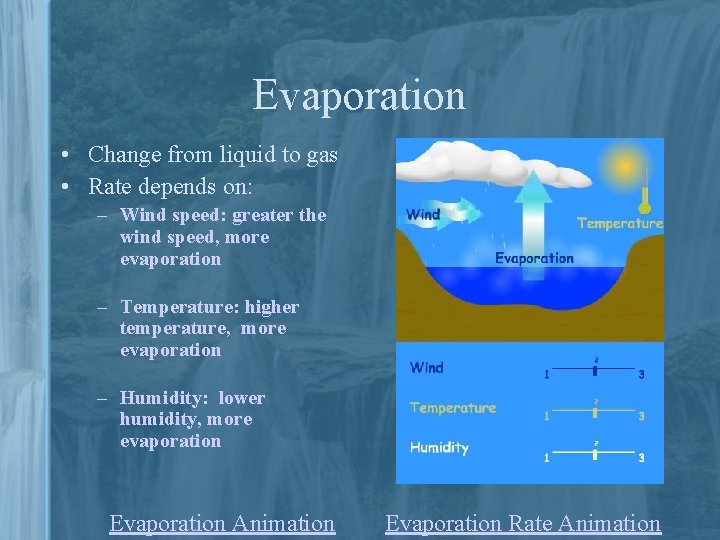
Evaporation • Change from liquid to gas • Rate depends on: – Wind speed: greater the wind speed, more evaporation – Temperature: higher temperature, more evaporation – Humidity: lower humidity, more evaporation Evaporation Animation Evaporation Rate Animation
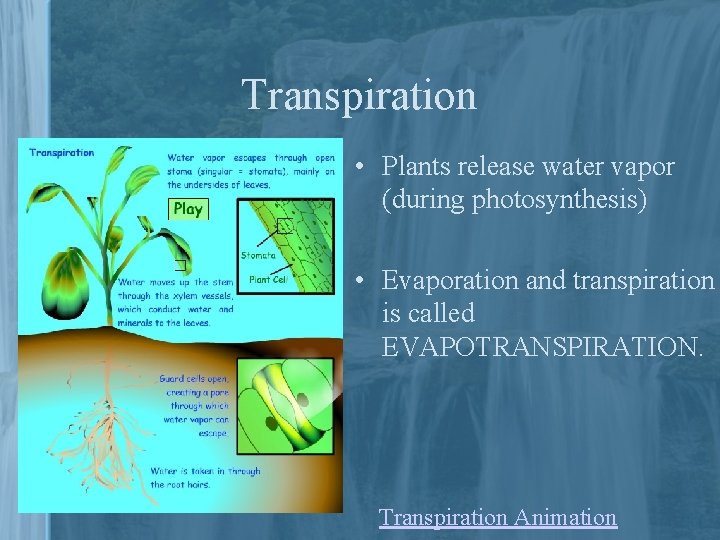
Transpiration • Plants release water vapor (during photosynthesis) • Evaporation and transpiration is called EVAPOTRANSPIRATION. Transpiration Animation
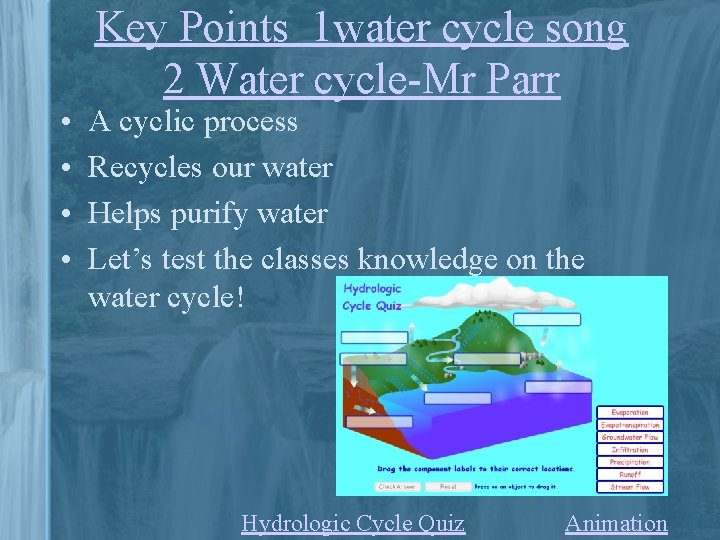
• • Key Points 1 water cycle song 2 Water cycle-Mr Parr A cyclic process Recycles our water Helps purify water Let’s test the classes knowledge on the water cycle! Hydrologic Cycle Quiz Animation