
The Washington Innovation Cluster Lessons Learned and Resources

- Slides: 17
The Washington Innovation Cluster Lessons Learned and Resources from 5 Years of Program Level Innovation Jason Gortney Beth Larsen Melissa Rivard Children’s Home Society of Washington Childhaven Center on the Developing Child at Harvard University
Overview I. Introduction to the Center on the Developing Child and FOI – Melissa II. Brief history of the WA Innovation Cluster – Jason III. Accomplishments and emerging promising practices - Beth IV. Overview of some FOI interventions and how to find out more - Jason V. Some insights and lessons learned about innovating in the early childhood/human services context – Jason and Beth VI. Available Resources and Tools – Melissa and Jason VII. Questions and discussion
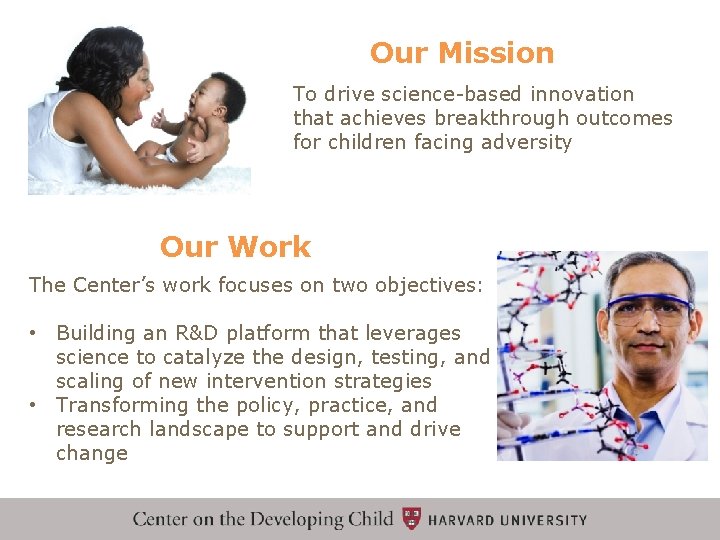
Our Mission To drive science-based innovation that achieves breakthrough outcomes for children facing adversity Our Work The Center’s work focuses on two objectives: • Building an R&D platform that leverages science to catalyze the design, testing, and scaling of new intervention strategies • Transforming the policy, practice, and research landscape to support and drive change
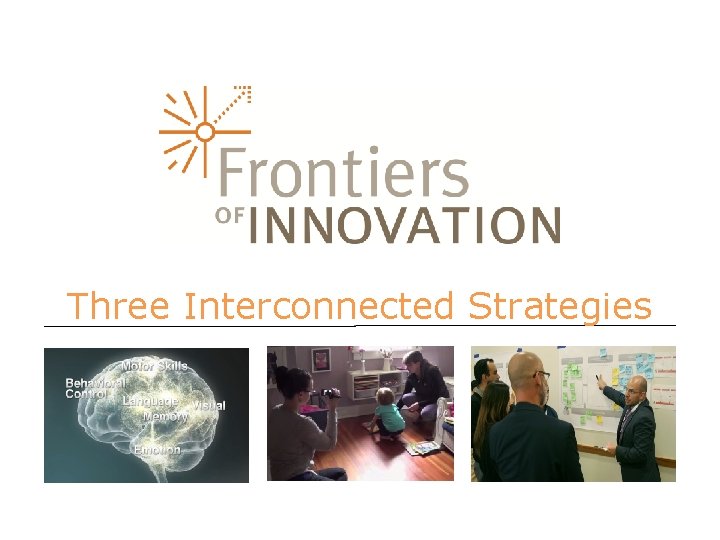
Three Interconnected Strategies
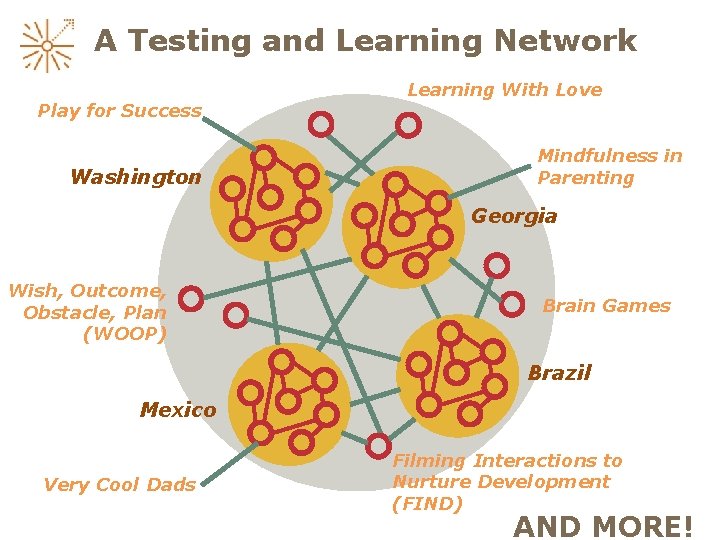
A Testing and Learning Network Play for Success Washington Learning With Love Mindfulness in Parenting Georgia Wish, Outcome, Obstacle, Plan (WOOP) Brain Games Brazil Mexico Very Cool Dads Filming Interactions to Nurture Development (FIND) AND MORE!
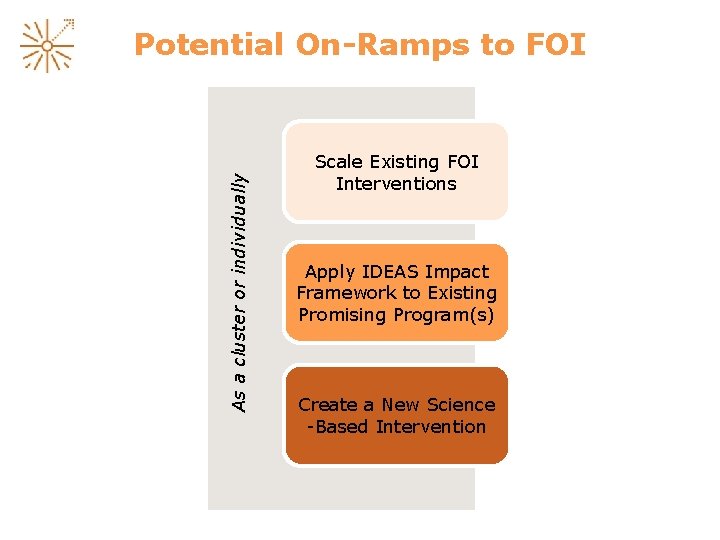
As a cluster or individually Potential On-Ramps to FOI Scale Existing FOI Interventions Apply IDEAS Impact Framework to Existing Promising Program(s) Create a New Science -Based Intervention
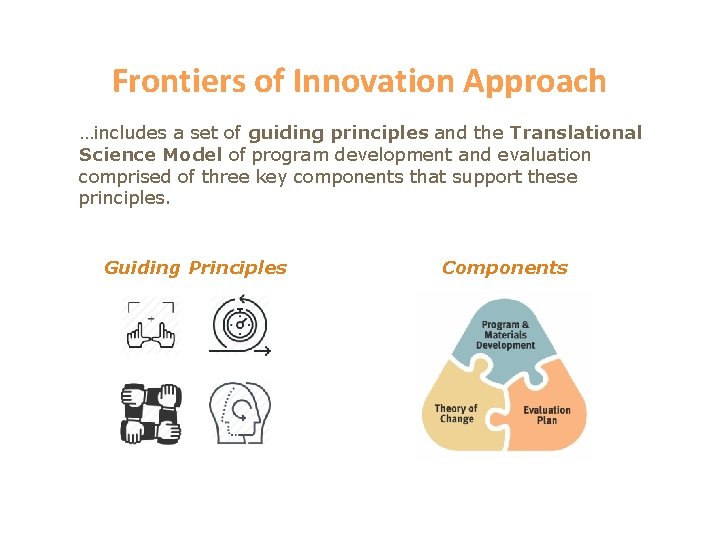
Frontiers of Innovation Approach …includes a set of guiding principles and the Translational Science Model of program development and evaluation comprised of three key components that support these principles. Guiding Principles Components
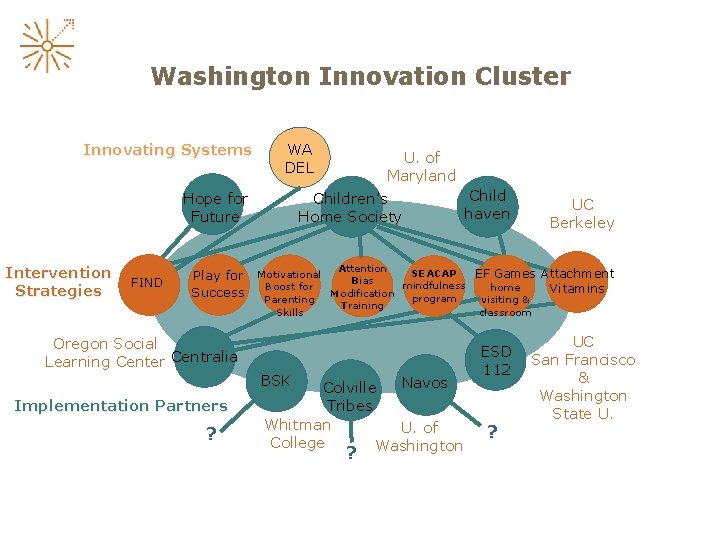
Washington Innovation Cluster Innovating Systems WA DEL Hope for Future Intervention Strategies FIND Play for Success U. of Maryland Children’s Home Society BSK ? UC Berkeley Attention SEACAP Motivational EF Games Bias mindfulness Boost for home Modification program Parenting visiting & Training Skills classroom Oregon Social Learning Center Centralia Implementation Partners Child haven Navos Colville Tribes Whitman U. of College Washington ? ESD 112 ? Attachment Vitamins UC San Francisco & Washington State U.
Frontiers of Innovation Portfolio
Toolbox
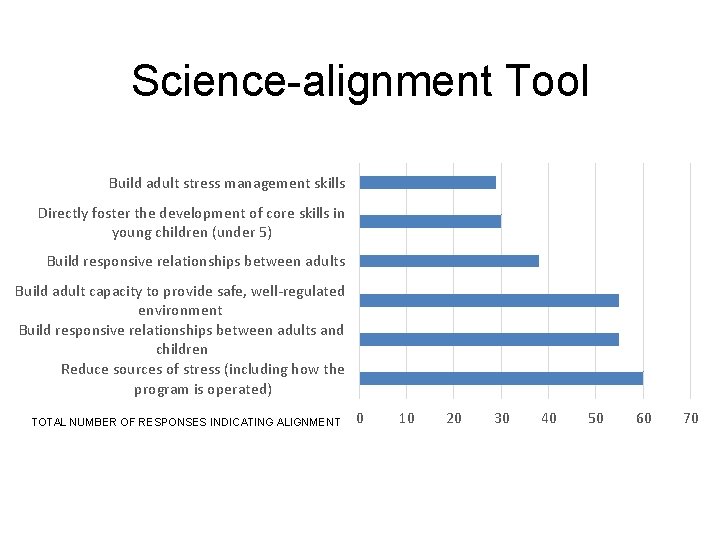
Science-alignment Tool Build adult stress management skills Directly foster the development of core skills in young children (under 5) Build responsive relationships between adults Build adult capacity to provide safe, well-regulated environment Build responsive relationships between adults and children Reduce sources of stress (including how the program is operated) TOTAL NUMBER OF RESPONSES INDICATING ALIGNMENT 0 10 20 30 40 50 60 70
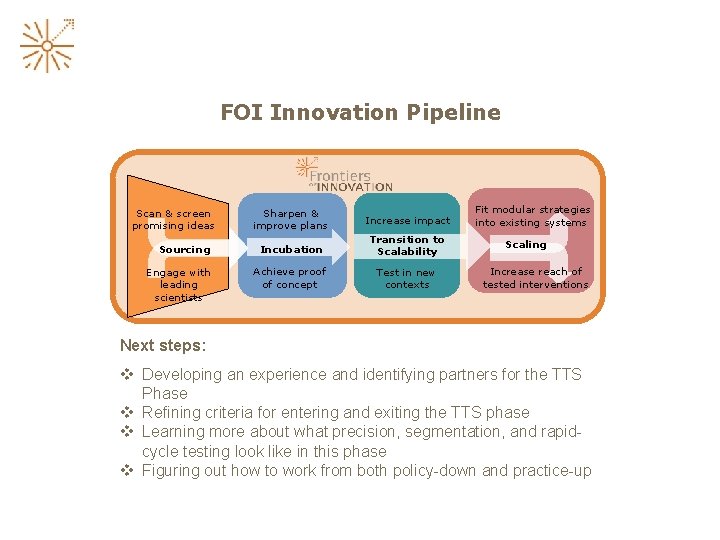
FOI Innovation Pipeline Scan & screen promising ideas Sharpen & improve plans Increase impact Sourcing Incubation Transition to Scalability Engage with leading scientists Achieve proof of concept Test in new contexts Fit modular strategies into existing systems Scaling Increase reach of tested interventions Next steps: v Developing an experience and identifying partners for the TTS Phase v Refining criteria for entering and exiting the TTS phase v Learning more about what precision, segmentation, and rapidcycle testing look like in this phase v Figuring out how to work from both policy-down and practice-up
Visit Our Website: https: //developingchild. Harvard. edu
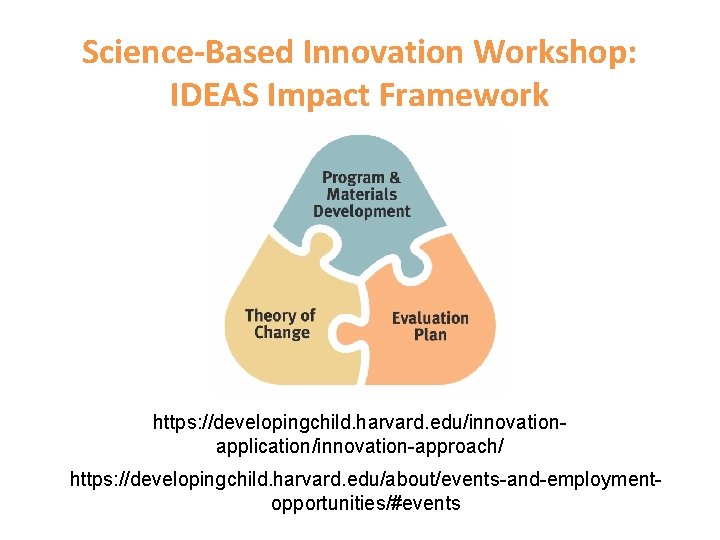
Science-Based Innovation Workshop: IDEAS Impact Framework https: //developingchild. harvard. edu/innovationapplication/innovation-approach/ https: //developingchild. harvard. edu/about/events-and-employmentopportunities/#events
Lessons Learned • Plan for frequent communication and build trust • Establish safety to learn from failures and successes • Start small • Seek stakeholder input first and continue throughout process (human-centered design) • Match evaluation plan to developmental stage – don’t start with RTC • Pay attention to feasibility • Map out fast cycles ahead of time with early check points • Seek clarity in theory of change, evaluation plan
Q&A For more information www. wafoi. org