
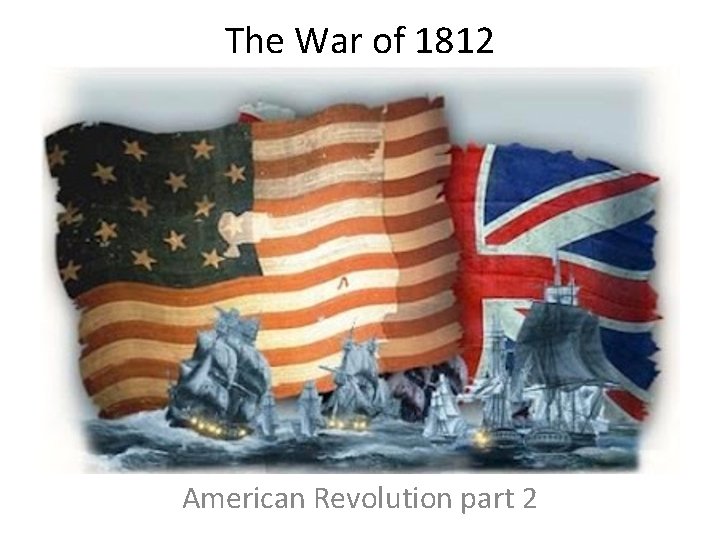
The War of 1812 American Revolution part 2
- Slides: 22
The War of 1812 American Revolution part 2
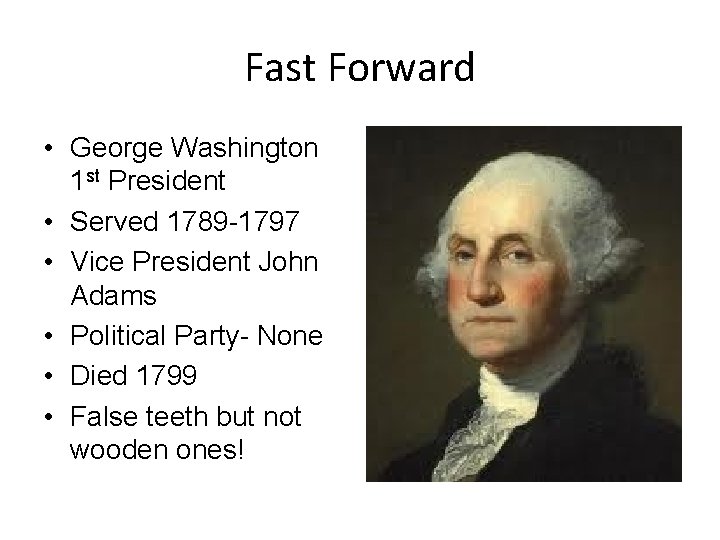
Fast Forward • George Washington 1 st President • Served 1789 -1797 • Vice President John Adams • Political Party- None • Died 1799 • False teeth but not wooden ones!
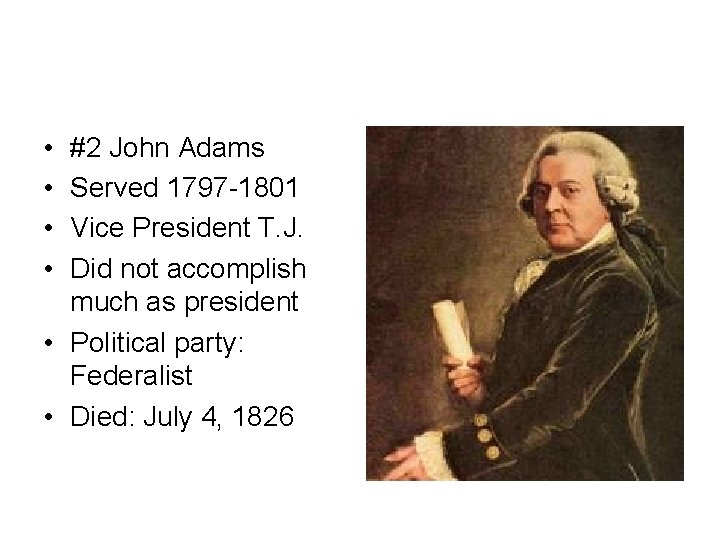
• • #2 John Adams Served 1797 -1801 Vice President T. J. Did not accomplish much as president • Political party: Federalist • Died: July 4, 1826
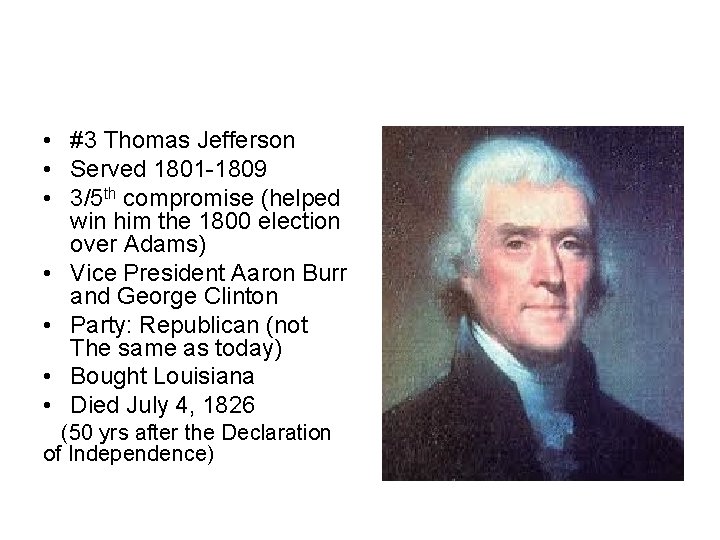
• #3 Thomas Jefferson • Served 1801 -1809 • 3/5 th compromise (helped win him the 1800 election over Adams) • Vice President Aaron Burr and George Clinton • Party: Republican (not The same as today) • Bought Louisiana • Died July 4, 1826 (50 yrs after the Declaration of Independence)
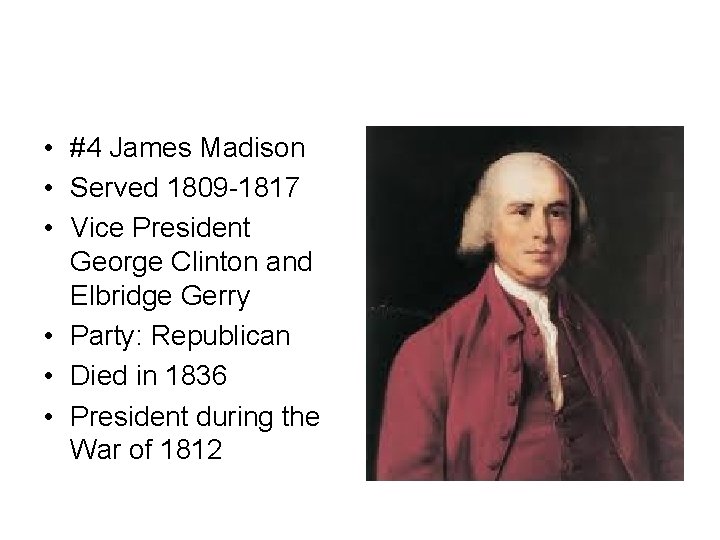
• #4 James Madison • Served 1809 -1817 • Vice President George Clinton and Elbridge Gerry • Party: Republican • Died in 1836 • President during the War of 1812
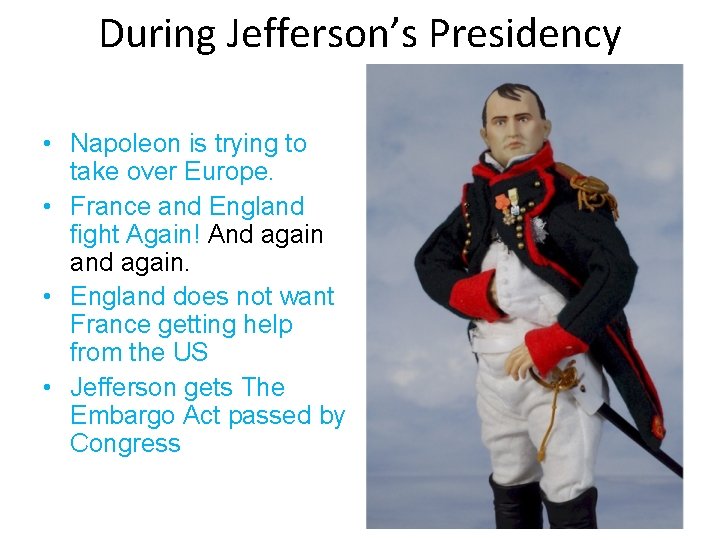
During Jefferson’s Presidency • Napoleon is trying to take over Europe. • France and England fight Again! And again and again. • England does not want France getting help from the US • Jefferson gets The Embargo Act passed by Congress
Vocab • Impressment –British practice of forcing people, including U. S. citizens, to serve in the British army or navy • Embargo- banning of trade with a country • Embargo act- 1807 law that prohibited American merchants from trading with other countries • Nationalism- belief in, love of and support of one’s country
Before the War (Causes) • Prior to the war England was impressing U. S. sailors to help fight against France. • Congress enacts the “Embargo Act” to punish both England France and to protect U. S. Ships. Mostly, it ended up hurting American merchants. • England was encouraging Native Americans to fight against the U. S. • One of the most influential Native American leaders was the Shawnee Chief Tecumseh. He planned to unite western tribes against the U. S. Killed in the Battle of Thames Oct 5, 1813
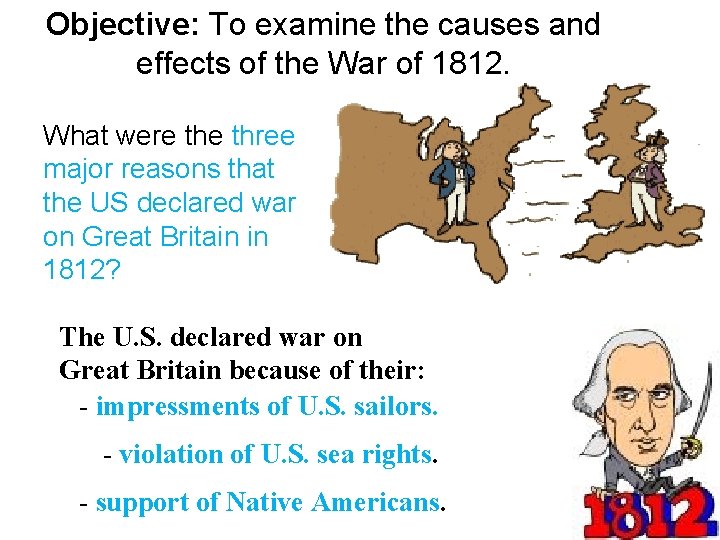
Objective: To examine the causes and effects of the War of 1812. What were three major reasons that the US declared war on Great Britain in 1812? The U. S. declared war on Great Britain because of their: - impressments of U. S. sailors. - violation of U. S. sea rights. - support of Native Americans.
Early in the War • The next generation of leaders were in Congress at this time. Men like Henry Clay of KY and John C. Calhoun of S. C. These young men that wanted war were known as War hawks. • War hawks- Members of Congress that favored war with the British and westward expansion of the U. S. • The U. S. declares war on England June 1, 1812. • First Battle was off the coast of Nova Scotia. The U. S. S. Constitution vs H. M. S. Guerriere. • “Old Ironsides” won the battle
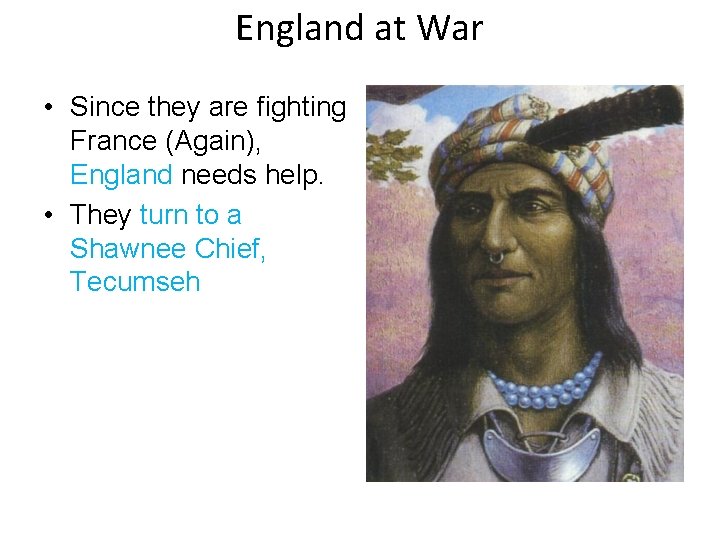
England at War • Since they are fighting France (Again), England needs help. • They turn to a Shawnee Chief, Tecumseh
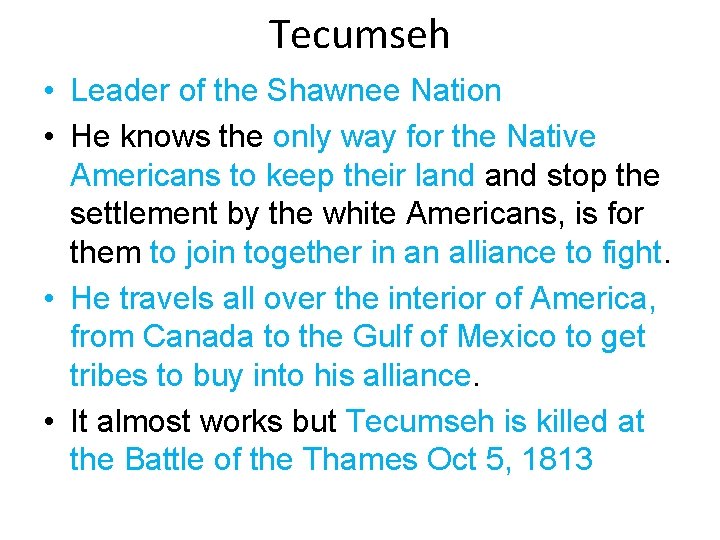
Tecumseh • Leader of the Shawnee Nation • He knows the only way for the Native Americans to keep their land stop the settlement by the white Americans, is for them to join together in an alliance to fight. • He travels all over the interior of America, from Canada to the Gulf of Mexico to get tribes to buy into his alliance. • It almost works but Tecumseh is killed at the Battle of the Thames Oct 5, 1813
It was a good first quarter and then…. • The Americans won a number of early battles in the war • Privateers attack British shipping • But…. England did not have its first string in. • The war with Napoleon ends and England sends over the A team. • Things change in a hurry
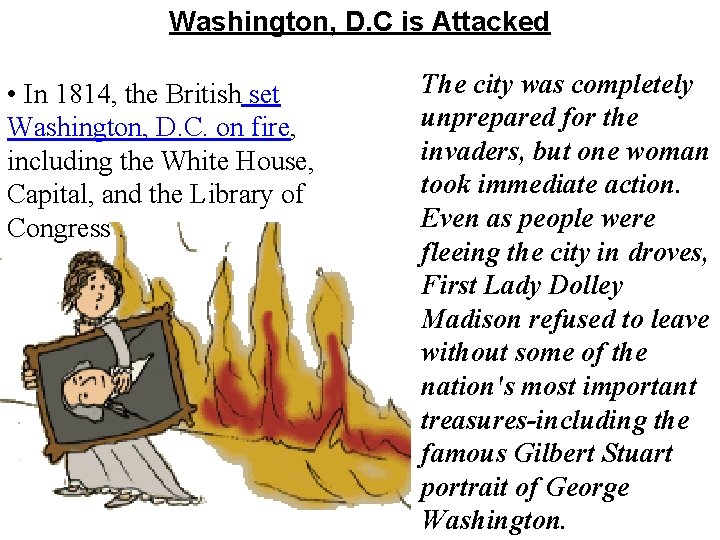
Washington, D. C is Attacked • In 1814, the British set Washington, D. C. on fire, including the White House, Capital, and the Library of Congress. The city was completely unprepared for the invaders, but one woman took immediate action. Even as people were fleeing the city in droves, First Lady Dolley Madison refused to leave without some of the nation's most important treasures-including the famous Gilbert Stuart portrait of George Washington.
After D. C. • After the U. S. defeat at Bladensburg, a well respected and well connected American doctor, Dr. Wiliam Beanes was giving aid to wounded soldiers, both American and British. The British troops left him alone. Later, he participated in having 4 drunk British deserters locked up. This did not set well with British General Ross, and he had Dr. Beanes arrested and taken out to his flagship. • Friends of Dr. Beanes contacted lawyer Francis Scott Key about seeking his release. Key contacted President Madison about this, seeking approval. Madison heartily approved and even sent Col. John Skinner a U. S. prisoner exchange agent to lend a hand. • The two sailed out to Ross’ flag ship and negotiated Beanes’ release for one week.
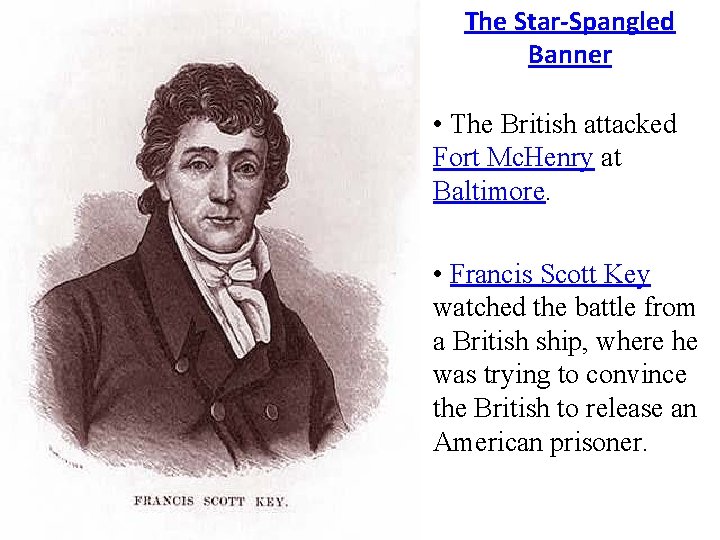
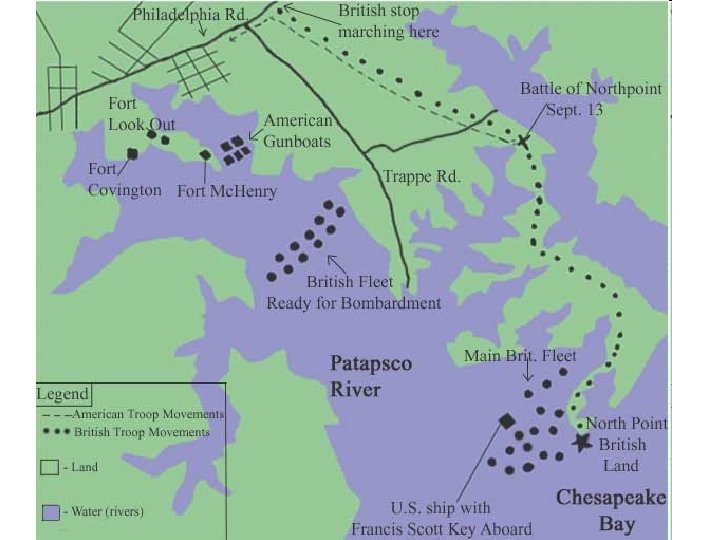
The Star-Spangled Banner • The British attacked Fort Mc. Henry at Baltimore. • Francis Scott Key watched the battle from a British ship, where he was trying to convince the British to release an American prisoner.
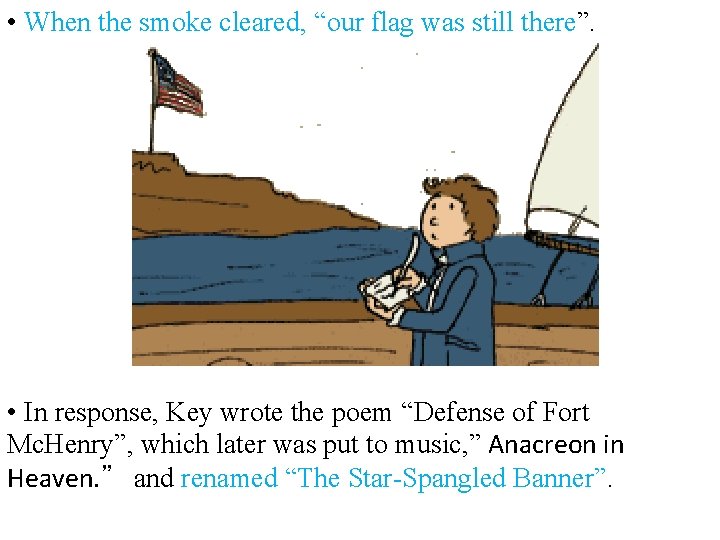
• When the smoke cleared, “our flag was still there”. • In response, Key wrote the poem “Defense of Fort Mc. Henry”, which later was put to music, ” Anacreon in Heaven. ” and renamed “The Star-Spangled Banner”.
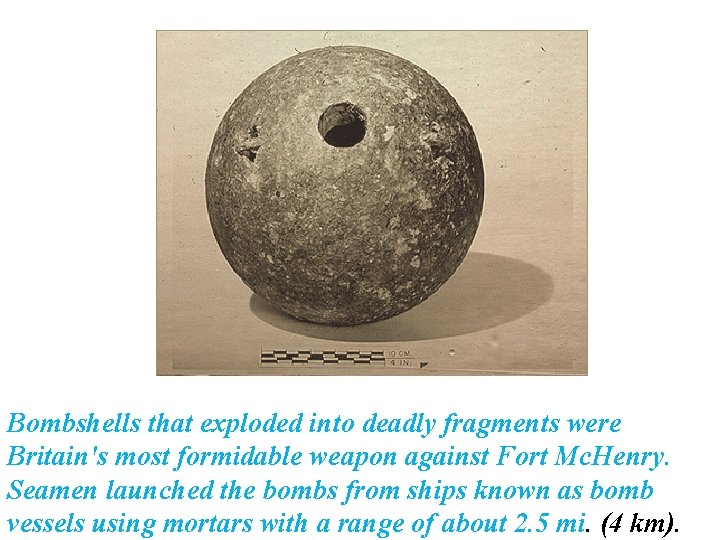
Bombshells that exploded into deadly fragments were Britain's most formidable weapon against Fort Mc. Henry. Seamen launched the bombs from ships known as bomb vessels using mortars with a range of about 2. 5 mi. (4 km).
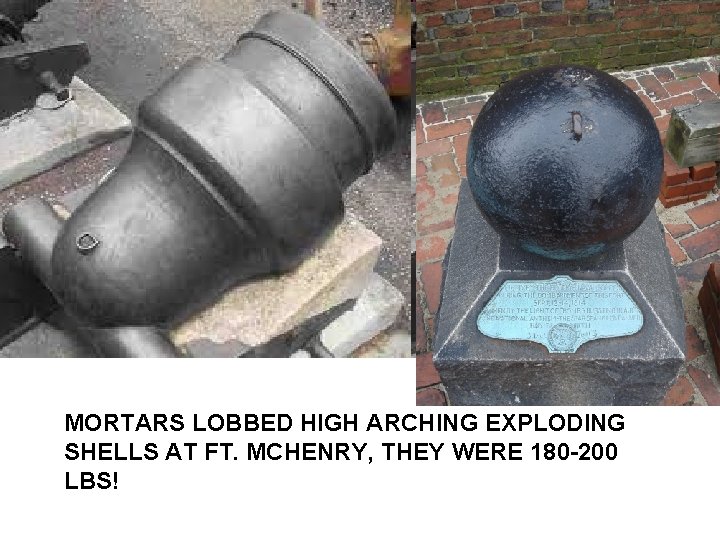
MORTARS LOBBED HIGH ARCHING EXPLODING SHELLS AT FT. MCHENRY, THEY WERE 180 -200 LBS!
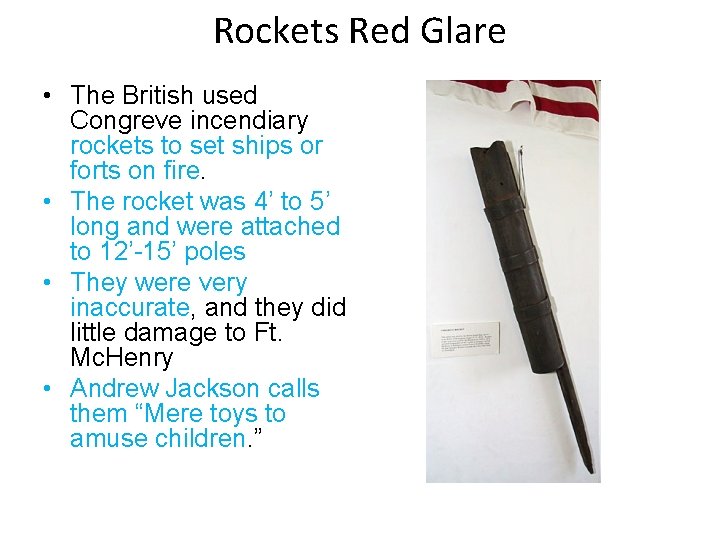
Rockets Red Glare • The British used Congreve incendiary rockets to set ships or forts on fire. • The rocket was 4’ to 5’ long and were attached to 12’-15’ poles • They were very inaccurate, and they did little damage to Ft. Mc. Henry • Andrew Jackson calls them “Mere toys to amuse children. ”
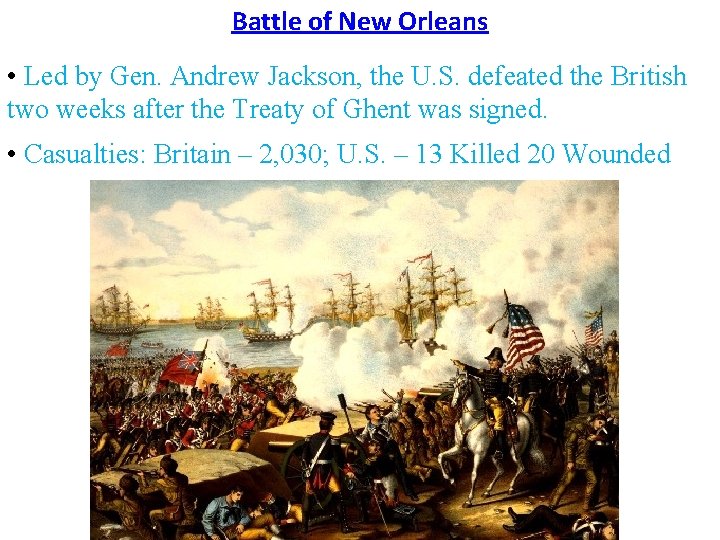
Battle of New Orleans • Led by Gen. Andrew Jackson, the U. S. defeated the British two weeks after the Treaty of Ghent was signed. • Casualties: Britain – 2, 030; U. S. – 13 Killed 20 Wounded