
The War for Independence Was Separation from England
- Slides: 26
The War for Independence Was Separation from England Inevitable?
Why do I care? The Dominion of Canada received her independence from Great Britain on July 1, 1867, in a bloodless agreement while America was recovering from her own civil war. If Americans had waited nearly another century, would the “War for Independence” even have been necessary?
Vocabulary § patriots § colonists who wanted independence from Britain § § § included farmers, artisans, merchants, and land owners saw economic opportunity in independent nation made up little less than 50% of the population § loyalists § colonists who were loyal to Britain § § § some served as judges, councilors, or governors many Native Americans felt that KG 3 would protect their rights better than colonial government
Attempts at Peace (1) § May 1775 § Second Continental Congress § creation of the Continental Army § George Washington in charge
Battle of (Breed’s) Bunker Hill, MA § June 17, 1775 § 1, 054 British casualties § 226 killed § § 100 colonists killed 267 wounded 30 taken prisoner deadliest battle of the war
As a result of the fighting at Breed’s Hill and Bunker Hill A. King George rebuked his commanders in North America. B. the colonists almost gave up hope of a military solution. C. the British offered the Olive Branch Petition seeking peace. D. the colonists won two major victories. E. British casualties ended the possibility of reconciliation.
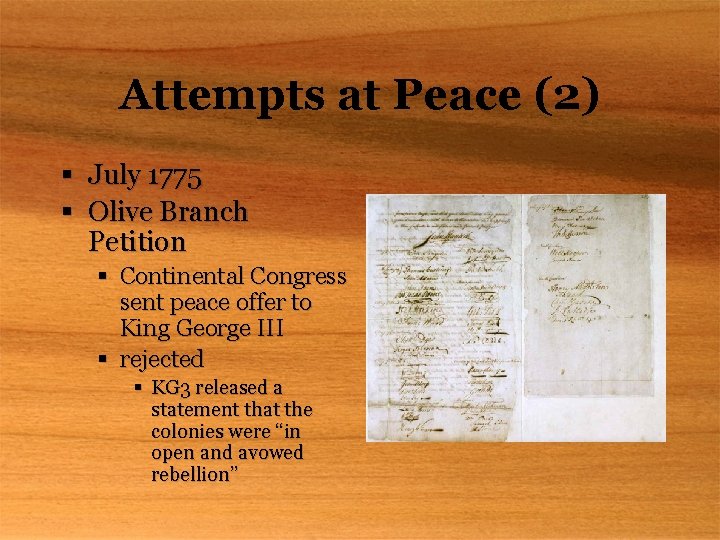
Attempts at Peace (2) § July 1775 § Olive Branch Petition § Continental Congress sent peace offer to King George III § rejected § KG 3 released a statement that the colonies were “in open and avowed rebellion”
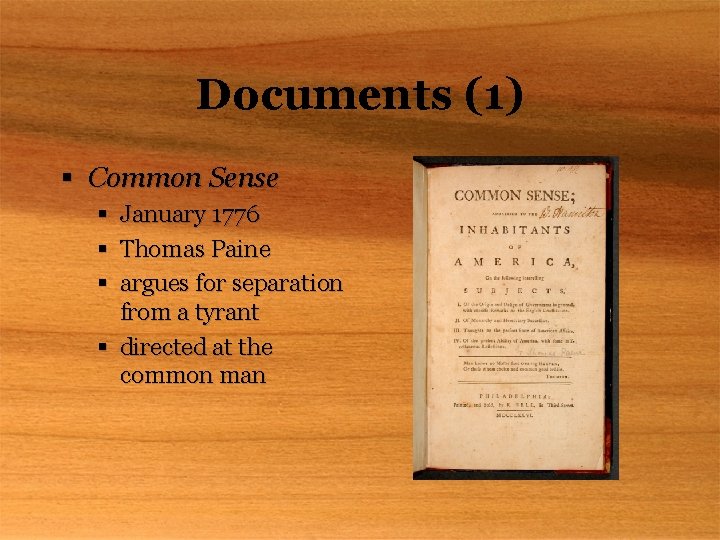
Documents (1) § Common Sense § § § January 1776 Thomas Paine argues for separation from a tyrant § directed at the common man
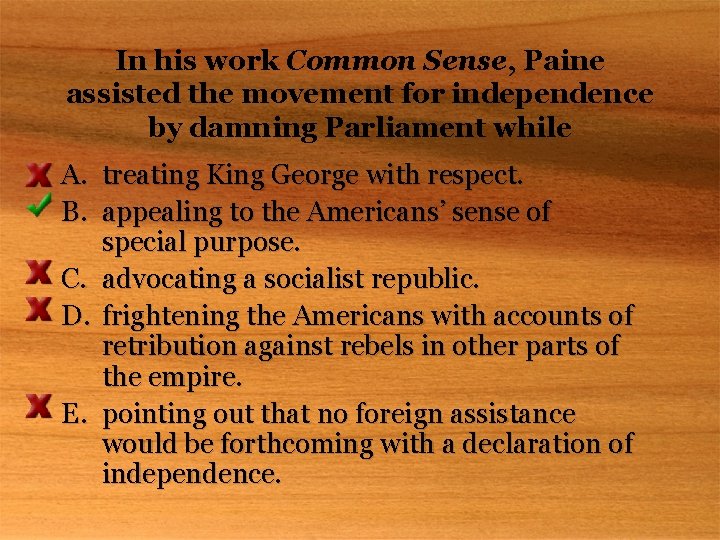
In his work Common Sense, Paine assisted the movement for independence by damning Parliament while A. treating King George with respect. B. appealing to the Americans’ sense of special purpose. C. advocating a socialist republic. D. frightening the Americans with accounts of retribution against rebels in other parts of the empire. E. pointing out that no foreign assistance would be forthcoming with a declaration of independence.
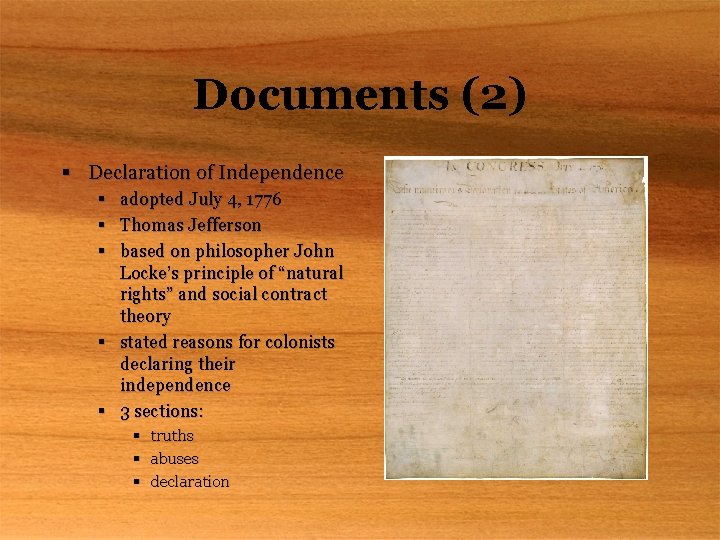
Documents (2) § Declaration of Independence § adopted July 4, 1776 § Thomas Jefferson § based on philosopher John Locke’s principle of “natural rights” and social contract theory § stated reasons for colonists declaring their independence § 3 sections: § § § truths abuses declaration
British Strategy § early stages § isolate New England § naval control/blockade of the east coast § 1778 § shifted South § gain Loyalist support
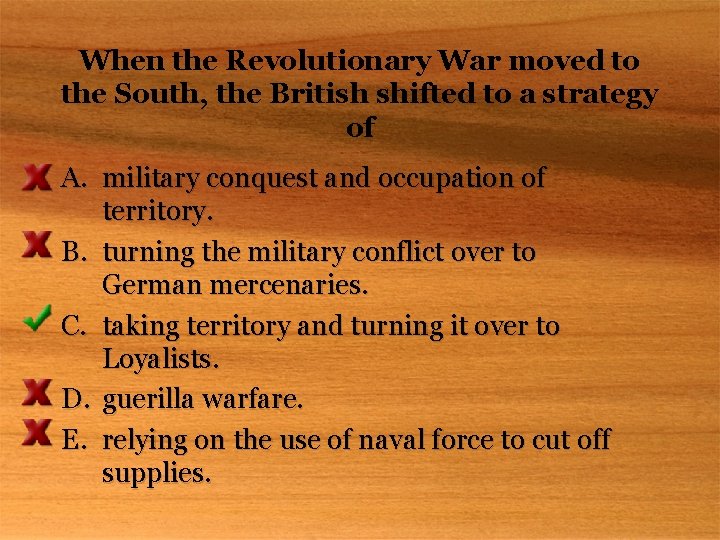
When the Revolutionary War moved to the South, the British shifted to a strategy of A. military conquest and occupation of territory. B. turning the military conflict over to German mercenaries. C. taking territory and turning it over to Loyalists. D. guerilla warfare. E. relying on the use of naval force to cut off supplies.
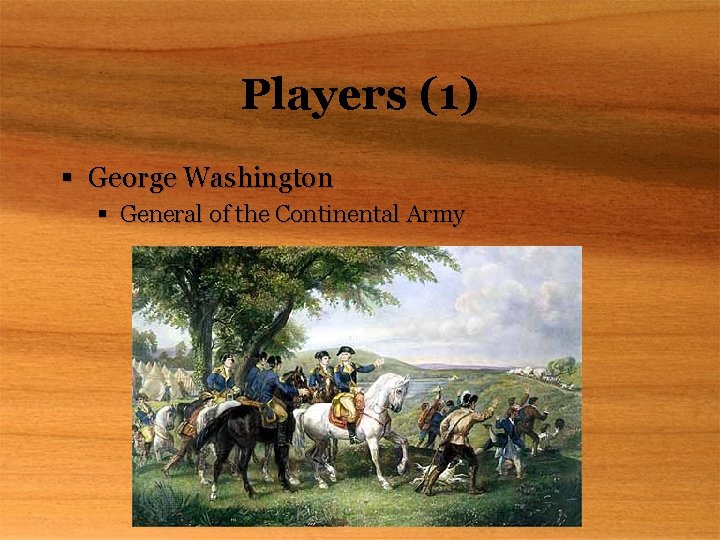
Players (1) § George Washington § General of the Continental Army
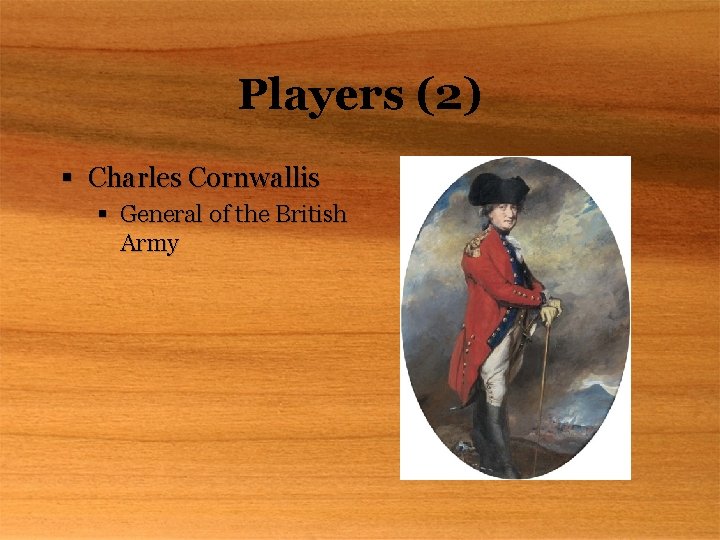
Players (2) § Charles Cornwallis § General of the British Army
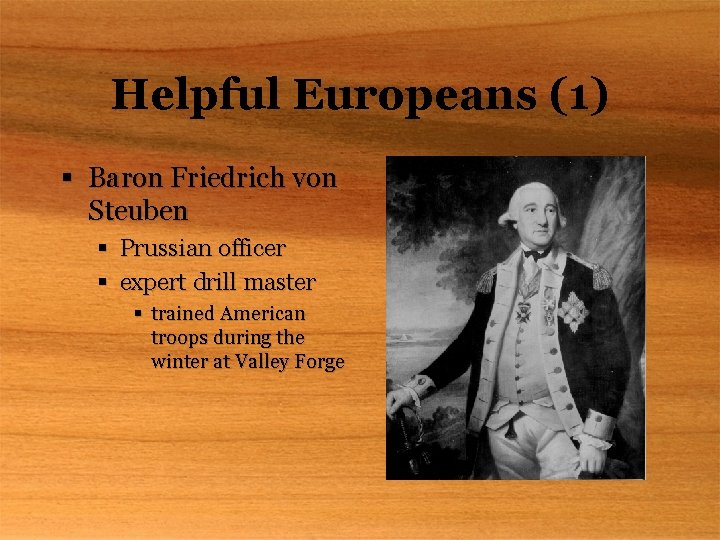
Helpful Europeans (1) § Baron Friedrich von Steuben § Prussian officer § expert drill master § trained American troops during the winter at Valley Forge
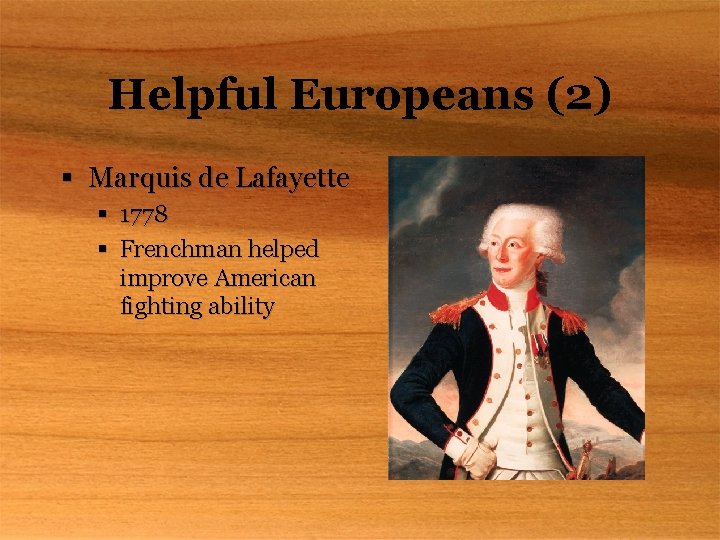
Helpful Europeans (2) § Marquis de Lafayette § 1778 § Frenchman helped improve American fighting ability
Lexington & Concord, MA April 19, 1775 first armed conflict of the war “the shot heard ‘round the world” militia supplied believed to be stored in Concord § 8 militiamen killed § “…give me liberty or give me death!” ~ Patrick Henry § §
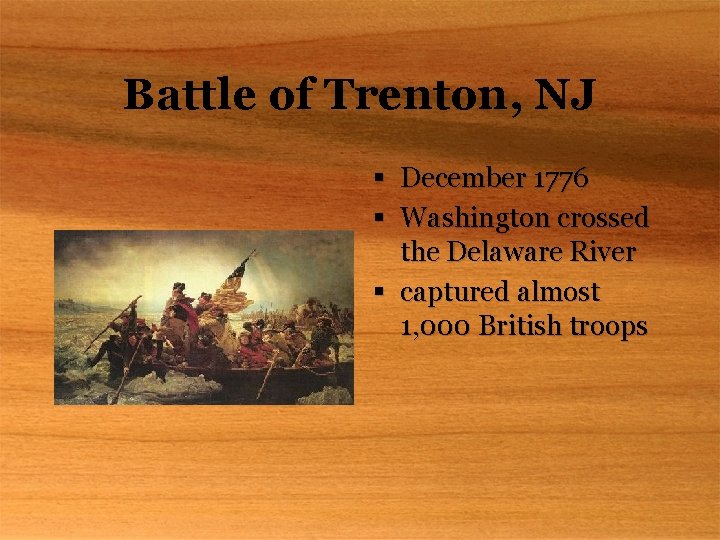
Battle of Trenton, NJ § December 1776 § Washington crossed the Delaware River § captured almost 1, 000 British troops
Battle of Saratoga, NY § § § 1777 colonial victory turning point of the war § French become allies
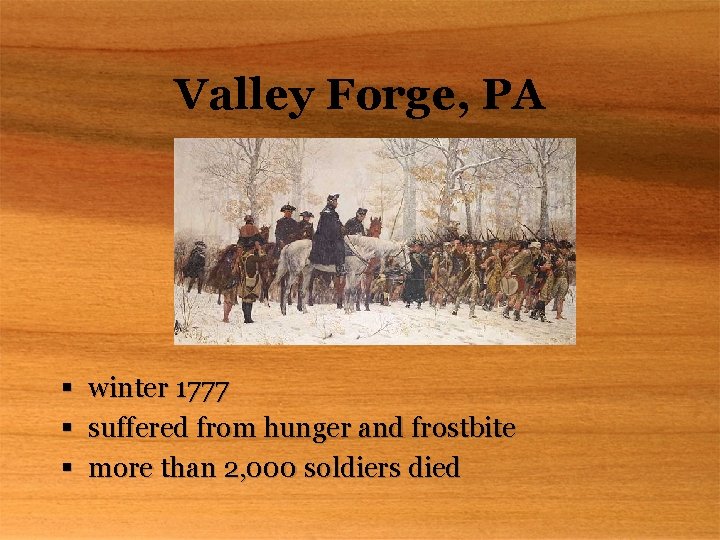
Valley Forge, PA § winter 1777 § suffered from hunger and frostbite § more than 2, 000 soldiers died
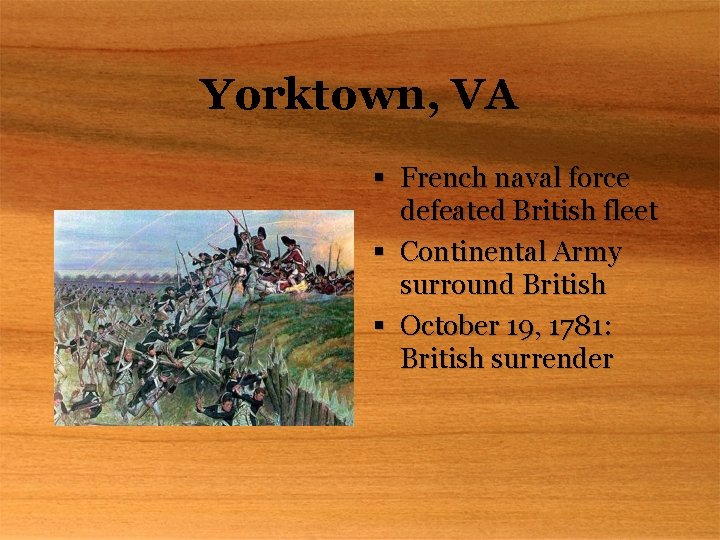
Yorktown, VA § French naval force defeated British fleet § Continental Army surround British § October 19, 1781: British surrender
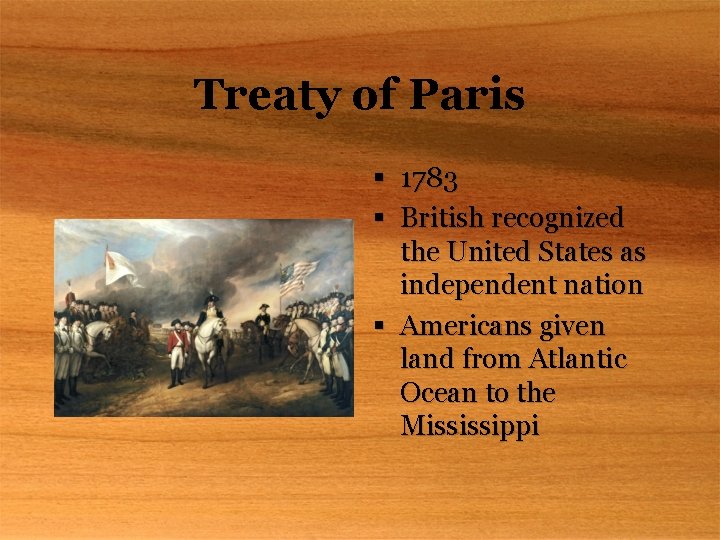
Treaty of Paris § 1783 § British recognized the United States as independent nation § Americans given land from Atlantic Ocean to the Mississippi
Which one of the following is NOT one of the provisions of the Treaty of Paris of 1783? A. the right to fish in northern waters. B. Britain would withdraw from all forts within American territory. C. Britain acknowledged the United States as “free, sovereign, and independent. ” D. Loyalists would not be compensated for property. E. the western boundary of Mississippi.
Effects of War § § § Economic inflation shortage of supplies profiteering Social § women fill traditional men’s roles § some enslaved Africans escaped § 5, 000 served in the Continental Army
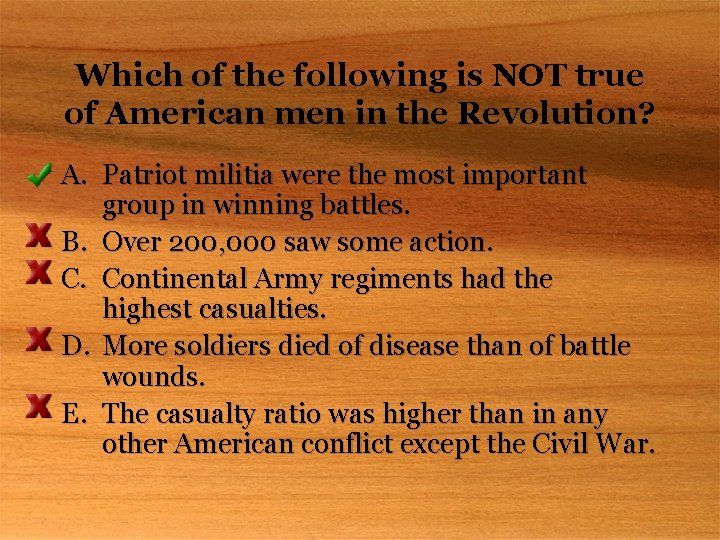
Which of the following is NOT true of American men in the Revolution? A. Patriot militia were the most important group in winning battles. B. Over 200, 000 saw some action. C. Continental Army regiments had the highest casualties. D. More soldiers died of disease than of battle wounds. E. The casualty ratio was higher than in any other American conflict except the Civil War.
Work to be Done § Who should participate in government? § How should the government answer to its people? § Who should be represented in government?