
THE VOCATIONAL PROFILE BUT I JUST WANTED TO
THE VOCATIONAL PROFILE

“BUT I JUST WANTED TO HELP PEOPLE!”
A PROFILE BY ANY OTHER NAME Vocational profile On-going Work Based Vocational Assessment Career profile All of these titles are referring to the same document. This document has changed over the years dependent on emerging research, but in general it is the same document.
BUT WAIT? I THOUGHTWE WEREN’T SUPPOSED TO DO ASSESSMENTS? The IPS model is an “assess as you go” model. We don’t make people wait to get help looking for jobs while requiring them to jump through months of hoops first. Community-based Work Assessments Neuropsychological Evaluations Functional Assessments
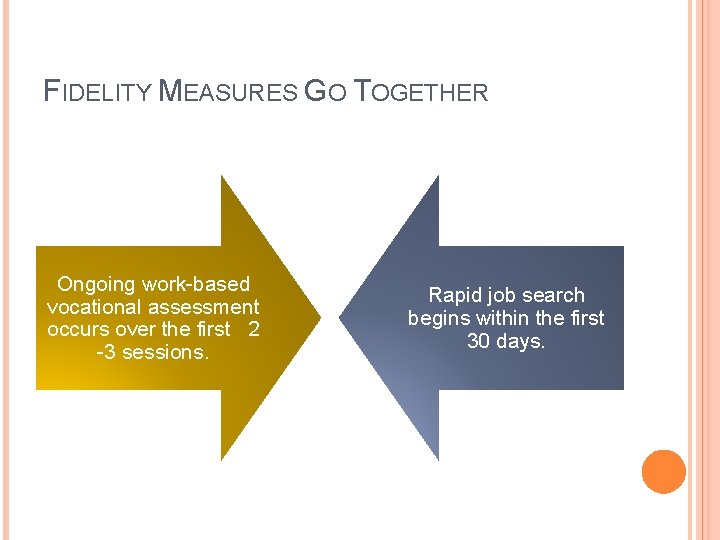
FIDELITY MEASURES GO TOGETHER Ongoing work-based vocational assessment occurs over the first 2 -3 sessions. Rapid job search begins within the first 30 days.
FIDELITY POINTS Does it take 2 -3 sessions on average for you to complete the profile with clients? Are you updating the profile with information with each new job experience? (For instance, using job start and job end forms. ) Does your vocational profile form include information about preferences, experiences, skills, current adjustment, strengths, personal contacts, etc. ? Do you include sources of information outside of just the participant? For instance, the treatment team, clinical records, and with the client’s permission, from family members and previous employers?
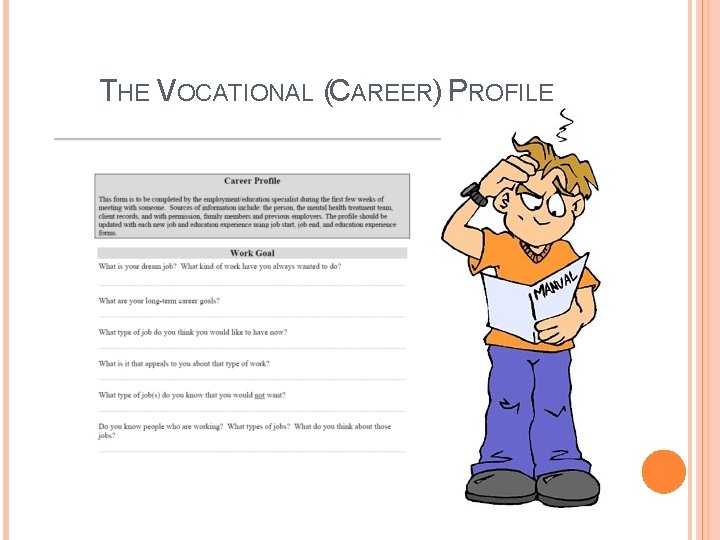
THE VOCATIONAL (CAREER) PROFILE
WHAT CAN HAPPEN WHEN WE DO NOT COMPLETE THE CAREER PROFILE FIRST The person ends up working in the same type of job that didn’t work for them before. They end up getting fired or quitting for the same reasons they did prior to IPS program entry.
WHAT CAN HAPPEN WHEN WE DO NOT COMPLETE THE CAREER PROFILE FIRST Examples: � Person had a criminal history and ES did not know but employer found out and fired person. � Person had issues with rage towards supervisors and became violent on the job and was fired. � Person did not have skills necessary to complete minimum requirements of a job. ES had to beg employer not to fire the person while looking for training to get them skills needed. � Person in recovery and new job environment triggered addiction relapse. � Person really wanted to work with children… thank goodness they were not able to get a job doing this right away as the person had a history of crimes against children!
WHAT IF THE PERSON DOESN’T WANT TO FILL IT OUT? Don’t panic! There can be more than one way to fill out a vocational profile!
POSSIBILITY THINKING! OR
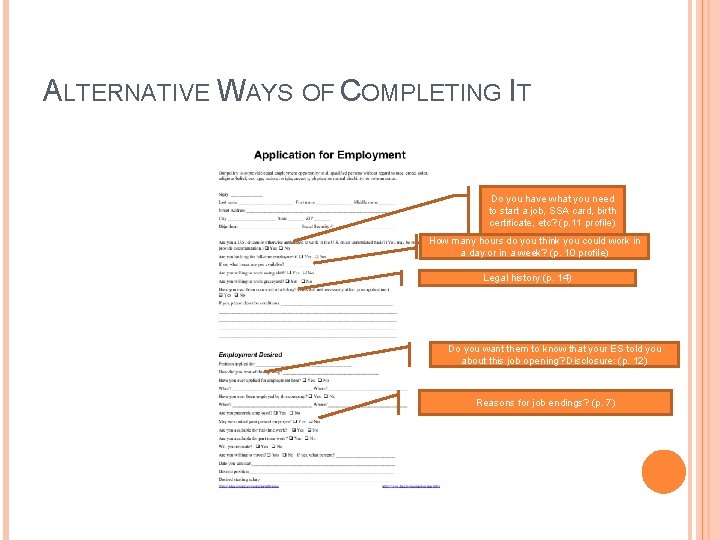
ALTERNATIVE WAYS OF COMPLETING IT Do you have what you need to start a job, SSA card, birth certificate, etc? (p. 11 profile) How many hours do you think you could work in a day or in a week? (p. 10 profile) Legal history (p. 14) Do you want them to know that your ES told you about this job opening? Disclosure: (p. 12) Reasons for job endings? (p. 7)
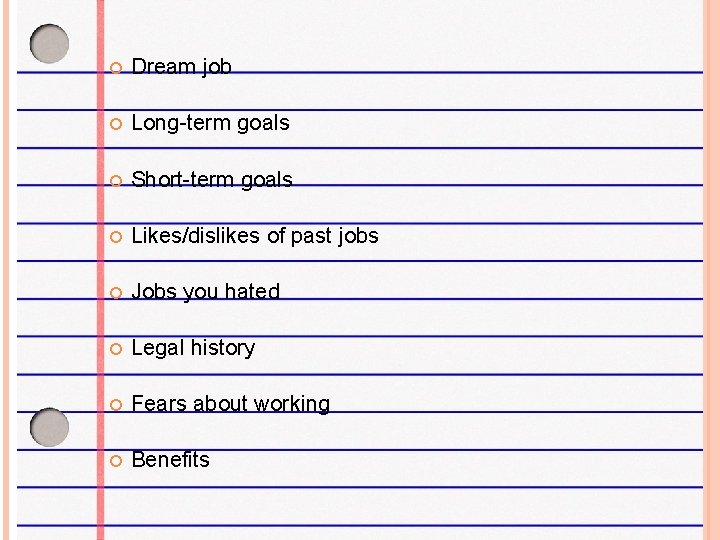
Dream job Long-term goals Short-term goals Likes/dislikes of past jobs Jobs you hated Legal history Fears about working Benefits
JOB MATCH By using the IPS model, we keep information from the career profile in mind when we are looking for jobs that match: Needs: environmental, physiological, psychological, social, cultural… Preferences Interests What’s worked rather than what hasn’t Strengths rather than barriers Long Term Career Goals 2012 Oregon Survey of IPS Graduates: 6 mos- 3 years post IPS graduation= 69% of the clients still had their jobs!
PLEASE DO: Fill out the profile with the person and whomever the person would like to be present. Offer to include significant others or people involved in the person’s life. Offer to call previous employers to find out if they will get a good reference. Take more than one appointment to fill out the questions but not more than three, if possible.
THE PURPOSE OF IPS DOCUMENTATION The purpose of the paperwork is not just for the sake of doing paperwork: 1. It triggers you to stop, evaluate, and plan rather than always flying by the seat of your pants and hoping for the best. 2. It helps us to not forget to address important things that will increase the client’s likelihood of success on the job.
QUESTIONS? What questions have you had about the IPS documentation that we did not cover? What other questions might you have? Contact: Tammy Guest, MA IPS Statewide Trainer Oregon Supported Employment Center for Excellence 541 -295 -5103 tguest@optionsonline. org www. osece. org
- Slides: 17