
The Visual System in Flight Visual Test What
- Slides: 57
The Visual System in Flight
Visual Test
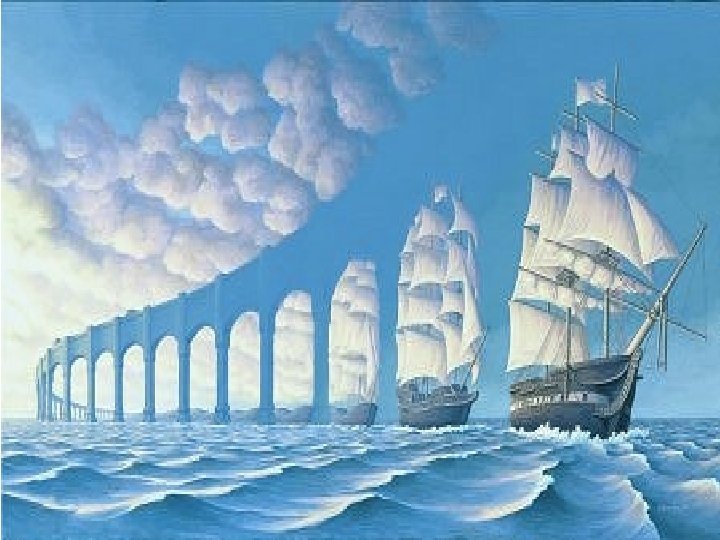
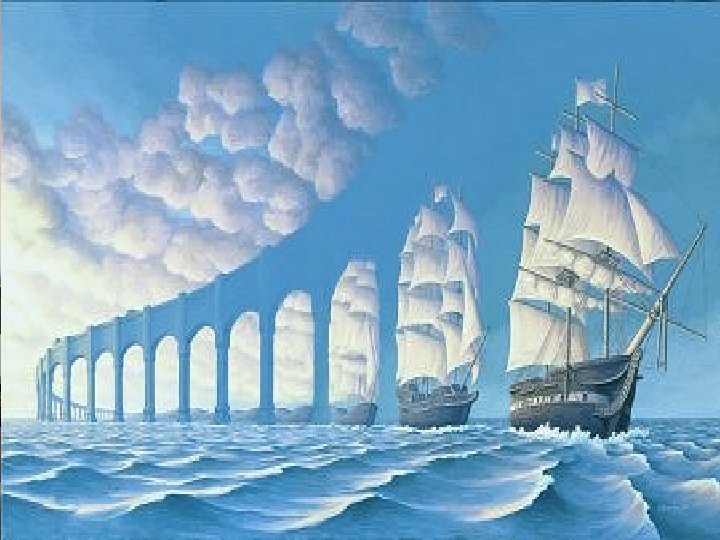
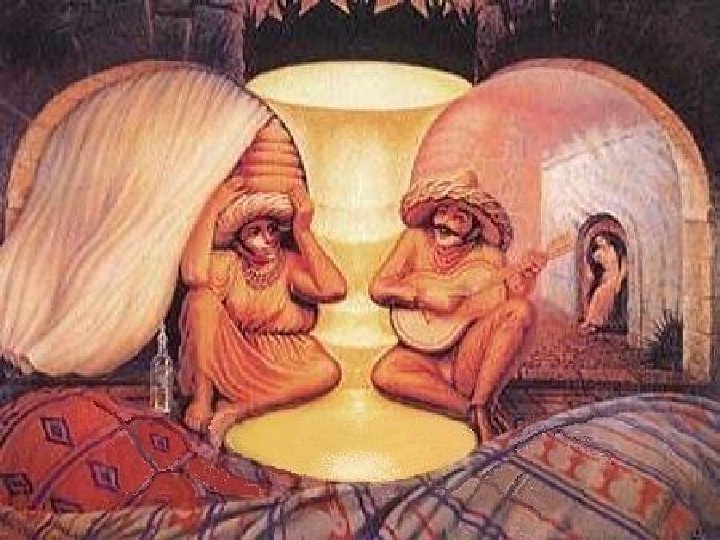
What did you see?
What did you see?
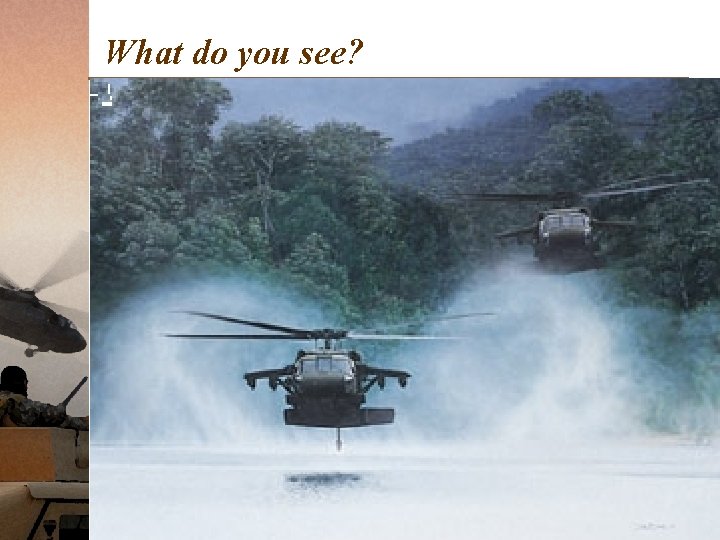
What do you see?
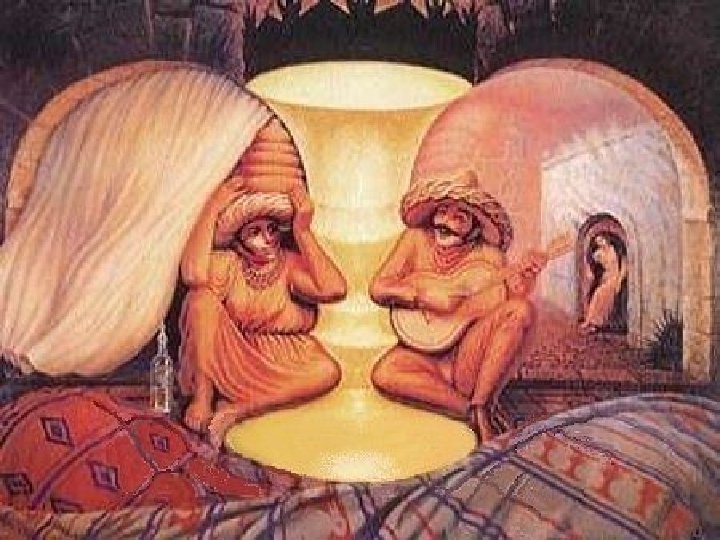
What did you see?
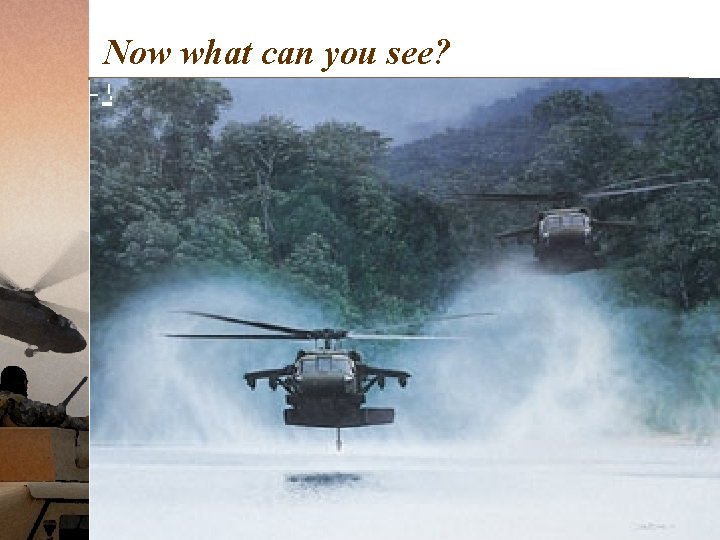
Now what can you see?
You Need to Focus
Terminal Learning Objective u Action: Manage the effects of visual limitations during flight u Conditions: While performing as an aircrew member u Standards: IAW TC 3 -04. 93, FM 3 -04. 203, Fundamentals of Aerospace Medicine, 3 rd Ed. , and Aeromedical Policy Letter (APL) entitled Corneal Refractive Surgery dated 12 Feb 07
ELO A u Action: Identify the components of the eye and its functions u Conditions: Given a list u Standards: IAW TC 3 -04. 93
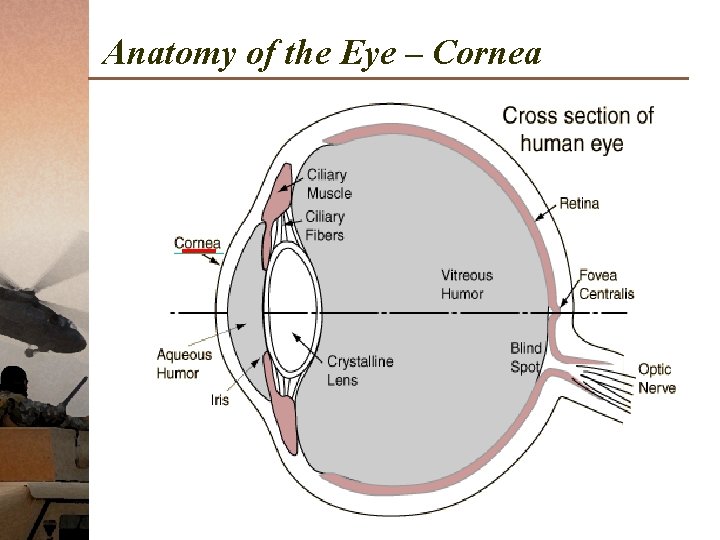
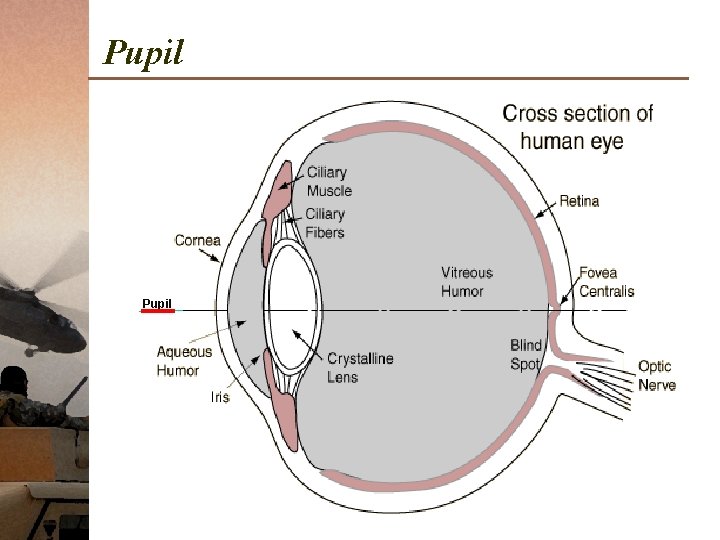
Anatomy of the Eye – Cornea
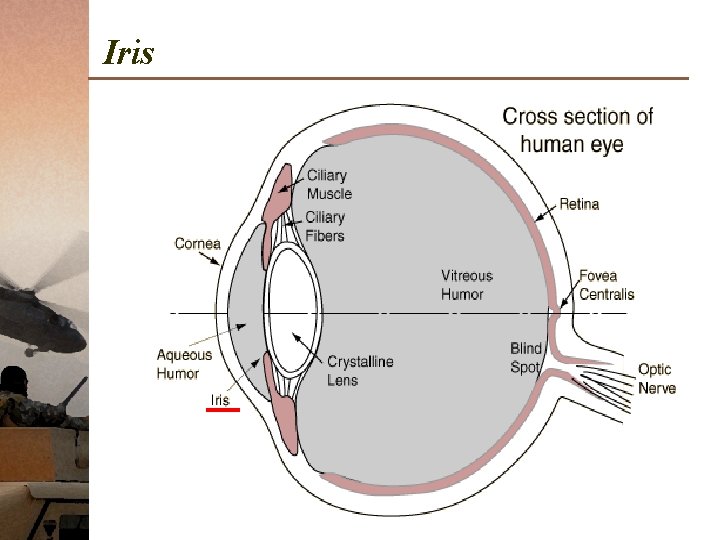
Iris
Pupil
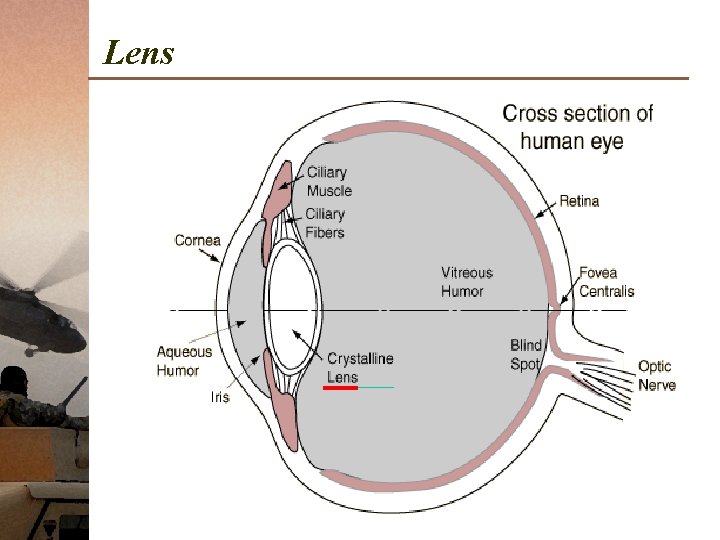
Lens
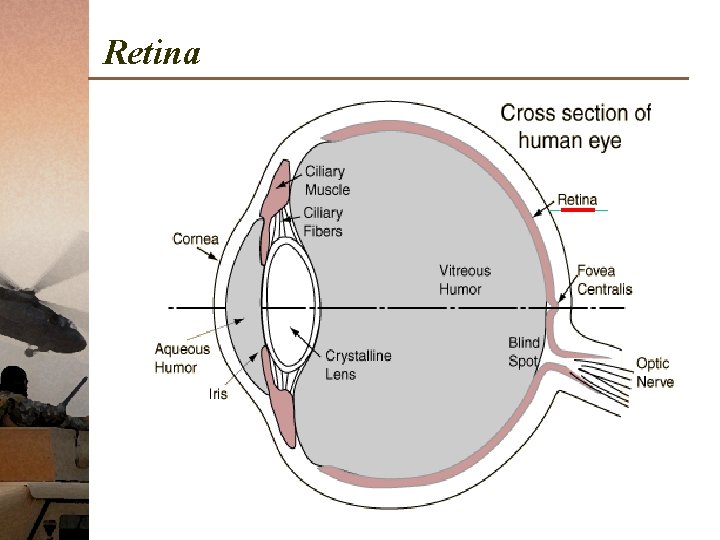
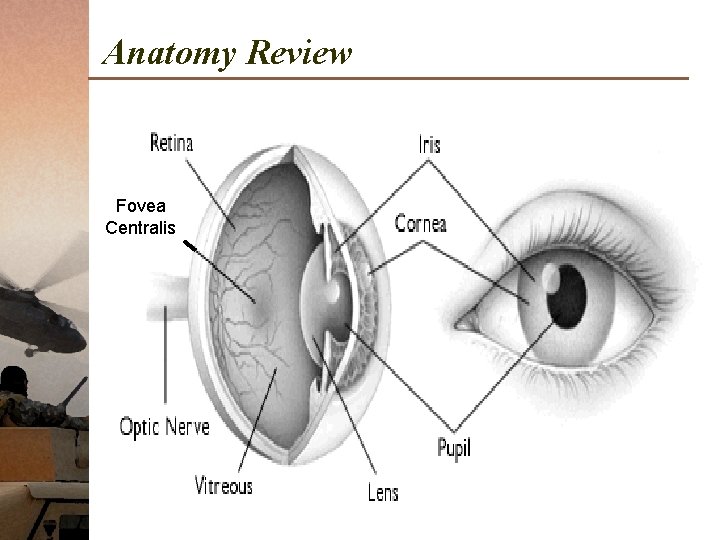
Retina
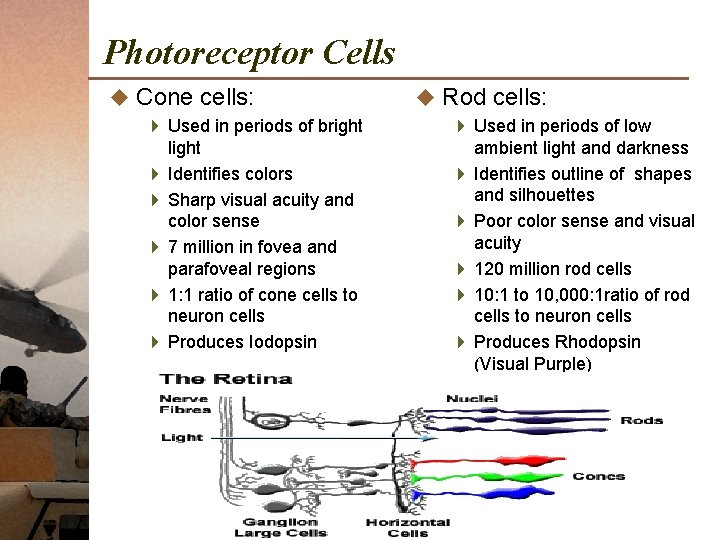
Photoreceptor Cells u Cone cells: 4 Used in periods of bright light 4 Identifies colors 4 Sharp visual acuity and color sense 4 7 million in fovea and parafoveal regions 4 1: 1 ratio of cone cells to neuron cells 4 Produces Iodopsin u Rod cells: 4 Used in periods of low ambient light and darkness 4 Identifies outline of shapes and silhouettes 4 Poor color sense and visual acuity 4 120 million rod cells 4 10: 1 to 10, 000: 1 ratio of rod cells to neuron cells 4 Produces Rhodopsin (Visual Purple)
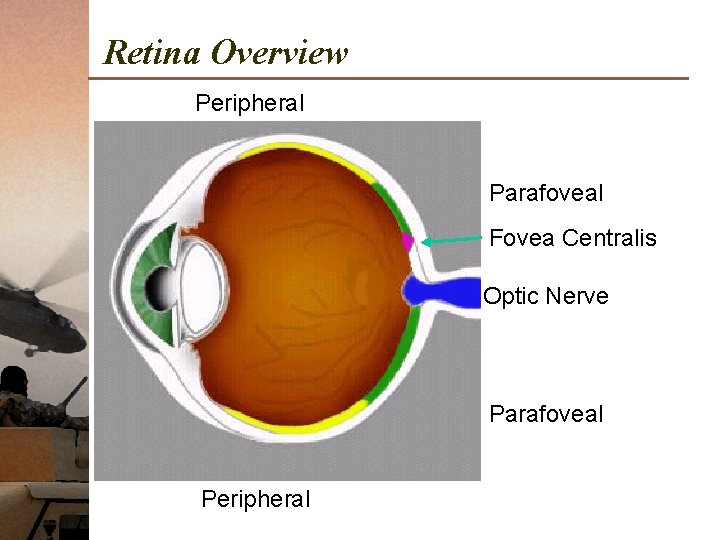
Retina Overview Peripheral Parafoveal Fovea Centralis Optic Nerve Parafoveal Peripheral
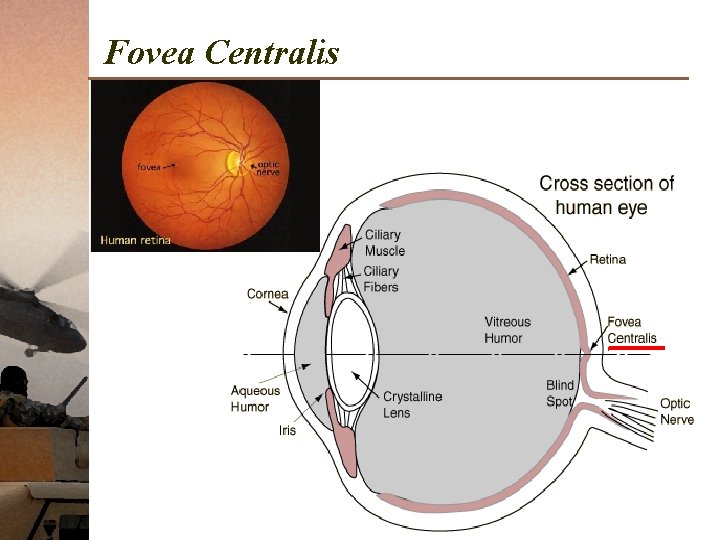
Fovea Centralis
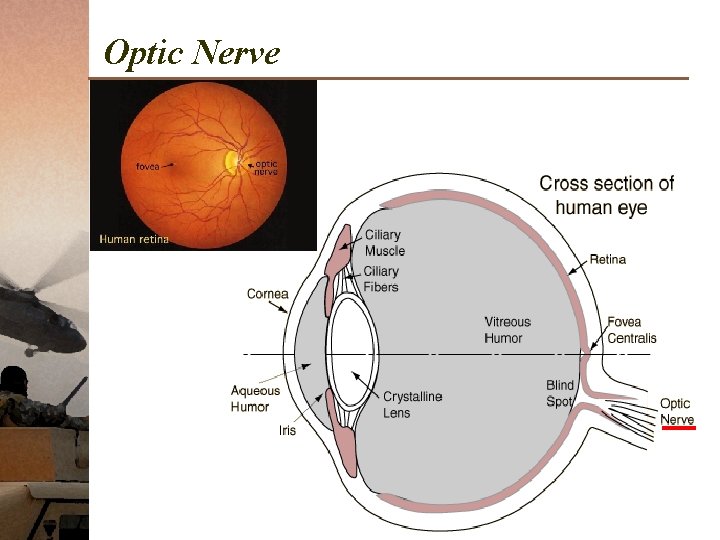
Optic Nerve
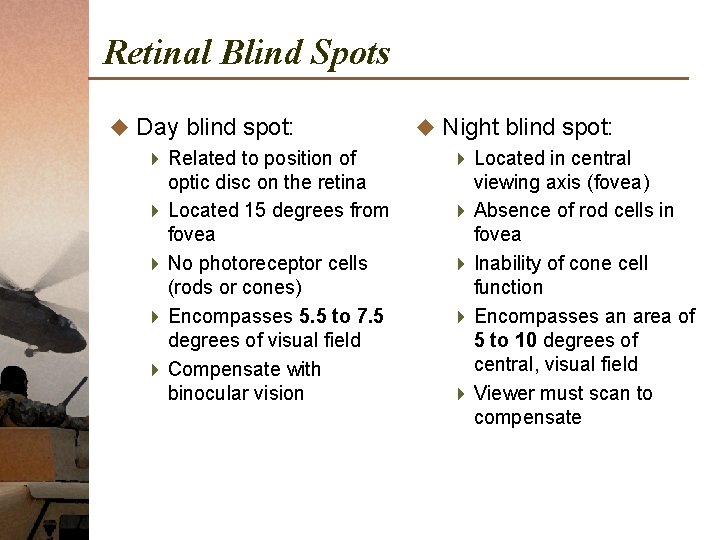
Retinal Blind Spots u Day blind spot: 4 Related to position of optic disc on the retina 4 Located 15 degrees from fovea 4 No photoreceptor cells (rods or cones) 4 Encompasses 5. 5 to 7. 5 degrees of visual field 4 Compensate with binocular vision u Night blind spot: 4 Located in central viewing axis (fovea) 4 Absence of rod cells in fovea 4 Inability of cone cell function 4 Encompasses an area of 5 to 10 degrees of central, visual field 4 Viewer must scan to compensate
Anatomy Review Fovea Centralis
QUESTIONS?
ELO B u Action: Identify the common visual deficiencies u Conditions: Given a list u Standards : IAW TC 3 -04. 93, AR 40 -501
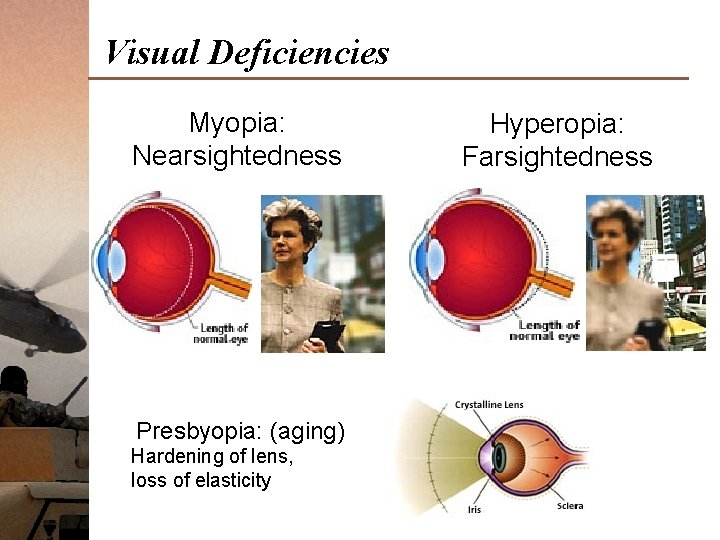
Visual Deficiencies u Astigmatism u Myopia u Hyperopia u Presbyopia
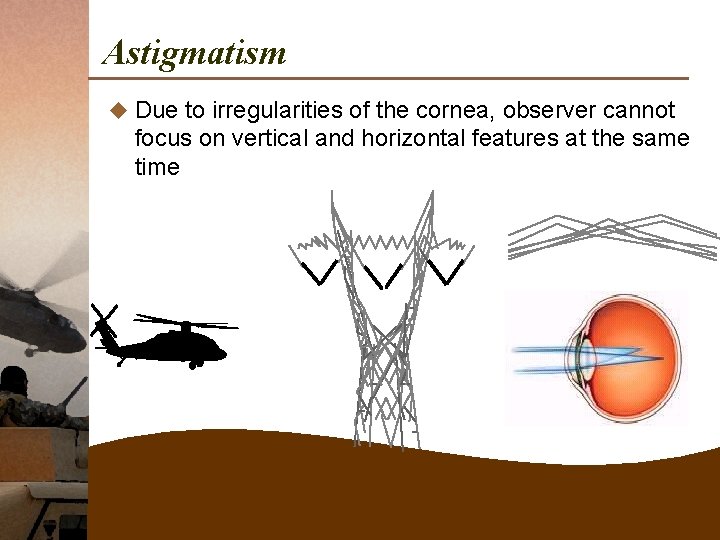
Astigmatism u Due to irregularities of the cornea, observer cannot focus on vertical and horizontal features at the same time
Visual Deficiencies Myopia: Nearsightedness Presbyopia: (aging) Hardening of lens, loss of elasticity Hyperopia: Farsightedness
QUESTIONS?
ELO C u Action: Identify the corneal refractive surgical procedures that are currently acceptable in Army Aviation u Conditions: Given a list u Standards : IAW AR 40 -501 and APL entitled Corneal Refractive Surgery dated 12 Feb 07
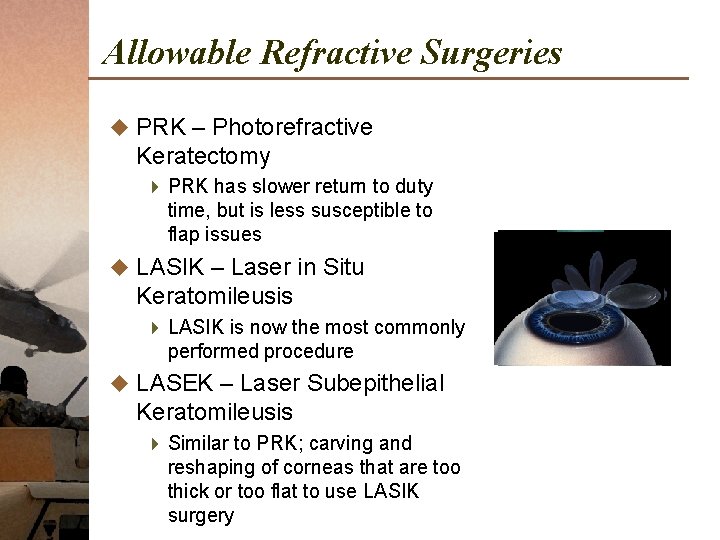
Allowable Refractive Surgeries u PRK – Photorefractive Keratectomy 4 PRK has slower return to duty time, but is less susceptible to flap issues u LASIK – Laser in Situ Keratomileusis 4 LASIK is now the most commonly performed procedure u LASEK – Laser Subepithelial Keratomileusis 4 Similar to PRK; carving and reshaping of corneas that are too thick or too flat to use LASIK surgery
QUESTIONS?
ELO D u Action: Identify the types of vision u Conditions: Given a list u Standards : IAW TC 3 -04. 93
Types of Vision u. Photopic Vision u. Mesopic Vision u. Scotopic Vision
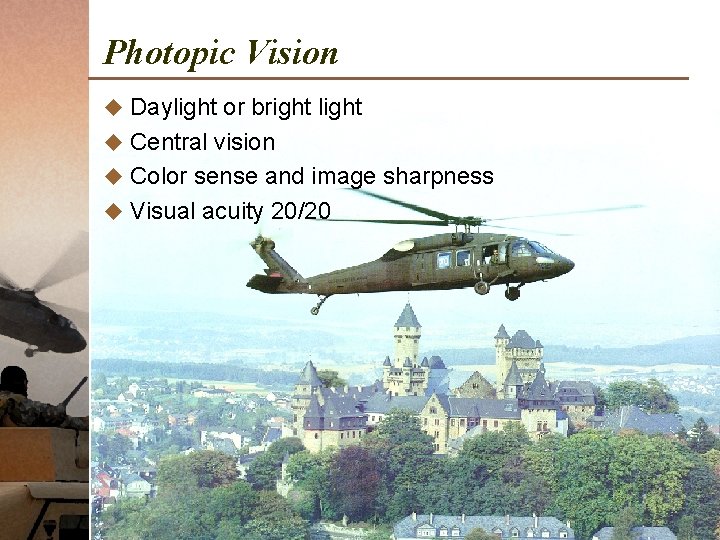
Photopic Vision u Daylight or bright light u Central vision u Color sense and image sharpness u Visual acuity 20/20
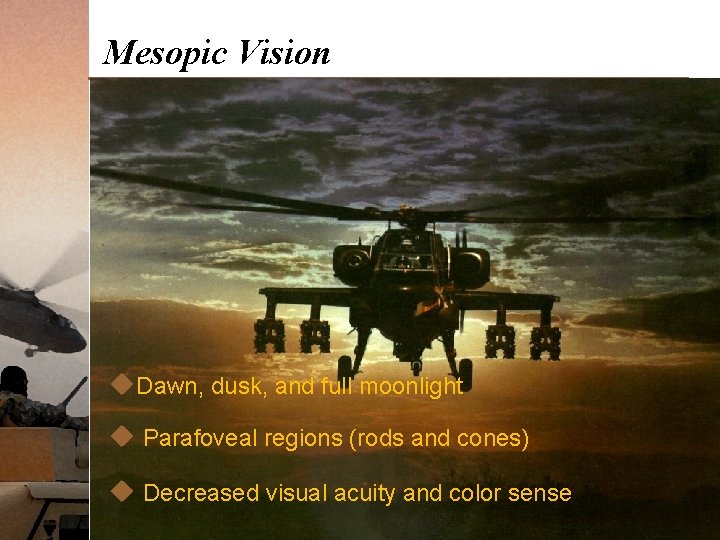
Mesopic Vision u. Dawn, dusk, and full moonlight u Parafoveal regions (rods and cones) u Decreased visual acuity and color sense
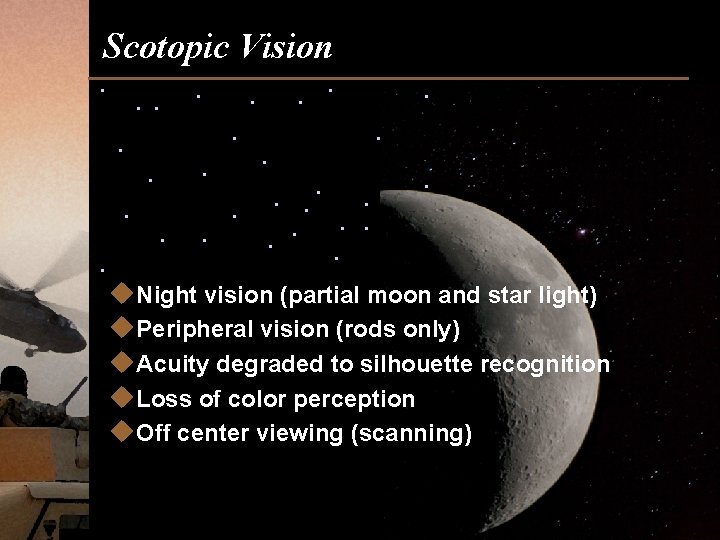
Scotopic Vision u. Night vision (partial moon and star light) u. Peripheral vision (rods only) u. Acuity degraded to silhouette recognition u. Loss of color perception u. Off center viewing (scanning)
QUESTIONS?
ELO F u Action: Identify limitations to night vision u Condition: Given a list of night vision limitations u Standard: IAW TC 3 -04. 93 and FM 3 -04. 203
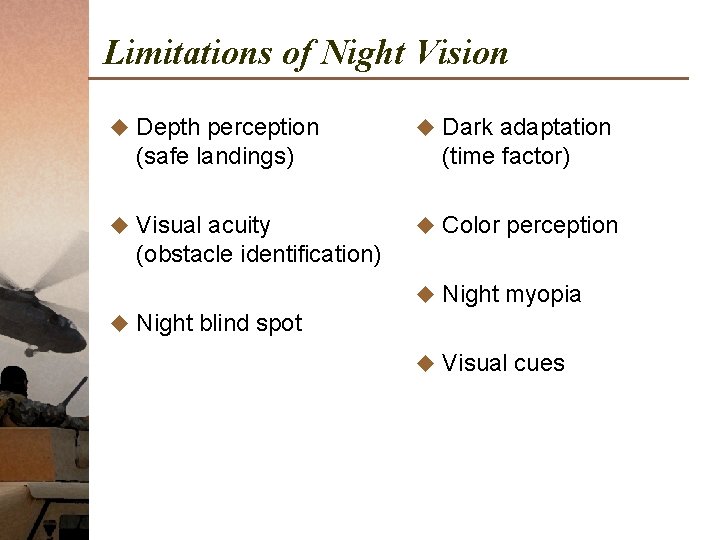
Limitations of Night Vision u Depth perception (safe landings) u Visual acuity u Dark adaptation (time factor) u Color perception (obstacle identification) u Night myopia u Night blind spot u Visual cues
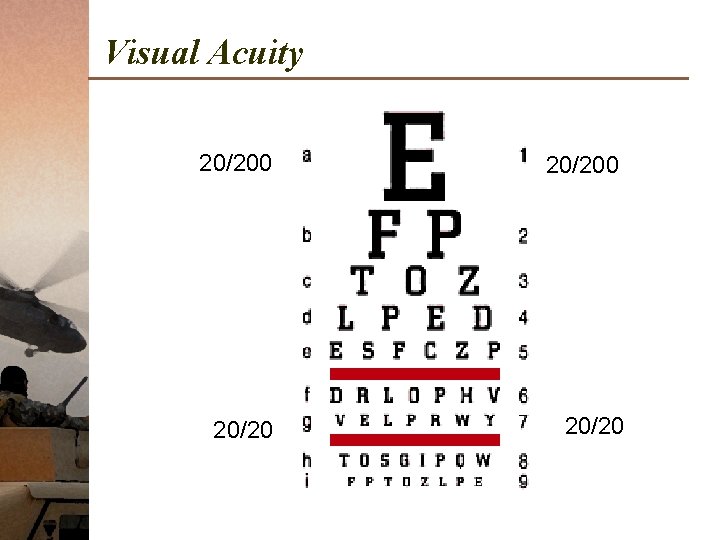
Visual Acuity 20/200 20/20
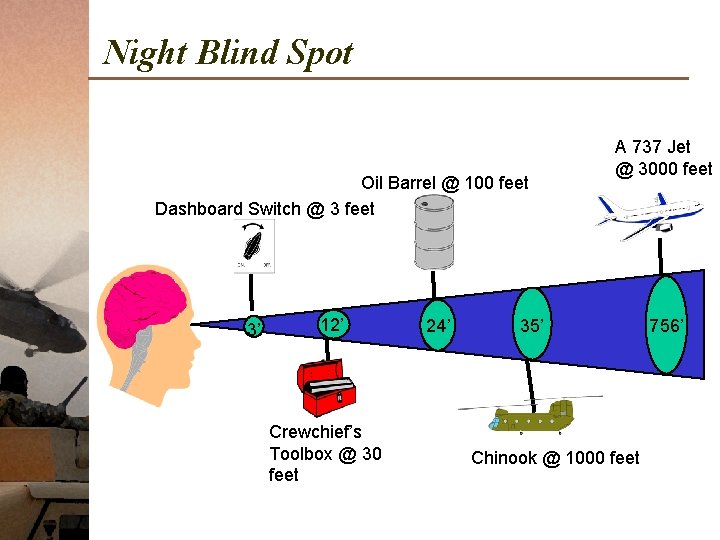
Night Blind Spot Oil Barrel @ 100 feet Dashboard Switch @ 3 feet 3’ 12’ Crewchief’s Toolbox @ 30 feet 24’ A 737 Jet @ 3000 feet 35’ Chinook @ 1000 feet 756’
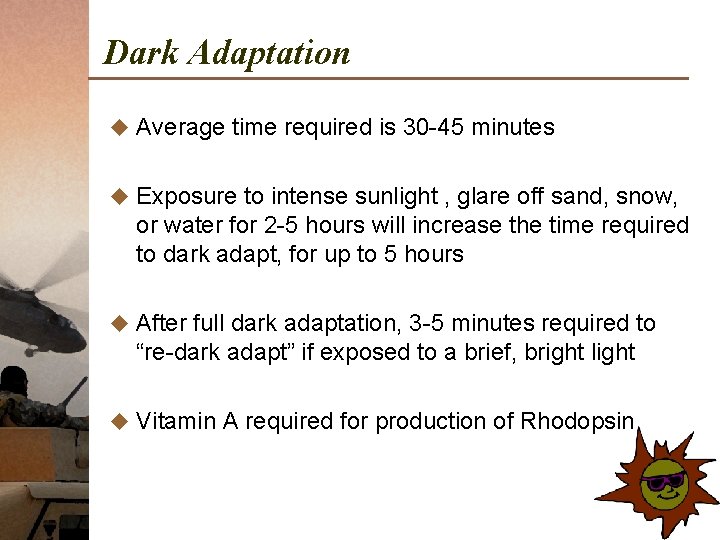
Dark Adaptation u Average time required is 30 -45 minutes u Exposure to intense sunlight , glare off sand, snow, or water for 2 -5 hours will increase the time required to dark adapt, for up to 5 hours u After full dark adaptation, 3 -5 minutes required to “re-dark adapt” if exposed to a brief, bright light u Vitamin A required for production of Rhodopsin
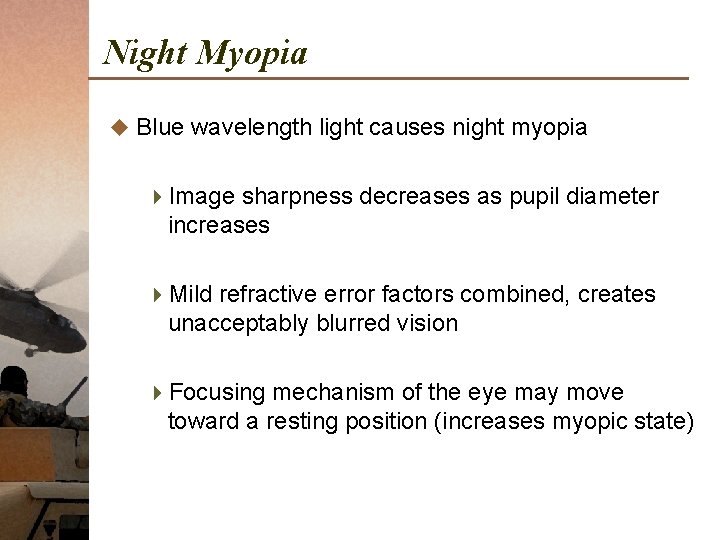
Night Myopia u Blue wavelength light causes night myopia 4 Image sharpness decreases as pupil diameter increases 4 Mild refractive error factors combined, creates unacceptably blurred vision 4 Focusing mechanism of the eye may move toward a resting position (increases myopic state)
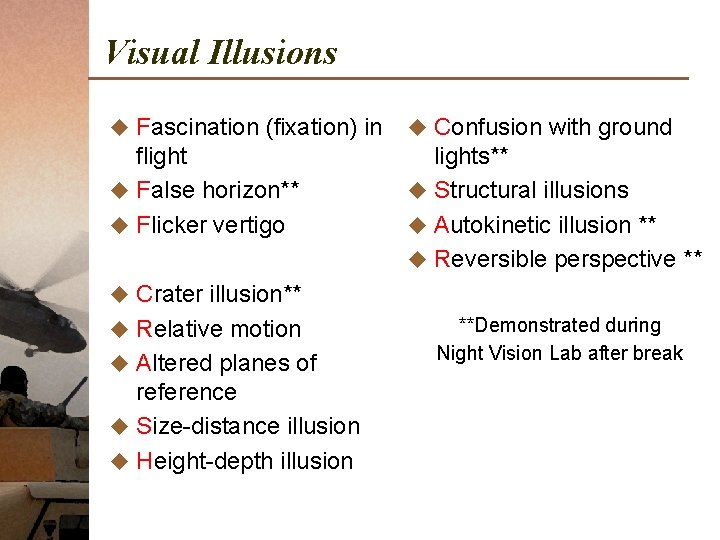
Visual Illusions u Fascination (fixation) in u Confusion with ground flight u False horizon** u Flicker vertigo lights** u Structural illusions u Autokinetic illusion ** u Reversible perspective ** u Crater illusion** u Relative motion u Altered planes of reference u Size-distance illusion u Height-depth illusion **Demonstrated during Night Vision Lab after break
ELO G u Action: Identify the methods to protect visual acuity from flight hazards u Conditions: Given a list u Standards : IAW TC 3 -04. 93
Flight Hazards u Solar Glare u Bird Strikes u Lasers u Nerve Agents
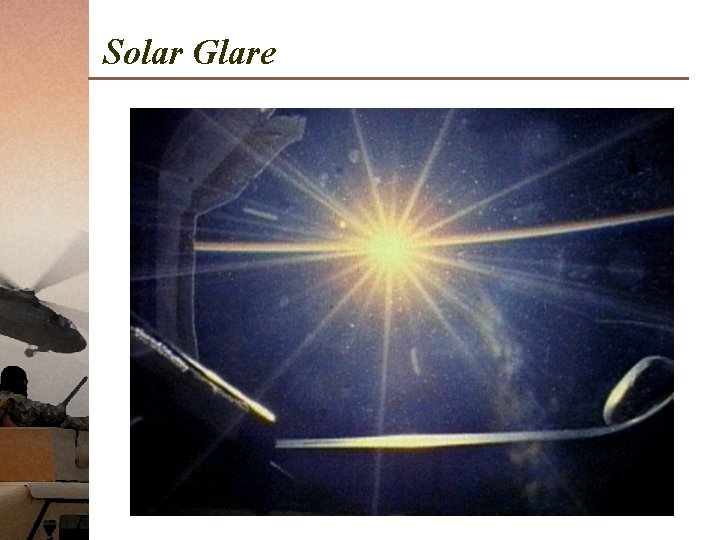
Solar Glare
Bird Strikes
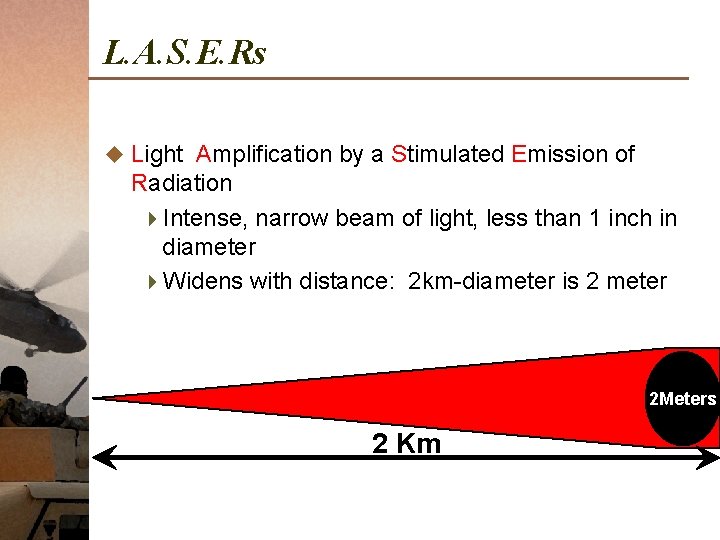
L. A. S. E. Rs u Light Amplification by a Stimulated Emission of Radiation 4 Intense, narrow beam of light, less than 1 inch in diameter 4 Widens with distance: 2 km-diameter is 2 meter 2 Meters 2 Km
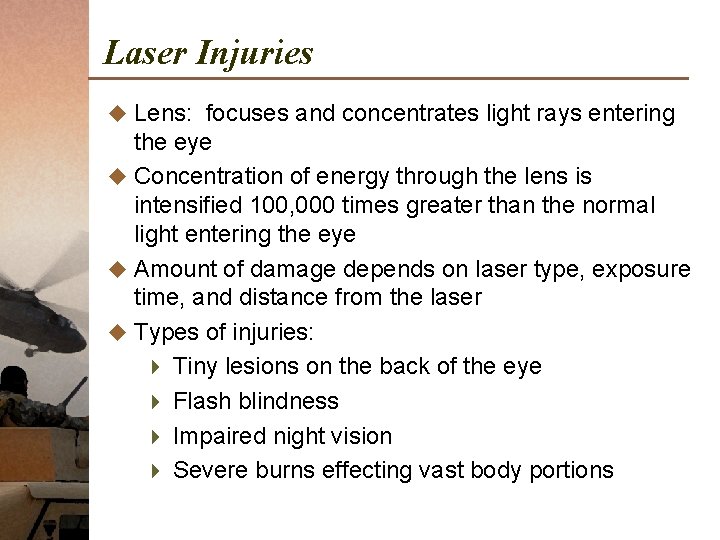
Laser Injuries u Lens: focuses and concentrates light rays entering the eye u Concentration of energy through the lens is intensified 100, 000 times greater than the normal light entering the eye u Amount of damage depends on laser type, exposure time, and distance from the laser u Types of injuries: 4 Tiny lesions on the back of the eye 4 Flash blindness 4 Impaired night vision 4 Severe burns effecting vast body portions
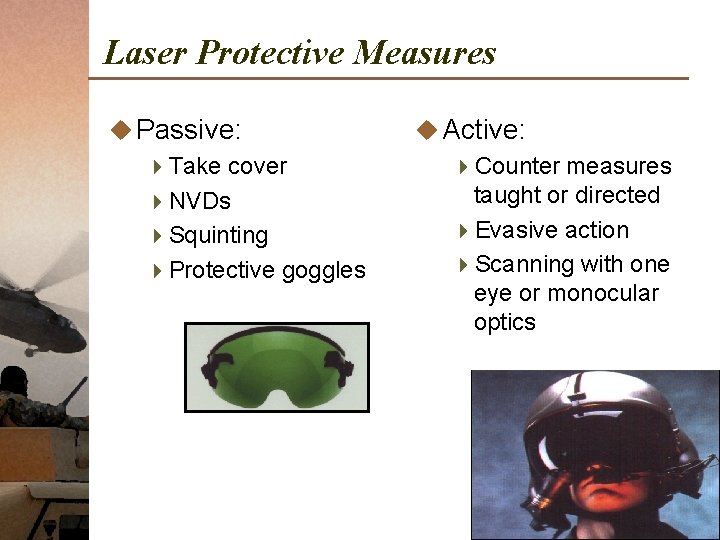
Laser Protective Measures u Passive: 4 Take cover 4 NVDs 4 Squinting 4 Protective goggles u Active: 4 Counter measures taught or directed 4 Evasive action 4 Scanning with one eye or monocular optics
ELO H u Action: Identify the effects of the self-imposed stresses u Conditions: Given a list u Standards: IAW TC 3 -04. 93, AR 40 -8
Self-imposed Stresses u Drugs u Exhaustion u Alcohol u Tobacco u Hypoglycemia
QUESTIONS?