
The Visual System and Visual Performance The Visible
The Visual System and Visual Performance
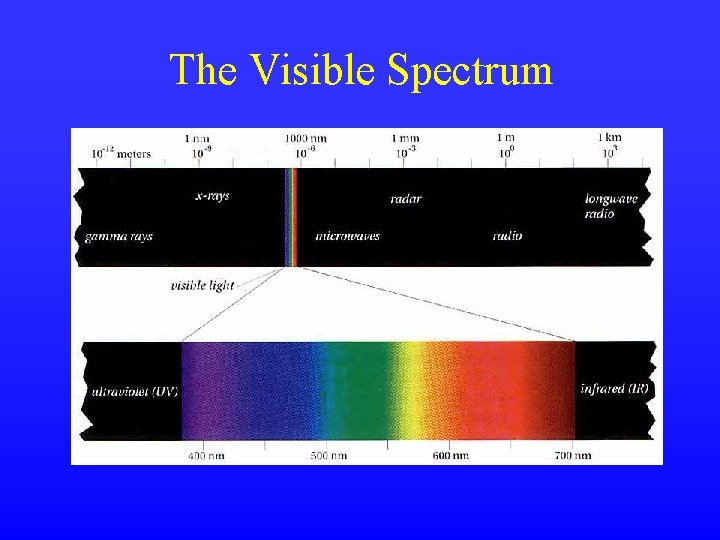
The Visible Spectrum
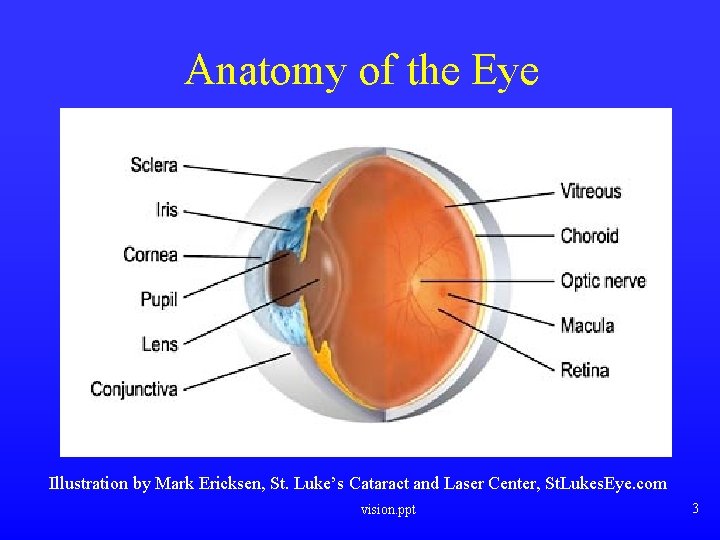
Anatomy of the Eye Illustration by Mark Ericksen, St. Luke’s Cataract and Laser Center, St. Lukes. Eye. com vision. ppt 3
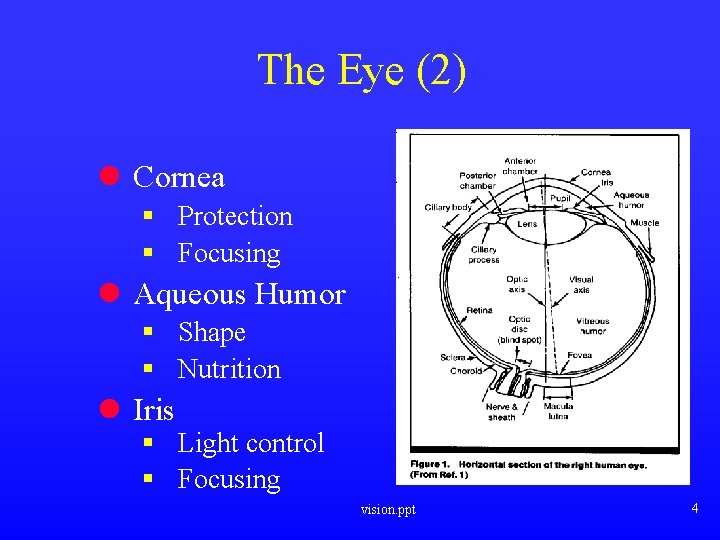
The Eye (2) l Cornea § Protection § Focusing l Aqueous Humor § Shape § Nutrition l Iris § Light control § Focusing vision. ppt 4
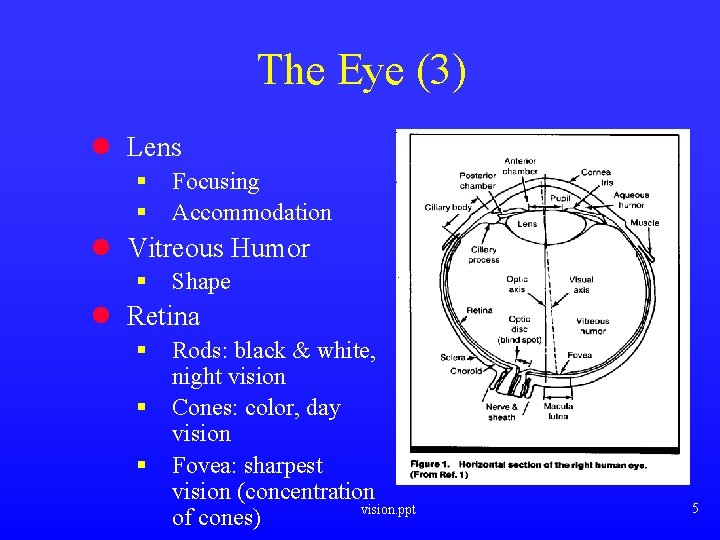
The Eye (3) l Lens § § Focusing Accommodation l Vitreous Humor § Shape l Retina § § § Rods: black & white, night vision Cones: color, day vision Fovea: sharpest vision (concentration vision. ppt of cones) 5
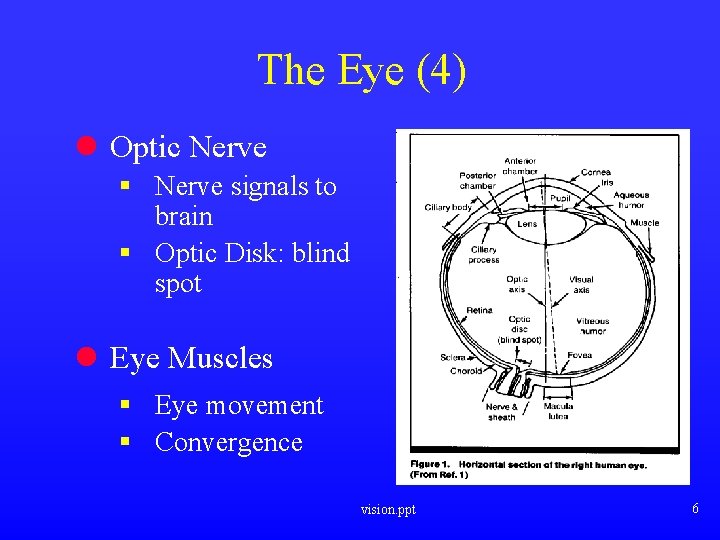
The Eye (4) l Optic Nerve § Nerve signals to brain § Optic Disk: blind spot l Eye Muscles § Eye movement § Convergence vision. ppt 6
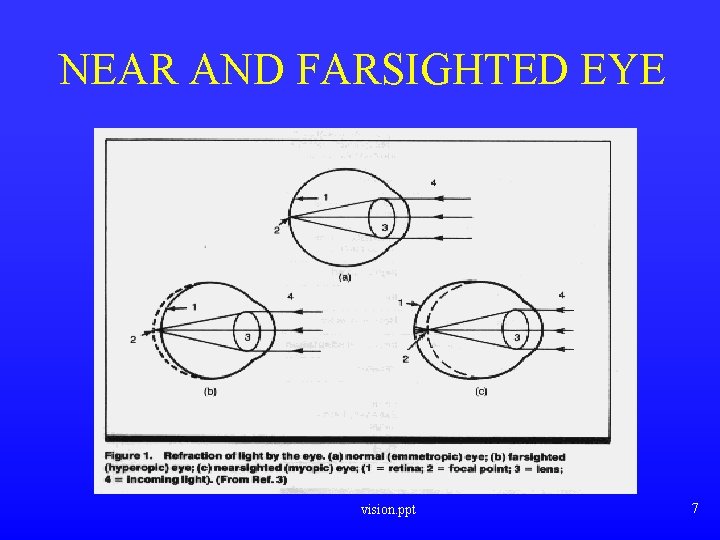
NEAR AND FARSIGHTED EYE vision. ppt 7
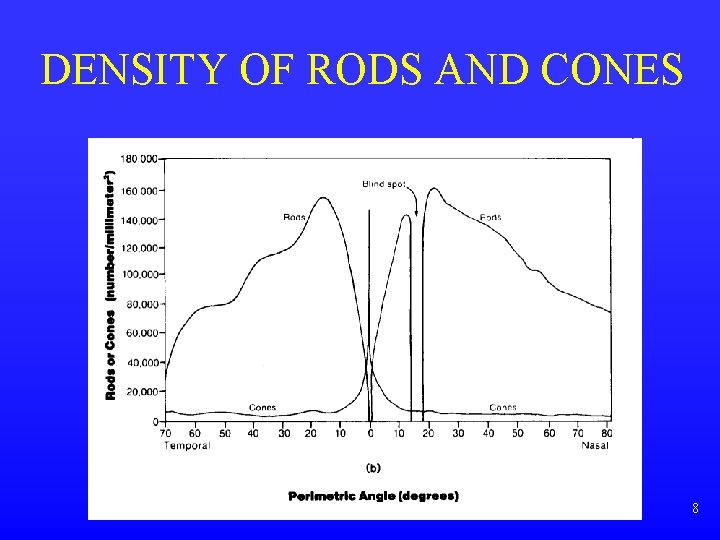
DENSITY OF RODS AND CONES vision. ppt 8
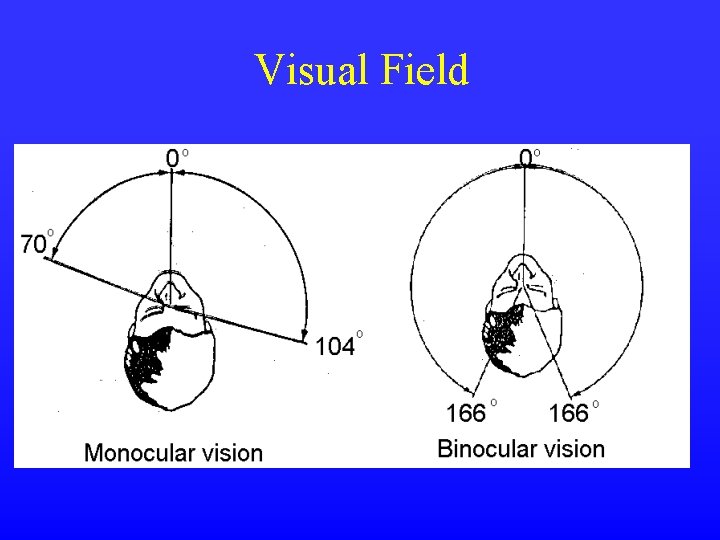
Visual Performance l Brightness l Visual Angle l Visual Acuity l Color l Visual Field vision. ppt 9
Brightness l Relative amount of light reflected from an object produces a sensation of lightness or brightness. l Brightness is related to the luminance of light as well as a subjective response to color vision. ppt 10
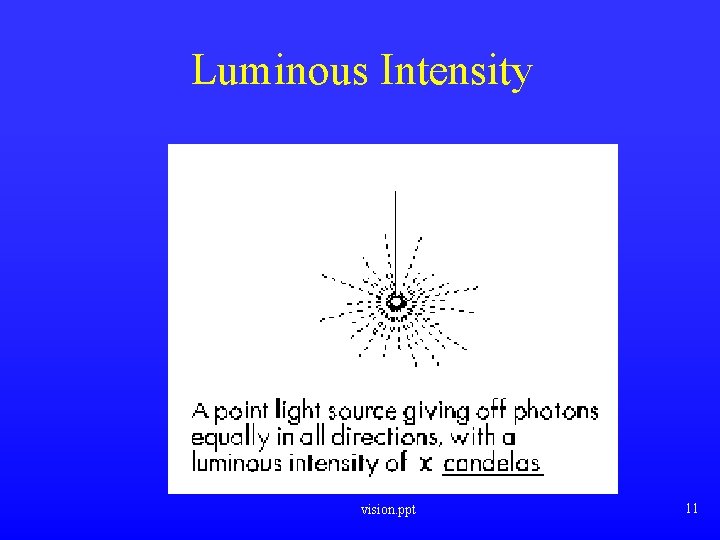
Luminous Intensity vision. ppt 11
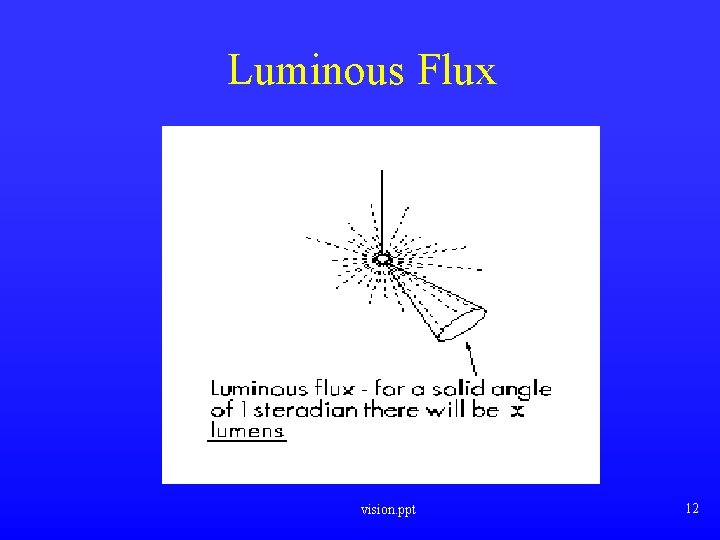
Luminous Flux vision. ppt 12
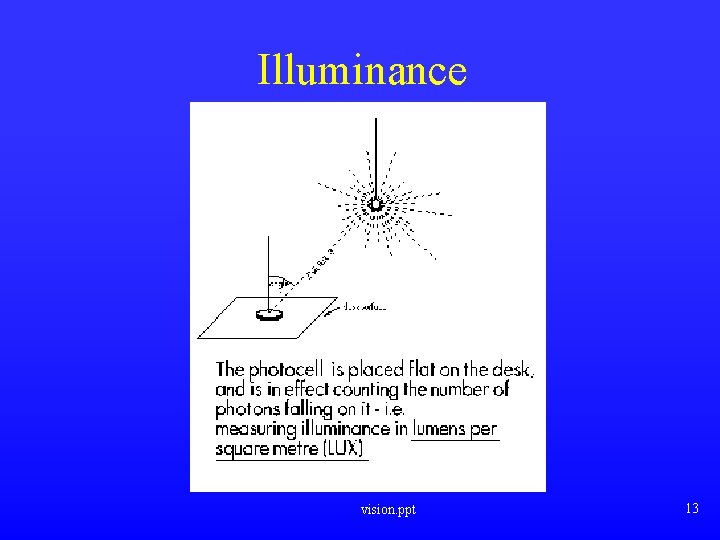
Illuminance vision. ppt 13
Illuminance v. Luminance l Illumination/Illuminance: The amount of light striking any point on the inside surface of a sphere surrounding the light source (Luminous flux/unit area) § § Foot candle: 1 lumen/square foot Lux: 1 luman/square meter l Luminance: The amount of light per unit area leaving (reflected from) a surface § § Foot Lamberts: 1 lumen/square foot Candelas/square meeter vision. ppt 14
Luminance Note: 1 foot-Lambert (ft-L) = 0. 929 m. L, so 1 ft-L ~ 1 m. L. vision. ppt 15
Luminance (2) l Threshold of detectability 1 x 10 -6 m. L l Threshold of pain 3 x 10 4 m. L l Limits to discriminability 3 - 4 levels vision. ppt 16
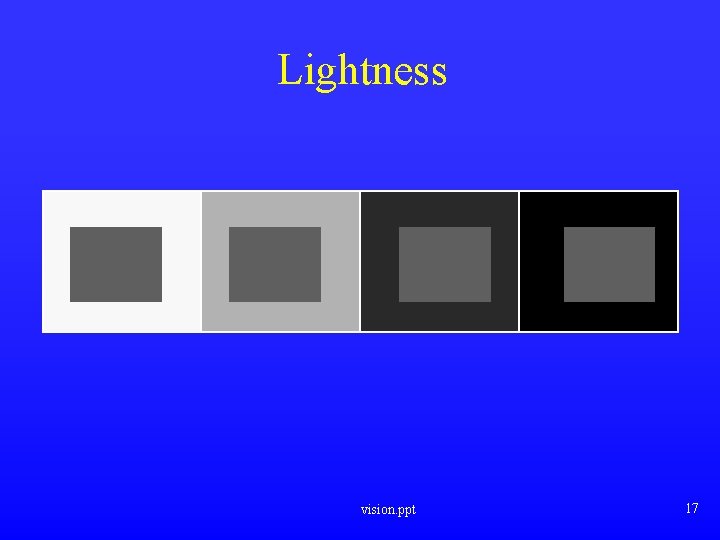
Lightness vision. ppt 17
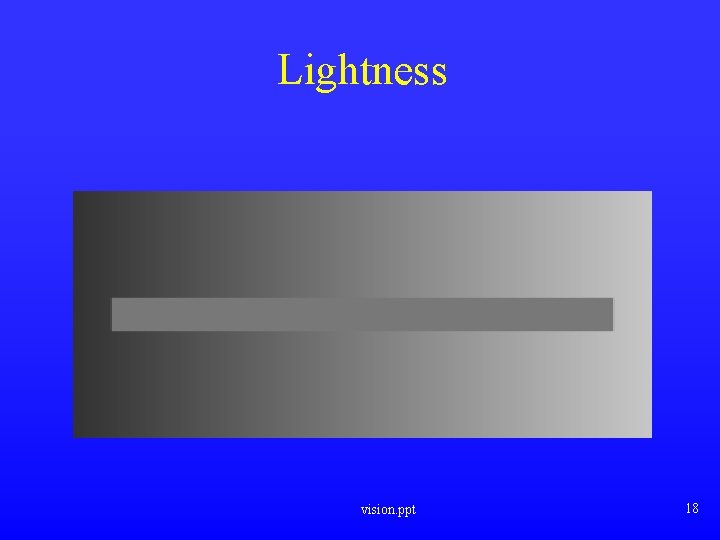
Lightness vision. ppt 18
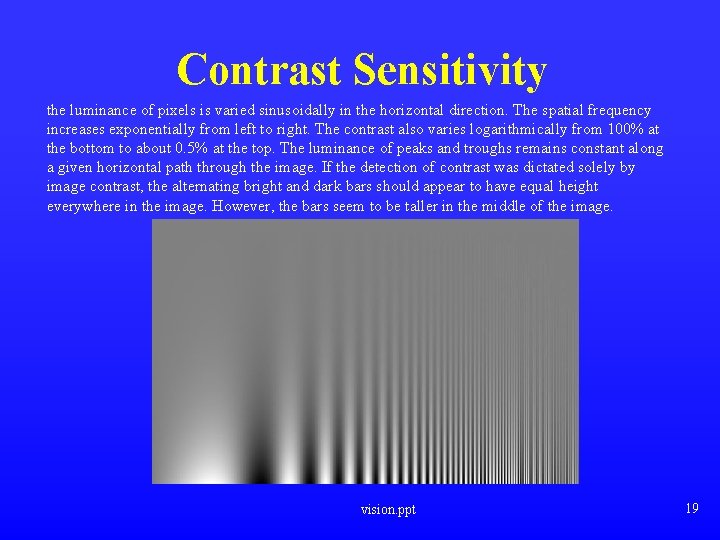
Contrast Sensitivity the luminance of pixels is varied sinusoidally in the horizontal direction. The spatial frequency increases exponentially from left to right. The contrast also varies logarithmically from 100% at the bottom to about 0. 5% at the top. The luminance of peaks and troughs remains constant along a given horizontal path through the image. If the detection of contrast was dictated solely by image contrast, the alternating bright and dark bars should appear to have equal height everywhere in the image. However, the bars seem to be taller in the middle of the image. vision. ppt 19
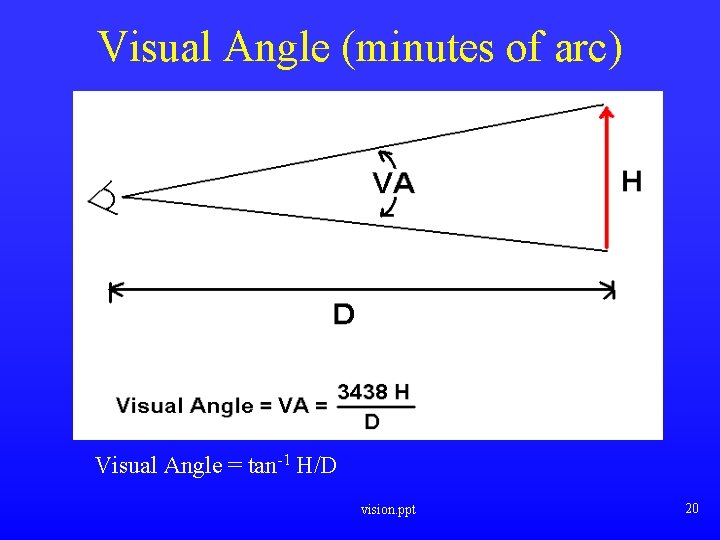
Visual Angle (minutes of arc) Visual Angle = tan-1 H/D vision. ppt 20
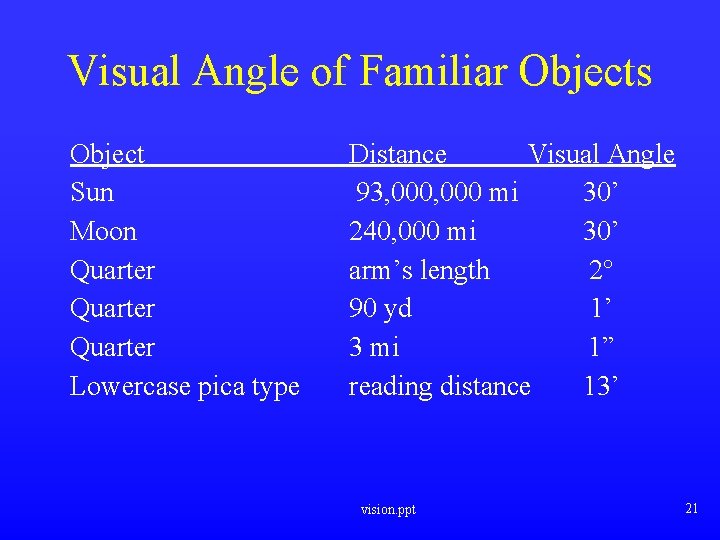
Visual Angle of Familiar Objects Object Sun Moon Quarter Lowercase pica type Distance Visual Angle 93, 000 mi 30’ 240, 000 mi 30’ arm’s length 2° 90 yd 1’ 3 mi 1” reading distance 13’ vision. ppt 21
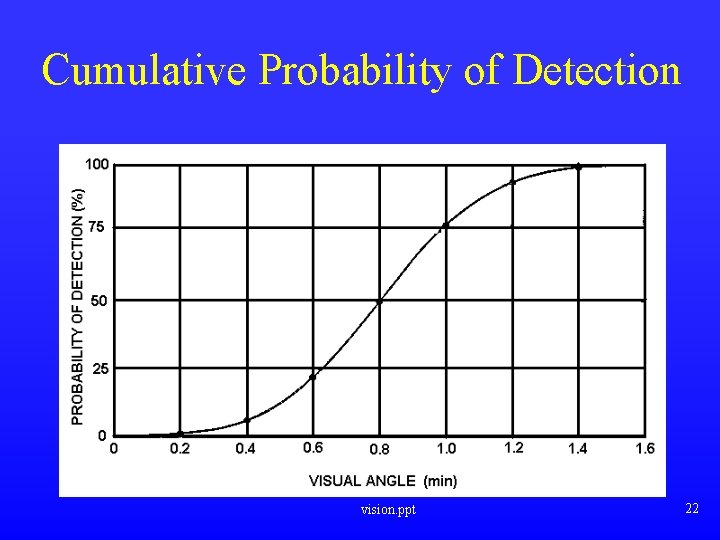
Cumulative Probability of Detection vision. ppt 22
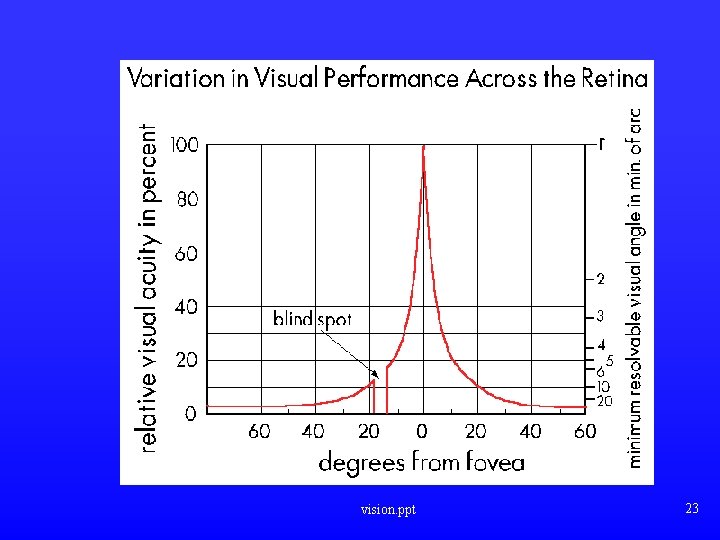
vision. ppt 23
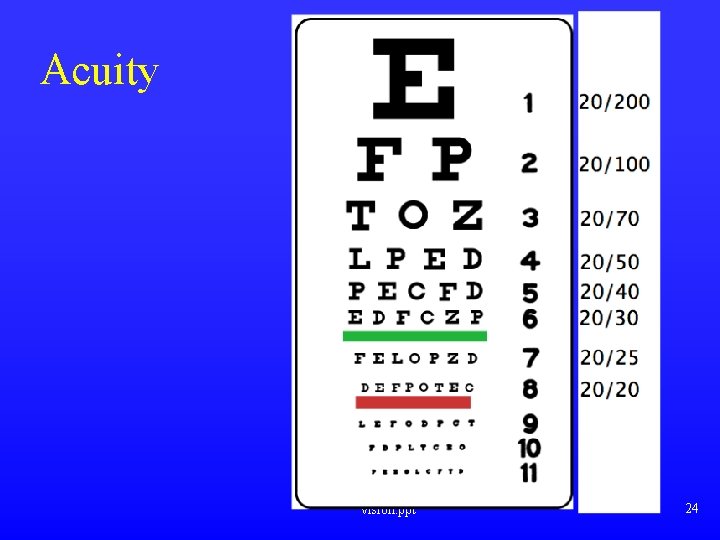
Acuity vision. ppt 24
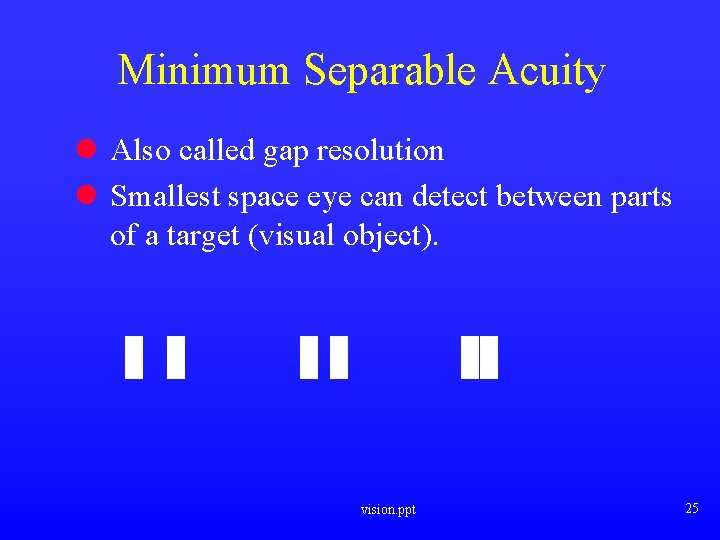
Minimum Separable Acuity l Also called gap resolution l Smallest space eye can detect between parts of a target (visual object). vision. ppt 25
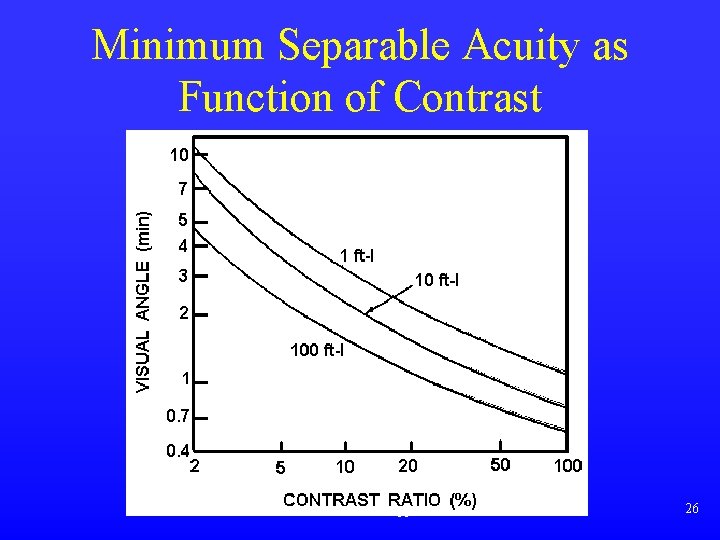
Minimum Separable Acuity as Function of Contrast vision. ppt 26
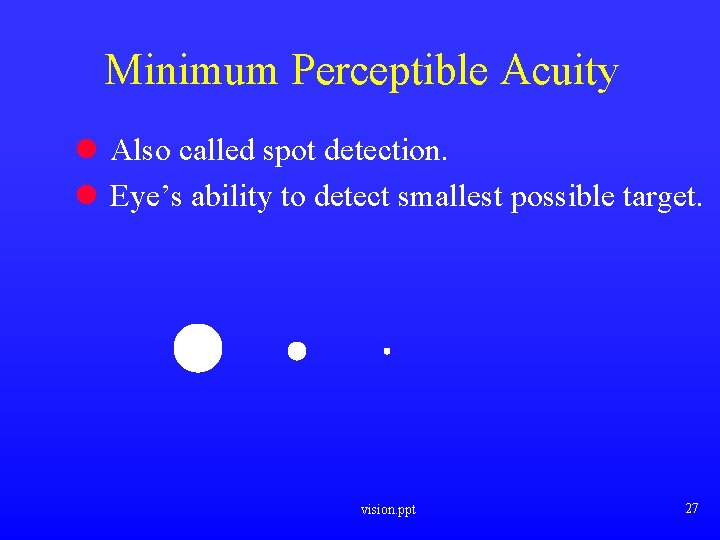
Minimum Perceptible Acuity l Also called spot detection. l Eye’s ability to detect smallest possible target. vision. ppt 27
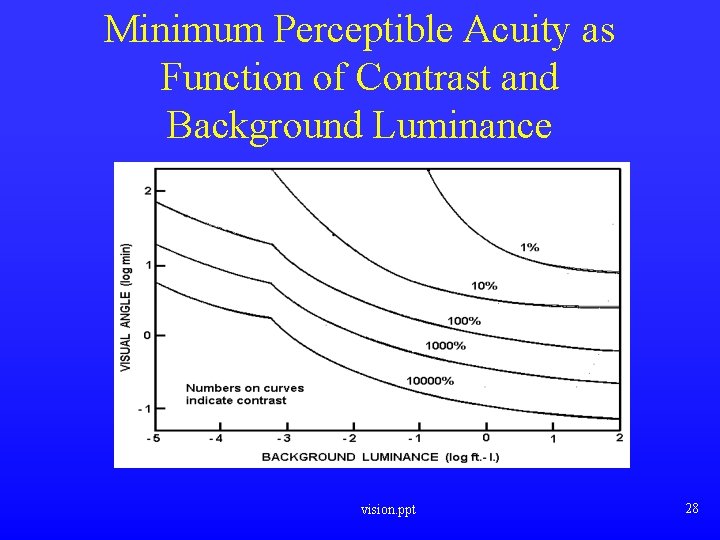
Minimum Perceptible Acuity as Function of Contrast and Background Luminance vision. ppt 28
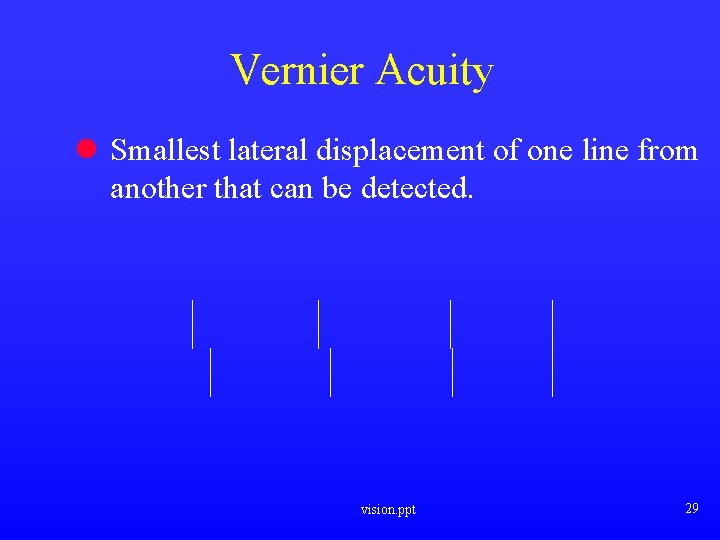
Vernier Acuity l Smallest lateral displacement of one line from another that can be detected. vision. ppt 29
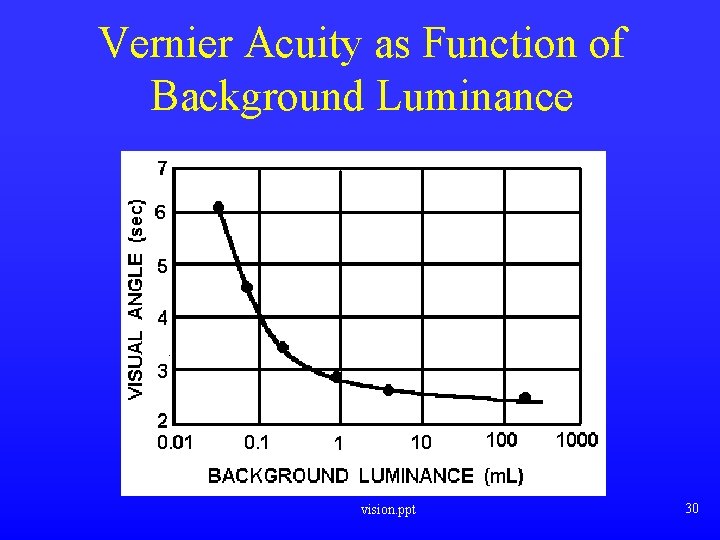
Vernier Acuity as Function of Background Luminance vision. ppt 30
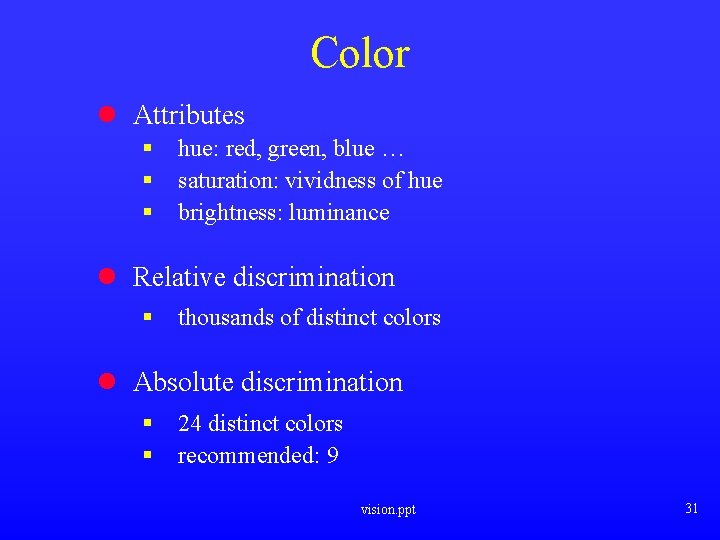
Color l Attributes § § § hue: red, green, blue … saturation: vividness of hue brightness: luminance l Relative discrimination § thousands of distinct colors l Absolute discrimination § § 24 distinct colors recommended: 9 vision. ppt 31
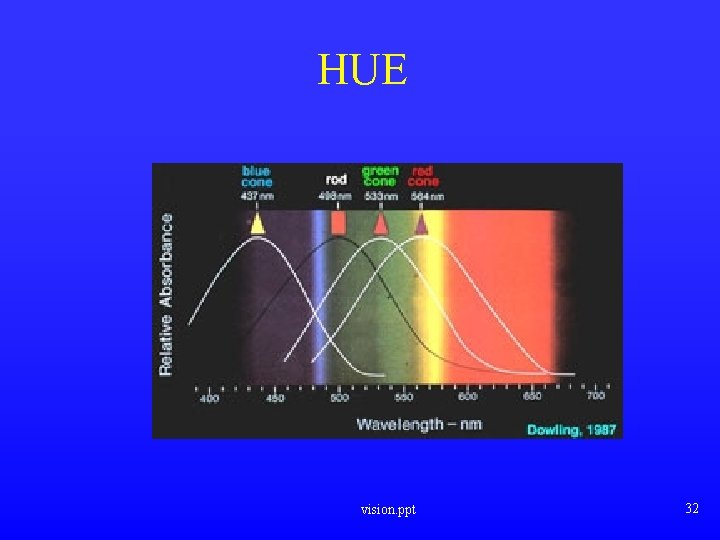
HUE vision. ppt 32
Absolute discrimination 0 vision. ppt 33
vision. ppt 34
Absolute discrimination 1 vision. ppt 35
vision. ppt 36
Absolute discrimination 2 vision. ppt 37
Relative discrimination vision. ppt 38
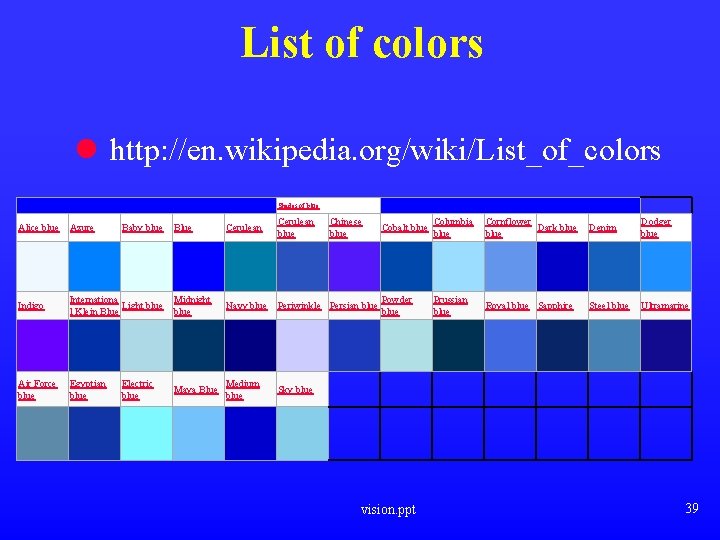
List of colors l http: //en. wikipedia. org/wiki/List_of_colors Shades of blue Alice blue Azure Baby blue Blue Cerulean blue Chinese blue Cobalt blue Columbia Cornflower Dark blue Denim Dodger blue Indigo Internationa Light blue l Klein Blue Midnight blue Navy blue Periwinkle Persian blue Powder blue Prussian blue Royal blue Sapphire Steel blue Ultramarine Air Force blue Egyptian blue Electric blue Maya Blue Medium blue Sky blue vision. ppt 39
Visual Field
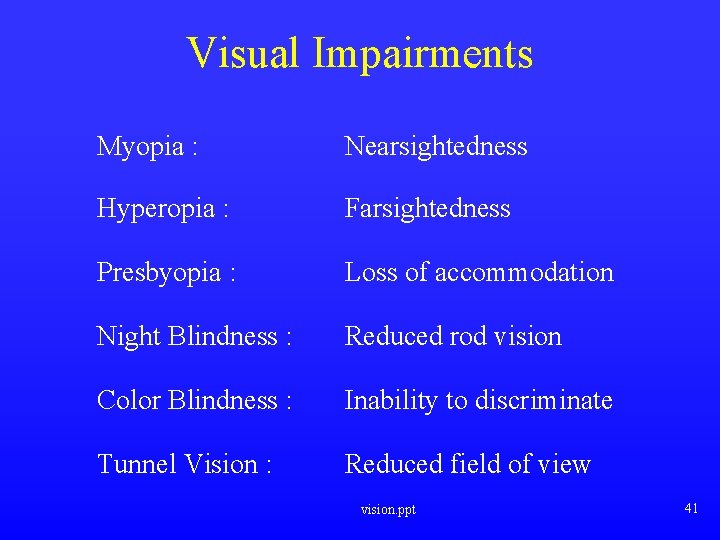
Visual Impairments Myopia : Nearsightedness Hyperopia : Farsightedness Presbyopia : Loss of accommodation Night Blindness : Reduced rod vision Color Blindness : Inability to discriminate Tunnel Vision : Reduced field of view vision. ppt 41
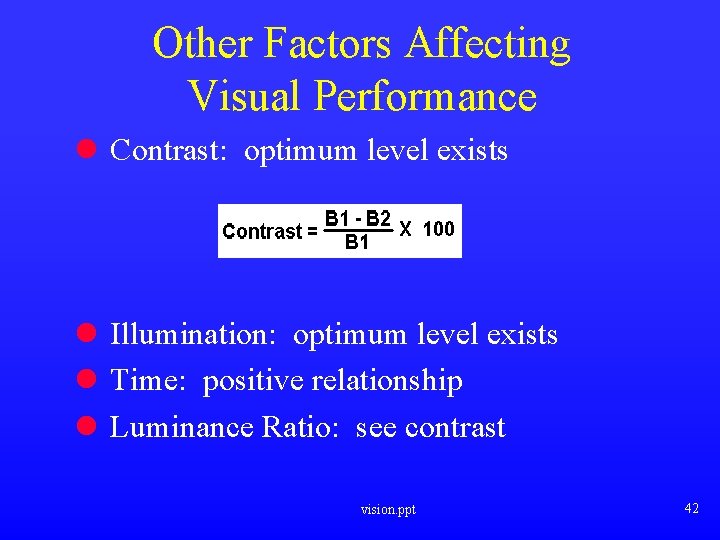
Other Factors Affecting Visual Performance l Contrast: optimum level exists l Illumination: optimum level exists l Time: positive relationship l Luminance Ratio: see contrast vision. ppt 42
Other Factors Affecting Visual Performance (2) l Glare: negative relationship l Movement: negative relationship l Age: negative relationship l Drugs: some drugs impair vision. ppt 43
• + vision. ppt 44
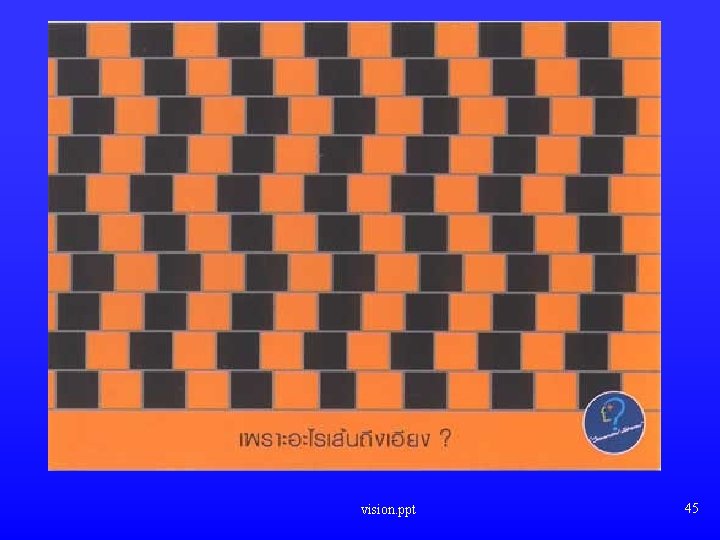
vision. ppt 45
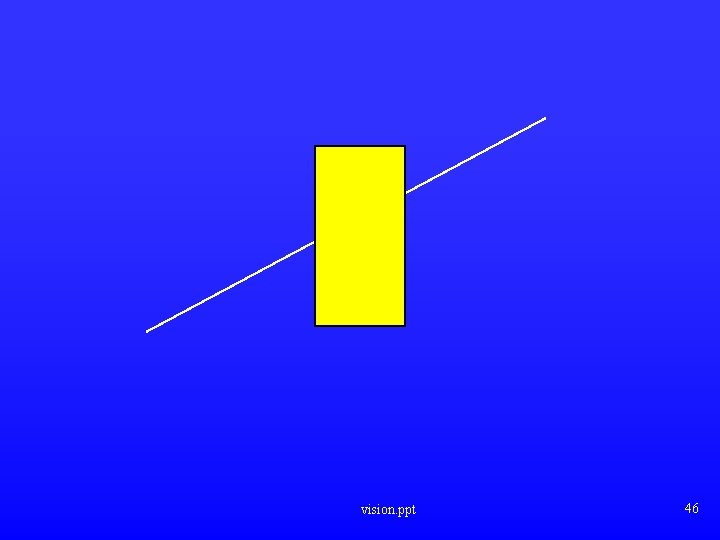
vision. ppt 46
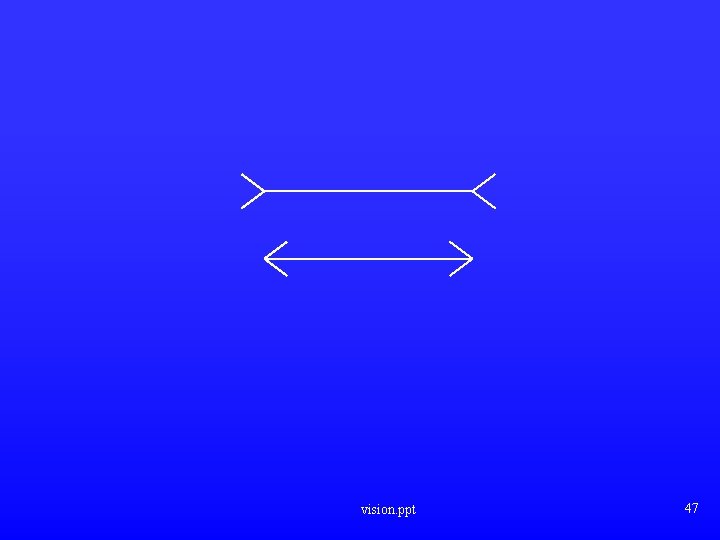
vision. ppt 47
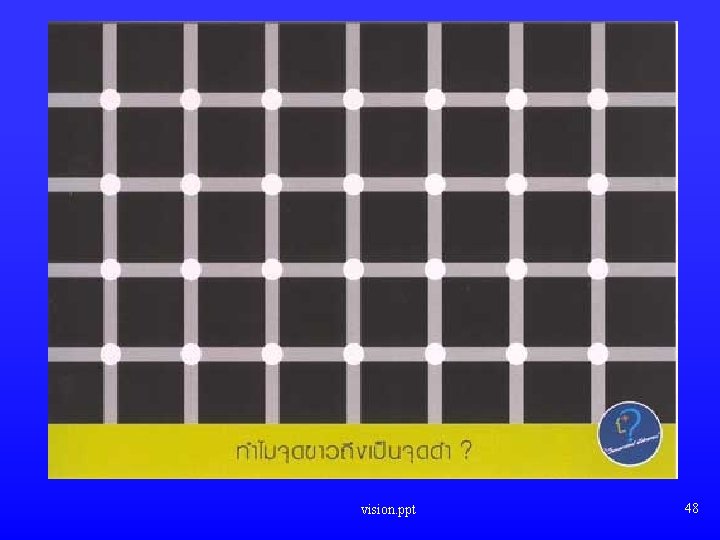
vision. ppt 48
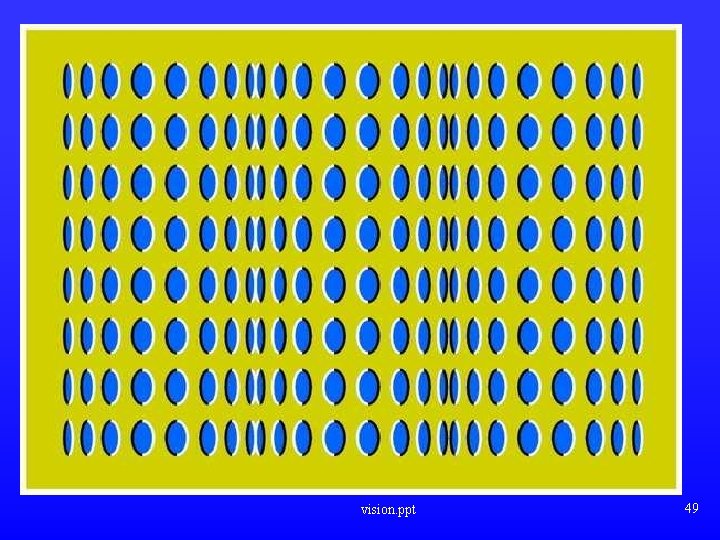
vision. ppt 49
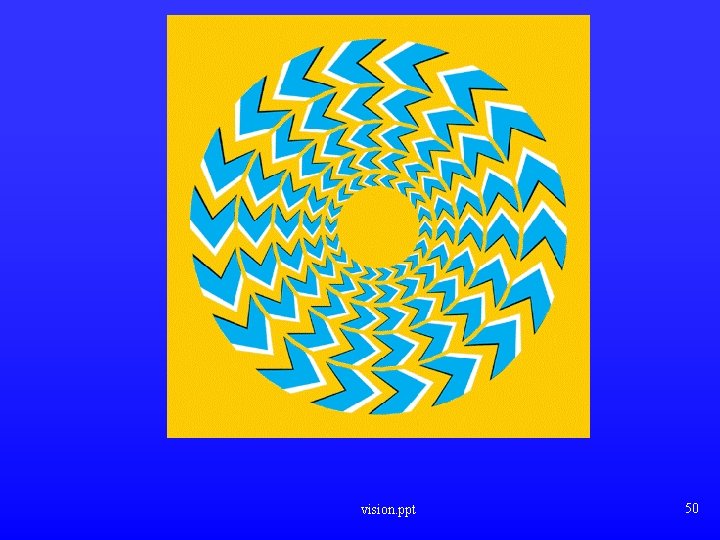
vision. ppt 50
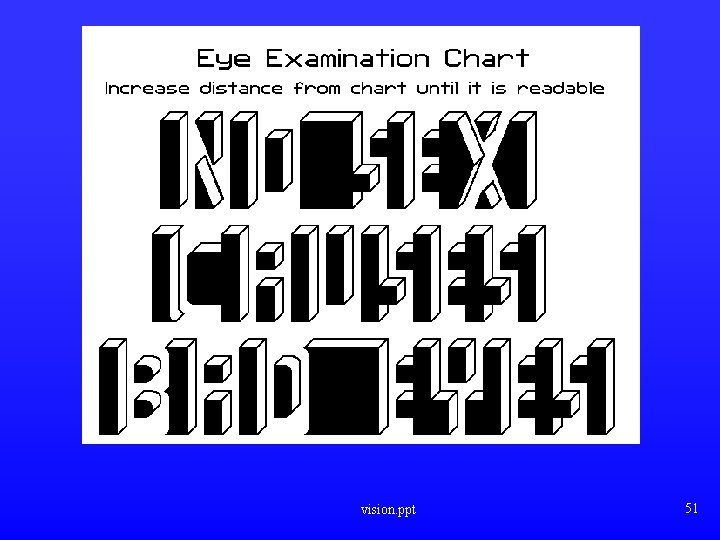
vision. ppt 51
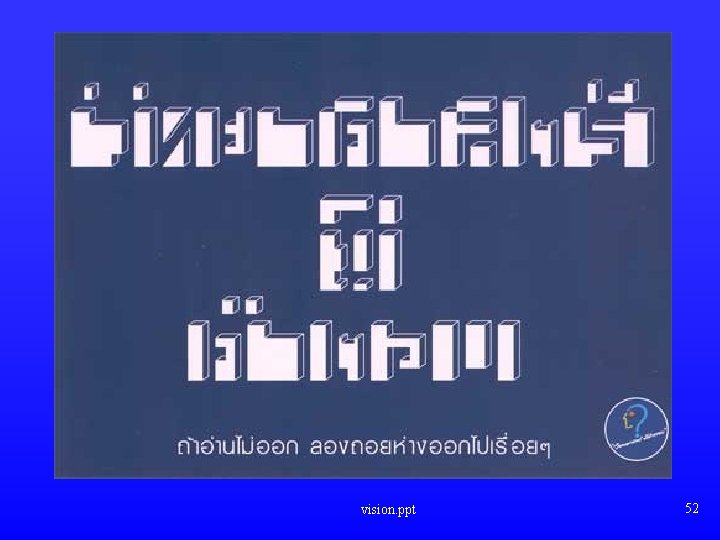
vision. ppt 52
- Slides: 52