
The View from Earth Introduction to the Celestial
- Slides: 10
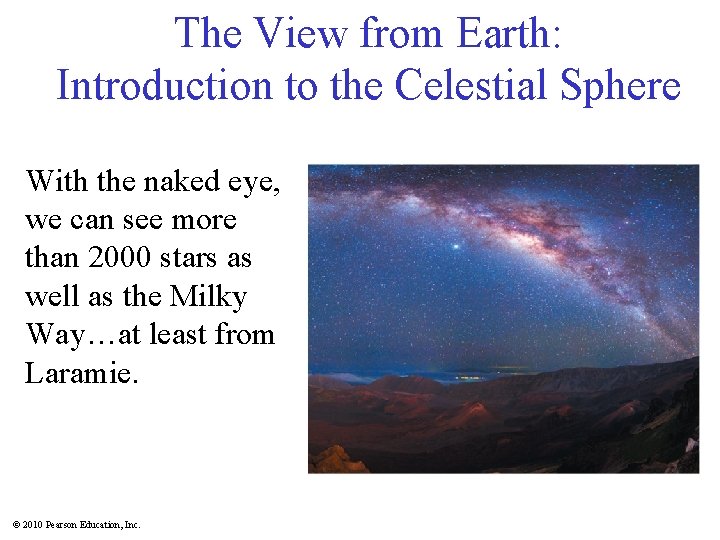
The View from Earth: Introduction to the Celestial Sphere With the naked eye, we can see more than 2000 stars as well as the Milky Way…at least from Laramie. © 2010 Pearson Education, Inc.
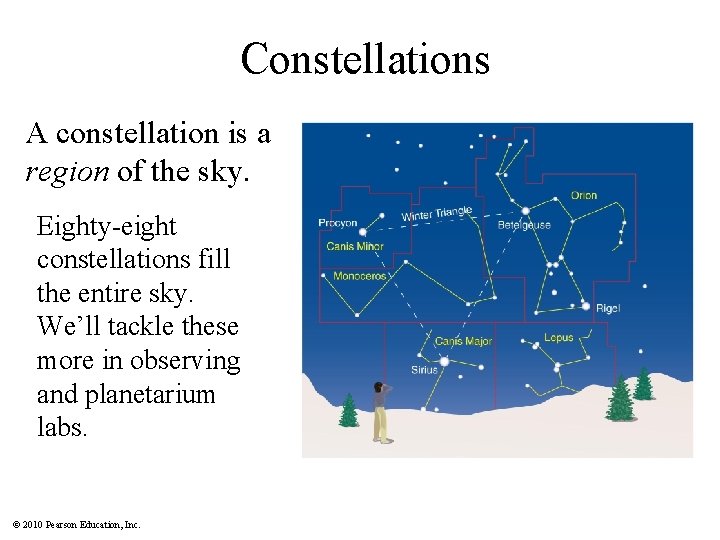
Constellations A constellation is a region of the sky. Eighty-eight constellations fill the entire sky. We’ll tackle these more in observing and planetarium labs. © 2010 Pearson Education, Inc.
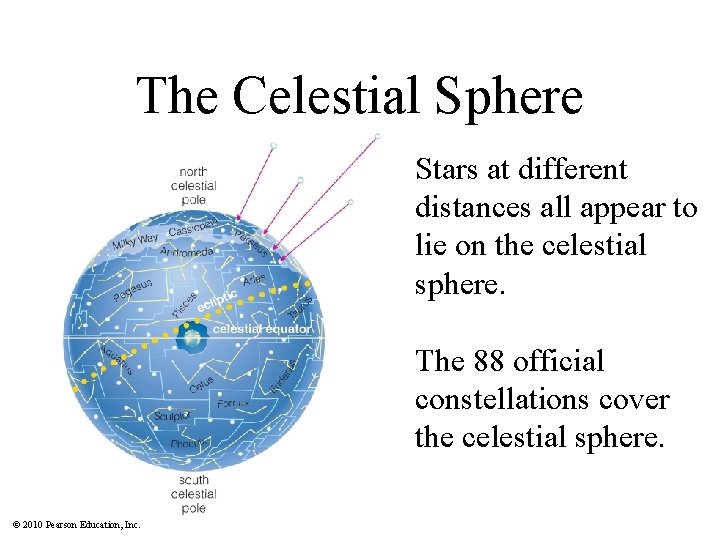
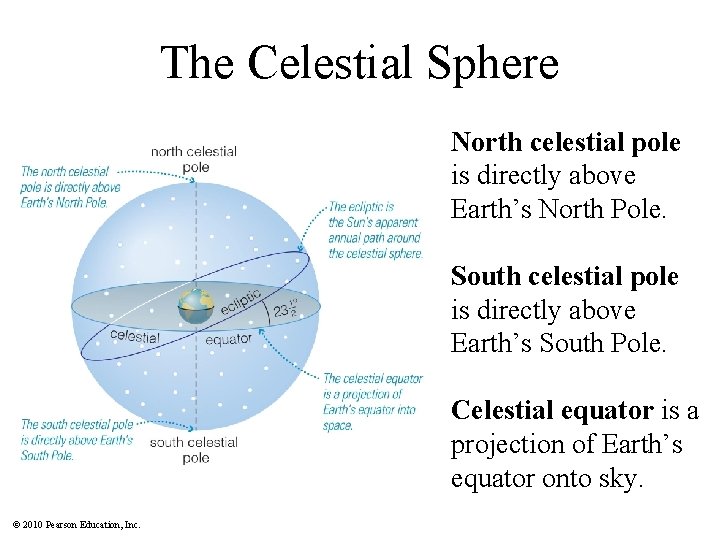
The Celestial Sphere Stars at different distances all appear to lie on the celestial sphere. The 88 official constellations cover the celestial sphere. © 2010 Pearson Education, Inc.
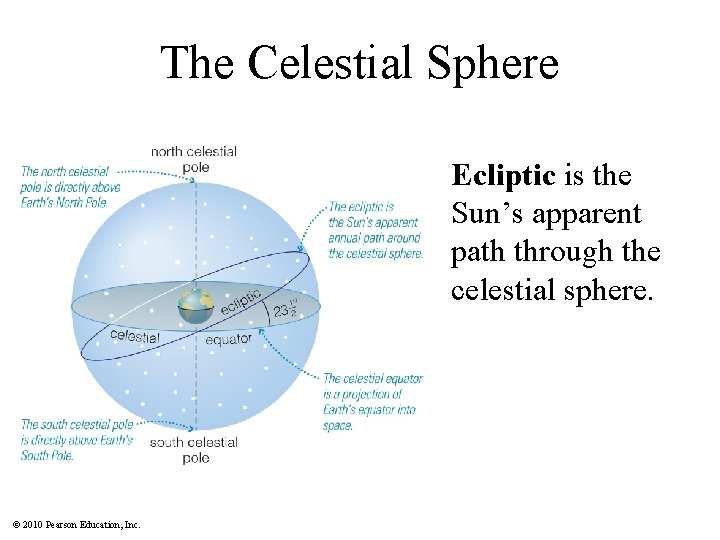
The Celestial Sphere Ecliptic is the Sun’s apparent path through the celestial sphere. © 2010 Pearson Education, Inc.
The Celestial Sphere North celestial pole is directly above Earth’s North Pole. South celestial pole is directly above Earth’s South Pole. Celestial equator is a projection of Earth’s equator onto sky. © 2010 Pearson Education, Inc.
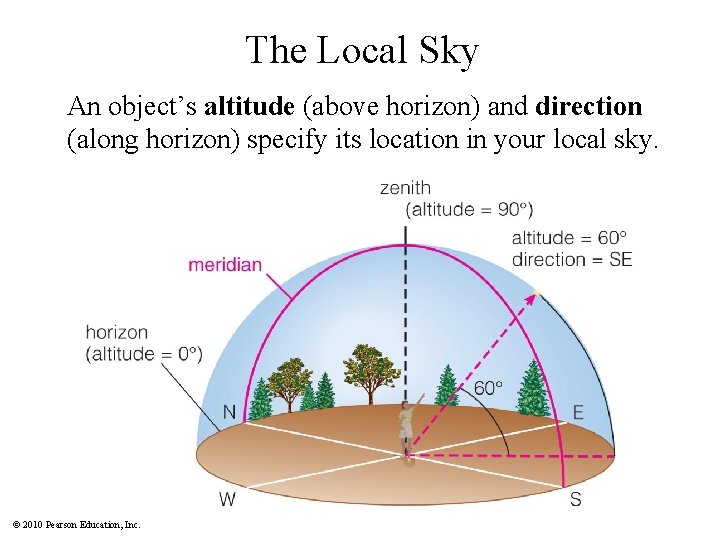
The Local Sky An object’s altitude (above horizon) and direction (along horizon) specify its location in your local sky. © 2010 Pearson Education, Inc.
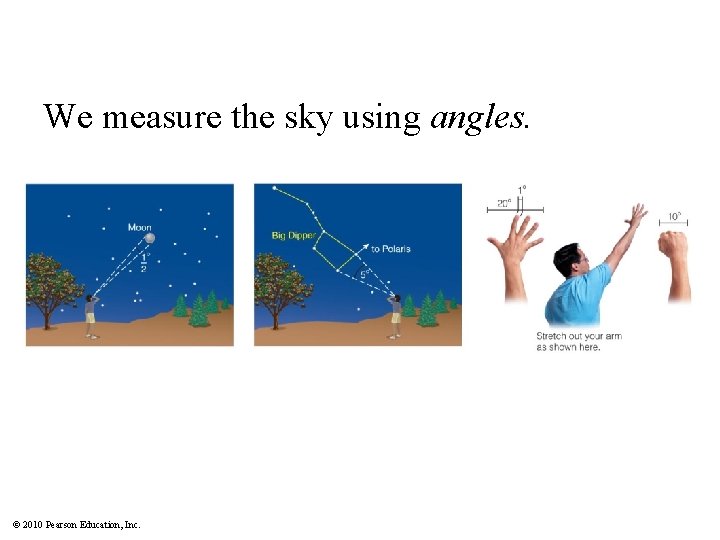
We measure the sky using angles. © 2010 Pearson Education, Inc.
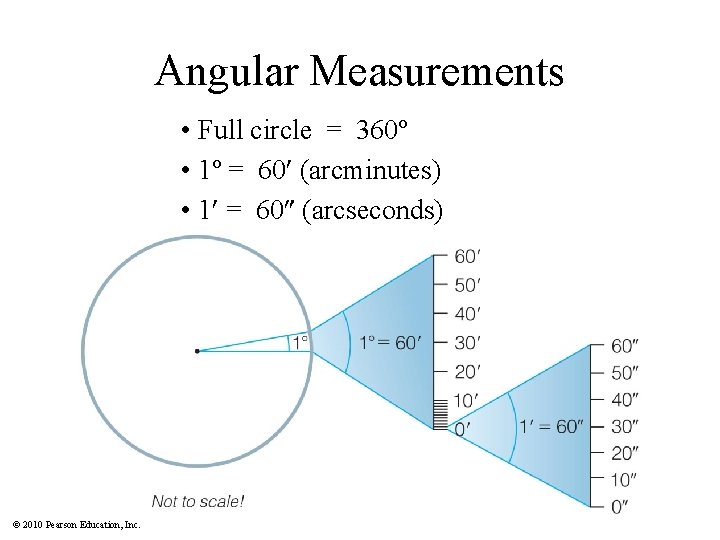
Angular Measurements • Full circle = 360º • 1º = 60 (arcminutes) • 1 = 60 (arcseconds) © 2010 Pearson Education, Inc.
Thought Question The angular size of your finger at arm’s length is about 1°. How many arcseconds is this? • P. 60 arcseconds • Q. 600 arcseconds • R. 60 � 60 = 3600 arcseconds © 2010 Pearson Education, Inc.
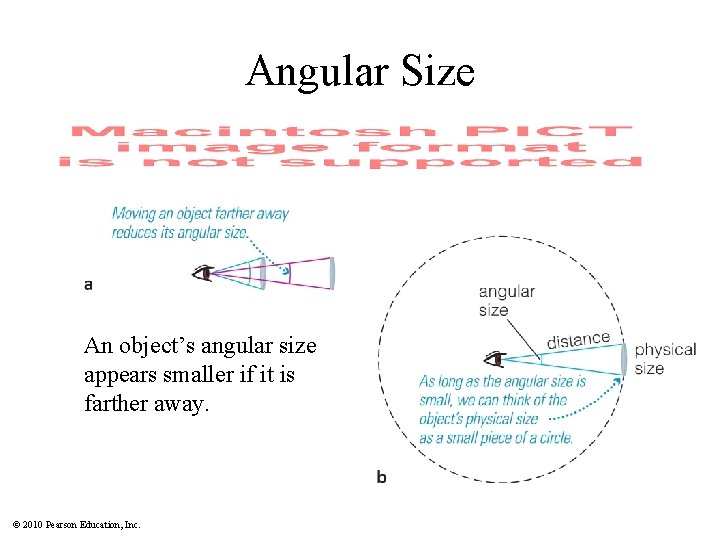
Angular Size An object’s angular size appears smaller if it is farther away. © 2010 Pearson Education, Inc.