
THE VIEW FROM CYPRUS Nikitas E Hatzimihail PAPER

- Slides: 17
THE VIEW FROM CYPRUS Nikitas E. Hatzimihail
PAPER OUTLINE 1. The Context - Brief Introduction to the Cyprus Legal System - Brief introduction to the Cyprus Problem 2. Challenges and Lessons from Dealing with Northern Cyprus - A de facto legal system - Problem cases 3. Potential challenges in dealing with PS NRS - Identifying areas of challenge - Potential legal solutions
OUTLINE OF PRESENTATION 1. Cyprus as a Jurisdiction of Interest 2. The Cyprus problem 3. Cases involving post-Soviet
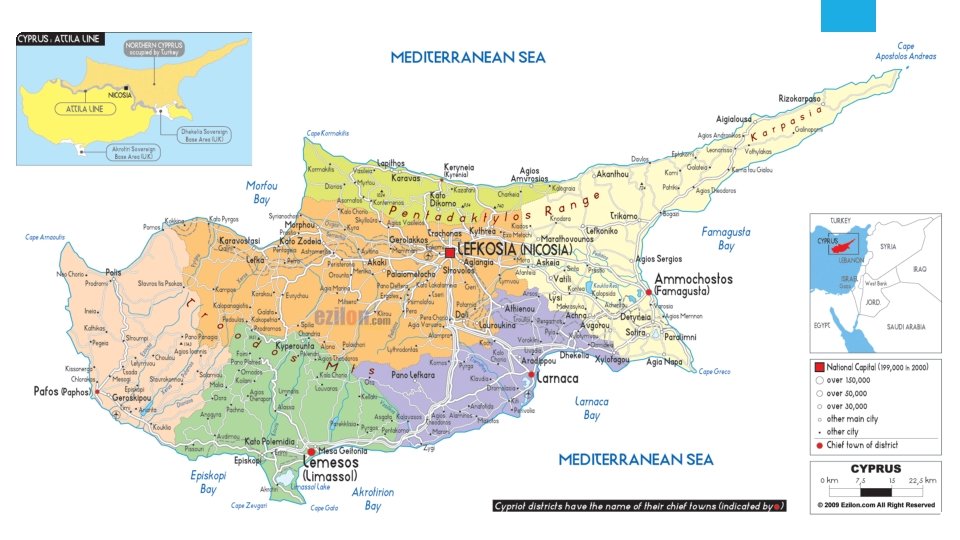
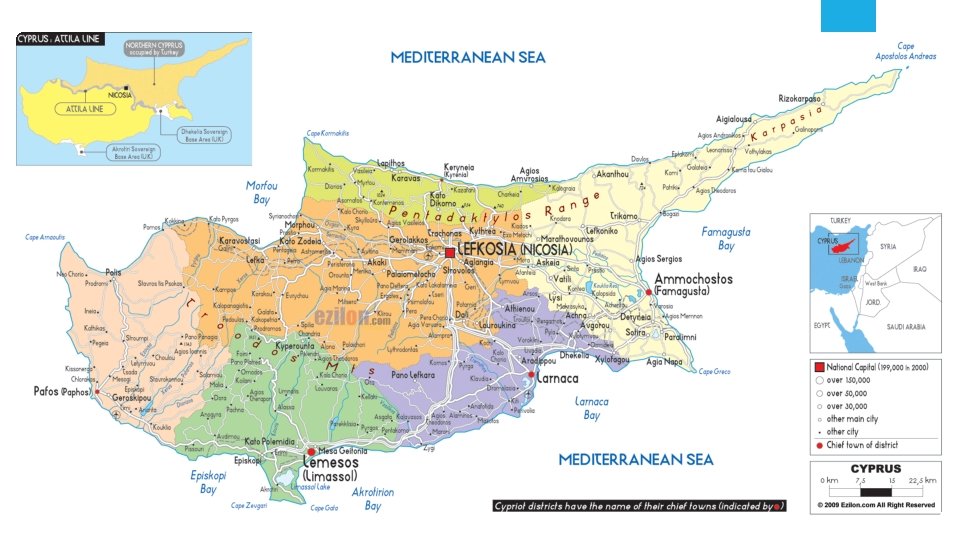
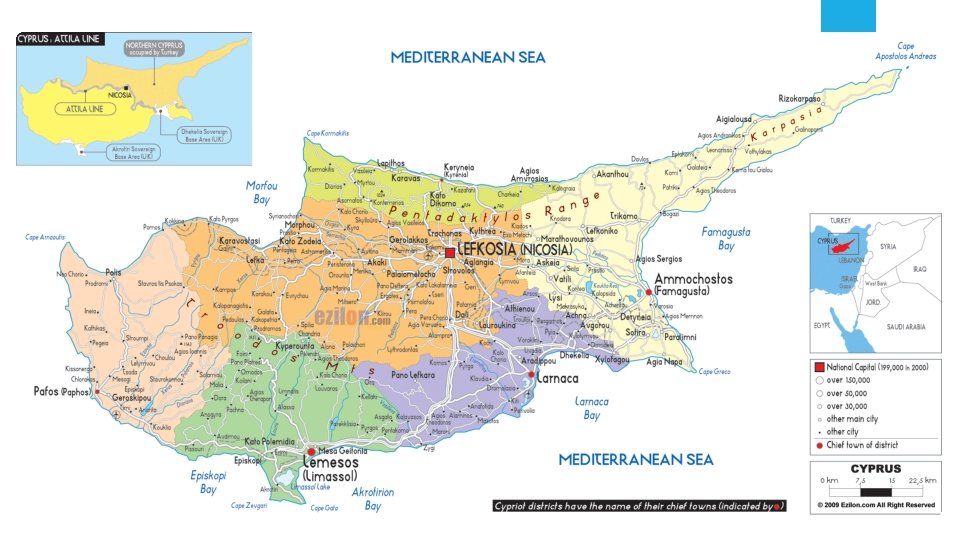
CYPRUS: COUNTRY PROFILE Ethnic composition: Greek – Turkish (4: 1) Official languages: Greek (and Turkish) British possession and Colony of the Crown, 1878 -1960 Independence, 1960 (British Sovereign Base Areas remain – colonial Cyprus law applies, not part of the EU) Turkish invasion, 1974 – loss of control over 37% of territory EU Accession, 2004
CYPRUS: MIXED LEGAL SYSTEM Common law dominant in “core” areas of the legal system and private law Codification of common-law principles in each basic legal field (Contracts, Torts) Procedural law clearly falling within the English/“common law” tradition Common-law encroachment upon the civilian enclave of family law (e. g. constructive trusts) Presence of English language continues to be strong Greek (and Turkish) as official language Mutation See Symeonides (2003); Hatzimihail (2013, 2015, 2017)
CYPRUS: ENVIRONMENT FOR CROSS-BORDER DISPUTES Drastic transformation of society, economy since the 1980 s/1990 s Internationalized economy, Foreign residents: MS citizens (ECE), mostly workers Commonwealth of Independent States (CIS), mostly workers, some affluent Middle East: few, some workers, some affluent Many affluent or long-term third-country nationals obtain citizenship => Assets: residents, non-residents (MS), non-residents (third-country, esp. post -Soviet) Companies, trusts
CYPRUS: TYPES OF CROSSBORDER DISPUTES Enforcement of judgments over property located in Cyprus Family Succession Civil and commercial Interim relief Injunctions ad personam Emerging Enforcement of jurisdictional agreements? Spillover of non-contractual claims (e. g. personality / internet torts)
CYPRUS: TYPES OF POTENTIAL CASES RELATING TO PSS NRS 1. Seeking to establish jurisdiction over individuals - domicile is paramount for both jurisdiction and applicable law A: few problems (unless an entity itself sues – see 3 below) 2. litigating issues involving actions (and legal actions) in the p. SS NRS territory - Cf Hesperides Hotels Ltd v Aegean Turkish Holidays Ltd (HL 1978, CA 1978) A: Follow an English-law approach? 3. Having to acknowledge the political entity itself - e. g. judicial assistance; enforcement of judgments A: No de facto recognition – look to international and EU law – strong Cyprus public policy Q: What about false conflicts?
CYPRUS: TYPES OF POTENTIAL CASES RELATING TO PSS NRS Seeking to establish jurisdiction over individuals A: few problems unless an entity itself sues – see 3 below) Domicile is paramount for both jurisdiction and applicable law - EU Pi. L: “domicile” for civil jurisdiction – habitual residence - Common law: domicile - Little role for nationality as connecting factor / jurisdiction ground - Dual nationalities in many cases? Cypriotization of many cases Q: What about “false conflicts”? Forum non conveniens?
CYPRUS: TYPES OF POTENTIAL CASES RELATING TO PSS NRS, PT 2 Litigating issues involving actions (and legal actions) in the p. SS NRS territory - Cf Hesperides Hotels Ltd v Aegean Turkish Holidays Ltd (HL 1978, CA 1978) Actions for trespass and conversion of chattels – dismissed under Moçambique rule A: Follow an English-law approach? Cases might involve more than private interests? - Forum non conveniens - any impact of EU PIL? (as long as no effet reflexe, not so much)
CYPRUS: TYPES OF POTENTIAL CASES RELATING TO PSS NRS, PT. 3 Having to acknowledge the political entity itself - e. g. judicial assistance; enforcement of judgments A: No de facto recognition Strong Cyprus public policy - consideration of precedents relative to our own case - conscious about reciprocity Look to international and EU law (due deference to international legality)
A RECENT CASE… Artesa Trading Co Ltd v Credit Bank of Russia (Supreme Court of Cyprus, Civil appeal, 2018) Claimants: P 2, P 3, P 4, P 5: Turkish Cypriots (address just north the ‘green line’) - organized in a company (presumably) registered in the North (“A”) Lead plaintiff (P 1): Cyprus Company with address listed in Pyla (only inhabited village in the ‘green line’ – both Greek and Turkish Cypriot residents) Defendant: Russian bank
A RECENT CASE (ARTESA – CONT’D) Contract by A to ”provide oil and asphalt products to another party in areas south of the UN controlled dead zone” (Plaintiff’s statement of claim) Plaintiffs’ payment to defendant made by a bank in the north P 2, P 3, P 4, P 5 created P 1 and assigned all their claims against Defendant to P 1 Action stricken out for lack of standing – S. Ct. affirmed - Sole purpose for creation of P 1 was to file a claim against D for “facts allegedly occurred in the occupied areas of the Republic” – this constitutes an ”evident” abuse of process (inherent powers doctrine) - The Courts of the Republic cannot, “via the indirect approach” examine and decide over issues arising from actions occurring in the occupied parts
(TENTATIVE) CONCLUSIONS Factual approach over a normative approach? - in principle yes, but beware of the potential normativity of factual approaches