
The Vietnam War 1956 1974 Americas Longest War
- Slides: 43
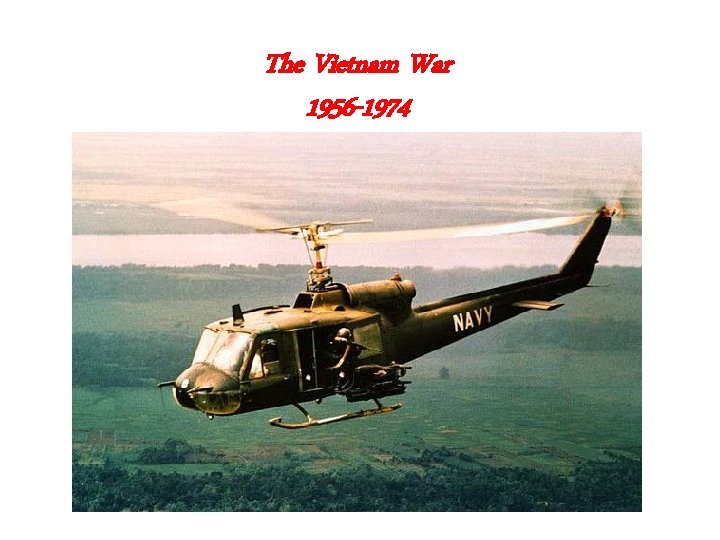
The Vietnam War 1956 -1974
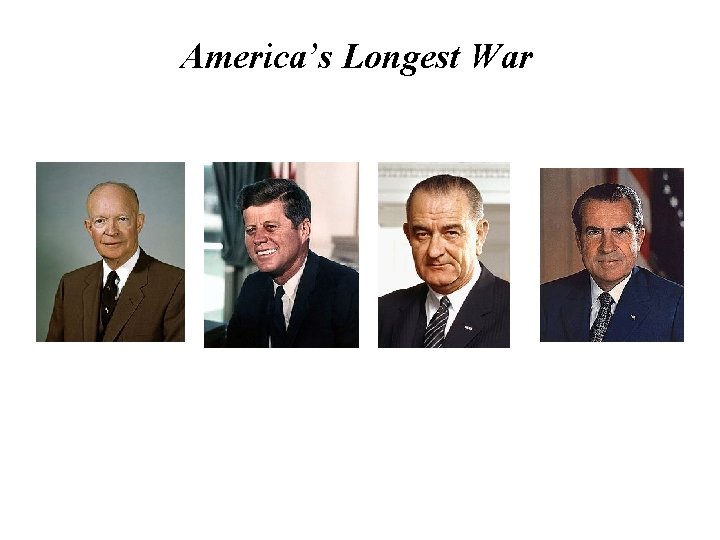
America’s Longest War
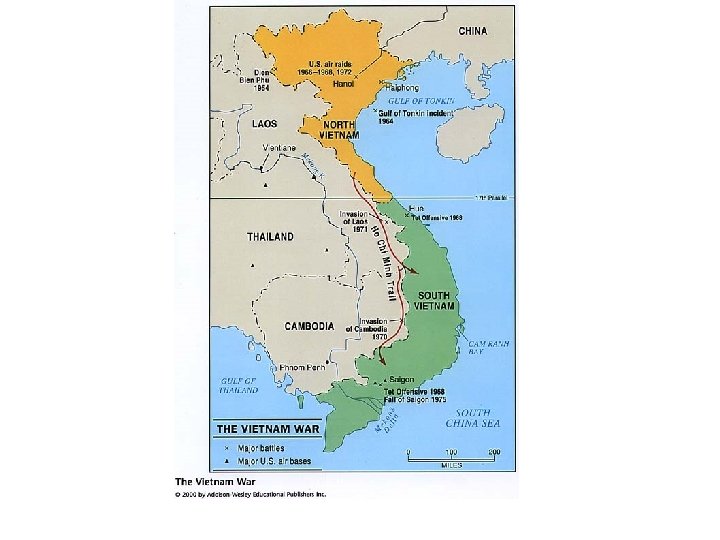
The Vietnam War Background • Vietnam ( Indochina) was a colony of France • From 1939 -1945 Vietnam was controlled by Japan • After WWII, just like in Korea, Vietnam was divided (17 th parallel) • North Vietnam was controlled by the Communist, • South Vietnam was allied to the U. S. • The North was led by Ho Chi Minh , his goal was to unite Vietnam into one nation
The French and Vietnam But the French had no intention of seeing Vietnam become independent or communist. The French asked the US to help—this put the US in a difficult position.
• The US didn’t want the French to have Vietnam, but it didn’t want Vietnam to become communist either—remember the Cold War is still going on. • So the US helped the French with money and war materials. • But after much fighting, the French gave up. The US was left holding up South Vietnam
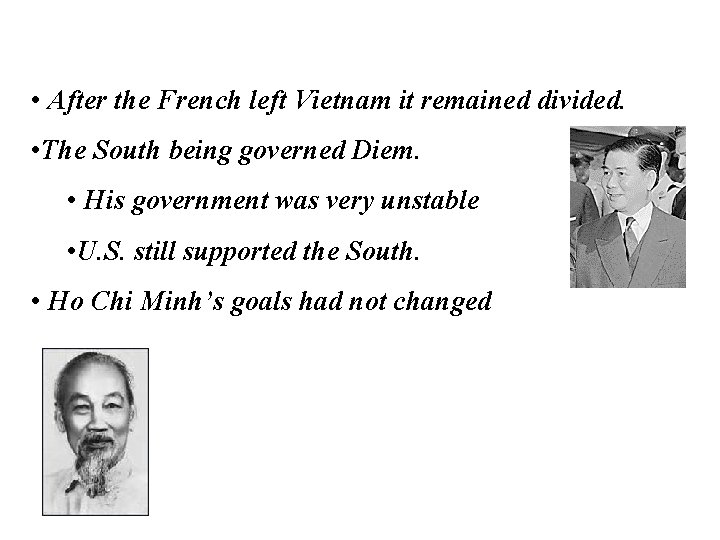
• After the French left Vietnam it remained divided. • The South being governed Diem. • His government was very unstable • U. S. still supported the South. • Ho Chi Minh’s goals had not changed
Elections • President Diem refused to have elections • Ho Chi Minh would not have fair elections. • Ho Chi Minh organized a new guerrilla army, Vietcong • sent them down to South Vietnam • US increased aid to South Vietnam • Vietcong continued to be powerful.
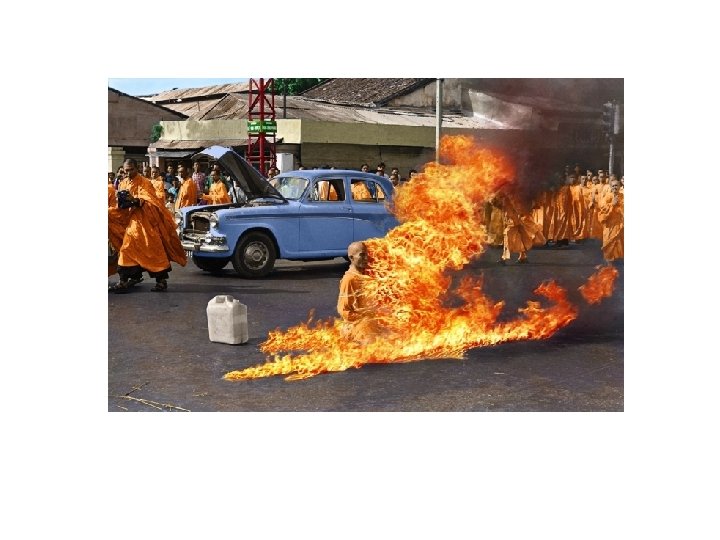
• Vietcong was so powerful because – South Vietnamese did not like President Diem • he was corrupt • catholic • increasingly discriminatory against the Buddhists— the majority religion in the area.
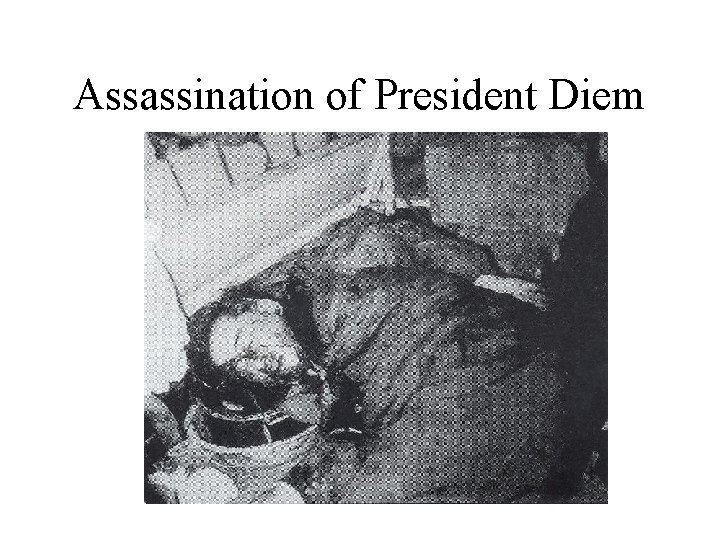
Assassination of President Diem
• The assassination of Diem with the approval of the Kennedy’s administration only made matters worse in Vietnam. • It grew increasingly weak and unstable. • The US became even more deeply involved. • Then President Kennedy was killed. • Now the problem became Johnson’s.
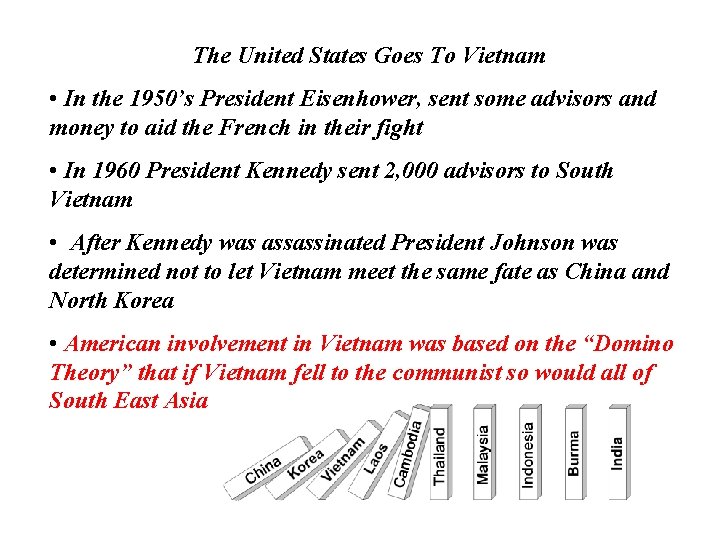
The United States Goes To Vietnam • In the 1950’s President Eisenhower, sent some advisors and money to aid the French in their fight • In 1960 President Kennedy sent 2, 000 advisors to South Vietnam • After Kennedy was assassinated President Johnson was determined not to let Vietnam meet the same fate as China and North Korea • American involvement in Vietnam was based on the “Domino Theory” that if Vietnam fell to the communist so would all of South East Asia
Johnson and Vietnam No President wanted to appear soft on Communism. On one hand he says “we do not seek to widen this conflict” and on the other hand he sought a way to “win” this struggle.
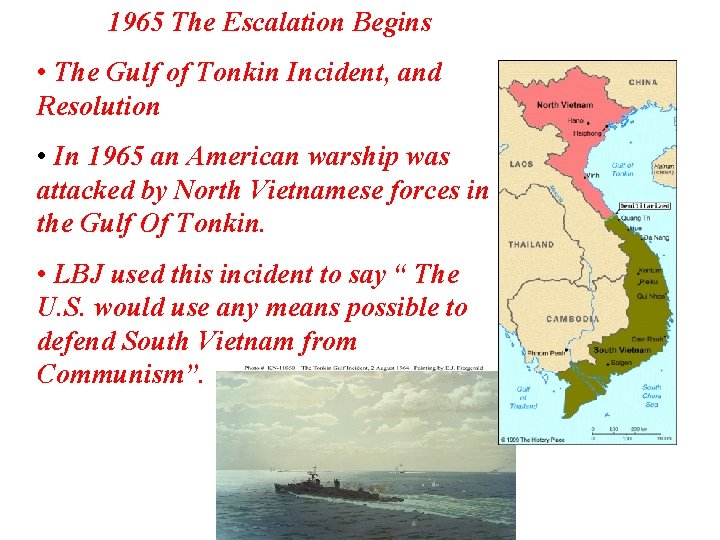
1965 The Escalation Begins • The Gulf of Tonkin Incident, and Resolution • In 1965 an American warship was attacked by North Vietnamese forces in the Gulf Of Tonkin. • LBJ used this incident to say “ The U. S. would use any means possible to defend South Vietnam from Communism”.
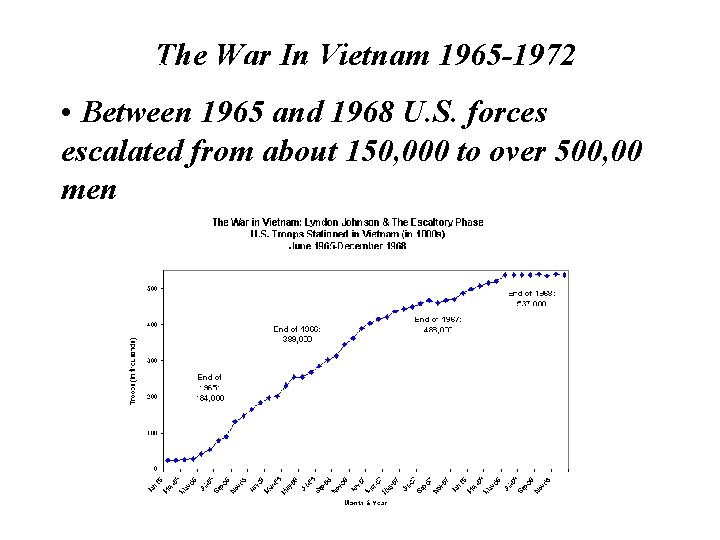
The War In Vietnam 1965 -1972 years from 1965 to 1968. • Between 1965 and 1968 U. S. forces escalated from about 150, 000 to over 500, 00 men
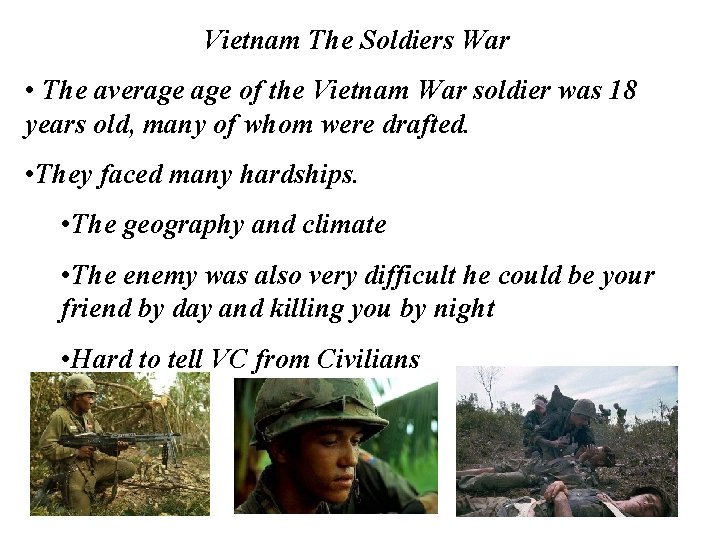
Vietnam The Soldiers War • The average of the Vietnam War soldier was 18 years old, many of whom were drafted. • They faced many hardships. • The geography and climate • The enemy was also very difficult he could be your friend by day and killing you by night • Hard to tell VC from Civilians
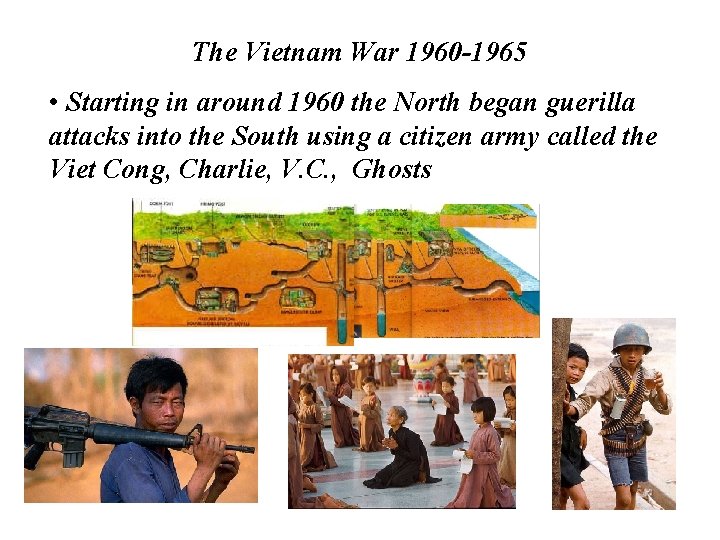
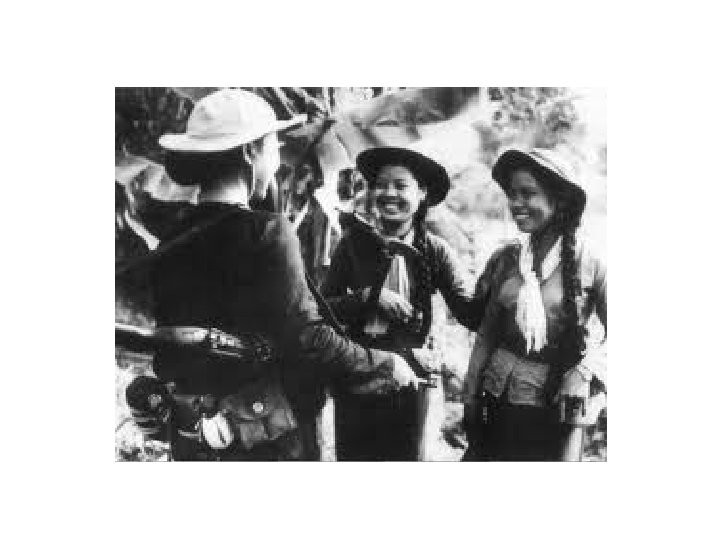
The Vietnam War 1960 -1965 • Starting in around 1960 the North began guerilla attacks into the South using a citizen army called the Viet Cong, Charlie, V. C. , Ghosts
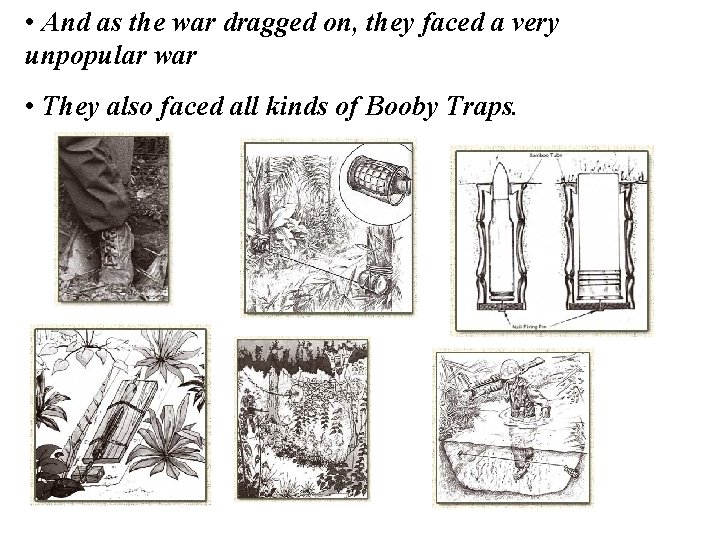
• And as the war dragged on, they faced a very unpopular war • They also faced all kinds of Booby Traps.
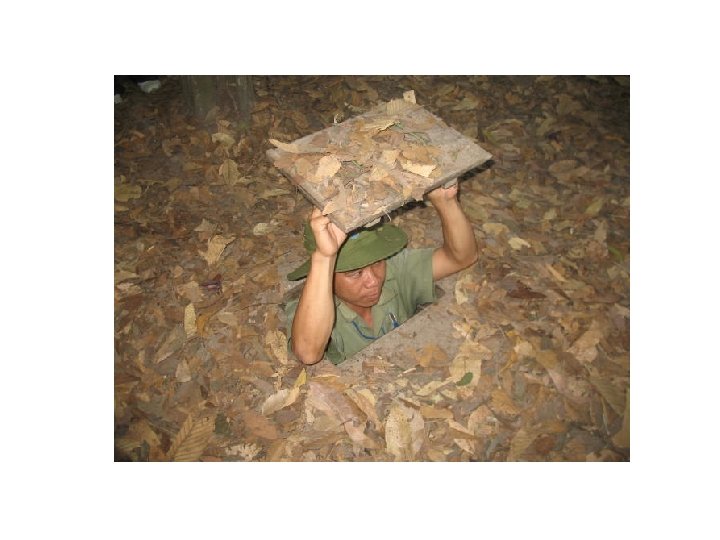
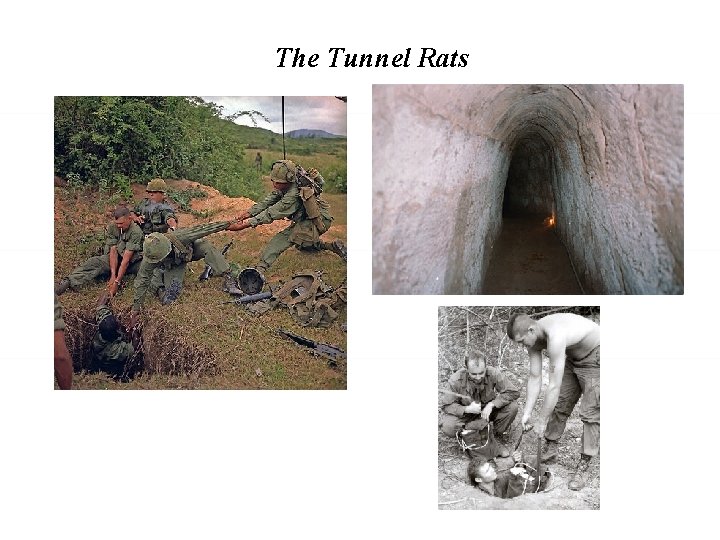
The Tunnel Rats
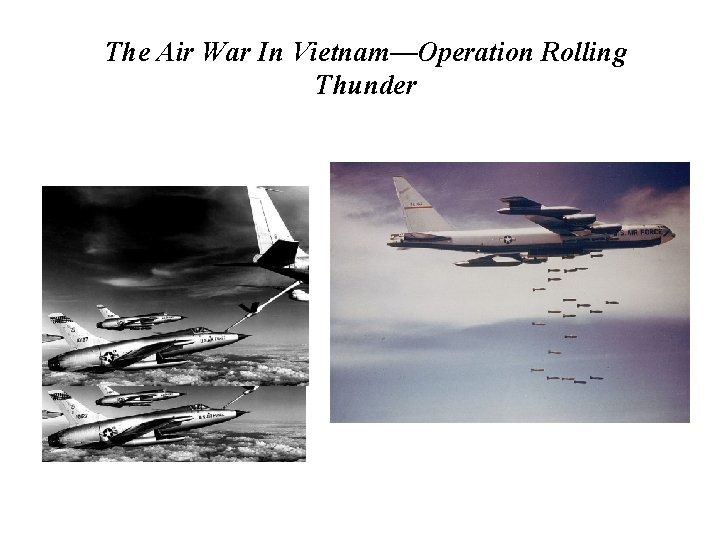
The Air War In Vietnam—Operation Rolling Thunder
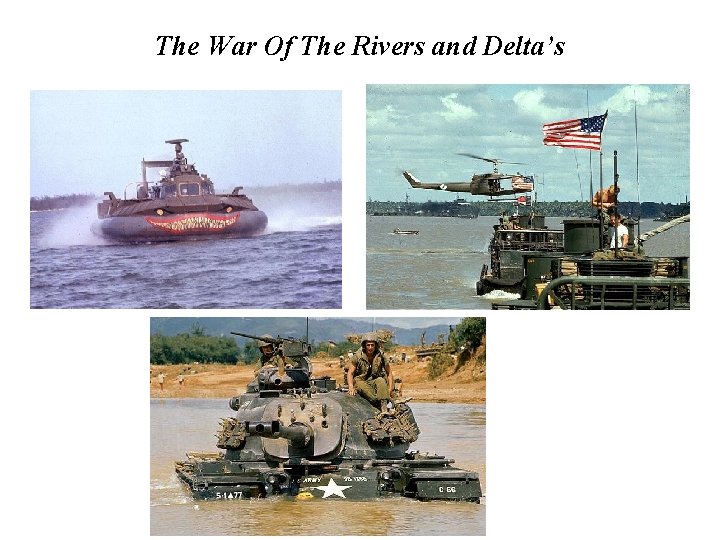
The War Of The Rivers and Delta’s
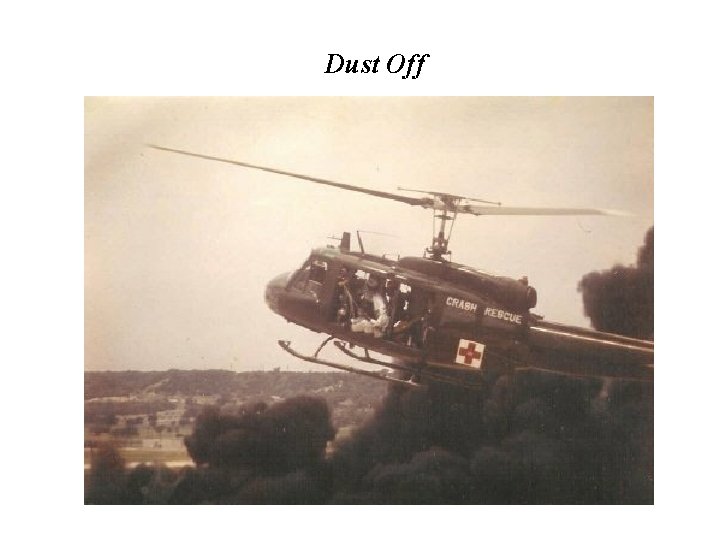
Dust Off
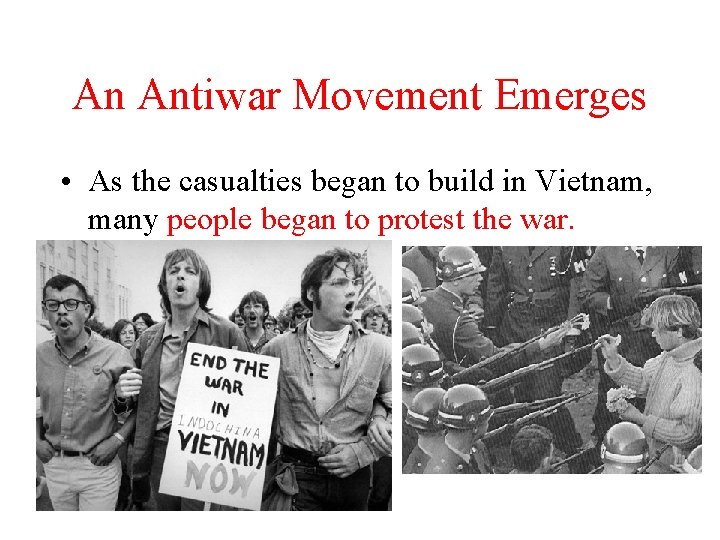
An Antiwar Movement Emerges • As the casualties began to build in Vietnam, many people began to protest the war.
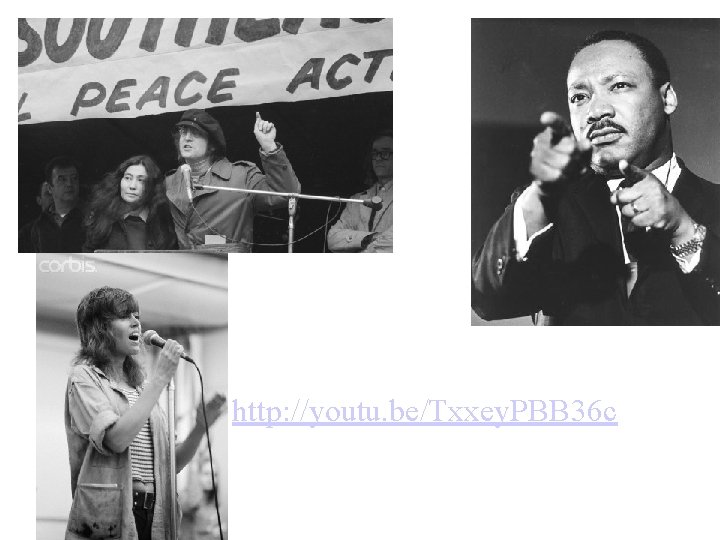
Why? • A Civil war in which the US had no business in • South Vietnam was a world away—no relevance • Anger at the Draft--unfair • Many famous started to voice opposition to the war
• http: //youtu. be/Txxey. PBB 36 c
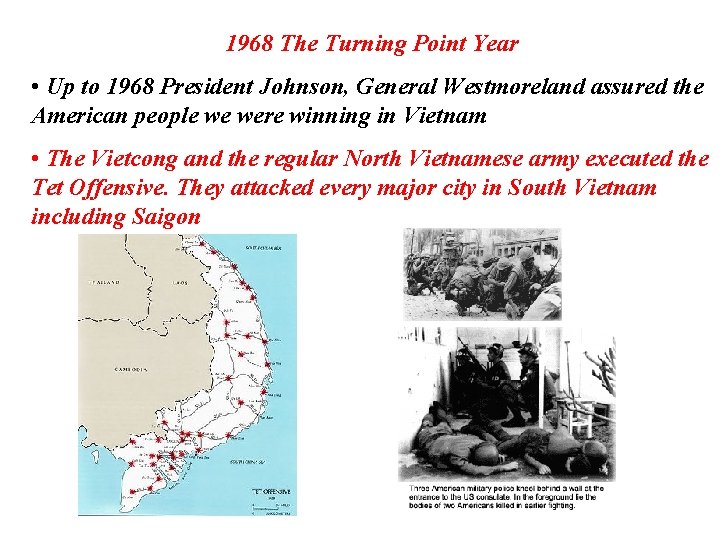
1968 The Turning Point Year • Up to 1968 President Johnson, General Westmoreland assured the American people we were winning in Vietnam • The Vietcong and the regular North Vietnamese army executed the Tet Offensive. They attacked every major city in South Vietnam including Saigon
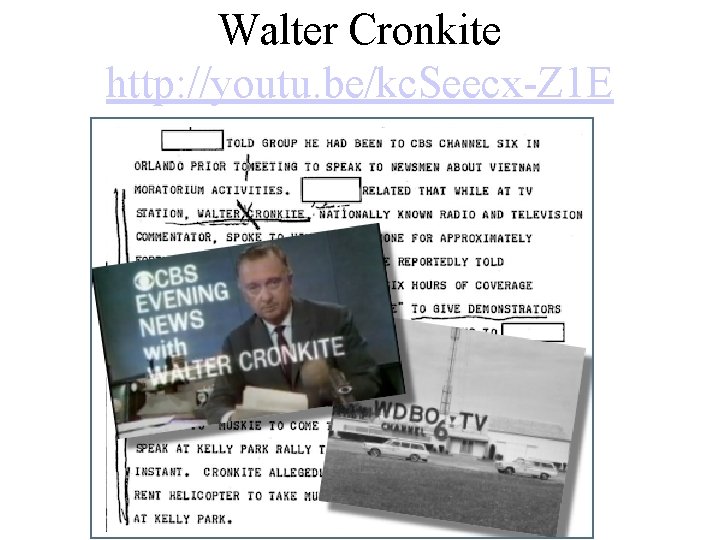
Walter Cronkite http: //youtu. be/kc. Seecx-Z 1 E
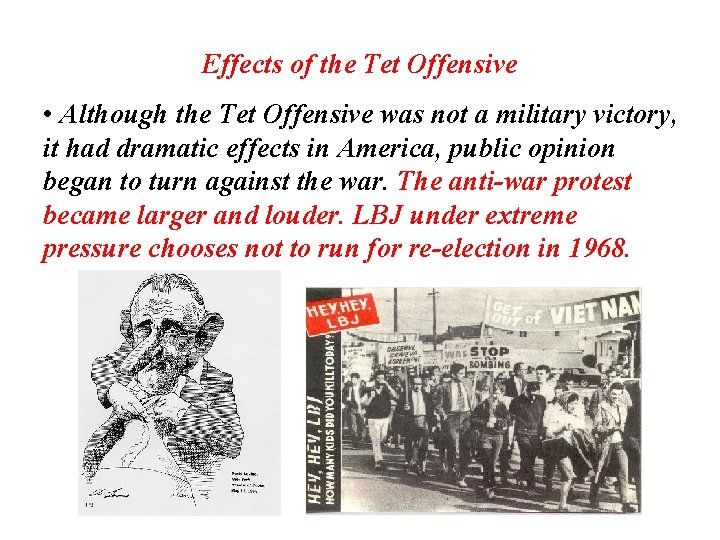
Effects of the Tet Offensive • Although the Tet Offensive was not a military victory, it had dramatic effects in America, public opinion began to turn against the war. The anti-war protest became larger and louder. LBJ under extreme pressure chooses not to run for re-election in 1968.
1968 -A year of Violence MLK killed in April http: //youtu. be/BCrx_u 3825 g
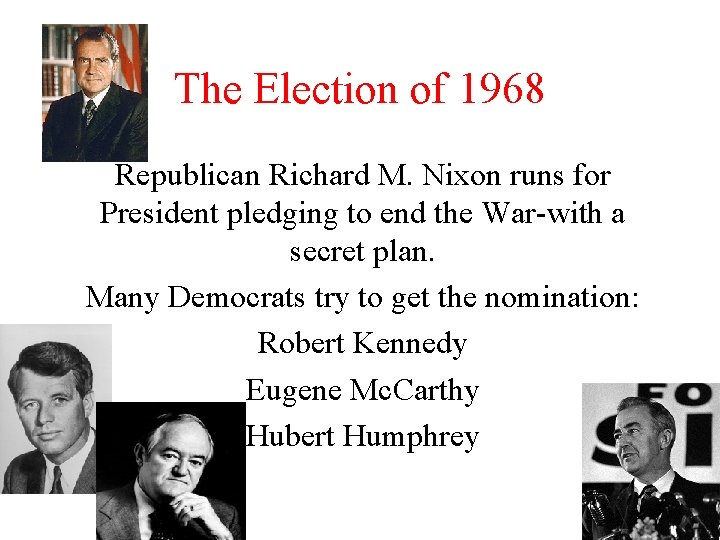
The Election of 1968 Republican Richard M. Nixon runs for President pledging to end the War-with a secret plan. Many Democrats try to get the nomination: Robert Kennedy Eugene Mc. Carthy Hubert Humphrey
California Primary • http: //youtu. be/il. Zu. An. BXe. M 8
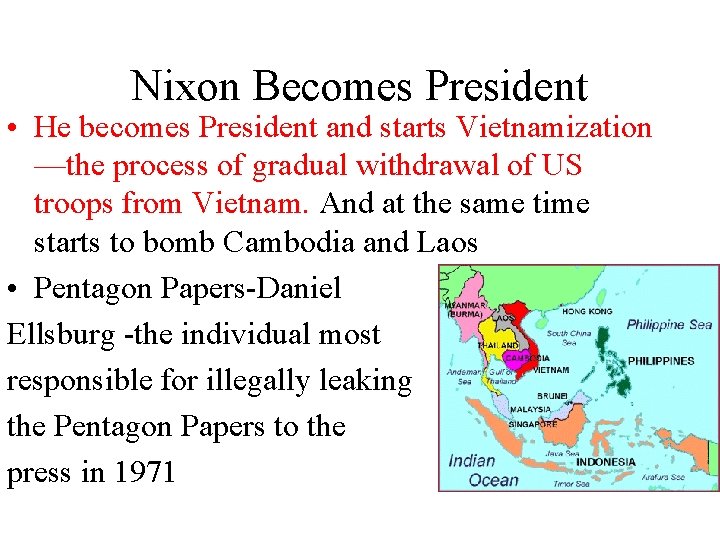
Nixon Becomes President • He becomes President and starts Vietnamization —the process of gradual withdrawal of US troops from Vietnam. And at the same time starts to bomb Cambodia and Laos • Pentagon Papers-Daniel Ellsburg -the individual most responsible for illegally leaking the Pentagon Papers to the press in 1971
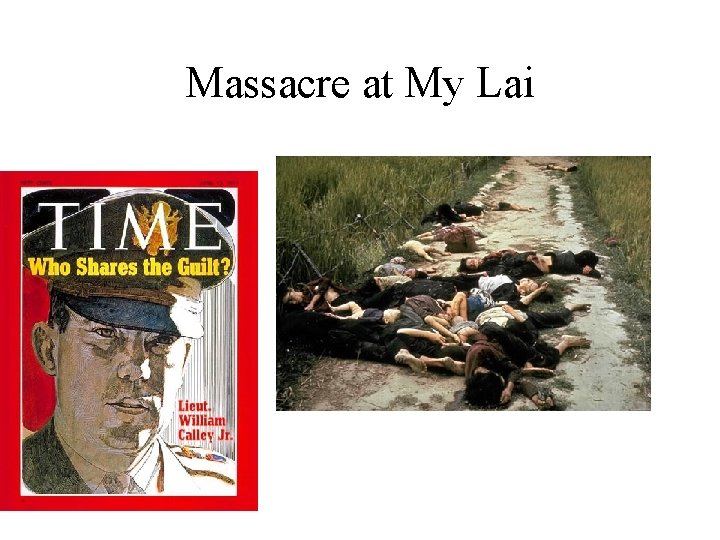
Massacre at My Lai
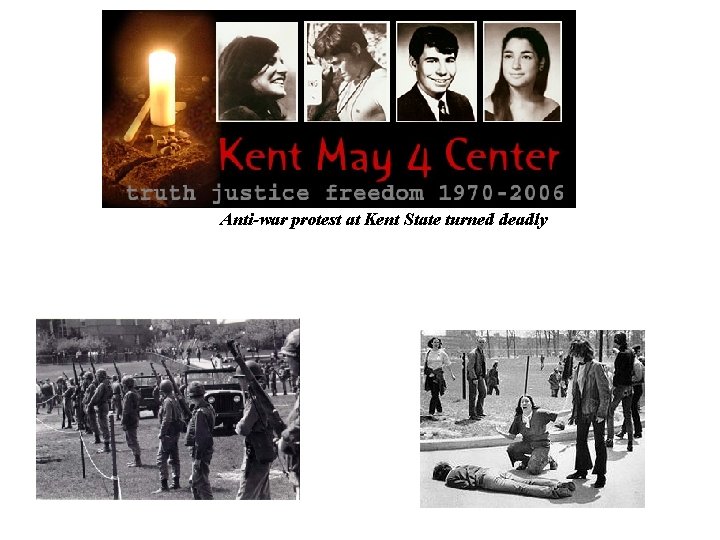
Anti-war protest at Kent State turned deadly
http: //youtu. be/GI 7 -m 919 yn. U CSNY-Ohio
Nixon and the Vietnam War • Nixon was elected on the promise he would get use out of Vietnam “ Peace With Honor” • He began a process of Vietnamization, turning the war over to South Vietnam. • After negotiations with China and Russia, and continued bombing he was able to secure the peace • Jan 1973, Nixon announced the suspension of all military action in Vietnam • The terms were simple The North would not invade the South and we would leave Vietnam
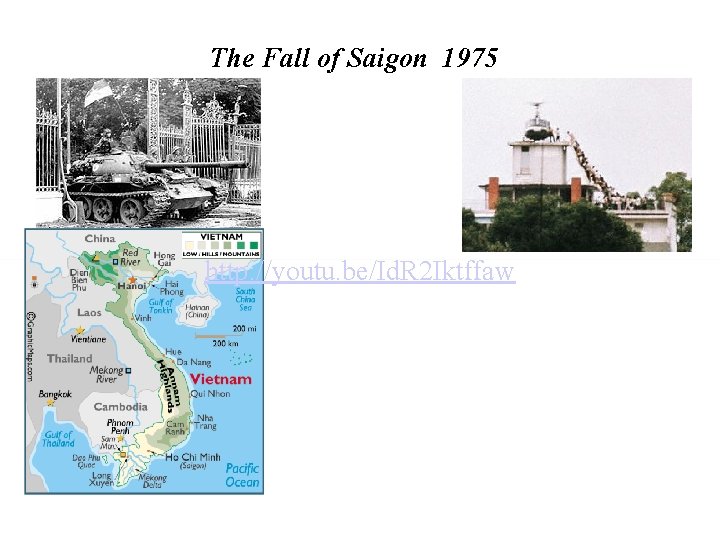
The Fall of Saigon 1975 http: //youtu. be/Id. R 2 Iktffaw
The Effects of the Vietnam War • 58, 000 Americans died, thousands were wounded. Millions of Vietnamese died • Cost America millions of dollars • Americans began to distrust and question the government • We did not win. Wars had to be short and decisive • The War Power Act, said the President could not send troops anywhere without congressional approval
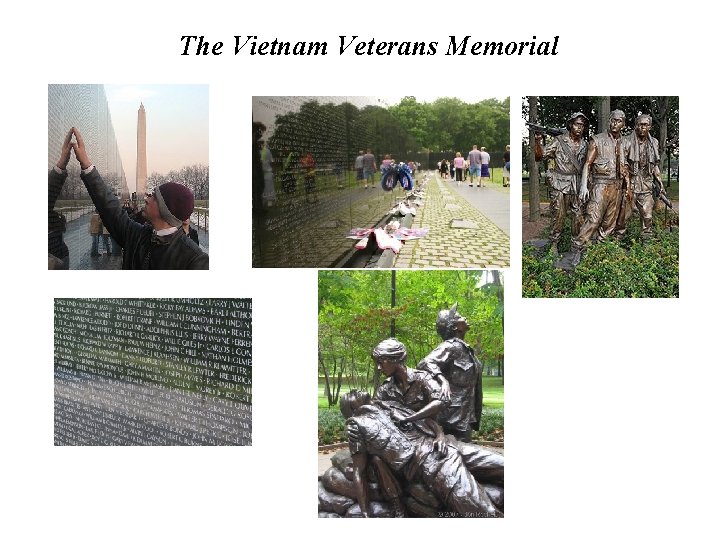
The Vietnam Veterans Memorial
Lessons from Vietnam • Should not go into an area with no vital interest to our security • Should not go into a War unless confident they can rally and sustain the support of the American people