
The Victorian Age The Victorian Age 1837 1901
- Slides: 12
The Victorian Age
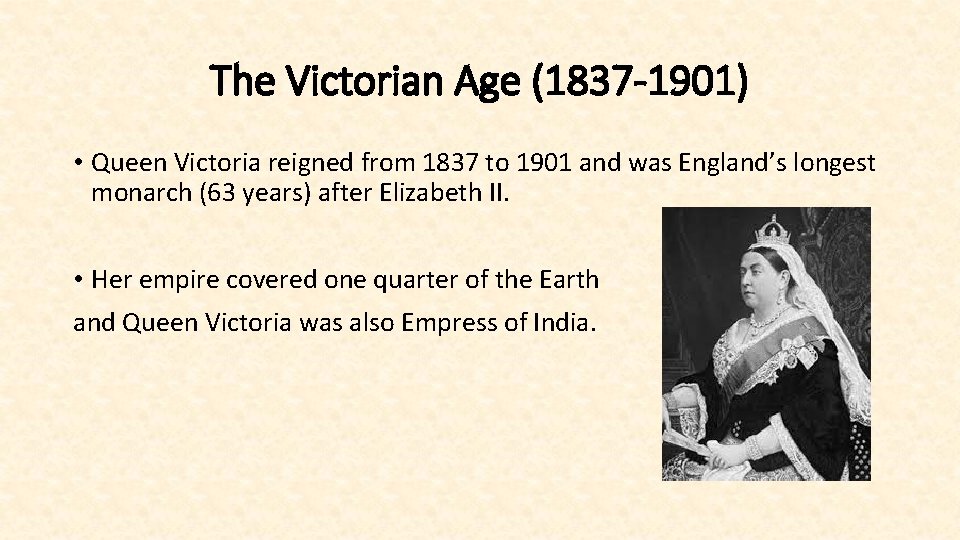
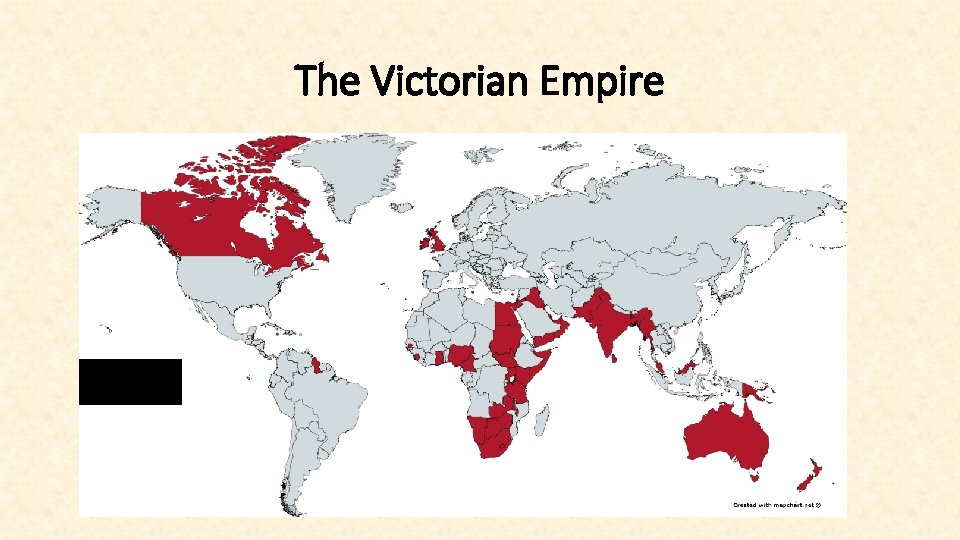
The Victorian Age (1837 -1901) • Queen Victoria reigned from 1837 to 1901 and was England’s longest monarch (63 years) after Elizabeth II. • Her empire covered one quarter of the Earth and Queen Victoria was also Empress of India.
The Victorian Empire
England: the most powerful nation • In this period England became the most powerful nation in the world after defeating Napoleon at Waterloo in 1815 • Two sources of wealth The growing number of COLONIES The lowly paid WORKERS who worked in factories
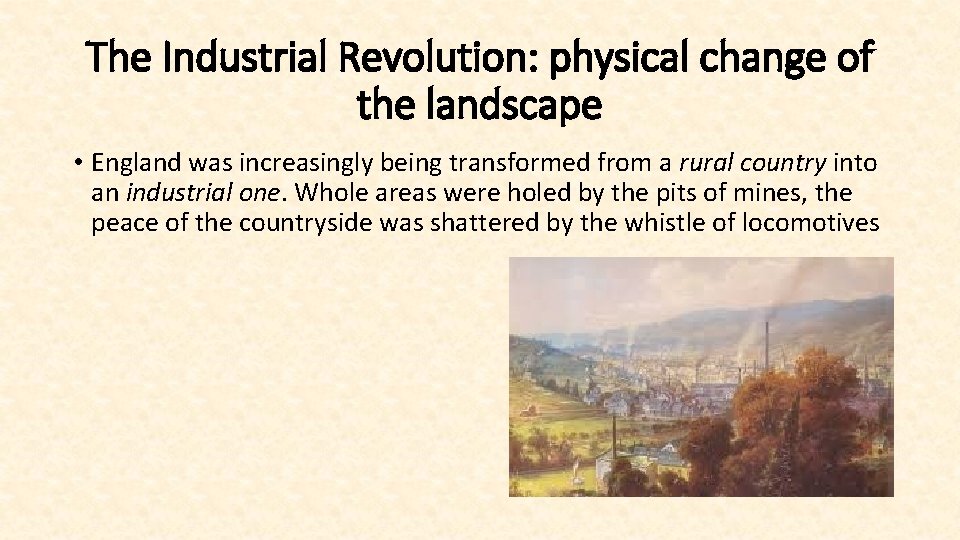
The Industrial Revolution: physical change of the landscape • England was increasingly being transformed from a rural country into an industrial one. Whole areas were holed by the pits of mines, the peace of the countryside was shattered by the whistle of locomotives
The urbanization and the social problem People were mainly attraced to cities by the promise of work in the new factories. The main centres of industry were: London, Liverpool, Manchester, Bristol, Leeds… In these industrial cities the upper and middle class (5% of population)the two classes that most benefited from the new situation- occupied up to 50% of the available land, the poor, on the other hand, were forced into overcrowded slums.
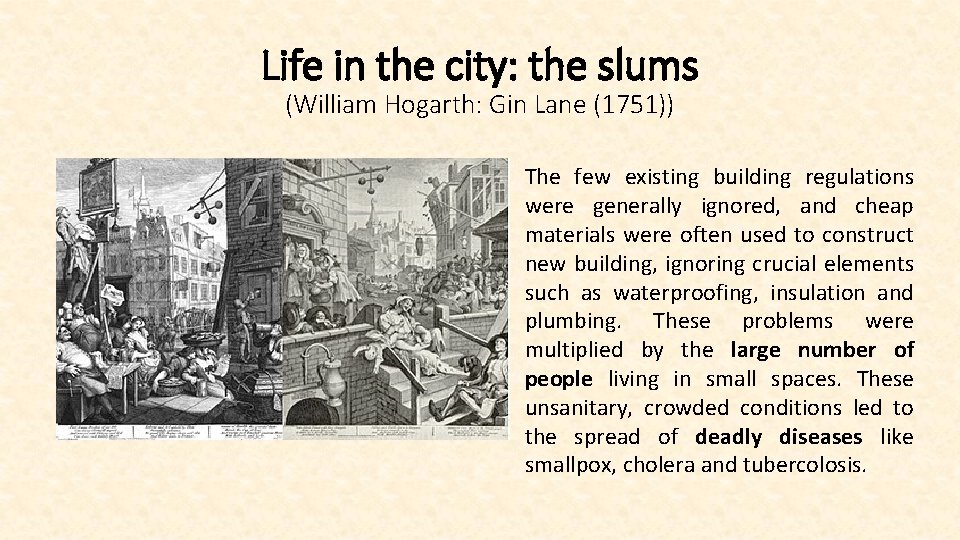
Life in the city: the slums (William Hogarth: Gin Lane (1751)) The few existing building regulations were generally ignored, and cheap materials were often used to construct new building, ignoring crucial elements such as waterproofing, insulation and plumbing. These problems were multiplied by the large number of people living in small spaces. These unsanitary, crowded conditions led to the spread of deadly diseases like smallpox, cholera and tubercolosis.
The Chartist Movement • The absence of a political representation and the consequent lack of rights for the working class (their exploitation in the factories, the bad life condition in which they lived in the slums and other social injustices) led to the rise of the Chartist Movement (1836). (The First Reform Bill (1832) had given the right to vote only to property owners. ) • The goal of the Chartist was to gain political rights for the working classes
The People’s Charter • The Charter listed the main aims of the movement, which contained six points: 1) Votes for all men (over 21) 2) the secret vote (voting) 3) Abolition of the property qualification for candidates seeking election 4) Working class men could also become Members of Parliament 5) The establishment of electoral districts equal in population 6) Annual elections for Parliament
Second and Third Reform Bills • The people’s Charter was drawn up in 1838 but was rejected three times. By the end of the century, however, it produced some results leading to the adoption of the points proposed, with the exception of «Annual Parliaments» . 1867 the Second Reform Bill was passed, giving the right of vote to the town labourers, but leaving the agricultar labourers and miners still unfranchised. In the was only in 1884, with the Third Reform Bill, that the latter at last got the vote. In 1918 all man had the right to vote and all women over 30 years of age. In 1928 it was given to everybody.
The Victorian Compromise A strong DUALISM • This particular situation, which saw prosperity and progress on the one hand, and poverty, ugliness and injustice on the other, which opposed ethical conformism to corruption, moralism and philanthropy to money and capitalistic greediness, is usually referred to as the Victorian Compromise. A sort of silent pact between rich people and poor people rich people supported Charity and any sort of social aid in fovour of poor and these latter benefited from it and remained calm by accepting the general situation. Although, at the time, there were different social unrests and riots, poor people didn’t really question their situation.
The Poor Law: the hypocrite Victorian moral • The Poor Law (1834) The law stated that anyone who wanted to receive money or other help from the Poor Law authorities, had to be sent or commit themselves to special «workhouses» , which were extremely hard and violent places