
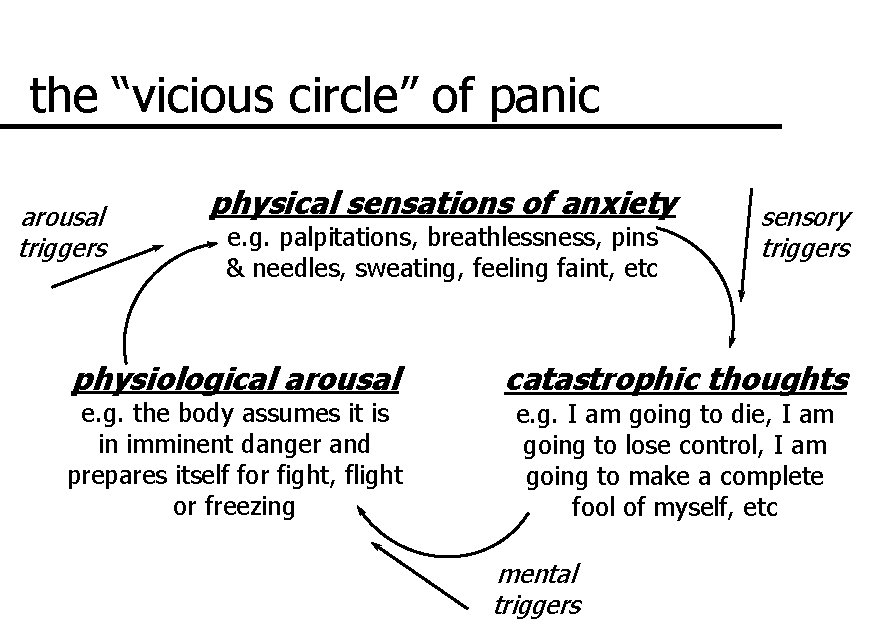
the vicious circle of panic arousal triggers physical
- Slides: 4
the “vicious circle” of panic arousal triggers physical sensations of anxiety e. g. palpitations, breathlessness, pins & needles, sweating, feeling faint, etc physiological arousal e. g. the body assumes it is in imminent danger and prepares itself for fight, flight or freezing sensory triggers catastrophic thoughts e. g. I am going to die, I am going to lose control, I am going to make a complete fool of myself, etc mental triggers
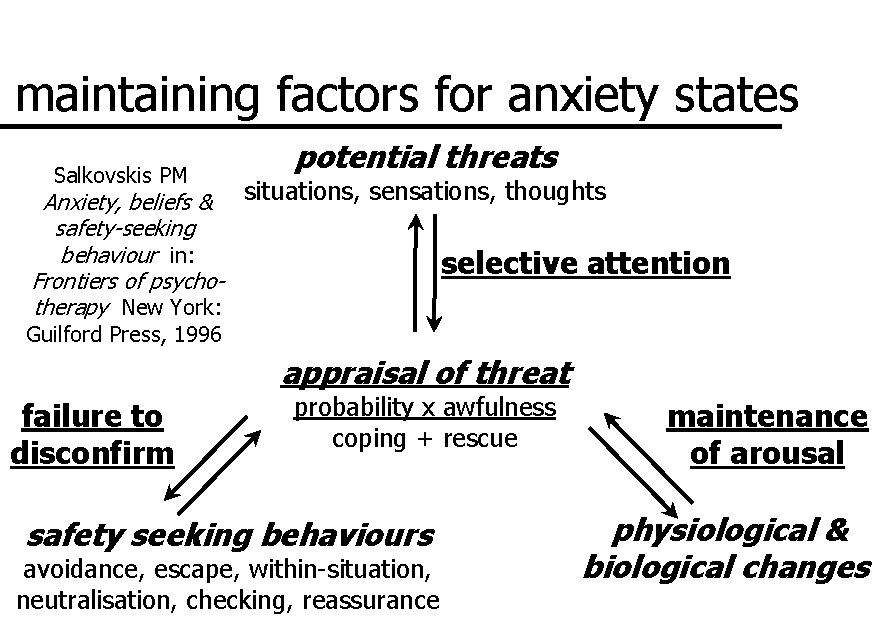
maintaining factors for anxiety states Salkovskis PM potential threats Anxiety, beliefs & situations, sensations, thoughts safety-seeking behaviour in: selective attention Frontiers of psychotherapy New York: Guilford Press, 1996 appraisal of threat failure to disconfirm probability x awfulness coping + rescue safety seeking behaviours avoidance, escape, within-situation, neutralisation, checking, reassurance maintenance of arousal physiological & biological changes
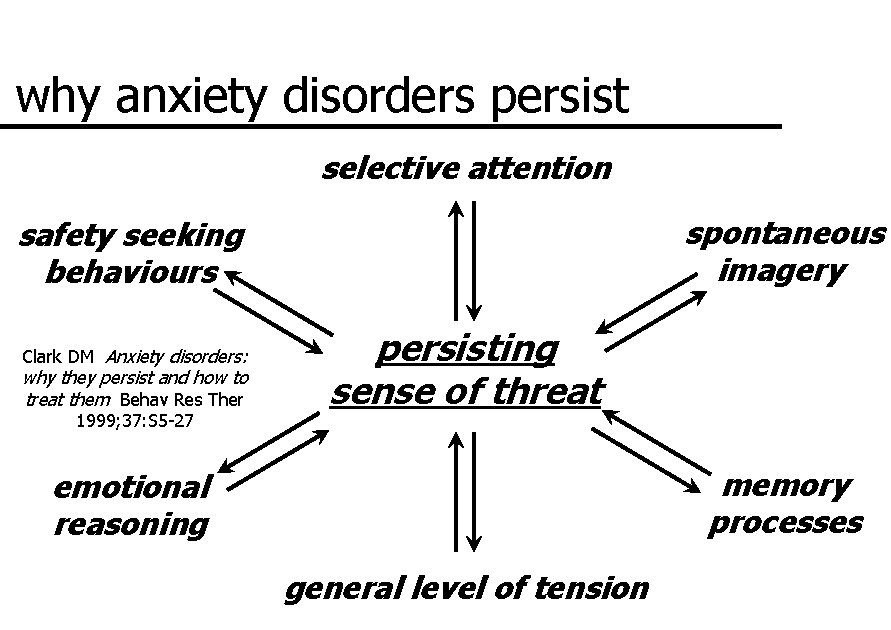
why anxiety disorders persist selective attention spontaneous imagery safety seeking behaviours Clark DM Anxiety disorders: why they persist and how to treat them Behav Res Ther 1999; 37: S 5 -27 persisting sense of threat memory processes emotional reasoning general level of tension
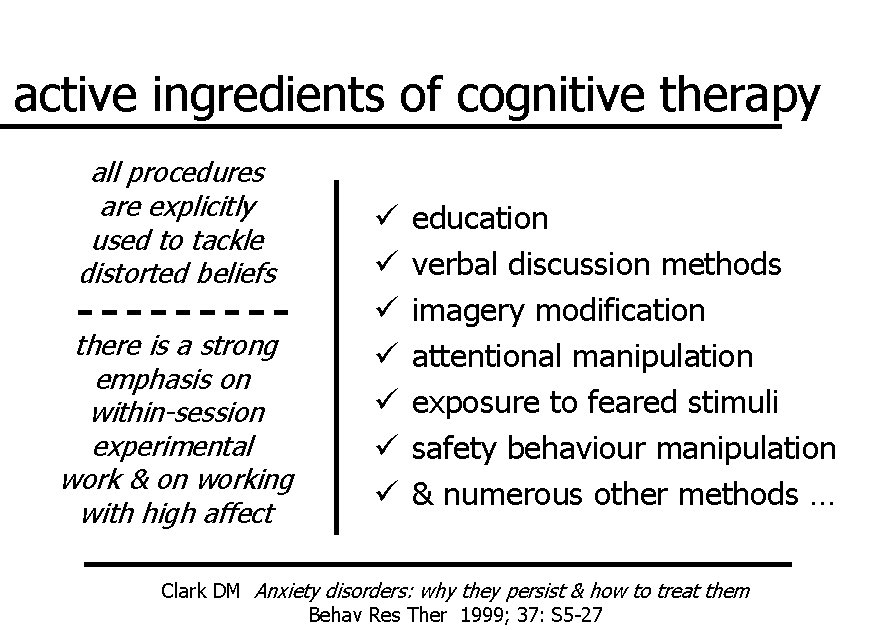
active ingredients of cognitive therapy all procedures are explicitly used to tackle distorted beliefs there is a strong emphasis on within-session experimental work & on working with high affect ü ü ü ü education verbal discussion methods imagery modification attentional manipulation exposure to feared stimuli safety behaviour manipulation & numerous other methods … Clark DM Anxiety disorders: why they persist & how to treat them Behav Res Ther 1999; 37: S 5 -27